
The 9 Best Diets for Weight Loss – SI Showcase

The 9 Best Diets for Weight Loss – SI Showcase

Best Weight Loss Diets_hero

The products featured in this article have been independently reviewed. When you buy something through the retail links on this page, we may earn commission at no cost to you, the reader. The Sports Illustrated editorial team is not involved in the creation of this content. Learn more here.

The concept of losing weight is simple—run a caloric energy deficit over time and you’ll eventually shed pounds.

But the key to weight loss isn’t finding a diet that works in theory. It’s finding an achievable diet plan based on your lifestyle and, to some degree, your psychological, genetic and metabolic make up.

Are you a Type A personality who prefers rule-based plans to flexible ones? Where do you tend to gain weight? Can your work-life balance handle food logging? What’s your medical history?

These factors (and more) matter when it comes to choosing an effective weight loss diet—one you can follow through on long-term. They also determine the rate of your fat burn. Is fast weight loss realistic for you? Is it the healthiest route?

This article introduces the best diet for weight loss in various categories, including the best diet for PCOS weight loss and the best diabetic diet for weight loss.

This content is meant to be informative, but should not be taken as medical advice. It is not intended for use as diagnosis, prevention or treatment of health problems. Always speak with your doctor before starting any new supplement or exercise regimen.

Our Picks for the Best Diet for Weight Loss:

  • Best Overall Weight Loss Diet: Nutrisystem
  • Best Psychology-Based Weight Loss Diet: Noom
  • Best Fasting Weight Loss Diet: DoFasting
  • Best Weight Loss Diet for Community Support: WW
  • Best Weight Loss Diet for Diabetes: Mediterranean Diet
  • Best Diet for PCOS Weight Loss: Mayo Clinic Diet
  • Best Weight Loss Diet for Seniors: DASH Diet
  • Best (Mostly) Vegetarian Weight Loss Diet: Flexitarian Diet
  • Best Weight Loss Diet for Pre-Made Food: Jenny Craig
ns 1
  • How it works for weight loss: Pick a meal plan that suits your taste and budget, and get fully prepared meals delivered to your doorstep. Each plan comes with an on-demand weight loss coach to guide your weight loss journey.
  • Key foods: There are over 130 meal options. They are mostly low-calorie, low-sugar, high-protein meals designed to promote fast weight loss.
  • Downsides: This may be a less eco-friendly option than cooking for yourself. The meal packaging may generate more waste than usual.

Nutrisystem benefits people who want to eat healthier, but don’t have time to cook meals everyday. With Nutrisystem, you can follow a healthy diet with little effort.

This diet lets you pick the best meal plan for your needs and delivers it right to your door. It includes meals designed by dietitians for women’s weight loss, men, couples and women over 55. You can also choose a plan based on your dietary restrictions and medical history, like the vegetarian or diabetes option.

Ultimately, Nutrisystem is a convenient way to follow a healthy diet plan. It proves you can lose weight without the hassle of daily calorie counting, food logs or meal-prepping.

Pros:

  • No calorie counting
  • Takes the guesswork out of portion sizes
  • Easy-to-follow
  • Seven-day money back guarantee

Cons:

  • No vegan or nut-free meal plans
  • Expensive compared to other diets on our list
  • Doesn’t allow you to cook your own recipes
Noom-screenshot4
  • How it works for weight loss: Noom combines psychology, human coaching and technology to create a customized diet plan. Integrate it into your everyday routine for long-term weight management.
  • Key foods: Noom focuses on less calorie-dense foods that help you feel full quicker. Your food options are plentiful: fruits, veggies, whole grains, red meats, poultry, fish and low-fat dairy products.
  • Downsides: This diet plan may be hard for ultra busy people to keep up with. It requires you to log your food choices, physical activity, water intake and body weight every day.

Noom is about making behavioral changes that promote life-long healthy eating habits. It pinpoints the reasons you have struggled with dieting, and provides a personalized plan to help you overcome them.

After downloading the Noom app, you’ll complete a 15-minute questionnaire about your weight loss goals, health status and demographics (age, sex, gender etc.). It then provides reasonable daily goals to guide your diet, plus tips to make healthier lifestyle changes across the board.

You can also take part in daily lessons. They aim to help you find the triggers behind your unhealthy eating habits, uncover emotional ties to food and combat psychological barriers that keep you from maintaining a healthy diet long-term.

Pros:

  • 24/7 access to virtual health coaches via the mobile app
  • Addresses the psychology of eating to improve your weight management
  • Provides daily encouragement as you work toward you weight loss goal
  • Curbs overeating

Cons:

  • Expensive compared to other weight loss apps
  • Only accessible with a smartphone or tablet
  • Requires daily logs some may find time-consuming
DoFasting
  • How it works for weight loss: DoFasting provides a custom-fit intermittent fasting program and expert tools to guide you. It includes workouts, meal plans, a progress tracker and over 5,000 recipes created by professional nutritionists.
  • Key foods: DoFasting accommodates a wide range of food preferences. Instead of restricting foods, it focuses on optimal fasting periods and eating windows. It aims to help you consume fewer calories while still eating foods you like.
  • Downsides: DoFasting requires adherence to a strict fasting schedule. It may not be the best choice for people with unpredictable work and personal schedules.

Scientific evidence suggests that intermittent fasting is one of the best diets for fast weight loss. A recent study found that intermittent fasting may also be helpful for the prevention and management of chronic diseases, such as Type 2 diabetes and heart disease.

DoFasting is an app-based weight loss diet that provides a trackable way to try fasting. The app tailors a fasting schedule to your lifestyle and weight loss goals based on your completed questionnaire. Adjust your plan to try different types of fasting, like 24-hour, 16-hour and 14-hour fasts.

DoFasting promotes additional health benefits outside of weight loss, like improved heart health and enhanced mental function, according to its creators. The goal is to reach a healthy weight and make healthy lifestyle changes to keep the weight off.

Pros:

  • Lose weight fast while eating your favorite foods
  • Provides at-home workout ideas suitable for all ages and skill levels
  • Expert-recommended recipes you can make in under 10 minutes

Cons:

  • Requires adherence to a strict fasting schedule
  • Requires a subscription plan that may be off putting to commitment-phobes
WW tracking
  • How it works for weight loss: WW assigns a PersonalPoints™ Budget to members based on their lifestyle and food preferences. It aims to help you eat fewer calories without limiting your food options.
  • Key foods: WW doesn’t restrict what foods you can eat. Instead, all foods have a Point value. You can eat whatever foods you want as long as you stay within your daily and weekly Point budget.
  • Downsides: WW requires you to log what you eat and keep track of your food Points throughout the day. It may be overwhelming for people with hectic schedules.

Formerly known as WeightWatchers, WW is ideal for people who struggle with food cravings and portion control. It allows you to eat whatever you want as long as you don’t go over your allotted points.

WW is an excellent diet for people who value community support. Membership grants you access to an exclusive digital community you can lean on for tips, motivation and emotional support. You can also have a personal coach and receive one-on-one coaching sessions. Check-in weekly to review your progress and set goals for the next week.

Keeping up with your food Points is easy using the WW app. It allows you to scan a food item’s barcode while you shop so you can see its Point value. You also get 12,000 recipes, weekly 30-minute group workshops and on-demand workout videos for all levels.

Pros:

  • Eat whatever foods you want
  • Access millions of community members for tips and motivation
  • 24/7 access to a personal coach
  • Achieve healthy lifestyle changes, like drinking more water and getting more sleep

Cons:

  • You have to track every meal and snack

Best Weight Loss Diet for Diabetes: Mediterranean Diet

Mediterranean Diet_Source iStock
  • How it works for weight loss: The Mediterranean diet is all about replacing unhealthy food choices with healthy foods from every food group. For example, red meat is avoided and replaced with lean protein sources like fish. It’s based on the eating habits of Mediterranean countries, like Greece, Spain, Italy and Morocco.
  • Key foods: Your food options are flexible with a Mediterranean diet. Use olive oil as your primary source of fat and eat lots of plant-based foods and whole grains. Saturated fats should be replaced with unsaturated fats (healthy fats). Eat fish, poultry and lean meats. Limit red meats. Eat fruit as dessert. Add low-fat dairy products like yogurt.
  • Downsides: This diet requires you to cook your own meals, so it might not be the best weight loss diet for people with busy schedules or without cooking skills.

The Mediterranean diet offers many health benefits alongside weight loss. According to a recent study published by the Journal of Internal Medicine, it may reduce the risk of Type 2 diabetes and cancer. It may also help lower high blood pressure and high cholesterol. The American Heart Association endorses it as a heart-healthy diet.

This is a great option for people who already follow a plant-based diet or want to start. No food is off-limits with this diet, not even processed foods. Nonetheless, highly processed foods and high-fat foods should be avoided.

We rank the Mediterranean diet as the best diabetic diet for weight loss because it strictly limits sweets and high-sugar foods, recommending fruit and nonfat yogurt in their place. It also emphasizes daily servings of low and zero-sugar foods like vegetables, brown rice, legumes, lentils and lean protein. These foods are relatively low on the glycemic index (GI) scale and don’t cause significant spikes in blood sugar levels.

Pros:

  • Inexpensive; no subscription or membership costs
  • Flexible food options
  • Promotes long-term health benefits
  • Accommodates a diabetic diet

Cons:

  • Requires you to cook your own meals
  • Self-guided; doesn’t include coaching or community support

Best Weight Loss Diet for PCOS: Mayo Clinic Diet

Mayo Clinic Diet_Source Mayo Clinic
  • How it works for weight loss: Follow the Mayo Clinic Healthy Weight Pyramid to eat foods that are filling but low in calories. It focuses on portion sizes so you consume fewer calories during meals and when snacking.
  • Key foods: Your choice of food is flexible. The diet encourages unlimited amounts of fruits and veggies and restricts the consumption of sweets to 75 calories a day. Whole grains, fish, lean protein (nuts) and healthy fats are also recommended.
  • Downsides: Since the natural sugar in fruit affects your intake of carbohydrates, this diet may temporarily raise your blood sugar, especially if you eat a lot of fruit.

The Mayo Clinic Diet is designed to help you lose six to ten pounds in the first two weeks, making it one of the best diets for fast weight loss. If you have the will power, repeat the two-week process and potentially drop 12 to 20 pounds in one month. However, it is very restrictive. Doubling it won’t be easy if you’re not motivated.

The Mayo Clinic Diet is broken into two phases as follows:

Phase 1 is called the “lose it” phase. You learn how to break five unhealthy habits and add ten healthy habits to your everyday routine. You can’t eat any sugar that doesn’t come from fruit, nor drink alcohol or eat out. You can’t even eat while watching TV.

Phase 2 is the “live it” phase. It transitions you to a new health-conscious routine, one that prioritizes healthy eating habits and regular exercise. You come to view your food choices as preventative healthcare, instead of a short-term method of losing weight.

The Mayo Clinic Diet is a flexible weight loss diet that you can tailor to your food preferences and dietary restrictions. If you need extra guidance, choose one of the five different meal plans: the Original Mayo Clinic Diet, Higher Protein, Health Keto, Vegetarian or Mediterranean. In addition to healthy eating, participants are encouraged to do at least 30 minutes of physical activity every day.

Women with polycystic ovary syndrome (PCOS) who need to lose weight should consider this diet. We rank it as the best diet for PCOS weight loss because healthy lifestyle changes are key to treating PCOS. Healthcare providers commonly recommend that women with PCOS lose weight using a low calorie diet and moderate exercise.

Pros:

  • Developed by medical professionals
  • Reduces health risks
  • Accommodates PCOS weight loss
  • Fast weight loss

Cons:

  • The first two weeks of the program are very restrictive

Best for Seniors: DASH Diet

DASH Diet_Source iStock
  • How it works for weight loss: The DASH Diet follows a 28-day eating plan of guided meals and recommended workouts to help you lose weight and improve your heart health. On top of that, it provides tips for long-term weight management, like how to deal with stress and improve the quality of your sleep.
  • Key foods: DASH is similar to the Mediterranean diet. It includes fruits, vegetables, whole grains, lean meats and nuts. It limits food high in saturated fat, cholesterol and trans fat. It strictly limits sweets, sugary beverages, red meats and high-sodium foods.
  • Downsides: The DASH diet restricts certain foods, so it’s not the best option for people who want to eat cake and have their weight loss too.

DASH stands for Dietary Approaches to Stop Hypertension. As the name suggests, the program was created to help people lower their blood pressure using a healthy diet. We rank DASH as the best diet for weight loss for seniors because 70 percent of adults over 65 have high blood pressure.

The DASH eating plan emphasizes the consumption of essential nutrients like calcium, magnesium and potassium. “The ability to maintain calcium balance worsens and bone loss accelerates after 50 years of age. Your risk of fracture also increases with older age. In fact, several studies have shown that calcium combined with low daily doses of Vitamin D reduces fracture risk and increases bone density,” says Mayo Clinic Endocrinologist Dr. Robert Wermers.

Pros:

  • Designed to lower blood pressure
  • Easy-to-follow 28-day eating plan
  • Good for seniors
  • Nutrient-rich foods for optimal vitamin and mineral intake

Cons:

  • Strictly limits sweets and sugary beverages; sweet-tooths beware

Best (Mostly) Vegetarian Weight Loss Diet: Flexitarian Diet

Flexitarian diet
  • How it works for weight loss: Plant-based diets are low-calorie and low-fat. A diet that prioritizes eating fruits and vegetables while limiting meat is an effective way to shed body fat. It’s often recommended as a treatment for obesity.
  • Key foods: This is a mostly plant-based diet with high daily servings of fruits and vegetables, especially leafy greens. It limits meat consumption to three times a week. Your meats should be organic, free-range and/or grass-fed. Whole foods and non-meat proteins are encouraged. It strictly limits highly processed foods and sugary beverages.
  • Downsides: This diet may leave you feeling hungry. A primarily plant-based diet can significantly reduce your calorie intake. You may not feel as full as usual after meals.

Often called a semi-vegetarian diet, the Flexitarian diet is a flexible version of a vegetarian diet. Plant-based foods are emphasized, but you can still eat meat occasionally.

A Flexitarian diet may help you get rid of stubborn belly fat. According to one study, adherence to a plant-based diet was associated with lower abdominal fat.

The Flexitarian diet may also help reduce blood pressure, blood cholesterol and the risk of developing Type 2 diabetes.

If you’ve ever considered going full vegetarian, or even vegan, the Flexitarian diet is a great way to ease into those restrictive diets while also losing weight.

Pros:

  • May help burn belly fat
  • Provides additional health benefits
  • Eco-friendly

Cons:

  • May leave you feeling hungry
  • How it works for weight loss: Jenny Craig uses portion-controlled meals and snacks to help you eat fewer calories. You eat six small portion size meals per day, but only between the hours of 9am and 7pm.
  • Key foods: In the first stage of the diet, you can only eat Jenny Craig foods. These are meals created and sold by the program. They include common foods like lasagna, pizza, cupcakes and ice cream, made with high quality ingredients. In the second stage, participants transition to home-prepared meals, focusing on small portion sizes and a low calorie intake.
  • Downsides: The program is expensive compared to other alternatives. It might not be ideal for those on a tight budget.

Jenny Craig is a household diet name, like the Atkins diet or Paleo. Its popularity, to some extent, says a lot about its credibility as an effective weight loss diet.

A typical Jenny Craig plan allots a daily caloric intake of 1,200 (which is very low for almost all adults) to 2,300 calories, depending on your sex, age and weight loss goals. It includes intermittent fasting, with a 10-hour eating window and a 14-hour fasting period. The program also recommends 30 minutes of physical activity five days a week.

A key component of the Jenny Craig diet is the individualized support from Jenny Craig coaches. However, these coaches are not registered dietitians or health professionals. They are previous members of the program who achieved successful weight loss results.

Pros:

Cons:

  • Expensive
  • Some meal plans promote excessively low calorie allotments

How We Chose the Best Diets for Weight Loss

In general, we looked for diets that encourage people to consume a healthy variety of foods without demonizing or cutting out complete groups, have science-backed results, focus on actual food rather than diet products and are actually possible for people to stick to.

How to Choose the Best Weight Loss Diet for You

Choosing the best weight loss diet for you requires finding one that gels with your lifestyle and accommodates your personality. It also helps if it aligns with your food preferences. Consider your health status and budget, as well.

Ultimately, you have to set realistic expectations based on everything you know about yourself. What motivates you? Are you organized enough to keep a daily food log? How much spare time can you dedicate to your weight loss goals? Are you willing to count calories every meal? How well can you control your food cravings?

By answering these questions, you’ll be in a better position to narrow down your diet plan choices. The more honest you are with yourself, the better your chances of finding an effective weight loss plan that delivers the results you want.

Who Should Avoid Weight Loss Diets

Most weight loss diets are, effectively, just a healthier or lower-calorie way of eating, which makes them generally safe for many people. However, extreme weight loss diets intended to promote rapid weight loss come with added health risks. Consult your physician about your weight loss goals for additional guidance.

People who should avoid weight loss diets include, but aren’t limited to:

  • Individuals whose physician advises against losing weight
  • Individuals with a history of eating disorders (e.g. anorexia nervosa, bulimia nervosa)
  • Individuals with medical conditions that require specific nutrient intake or restriction

If you’re unsure if a weight loss diet is appropriate for you, talk with your doctor or a registered dietician.

Diets That Help You Burn Belly Fat

Belly fat is notoriously hard to get rid of, and there’s an evolutionary reason why. “The body preferentially sends fat to the waist so that the stored energy is near the vital organs in case they need it,” says registered dietitian Betsy Opyt, R.D.

If you’re looking for a solution to burn off stubborn belly fat, there’s good and bad news.

The good news is that burning belly fat to achieve a flatter stomach is possible, and may be enhanced by certain diets.

The bad news, however, is that there’s little conclusive scientific evidence to support the idea of targeting belly fat through dieting alone.

“It’s impossible to target belly fat specifically when you diet. But losing weight overall will help shrink your waistline; more importantly, it will help reduce the dangerous layer of visceral fat, a type of fat within the abdominal cavity that you can’t see but that heightens health risks,” says Kerry Stewart, Ed.D., director of Clinical and Research Physiology at Johns Hopkins.

In other words, burning belly fat through dieting requires that you shed total body fat in the process. Nonetheless, there are dieting strategies you can use to burn belly fat faster.

One such strategy is to focus on curbing carbs, rather than fats. When researchers at Johns Hopkins compared the effects of a low-carb diet to a low-fat diet, they found that a low-carb diet led to an average of 10 more pounds of weight loss compared to a low-fat diet. These results suggest that a low-carb diet may be one of the best ways to burn belly fat while also reducing your overall body weight.

Physical activity is another proven way to burn belly fat. “Exercise seems to work off belly fat in particular because it reduces circulating levels of insulin—which would otherwise signal the body to hang on to fat,” says Kerry Stewart, Ed.D.

This all suggests that a low-carb diet combined with regular exercise may be the best way to get rid of belly fat.

FAQs

How do you detox your body to lose weight?

“Detox” is a misleading term. As long as you don’t have any sort of medically diagnosed problem with your kidneys or liver, you do not need to do any sort of detox. Your organs do the work of clearing any toxic substances from your body.

What foods help burn belly fat?

Following a low-carb diet can help you burn belly fat. Eat more vegetables, lean protein sources and fruits. Eliminate foods that are high in trans fat and carbohydrates from your diet. Avoid highly processed foods, as well.

Eat fish and non-meat protein sources instead of red meats. Always opt for unsaturated fats (healthy fats) over saturated fats. For example, use extra virgin olive oil on your salad instead of high-fat dressing. Avoid solid cooking fats like butter, lard and shortening.

What drinks help with weight loss?

Drinking only water can significantly lower your daily intake of calories, carbohydrates and sugar.

These drinks may also help with weight loss:

  • Green, black and ginger teas
  • Coffee
  • High-protein, low-calorie drinks
  • Apple Cider Vinegar (ACV) drinks
  • Fruit and vegetable juices

How long should I be on a diet?

Stick to your diet until you reach your desired healthy weight goal. Try to transition your new diet into an everyday routine of healthy, mindful eating. This will improve your weight management long-term and curb future weight gain.

Final Thoughts

Taking a personalized approach to dieting improves your weight loss results. Diet fads will come and go, but your personal character traits are more or less permanent; they will likely contribute to your weight loss more than anything else. Custom-fit your next diet to your unique self, and positive results will surely follow.

Also, take comfort in the fact that if you don’t see results right away, you are likely improving underlying aspects of your health by following a healthier diet. Don’t give up! With or without weight loss, improving your health is always a worthy cause.

Prices are accurate and items in stock as of publish time.
Nutrisystem Review 2023 – SI Showcase

Nutrisystem Review 2023 – SI Showcase

Nutrisystem_hero

The products featured in this article have been independently reviewed. When you buy something through the retail links on this page, we may earn commission at no cost to you, the reader. The Sports Illustrated editorial team is not involved in the creation of this content. Learn more here.

Nutrisystem is a popular weight loss meal delivery program that offers prepackaged, low-calorie meals and snacks for a variety of different dietary needs. Nutrisystem customers often report success losing weight on the program, but how do you know if it’s a good fit for you? In this article, we provide a complete review of the Nutrisystem program, including how Nutrisystem works, the available meal plans, the types of foods you can eat on Nutrisystem, the benefits and drawbacks, the pricing structure, customer reviews and how Nutrisystem stacks up compared to other weight loss programs.

This content is meant to be informative, but should not be taken as medical advice. It is not intended for use as diagnosis, prevention or treatment of health problems. Always speak with your doctor before starting any new supplement or exercise regimen.

Nutrisystem Key Info

  • Allergen-friendly meals offered? No
  • Specialty diet meals offered? Yes. Vegetarian, diabetes-friendly and low-calorie for women over age 55; created by dietitians; all plans are low sodium, low cholesterol and low fat
  • Number of meal plans offered: Six meal plans with three different pricing tiers and package sizes per plan
  • Price: From $10.13 per day to $16.48 per day, depending on your meal plan
  • Shipping: Free shipping

Nutrisystem Pros

  • Convenient low-calorie prepared frozen meals just require reheating but not cooking
  • Ready-to-eat shakes and snacks available
  • Numerous meal plans and diet packages to choose from to suit different dietary needs, budgets and taste preferences
  • Can eat six times per day and enjoy several flex meals off your diet plan per week
  • Money-back guarantee for new customers
  • Free NuMi app to help support health and weight loss goals
  • Meals and diet plans created by dietitians to include lean proteins, healthy fats, whole grains and fiber

Nutrisystem Cons

  • Box comes with four weeks of meals so you need to have ample freezer space
  • Portions are on the smaller side
  • No vegan, kosher, gluten-free or allergen-friendly plans available

What is Nutrisystem?

Nutrisystem is a popular weight loss diet program created in the 1970s. Like most weight loss plans, the Nutrisystem diet is a low-calorie diet plan that focuses on portion control and creating balanced meals and snacks to help people lose weight. The premise of the Nutrisystem is that eating frequently throughout the day will help balance blood sugar and hunger levels to prevent over-eating while still maintaining a caloric deficit necessary to lose weight. Dieters eat six small meals per day, each providing just a couple hundred calories.

The Nutrisystem diet is primarily a prepackaged, prepared meal delivery service. The foods come either frozen or shelf stable, because they are either fully cooked or already prepared in the box as is, they simply require reheating rather than cooking, making it convenient and time-saving for those looking to lose weight who do not have the time, energy or interest in cooking their own meals using some of the other meal kit delivery services like HelloFresh or Sunbasket.

Unlike some of the other heat and eat prepared meal delivery services like Diet-to-Go, in which dieters can only eat three meals per day and do not get snacks or desserts, Nutrisystem offers diet shakes and diet friendly desserts, sweets and snacks to help people not feel deprived of some of their favorite foods while trying to lose weight. With that said, all of the Nutrisystem foods are low calorie recipes, so a “chocolate brownie“ may not taste like a traditional chocolate brownie, but many dieters who follow this program do enjoy the option of having treats like this in addition to the convenience of having ready-made shakes, snack bars and prepared foods.

How Does Nutrisystem work?

The Nutrisystem diet programs operate on a four-week basis. Each program is designed to function as a standalone four-week weight loss program, but you can repeat the plan as many times as you want, making it an ongoing diet plan if you so choose. Each of the different Nutrisystem meal plans suggests that dieters eat six times per day, including breakfast, lunch, dinner and snacks in between. Depending on the level of the meal plan you purchase, (Basic, Uniquely Yours or Uniquely Yours Max), you will receive numerous ready to heat-and-eat frozen entrees per day along with diet shakes and snacks that are ready to eat out of the package. The meals are designed by nutritionists to be balanced, providing healthy fats, proteins, fiber and complex carbohydrates. The diabetes plans (Nutrisystem D) are low-carb for those who need to manage blood sugar levels.

The four-week Nutrisystem diet protocol involves eating three meals, one snack and one protein shake during the first week of whichever meal plan you have selected. This protocol is designed to help “prepare” your body for weight loss. The lower caloric intake is supposed to kickstart your metabolism. Then, during weeks two through four, you eat three meals and three snacks per day.

On the Basic plan, and in cases where meals and snacks are not provided by Nutrisystem, the company recommends dieters choose low-calorie, low-fat and low-sodium options that are lean and in line with the type of diet plan you are following with Nutrisystem. There is a free NuMi app, available on Google Play and the iOS store, provided by Nutrisystem that provides dieters guidance with selecting healthy foods to eat for these “choose your own” meals and snacks.

The NuMi app also provides users with a number of other supportive features such as meal tracking for both Nutrisystem meals and regular foods, and weight logs to monitor your weight loss progress and daily reminders with push notifications for drinking more water, getting regular exercise and logging your food intake. There are also different challenges and contests you can take on along with free resources such as healthy recipes, weight loss tips and informational articles about nutrition, healthy eating, weight loss, exercise and daily habits that can improve your health and help you reach your goals. Although exercise is not required as part of the weight loss program, Nutrisystem encourages all dieters to meet the physical activity guidelines for adults set forth by the Centers of Disease Control and Prevention, which are to accumulate either 150 minutes of moderate-intensity aerobic exercise or 75 minutes of vigorous-intensity cardio exercise per week.

One of the benefits of this weight loss program compared to stricter competitors is that dieters are also permitted to enjoy up to eight “Flex Meals” per week. This can include a maximum of two breakfasts, two lunches, two dinners and two snacks that are completely up to your choosing and not included on the Nutrisystem diet nor necessarily lean or low calorie. These “Flex Meals” are a way to enjoy some of your favorite meals that don’t necessarily fall in line with a regimented diet meal plan. This can help make the Nutrisystem program much more sustainable for long-term weight loss compared to other programs.

Specialized Nutrisystem Programs

There are several different Nutrisystem meal plans that each have different pricing tiers, depending on the number of included meals, menu options per week and other perks. It is designed to help make Nutrisystem an affordable option for those with different budgets. The meal plans themselves cater towards different dietary restrictions and nutritional needs. Within each meal plan, customers can choose between one of the following three packages from least to most people expensive:

Women’s Standard

The standard Nutrisystem plan is a nutritionally-balanced, low-calorie weight loss diet plan that offers a variety of popular meals and snacks featuring foods from a variety of cuisines such as American, Asian, Italian, Mexican and more. Meals are designed to be lean, low in cholesterol and low-sodium, but do not have specific dietary restrictions. The dishes and meal plans are created by dietitians to meet the recommendations set forth in the 2020-2025 Dietary Guidelines for Americans.

Men’s Plans

The Nutrisystem Men’s Plans include the same meals as the standard plans but they allow for additional snacks each week to provide a higher number of calories.

Vegetarian Plan

Nutrisystem offers a vegetarian plan that contains meals specifically designed for those who do not consume meat, poultry or fish. However, the Vegetarian plan is not a good fit for those on a vegan diet because the meals do contain dairy and some may include eggs.

Nutrisystem D

The Nutrisystem D plans are designed for those who have insulin resistance, pre-diabetes or type 2 diabetes. The meals are all designed by a registered dietitian and nutritionist to specifically meet the needs of those who need help regulating blood sugar. The meals are high in protein and fiber, and contain carbohydrates that are low on the glycemic index in order to prevent a spike in blood sugar. They also did not include any artificial sweeteners or flavors. Customers on the Nutrisystem D Plan also have access to unlimited support from Certified Diabetes Care and Education Specialists and experienced weight loss coaches.

Partner Plan

Nutrisystem has a new partner plan that allows couples to order any of the meals from the Uniquely Yours menu for two people so that you can work on your weight loss goals together and share in the same dining experience.

Complete 55

The Complete 55 is a new weight loss plan specifically designed for the metabolic needs of women over the age of 55 years old. Unlike the other Nutrisystem plans, Complete 55 is a three week, rather than four week, diet plan. According to Nutrisystem, the Hearty Inspirations meal choices provide up to 30 grams of protein to help control appetite for up to 5 hours. This particular weight loss diet program is structured such that during the first month, dieters enjoy ready-made Nutrisystem meals and snacks seven days a week. Then, for the second and third months, you eat Nutrisystem meals and snacks five days a week, and then use the NuMi app to guide your choices for your own healthy meals or “Flex” meals for the other two days per week.

Within the different specialty meal plans, Nutrisystem offers three different pricing tiers based on menu options and meals:

Basic

The Basic plans are the cheapest option, and they come with five days of meals per week with about 100 menu choices, depending on the meal plan that you select. The rest of the meals and snacks you must supply on your own or you can purchase the Nutrisystem shakes a la carte.

Uniquely Yours

Nutrisystem reports that this is the most popular pricing tier. It is similar to the Basic plan in that customers get five days of food per week but there are closer to 150 menu choices, helping cater to a variety of different taste preferences to prevent boredom with the same meals.

Uniquely Yours Max+

This is the most expensive program because it provides up to seven days of food per week, significantly decreasing what you have to supplement on your own. There are also over 160 menu choices and premium meals.

Note that there is also a Chef’s Choice option where Nutrisystem will take the selection process out of the equation for you to save time. This is a great choice for those who are flexible in terms of what they eat. Nutrisystem will send an assortment of the meals and snacks compatible with your program and pricing here that have been rated highest amongst the customer reviews.

Nutrisystem Meals

All of the Nutrisystem meals are low calorie, low-sodium and low-cholesterol meals, but the specific meal options depend on the meal plan you select. They feature lean proteins, healthy fats, fiber, vegetables, fruits, low-fat dairy and whole grains.

Nutrisystem menu

When you go to select your Nutrisystem meals and snacks, you can read customer reviews of the menu options.

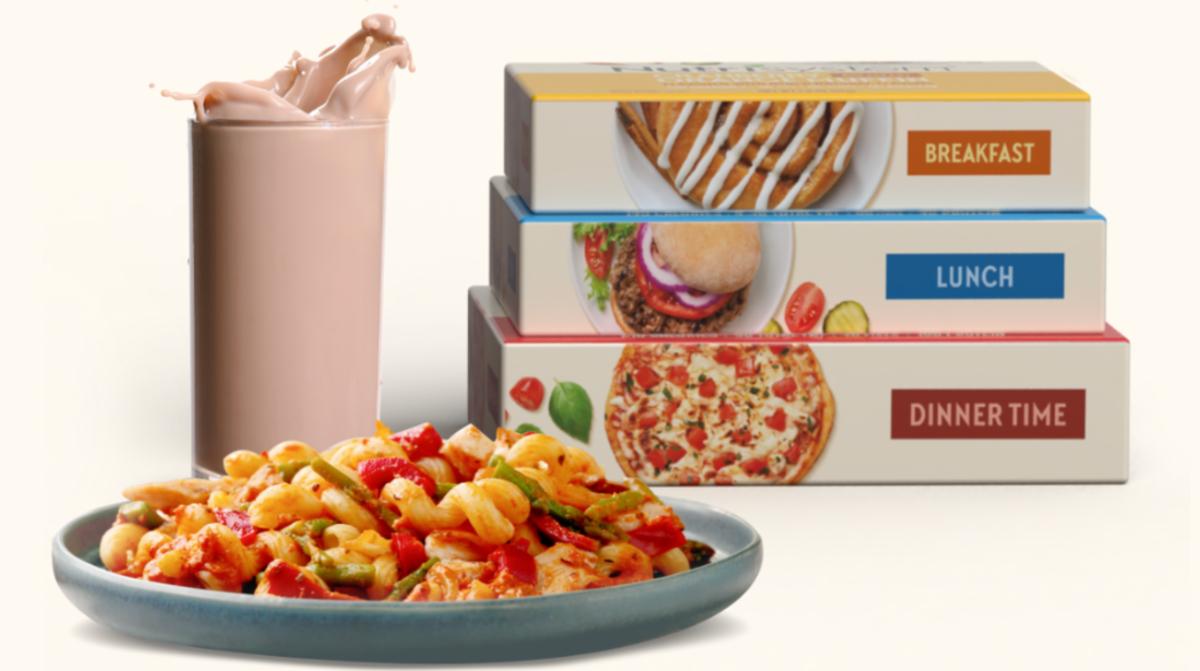
Some of the highest-rated Nutrisystem meals include the Cinnamon Roll and Buttermilk Waffles for breakfasts, the Mushroom Parmesan Soup with Chicken and Artichoke and Spinach Stuffed Chicken Breast for lunch and the Italian Sausage and Turkey Pepperoni Pizza and Classic Hamburger for dinner. Nutrisystem does try to add new menu options for the different meal plans periodically to keep things fresh. These new meal options are usually offered at the higher pricing packages like the Uniquely Yours and Uniquely Yours Max rather than the Basic plan.

Examples of foods on the Vegetarian plan include Cinnamon Roll, Maple Brown Sugar Oatmeal, Spinach and Cheese Pretzel Melt Four Cheese Manicotti and sautéed spinach, Spicy Kung Pao Noodles, Southwest Fiesta Melt, Mushroom Risotto, Margherita Pizza, Chockful of Veggie Chili, Fiesta Macaroni and Cheese, Bean Bolognese, Chocolate Brownie Sundae, Strawberry Shortcake Cupcake and Toffee Crunch Cookies.

The Diabetes plans include customer favorites like the Cinnamon Streusel Muffin, Blueberry Muffin, Granola Cereal, White Cheddar Mac and Cheese, Chicken Noodle Soup, Lasagna with Meat Sauce, Hearty Beef Stew, Chili with Beans, Chicken Parmesan, White Cheddar Popcorn, Snickerdoodle Cookie and Double Chocolate Muffin.

The Standard Women’s and Men’s diet plans include more variety of popular foods tailored to be healthier and low calorie.

Unless you are indulging in one of the “Flex Meals,” all of the meals and snacks you can eat on Nutrisystem that you have to supply on your own should fall within the parameters and guidelines of the diet plan. Nutrisystem permits dieters to eat lean proteins, vegetables, fruits, healthy fats, low-fat dairy products, legumes and whole grains.

Foods that you choose to eat that do not fall within these recommendations can count towards your “Flex Meals,” though these should be kept to a minimum to best support your overall weight loss goals. Nutrisystem suggests avoiding battered or fried proteins, fried vegetables, desserts like pies and ice cream, butter, lard, full-fat dairy, cookies, French fries, refined breads and pastas and other sweets.

How does Nutrisystem food taste?

Taste is ultimately a matter of preference and Nutrisystem offers quite a range of meals and snacks from different cuisines such as American, Italian, Mexican, Chinese, Thai and fusion. When you select your meal options, you can read the customer reviews along with the ingredients in each meal to get an idea of what the food tastes like and how well it resembles what customers expect the flavor profile and texture to embody. There are plenty of sweet options for breakfast such as the Nutrisystem Cranberry and Orange Muffin, Cinnamon Roll, Biscotti Bites and Buttermilk Waffles. There are also numerous savory egg dishes and other traditional breakfast fare with turkey sausage for those not following the Vegetarian plan. Most reviews of the breakfast options are favorable with people saying that the flavors and textures are pleasant and that the foods are surprisingly sweet and “decadent“ despite being low-calorie and low sugar.

Some of the meals are described as somewhat bland, largely due to the low sodium and low fat nature of the recipes compared to restaurant or conventional frozen foods. However, even the healthier options for some of these popular American favorites such as the Nutrisystem Hamburger and Chicken Pot Pie are very highly rated. Customers should expect that Nutrisystem meals and snacks will resemble the taste of what the meal is intending to replicate, but as the recipes are tweaked to be healthier, the flavors may be somewhat muted and there is usually less sauce, so some food may taste a little dry.

Customer reviews for some meals also note that the texture of certain foods may change when reheated, particularly if using a microwave instead of a toaster oven or a conventional oven. For example, meals that include cheese that are reheated in the microwave can sometimes end up feeling soft and soggy if they include bread. For this reason, with meals like the Nutrisystem Cheesesteak Pizza and Tuna melt, it is advisable to reheat the frozen dish in the toaster oven or conventional oven rather than the microwave if you have the time to do so. There are also sweet snacks such as the Nutrisystem S’mores Pie and the Nutrisystem Ice Cream Sandwich, which dieters say taste delicious and make them feel like they are not on a weight loss diet program.

How Much Does Nutrisystem Cost?

There are several different Nutrisystem plans, each with a slightly different pricing structure, menu options and number of included meals per day. There are basic plans and then upgrades for each type of plan that enable diameters to have a greater number of menu options to choose from each week and the ability to add more meals or larger servings. Food costs about $10.13 per day to $16.48 per day, depending on your meal plan. All of the meal plans offer free shipping on the delivery boxes. You can also supplement your meals with Nutrisystem proteins shakes, the shakes cost about $2.85 per serving.

One of the benefits of Nutrisystem is that they offer a money-back guarantee for all new customers who purchase a four-week diet plan. With your first order, if you aren’t satisfied with the meals that arrive or the diet program for one reason or another, you can call a toll-free number and return any of the unopened food or a full refund, less a $19.90 return shipping fee.

This is a nice perk that many meal delivery services do not offer. Because Nutrisystem can be pricey and may not be suitable for everyone looking to begin a weight loss meal program, it is helpful to have the ability to change your mind and send back any remaining food if you decide the program isn’t going to work for you.

Lose weight for 2023 with 50{35112b74ca1a6bc4decb6697edde3f9edcc1b44915f2ccb9995df8df6b4364bc} off plans, 50{35112b74ca1a6bc4decb6697edde3f9edcc1b44915f2ccb9995df8df6b4364bc} off a month of shakes and free shaker bottle

Nutrisystem vs Competitor Programs

Nutrisystem is similar to other weight loss meal delivery services that offer portion-controlled, prepared meals. Here’s how it stacks up against other popular diet meal delivery programs.

Nutrisystem vs Diet-to-Go

Nutrisystem is similar to Diet-to-Go in that both companies provide low-calorie, frozen meals with several different menu plan options geared towards different dietary goals and menus for each company are designed by nutritionists. In general, Nutrisystem meals cost less per meal and the menu plans include snacks whereas the Diet-to-Go menu plans do not have snacks and include the three meals you should be eating every day. Nutrisystem is also slightly more customizable in terms of how many calories you eat per day based on the flexibility in the meals and snacks you provide on your own. The packaging and meal selection is fairly similar across both companies, with the option of diabetes-friendly and vegetarian diet menu plans with both meal delivery services, although Nutrisystem has more sweets, dessert options and protein powder shakes for weight loss. Nutrisystem is also designed as four-week programs whereas Diet-to-Go can be purchased for shorter terms and uses a rotating menu that changes every five weeks with the option to swap out meals you don’t like. Diet-to-Go is also delivered once a week or twice a week depending on where you live, rather than once a month.

Nutrisystem vs Jenny Craig

Jenny Craig is similar to Nutrisystem in that it provides calorie-controlled prepared meals delivered to your home. However, the cost per meal is higher and there are fewer options for specific dietary goals. For example, although there are vegetarian options, there is no specific vegetarian meal plan. Both plans involve small portions and eating six times per day.

Related: Read our in-depth Jenny Craig review here

Like Nutrisystem, Jenny Craig uses registered dietitians to help create nutritious, balanced recipes that are low-fat, low-cholesterol, low-sodium and low-calorie, and meet certain other nutritional requirements where noted, such as being low in carbohydrates for diabetic-friendly meals. Jenny Craig is an annual subscription plan, and canceling is more difficult. However, there is also a 12-week trial plan available.

Who Nutrisystem is Best For

Nutrisystem is best for people looking to lose weight who need the convenience of prepared foods that simply need to be reheated rather than cooked. Nutrisystem has the benefit of providing portion controlled and pre-planned menus, eliminating the need for meal prepping, grocery store shopping and cooking. Ultimately, Nutrisystem is ideal for dieters who are short on time or tend to overeat if they keep certain foods in the house or cook for themselves, as it can be a structured and convenient way to remove triggers for overheating and provide the healthy food you need to support your weight loss goals. It is also good for dieters who prefer to eat numerous times throughout the day because the diet plan encourages eating six times per day rather than just three meals.

Additionally, Nutrisystem is great for people who would like a little bit of flexibility in terms of the ability to have “cheat meals“ or meals outside of their normal restricted plan a couple of times per week without feeling like they are sabotaging their weight loss goals. People who are looking for a sustainable program for long-term weight loss may also appreciate the fact that the Nutrisystem meal plans include plenty of sweet snacks and treats, and convenient shakes, which can help prevent the feeling of deprivation and can make it super convenient to stick with your diet plan when you are busy and just need to grab something on-the-go.

Because Nutrisystem offers the free NuMi app, which includes supportive services like food logging, reminders to drink more water and to exercise, information about healthy eating, diet tips and personalized nutrition recommendations, Nutrisystem can also be good for people needing extra guidance, education and support on their weight loss journey who cannot afford the services of a private personal trainer or health coach. Finally, Nutrisystem caters to specific dietary needs such as diabetes friendly diets and vegetarian diets, so it’s a good option for dieters who need to lose weight following alternatives to a traditional omnivorous diet. Because all of the plans are relatively low in sodium, the food is also typically workable for people with hypertension.

Who Nutrisystem is Not Best For

Nutrisystem is specifically designed to be a weight loss program, so it is not a good meal delivery option for anyone who is not trying to lose weight. The calorie counts for the meals are quite low and the portion sizes are on the smaller side, meaning that you might not be able to support your caloric needs with these meals unless you are trying to create a significant caloric deficit for weight loss.

The cost of Nutrisystem per meal can be fairly expensive, depending on your meal plan and budget, so if you need a budget friendly weight loss plan, Nutrisystem may not be the best choice for you. Additionally, it is a restrictive diet in terms of the number of calories, and because it is focused primarily on weight loss, the website uses a lot of diet culture language such as “slimming down,” “portion control,” and “calorie allowance,” which can be triggering for those with a history of eating disorders, body dysmorphia or are sensitive to diet culture language.

Moreover, Nutrisystem does not cater to certain dietary needs such as those who need gluten-free food, kosher food, vegan food or food free from common allergens such as nuts, wheat, dairy, milk, soy, peanuts and shellfish. Some of the meals and snacks use refined grains and some ingredients are heavily processed. If you prefer organic, whole and natural foods rather than processed foods and snack foods, Nutrisystem may not be the best choice for you.

How to Get Started on Nutrisystem

NuMi Nutrisystem App_hero

Getting started with Nutrisystem is a simple and straightforward process. After going to the Nutrisystem website, you select which Nutrisystem plan you would like to purchase. Then, you create an account by providing basic information such as your name, address, phone number and email. You can also add in your sex, height and current weight because the NuMi app can use this information to provide personalized recommendations and plans for you. Once you choose the meal plan and pricing tier that you are interested in, you are taken to a page where you can select the meals that you want to receive. Keep in mind that the higher the tier you select, the greater the number of meal options you will have.

On the meal selection page, you can filter and sort the provided meals. Each meal is already presented in categories (breakfast, lunch or dinner) and you can click to view the nutrition facts, ingredients, necessary preparation and customer reviews. If you do not want to select your own meals or just don’t have time, you can also choose the Chef’s Choice option in which Nutrisystem will automatically select an assortment of the highest-rated meals and snacks for you. First time customers typically have to wait up to five days to receive their first delivery so that their new account can be created and the order can be processed. The NuMi app provides personalized recommendations of items to add to your grocery store list to round out your meal plan, such as whole grains, vegetables, fruits, lean proteins and low-fat dairy products such as yogurt and cottage cheese.

Note that with the Nutrisystem diet, you will not receive a weekly shipment; everything is contained within the one box. Most of the meals come frozen, although there are shelf stable meals and snacks as well, depending on what you choose. All of the shakes are shelf stable and do not require refrigeration until you open them. After your first order, unless you cancel your subscription, you will receive a new shipment every four weeks.

Nutrisystem Customer Reviews

Customer reviews for Nutrisystem are mostly positive. Many customers love the convenience and variety of meals offered on the different menus and the ability to cater meal plans to specific wellness goals. Most dieters like the sweet treats and snacks, the ability to have flex meals, the supportive NuMi app, getting to eat six times per day and the convenience of shakes and snacks that don’t need heating.

Some reviews note that the meals lack in texture and flavor, and that you definitely know you’re eating diet food based on taste. Some meal ratings note a lack of seasoning and that some foods become soggy after heating.

Nutrisystem FAQs

How much weight can I lose in a month on Nutrisystem?

The amount of weight you will lose on any diet depends on several different factors including how well you follow a diet plan and how active you are. The Nutrisystem website claims that you can expect to lose one to two pounds per week if you follow the program, and that women can lose up to 13 pounds and men can lose up to 18 pounds in the first month. Depending on the meal plan you choose and how you fill out your flex meals and supplemental meals and snacks, Nutrisystem provides about 1200-1500 calories per day, which is a significant caloric deficit for most adults.

Is it difficult to cancel Nutrisystem?

No. Customers may call customer service or use the chat function on the Nutrisystem website to cancel your auto-delivery program any time before 6:00 p.m. ET the day before your order is scheduled to be processed.

Is Nutrisystem food healthy?

Nutrisystem food is healthy in that the portion control helps provide a minimal number of calories to support weight loss, and meals are designed by nutritionists and dietitians to be in line with nutritional guidelines set forth in the 2020-2025 Dietary Guidelines for Americans. Compared to many prepackaged meals and frozen foods, Nutrisystem meals are lower in sodium, cholesterol and sugar, and higher in fiber and protein. However, the food is still processed, so it may not be as healthy as whole foods.

Can I do Nutrisystem for just one month?

Yes; except for the new Complete 55 program, all Nutrisystem weight loss plans are four-week plans. You can cancel after one month as long as you do so before your next shipment is processed.

Final Thoughts

Overall, Nutrisystem can be an effective weight loss program for those looking for the ultimate in terms of convenience, portion control, variety in meal options and some amount of flexibility in food choices. However, the Nutrisystem program can be pricey, especially given the portion sizes and calorie count, and the packaged foods are processed, so these are things to keep in mind. With that said, there are several options of meal plans that cater towards different dietary restrictions, nutritional needs and weight loss goals, making Nutrisystem a good choice for vegetarians, people with diabetes, or older women looking to lose weight. The ability to eat six times per day and enjoy foods that are traditionally thought of as treats or sweets, while still meeting your calorie limits, can help make the diet program more sustainable for many customers.

Prices are accurate and items in stock as of publish time.

The Best Diets of 2023, According to a Nutrition Expert – SI Showcase

The Best Diets of 2023, According to a Nutrition Expert – SI Showcase

Hero_Best Diets_Source iStock

The products featured in this article have been independently reviewed. When you buy something through the retail links on this page, we may earn commission at no cost to you, the reader. The Sports Illustrated editorial team is not involved in the creation of this content. Learn more here.

The best diet for your health and happiness is the one that works for you. If a restrictive diet leaves you feeling deprived or is impossible to maintain, you’re more likely to fall off the bandwagon than stick with it. And while many diets are out there, they aren’t one-size-fits-all. With so many eating plans to try, how do you choose?

Dieting shouldn’t be about only losing weight, building muscle or preventing disease. A successful diet improves your health and makes you feel good while enjoying your food. Any diet should nourish the body—even those designed for weight loss.

This article gives you the top 10 diets (backed by science) for your personal health and wellness goals. Our guide will also arm you with tips for choosing the right diet and answer the most common questions about dieting. Now, on to our highest-rated diet plans.

This content is meant to be informative, but should not be taken as medical advice. It is not intended for use as diagnosis, prevention or treatment of health problems. Always speak with your doctor before starting any new supplement or exercise regimen.

Our Picks for the Best Diets:

  • Best Diet for Overall Health: Flexitarian Diet
  • Best Diet for Brain Health: MIND Diet
  • Best Diet for Weight Loss: Mayo Clinic Diet
  • Best Diet for Diabetes: Mediterranean Diet
  • Best Diet for Gut Health: FODMAP Diet
  • Best Diet for Heart Health: DASH Diet
  • Best Diet for Cholesterol: Vegan Diet
  • Best Diet for Cutting: Keto Diet
  • Best Diet to Gain Muscle: Paleo Diet

Interested in managing your diet with an app? We recommend you check out Noom.

Best Diet for Overall Health: Flexitarian Diet

Flexitarian Diet_Source iStock

With the latest research suggesting that it lowers your risk for heart disease, diabetes and cancer, the Flexitarian diet is the best diet for overall health. It’s a semi-vegetarian, or flexible (“flex-”) vegetarian (“-itarian”), way of eating that emphasizes plant and plant-based foods, but lets you enjoy lean meats on occasion.

On this diet, you’ll eat plenty of vegetables, fruits and whole grains (the latter being an important part of any healthy diet). Flexitarians avoid certain animal products like butter, cream and lard, but allow yogurt and cheese in moderation. They also limit meat intake to nine to 28 ounces per week and choose high-quality free-range or pasture-fed products for fuel.

Research suggests that a Flexitarian Diet improves metabolism, blood pressure and inflammatory markers that increase your risk for many diseases. The Flexitarian diet is generally safe for everyone, including pregnant women, children and those over age 60.

Pros:

  • Flexible, so it’s easier to stick with
  • Reduces risk of chronic diseases
  • Lots of variety for easier meal planning

Cons:

Best Diet for Brain Health: MIND Diet

MIND Diet_Source iStock

Emerging studies on dementia prevention led to the development of the MIND diet, now considered the best diet for brain health. It’s an eating plan focused on healthy foods that can help prevent Alzheimer’s disease and other brain diseases.

MIND stands for Mediterranean-DASH Intervention for Neurodegenerative Delay. The MIND diet recommends these “brain healthy” foods to slow the decline of brain function:

  • Whole grains (at least three servings per day)
  • Vegetables other than leafy greens (at least one serving per day)
  • Green leafy vegetables (at least six servings per week)
  • Nuts (at least five servings per week)
  • Beans (at least four meals per week)
  • Berries (at least two servings per week)
  • Poultry (at least two meals per week)
  • Fish (at least one meal per week)

These foods are rich in vitamins, carotenoids, and flavonoids that protect the brain and nervous system. In a ten-year study of older adults, those who consumed the largest amounts of these foods saw a 53 percent lower risk of Alzheimer’s disease.

The MIND Diet also limits the following five unhealthy foods:

  • Pastries and sweets (less than five servings per week)
  • Red meat (less than four servings per week)
  • Cheese (max of one serving per week)
  • Fried foods (max of one serving per week)
  • Butter/margarine (max of one tablespoon per day)

Since many aspects of the MIND Diet are also part of the DASH and Mediterranean diets, it also benefits cardiovascular and metabolic health. Anyone can follow this diet for brain health. People with food allergies or intolerances can easily modify meals and stay on plan.

Pros:

Cons:

  • Three daily whole grain servings may be hard for those with gluten sensitivity

Best Diet for Weight Loss: Mayo Clinic Diet

Mayo Clinic Diet_Source Mayo Clinic

Another popular diet that offers variety is our best diet for weight loss: the Mayo Clinic Diet. First developed in 1949 by medical doctors and weight loss experts, it has been updated through the years based on the newest diet and weight loss research. The Mayo Clinic Diet is different from other weight loss diets because it’s a long-term eating plan meant to create positive life-long habits.

This diet has two phases:

  • The “Lose It!” phase is two weeks designed to jump-start your weight loss with quick results. You can lose six to 10 pounds safely and begin practicing new healthy habits that you’ll carry into Phase 2. The diet is paired with 30 minutes of daily walking or other exercises.
  • “Live It!” is a lifelong approach to long-term weight loss that includes learning more about portion sizes, food choices and meal planning. You may see continued weight loss (one to two pounds per week) until you reach your goal weight.

The Mayo Clinic offers free tools and digital resources like mobile apps to help users stick to the plan. The Mayo Clinic Diet is safe for everyone; however, if you’re not used to eating lots of fruits and vegetables, you could experience temporary stomach issues like gas, bloating or diarrhea while your body adjusts.

Pros:

  • Developed by medical professionals
  • Allows unlimited fruits and vegetables
  • Doesn’t eliminate any food group

Cons:

  • Fewer daily calories can lead to hunger pains or cravings
  • The first phase is restrictive: no sugar or alcohol

Best Diet for Diabetes: Mediterranean Diet

Mediterranean Diet_Source iStock

With a focus on plant-based foods prepared with flavorful herbs and spices, the Mediterranean diet is the best for diabetes. It emphasizes fruits, vegetables, high-fiber foods (like beans) and healthy fats (like olive oil) that regulate blood sugars.

Also known as the “Med Diet,” it’s more of a lifestyle than a diet. It’s based on the way Europeans typically eat in Greece, Italy and islands in the Mediterranean Sea. Eating “Mediterranean” is about what and how you eat. Med Diet guidelines include:

  • Slowing down to eat
  • Enjoying regular physical activity
  • Socializing by enjoying meals with friends and family
  • Eating seasonal and local produce
  • Avoiding processed foods

The Mediterranean diet is flexible and easy to stick with. It doesn’t require you to measure foods or count calories, yet it still promotes weight loss. For those with Type 2 diabetes who are struggling with obesity, weight loss can reduce insulin resistance. It may even reverse the condition in 46 percent of cases. In fact, research suggests that each part of the Mediterranean Diet helps balance diabetes in some way.

This diet is generally safe for anyone, including children. It was also ranked number one by U.S. News & World Report.

Pros:

  • Family-friendly food options are healthy and balanced for all ages.
  • Easy to follow for those with gluten intolerance
  • No counting, measuring or tracking
  • Whole foods are high in fiber and filling

Cons:

  • Weight loss may be slow if you eat too many healthy fats

Best Diet for Gut Health: FODMAP Diet

FODMAP Diet_Source iStock

Backed by clinical studies, we’ve crowned the FODMAP diet as the best diet for gut health. FODMAP stands for fermentable oligosaccharides, disaccharides, monosaccharides and polyols. Yes, the name is a mouthful.

When you eat FODMAPs, these simple sugar molecules are not well absorbed in the small intestine. When they travel to the colon, they ferment. This process creates gas in your abdomen and may cause symptoms like cramping, pain, bloating or diarrhea. Examples of high FODMAP foods that are off-limits on this plan include:

  • Beans and lentils
  • Dairy
  • Wheat products (bread, pasta, cereals)
  • Certain vegetables (onions, garlic, asparagus)

Low FODMAP diets have been shown to reduce gastrointestinal (GI) symptoms. Studies suggest it can improve irritable bowel syndrome (IBS) symptoms in up to 86 percent of cases.

There are three phases to the diet:

  1. Eliminate foods high in FODMAPs for at least two to six weeks.
  2. Slowly reintroduce foods, one every three days or so, to find your triggers.
  3. Avoid those foods in your regular diet to improve your health.

“The low FODMAP diet is a temporary eating plan that’s very restrictive,” says Hazel Galon Veloso, M.D., a gastroenterologist at Johns Hopkins University Medical Center. Since it eliminates many foods and can cause weight loss, it can be dangerous for underweight individuals, pregnant women and children.

Pros:

  • May improve the quality of life for people suffering from stomach problems
  • Proven benefits for people with IBS

Cons:

Best Diet for Heart Health: DASH Diet

DASH Diet_Source iStock

Developed decades ago by the National Heart, Blood, and Lung Institute to treat and prevent high blood pressure, the DASH Diet is still the best diet for heart health. DASH stands for Dietary Approaches to Stop Hypertension.

The DASH Diet is an eating plan high in vegetables, fruits and whole grains and low in sodium. Along with the nutritious diet, DASH encourages at least 30 minutes of heart-healthy exercise daily, with at least two and a half hours each week of moderate-intensity activity.

It has been widely studied and has many health benefits. Following this diet may lower your risk of cardiovascular conditions, including:

  • High blood pressure
  • High cholesterol
  • Heart disease
  • Heart failure
  • Stroke

The DASH diet is safe for the whole family. In fact, it’s recommended in the Dietary Guidelines for Americans and the American Heart Association.

Pros:

  • Family-friendly
  • Alcohol is allowed in moderation (one to two drinks per day)
  • Developed and recommended by doctors

Cons:

  • Must track servings from each food group daily
  • Low sodium requirement makes it difficult to eat out

Best Diet for Cholesterol: Vegan Diet

Vegan Diet_Source iStock

Research suggests that the best diet for cholesterol control is a plant-based, vegan diet. Vegan means avoiding all animal products, including dairy and eggs. A vegan diet emphasizes vegetables, fruits, nuts, legumes and whole grains. It may be easier to follow than some might think since many grocery stores now carry vegan options for yogurt, cheese and milk made from plants.

Many studies have compared vegan and omnivorous diets and their effects on cholesterol levels. In general, science shows that plant-based diets lower low-density lipoprotein (LDL)—or “bad cholesterol”—high-density lipoprotein (HDL) and total cholesterol levels. One of the reasons is that plants contain phytosterols, which reduce blood cholesterol. Eating around one to three grams of sterols daily can lower LDL cholesterol by six to 12 percent. Plant-based diets are also rich in antioxidants which may offer protection against heart disease.

A vegan or vegetarian diet may not be the best choice for people with kidney disease because it could cause their potassium levels to go up. Also, anyone taking blood thinners has to be careful about diets high in Vitamin K. It’s best to talk with a doctor or registered dietician before starting a vegan diet if you have any chronic diseases.

Pros:

  • Lowers cholesterol and improves heart health
  • Contains foods packed with vitamins and nutrients
  • Low-fat and aids weight loss

Cons:

  • May require supplements for complete, balanced nutrition

Best Diet for Cutting: Keto Diet

Keto Diet_Source iStock

If you’re looking to lose fat and keep muscle mass, the best diet for cutting is the Keto Diet. It’s a ketogenic, low-carb diet that gives the body plenty of fat and protein with few carbohydrates, so you lose water and fat while preserving muscle.

You’ll eat plenty of meats, poultry, fish and seafood on this diet. You’ll also have eggs, cheese, nuts, seeds and sauces. Keto dieters steer clear of starches like bread, pasta made from grains and higher carbohydrate fruits and vegetables.

Normally when you diet, your body breaks down muscle tissue for energy. However, taking in an adequate amount of protein will help protect your muscle tissue and encourage your body to use stored body fat instead. The diet also has a diuretic effect which can lead to initially rapid weight loss (up to 10 pounds in one week).

First developed in the 1920s by doctors to treat epilepsy, the keto diet has been studied for decades. It’s been repopularized thanks to Atkins plans, and millions of people have tried it. According to experts, a well-planned keto diet is considered safe for most people.

Pros:

  • High protein intake helps you feel fuller for longer
  • Allows flavorful, high-fat foods
  • Promotes fat loss while maintaining muscle mass

Cons:

  • It can be hard to stick with over time

Best Diet to Gain Muscle: Paleo Diet

Paleo Diet_Source iStock

If your number one dieting goal is to bulk up or add lean muscle mass, consider the best diet to gain muscle: the Paleo diet. It’s an eating plan based on eating only foods that would have been available during the Paleolithic Era (over 10,000 years ago). Think fish, game, fruits, nuts and plants. If your ancestors wouldn’t, or couldn’t, have eaten it, then you won’t either on this diet.

The Paleo diet eliminates processed carbs and dairy products. Instead, you’ll feel more satiated by a diet full of protein, healthy fats and veggies. These food sources also encourage muscle growth and repair to support your strength training regimen.

The Paleo way of eating is also family-friendly. Parents can create healthy and balanced meals from the diet staples for any age.

Pros:

  • Great for gluten sensitivities
  • Greater satiety from foods rich in fiber and protein

Cons:

  • Difficult to stick to long-term
  • Meal planning is more challenging

How We Chose the Best Diets

To choose the best diets for you, we cut through the claims to find diets backed by science. From published research to expert recommendations, we examined the diets in each category objectively. We’ve presented the top diets most likely to meet our readers’ individual needs and give them the nutrients needed for overall health and wellness.

How to Choose the Best Healthy Diet for You

Remember, there’s no single best diet out there that works for everyone. You have to find one that works for you. Before choosing a healthy diet, think about your eating habits. Then, answer these questions:

  • What foods do you most enjoy eating?
  • What are your normal eating patterns? (ex: bigger meals, more snacks, etc.)
  • How and when do you normally eat? (ex: cooking at home, eating out, etc.)
  • Who do you eat with?

These questions can help you sort out diets that will fit your life for long-term benefits.

When looking into diet and eating plans, remember that a healthy diet should give your body the essential nutrition you need, including macronutrients (proteins, fats, carbs) and micronutrients (vitamins and minerals). It should also incorporate physical activities. You need to get your body moving to use that good fuel you’re taking in!

Dieting FAQs

What is the easiest diet to follow?

The easiest diet to follow will be one that works with your lifestyle. It will also fit your tastes, personal preferences and food sensitivities.

What is the simplest diet?

From our list, the simplest diet to follow may be the Flexitarian diet. It includes eating vegetables and grains for each meal and adding animal protein once or twice a week. The Mediterranean diet is also simplistic, with a wide variety of foods for all tastes and no calorie counting, tracking or measuring.

Which diet gives you the best results?

The Flexitarian and Mediterranean Diets give the best results in terms of overall health.

Final Thoughts

Whether you’re looking to make huge lifestyle changes, optimize your health or just want a taste of something new, there are lots of healthy diets out there. With the tips in this guide, you can narrow down the choices to find the diet that’s right for you.

Prices are accurate and items in stock as of publish time.