Investigation: Jail guards use force against prisoners with mental illness : Shots

Investigation: Jail guards use force against prisoners with mental illness : Shots

An investigation of records from 25 county jails across Pennsylvania shows that nearly 1 in 3 “use of force” incidents by guards involved a prisoner who was having a psychiatric crisis or who had a known mental illness. Guards used weapons like stun guns or pepper spray to subdue prisoners who may have been unable to understand what was going on.

Ibrahim Rayintakath for NPR


hide caption

toggle caption

Ibrahim Rayintakath for NPR


An investigation of records from 25 county jails across Pennsylvania shows that nearly 1 in 3 “use of force” incidents by guards involved a prisoner who was having a psychiatric crisis or who had a known mental illness. Guards used weapons like stun guns or pepper spray to subdue prisoners who may have been unable to understand what was going on.

Ibrahim Rayintakath for NPR

When police arrived on the scene, they found Ishmail Thompson standing naked outside a hotel near Harrisburg, Pa., after he had just punched a man. After they arrested him, a mental health specialist at the county jail said Thompson should be sent to the hospital for psychiatric care.

However, after a few hours at the hospital, a doctor cleared Thompson to return to jail. With that decision, he went from being a mental health patient to a Dauphin County Prison inmate. Now he was expected to comply with orders — or be forced to.

Thompson soon would be locked in a physical struggle with corrections officers — one of 5,144 such “use of force” incidents that occurred in 2021 inside Pennsylvania county jails.

An investigation by WITF and NPR looked at 456 of those incidents from 25 county jails in Pennsylvania, during the last quarter of 2021.

KHN logo

Nearly 1 in 3 “use of force” incidents involved a person who was having a mental health crisis or who had a known mental illness. In many cases, guards used aggressive — and distressing — weapons like stun guns and pepper spray to control and subdue such prisoners, despite the fact that their severe psychiatric conditions meant they may have been unable to follow orders — or even understand what was going on.

For Ishmail Thompson, this played out within hours of returning to jail from the hospital. Records show that when he ran away from jail staff during a strip search, an officer pepper-sprayed him in the face and then tried taking him to the ground. According to the records, Thompson fought back and additional officers flooded the area, handcuffing and shackling him.

An officer covered Thompson’s head with a hood and put him in a restraint chair, strapping down his arms and legs, according to the records, and about 20 minutes later, an officer noticed something wrong with Thompson’s breathing. He was rushed to the hospital.

Five days later, Thompson died. The district attorney declined to bring charges.

The DA, warden, and county officials who help oversee the jail did not respond to requests for interviews about Thompson’s treatment, or declined to comment.

Most uses of force in jails don’t lead to death. In Thompson’s case, the immediate cause of death was “complications from cardiac dysrhythmia,” but the manner in which that occurred was “undetermined,” according to the county coroner. In other words, he couldn’t determine whether Thompson’s death was due to being pepper-sprayed and restrained, but he also didn’t say Thompson died of natural causes.

Dauphin County spokesman Brett Hambright also declined to talk about Thompson, but says nearly half of the people at the jail have a mental illness, “along with a significant number of incarcerated individuals with violent propensities.”

“There are always going to be use-of-force incidents at the prison,” Hambright says. “Some of them will involve mentally ill inmates due to volume.”

But the practices employed by corrections officers every day in county jails can put prisoners and staff at risk of injury and can harm vulnerable people who may be scheduled to return to society within months.

“Some mentally ill prisoners are so traumatized by the abuse that they never recover, some are driven to suicide, and others are deterred from bringing attention to their mental health problems because reporting these issues often results in harsher treatment,” says Craig Haney, a psychology professor at the University of California, Santa Cruz who specializes in conditions in correctional facilities.

What records reveal about “use of force” in jails

Corrections experts say the use of physical force is an important option to prevent violence between inmates, or violence against guards themselves. However, records kept by correctional officers at the 25 Pennsylvania county jails show that just 10{35112b74ca1a6bc4decb6697edde3f9edcc1b44915f2ccb9995df8df6b4364bc} of “use of force” incidents were in response to a prisoner assaulting someone else. Another 10{35112b74ca1a6bc4decb6697edde3f9edcc1b44915f2ccb9995df8df6b4364bc} describe a prisoner threatening staff.

WITF found that 1 in 5 uses of force — 88 incidents — involved a prisoner who was either attempting suicide, hurting themselves or threatening self-harm. Common responses by jail staff included the tools used on Thompson — a restraint chair and pepper spray. In some cases, officers used electroshock devices such as stun guns.

In addition, the investigation uncovered 42 incidents where corrections staff noted that an inmate appeared to have a mental health condition — but guards still deployed force after the person failed to respond to commands.

Defenders of these techniques say they save lives by preventing violence or self-harm, but some jails in the U.S. have moved away from the practices, saying they’re inhumane and don’t work.

The human costs can extend far beyond the jail, reaching the families of prisoners killed or traumatized, as well as the corrections officers involved, says Liz Schultz, a civil rights and criminal defense attorney in the Philadelphia area.

“And even if the human costs aren’t persuasive, the taxpayers should care, since the resulting lawsuits can be staggering,” Schultz says. “It underscores that we must ensure safe conditions in jails and prisons, and that we should be a bit more judicious about who we are locking up and why.”

“All I needed was one person”

For Adam Caprioli, it began when he called 911 during a panic attack. Caprioli, 30, lives in Long Pond, Pa., and has been diagnosed with bipolar disorder and anxiety disorder. He also struggles with alcohol and drug addiction.

When police responded to the 911 call in the fall of 2021, they decided to take Caprioli to the Monroe County Correctional Facility.

Inside the jail, Caprioli’s anxiety and paranoia surged. He says staff ignored his requests to make a phone call or speak to a mental health professional.

After several hours of extreme distress, Caprioli tied his shirt around his neck and choked himself until he passed out. When corrections officers saw this, they decided it was time to respond.

Adam Caprioli remembers how jail guards responded when he experienced a psychiatric crisis inside the Monroe County Correctional Facility in Pennsylvania. Official records from the facility confirm he was subdued by four guards and shot in the back with a pepper ball launcher.

Jeremy Long/WITF


hide caption

toggle caption

Jeremy Long/WITF

Prison staff often justify their use of physical force by saying they’re intervening to save the person’s life, says Alan Mills, an attorney who has litigated use of force cases and who serves as executive director of Uptown People’s Law Center in Chicago.

“The vast majority of people who are engaged in self-harm are not going to die,” Mills says. “Rather, they are acting out some form of serious mental illness. And therefore what they really need is intervention to de-escalate the situation, whereas use of force does exactly the opposite and escalates the situation.”

After they saw Caprioli with his shirt around his neck, officers wearing body armor and helmets rushed into his cell.

The four-man team brought the 150-pound Caprioli down to the floor. One of them had a pepper ball launcher — a compressed air gun that shoots projectiles containing chemical irritants.

“Inmate Caprioli was swinging his arms and kicking his legs,” a sergeant wrote in the report. “I pressed the Pepperball launcher against the small of Inmate Caprioli’s back and impacted him three (3) times.”

Caprioli felt the pain of welts in his flesh. Then, the sting of powdered chemicals in the air. He realized nobody would help him.

“That’s the sick part about it,” Caprioli says. “You can see I’m in distress. You can see I’m not going to try and hurt anyone. I have nothing I can hurt you with.”

Eventually he was taken to the hospital — where Caprioli says they assessed his physical injuries — but he didn’t get help from a mental health professional. Hours later, he was back in jail, where he stayed for five days. He eventually pleaded guilty to a charge of “public drunkenness and similar misconduct” and had to pay a fine.

Caprioli acknowledges that he makes his problems worse when he uses alcohol or drugs, but he says that doesn’t justify how he was treated in the jail.

“That’s not something that should be going on at all. All I needed was one person to just be like, ‘Hey, how are you? What’s going on?’ And never got that, even to the last day.”

Monroe County Warden Garry Haidle and Monroe County District Attorney E. David Christine Jr. did not respond to requests for comment.

Jails unequipped to cope with psychiatric pain

Jail is not an appropriate setting for treating serious mental illness, says Dr. Pamela Rollings-Mazza. She works with PrimeCare Medical, which provides medical and behavioral services at about 35 county jails in Pennsylvania.

The problem, Rollings-Mazza says, is that people with serious psychiatric issues don’t get the help they need before they are in crisis. At that point, police can be involved, and people who started off needing mental health care end up in jail.

“So the patients that we’re seeing, you know, a lot of times are very, very, very sick,” Rollings-Mazza says. “So we have adapted our staff to try to address that need.”

PrimeCare psychologists rate prisoners’ mental health on an A, B, C and D scale. Prisoners with a D rating are the most seriously ill. Rollings-Mazza says they make up between 10{35112b74ca1a6bc4decb6697edde3f9edcc1b44915f2ccb9995df8df6b4364bc} and 15{35112b74ca1a6bc4decb6697edde3f9edcc1b44915f2ccb9995df8df6b4364bc} of the overall jail population. Another 40{35112b74ca1a6bc4decb6697edde3f9edcc1b44915f2ccb9995df8df6b4364bc} of people have a C rating, also a sign of significant illness.

She says that rating system helps determine the care psychologists provide, but it has little effect on jail policies.

“There are some jails where they don’t have that understanding or want to necessarily support us,” she says. “Some security officers are not educated about mental health at the level that they should be.”

Rollings-Mazza says her team frequently sees people come to jail who are “not reality-based” due to psychiatric illness, and can’t understand or comply with basic orders. They are often kept away from other prisoners for their own safety and may spend up to 23 hours a day alone.

That isolation virtually guarantees that vulnerable people will spiral into a crisis, said Dr. Mariposa McCall, a California-based psychiatrist who recently published a paper looking at the effects of solitary confinement.

Her work is part of a large body of research showing that keeping a person alone in a small cell all day can cause lasting psychological damage.

McCall worked for several years at state prisons in California and says it’s important to understand that the culture among corrections officers prioritizes security and compliance above all. As a result, staff may believe that people who are hurting themselves are actually trying to manipulate them.

Many guards also view prisoners with mental health conditions as potentially dangerous.

“And so it creates a certain level of disconnect from people’s suffering or humanity in some ways, because it feeds on that distrust,” McCall says. In that environment, officers feel justified using force whether or not they think the prisoner understands them.

In Chicago’s jail, a new approach to mental health

To really understand the issue, it helps to examine the decisions made in the hours and days leading up to uses of force, says Jamelia Morgan, a professor at Northwestern University Pritzker School of Law.

Morgan researches how a growing number of lawsuits are responding to the problem. Lawyers have successfully argued that demanding that a person with mental illness comply with orders they may not understand is a violation of their civil rights. Instead, jails should provide “reasonable accommodations” for people with a designated illness.

“In some cases, it’s as simple as having medical staff respond, as opposed to security staff,” Morgan says.

But individual cases can be difficult to litigate due to a complex grievance process that prisoners have to follow prior to filing suit, Morgan says.

WITF and NPR filed right-to-know requests with 61 counties across Pennsylvania and followed up with wardens in some of the counties that released use of force reports. None agreed to talk about how their officers are trained or whether they could change how they respond to people in crisis.

To solve the overall problem, wardens will need to redefine what it means to be in jail, Morgan says.

Some jails are trying new strategies. In Chicago, the Cook County Jail doesn’t have a warden. Rather, it has an “executive director” who is also a trained psychologist.

That change was one part of a total reimagining of jail operations after a 2008 U.S. Department of Justice report found widespread violations of inmates’ civil rights.

In recent years, the Cook County Jail has gotten rid of solitary confinement, opting instead to put problematic prisoners in common areas, but with additional security measures whenever possible, Cook County Sheriff Tom Dart says.

The jail includes a mental health transition center that offers alternative housing — a “college setting of Quonset huts and gardens,” as Dart describes it. There, prisoners have access to art, photography and gardening classes. There’s also job training, and case managers work with local community agencies, planning for what will happen once someone leaves the jail.

Just as important, Dart says, jail leadership has worked to change the training and norms around when it’s appropriate to use tools such as pepper spray.

“Our role is to keep people safe, and if you have someone with a mental illness, I just don’t see how Tasers and [pepper] spray can do anything other than aggravate issues, and can only be used as the last conceivable option,” Dart says.

Cook County’s reforms show that change is possible, but there are thousands of local jails across the U.S., and they depend on the local and state governments that set correctional policies, and that fund — or fail to fund — the mental health services that could keep vulnerable people out of jail in the first place.

In Pennsylvania’s Dauphin County, where Ishmail Thompson died, officials agree that the problem — and solutions — extend beyond the jail walls. County spokesman Brett Hambright says funding has remained stagnant amid an increase in people needing mental health services. That’s led to an over-reliance on jails, where the “lights are always on.”

“We would certainly like to see some of these individuals treated and housed in locations better equipped to treat the specificity of their conditions,” Hambright adds. “But we must play the hands we are dealt by the existing system as best we can with the resources that we have.”

Brett Sholtis received a 2021-22 Rosalynn Carter Fellowship for Mental Health Journalism, and this investigation received additional support from The Benjamin von Sternenfels Rosenthal Grant for Mental Health Investigative Journalism, in partnership with the Carter Center and Reveal from the Center for Investigative Reporting.

To learn more about how WITF reported this story, check out this explainer.

Carrie Feibel edited this story for Shots, and the photo editor was Max Posner.

Psychedelic drugs from LSD to psilocybin could help with depression, PTSD : Shots

Psychedelic drugs from LSD to psilocybin could help with depression, PTSD : Shots

A Washington, D.C., resident has an operation rising psilocybin mushrooms. Brain scientists are ever more studying psychedelic compounds like psilocybin and LSD as opportunity treatments for anxiety, depression and other diseases.

Jahi Chikwendiu/The Washington Article by means of Getty Images


disguise caption

toggle caption

Jahi Chikwendiu/The Washington Write-up through Getty Illustrations or photos


A Washington, D.C., resident has an procedure developing psilocybin mushrooms. Brain scientists are ever more studying psychedelic compounds like psilocybin and LSD as potential remedies for nervousness, melancholy and other diseases.

Jahi Chikwendiu/The Washington Submit by means of Getty Images

A person of the hottest tickets at this year’s Society for Neuroscience assembly in San Diego was a session on psychedelic medications.

About 1,000 brain scientists squeezed into an auditorium at the San Diego Conference Heart for the symposium, known as Psychedelics and Neural Plasticity.

They’d appear to listen to talks on how medicines like psilocybin and MDMA can alter particular person mind cells, can help rewire the brain, and may possibly give a new way to take care of conditions ranging from melancholy to chronic suffering.

“I was pleasantly amazed at the amount of people today,” suggests Alex Kwan, a biomedical engineer at Cornell University who spoke at the session.

“In the past pair of decades there has been a lot of community enjoyment about psychedelics,” Kwan claims. “The experts are catching on now that we just will not know a great deal about what these compounds do.”

So all through the session, Kwan and various other scientists shared what they are understanding about the drugs.

Rewiring the mind

Kwan described his possess function on how psilocybin, the lively component in magic mushrooms, would seem to assistance the mind rewire by generating new connections in between neurons.

A research of mice located that psilocybin altered dendrites, the branch-like constructions that extend from a nerve cell and get enter from other cells.

Dendrites variety connections by means of compact protrusions recognized as dendritic spines. And in mice that got psilocybin, the dimension and range of these spines improved by about 10{35112b74ca1a6bc4decb6697edde3f9edcc1b44915f2ccb9995df8df6b4364bc}, which allowed cells to sort new connections.

“When we give mice a one dose of psilocybin, we can see those people new connections sort inside a day,” Kwan suggests. “And then they can very last additional than a thirty day period,” which is the equal of many months in a human.

New connections are a crucial element of the rewiring approach acknowledged as mind plasticity, which enables the mind to discover and adapt.

“Psychedelics look to elevate plasticity,” Kwan states.

Just one-and-performed procedure?

Mind plasticity might reveal why a solitary dose of a psychedelic drug can have a very long-lasting affect on issues like nervousness, depression and PTSD.

“It can be months or a long time,” says Dr. Gitte Knudsen a neurologist from College of Copenhagen in Denmark who spoke at the psychedelics session. “It really is a stunning impact.”

These long-phrase effects have been demonstrated with prescription drugs together with psilocybin, LSD and DMT (ayahuasca), Knudsen states. In distinction, most current psychiatric medicine have to have to be taken every single day.

But psychedelic drugs have some negatives. They can induce nausea or produce hallucinations that are horrifying or disagreeable.

“It can be a very frustrating working experience to individuals,” Knudsen says. “And for that explanation, you need to put together them for that, and you also need to be with them whilst they are in the encounter.”

Even when clients are properly geared up for a session, Knudsen states, they could have blended thoughts afterward.

“When people have been by means of a psychedelic knowledge in my lab, they say, ‘Wow this was remarkable, this was just a wonderful knowledge,'” she says. “And you ask them, ‘Well, would you like to appear back subsequent 7 days for yet another session?’ They say, ‘Thank you, but no thank you.’ “

Psychedelics in the mainstream

The fact that psychedelics ended up featured at the world’s biggest meeting of brain experts suggests the medicine are poised to enter the scientific mainstream. That is a recent progress.

Psychedelic exploration was well-known in the 1950s but really a great deal finished immediately after the mid-1960s when the medication had been built unlawful in the U.S. and Europe.

In the 1990s, a couple researchers began cautiously finding out how prescription drugs like LSD, MDMA and psilocybin could support with psychiatric ailments like depression and PTSD.

And in 2016, a pair of reports posted by well known researchers “actually piqued everyone’s desire,” claims Dr. Joshua Gordon, who directs the Countrywide Institute of Psychological Well being.

Equally studies found that a solitary procedure with psilocybin decreased stress and despair in cancer people.

That has led to some huge scientific studies of psychedelics, which include 1 revealed in The New England Journal of Medicine in November displaying that psilocybin served people today with major despair who hadn’t been helped by other treatment plans.

Scientific studies like that one particular recommend that psychedelics “are heading to be effective and practical” in treating psychiatric disorders, Gordon states.

But the effects found in huge scientific tests of psychedelics have been a great deal a lot less spectacular than in some of the previously, smaller sized experiments, Gordon claims. Also, he states, some organizations hoping to market place psychedelics have overstated their advantages.

“There is a large amount of buzz,” he claims, “and a great deal of hope.”

To stop fatal overdoses, hospitals turn to addiction treatment teams : Shots

To stop fatal overdoses, hospitals turn to addiction treatment teams : Shots

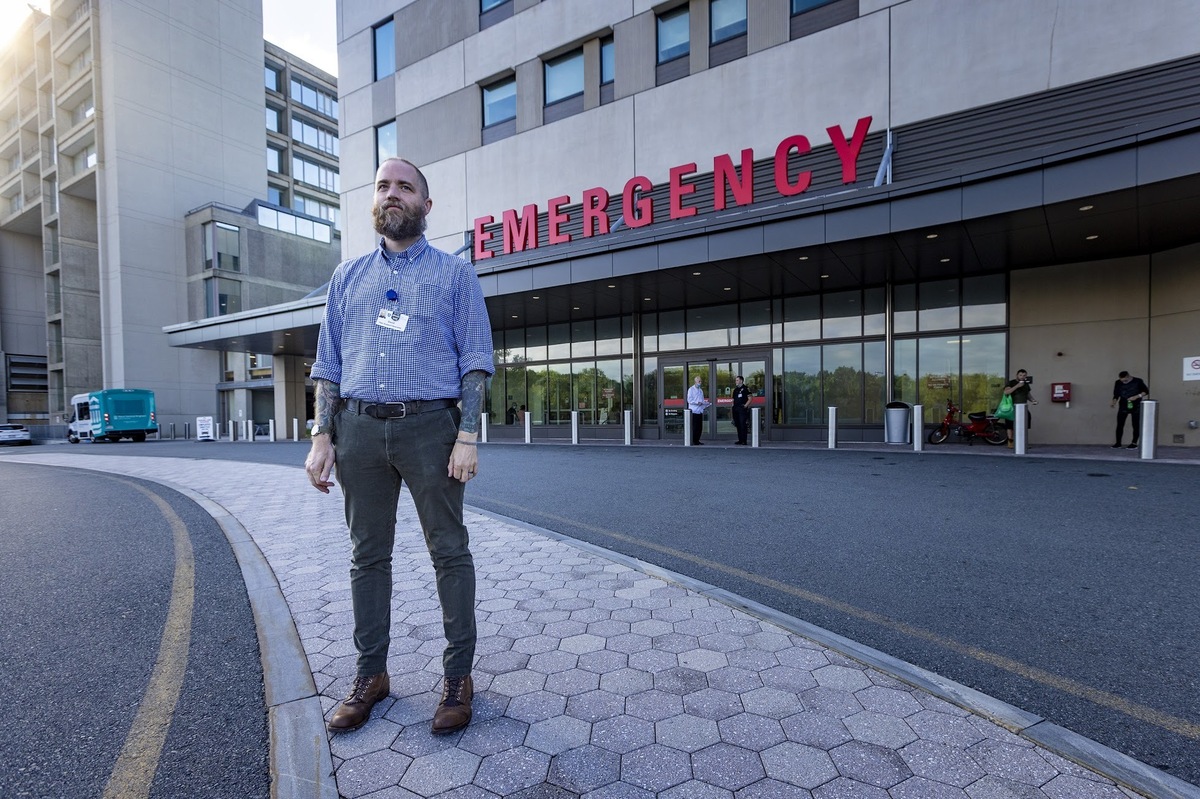
David Cave, a recovery coach who is part of an addiction specialty team at Salem Hospital, north of Boston, stands outside the emergency department.

Jesse Costa/WBUR


hide caption

toggle caption

Jesse Costa/WBUR


David Cave, a recovery coach who is part of an addiction specialty team at Salem Hospital, north of Boston, stands outside the emergency department.

Jesse Costa/WBUR

Marie lives in the coastal town of Swampscott, in Massachusetts. Last December, she began having more and more trouble breathing. One morning, three days after Christmas, she woke up gasping for air. A voice in her head said, “You’re going to die.” Marie dialed 911.

“I was so scared,” Marie said later. Describing that day, the 63-year-old’s voice filled with tension, and her hand clutched at her chest.

Marie was admitted to Salem Hospital, north of Boston. The staff treated her COPD, a chronic lung condition that includes emphysema and chronic bronchitis.

KHN logo

After her worst symptoms subsided, a doctor came the next day to check on her. He told Marie her oxygen levels looked good and that she was stable and ready to be discharged.

NPR is not using Marie’s last name because she, like 1 in 9 hospitalized patients, has a history of addiction to drugs or alcohol. Disclosing a diagnosis like that can make it hard to find housing, a job and even medical care in hospitals where patients with an addiction may be shunned.

But talking to the doctor that morning, Marie felt she didn’t have a choice. She had to tell him about her other medical problem.

“He said I could be released,” Marie recalled. “And I said, ‘I got to tell you something. I’m a heroin addict. And I’m, like, starting to be in heavy withdrawal. I can’t literally move, please don’t make me go.'”

Without care, discharged patients risk overdose

At many hospitals in Massachusetts and across the country, Marie would likely have been discharged anyway, while still in the pain of withdrawal. Perhaps she would leave with a list of local detox programs where she might — or might not — find help.

But a crucial opportunity to intervene and treat at the hospital would have been lost — partly because most hospitals don’t have specialists available who know how to treat addiction, and other clinicians don’t know what to do.

Hospitals typically employ all sorts of specialists who focus on critical organs like hearts, lungs and kidneys — or who treat systemic or chronic diseases of the immune system or the brain. There are specialists for children, for mental illness, for childbirth and hospice.

But if your illness is an addiction or a condition related to drug or alcohol use, there are few hospitals where patients can see a clinician — whether that be an M.D., nurse, therapist or social worker — who specializes in addiction medicine.

Their absence among hospital personnel is particularly striking at a time when overdose deaths in the U.S. have reached record highs, and research shows patients face an increased risk of fatal overdose in the days or weeks after they are discharged from a hospital.

“They’re left on their own to figure it out, which unfortunately usually means resuming [drug] use because that’s the only way to feel better,” says Liz Tadie, a nurse practitioner certified in addiction care.

In the fall of 2020, Tadie launched a new approach at Salem Hospital, using $320,000 from a federal grant that the hospital had worked for several years to secure. Tadie put together what’s known as an “addiction consult service.”

At Salem, that team included Tadie, a patient case manager, and three recovery coaches — who draw on their experience with addiction to advocate for patients and help them navigate their treatment options.

What an addiction consult service brings to the bedside

So on that day, when Marie said, “Please don’t make me go,” her doctor didn’t tell Marie she had to leave. He called Tadie for a bedside consult.

Tadie started out the treatment by first prescribing methadone, a medication to treat opioid addiction. Although many patients do well on that drug, it didn’t help Marie, so Tadie switched her to buprenorphine, with better results. After a few more days, Marie was eventually discharged and continued taking buprenorphine to manage her addiction to opioids.

But Marie continued seeing Tadie for treatment as an outpatient and was able to turn to her for support and reassurance:

“Like, that I wasn’t going to be left alone,” Marie said. “That I wasn’t going to have to call a dealer ever again, that I could delete the number. I want to get back to my life. I just feel grateful.”

Among Salem’s clinical staff, Tadie helped spread the word about the expertise she can offer and how it can help patients. Success stories like Marie’s helped her make the case for addiction medicine — which also meant unraveling decades of misinformation, discrimination and ignorance about patients with an addiction and their treatment options.

Part of the problem, according to Tadie, is that doctors, nurses and other clinicians get very little training in the physiology of addiction and withdrawal, the medications and treatment options, and the emerging science about what works for these patients. What little training that doctors and nurses do get is often unhelpful.

“A lot of the facts are outdated,” Tadie says. “And people are training to use stigmatizing language — words like ‘addict’ and substance ‘abuse.'”

Tadie gently corrected doctors at Salem Hospital, for example, who thought they weren’t ever allowed to start patients on methadone in the hospital.

“Sometimes I would recommend a dose and somebody would give pushback,” Tadie says. But “we got to know the hospital doctors and they, over time, were like, “OK, we can trust you. We’ll follow your recommendations.”

Over time, addiction specialists help change the culture

Other members of Tadie’s team have also wrestled with finding their place in the hospital hierarchy. David Cave, one of the recovery coaches at Salem Hospital, is often the first person to speak to a patient who comes to the emergency room in withdrawal. He tries to help doctors and nurses understand what the person is going through and help navigate their care.

“I’m probably punching above my weight every time I try to talk to a clinician or doctor,” says Cave. “They don’t see letters after my name. It can be kind of tough.”

But naming addiction as a specialty, and hiring people with training in this particular disease, is shifting the culture of Salem Hospital, according to Jean Monahan-Doherty, a social worker who has referred patients to Tadie.

“There was finally some recognition across the entire institution that this was a complex medical disease that needed the attention of a specialist,” Monahan-Doherty says. “People are dying. This is a terminal illness unless it’s treated.”

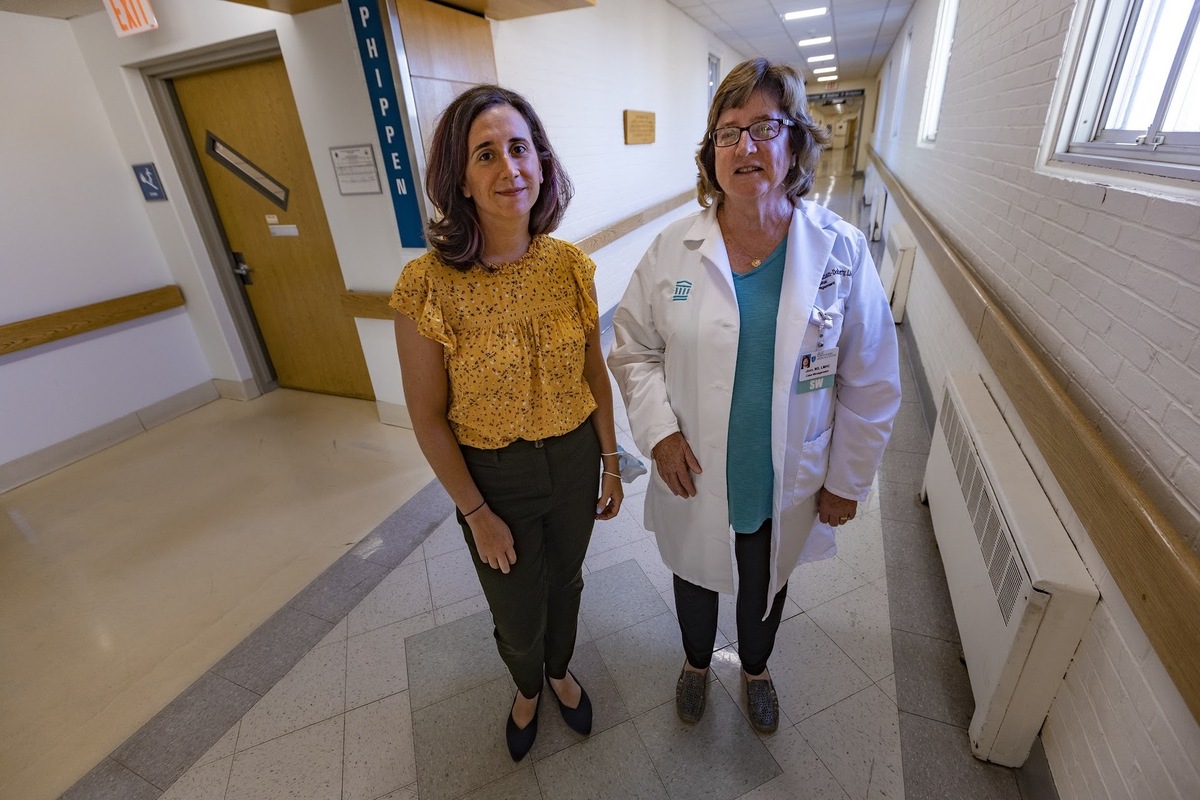
Former director of substance use disorder services at Salem Hospital Liz Tadie (left) and social worker Jean Monahan-Doherty. Tadie is moving to a new job at another hospital, but Salem Hospital leaders say they are committed to continuing the program.

Jesse Costa/WBUR


hide caption

toggle caption

Jesse Costa/WBUR


Former director of substance use disorder services at Salem Hospital Liz Tadie (left) and social worker Jean Monahan-Doherty. Tadie is moving to a new job at another hospital, but Salem Hospital leaders say they are committed to continuing the program.

Jesse Costa/WBUR

This approach to treating addiction is winning over some Salem Hospital employees — but not all.

“Some of the medical staff continue to see it as a moral issue,” Monahan-Doherty says. “Sometimes you hear an attitude of ‘Why are you putting all this effort into this patient? They’re not going to get better.’ Well, how do we know? If a patient comes in with diabetes, we don’t say, ‘OK, they’ve been taught once and it didn’t work. So we’re not going to offer them support again.'”

Despite lingering reservations among some colleagues, the demand for their services is quite high. Many days, Tadie and her team have been overwhelmed with referrals.

With federal support, states experiment to stop overdose deaths

Four other Massachusetts hospitals also added addiction specialists in the past three years and experienced similar challenges and success. The additional staff were paid for by federal funding from the HEALing Communities study. This project is paying for a wide range of strategies across several states, to determine the most effective ways to reduce drug overdose deaths. They include mobile treatment clinics, street outreach teams, naloxone trainings and distribution, rides to treatment sites, and multilingual public awareness campaigns.

“You really do provide better care for patients and you make the care environment one that people are more satisfied working in,” says Dr. Jeffrey Samet, who leads the Massachusetts portion of this research effort. Samet practices primary care at Boston Medical Center and says adding addiction specialists in hospitals is a key piece of the solution.

Dr. Todd Kerensky, president of the Massachusetts Society of Addiction Medicine, has seen patients cry when they learn he specializes in addiction and wants to treat their disease, not shame them.

“It’s gut-wrenching to know there are a lot of institutions that don’t have this service,” says Kerensky. It’s not clear how many hospitals in Massachusetts have addiction experts on staff, but Kerensky says it’s a “distinct minority.”

There are many possible reasons. It’s a new field, so finding qualified staff members with the right certifications may be a hurdle. Some hospital leaders say they’re worried about the costs of addiction treatment and fear they’ll lose money on the efforts. Some doctors report not wanting to initiate a treatment medication while the patient is still in the hospital, because they don’t know where to refer patients after they’ve been discharged, whether that be outpatient follow-up care or a residential program. To address follow-up care, Salem Hospital started what’s known as a “bridge clinic,” where patients get help transitioning to outpatient care.

Despite these worries and reservations, hospitals that don’t have an addiction specialty team need to start one, says Dr. Honora Englander, a national leader in addiction specialty programs.

“People with substance use disorder are coming to our hospitals now,” said Englander, who directs an addiction care team at Oregon Health and Science University. “We can’t wait. We have to do better, and this is the time.”

Englander says the federal government could support the creation of more addiction consult services by offering financial incentives — or penalties for hospitals that don’t embrace them. The Centers for Medicare & Medicaid Services, which has regulatory authority over most U.S. hospitals, could require that hospitals stock the medications used to treat an addiction and track outcomes for patients hospitalized with a substance use disorder, in the same way that CMS already does when it comes to readmissions for other health conditions.

At Salem Hospital, the program is still new, and some staff worry about its future. Liz Tadie is moving to a new job at another hospital, and the federal grant ended June 30. But Salem Hospital leaders say they are committed to continuing the program, and the service will continue.

Compared to the other four Massachusetts hospitals that launched addiction consult teams using the same federal grant, Salem Hospital has helped the most patients. Over a 15-month period, its team helped 448 patients begin medication to treat their opioid use disorder.

This story comes from NPR’s health reporting partnership with WBUR and KHN (Kaiser Health News).

CDC endorses updated COVID boosters, shots to begin soon | Health and Fitness

CDC endorses updated COVID boosters, shots to begin soon | Health and Fitness

The Facilities for Ailment Handle and Prevention on Thursday endorsed updated COIVD-19 boosters, opening the way for a fall vaccination campaign that could blunt a wintertime surge if plenty of Individuals roll up their sleeves.

The new boosters focusing on present day most frequent omicron strains need to commence arriving in pharmacies and clinics within just times.

The determination by CDC Director Rochelle Walensky arrived shortly following the agency’s advisers voted in favor of the suggestion.

The pictures “can help restore defense that has waned considering that former vaccination and were being built to offer broader protection,” she stated in a assertion.

The tweaked shots manufactured by Pfizer and rival Moderna offer you Us citizens a likelihood to get the most up-to-day defense at but another significant time period in the pandemic. They’re mixture or “bivalent” pictures — 50 percent the initial vaccine and fifty percent defense from the BA.4 and BA.5 omicron variations now resulting in almost all COVID-19 infections.

People today are also reading…

The CDC’s advisers struggled with who need to get the new boosters and when due to the fact only a similarly tweaked vaccine, not the precise recipe, has been analyzed in people so considerably.

But finally the panel deemed the updated injections the ideal choice looking at the U.S. nonetheless is dealing with tens of thousands of COVID-19 cases and about 500 fatalities every day — even prior to an expected new winter wave.

“I imagine they’re likely to be an helpful device for disease prevention this drop and into the winter season,” stated CDC adviser Dr. Matthew Daley of Kaiser Permanente Colorado.

Evaluating the tweak that has been analyzed in men and women and the 1 the U.S. truly will use, “it is the similar scaffolding, portion of the similar roof, we’re just placing in some dormers and home windows,” explained Dr. Sarah Lengthy of Drexel University.

The CDC advice was the final step prior to pictures can begin. Pfizer said it predicted to provide 3 million doses to vaccination web pages about the region by Tuesday.

The first COVID-19 vaccines still present strong protection from critical disease and death, in particular amid youthful and more healthy individuals who’ve gotten at least a single booster.

But those vaccines have been intended to target the virus pressure that circulated in early 2020. Efficiency drops as new mutants arise and more time passes given that someone’s last shot. Considering that April, hospitalization prices in people about age 65 have jumped, the CDC said.

The updated shots are only for use as a booster, not for someone’s first-at any time vaccinations. The Food stuff and Drug Administration cleared Pfizer’s bivalent possibility for folks 12 and more mature although Moderna’s is for older people only.

A huge unfamiliar: precisely how significantly reward people today will get from one of those people added pictures.

The CDC explained extra than 1,400 people today have been integrated in several experiments of a prior tweak to the vaccine recipe concentrating on an earlier omicron pressure named BA.1. That omicron-targeting combo shot proved safe and sound and equipped to rev up virus-preventing antibodies, and European regulators on Thursday advisable using that kind of booster.

In the U.S., the Food and drug administration required fall boosters to target the at the moment circulating omicron strains. Rather than waiting till maybe November for far more human scientific studies to be finished, the company approved mouse tests that confirmed the more recent tweak sparked a equally great immune response.

Which is how flu vaccines are current each and every calendar year, the CDC observed.

Dr. Pablo Sanchez of the Ohio State College was the only CDC adviser to vote from recommending the photographs. He said he thinks the bivalent vaccine is risk-free and that he probably will get it.

But “I just really feel that this was a bit premature” given the absence of human information on how very well it is effective, he mentioned.

Several CDC advisers mentioned that to get the most reward, men and women will have to have to wait around extended involving their last vaccination and the new booster than the two-month minimum amount established by the Food and drug administration. Ready at the very least 3 months would be much better, they claimed.

One a lot more change: The Fda no lengthier authorizes use of the authentic-recipe boosters for anybody 12 or older, considering them outdated. It’s a source of probable confusion for persons who experienced planned on receiving a common booster this 7 days and now might have to hold out for the new form to get there.

It’s not apparent how several persons will want an up-to-date shot. Just 50 {35112b74ca1a6bc4decb6697edde3f9edcc1b44915f2ccb9995df8df6b4364bc} of vaccinated Us residents got the first proposed booster dose, and only a third of all those 50 and older who have been urged to get a second booster did so.

The U.S. authorities has purchased 170 million doses from both of those firms — photographs that will be free — and the CDC said 200 million persons could be eligible.

Involved Push Healthcare Author Mike Stobbe contributed to this report.

The Linked Press Health and Science Department gets support from the Howard Hughes Medical Institute’s Section of Science Training. The AP is entirely liable for all content material.

Copyright 2022 The Linked Press. All legal rights reserved. This content may well not be published, broadcast, rewritten or redistributed without having authorization.

Could IVF treatment be in legal jeopardy in states with abortion bans? : Shots

Could IVF treatment be in legal jeopardy in states with abortion bans? : Shots

In states that outlaw abortion, some people and well being treatment workers worry that in vitro fertilization could be in authorized jeopardy as well.

Sebastian Kaulitzki/Getty Images/Science Picture Library


disguise caption

toggle caption

Sebastian Kaulitzki/Getty Photos/Science Photograph Library

Immediately after battling with infertility for numerous decades, Melissa claims she lastly noticed a glimmer of hope by way of in vitro fertilization. She and her partner begun doing work with a fertility heart in Grand Rapids, Mich., in March 2021 and have made and frozen quite a few embryos.

Melissa hopes to finally get expecting for the 2nd time this winter. But when the U.S. Supreme Court’s ruling overturning Roe v. Wade came down, she started off to fret.

“I am sitting listed here determined for infants — determined,” she claims. “And this can critically impression no matter if I can improve my spouse and children, irrespective of whether I can pay for to, no matter whether I want to danger it.”

NPR has agreed to use only her very first name because she’s concerned about opportunity retaliation from abortion opponents.

Melissa’s panic is that a Michigan law banning abortion (which is presently in legal limbo) could probably put fertility treatment plans, this kind of as in vitro fertilization, in jeopardy. Individuals in other states with abortion bans or pending bans have similar concerns.

Their problem could be quite actual, says Judith Daar, a legislation professor at Northern Kentucky College with knowledge in reproductive health.

She states when the Supreme Court’s ruling overturning Roe v. Wade built reference to “unborn human beings,” it indirectly raised the difficulty of IVF. And it will be up to point out legislatures to establish how abortion guidelines impact fertility solutions.

“If the legislature does look at the unborn human lifetime at its earliest times as a little something worthy of safety around other pursuits, such as the fascination of clients and forming their people, then rules could go ahead that are restrictive to in vitro fertilization,” she says.

Personhood legal rights for embryos?

In the course of IVF, medical professionals gather eggs from a patient’s ovaries and fertilize them with sperm in a lab to create embryos. They either transfer people embryos to a uterus, discard them or freeze them to be employed later.

A handful of point out abortion bans determine daily life as beginning at fertilization, while they never specifically focus on the process of IVF. Other states are making an attempt to pass laws that would grant embryos, fetuses and fertilized eggs personhood legal rights and in some cases constitutional legal rights.

These types of laws would “pose a concrete danger to the regime exercise of IVF,” suggests Daar. The concern is that these rules deem a frozen embryo a human life and that performing points like genetic testing on it for the duration of the IVF course of action, or discarding it, could come to be illegal.

“If an early embryo is considered a individual for uses of authorized legal rights and protections, any motion quick of transfer to the uterus could be witnessed as violating its appropriate to life underneath these new guidelines,” Daar suggests.

Michigan’s 1931 regulation banning abortion is paused as the courts contemplate a lawsuit that Gov. Gretchen Whitmer filed in the Michigan Supreme Court docket hard the law’s constitutionality. Right until the courts decide irrespective of whether the law is valid, abortions carry on to be legal in Michigan.

But if the regulation is upheld and goes into effect, there is uncertainty about regardless of whether overall health workers in IVF clinics could deal with criminal fees for discarding embryos.

Michigan Attorney Common Dana Nessel said she fears that the 1931 regulation could impact IVF exercise mainly because of its ambiguity.

“If you happen to be heading to say that some of these are going to be unsuitable to be implanted — we are going to dispose of them,” Nessel asked in a news conference previous thirty day period, “are you now committing a felony offense by performing so?”

In other states with rigid abortion bans like Alabama and Oklahoma, officials have clarified that their present-day abortions bans will not impression IVF therapies.

Contemplating hard options

With so considerably uncertainty in excess of the law, sufferers like Melissa fear they could conclude up in a problem with several very good choices.

“What is the clinic likely to have to pivot to? Are they heading to be ready to make more than one embryo at a time? Are frozen embryos ever likely to be permitted to be discarded?” Melissa asks.

She has seven embryos in storage, four of which are not viable. To stay away from discarding any, she could possibly be pressured to maintain her nonviable embryos frozen for an undetermined time.

In this circumstance, Melissa says, “my options would be to shell out for them to keep in storage for the rest of our life, which is extremely high priced, or to transfer them again to my uterus and see what occurs.”

A different chance would be to transfer the embryos to more permissive states, like New York. But the value of transferring can be extremely pricey.

“We are not recommending that persons shift embryos, but that absolutely could adjust centered on actions that a certain state may perhaps acquire and how we think it harms people’s rights about their embryos,” suggests Barb Collura, the president and CEO of Solve: The Nationwide Infertility Affiliation.

Though there is no lawful precedent for prosecuting health treatment providers if they’re not willing to implant an unsafe quantity of embryos, Collura suggests vendors are fearful about what will take place in these states with stringent abortion bans that you should not clarify the concern of IVF.

“If you believe that an embryo is a particular person, then perhaps even if that embryo is exterior of the physique, you want to ensure that it is protected and no hurt will come to it,” she claims. “And that is where we run into some problems. Due to the fact there are issues that are completed as typical observe in a laboratory in the study course of IVF that some may deem as resulting in damage to that embryo.”

Collura states demanding abortion bans could pressure suppliers to shut practices in all those states. “In some situations, it would essentially be seriously tricky for medical practitioners to do what they need to do in an IVF cycle,” she states. “So our thoughts actually are: How considerably are legislators going to go? And how will it impact our neighborhood?”

IVF treatment method can price anyplace from $10,000 to $20,000 devoid of wellness insurance policies, and most non-public coverage businesses do not go over the expense of the therapies. Traveling for treatment provides costs to that. Michigan Condition University ethicist Sean Valles fears a point out ban that outlawed IVF could widen the hole in entry to treatment.

Valles claims those people who have the suggests will be ready to go away the state to get remedy in “1 of the several jurisdictions in the United States or outside the United States where by abortion is authorized.”

“And so equally the ability to grow a spouse and children or to delay obtaining it or to hold off increasing a loved ones, those will the two develop into much more and additional the prerogative of people who have dollars and connections and racial privilege,” he claims.

Though a pause on Michigan’s abortion ban is in area, Melissa and her husband say they are anxiously hoping the state’s courts make a selection in favor of abortion legal rights so that they can continue on to expand their loved ones.