Abortion clinics face rising legal battles and threats : Shots

Abortion clinics face rising legal battles and threats : Shots

Wellspring Health Access clinic was set to open in June 2022 in Casper, Wyo., when it was damaged by arson in late May, 2022. If it opens this year, the women’s health and abortion clinic would be the only one of its kind in the state.

Mead Gruver/AP


hide caption

toggle caption

Mead Gruver/AP
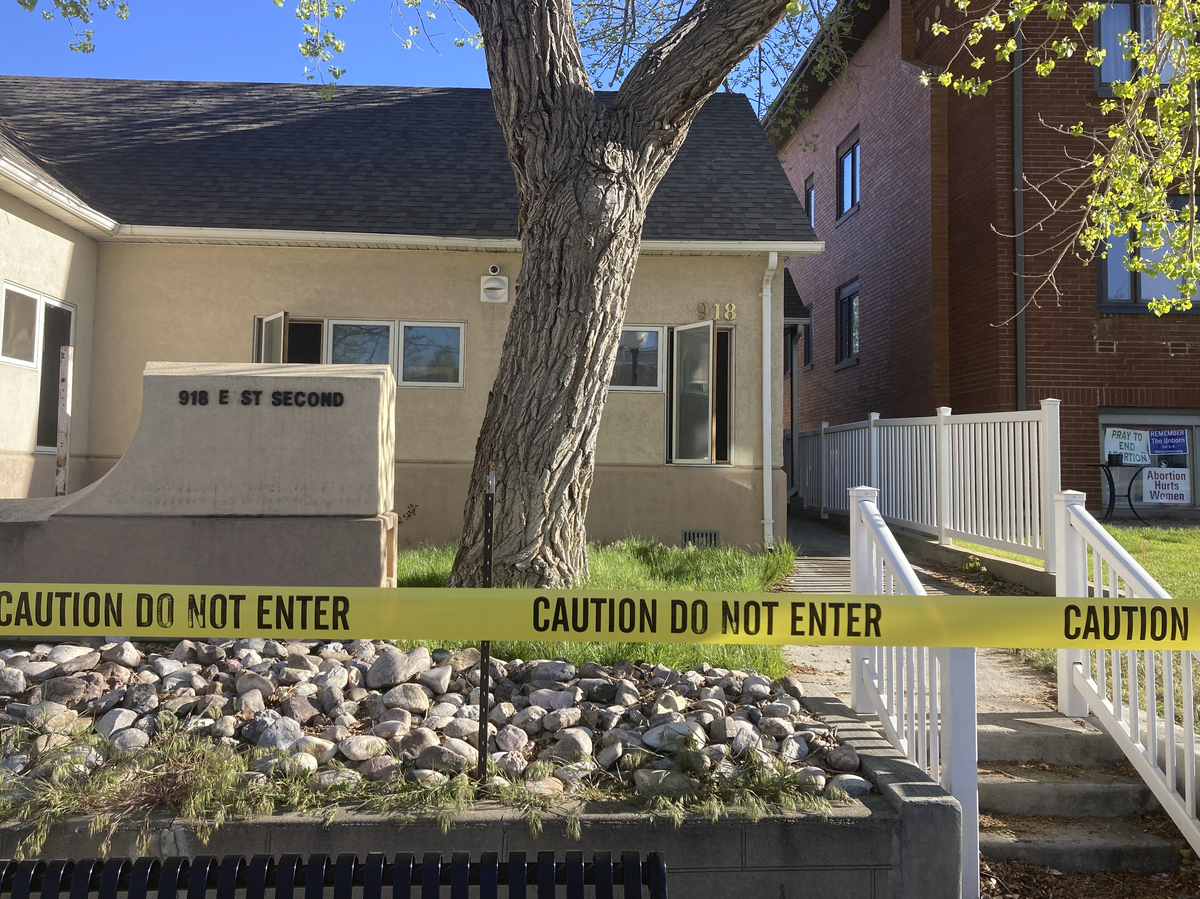

Wellspring Health Access clinic was set to open in June 2022 in Casper, Wyo., when it was damaged by arson in late May, 2022. If it opens this year, the women’s health and abortion clinic would be the only one of its kind in the state.

Mead Gruver/AP

Thirty years ago, Blue Mountain Clinic Director Willa Craig stood in front of the sagging roof and broken windows of an abortion clinic that an arsonist had burned down early that morning in Missoula, Montana.

“This morning, Missoula, Montana, learned that there is no place in America that is safe from hateful, misguided groups,” she told the crowd of reporters and onlookers.

The 1993 fire at Blue Mountain Clinic was part of a particularly violent period of anti-abortion attacks in the U.S. that continued through the 1990s and 2000s, when clinics were bombed and abortion providers killed. Now, less than a year after the U.S. Supreme Court overturned Roe v. Wade, rhetorical and physical attacks have increased against clinics that still provide abortions in conservative-led states.

The U.S. Justice Department formed a Reproductive Rights Task Force after last year’s Supreme Court decision, in part to bring more attention to anti-abortion violence and threats. Since 2011, the DOJ has prosecuted dozens of criminal and civil cases over obstructing access to, threatening, or damaging abortion clinics. It charged 26 people in 2022 — more than in the previous three years combined.

The FBI is also investigating a series of abortion clinic arsons, primarily in states that have maintained or bolstered abortion access since the June 24 Dobbs v. Jackson Women’s Health Organization decision overturning Roe.

The increase in violence has led abortion-rights advocates to worry that more violence could be coming if the fringes of a fragmented anti-abortion movement become impatient with judicial and political efforts to ban and restrict abortion. Meanwhile, anti-abortion activists worry that vandalism committed at pregnancy resource centers over the past year is an indication that abortion-rights advocates could escalate into violence if states further tighten abortion access.

Violence has been rising since 2020

Violence against abortion providers was already on the rise before the Supreme Court’s decision to end federal protections for abortions, according to the National Abortion Federation. Nationally, from 2020 to 2021, reports of stalking rose 600{35112b74ca1a6bc4decb6697edde3f9edcc1b44915f2ccb9995df8df6b4364bc}, clinic invasions 129{35112b74ca1a6bc4decb6697edde3f9edcc1b44915f2ccb9995df8df6b4364bc}, and assaults 128{35112b74ca1a6bc4decb6697edde3f9edcc1b44915f2ccb9995df8df6b4364bc}, according to the federation. The organization is still aggregating its 2022 figures, which include data from after Roe was overturned, but it expects the upward trends to continue, according to chief program officer Melissa Fowler.

“When a clinic closes, the protesters don’t just pack up and go home,” Fowler said. “A lot of times, they will travel or even move to other communities and states and target the clinics that remain open there.”

There have also been attacks on anti-abortion pregnancy resource centers, which have been vandalized in several states since last year. Police in Minnesota were looking for the vandals responsible for smashing windows and spray-painting in red, “if abortion isn’t safe, neither are you,” at Abria Pregnancy Resources in St. Paul last summer, KSTP reported.

The clinic’s director, Angela Franey, had previously voiced support for the Supreme Court’s Dobbs decision.

Last May in Wyoming, after a draft opinion of the decision was leaked to the press, a new abortion clinic in Casper was set on fire before it could open. Owner Julie Burkhart blamed the incendiary rhetoric of anti-abortion groups.

“They are highly skilled in getting these lone wolves to come in and do their dirty work so that their hands can remain clean,” Burkhart said.

Federal officials recently charged a woman with arson in that case. According to an affidavit, 22-year-old Lorna Green allegedly admitted to lighting the fire at the Wellspring Health Access clinic in her hometown of Casper because “she did not like abortion.”

The clinic plans to open this spring, but its future is uncertain. A state law bans nearly all abortions in Wyoming, though on March 22 a judge temporarily blocked the law while a legal challenge against it is pending.

Vandalism and fear of violence in Montana

In Montana, the most recent attack against an abortion clinic happened in 2014 in Kalispell, about 120 miles north of Missoula by car, where the son of an anti-abortion activist broke into and vandalized All Families Healthcare. He was sentenced to 20 years in prison with 15 years suspended.

All Families Healthcare owner Susan Cahill said she wanted to continue working after the break-in. But her family, fearing for her safety, persuaded her to retire.

“I was quite depressed for a couple of years after the office was destroyed,” Cahill said.

The clinic’s closure created an abortion care desert for four years before another provider took over the practice.

Montana continues to allow access to abortion services because of protections in its state constitution, but clinics that perform abortions are few. Blue Mountain reopened after its 1993 fire, and Planned Parenthood of Montana also provides abortion services in multiple Montana cities. All Families reopened under new owner Helen Weems, in Whitefish, just north of Kalispell in northwestern Montana’s Flathead Valley.

Montana’s Republican governor and Republican-led legislature are now seeking to restrict abortion access. Gov. Greg Gianforte and state Attorney General Austin Knudsen are asking the state Supreme Court to overturn its 1999 decision in the case Armstrong v. State, in which it held that abortion access is protected under the Montana Constitution’s right to privacy.

“It’s time for the Montana Supreme Court to take up the Armstrong case, take another look at it, and reverse it,” Montana Attorney General Austin Knudsen said at a January anti-abortion rally in the Montana Capitol. “It is garbage law and it needs to go.”

Conflicting desires within the anti-abortion movement

Montana state lawmakers are moving legislation that seeks to decouple abortion access from the constitutional right to privacy, along with other measures that would restrict abortion. Gianforte’s administration and conservative lawmakers are also trying to make it more difficult for Medicaid patients to obtain medically necessary abortions.

However, polling suggests most Montanans support abortion access, and voters rejected a 2022 ballot initiative that would have created criminal penalties for health officials who do not work to save the life of an infant born after an attempted abortion or birth, even if the infant has no chance of long-term survival.

A recent survey from the Public Religion Research Institute found a greater percentage of Montanans than of people in any bordering state think abortion should be legal in most or all cases.

The message sent by voters in Montana — and those who passed 2022 ballot measures in support of reproductive rights in California, Kansas, Kentucky, Michigan, and Vermont — has left Republican lawmakers with unexpected challenges, said Mary Ziegler, a law professor at the University of California-Davis who studies the anti-abortion movement.

Those politicians want to avoid upsetting voters, but they also want to pacify the more extreme anti-abortion groups by promising progress through legal means, said Ziegler. With the movement fragmented after Roe was overturned, those in the mainstream anti-abortion movement worry about what the more radical elements might do if their cause isn’t advanced in the courts and statehouses, she said.

“Quite literally the last thing you want is PR where your movement is being associated with violence,” Ziegler said.

Health care providers in Montana said the post-Roe era has been an uneasy time as they defend themselves against legal and political attacks while trying to keep their doors open for patients from Montana and neighboring states where abortion is banned.

“Our patients show up every day because they are desperate to get this care,” said Nicole Smith, the current executive director of Blue Mountain Clinic. “We have to be there and hold the line for them.”

Weems, of All Families Healthcare, said having to constantly fend off legal attacks on abortion care has changed how she thinks of herself.

“It’s felt like there’s been a change in my role from strictly a medical provider to more of a political activist,” she said.

Abortion-rights advocates are working to support medical providers in managing the mental toll these legal attacks take. The newly created Montana Sexual & Reproductive Health Collective is partnering with licensed therapists to provide free emotional and psychological support for providers.

“We don’t want to have to be doing triage on our abortion providers or our abortion-rights community,” said Hillary-Anne Crosby, the group’s leader. “We want to be there every step of the way so it does not get to that crisis point.”

This story comes from NPR’s health reporting partnership with Kaiser Health News (KHN) and Montana Public Radio.

KHN (Kaiser Health News) is a national newsroom that produces in-depth journalism about health issues. Together with Policy Analysis and Polling, KHN is one of the three major operating programs at KFF (Kaiser Family Foundation). KFF is an endowed nonprofit organization providing information on health issues to the nation.

Edited by Matt Volz of KHN and Carmel Wroth of NPR.

Recovery high schools build a culture of mental health to help kids thrive : Shots

Recovery high schools build a culture of mental health to help kids thrive : Shots

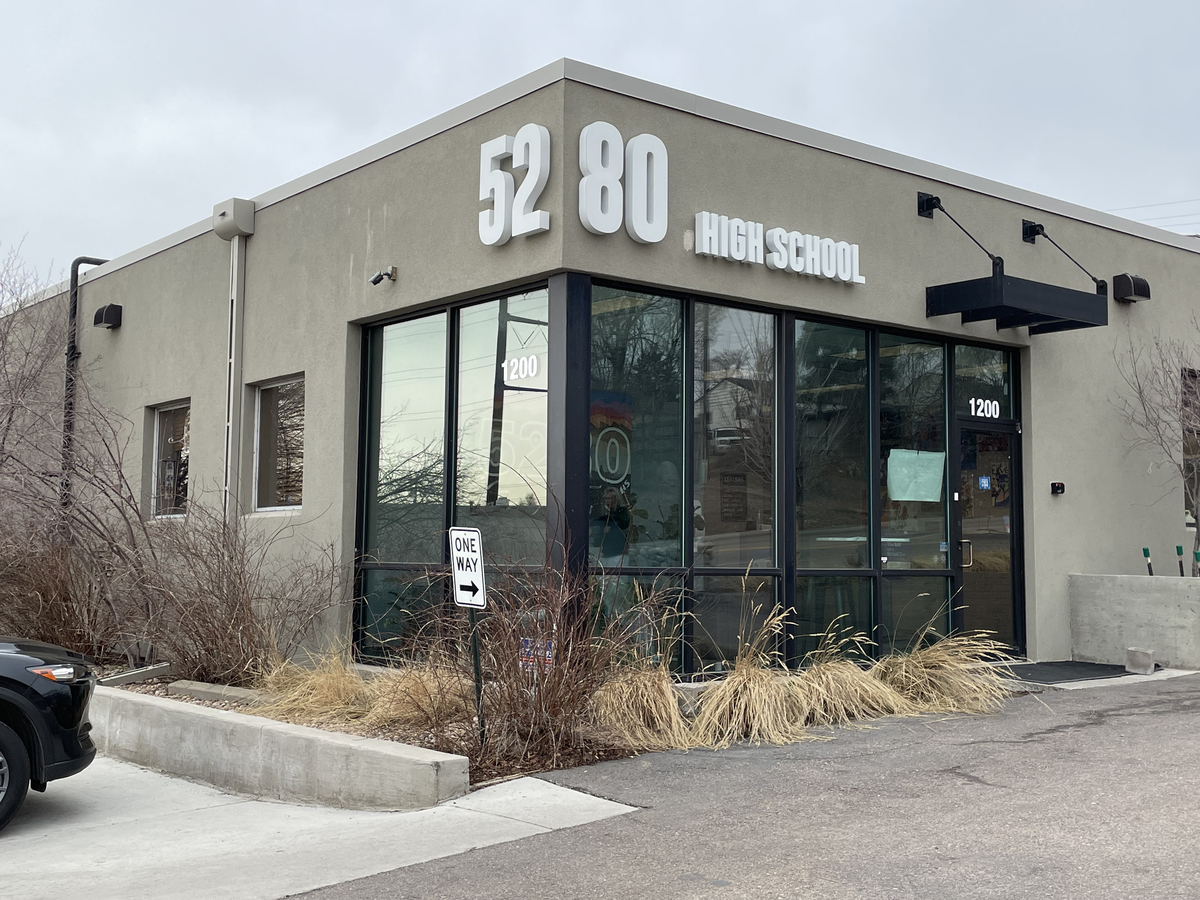
5280 High School in Denver is one of 43 secondary schools in the U.S. with a program designed for students recovering from substance use disorder and related mental health disorders.

Stephanie Daniel/KUNC


hide caption

toggle caption

Stephanie Daniel/KUNC


5280 High School in Denver is one of 43 secondary schools in the U.S. with a program designed for students recovering from substance use disorder and related mental health disorders.

Stephanie Daniel/KUNC

Every weekday at 5280 High School in Denver starts the same way.

Students in recovery from drug and alcohol addiction gather on the steps of the school’s indoor auditorium to discuss a topic chosen by staff members. One recent morning, they talked about mental health and sobriety. A teenage boy dressed in tan corduroys, a black hoodie, and sneakers went first.

“I didn’t want to have, like, any emotion,” he said. “So I thought, like, the best way to, like, put it down would be to do more and more and more drugs.”

A classmate said she started doing drugs for fun and then got hooked. Another student said his addiction negatively impacts his mental health. A third announced an upcoming milestone.

“In, like, two days, I’ll be six months sober,” she said, as her classmates cheered.

The students attend Colorado’s only recovery high school — one of 43 nationwide. These schools are designed for students who are recovering from substance use disorder and might also be dealing with related mental health disorders. The Denver school opened in 2018 as a public charter school that today enrolls more than 100 students.

KHN logo

One of those cheering classmates was sophomore Alexis Castillo, 16, who listened supportively during that recent morning meeting. She is in recovery for alcohol and fentanyl addictions. Several of her friends attended the school when she enrolled during her freshman year and initially loved it. But after a while some of Castillo’s friends left and she grew disillusioned. She stopped going to class and wasn’t motivated to work her recovery steps.

“They give you a lot of accountability,” she said. “That was not something I wanted.”

Castillo relapsed and school staffers helped her get into rehab. Three months later she was back at the school, in recovery and ready to do the work.

The school’s mission is to help kids learn to live a substance-free life while receiving an education. This includes attending recovery meetings and wellness activities, and taking traditional high school classes like English, math, and Spanish.

“They can go on to college or a career and really handle anything that life throws at them,” said 5280’s founder and executive director, Dr. Melissa Mouton.

In 2022, nearly a third of 12th graders and 1 in 5 10th graders reported using an illicit drug in the previous year, according to a national survey from the Monitoring the Future project conducted by the University of Michigan Survey Research Center. Those numbers have steadily decreased over the past 25 years. However, data from UCLA shows overdose deaths among teens doubled in the first year of the pandemic, mainly attributed to the increased prevalence of fentanyl-laced drugs.

The first recovery high school opened in Silver Spring, Md., in 1979 and similar programs now operate in 21 states. Compared with their peers at regular schools who have gone through treatment, recovery high school students have better attendance and are more likely to stay sober, and their graduation rate is at least 21{35112b74ca1a6bc4decb6697edde3f9edcc1b44915f2ccb9995df8df6b4364bc} higher, according to one study.

A mosaic in the computer lab at 5280 High School in Denver. Colorado’s only high school with a recovery program opened in 2018 as a public charter school and today enrolls more than 100 students.

Stephanie Daniel/KUNC


hide caption

toggle caption

Stephanie Daniel/KUNC


A mosaic in the computer lab at 5280 High School in Denver. Colorado’s only high school with a recovery program opened in 2018 as a public charter school and today enrolls more than 100 students.

Stephanie Daniel/KUNC

“For this particular group of young people who have these disorders, this can be a lifesaver,” said John Kelly, director of the Recovery Research Institute at Massachusetts General Hospital. “It can help them create a social norm of recovery.”

There are three components to effective drug and alcohol treatment, according to Dr. Sharon Levy, a pediatrician and addiction medicine specialist at Boston Children’s Hospital. The first part is medical, which includes seeing a doctor, drug testing, and using medications like buprenorphine to treat opioid addiction. The second is emotional support from counseling to address co-occurring mental health disorders. And there is a behavioral component that, for kids, can include receiving positive feedback from parents, peer support and recovery schools.

“Recovery schools offer an opportunity really for peer support and mutual aid in a kind of a supervised and structured way,” Levy said.

Recovery high schools often weave components of treatment into the school day — activities like 5280’s daily recovery program meeting. In the afternoon, the school offers wellness electives such as spiritual principles and journaling. The school also employs a director of recovery and recovery coach to work with and counsel the students individually.

Recovery schools do face challenges. Most are publicly funded charter or alternative schools that carry a higher cost of educating students than traditional schools do. This is due to a smaller enrollment, the need for mental health and recovery personnel, higher faculty-to-student ratios, and other factors.

The Denver school enrolls about 100 students annually, making it one of the biggest recovery high schools in the nation. This year, the per-pupil cost is about $25,000 per student but the school receives only about $15,000 from federal, state, and local funding, according to Mouton. The remaining money comes from donors.

Given the complex needs of the students, “recovery schools will always be small,” she said.

Pooling such students together may also raise a concern that students will trigger one another to use drugs and alcohol and relapse, but, Levy said, that’s a risk with any social interaction.

“So, if you’re in an environment where the recovery is kind of front and center and people are watching and monitoring and supervising,” she said, “I think that’s helpful for a lot of kids.”

The school in Denver purposely keeps enrollment under capacity so additional teens can enroll anytime during the school year. A student won’t get kicked out if they relapse, but there are two requirements: They must want to be sober and attend an outside recovery program.

“The No. 1 step is just letting them know out of the gate, no matter what’s going on, that we love them,” said Brittany Kitchens, the school’s recovery coach. “We are here for them.”

Kitchens teaches students how to navigate recovery and regulate their emotions. She likens herself to a hall monitor, constantly checking in with students and looking for changes in behavior.

“I tend to be the first kind of line that the kids will come to when they’re experiencing something that is just a little bit too big for them to process,” she said.

Some of these difficulties stem from traumas students have experienced, including sex and drug trafficking, and abandonment. Students also deal with traumas they have caused, Kitchens said, actions that landed them in jail or on probation.

Kitchens, who is in recovery herself, shares coping mechanisms with the students.

“A lot of times it just starts with, ‘Hey, take a breath, breathe in through the nose and out through the mouth,'” she said.

Alexis has been in recovery for nearly a year, she said. The morning meetings where she and her classmates talk about mental health, sobriety, and other topics are an opportunity to build a community of friends who support one another, something she said she didn’t have when she was using drugs.

“It’s really hard to get sober young,” she said.

This article is part of a partnership that includes KUNC, NPR, and KHN.

KHN (Kaiser Health News) is a national newsroom that produces in-depth journalism about health issues. Together with Policy Analysis and Polling, KHN is one of the three major operating programs at KFF (Kaiser Family Foundation). KFF is an endowed nonprofit organization providing information on health issues to the nation.

Is involuntary psychiatric commitment making a policy comeback? : Shots

Is involuntary psychiatric commitment making a policy comeback? : Shots

A homeless encampment along a street in Skid Row on Dec. 14, 2022 in Los Angeles, California. Two days earlier, LA Mayor Karen Bass declared a state of emergency regarding homelessness in the city, where an estimated 40,000 residents are unhoused.

Mario Tama/Getty Images


hide caption

toggle caption

Mario Tama/Getty Images


A homeless encampment along a street in Skid Row on Dec. 14, 2022 in Los Angeles, California. Two days earlier, LA Mayor Karen Bass declared a state of emergency regarding homelessness in the city, where an estimated 40,000 residents are unhoused.

Mario Tama/Getty Images

Many of Portland’s least fortunate live in tents pitched on sidewalks or in aging campers parked in small convoys behind grocery stores.

High housing costs and financial adversity are the primary root causes behind the burgeoning population on the streets; only about one in three people who are homeless in Portland report having a mental illness or a substance use disorder, or both.

But the combination of homelessness with substance use or untreated mental illnesses has led to a lot of very public tragedies.

People with schizophrenia, for example, have died of hypothermia on the city’s streets. Residents have given birth out in the open, to premature infants who did not survive. Methamphetamine, cheaper and more harmful than it used to be, is creating a heightened risk of overdose and psychosis.

KHN logo

Mental illness can be part of the story of how a person ends up homeless — or part of the price of survival on the streets, where sleep and safety are scarce. Unsheltered residents in Portland die thirty years earlier than the average American, according to county data.

These grim realities have ratched up the pressure on politicians to do something.

In Oregon, some politicians, including Portland mayor Ted Wheeler, have proposed changing civil commitment law, so doctors have more leeway in compelling treatment for patients who are too sick to know they need care.

Without such changes, they argue, people with untreated addictions or mental illnesses are stuck cycling between the streets, county jails, and state psychiatric hospitals.

“I think we can do better by people than allowing them to flounder,” says Janelle Bynum, a state legislator who represents suburbs east of Portland.

Bynum was the sole Democrat to sign on to a pair of bills, introduced by Republicans earlier this year, that would expand the criteria for involuntary commitment in Oregon. “My intention was to signal how cruel I think our current system is,” she says.

As multiple crises spill into streets, calls for change

Half of the country’s unsheltered people live in California, and though only about a quarter or third of them are estimated to have a serious mental illness, they are the ones residents are most likely to encounter in California’s cities. Mayors from San Francisco, San Jose, and San Diego have all expressed frustration that the threshold for psychiatric intervention is too high.

“When I’m often asked, ‘Mayor, why aren’t you doing something about this person who is screaming at the top of their lungs on the street corner? And I said, ‘Well, they’re not a threat to themselves or to others,’ that rings hollow,” says Todd Gloria, mayor of San Diego.

Now, state lawmakers in Sacramento, backed by mayors, have introduced new laws and bills that would help bring more people into treatment, even if it’s against their will.

Last year, legislators approved a new system of CARE Courts, where judges issue treatment plans. That program begins on a pilot basis this fall in eight counties, including Los Angeles and San Francisco counties, with the rest of the state expected to join next year.

This year, a bill moving through the legislature would expand who qualifies for a yearlong conservatorship, or involuntary psychiatric hold.

The bill is gathering support and sponsors are optimistic that Gov. Gavin Newsom would sign it if passed. But it’s been controversial: opponents fear a return to bygone policies of locking people up just for being sick.

Half a century ago, California policymakers shuttered state psychiatric institutions, denouncing them as inhumane. Involuntary commitment was deemphasized and state laws ensured that it only be used as a last resort. The thinking was that the patient should have autonomy and participate in their care.

But progressive leaders across California are now reconsidering involuntary commitments. They argue that not helping people who are seriously ill, and living in squalor on the streets, is inhumane. Psychiatrists who support the bill say it would constitute a modest update to a 56-year-old law.

The shift is dividing liberals over the very meaning of compassion and which rights should take precedence: civil rights like freedom of movement and medical consent? Or the right to appropriate medical care in a crisis?

“The status quo has forced too many of our loved ones to die with their rights on,” says Teresa Pasquini, an activist with the National Alliance on Mental Illness. Her son has schizophrenia and has spent the past 20 years being “failed, jailed, treated, and streeted” by what she calls a broken public health system.

“We are doctors who have to watch these people die,” says Dr. Emily Wood of the California State Association of Psychiatrists, a sponsor of the conservatorship bill, SB 43. “We have to talk to their families who know that they need that care, and we have to say we don’t have any legal basis to bring them into the hospital right now.”

A person kneels on the sidewalk as another person sleeps in the Skid Row community on Dec. 14, 2022 in Los Angeles, California. The Skid Row community is home to thousands of people who either live on the streets or in tents or makeshift shelters.

Mario Tama/Getty Images


hide caption

toggle caption

Mario Tama/Getty Images


A person kneels on the sidewalk as another person sleeps in the Skid Row community on Dec. 14, 2022 in Los Angeles, California. The Skid Row community is home to thousands of people who either live on the streets or in tents or makeshift shelters.

Mario Tama/Getty Images

Under current state law, a person can be held in the hospital involuntarily if they are a danger to themselves or others, or if they are unable to seek food, clothing, or shelter, as a result of mental illness or alcoholism. Doctors want to add other substance use disorders to the criteria, and include a person’s inability to look out for one’s own safety and medical care.

(The state law defines what is known as “mental health conservatorship,” which is separate from the probate conservatorship that Brittney Spears was held under.)

Dr. Wood, who practices in Los Angeles, gives two examples of people she and her colleagues have tried to care for, but who slip through the cracks under the current rules. One is a man who doesn’t take his diabetes medication because he’s not taking his schizophrenia medication, and doesn’t understand the consequences of not managing either condition.

Wood explains that even if he repeatedly ends up in the ER with dangerously high blood sugar, no one can compel him to take either medication under current law, because poorly managing one’s health is not a trigger for conservatorship.

Clash over ‘compassion’ fuels conservatorship controversy

Another man Dr. Wood describes has a developmental disability that was never treated in childhood. He developed an addiction to methamphetamine in his twenties. Wood says the man is now regularly found sleeping in a park and acting inappropriately in public. His family members have begged doctors to treat him, but they can’t because substance use disorder is not a trigger for conservatorship.

To Dr. Wood, treating these people, even when they’re unable to consent, is the compassionate, moral thing to do.

“It’s essential that we respect all the rights of our patients, including the right to receive care from us,” she says.

But other advocates, including Californians with mental illnesses, see the issue very differently.

Lawyers from the nonprofit Disability Rights California say the proposed expansion of conservatorship and the ongoing rollout of CARE Courts are misguided efforts, focused on depriving people of their liberty and privacy.

Instead, they say, the state should invest in better voluntary mental health services which help maintain peoples’ dignity and civil rights. The group filed a lawsuit in January to try to block the implementation of CARE Courts.

These advocates are particularly concerned that people of color, specifically Black residents who are overrepresented in the homeless population and overdiagnosed with schizophrenia, will now be disproportionately targeted by these more forceful measures.

“When people are told that they have to go to court to get what they should be getting voluntarily in the community, and then they get a care plan that subjugates them to services that still do not meet their cultural needs, that is not compassion,” says Keris Myrick, an advocate who has schizophrenia and has experienced homelessness.

Under current state law in Oregon, a person can be held for involuntary treatment if they are a danger to themselves or others, or if they are at risk of serious physical harm because they cannot provide for basic personal needs, due to a mental illness.

Oregon, like California, does not include substance use disorders as grounds for commitment.

But the law is slightly broader than California’s, at least in one respect: Legislators amended it in 2015 to give doctors more leeway to step in if a person’s psychosis or other chronic mental illness is putting them at risk of a medical crisis.

Terry Schroder, a civil commitment coordinator with the Oregon Health Authority, says before that change was implemented, a person would have to be nearly comatose, or within a few days of death, to meet the criteria that would allow doctors to forcibly treat them for their own welfare.

The law now allows doctors to intervene earlier in an ongoing medical crisis.

“You can apply serious risk from a medical provider’s point of view in a much broader scope,” he says.

In Oregon, lack of treatment capacity dominates debate

A Republican proposal to add substance use disorders, as grounds for involuntary treatment, has stalled in the state’s Democratically-controlled legislature.

Most Democrats are instead focused on the severe lack of treatment capacity, and the state’s inability to serve the large number of people who want mental health treatment, or those who have already been involuntarily committed under current law.

All over Oregon, there are long waiting lists. For example, for substance use disorders, experts say the statewide capacity in prevention, treatment, and recovery services is roughly half of what’s needed.

Oregon currently has two state-run psychiatric hospitals, which together comprise just under 600 beds total. And over the last 10 years, more of those beds have been needed for another population: people transferred from county jails because they are too mentally ill to understand the charges against them. As a result, patients who would be referred due to a civil commitment cannot get a bed in the state hospitals.

In addition, there’s a shortage of beds in community care settings such as nursing homes, adult foster homes, or residential treatment facilities.

Unable to refer patients for treatment, hospitals sue Oregon

The pandemic only made the deficit worse. A private nursing home in Portland that had a state contract to care for psychiatric patients, Health Care at Foster Creek, was the site of the state’s first large Covid-19 outbreak. A total of 28 residents died, and it was shut down permanently.

The situation has become so dire that last fall, three of Oregon’s largest hospital systems sued the state over its failure to find placements for civilly committed patients.

Robin Henderson is the behavioral health director for Providence Oregon, one of the hospital systems that filed suit. Henderson says expanding the criteria for civil commitment won’t solve the problem of where to send people for treatment and long-term recovery.

As an example, she describes a patient on the waitlist for the state’s psychiatric hospital, a man who likes to garden and doesn’t believe that he has chronic schizophrenia.

The patient, who likes to garden and finds comfort in it, has spent more than 800 days out of the last three years in an acute psychiatric unit at one of the Providence hospitals. Those units are designed for two-week stays, and the man is locked inside, with no access to the outdoors.

“We really don’t have a plan for people, a very small number of people who pose the hardest societal, ethical, questions: people who can’t care for themselves,” Henderson says.

In California, the lack of adequate treatment options is also frequently invoked in the ongoing disputes.

“Expanding conservatorships doesn’t solve for those structural issues around the lack of housing and the lack of funding for treatment services,” says Michelle Doty Cabrera, executive director of the California Behavioral Health Directors Association.

Cabrera’s group also questions the overarching premise that forced treatment works. With substance use disorder, there is little evidence that compulsory treatment is effective and some evidence that it could even be harmful. In Massachusetts, people who were involuntarily committed for drug treatment were twice as likely to die from an overdose as those who received treatment willingly.

Why involuntary commitment alone won’t solve homelessness

Critics of involuntary commitment have questioned the California legislature’s objectives. If the ultimate goal of forced treatment is reducing homelessness – and easing the moral heartbreak of witnessing ill people sleeping on the street or using drugs in the open – then lawmakers are writing the wrong prescription, they say.

“The problem of homelessness is that people don’t have housing,” says Dr. Margot Kushel, director of the UCSF’s Benioff Homelessness and Housing Initiative. “If you had all the treatment in the world and you didn’t have the housing, we would still have this problem.”

She compares homelessness to a game of musical chairs, where a child with a broken leg is the last one left standing when the music stops. In California, there are 24 units of affordable housing for every 100 very low-income households, she said, and people with mental illness or substance use disorder are the ones who have the hardest time competing for those scarce spots.

That’s why they’re overrepresented among the homeless population, she said, not because conservatorship laws aren’t strong enough.

“If you try to fix the problem of homelessness by tinkering with the health care system, we’re not going to get anywhere,” Kushel says.

How housing prices are pushing vulnerable people into homelessness

Supporters of involuntary commitments say both are needed: treatment and housing. The same California lawmakers who are backing expanded conservatorship and CARE Courts are also backing efforts to increase the housing supply, including a $3 billion bond measure for the construction of small, neighborhood-oriented residences for people with mental illness.

Nationwide, rents have risen more quickly than people’s incomes in the last twenty years, and those soaring rents are having a disparate impact on people who rely on a fixed income such as monthly disability payments.

In the West, cities like Portland, San Francisco, and Los Angeles have all seen sharp surges in housing costs.

Washington County, west of Portland, is home to the global headquarters for Nike. The average monthly rent for greater Portland, including Washington County, rose from about $800 in 2010 to just under $1,400 in 2021.

Chance Wooley works for Washington County, supervising services for people being investigated for a possible civil commitment. Wooley says the gap between high housing costs and disability payments is pushing people with serious mental illnesses into homelessness.

When he started in this job, 20 years ago, it was much easier to transition people from a treatment home into independent housing, Wooley says.

Back then, a person living on a monthly disability check could afford to pay the rent on a studio apartment and still have enough left over for groceries and utilities.

“That’s not a reality any more,” Wooley says.

The state’s new governor, Tina Kotek, has chosen to push forward on two fronts: more housing aid, as well as more treatment beds for psychiatric and substance use disorders.

Oregon is also pioneering an approach that tries to tackle both housing and health simultaneously. The new pilot program, launching in 2024, will make Oregon the first state in the nation to use Medicaid money to pay for housing costs.

The funds, previously limited to medical care, can now be spent on supports such as rental assistance for people who are homeless and participating in mental health or addiction treatment.

This story comes from NPR’s health reporting partnreship with KQED, OPB and Kaiser Health News (KHN).

Treating opioid addiction with Suboxone is easier. Will doctors get on board? : Shots

Treating opioid addiction with Suboxone is easier. Will doctors get on board? : Shots

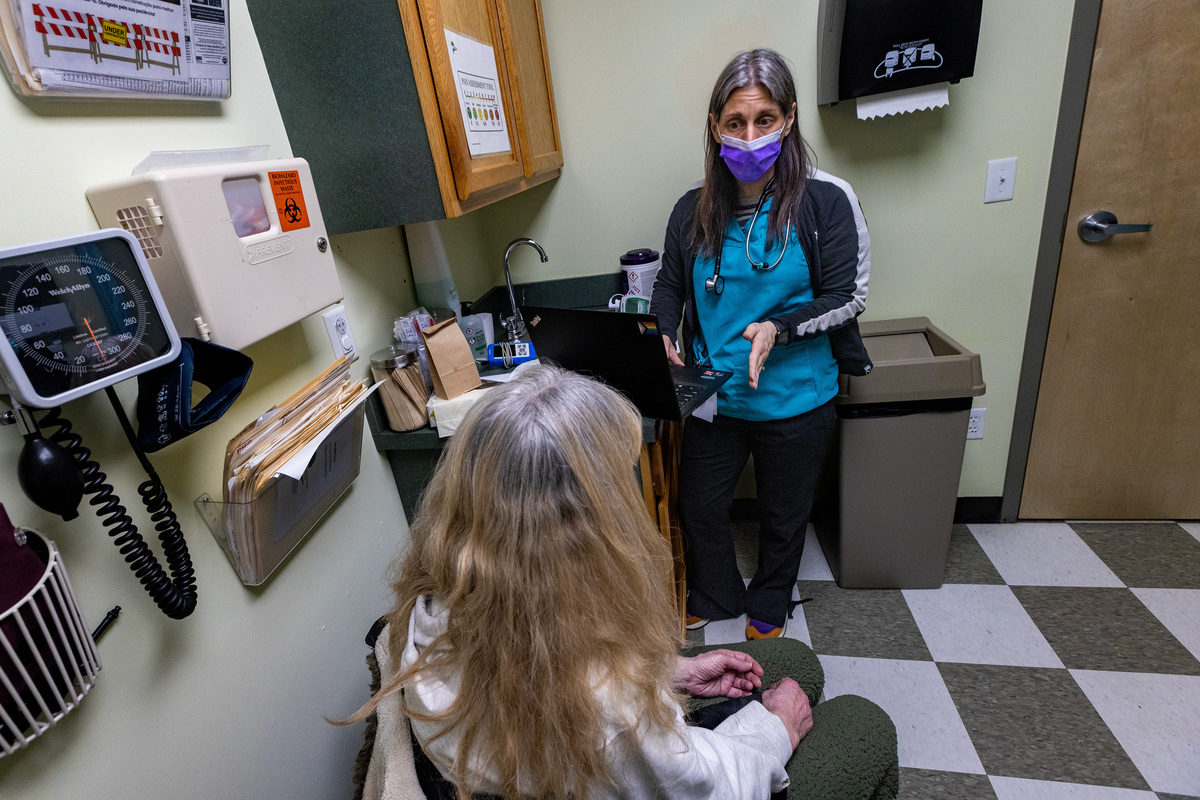
Registered nurse Jamie Simmons speaks with a patient during an appointment at the Greater New Bedford Community Health Center in Massachusetts. The patient, whose first name is Kim, says buprenorphine has helped her stay off heroin and avoid an overdose for nearly 20 years.

Jesse Costa for KHN


hide caption

toggle caption

Jesse Costa for KHN


Registered nurse Jamie Simmons speaks with a patient during an appointment at the Greater New Bedford Community Health Center in Massachusetts. The patient, whose first name is Kim, says buprenorphine has helped her stay off heroin and avoid an overdose for nearly 20 years.

Jesse Costa for KHN

For two decades — as opioid overdose deaths rose steadily — the federal government limited access to buprenorphine, a medication that addiction experts consider the gold-standard for treating patients with an opioid use disorder. Study after study shows it helps people continue addiction treatment while reducing the risk of overdose, and death.

Clinicians who wanted to prescribe the medicine had to complete an 8-hour training. They could only treat a limited number of patients and had to keep special records. They were given a Drug Enforcement Administration (DEA) registration number starting with X, a designation that many doctors say made them a target for drug enforcement audits.

“Just the process associated with taking care of our patients with a substance use disorder made us feel like, ‘boy, this is dangerous stuff,'” says Dr. Bobby Mukkamala, who chairs the American Medical Association’s task force on substance use disorder.

“The science doesn’t support that but the rigamarole suggested that.”

That rigamarole is mostly gone. Congress eliminated what became known as the “X-waiver” in legislation President Biden signed late last year. Now begins what some addiction experts are calling a truth serum moment.

Was the X-waiver and the burdens that came with it the real reason only about 7{35112b74ca1a6bc4decb6697edde3f9edcc1b44915f2ccb9995df8df6b4364bc} of clinicians in the U.S. were cleared to prescribe buprenorphine? Or was it an excuse that masked hesitation about treating addiction, if not outright disdain for these patients?

There’s great optimism among some leaders that getting rid of the X-waiver will expand access to buprenorphine and reduce overdoses. One study from 2021 shows taking buprenorphine reduces the risk by 50{35112b74ca1a6bc4decb6697edde3f9edcc1b44915f2ccb9995df8df6b4364bc}. The medication is an opioid that produces much weaker effects than heroin or fentanyl and reduces cravings for those deadlier drugs.

The nation’s drug czar, Dr. Rahul Gupta, says getting rid of the X-waiver will ultimately prevent millions of deaths.

“The impact of this will be felt for years to come,” Gupta says. “It is a true historic change that, frankly, I could only dream of being possible.”

Gupta and others envision obstetricians prescribing buprenorphine to their pregnant patients, infectious disease doctors adding it to their medical tool box, and lots more patients starting buprenorphine when they come to emergency rooms, primary care clinics and rehabilitation facilities.

We are “transforming the way we think to make every moment an opportunity to start this treatment and save someone’s life,” says Dr. Sarah Wakeman, the medical director for substance use disorder at Mass General Brigham in Boston.

Wakeman says clinicians who she’s been reaching out to for the past decade are finally willing to consider treating patients with buprenorphine. Still, she knows stigma and discrimination could undermine efforts to help those who aren’t being served. In 2021, a national survey showed just 22{35112b74ca1a6bc4decb6697edde3f9edcc1b44915f2ccb9995df8df6b4364bc} of people with an opioid use disorder received buprenorphine or methadone, which is another form of medication-assisted treatment.

The truth serum experiment

The truth serum experiment – what will test whether clinicians will now step up prescribing – is underway in hospitals and clinics across the country as patients struggling with addiction queue up for treatment.

One woman named Kim, 65, is among them.

Kim’s recent visit to the Greater New Bedford Community Health Center in southern Massachusetts began in an exam room with Jamie Simmons, a registered nurse who runs the center’s addiction treatment program but doesn’t have prescribing powers. NPR agreed to use only Kim’s first name to limit discrimination linked to her drug use.

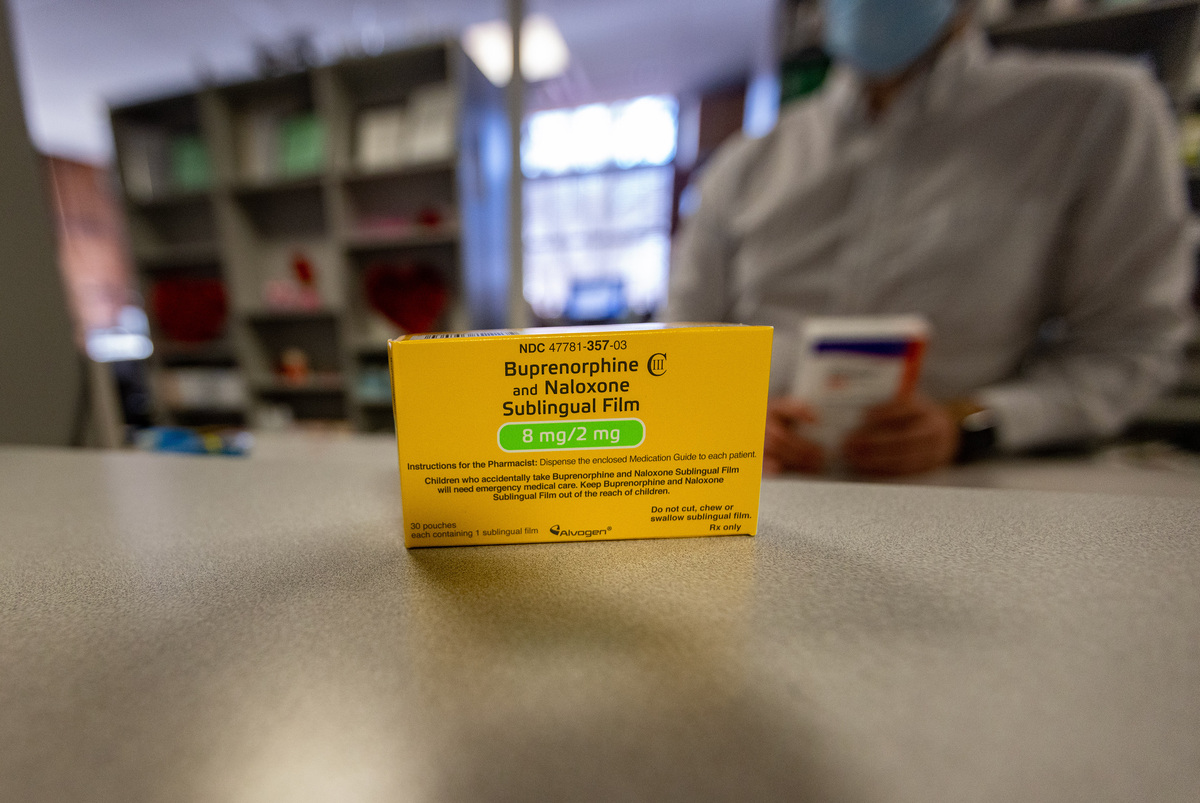
Kim tells Simmons that buprenorphine has helped her stay off heroin and avoid an overdose for nearly 20 years. Kim takes a brand of the medication called Suboxone, which comes in the form of thin film-like strips she dissolves under her tongue.

“It’s the best thing they could have ever come out with,” Kim says, “I don’t think I ever even had a desire to use heroin since I’ve been taking them.”

Buprenorphine can produce mild euphoria and slow breathing but there’s a ceiling on the effects. Patients like Kim may develop a tolerance and not experience any effects.

“I don’t get high on Suboxones,” Kim says, “they just keep me normal.”

Still many clinicians have been hesitant to use buprenorphine – known as a partial opioid agonist – to treat an addiction to more deadly forms of the drug.

Kim’s primary care doctor at the health center never applied for an X-waiver. So for years Kim has bounced from one treatment program to another, seeking a prescription. When there were lapses in her access to buprenorphine, the cravings returned – an especially scary prospect now that the powerful opioid fentanyl has replaced heroin on the streets of Massachusetts, where Kim lives.

“I’ve seen so many people fall out [overdose] in the last month,” says Kim, her eyes wide, “that stuff is so strong that within a couple minutes, boom.”

Because fentanyl can kill so quickly, the benefits of taking buprenorphine and other medications to treat an opioid use disorder have increased as deaths linked to even stronger types of fentanyl rise. Buprenorphine is present in a small percentage of overdose deaths nationwide, 2.6{35112b74ca1a6bc4decb6697edde3f9edcc1b44915f2ccb9995df8df6b4364bc} – virtually always with a mix of other drugs, often benzodiazepines. Fentanyl is in 94{35112b74ca1a6bc4decb6697edde3f9edcc1b44915f2ccb9995df8df6b4364bc} of overdose deaths in Massachusetts.

“Bottom line is, fentanyl kills people, buprenorphine doesn’t,” Simmons says.

That reality adds urgency to Kim’s health center visit because Kim took her last Suboxone before arriving. Her latest prescription has run out. Cravings for heroin could resume tomorrow if she doesn’t get more Suboxone. Simmons confirms the dose and tells Kim that her primary care doctor may be willing to renew the prescription now that the X-waiver is not required. But Dr. Than Win has some concerns after reviewing Kim’s most recent urine test.

It showed traces of cocaine, fentanyl, marijuana and Xanax, and Win says she’s worried about how the street drugs might interact with buprenorphine.

“I don’t want my patients to die from an overdose,” Win says. “But I’m not comfortable with the fentanyl and a lot of narcotics in the system.”

Kim is adamant that she’s not intentionally ingesting fentanyl. It might have been in the cocaine she says her roommate shares occasionally. Kim says she takes the Xanax to sleep. Her drug use presents complications that many primary care doctors don’t have experience managing. Some clinicians are apprehensive about using an opioid to treat an addiction to opioids, despite compelling evidence that it saves patients’ lives.

Win is worried about writing her first prescription for Suboxone. But she agrees to help Kim stay on the medication.

“I wanted to start with someone a little bit easier,” Win says. “It’s hard for me, that’s the reality and truth.”

About half of the providers at the health center had an X-waiver when it was still required. Simmons says some of the resistance to having the waiver was rooted in stigma or misunderstanding about addiction. She urges doctors to treat addiction as they would any other disease.

“You wouldn’t not treat a diabetic, you wouldn’t not treat a patient who is hypertensive,” Simmons says. “People can’t control that they formed an addiction to an opiate, alcohol or a benzo.”

Suboxone film

Jesse Costa/WBUR


hide caption

toggle caption

Jesse Costa/WBUR


Suboxone film

Jesse Costa/WBUR

Searching for solutions to soften stigma

Although the restrictions on buprenorphine prescribing are no longer in place, Dr. Mukkamala says the perception created by the X-waiver lingers.

“That legacy of elevating this to a level of scrutiny and caution, that needs to be sort of walked back,” says Mukkamala with the AMA. “That’s going to come from education.”

Mukkamala sees promise in the next generation of doctors, nurse practitioners and physician assistants coming out of schools that have added addiction training. The AMA and the American Society of Addiction Medicine have online resources for clinicians who want to learn on their own.

Some of these resources may help fulfill a new training requirement for clinicians who prescribe buprenorphine and other controlled narcotics. It will take effect in June. The DEA has not issued details about that training.

But training alone may not shift behavior: take the experience of Rhode Island.

The number of doctors approved to prescribe buprenorphine jumped more than 200{35112b74ca1a6bc4decb6697edde3f9edcc1b44915f2ccb9995df8df6b4364bc} from 2016 to 2022 after the state said physician training should include an X-waiver. Still, having the option to prescribe buprenorphine “didn’t open the floodgates” for patients in need of treatment, says Dr. Jody Rich, an addiction specialist who teaches at Brown University. The number of patients taking buprenorphine in Rhode Island increased – from 2016 to 2022 when the number of qualified prescribers jumped – but at a much slower rate .

“It all comes back to stigma,” Rich says.

He says longstanding resistance among some providers to treating addiction is shifting as younger people enter medicine. But the opioid crisis can’t wait for a generational change, he says. To expand buprenorphine access now, Rich’s research shows states could use pharmacists, partnered with doctors, to help manage the care of more patients with an opioid use disorder.

Wakeman, at Mass General Brigham, says it might be time to hold clinicians who don’t provide addiction care accountable through quality measures tied to payments.

“We’re expected to care for patients with diabetes or to care for patients with heart attack in a certain way and the same should be true for patients with an opioid use disorder,” says Wakeman.

One quality measure could be to track how often prescribers start and continue buprenorphine treatment. Wakeman says it would also help if insurers reimbursed clinics for the cost of staff who aren’t traditional clinicians but are critical in addiction care, like recovery coaches and case managers.

Will ending the X-waiver close racial gaps?

Wakeman and others are paying especially close attention to whether eliminating the X-waiver helps narrow racial gaps in buprenorphine treatment.

The medication is much more commonly prescribed to white patients with private insurance or who can pay cash. But there are also stark differences by race at some health centers where most patients are on Medicaid and would seem to have equal access to this addiction treatment.

At the New Bedford health center, Black patients represent 15{35112b74ca1a6bc4decb6697edde3f9edcc1b44915f2ccb9995df8df6b4364bc} of all patients but only 6{35112b74ca1a6bc4decb6697edde3f9edcc1b44915f2ccb9995df8df6b4364bc} of those taking buprenorphine. For Hispanics that comparison is 30{35112b74ca1a6bc4decb6697edde3f9edcc1b44915f2ccb9995df8df6b4364bc} to 23{35112b74ca1a6bc4decb6697edde3f9edcc1b44915f2ccb9995df8df6b4364bc}. Most of the health center patients prescribed buprenorphine are white, 61{35112b74ca1a6bc4decb6697edde3f9edcc1b44915f2ccb9995df8df6b4364bc}, while they are just 36{35112b74ca1a6bc4decb6697edde3f9edcc1b44915f2ccb9995df8df6b4364bc} of patients overall.

Dr. Helena Hansen, who co-authored a book on race in the opioid epidemic, says access to buprenorphine doesn’t guarantee that patients will benefit from it.

“People are not able to stay on a life-saving medication unless the immense instability in housing, employment, social supports — the very fabric of their communities — is addressed,” says Hansen. “That’s where we fall incredibly short in the United States.”

Hansen says expanding access to buprenorphine has helped reduce overdose deaths dramatically among all drug users in France, including those who are low-income and immigrants. There, patients with an opioid use disorder are seen in their communities and offered a wide range of social services.

“Removing the X-waiver,” says Hansen, “is not in itself going to revolutionize the opioid overdose crisis in our country. We would need to do much more.”

This story is from NPR’s partnership with WBUR and KHN. KHN (Kaiser Health News) is a national newsroom that produces in-depth journalism about health issues.

Hormone shots could be used as treatment for low sex drive | Medical research

Hormone shots could be used as treatment for low sex drive | Medical research

Folks with a reduced intercourse drive could profit from injections of a hormone called kisspeptin, in accordance to scientific trials that observed the pictures can strengthen sexual responses.

The trials are the 1st to show the hormone can raise exercise in mind regions linked to arousal and attraction in guys and gals who are distressed by their reduced libidos.

Outside of rising sex-related brain exercise, scientists stated some women of all ages who received the hormone noted emotion “more sexy”, whilst men had improved “happiness about sex” and amplified “penile tumescence” when watching an erotic movie as component of the study.

One particular 44-yr-previous male on the demo, who explained he experienced struggled to sustain associations due to the fact his sexual urge for food was so small, went on to have a son after his associate conceived in the same 7 days he been given the hormone. “I had the greatest possible final result as a outcome of the trial,” he explained.

Kisspeptin is a all-natural hormone that stimulates the launch of other reproductive hormones in the system. Past reports have proven that photographs of kisspeptin can enrich how men and women with healthful libidos respond to sexual stimuli and enhance activity in components of the mind included in sexual attraction.

In two separate trials revealed in Jama Community Open up, scientists led by Prof Waljit Dhillo and Dr Alexander Comninos, each expert endocrinologists at Imperial Higher education London, investigated the results of kisspeptin injections in 32 females and 32 guys with hypoactive sexual wish problem (HSDD). The situation, which is defined by small sexual desire that is distressing to the personal, affects about 10{35112b74ca1a6bc4decb6697edde3f9edcc1b44915f2ccb9995df8df6b4364bc} of ladies and 8{35112b74ca1a6bc4decb6697edde3f9edcc1b44915f2ccb9995df8df6b4364bc} of men.

Brain scans from the trial members suggest that the hormone can dampen down hyperactivity in areas connected to HSDD whilst boosting action in vital sexual areas of the brain. An added measurement of the males observed that penile rigidity, measured as they watched an erotic movie as section of the demo, enhanced up to 56{35112b74ca1a6bc4decb6697edde3f9edcc1b44915f2ccb9995df8df6b4364bc} compared with a placebo.

“The predominant theory in HSDD implies that there is excessive self-monitoring and introspection, for case in point, how am I executing, how do I appear, what does my partner imagine, which blunts downstream sexual motivation and arousal,” claimed Comninos. “In these scientific studies we have revealed that kisspeptin may perhaps be able to address this imbalance and market sexual pathways in both girls and guys distressed by lower sexual desire.”

Presented the clear rewards of kisspeptin and the deficiency of described side-outcomes, the scientists feel the hormone is ripe to be created as a treatment method for HSDD. “Collectively, the benefits suggest that kisspeptin might present a risk-free and a great deal-desired treatment method for HSDD that has an effect on tens of millions of folks about the globe,” Dhillo said.

Therapy by AI holds promise and challenges : Shots

Therapy by AI holds promise and challenges : Shots
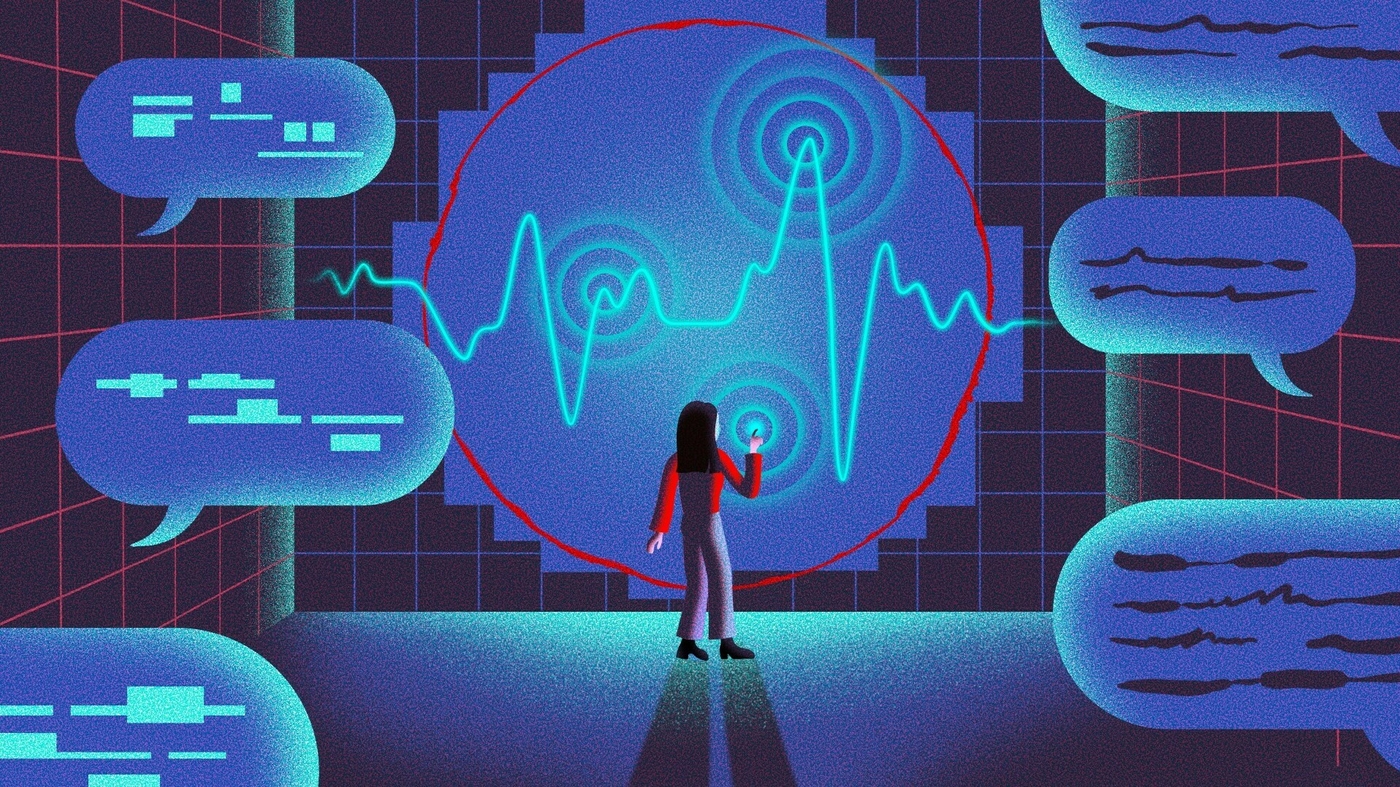
Some companies and researchers think smart computers might eventually help with provider shortages in mental health, and some consumers are already turning to chatbots to build "emotional resilience."

Just a year ago, Chukurah Ali had fulfilled a dream of owning her own bakery — Coco’s Desserts in St. Louis, Mo. — which specialized in the sort of custom-made ornate wedding cakes often featured in baking show competitions. Ali, a single mom, supported her daughter and mother by baking recipes she learned from her beloved grandmother.

But last February, all that fell apart, after a car accident left Ali hobbled by injury, from head to knee. “I could barely talk, I could barely move,” she says, sobbing. “I felt like I was worthless because I could barely provide for my family.”

As darkness and depression engulfed Ali, help seemed out of reach; she couldn’t find an available therapist, nor could she get there without a car, or pay for it. She had no health insurance, after having to shut down her bakery.

So her orthopedist suggested a mental-health app called Wysa. Its chatbot-only service is free, though it also offers teletherapy services with a human for a fee ranging from $15 to $30 a week; that fee is sometimes covered by insurance. The chatbot, which Wysa co-founder Ramakant Vempati describes as a “friendly” and “empathetic” tool, asks questions like, “How are you feeling?” or “What’s bothering you?” The computer then analyzes the words and phrases in the answers to deliver supportive messages, or advice about managing chronic pain, for example, or grief — all served up from a database of responses that have been prewritten by a psychologist trained in cognitive behavioral therapy.

That is how Ali found herself on a new frontier of technology and mental health. Advances in artificial intelligence — such as Chat GPT — are increasingly being looked to as a way to help screen for, or support, people who dealing with isolation, or mild depression or anxiety. Human emotions are tracked, analyzed and responded to, using machine learning that tries to monitor a patient’s mood, or mimic a human therapist’s interactions with a patient. It’s an area garnering lots of interest, in part because of its potential to overcome the common kinds of financial and logistical barriers to care, such as those Ali faced.

Potential pitfalls and risks of chatbot therapy

There is, of course, still plenty of debate and skepticism about the capacity of machines to read or respond accurately to the whole spectrum of human emotion — and the potential pitfalls of when the approach fails. (Controversy flared up on social media recently over a canceled experiment involving chatbot-assisted therapeutic messages.)

“The hype and promise is way ahead of the research that shows its effectiveness,” says Serife Tekin, a philosophy professor and researcher in mental health ethics at the University of Texas San Antonio. Algorithms are still not at a point where they can mimic the complexities of human emotion, let alone emulate empathetic care, she says.

Tekin says there’s a risk that teenagers, for example, might attempt AI-driven therapy, find it lacking, then refuse the real thing with a human being. “My worry is they will turn away from other mental health interventions saying, ‘Oh well, I already tried this and it didn’t work,’ ” she says.

But proponents of chatbot therapy say the approach may also be the only realistic and affordable way to address a gaping worldwide need for more mental health care, at a time when there are simply not enough professionals to help all the people who could benefit.

Someone dealing with stress in a family relationship, for example, might benefit from a reminder to meditate. Or apps that encourage forms of journaling might boost a user’s confidence by pointing when out where they make progress.

Proponents call the chatbot a ‘guided self-help ally’

It’s best thought of as a “guided self-help ally,” says Athena Robinson, chief clinical officer for Woebot Health, an AI-driven chatbot service. “Woebot listens to the user’s inputs in the moment through text-based messaging to understand if they want to work on a particular problem,” Robinson says, then offers a variety of tools to choose from, based on methods scientifically proven to be effective.

Many people will not embrace opening up to a robot.

Chukurah Ali says it felt silly to her too, initially. “I’m like, ‘OK, I’m talking to a bot, it’s not gonna do nothing; I want to talk to a therapist,” Ali says, then adds, as if she still cannot believe it herself: “But that bot helped!”

At a practical level, she says, the chatbot was extremely easy and accessible. Confined to her bed, she could text it at 3 a.m.

“How are you feeling today?” the chatbot would ask.

“I’m not feeling it,” Ali says she sometimes would respond.

The chatbot would then suggest things that might soothe her, or take her mind off the pain — like deep breathing, listening to calming music, or trying a simple exercise she could do in bed. Ali says things the chatbot said reminded her of the in-person therapy she did years earlier. “It’s not a person, but, it makes you feel like it’s a person,” she says, “because it’s asking you all the right questions.”

Technology has gotten good at identifying and labeling emotions fairly accurately, based on motion and facial expressions, a person’s online activity, phrasing and vocal tone, says Rosalind Picard, director of MIT’s Affective Computing Research Group. “We know we can elicit the feeling that the AI cares for you,” she says. But, because all AI systems actually do is respond based on a series of inputs, people interacting with the systems often find that longer conversations ultimately feel empty, sterile and superficial.

While AI may not fully simulate one-on-one individual counseling, its proponents say there are plenty of other existing and future uses where it could be used to support or improve human counseling.

AI might improve mental health services in other ways

“What I’m talking about in terms of the future of AI is not just helping doctors and [health] systems to get better, but helping to do more prevention on the front end,” Picard says, by reading early signals of stress, for example, then offering suggestions to bolster a person’s resilience. Picard, for example, is looking at various ways technology might flag a patient’s worsening mood — using data collected from motion sensors on the body, activity on apps, or posts on social media.

Technology might also help improve the efficacy of treatment by notifying therapists when patients skip medications, or by keeping detailed notes about a patient’s tone or behavior during sessions.

Maybe the most controversial applications of AI in the therapy realm are the chatbots that interact directly with patients like Chukurah Ali.

What’s the risk?

Chatbots may not appeal to everyone, or could be misused or mistaken. Skeptics point to instances where computers misunderstood users, and generated potentially damaging messages.

But research also shows some people interacting with these chatbots actually prefer the machines; they feel less stigma in asking for help, knowing there’s no human at the other end.

Ali says that as odd as it might sound to some people, after nearly a year, she still relies on her chatbot.

“I think the most I talked to that bot was like 7 times a day,” she says, laughing. She says that rather than replacing her human health care providers, the chatbot has helped lift her spirits enough so she keeps those appointments. Because of the steady coaching by her chatbot, she says, she’s more likely to get up and go to a physical therapy appointment, instead of canceling it because she feels blue.

That’s precisely why Ali’s doctor, Washington University orthopedist Abby Cheng, suggested she use the app. Cheng treats physical ailments, but says almost always the mental health challenges that accompany those problems hold people back in recovery. Addressing the mental-health challenge, in turn, is complicated because patients often run into a lack of therapists, transportation, insurance, time or money, says Cheng, who is conducting her own studies based on patients’ use of the Wysa app.

“In order to address this huge mental health crisis we have in our nation — and even globally — I think digital treatments and AI can play a role in that, and at least fill some of that gap in the shortage of providers and resources that people have,” Cheng says.

Not meant for crisis intervention

But getting to such a future will require navigating thorny issues like the need for regulation, protecting patient privacy and issues of legal liability. Who bears responsibility if the technology goes wrong?

Many similar apps on the market, including those from Woebot or Pyx Health, repeatedly warn users that they are not designed to intervene in acute crisis situations. And even AI’s proponents argue computers aren’t ready, and may never be ready, to replace human therapists — especially for handling people in crisis.

“We have not reached a point where, in an affordable, scalable way, AI can understand every sort of response that a human might give, particularly those in crisis,” says Cindy Jordan, CEO of Pyx Health, which has an app designed to communicate with people who feel chronically lonely.

Jordan says Pyx’s goal is to broaden access to care — the service is now offered in 62 U.S. markets and is paid for by Medicaid and Medicare. But she also balances that against worries that the chatbot might respond to a suicidal person, ” ‘Oh, I’m sorry to hear that.’ Or worse, ‘I don’t understand you.’ ” That makes her nervous, she says, so as a backup, Pyx staffs a call center with people who call users when the system flags them as potentially in crisis.

Woebot, a text-based mental health service, warns users up front about the limitations of its service, and warnings that it should not be used for crisis intervention or management. If a user’s text indicates a severe problem, the service will refer patients to other therapeutic or emergency resources.

Cross-cultural research on effectiveness of chatbot therapy is still sparse

Athena Robinson, chief clinical officer for Woebot, says such disclosures are critical. Also, she says, “it is imperative that what’s available to the public is clinically and rigorously tested,” she says. Data using Woebot, she says, has been published in peer-reviewed scientific journals. And some of its applications, including for post-partum depression and substance use disorder, are part of ongoing clinical research studies. The company continues to test its products’ effectiveness in addressing mental health conditions for things like post-partum depression, or substance use disorder.

But in the U.S. and elsewhere, there is no clear regulatory approval process for such services before they go to market. (Last year Wysa did receive a designation that allows it to work with Food and Drug Administration on the further development of its product.)

It’s important that clinical studies — especially those that cut across different countries and ethnicities — continue to be done to hone the technology’s intelligence and its ability to read different cultures and personalities, says Aniket Bera, an associate professor of computer science at Purdue.

“Mental-health related problems are heavily individualized problems,” Bera says, yet the available data on chatbot therapy is heavily weighted toward white males. That bias, he says, makes the technology more likely to misunderstand cultural cues from people like him, who grew up in India, for example.

“I don’t know if it will ever be equal to an empathetic human,” Bera says, but “I guess that part of my life’s journey is to come close.”

And, in the meantime, for people like Chukurah Ali, the technology is already a welcome stand-in. She says she has recommended the Wysa app to many of her friends. She says she also finds herself passing along advice she’s picked up from the app, asking friends, “Oh, what you gonna do today to make you feel better? How about you try this today?”

It isn’t just the technology that is trying to act human, she says, and laughs. She’s now begun mimicking the technology.