
From Orgasms to Overdoses: How Marie Nyswander Went from Treating ‘Sexual Frigidity’ to Heroin Addiction

From Orgasms to Overdoses: How Marie Nyswander Went from Treating ‘Sexual Frigidity’ to Heroin Addiction

In the early 1950s Marie Nyswander was ready to move on from addiction. She set up a private practice and specialized in treating women afflicted with what she would call one of the “gravest problems of our time”: sexual frigidity. She and her adoring husband were living the good life, hanging out with rich art collectors and members of New York City’s literary scene. But when Nyswander started getting phone calls for help, she got pulled in a very different direction.

[New to this season of Lost Women of Science? Listen to Episode One here first.]

EPISODE TRANSCRIPT

The Lost Women of Science podcast is made for the ear. We aim to make our transcripts as accurate as possible, but some errors may have occurred nonetheless. In addition, important aspects of speech, like tone and emphasis, may not be fully captured, so we recommend listening to episodes, rather than reading transcripts, when possible.

—-

CAROL SUTTON LEWIS: This is the second episode of our series about Marie Nyswander. If you haven’t heard the first episode, stop now and go back and listen to that one. This episode will make much more sense if you do.

And a reminder that this season of Lost Women of Science is for adults. It will occasionally include adult language, and we’ll be talking about drugs and sex. Please, also note that some archival audio includes outdated language about drug addiction. Okay, I think we’re ready! 

CAROL SUTTON LEWIS: In 1912, the German pharmaceutical company Bayer ran an ad for cough syrup in a Spanish newspaper. The ad features a little girl sitting on a chair with a big bow in her hair. She smiles as a woman spoon feeds her medicine. The caption reads, “la tos desaparece” – “the cough disappears.”

The ad goes on to explain how this syrup will help with everything from bronchitis to laryngitis, even tuberculosis. And then, at the bottom, in big, bold letters, we see the name of the medicine: “Heroína.”

KATIE HAFNER: Just in case you missed that, the miracle cough syrup for kids is heroin. 

Bayer—yes, the same company that makes Aspirin—ran multiple ads like this in Spain: one features a boy grabbing at a heroin bottle in his mother’s hands, there’s another that depicts two kids in a standoff, both reaching for a vial of heroin on the table.

American ads were just as sweet, touting heroin’s many benefits, saying it was a non-addictive alternative to morphine. Some ads even suggested heroin for more vulnerable patients who couldn’t handle morphine.

CAROL SUTTON LEWIS: By the time these ads ran in 1912, Bayer might have had some inkling that heroin wasn’t actually so kid-friendly or adult friendly for that matter. It had been selling heroin for over a decade by then, and it was becoming very apparent just how addictive it was. Just one year after these ads ran, the company stopped making heroin for good.

But it was too late. And when Marie Nyswander arrived in New York half a century later, this “cough medicine” was wreaking havoc in the city, and around the world. And though Marie thought she was done with addiction, addiction was far from done with her.

KATIE HAFNER: This is Lost Women of Science. I’m Katie Hafner.

CAROL SUTTON LEWIS: And I’m Carol Sutton Lewis, and this season is the story of Marie Nyswander. 

CAROL SUTTON LEWIS: In 1950, Marie was living in New York City, ready to start fresh. After her miserable year at the Narcotic Farm in Lexington, Kentucky, she’d spent a couple of years finishing up her residency at Bellevue Psychiatric Hospital in Manhattan, where she saw even more of the terrors of withdrawal  up close—diarrhea, vomiting, fevers, weight loss, pleas from patients that were so heartbreaking, it made the doctors keeping them away from drugs look like monsters. Marie was ready to move on.

CAROL SUTTON LEWIS: Fortunately, during those early years back in New York she’d also done some post-grad training at the New York Medical College, learning all about the hottest psychiatric method of the day: Freudian psychoanalysis.

DAVID COURTWRIGHT: Well, why psychoanalysis then? 

MARIE NYSWANDER: Oh, well, you have to remember, that’s again historical.

CAROL SUTTON LEWIS: Back in 1981, Marie told the historian, David Courtwright, it was just that most psychiatrists were into Freud back then.

MARIE NYSWANDER: And the Freudian explanation for behavior seemed to be the most dynamic and correct and true, and we took it just right down the line. It was like a bible. [laughs]

KATIE HAFNER: Marie soon started seeing private clients. And her specialty? What she would later call one of the “gravest problems of our times”? Carol, it was sexual frigidity, of course.

CAROL SUTTON LEWIS: Sexual frigidity? Can we even say that?

KATIE HAFNER: Uh, we said it a lot back then, at least Marie did. And here’s how Marie defined it.  Sexual frigidity is “the inability to enjoy physical love to the limits of its potentiality.” In lay person’s terms, the sexually frigid woman can’t orgasm. Or if she can it’s not very good.

So Marie, she was so taken with this particular subject that she later wrote an entire book about it. Are you ready for the title of the book? The Power of Sexual Surrender.  It is exactly what it sounds like, a treatise on female submission.  

Carol, I have to read you some quotes from this book. I couldn’t believe it was the same Marie Nyswander I had been reading about. I mean, here’s just one quote: “The biological role of woman is motherhood. If a woman cannot dare to accept this aspect of her destiny, she will be deeply defeated in her life.”

And she thought frigidity came from problems in childhood like having an absent father, or worse, a feminist mother.

CAROL SUTTON LEWIS: What?

KATIE HAFNER: Yeah, in this book, I mean, I was pretty surprised. Marie really goes after feminists for disrupting gender norms – claiming feminists make their daughters wanna live like men.

 And the book, it staunchly decries women who put their careers first, imagine that. A woman’s most important role, according to Marie, is in the home as a wife and mother.

KATIE HAFNER: So yeah, a very interesting read. Some real contradictions with the life Marie actually lived.

DAVID COURTWRIGHT: Marie was always a career woman. 

KATIE HAFNER: David Courtwright again, professor emeritus of history at the University of North Florida.

DAVID COURTWRIGHT: Um, she never had any children, and she was devoted to her patients, to her research, to her writing. 

So she’s off in Freud land now in the mid fifties. Okay, uh, and this is also when she meets and marries Leonard Robinson.  

CAROL SUTTON LEWIS: Leonard wasn’t her first husband. It turns out Marie actually had quite a bit of experience with marriage and its pitfalls. Because by the time she met Leonard, Marie had already been married and divorced twice. The first marriage, when she was just 16-years-old was to a man named Gordon Woodrow Raleigh, a pre-med student  at the University of Utah. We don’t have a lot of details on that, but we do know that marriage lasted no more than a year. And then, while Marie was at medical school at Cornell, she married Charles Miles Berry, an anatomy instructor at the school.  We actually asked Cornell whether he’d been her instructor, but they didn’t know. That marriage was short-lived too.

CAROL SUTTON LEWIS: But then, along came husband number three. 

KATIE HAFNER: Yes, Leonard Wallace Robinson, another guy who went by all three of his names.

And Carol, just in case anybody thinks we’re being judgmental here, we are definitely not. I mean, we are people—well, I am person—who has been married a few times herself. 

Anyway, Leonard was a writer and lecturer at Columbia University. And when Marie breezed into his life, Leonard fell hard, hard enough that he wrote a novel all about her and their relationship. The title is The Man Who Loved Beauty. 

KATIE HAFNER: In the book, Leonard – codename “Jonathan” –  recounts meeting Marie – codename Elizabeth – at a Columbia faculty party. He describes her blonde hair, her deep, textured voice, and their electric connection on the dance floor.

KATIE HAFNER: And Carol, I wanted you to hear this passage about that meeting on the dance floor. I actually got my husband Bob to read it for us. He was a little bit reluctant at first.

KATIE HAFNER: Okay, take it away

BOB: I wanna guarantee that you’re gonna use it. If I, if I do it, I need a guarantee you’re gonna use it.

KATIE HAFNER: He’s kidding. 

BOB: My, my union insists on it.  

KATIE HAFNER: Okay

BOB AS LEONARD: The feeling of her body against mine was simply not describable. It was different in kind from all that went before. And many (laugh) had gone before. I had not naiveté left. But with Elizabeth in my arms that night on the dance floor, the great complex mysterious and marvelous body of woman seemed to make itself known to me for the first time, with all its primal attributes streaming from it, passion and purity, and the heavy mystery waiting to be explored.

BOB AS LEONARD: Geez, you should have warned me.

KATIE HAFNER: So as far as Leonard was concerned, they had a fantastic marriage.   

CAROL SUTTON LEWIS: In the 50s, Marie is living the good life. She’s got her private practice, she’s married to Leonard, who is absolutely enthralled with her, and she starts hanging out with a fashionable group of art collectors. She even starts collecting art herself.

 It sounded like a comfortable life, and it seemed to suit her.  But then, she started getting these calls.

EMILY DUFTON: She started getting phone calls from an increasing number of people saying, you know, my son has this problem. My daughter has this problem, my husband has this problem. She was being sought out. 

The problem was heroin addiction. During the war, there’d been a temporary interruption in supplies, but in the 50s, heroin was back in full force, and New York City was its capital.

LOW: When I, when I, when I, when I was on dope, it seemed like everybody was on dope. 

CAROL SUTTON LEWIS: During an oral history interview decades later, a man named Low recalled how bad things were back in the 50s. Low had grown up in Spanish Harlem, and he remembered being afraid of heroin. He’d seen how it ruined people. They’d go from being well dressed to wearing rags. But then one day, in 1949, a guy at a bar offered Low a free sample. And for whatever reason, that day, he decided to take it.

LOW: And I started to vomit. I vomit so much I couldn’t…

Q: Was this the first time you…

LOW: The first time.  And then, when after the vomiting, you have, you, you, you feel a sensation. A sensation that no other high like marijuana or liquid could give you, you just sit down and you be, you’ll be asleep, but you’ll be hearing everything that’s going on.

CAROL SUTTON LEWIS: And that was it. Low kept using heroin until he ran out of money. So he got a second job, and used some more. He was addicted to heroin. And in the 50s and 60s, he had a lot of company. 

LOW: It was like an epidemic, like everybody was using it. You know, it seems to me that everybody in every street corner, 10, 25 guys. You know, pedaling, heroin. I said, gee, whiz, I mean, I thought, I thought, that the world would come to an end.

CAROL SUTTON LEWIS: Now, something else that’s happening at this point is the demographics of heroin use is shifting rapidly. That’s actually one of the things we’ve learned—that what an opiate user looks like is always changing. During the 19th century, opiates were actually a middle or upper class white woman’s drug. When Marie was at Lexington in the 40s, opiate users were mostly white men. And in the 50s, the people hardest hit were young, poor, Black and Puerto Rican men. 

COMMISSIONER STEVE CANADAY: Narcotics traffic is a dirty business. Its victims are the walking dead. (fade under)

CAROL SUTTON LEWIS: In this WNYC program from 1959, New York City’s police commissioner, Steve Canaday, sounded the alarm. All these drugs were coming into New York City from abroad; thousands were addicted. He urged anyone who had tips about illegal sales to call the narcotics hotline.

COMMISSIONER STEVE CANADAY:  Call the Narcotics Squad at DIGBY 4 9 4 3 0. That is DIGBY 4 9 4 3 0

CAROL SUTTON LEWIS: Phone lines were open 24/7.

COMMISSIONER STEVE CANADAY: Action will be immediate, and your identity will be kept in strictest confidence. Give us the leads. We’ll do the rest. Remember, someone you love may be the next victim.

CAROL SUTTON LEWIS: The way Canaday described it, drug addiction was spreading in New York City like a zombie apocalypse.

SAM K. ROBERTS: In the period between 1955 and 1965, the change is certainly dramatic. All the data I’ve seen indicates that it, it was not good. I will say that. It wasn’t Night of the Living Dead, but it wasn’t um, it was not a rare occurrence either.

CAROL SUTTON LEWIS: Samuel Kelton Roberts is an associate professor of history, sociomedical sciences, and African-American and African diaspora studies at Columbia University. And he explains that a lot of that heroin ended up in Harlem thanks to Italian organized crime.

SAM K. ROBERTS: Are you all Godfather fans? You know the film?

CAROL SUTTON LEWIS: Oh yes. Just thinking. Yes. If you know The Godfather, then you know that they could sit around the table with five families.

DON ZALUCHI: I want to control it as a business. To keep it respectable. I don’t want it near schools. I don’t want it sold to children. (table slam) That’s an infamia. In my city we would keep the traffic in the dark people, the colored. They’re animals anyway so let them lose their souls.

SAM K. ROBERTS: ​​That scene is based on reality

CAROL SUTTON LEWIS: After World War II, the sale of heroin in New York was dominated by Italian crime syndicates, with some help from Jewish organized crime. Italian gangsters were able to smuggle in a lot of heroin from their connections in Europe, especially Corsica. So that was the supply side. 

And according to Ralph Salerno, a New York City police detective in those days, when it came to distributing the heroin, it wasn’t so much about consciously targeting Black communities, as it was about protecting their own neighborhood. 

RALPH SALERNO: In the, in the lower part of Manhattan, the Italian gangster’s image was we keep the drug pushers out of the neighborhood. And they did. And they did. As long as they’re not selling it or allowing it to be sold in their community, whoever they might be selling it to, isn’t that we’re gonna sell it to blacks and therefore it’s, we will not allow it to be sold here.

CAROL SUTTON LEWIS: But the upshot was that soon, the streets of Harlem were flooded with heroin. In some parts, it was easier to get than cigarettes.

SAM K. ROBERTS: Circa 1965, in Harlem, if you had been living there for anything more than about three, four years, you probably knew somebody who had like negative impact of heroin. Not just using and here and there, but like you probably knew had been acquainted with somebody who had had problems. 

KATIE HAFNER: So in the 1950s, Marie Nyswander started getting these calls asking for help, as we mentioned before. And she’s kind of an odd choice. Remember, Marie was a Freudian psychoanalyst, spending a good deal of her time teaching women how to enjoy sex. So why were people coming to her about addiction?

CAROL SUTTON LEWIS: Yeah really?

KATIE HAFNER: Well, back when Marie was a resident at Bellevue, she wrote this paper. It was a how-to for drug withdrawal, based on what she saw at Lexington. And in this paper, she explained, for example, how much morphine to give people to ease their symptoms, and then how to slowly wean them off of it, and how to make sure they didn’t smuggle any drugs into the hospital. You know, like practical tips.

And that’s why people turned to Marie. There weren’t a lot of doctors treating  addiction in the 50s. In fact, medical schools weren’t even teaching about it.

SAMUEL K. ROBERTS: If you were a first year medical student, you know, at Columbia or Hopkins or Penn or wherever else, certainly during this period, if you raised your hand and said, professor, you know, how do you treat drug addicts? The answer likely would’ve been something to the effect of, you don’t.

KATIE HAFNER: Historian Sam Roberts again.

SAMUEL K. ROBERTS: What was more likely is that you would have social workers who would try to help, um, churches would be involved. You know, sometimes they, you know, depending on the church, you know, they’d help you pray away the demon of addiction. That usually doesn’t work.

KATIE HAFNER: So Marie stood out just by publishing this short paper.

MARIE: Far from being rid of the problem, more calls. How can you walk away when there’s a woman in the hospital on barbiturates? So the intern has cut off from all barbiturates and she’s starting to convulse. You cannot not treat that woman. And on it goes, you see, you’re kind of by default forced into these thing.

KATIE HAFNER: Okay, so Marie wants to help. But, how helpful could she really be? She didn’t have a lot of tools at her disposal, like almost none, and almost nothing was understood about addiction. 

And now, in the 50s, Marie was up to her ears in Freud, who actually didn’t have that much to say about addiction. Though, he thought maybe it had something to do with a substitute for masturbation in childhood?

CAROL SUTTON LEWIS: Oh, that Sigmund

KATIE HAFNER: Yes, very on brand for Freud. 

In any case,  miles away, in the great nation of Canada, a pair of neuroscientists made an accidental and important discovery. 

CAROL SUTTON LEWIS: In 1953, in Montreal, two researchers embarked on an experiment that wasn’t supposed to have anything to do with pleasure or addiction. But thanks to a rookie’s mistake, it would change our understanding of both for decades to come.

KENT BERRIDGE: Our understanding of the brain reward system really began with the experiments of Jim Olds and Peter Milner in Montreal at McGill University in the 1950s. 

CAROL SUTTON LEWIS:  Kent Berridge is a professor at the University of Michigan. His full title is actually the James Olds distinguished professor of psychology and neuroscience. Seventy years later, Jim Olds is still a very big deal.

KENT BERRIDGE: It was thought at the time that a lot of people’s motivation was driven by unpleasant states, like hunger, thirst, drug withdrawal, things you’d rather not be in.

CAROL SUTTON LEWIS: Jim Olds was a postdoc, and he was specifically interested in the arousal system of the brain. Not in the sense of sexual arousal, but arousal meaning kind of overstimulated or agitated.

Jim wanted to show that this kind of arousal is generally not a pleasant thing. So if you stimulate a rat’s arousal system, it will do its best to avoid that experience. That was his plan anyway.

KENT BERRIDGE: It turned out he wasn’t a very good surgeon to start off, and his electrode went to a wrong place.  And he turned it on, he expected the rat to want to avoid that stimulation, so he put the rat on a table top and he said to the rat, basically, if you go to one corner of the table, I’m gonna turn this electrode stimulation on. But if you don’t want it, all you have to do is avoid that corner of the table. So he let the rat wander around, explore the table, sometimes going to the corner and getting the stimulation. And to his surprise, the rat didn’t avoid that corner, and it went back to the corner and it ended up staying entirely in that corner so it could get the brain stimulation. And this was a total surprise.

CAROL SUTTON LEWIS: And sure enough, when Peter Milner took an x-ray of the rat, they saw Jim’s electrode had missed the mark by quite a bit. Instead of the brainstem, where Jim was aiming, his electrode ended up roughly in the septal area of the brain, likely in something called the nucleus accumbens.

And Jim and Peter found that rats would do just about anything to stimulate that part of the brain—not just sit on a corner of a table. They’d also press levers, run through mazes, and even endure strong electric shocks, just to get that hit. 

And at the time, the takeaway of these experiments was this: if these rats want this kind of stimulation, they must like it. We must have found the brain’s pleasure center.

And maybe that could explain something about addiction. The behavior of these rats at least looked a lot like addiction. So maybe addiction was also about seeking pleasure on a very basic neurological level.

It turned out a lot of this was probably wrong – and we’ll get to that. But this idea, that addiction could be something other than a moral failing or the product of a psychopathic mind, that it could actually come from a fundamental neurological issue – that was the promise of these kinds of discoveries. 

KATIE HAFNER: Back in New York, Marie decides she’s going to step up to the plate. So she rolls up her sleeves and gets to work in the neighborhood where she’s needed most, East Harlem. She teams up with the East Harlem Protestant Parish and sets up shop inside a storefront on the first floor of a bleak tenement building on East 103rd Street. 

And what she offered was unique. Unlike other addiction programs in the country, you didn’t need to be an inpatient to get treatment, and you didn’t have to quit drugs before she’d see you. That made no sense to her, if the whole point was to treat your drug addiction. Instead, Marie offered therapy to anyone who needed it.  Anyone could walk in, have some coffee, sit and talk with Marie. No appointment or payment needed. 

CAROL SUTTON LEWIS: It all sounds very noble. And Marie, in her interviews, often reminds us of just how noble it all is. So Katie, not to be horribly cynical, but I got a whiff of a savior complex from some of Marie’s interviews.

KATIE HAFNER: I didn’t get that sense. Well, which interview?

CAROL SUTTON LEWIS: Well, listen. Listen to her. 

MARIE NYSWANDER: I think if there had just been one other person in the city that would see addicts, I, I would probably have washed my hands. But there wasn’t anybody, and I just said, you can’t abandon them. At least the way I was raised, you simply can’t abandon someone when there’s nobody to give them a glass of water, you know.

CAROL SUTTON LEWIS: Ok, so when I hear that I hear her saying no one else got it. No one else cared. She was the only one who gave a damn.

SAM ROBERTS: That’s certainly not true. I mean, there were people who gave a damn when she came to  New York, um, I think in her social circle, she was the one who gave a damn. 

She’s a- a white professional woman. She’s from a middle class family. So I think in her social circles, shit, so probably was the only one who gave a damn.

CAROL SUTTON LEWIS: Heroin just wasn’t hitting the white people downtown the way it was hitting Harlem at this point. And yeah, it seemed like a lot of white people didn’t care, but Marie did. 

KATIE HAFNER: And in Harlem, people really appreciated her. 

EMILY DUFTON: Oh, man, they just love her. They just, like, eat her up with a spoon. Everyone’s just like this, she’s the greatest. 

KATIE HAFNER: What was it about her that made them fall in love with her? 

EMILY DUFTON: I think it’s because she really wasn’t pretentious, you know, like she, she was trying to understand the issues that, you know, it’s mostly men, like, mostly like young Black and Puerto Rican men are coming to see her at this storefront. And she’s really trying to understand what it is that’s driving them to these, you know,these harmful habits. And I think she leveled with them, you know. She really came to it with a lot of curiosity and compassion as opposed to like judgment and trying to demean them into better behavior. I think everybody fell in love with her because if she turned her sun beam on you, you’d feel good. 

KATIE HAFNER: One of the reasons we know this is thanks to the very long New Yorker article that came out in 1965, written by Nat Hentoff, who was a leading journalist at the time. In fact, one of the most famous jazz critics of the 20th century. And Hentoff got The New Yorker to devote a whole forty-five pages of print to Marie, and later Hentoff expanded those pages into a full biography. It was clear, he deeply admired Marie.  

And so did her patients. One man tells Hentoff that Marie was different from the other doctors. She “didn’t put us all in one box, she sorted us out, because she got inside. I could walk in next door and just blow my top if I want to; and believe me, she could blow her top too. I dig her because she swings. She’s really alive.” 

The bottom line was that Marie talked to her patients like people, and they loved her for it. And the results?

EMILY DUFTON: The results are terrible. 90{35112b74ca1a6bc4decb6697edde3f9edcc1b44915f2ccb9995df8df6b4364bc} relapse rates.

CAROL SUTTON LEWIS: To Marie’s disappointment, her patients were relapsing at about the same rate as patients  at Lexington or Bellevue.

EMILY DUFTON: You’re gonna get about as good a relapse rate as, you know, hospital detoxification with no follow up care apparently, as you will with, you know, psychoanalysis about your mom

KATIE HAFNER: And doing this work, not seeing results she wanted, it was really getting to Marie, as she told David in 1981.

DAVID COURTWRIGHT: You had played about every card in your hand. 

MARIE NYSWANDER: Every card. Very frustrated. Very depressed, very. Nothing I could do. 

DAVID COURTWRIGHT: All, all the more impressed. Because you were really fond of these people. I mean, that’s, that’s-

MARIE NYSWANDER: I, I respected them, yes, I respected the, the courage to keep going. I would often say, my God, if I were in their shoes, it seems to me I would call Dr. Nyswander and ask her for money and procedure for drugs and in general, make your life miserable. And they never do. They, no matter how miserable they were, they. It made life difficult for me. I was around trying to help ’em. I couldn’t help them. They understood that. 

CAROL SUTTON LEWIS: But what if Marie was just using the wrong tools? What if addiction wasn’t a psychological problem at all? Remember those  rats being studied by the two researchers up in Canada? The way those rats acted looked a lot like addiction, but they didn’t have mother or father issues or prolonged adolescence, at least not that we knew of.

The problem was in their brain. What if the same thing was happening in people with addiction? If the problem was neurological or physiological, then talk therapy probably wasn’t going to fix it. 

And it seems like Marie would have known it wouldn’t all along. At that 1951 hearing in New York that we heard in the first episode, she’d been asked a final question:

SIDNEY TARTIKOFF: I know that you are a very fine practicing psychiatrist. Do you think that psychiatry in and of itself is the answer to the treatment and cure of addicts?

MARIE NYSWANDER: No, no. Far more complicated. 

SIDNEY TARTIKOFF: Far more than that? 

MARIE NYSWANDER: Far more, actually. 

ANOTHER VOICE: It’s just a partial element in the answer?

MARIE NYSWANDER: Oh, yes, yes. A very small part too, probably. 

SIDNEY TARTIKOFF: Thank you. Thank you so much, doctor.  The meeting stands adjourned. I mean, the hearing until tomorrow at one, thank you.

CAROL SUTTON LEWIS: Marie’s brand of psychiatry wasn’t enough, not on its own. But what was the alternative? If Marie knew about the rats in Canada or the studies that followed, it didn’t seem to shift her practice. And what could she do about a neurological problem anyway? She could only use the tools she had at the time. 

KATIE HAFNER: But it turns out another approach was just around the corner. Marie was about to get a call from one Vincent Dole, a researcher at Rockefeller:

VINCENT DOLE: I read as much as I could and I made a point of meeting everybody in the field that pretended any sort of expertise or had been recognized experts. And, uh, actually the only person that made sense to me just as a clinician was, uh, Marie Nyswander.

KATIE HAFNER: Together, Vincent Dole and Marie Nyswander made a discovery that would radically change how we treat addiction in this country. And much to her husband Leonard’s dismay, the Dole-Nyswander alliance would become a powerful one.

CAROL SUTTON LEWIS:  The Lost Women of Science podcast is hosted by me, Carol Sutton Lewis.

KATIE HAFNER: And me, Katie Hafner. This episode was produced by Zoe Kurland and Elah Feder, our senior producer, with help from Nora Mathison, Alexa Lim, Hilda Gitchell, and Dominique Janee.

CAROL SUTTON LEWIS: We had fact checking help from Danya AbdelHameid [UB-dell hah-MEED]. All of our music is by Lizzy Younan. D Peterschmidt mixed and designed the sound for this episode. 

KATIE HAFNER HAFNER: Amy Scharf is my co-executive producer at Lost Women of Science. We are funded in part by the Alfred P. Sloan Foundation, and Schmidt Futures. Our podcast is distributed by PRX and published in partnership with Scientific American.

CAROL SUTTON LEWIS:  For show notes and more about the whole team that makes this show happen, visit lostwomenofscience.org. 

KATIE HAFNER HAFNER: Finally, if you like what you’ve heard (or even if you hate it) tell your friends! I know people say that all the time, but seriously, it really helps the show. Text five people right now. Start a chain letter, with those ominous threats at the end that tell people if they don’t write five more people, their lives will be in shambles. Oh wait, no, don’t do that. But the texting is good. We’d really appreciate it.

CAROL SUTTON LEWIS: See you next week!
DMX’s 10-year-old daughter plans to create a docuseries on drug addiction, as fentanyl overdoses surge in adolescents

DMX’s 10-year-old daughter plans to create a docuseries on drug addiction, as fentanyl overdoses surge in adolescents
Sonovah Hillman Jr. with her father, DMX.

Sonovah Hillman Jr. with her father, DMX. (Courtesy of Sonovah Hillman Sr.)

Sonovah Hillman Jr., the 10-12 months-outdated daughter of hip-hop icon and Grammy-nominated rapper DMX, is working with her voice to distribute recognition about the risks of fentanyl, a strong opioid that is the major contributor to overdoses in the U.S.

In January, Sonovah declared that she options to produce a 4-component documentary series to educate and spread consciousness about fentanyl and drug dependancy. In a YouTube video posted on Jan. 23, Sonovah says she shed her aunt and uncle, as perfectly as her father, to drug addiction.

“Too several folks of all ages are dying from fentanyl, but to the young children and young adults, I just want to get to out and say there’s so substantially extra we can do,” Sonovah informed Yahoo Information. “Drugs close all desires. Let’s keep dreaming and keep living.”

DMX onstage at Barclays Center in Brooklyn.

DMX performs at the Barclays Centre in Brooklyn in 2019. (Theo Wargo/Getty Visuals)

Sonovah’s father died from a drug-overdose-induced heart assault in 2021 at the age of 50. DMX spoke out usually about his struggle with habit. “I will always have a drug difficulty. Just due to the fact you quit getting superior doesn’t signify you really don’t have a problem, for the reason that it’s a frequent battle each and every day,” he said in a 2013 episode of “Iyanla, Resolve My Lifestyle.”

Around the previous three decades, People ages 10 by 19 have found an raise in opioid fatalities. “Fentanyl is now the top induce of loss of life for Americans from age 18 to 49,” Lisa Kugler, senior vice president of the dependancy treatment method locator application at Shatterproof, a nonprofit that seeks to help people today battling with dependancy, instructed Yahoo News.

The CDC’s Point out Accidental Drug Overdose Reporting Method uncovered that typical regular overdose deaths amid adolescents amplified by 109{35112b74ca1a6bc4decb6697edde3f9edcc1b44915f2ccb9995df8df6b4364bc} — and the fatalities that included fentanyl elevated by 182{35112b74ca1a6bc4decb6697edde3f9edcc1b44915f2ccb9995df8df6b4364bc} — from 2019 via 2021.

“It’s a continual ailment, really related to other long-term illnesses like hypertension, bronchial asthma, diabetes, and it is not the person’s fault that they’ve develop into dependent on the substances. It’s not a moral failing,” Kugler explained.

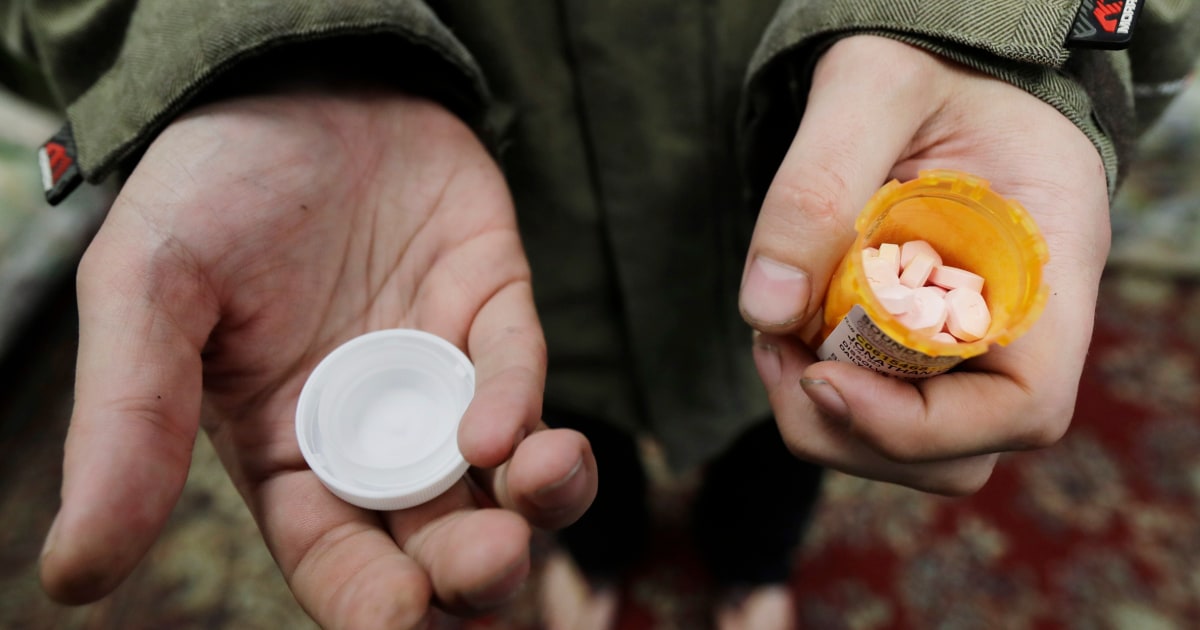
A photo of an open prescription bottle with a label that reads fentanyl, and a smaller vial with pills spilling out of it.

Getty Illustrations or photos

Specialists say the increase of deaths is the purpose education and learning is important, which Sonovah been given when D.A.R.E., a program that teaches students about medicines via choice generating, visited her college in California.

“Our officers go into the classroom, and we teach final decision making utilizing a product as it relates to alcohol, tobacco and cannabis and other drugs,” D.A.R.E. CEO Francisco Pegueros advised Yahoo Information.

But Pegueros explained these lessons may possibly not stick to youngsters by means of just about every degree of their instruction. “There’s no so-referred to as magic alternative, it truly requires to be a complete local community effort,” he said. “There requires to be a in depth compound abuse avoidance system in each and every local community.”

Very last calendar year, Joseph Friedman, an addiction researcher at UCLA, located that higher-university-age teenager overdoses have enhanced nationally, but that teenage drug use costs have essentially gone down.

“Fewer young adults are applying drugs than right before, we in fact observed that for the to start with time,” he stated. “Over the past few decades, overdose deaths among the teenagers are actually heading up pretty quickly.

“This is vital simply because overdose deaths amongst grown ups have actually been heading up calendar year after calendar year for more than 40 yrs,” he additional. “But for most of that time, young people were being really kind of insulated from these increases.”

Sonovah Hillman Jr. with her dad, DMX.

Sonovah with her dad. (Courtesy of Sonovah Hillman Jr.)

Friedman mentioned the research also found that adolescents on the West Coastline were influenced the most by fentanyl-connected overdoses. “We also located that Indigenous American and Latinx teens ended up disproportionately influenced,” he claimed.

Considering the fact that 2020, adolescents have faced an enhance in fentanyl-involved fatalities: Total, the opioid has been determined in over 75{35112b74ca1a6bc4decb6697edde3f9edcc1b44915f2ccb9995df8df6b4364bc} of overdose deaths in adolescents.

In comparison, other prescription drugs lead to fatalities on a significantly smaller sized scale: “13.26{35112b74ca1a6bc4decb6697edde3f9edcc1b44915f2ccb9995df8df6b4364bc} for benzodiazepines, 9.77{35112b74ca1a6bc4decb6697edde3f9edcc1b44915f2ccb9995df8df6b4364bc} for methamphetamine, 7.33{35112b74ca1a6bc4decb6697edde3f9edcc1b44915f2ccb9995df8df6b4364bc} for cocaine, 5.76{35112b74ca1a6bc4decb6697edde3f9edcc1b44915f2ccb9995df8df6b4364bc} for prescription opioids, and 2.27{35112b74ca1a6bc4decb6697edde3f9edcc1b44915f2ccb9995df8df6b4364bc} for heroin,” the 2022 research discovered.

With 150 individuals dying every single working day from fentanyl-similar overdoses, Sonovah plans to use her experience and trauma to force for a resolution.

“I’m all set to have a discussion that some adults aren’t prepared to have,” she said. “My purpose is to educate, unfold consciousness and help you save life.”

She and her mother have established a GoFundMe webpage to raise cash for the production fees of the docuseries, with a aim of $250,000.

“I’m content with all the assist I’ve been finding. It feels really great. We gave ourselves 120 days to get whatsoever funding we can, and we’ll make it perform from there,” Sonovah explained.

CRISIS IN KENSINGTON: Drug overdoses kill 12 Pennsylvanians a day. Watch one man’s fight to help addicts

CRISIS IN KENSINGTON: Drug overdoses kill 12 Pennsylvanians a day. Watch one man’s fight to help addicts

This is the second tale in a collection about the open-air drug sector in Kensington. Read through the initial in this article.

PHILADELPHIA – As overdose fatalities continue on to tick up in Pennsylvania, a single gentleman walks the streets of a drug-ridden community hoping to preserve addicts from dying — and possibly even help change their life around.

Kensington — usually identified as an open-air drug market place — is floor zero for Philadelphia’s opioid disaster. There, Frank Rodriguez wakes addicts handed out on the sidewalks, creating certain they’re not overdosing.

Enjoy: ACTIVIST Tours PHILADELPHIA’S Open up-AIR DRUG Market

Look at Additional FOX News Electronic ORIGINALS Right here

“I see the drug habit. You know, I see the drug dealing. I see the violence. I see the poverty,” the recovering addict previously told Fox Information. “Most of all, I see soreness.”

In 2021, a Pennsylvanian died about every single two several hours of a drug overdose, in accordance to preliminary knowledge the state updated very last week. Approximately 80{35112b74ca1a6bc4decb6697edde3f9edcc1b44915f2ccb9995df8df6b4364bc} of individuals associated fentanyl.

And like most states, Pennsylvania saw a substantial leap in the wake of the COVID-19 lockdowns, with the Keystone Point out struggling with 5,347 overdoses in 2021, marking a practically 20{35112b74ca1a6bc4decb6697edde3f9edcc1b44915f2ccb9995df8df6b4364bc} boost from 2019.

Check out: SAN FRANCISCO ACTIVIST EXPOSES BUS STOPS ‘HIJACKED’ AS ‘OPEN-AIR DRUG MARKETS’

For Rodriguez, an overdose played an critical function in his sobriety and eventual activism. For the duration of a relapse just after a limited stint in restoration, he experienced an overdose of his have.

“I woke up in the healthcare facility 3 times later on,” Rodriguez, who grew up and lived in Kensington for several years, earlier explained.

Afterward, the Brooklyn indigenous went to rehab where by he sat in the entrance row having notes.

Now, Rodriguez returns to Kensington to enable addicts. He offers cost-free haircuts and posts testimonies from struggling drug buyers on his YouTube channel “Morals Over Funds” in an try to humanize them.

But when he sees an addict handed out on the sidewalk, Rodriguez remembers his personal expertise.

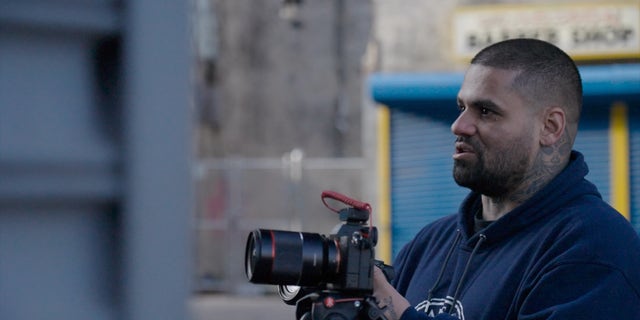
Frank Rodriguez films addicts' testimonials in an effort to remind viewers that they're still people — and they're suffering.

Frank Rodriguez movies addicts’ testimonies in an work to remind viewers that they’re even now men and women — and they are struggling. (Fox News)

Click In this article TO GET THE FOX Information Application

“For me, that is why I see individuals overdose and I see persons stretched out and laid out and I wanna go there and just be like ‘yo, you alright?’” Rodriguez earlier told Fox Information. “That’s all it took for me to wholly adjust my existence, 180 levels.”

“Maybe there’s other folks that are like that also. And maybe not, but…” he said, trailing off.

To hear Rodriguez detail the horrors of Philadelphia’s open-air drug market, click listed here.

Drug Overdoses Are On The Rise On Kauai. Meth Is Still The Main Reason

Drug Overdoses Are On The Rise On Kauai. Meth Is Still The Main Reason

On Kauai, drug overdose deaths have more than quadrupled in 10 years from fewer than five in 2012 to 18 last year, contributing to an alarming rise in fatal drug use statewide.

Kauai locator map

Drug overdoses were the second-most common cause of fatal injury on the Garden Isle in 2021 — after suicide and surpassing deaths from drowning, car crashes and falls — and the 10th most common cause of death overall, according to Hawaii Department of Health data.

“It’s getting worse fast,” said Dr. Graham Chelius.

He’s lost count of the number of his Kauai patients who’ve died from a drug overdose on an island grappling with a rise in drug abuse, a suicide problem and a longstanding lack of mental health and drug addiction resources.

A family medicine doctor in Waimea, a town of fewer than 2,000 people, Chelius said he has prescribed medication to alleviate withdrawal symptoms and cravings for opioids to hundreds of patients, including inmates at the Kauai Community Correctional Center.

The county built the $7 facility with taxpayer dollars n 2019. But its doors never opened for the center's intended purpose.
Kauai has been without an inpatient drug and alcohol rehabilitation facility since Hurricane Iniki ripped through the island in 1992. A $7 million adolescent treatment facility was constructed with taxpayer money in 2019 but has never opened. Brittany Lyte/Civil Beat/2022

Medication-assisted treatment is not a miracle antidote to drug dependency, but studies have shown that medications like buprenorphine, also known as Suboxone and Sublocade, substantially reduce the risk of overdose deaths from opioid use and help prevent people from falling off treatment.

Another important tool is naloxone, commonly known by the brand name Narcan. The lifesaving opioid overdose antidote can block the effects of opiates on the brain to restore breathing in someone on the verge of an overdose death. 

But no medication has been approved by the Food and Drug Administration for use with methamphetamine, the leading cause of fatal drug overdoses in Hawaii. 

Dr. Graham Chelius abortion pill
Dr. Graham Chelius said said drug addiction is a staggering problem on Kauai. Courtesy: Graham Chelius

Although highly addictive opioids kill more people any other drug nationwide, causing nearly two-thirds of the 107,622 drug overdose deaths in the U.S. in 2021, methamphetamine continues to be the deadliest drug in the islands. 

“The research for treatment of methamphetamine use is really limited,” said Heather Lusk, executive director of the Hawaii Health & Harm Reduction Center.

On Oahu, fatal overdoses involving methamphetamine outnumbered those involving opioids from 2017 to 2021 by a ratio of more than 3-to-1. On Kauai that ratio is closer to 2-to-1, with meth-related overdoses increasing from zero in 2012 to 14 in both 2020 and 2021. 


Most of the 107 drug overdose deaths on Kauai in the decade ending in 2021 were unintentional, except for 20 suicides and five deaths for which the intent could not be determined, according to data analyzed by Daniel Galanis, an epidemiologist at the state Department of Health.

Opioids contributed to about a third of the deaths. Ten of the 11 opioid-related deaths in 2021 involved synthetic opioids, assumed to be fentanyl.    

“Substance abuse is often actually a symptom of deeper social problems,” said Life’s Choices Kauai Coordinator Michael Miranda. “I think it’s an indicator of the quality of our education system, the cost of living, the lack of housing. People are self-medicating with illicit substances to cope with all the socioeconomic stressors they are facing.”

The Statewide Picture

Fatal overdoses from all drugs have generally increased in Hawaii over the last five years, although there was a stark decrease in deadly overdoses on Oahu from 210 in 2020 to 163 in 2021.

Heather Lusk press conference homeless count.
Heather Lusk, executive director of Hawaii Health & Harm Reduction Center, said Narcan, the lifesaving opioid overdose antidote, is more readily available than ever in Hawaii. But there is no similar drug to help people battling addiction to methamphetamine. Cory Lum/Civil Beat/2018

It’s unclear why Oahu experienced a drop in overdose deaths last year, but Lusk said one contributing factor may be that in 2021 the brunt of the fentanyl epidemic hadn’t hit Hawaii yet. And at the same time, the availability of life-saving Narcan in Hawaii was on the rise, helping to reverse opioid overdoses at higher rates.

Since August 2016, HHHRC has distributed 40,000 doses of Narcan statewide as the overseer of the state’s Overdose Prevention and Response Program. Half of those doses were distributed this year to opioid addicts, drug treatment counselors, mental health providers, homeless shelter workers, police officers and other people in the community who’ve undergone training.

Opioids are the main driver of drug overdose deaths in the U.S., with fentanyl and other synthetic opioids involved in more than 82{35112b74ca1a6bc4decb6697edde3f9edcc1b44915f2ccb9995df8df6b4364bc} of opioid overdose deaths, according to the Centers for Disease Control and Prevention.

Opioid-involved deaths in Hawaii are more likely to be from fentanyl and other illicit synthetic opioids than from legal prescription pills, such as oxycodone. 

In Hawaii, fentanyl is typically sold on the street for $15 to $17 a pill, an indicator that the supply is not as plentiful as it is in places like Los Angeles, where a pill sells for about a dollar, according to DEA Hawaii District Office Assistant Special Agent in Charge Victor Vazquez.

“Meth has been the primary choice drug in Hawaii, whereas we’re seeing fentanyl being seized in much larger quantities — up to a million pills at a time — in places like California, Arizona and Texas because it’s coming from the Mexican cartels,” Vazquez said. 

“I think the reason we haven’t seen as much fentanyl here in Hawaii is that we’re naturally protected by the ocean from the Mexican border,” he added. “If it’s being driven through the border, it’s not going to be immediately driven into Honolulu or Waikiki Beach.”

When fentanyl does reach Hawaii shores, it arrives primarily through the postal system or commercial airline luggage, Vazquez said.

One pill can be deadly. Across the nation this year the DEA seized over 50 million fentanyl-laced fake prescription pills and 10,800 pounds of fentanyl powder — the equivalent of about 379 million deadly doses. 

“That’s enough to wipe out the whole U.S. population,” Vazquez said.

Civil Beat’s health coverage is supported by the Atherton Family Foundation, Swayne Family Fund of Hawaii Community Foundation, Cooke Foundation and Papa Ola Lokahi.

As overdoses soar in rural America, more clinicians are prescribing addiction medications

As overdoses soar in rural America, more clinicians are prescribing addiction medications

MARSHALLTOWN, Iowa — Andrea Storjohann is glad to see that she’s starting to be significantly less of a rarity in rural The usa.

The nurse practitioner prescribes medicine to dozens of individuals striving to get better from dependancy to heroin or opioid painkillers.

The basic-apply clinic exactly where she is effective, housed in a repurposed supermarket developing, has no indications designating it as a location for men and women to look for treatment for drug addiction, which is how Storjohann desires it.

“You could be coming in this article for OB-GYN care. You could be coming here for a sore throat. You could be coming here for any range of causes,” and no 1 in the waiting place would know the variance, she said.

Privacy is an essential component of the treatment. And so is the medicine Storjohann prescribes: buprenorphine, which staves off cravings and stops withdrawal signs or symptoms for people today who have stopped misusing opioid medicines. The central Iowa clinic, owned by the nonprofit company Most important Wellbeing Care, has supplied buprenorphine because 2016. “We were being kind of a unicorn in this aspect of the point out,” Storjohann said, but which is switching.

Contrary to methadone, the standard medicine to wean persons off heroin or other opioids, buprenorphine can be recommended at key care clinics and dispensed at community pharmacies. Federal and state authorities have encouraged additional entrance-line overall health care industry experts to prescribe Suboxone and other remedies that contains buprenorphine for individuals attempting to defeat opioid addiction. Federal regulators have made it easier for health professionals, nurse practitioners, and medical professional assistants to grow to be certified to supply the services.

The opioid disaster has deepened in the previous 10 years with the illicit distribution of fentanyl, a highly effective, particularly addictive opioid. Its prevalence has intricate the use of treatment to take care of opioid addiction. Patients who have been misusing fentanyl can experience severe withdrawal indicators when they start out getting buprenorphine, so well being practitioners must be cautious when setting up the cure.

In Iowa, officials designated $3.8 million from the state’s first share of opioid lawsuit settlement money for a University of Iowa plan that can help wellness treatment providers have an understanding of how to use the remedies.

Federal companies are paying millions to broaden entry to medicine to address addictions, such as in rural parts. The Wellbeing Means and Products and services Administration, which aims to enhance wellbeing treatment for underserved people, features many of these grants.

Carole Johnson, the agency’s leading administrator, stated she hopes improved teaching on treating opioid dependancy encourages health and fitness care suppliers to find out the newest methods to deal with other varieties of addiction, together with methamphetamine dependence and alcoholism, which plague several rural states. “We’re sensitizing folks to substance use disorder writ huge,” she told KHN.

In 2016, just 40{35112b74ca1a6bc4decb6697edde3f9edcc1b44915f2ccb9995df8df6b4364bc} of rural counties nationwide had at least a person wellness treatment company accredited to prescribe buprenorphine, according to a University of Washington examine. That figure climbed to 63{35112b74ca1a6bc4decb6697edde3f9edcc1b44915f2ccb9995df8df6b4364bc} by 2020, the examine discovered.

The research credited the increase to changes in federal policies that let nurse practitioners, health practitioner assistants, and other midlevel wellbeing care providers to prescribe buprenorphine. In the earlier, only medical professionals could do so, and several rural counties lacked doctors.

Buprenorphine is an opioid that pharmacies most usually offer as a pill or a film that both of those dissolve below the tongue. It does not result in the identical variety of significant as other opioid prescription drugs do, but it can reduce the debilitating withdrawal effects experienced with those people medications. Without that enable, lots of persons relapse into risky drug use.

The concept of opioid “maintenance treatment” has been all around for far more than 50 a long time, primarily in the variety of methadone. That drug is also an opioid that can lessen the prospect of relapse into misusing heroin or painkillers. But the use of methadone for dependancy treatment method is tightly regulated, because of to considerations that it can be abused.

Only specialized clinics offer you methadone routine maintenance treatment method, and most of them are in towns. Quite a few clients starting up methadone procedure are necessary to travel everyday to the clinics, where staffers enjoy them swallow their medicine.

Federal regulators accredited Suboxone in 2002, opening an avenue for dependancy remedy in towns devoid of methadone clinics.

Storjohann said buprenorphine offers a realistic choice for Marshalltown, a town of 27,000 folks surrounded by rural places.

The nurse practitioner spends about fifty percent her time doing work with clients who are getting prescription drugs to avert relapse into drug abuse. The other half of her follow is mental well being treatment. A latest appointment with affected person Bonnie Purk provided a little bit of both.

Purk, 43, sat in a smaller test space with the nurse practitioner, who requested about her lifetime. Purk explained relatives struggles and other stressors she faces when hoping to abstain from abusing painkillers.

Storjohann requested no matter whether Purk felt hopeless. “Or are you just frustrated?”

Purk assumed for a second. “I went through a 7 days wherever I was just crying,” she mentioned, wiping her eyes with a tissue. But she said she hasn’t been seriously tempted to relapse.

Storjohann praised her persistence. “You’re riding a roller coaster,” she explained. “I imagine you require to give oneself some grace.”

Bonnie Purk meets with nurse practitioner Andrea Storjohann at the Primary Health Care clinic
Bonnie Purk, left, fulfills with nurse practitioner Andrea Storjohann at the Main Wellbeing Treatment clinic in Marshalltown, Iowa.Courtesy Tony Leys/KHN

Purk appreciates Suboxone is not a wonder heal. She has taken the medicine for yrs, and twice relapsed into misusing ache drugs. But she has prevented a relapse because spring, and she explained the medication will help.

In an interview soon after her month to month appointment with Storjohann, Purk stated the medication dulls cravings and blocks withdrawal indications. She recalled awful evening sweats, sleeplessness, diarrhea, and jitters she endured when making an attempt to halt abusing capsules without the need of taking Suboxone.

“You target on nothing at all but that subsequent deal with. ‘Where am I likely to get it? How am I likely to choose it?’” she explained. “You just truly feel like a educate wreck — like you’ll die without having it.”

Purk mentioned mental overall health counseling and repeated drug checks have also assisted her keep on being sober.

Sufferers can continue to be on buprenorphine for months or even yrs. Some skeptics contend it is swapping just one drug dependence for yet another, and that it must not be seen as a substitute for abstinence. But proponents say these skepticism is easing as more households see how the therapy can support men and women regain control more than their lives.

Dr. Alison Lynch, a College of Iowa addiction drugs specialist, warned about the risks of fentanyl and buprenorphine in a current lecture to health and fitness industry experts in education.

Lynch defined that fentanyl continues to be in the system extended than other opioids, these as heroin. When another person with fentanyl in their procedure will take buprenorphine, it can trigger a specially severe spherical of nausea, muscle mass agony, and other indications, she stated. “It’s not perilous. It is just miserable,” she stated, and it can discourage sufferers from continuing the medicine.

Lynch noted drug sellers are lacing fentanyl into other medicines, so individuals really do not always know they’ve taken it. “I just make the assumption that if persons are making use of any prescription drugs they purchased on the street, it is probably received fentanyl,” she mentioned. Due to the fact of that, she explained, she has been working with smaller preliminary doses of buprenorphine and escalating the dosage extra progressively than she utilised to.

Nationwide, the range of overall health experts accredited to prescribe buprenorphine has extra than doubled in the past 4 years, to far more than 134,000, in accordance to the federal Material Abuse and Psychological Health Companies Administration. Attempts to expand obtain to the treatment method appear as drug overdose fatalities have additional than doubled in the U.S. given that 2015, led by overdoses of fentanyl and other opioids.

Storjohann would like to see more general clinicians request coaching and certification to prescribe buprenorphine at least occasionally. For instance, she said, crisis place medical practitioners could prescribe a handful of days’ really worth of the treatment for a affected person who arrives to them in disaster, then refer the client to a specialist like her. Or a patient’s major doctor could acquire in excess of the buprenorphine procedure immediately after an addiction therapy expert stabilizes a affected individual.

Dr. Neeraj Gandotra, chief healthcare officer of the federal Substance Abuse and Psychological Health and fitness Services Administration, said he sees probable in expanding these kinds of preparations, regarded as a “hub and spoke” model of care. Relatives practice suppliers who agree to participate would be confident that they could always send out a affected individual back again to an addiction treatment method expert if difficulties arose, he stated.

Gandotra explained he hopes extra major care companies will request certification to prescribe buprenorphine.

Johnson, the Wellness Assets and Companies Administration administrator, explained states can also increase accessibility to treatment-assisted procedure by growing their Medicaid packages, to provide overall health insurance protection to more very low-profits adults. The federal governing administration pays most of the charge of Medicaid growth, but 11 states have declined to do so. That leaves far more individuals uninsured, which usually means clinics are considerably less likely to be reimbursed for treating them, she reported.

Wellbeing care providers no for a longer time are expected to take particular courses to get federal certification — identified as a “waiver” — to deal with up to 30 people with buprenorphine. But Lynch claimed even veteran health and fitness treatment companies could gain from schooling on how to thoroughly deal with the therapy. “It’s a minor daunting to start out prescribing a treatment that we didn’t get a lot of coaching about in healthcare school or PA college or in nursing college,” she stated.

Federal officials have set up a general public databases of wellbeing care vendors qualified to provide buprenorphine cure for habit, but the registry lists only vendors who concur to include their names. Several do not do so. In Iowa, only about a third of companies with the certification have agreed to be mentioned on the general public registry, in accordance to the Iowa Section of Health and fitness and Human Companies.

Lynch speculated that some well being treatment professionals want to use the treatment to aid recent people who will need addiction therapy, but they aren’t seeking to make it a big section of their follow.

Storjohann explained some wellness treatment professionals consider habit cure would direct to disappointment, for the reason that sufferers can consistently relapse. She doesn’t see it that way. “This is a area the place individuals definitely want to get greater,” she stated. “It’s actually gratifying.”

KHN (Kaiser Health Information) is a countrywide newsroom that generates in-depth journalism about health and fitness issues. Jointly with Policy Investigation and Polling, KHN is a single of the three important working plans at KFF (Kaiser Family Foundation). KFF is an endowed nonprofit firm furnishing information on health troubles to the nation.

Follow NBC Wellbeing on Twitter & Fb.

To stop fatal overdoses, hospitals turn to addiction treatment teams : Shots

To stop fatal overdoses, hospitals turn to addiction treatment teams : Shots

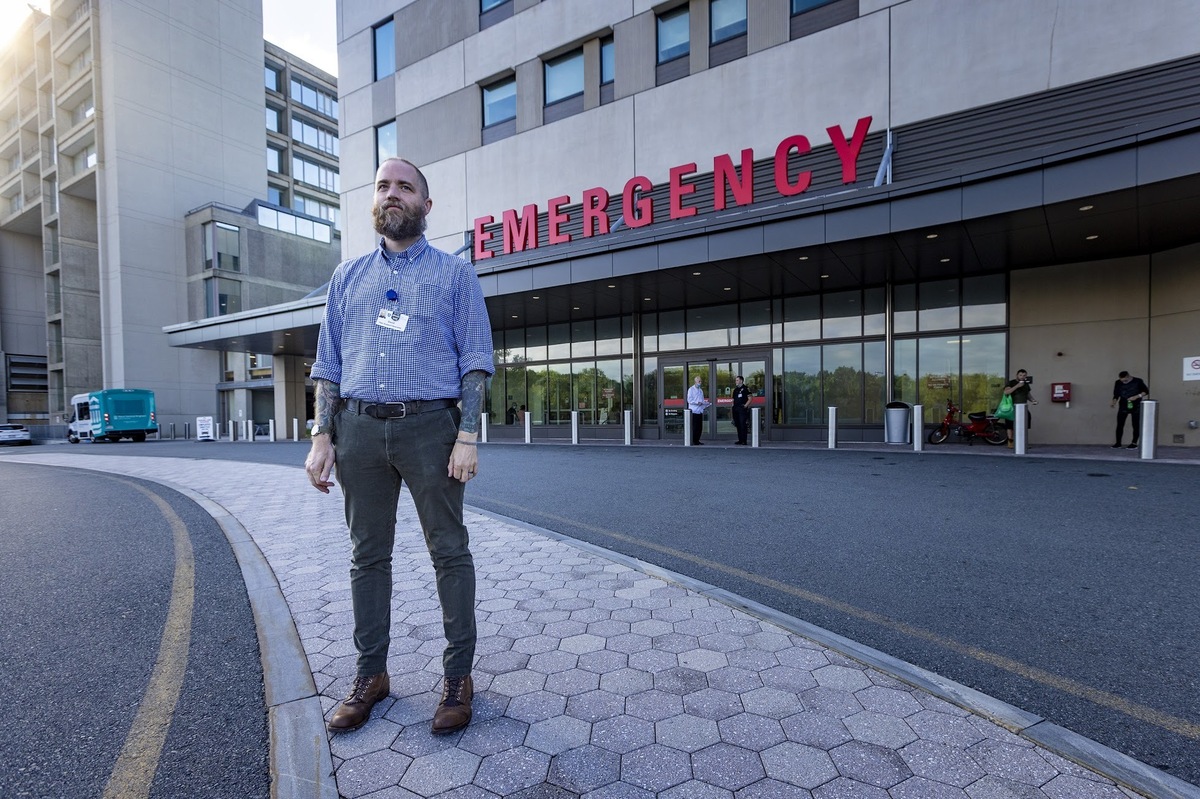
David Cave, a recovery coach who is part of an addiction specialty team at Salem Hospital, north of Boston, stands outside the emergency department.

Jesse Costa/WBUR


hide caption

toggle caption

Jesse Costa/WBUR


David Cave, a recovery coach who is part of an addiction specialty team at Salem Hospital, north of Boston, stands outside the emergency department.

Jesse Costa/WBUR

Marie lives in the coastal town of Swampscott, in Massachusetts. Last December, she began having more and more trouble breathing. One morning, three days after Christmas, she woke up gasping for air. A voice in her head said, “You’re going to die.” Marie dialed 911.

“I was so scared,” Marie said later. Describing that day, the 63-year-old’s voice filled with tension, and her hand clutched at her chest.

Marie was admitted to Salem Hospital, north of Boston. The staff treated her COPD, a chronic lung condition that includes emphysema and chronic bronchitis.

KHN logo

After her worst symptoms subsided, a doctor came the next day to check on her. He told Marie her oxygen levels looked good and that she was stable and ready to be discharged.

NPR is not using Marie’s last name because she, like 1 in 9 hospitalized patients, has a history of addiction to drugs or alcohol. Disclosing a diagnosis like that can make it hard to find housing, a job and even medical care in hospitals where patients with an addiction may be shunned.

But talking to the doctor that morning, Marie felt she didn’t have a choice. She had to tell him about her other medical problem.

“He said I could be released,” Marie recalled. “And I said, ‘I got to tell you something. I’m a heroin addict. And I’m, like, starting to be in heavy withdrawal. I can’t literally move, please don’t make me go.'”

Without care, discharged patients risk overdose

At many hospitals in Massachusetts and across the country, Marie would likely have been discharged anyway, while still in the pain of withdrawal. Perhaps she would leave with a list of local detox programs where she might — or might not — find help.

But a crucial opportunity to intervene and treat at the hospital would have been lost — partly because most hospitals don’t have specialists available who know how to treat addiction, and other clinicians don’t know what to do.

Hospitals typically employ all sorts of specialists who focus on critical organs like hearts, lungs and kidneys — or who treat systemic or chronic diseases of the immune system or the brain. There are specialists for children, for mental illness, for childbirth and hospice.

But if your illness is an addiction or a condition related to drug or alcohol use, there are few hospitals where patients can see a clinician — whether that be an M.D., nurse, therapist or social worker — who specializes in addiction medicine.

Their absence among hospital personnel is particularly striking at a time when overdose deaths in the U.S. have reached record highs, and research shows patients face an increased risk of fatal overdose in the days or weeks after they are discharged from a hospital.

“They’re left on their own to figure it out, which unfortunately usually means resuming [drug] use because that’s the only way to feel better,” says Liz Tadie, a nurse practitioner certified in addiction care.

In the fall of 2020, Tadie launched a new approach at Salem Hospital, using $320,000 from a federal grant that the hospital had worked for several years to secure. Tadie put together what’s known as an “addiction consult service.”

At Salem, that team included Tadie, a patient case manager, and three recovery coaches — who draw on their experience with addiction to advocate for patients and help them navigate their treatment options.

What an addiction consult service brings to the bedside

So on that day, when Marie said, “Please don’t make me go,” her doctor didn’t tell Marie she had to leave. He called Tadie for a bedside consult.

Tadie started out the treatment by first prescribing methadone, a medication to treat opioid addiction. Although many patients do well on that drug, it didn’t help Marie, so Tadie switched her to buprenorphine, with better results. After a few more days, Marie was eventually discharged and continued taking buprenorphine to manage her addiction to opioids.

But Marie continued seeing Tadie for treatment as an outpatient and was able to turn to her for support and reassurance:

“Like, that I wasn’t going to be left alone,” Marie said. “That I wasn’t going to have to call a dealer ever again, that I could delete the number. I want to get back to my life. I just feel grateful.”

Among Salem’s clinical staff, Tadie helped spread the word about the expertise she can offer and how it can help patients. Success stories like Marie’s helped her make the case for addiction medicine — which also meant unraveling decades of misinformation, discrimination and ignorance about patients with an addiction and their treatment options.

Part of the problem, according to Tadie, is that doctors, nurses and other clinicians get very little training in the physiology of addiction and withdrawal, the medications and treatment options, and the emerging science about what works for these patients. What little training that doctors and nurses do get is often unhelpful.

“A lot of the facts are outdated,” Tadie says. “And people are training to use stigmatizing language — words like ‘addict’ and substance ‘abuse.'”

Tadie gently corrected doctors at Salem Hospital, for example, who thought they weren’t ever allowed to start patients on methadone in the hospital.

“Sometimes I would recommend a dose and somebody would give pushback,” Tadie says. But “we got to know the hospital doctors and they, over time, were like, “OK, we can trust you. We’ll follow your recommendations.”

Over time, addiction specialists help change the culture

Other members of Tadie’s team have also wrestled with finding their place in the hospital hierarchy. David Cave, one of the recovery coaches at Salem Hospital, is often the first person to speak to a patient who comes to the emergency room in withdrawal. He tries to help doctors and nurses understand what the person is going through and help navigate their care.

“I’m probably punching above my weight every time I try to talk to a clinician or doctor,” says Cave. “They don’t see letters after my name. It can be kind of tough.”

But naming addiction as a specialty, and hiring people with training in this particular disease, is shifting the culture of Salem Hospital, according to Jean Monahan-Doherty, a social worker who has referred patients to Tadie.

“There was finally some recognition across the entire institution that this was a complex medical disease that needed the attention of a specialist,” Monahan-Doherty says. “People are dying. This is a terminal illness unless it’s treated.”

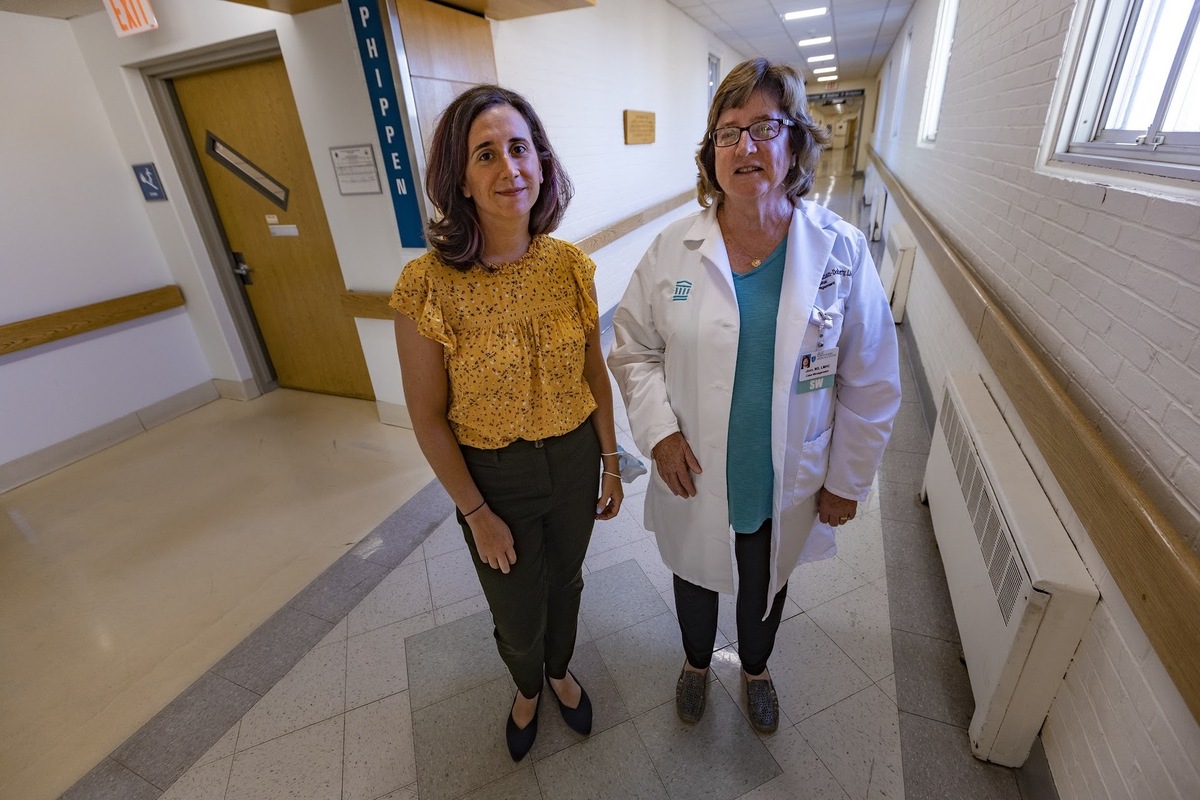
Former director of substance use disorder services at Salem Hospital Liz Tadie (left) and social worker Jean Monahan-Doherty. Tadie is moving to a new job at another hospital, but Salem Hospital leaders say they are committed to continuing the program.

Jesse Costa/WBUR


hide caption

toggle caption

Jesse Costa/WBUR


Former director of substance use disorder services at Salem Hospital Liz Tadie (left) and social worker Jean Monahan-Doherty. Tadie is moving to a new job at another hospital, but Salem Hospital leaders say they are committed to continuing the program.

Jesse Costa/WBUR

This approach to treating addiction is winning over some Salem Hospital employees — but not all.

“Some of the medical staff continue to see it as a moral issue,” Monahan-Doherty says. “Sometimes you hear an attitude of ‘Why are you putting all this effort into this patient? They’re not going to get better.’ Well, how do we know? If a patient comes in with diabetes, we don’t say, ‘OK, they’ve been taught once and it didn’t work. So we’re not going to offer them support again.'”

Despite lingering reservations among some colleagues, the demand for their services is quite high. Many days, Tadie and her team have been overwhelmed with referrals.

With federal support, states experiment to stop overdose deaths

Four other Massachusetts hospitals also added addiction specialists in the past three years and experienced similar challenges and success. The additional staff were paid for by federal funding from the HEALing Communities study. This project is paying for a wide range of strategies across several states, to determine the most effective ways to reduce drug overdose deaths. They include mobile treatment clinics, street outreach teams, naloxone trainings and distribution, rides to treatment sites, and multilingual public awareness campaigns.

“You really do provide better care for patients and you make the care environment one that people are more satisfied working in,” says Dr. Jeffrey Samet, who leads the Massachusetts portion of this research effort. Samet practices primary care at Boston Medical Center and says adding addiction specialists in hospitals is a key piece of the solution.

Dr. Todd Kerensky, president of the Massachusetts Society of Addiction Medicine, has seen patients cry when they learn he specializes in addiction and wants to treat their disease, not shame them.

“It’s gut-wrenching to know there are a lot of institutions that don’t have this service,” says Kerensky. It’s not clear how many hospitals in Massachusetts have addiction experts on staff, but Kerensky says it’s a “distinct minority.”

There are many possible reasons. It’s a new field, so finding qualified staff members with the right certifications may be a hurdle. Some hospital leaders say they’re worried about the costs of addiction treatment and fear they’ll lose money on the efforts. Some doctors report not wanting to initiate a treatment medication while the patient is still in the hospital, because they don’t know where to refer patients after they’ve been discharged, whether that be outpatient follow-up care or a residential program. To address follow-up care, Salem Hospital started what’s known as a “bridge clinic,” where patients get help transitioning to outpatient care.

Despite these worries and reservations, hospitals that don’t have an addiction specialty team need to start one, says Dr. Honora Englander, a national leader in addiction specialty programs.

“People with substance use disorder are coming to our hospitals now,” said Englander, who directs an addiction care team at Oregon Health and Science University. “We can’t wait. We have to do better, and this is the time.”

Englander says the federal government could support the creation of more addiction consult services by offering financial incentives — or penalties for hospitals that don’t embrace them. The Centers for Medicare & Medicaid Services, which has regulatory authority over most U.S. hospitals, could require that hospitals stock the medications used to treat an addiction and track outcomes for patients hospitalized with a substance use disorder, in the same way that CMS already does when it comes to readmissions for other health conditions.

At Salem Hospital, the program is still new, and some staff worry about its future. Liz Tadie is moving to a new job at another hospital, and the federal grant ended June 30. But Salem Hospital leaders say they are committed to continuing the program, and the service will continue.

Compared to the other four Massachusetts hospitals that launched addiction consult teams using the same federal grant, Salem Hospital has helped the most patients. Over a 15-month period, its team helped 448 patients begin medication to treat their opioid use disorder.

This story comes from NPR’s health reporting partnership with WBUR and KHN (Kaiser Health News).