Detoxing fads: Nutrition experts give tips and insights on finding the truth amid the trends in diets, fasting and supplements

Detoxing fads: Nutrition experts give tips and insights on finding the truth amid the trends in diets, fasting and supplements
Dr. Lisa Pomerantz measures out dried calendula into a bag containing tea while working in her storefront at Mountain-River Naturopathic Clinic in downtown Frisco. A registered naturopathic doctor, Pomerantz helps patients harness the power of plants and natural remedies to treat mental stress and physical disease.
Andrew Maciejewski/Summit Daily News

A call in 2011 changed the course of Lisa Pomerantz’s life.

She boarded a plane in Costa Rica to head back home as soon as she heard her father was diagnosed with pancreatic cancer. 

Her dad was a meat-and-potatoes kind of guy before beginning treatment, but he began juicing every day as he transitioned to becoming a raw vegan, a fully plant-based diet consisting of food that isn’t cooked, she said. 


His transformation from a “standard American diet” to becoming the healthiest person in her life left an impression on her. 

“The doctors couldn’t believe that we started in November and by March we were celebrating his health on vacation,” Pomerantz said. “You know, it’s a diagnosis where people usually die within a year. My dad lived for seven years with it.”


She was studying anthropology abroad before she got that call, but after coming home to spend time with her father, she got a job at a local juice bar. She met nutritionists and embedded herself in a health-passionate community as she watched her father undergo chemo and reach remission. Eventually, she discovered naturopathic medicine and decided to change her career path. 

Pomerantz received a doctorate in naturopathic medicine from Bastyr University and now treats patients at Mountain-River Naturopathic Clinic on Main Street in downtown Frisco. Naturopathic medicine focuses on natural remedies that often combine stress reduction, nutrition counseling, exercise and wellness. 

Various dried plants line a wall at Mountain-River Naturopathic Clinic in downtown Frisco on Friday, March 24, 2023. Plants create substances that help combat toxins, which can be harnessed by humans to detoxify the body, and drinking tea can be another way to consume these substances beyond eating a plant-heavy diet.
Andrew Maciejewski/Summit Daily News

Like many Americans, patients come to Pomerantz after being bombarded with advertisements about the latest fad diets and trendy topics surrounding nutrition. 

“Keto, intermittent fasting — you know — there are even things that say you should be high carb, low fat to lose weight and then others say high fat, low carb,” Pomerantz said. “But really, you just have to listen to your body. The No. 1 thing is intuition, observing your body.”

Naturopathic doctors and registered dietitians help folks cut through all of the promotions and vast amounts of information out there to help identify deficiencies and sort out root causes of issues in their health. 

“At the end of the day, everybody’s health goals are different,” said Debbie Petitpain, a registered dietitian at the Academy of Nutrition and Dietetics. “The approach that you may want to take will be different than even a family member. A registered dietitian can help you come up with that individualized, tailored approach.”

With the latest diets, trendy techniques like intermittent fasting, exotic superfoods and endless supplements flooding the market, nutrition experts provided their best tips on how to navigate the muddy waters surrounding these topics. 

Fad diets

With 41{35112b74ca1a6bc4decb6697edde3f9edcc1b44915f2ccb9995df8df6b4364bc} of Americans living with obesity, according to a Centers for Disease Control and Prevention study from 2020, nutrition is a common topic in the United States. 

Obesity is tied to numerous health conditions such as heart disease, diabetes and certain types of cancer. It comes with a financial burden, too. The medical cost of obesity was nearly $173 billion in 2019, according to the CDC. 

The top line shows obesity rates and the bottom line shows severe obesity rates in U.S. adults aged 20 and over, according to the National Health and Nutrition Survey results.
Andrew Maciejewski/Summit Daily News

This puts a lot of pressure on people to seek ways to cut pounds, and people often gravitate toward trendy diets, Petitpain said. 

“A lot of people are really struggling to find a way to lose weight and often want to lose it quickly,” Petitpain said, “and that’s typically the big promise that these popular or fad diets make.”  

Atkins. Paleo. Keto. South Beach. Zone. Mediterranean. The list goes on. 

“There are so many diets,” said Nikki Withrow, a registered dietitian and associate professor at the University of Northern Colorado. “It’s a multibillion-dollar industry.”

Amid all of the choices, Petitpain said the most important thing is finding out long-term consequences of each and whether they are safe and effective. 

Whether its high-carb or low-carb diets — Petitpain said they all work in the short term, but they often are followed by weight gain a year later. 

“Primarily, if you’re going on a fad diet that you don’t feel like you can sustain as your forever diet, it’s probably not the best choice,” she said. 

Fad diets that are rigid and cut out entire food groups should be a red flag, Petitpain says.

Withrow agrees. Both said cutting out entire food groups is a concern because you lose out on vitamins, minerals, fiber, protein and other things that are proven to promote longevity and health. 

For example, Withrow said, “If you cut out gluten, instead of reducing quantity — what they don’t understand is that many grains in the United States are fortified with micronutrients — like magnesium, calcium, etc. … Often people do not understand how to maximize their nutrient intake.”

Having a medical evaluation before starting a diet is also important since it can detect underlying conditions that may be affected by restricting or adding certain food groups.

The DASH diet calls for eating four to five servings of fruits and vegetables every day while limiting certain foods like sugar and other processed items.
Andrew Maciejewski/Summit Daily News

As far as what the studies say, Petitpain said the DASH diet has withstood the test of time after countless clinical trials, the gold standard of science. It stands for Dietary Approaches to Stop Hypertension, and it has a simple approach: cutting sodium and increasing fruits and vegetables. 

Making an effort to add certain foods to your diet, like heart-healthy ones, is a great approach to navigating nutrition since it is easier to sustain than cutting out entire food groups, which often leads to psychological challenges like changes in mood. Making unrealistic changes in diet can also cause an unbalance in hormones that regulate feelings. 

“When we intentionally try to put our bodies out of balance, our body sees that as a threat to its overall well-being,” Petitpain explained. “As far as your body is concerned, you’ve just been stranded on a deserted island.”

Pomerantz said adding foods that target specific body parts is a good strategy, too. Since naturopathic doctors identify root causes of inflammation and issues with digestive health, people can work with dietitians to add foods to their diet that support vital organs, such as lymph nodes and kidneys. 

“We want to get people eating healthy diets,” Pomerantz said. “Standard American diet is abbreviated as SAD for a reason.”

Intermittent fasting

A polar opposite to diets, intermittent fasting is gaining publicity within the nutrition industry. 

This new approach focuses more on when people eat rather than what people eat. There are multiple ways in which it is employed, but generally it involves going set periods of time without eating followed by a regular eating pattern. 

While it’s gaining popularity, Petitpain said fasting is a technique with ancient roots of a spiritual and religious origin. The reason it is considered a trendy or new approach in nutrition is because scientists are now studying possible health benefits.

“I’ll say that the science is still emerging,” Petitpain said. “As far as the long-term outcomes … we don’t know yet what they are, but the amount of research that’s coming out in this field is just growing exponentially. It’s a very exciting time to watch it.”

Debbie Petitpain
Academy of Nutrition and Dietetics/Courtesy photo

The medical draw to intermittent fasting lies in how the body is designed to go long periods of time without eating, she said. The stomach is like a holding tank, but if it runs out of food, the body has a few mechanisms it uses as backups. 

The body’s cells need constant nourishment, so food is converted by the stomach and stored by our bodies in various ways. When faced with a lack of food, the body will empty sugar stored in the liver and release it into the bloodstream to fuel muscles and high-energy-consuming organs, such as the brain. Once those sugars are depleted, the body then starts to dip into fat storage, which is its long-term energy bank. 

“It’s sort of like your 401(k),” Petitpain said. “It starts to make (fat storage) more accessible. We obviously don’t want to touch our retirement plans, but we can if we have to.”

Being deprived of food also causes hormonal changes. When the body runs out of food, blood sugar levels go down along with insulin, which is a hormone that the body produces to help cells use glucose in the body. 

High blood sugar and high amounts of insulin in the blood have been associated with “all sorts of diseases, diabetes, obesity, inflammation, cardiac disease and vascular damage,” Petitpain said, which is why scientists are researching intermittent fasting’s safety and effectiveness. 

During a fast, “your body goes through a series of different repair processes, where it basically starts to break down old dysfunctional proteins in order to recycle those cells,” Petitpain said. 

That process can reduce inflammation, which may lower the prevalence of cancer according to some preliminary research.

Withrow agreed with Petitpain that there is some evidence to support benefits of intermittent fasting, but Withrow emphasized that “the rigor is not there, yet.”

Both urged caution and said a doctor or dietitian should be involved when approaching intermittent fasting since it can affect medications and also might have detrimental effects for people living with diabetes or hypoglycemia. 

“Intermittent fasting — where you’re going somewhere between eight to 12, maybe 16 hours without eating — there’s very little danger associated with that, as long as you are not on a certain type of medication, like blood sugar, blood pressure medication,” Petitpain explained.

Mountain-River Naturopathic Clinic in downtown Frisco is pictured on Friday, March 24, 2023. The clinic includes supplements and plant-based food sources for folks wanting to bolster their vitamin and nutrient intakes.
Andrew Maciejewski/Summit Daily News

People who are experiencing puberty or are pregnant should not employ this technique, either. 

However, anyone thinking about fasting should consider what it is that they are trying to get out of it, Petitpain said. 

Fasting is often sought out as a way to create self-awareness and mental clarity, she said, but those who seek it out for weight loss might not find it to be helpful, especially if they are trying to cut calories. 

“Being on a low-calorie diet is hard, and there’s plenty of evidence to substantiate that,” she said. 

Since you’re going from a period without eating and following it up with a period of normal eating, it can end up as a wash, which can be disheartening to folks seeking weight loss. 

“The data is not quite there yet, though, to show that fasting works as a long-term weight-loss strategy, and that’s still some evidence we’re looking for,” Petitpain said. “That’s why I think going into it with a more ‘I’m curious’ approach than really wanting a particular outcome is important.”

Withrow said more research is needed, but she did say that if people use intermittent fasting to eat for eight to 12 hours a day, they can consume all of the vital macronutrients and micronutrients that the body needs, which is promising. 

Dietary supplements sit on a shelf at Mountain-River Naturopathic Clinic in downtown Frisco on Friday, March 24, 2023. Supplements can be beneficial when nutritionists detect deficiencies in a patient’s vitamin and mineral levels.
Andrew Maciejewski/Summit Daily News

Supplements 

Most people know vitamins and minerals are essential in any diet, but with millions of options on the market and new products every day — often backed by claims for just about any ailment — it can be overwhelming. 

“It is a ginormous, booming, money-rich industry,” Petitpain said. “We’re used to these weird-smelling bottles on the shelves of the health food store, and now you can’t even pick up a water bottle without wondering what they’ve put in it to — air quote — enhance your well-being. It’s everywhere.”

A CDC survey found that the consumption of over-the-counter vitamin, mineral and herbal supplements is widespread. 

Petitpain said supplements do have benefits and are commonly used in medical practice since it helps fill gaps in people’s diets. 

“There is some evidence to show that the American diet is lacking in some of the nutrients that we know can enhance our health,” Petitpain said. 

This is especially true for certain people, like picky eaters who don’t eat a wide array of foods. 

Even if you aren’t picky with what you eat, there are some vitamins that are hard to get enough of in a normal diet.

“Vitamin D is actually something that is found in very few foods,” Petitpain said, explaining how most milks are fortified with it to help people achieve the daily recommended values. For people who live in northern parts of the world, they might not get enough sunlight to provide the vitamin D their bodies need, so supplements can be helpful. 

Doctors and registered dietitians often use supplements to help fix deficiencies they identify through their medical practice, but with so many persuasive claims out there, many people use them without consulting a doctor or nutritionist first. 

The main concerns with supplements are rooted in how they can interact with medications in bad ways, how some people use them in replacement of medication or seeking medical care, and how some have a potential to cause harm if used incorrectly, according to a study published in the American Medical Association Journal of Ethics. 

Unlike prescription or over-the-counter drugs, dietary supplements are not approved by the U.S. Food and Drug Administration for safety or effectiveness before they hit the market. 

To help navigate this, Petitpain said people should look out for third-party testing that often comes with seals of approval for meeting certain requirements. 

A position paper published by the Academy of Nutrition and Dietetics lists organizations such as ConsumerLab.com, NSF International and U.S. Pharmacopeial Convention as examples. 

Petitpain said multivitamins are common, and when folks ask her about taking them, she recommends finding one that doesn’t have levels of vitamins and minerals that exceed the daily suggested values. 

“If you’re taking more than you need, you’re basically just urinating out your paycheck,” she said. 

Dark leafy greens are packed with antioxidants, which are substances made by plants that fight toxic pathogens in living organisms.
Courtesy Suzanne Elizabeth Anderson

Superfoods

People will ship food from across the country in order to receive the benefits promised by certain plants coined as superfoods. They often pay a hefty price tag, too. 

But Pomerantz, who studies natural remedies and healing properties of plants, said people don’t need to go through all of that effort. She said you can find plants with detoxifying powers that are packed with vitamins and minerals at your local grocery store rather than looking for goji berries imported from China. 

“I think you can get totally by with blueberries,” she said. “Blueberries are one of the most potent superfoods loaded in antioxidants.”

Antioxidants are substances that combat harmful byproducts that are produced by cells as they work to stay alive and reproduce. They neutralize the byproducts and prevent destruction to our cells, especially proteins and DNA. 

Plants produce these substances as a way to protect themselves out in the wild and to grow stronger to withstand the stresses of nature. 

We then harness these defensive chemicals by eating the plants, Pomerantz said.

“We get the vitamins and minerals from the plants that are absolutely essential because they get input into our own metabolic processes,” she explained. “They help us produce energy. They help us do our detoxification. They help produce our DNA in our body.”

To obtain these benefits, Pomerantz said people should add plants to their carts by looking at their colors. Each color brings different benefits at a cellular level for our bodies. 

Dark, leafy greens of all kinds are a great superfood, Pomerantz said, and the same goes for dark berries. The skin of eggplants pack a punch, and colorful peppers contain essential components that support immunity and overall health. 

Getty Images
Juicing and making smoothies can help people fit more fruits and vegetables into their diet, which has shown to help reduce inflammation and promote overall good health.
Getty Images

Nuts, seeds, salmon — there are a lot of superfoods in grocery stores, and those who want to go to the next level can look for locally produced fruits, vegetables and meats. 

“As soon as we harvest food, it’s starting to lose some of its nutrients, and then who knows how long it takes to get from the farm to our supermarkets,” she said. 

Pomerantz’s father used juicing as a way to help harness more detoxifying powers from plants, and his raw vegan diet helped ensure he was eating a variety of fruits and vegetables. 

While Pomerantz feels his approach was monumental in his health journey, she said people can reap similar benefits by adding more fruits and vegetables into their diets, whether that’s by drinking tea, making smoothies, juicing or picking recipes that incorporate more vegetables than they would normally use in their meals.

NYT ripped for only reporting Fetterman’s ‘serious mental health’ issues ‘now that the truth doesn’t matter’

NYT ripped for only reporting Fetterman’s ‘serious mental health’ issues ‘now that the truth doesn’t matter’

Community figures are brazenly talking about how Sen. John Fetterman, D-Pa., faces long lasting psychological issues, a thirty day period just after he was sworn in and a Democratic Senate the greater part secured.

Fetterman experienced a stroke in Could 2022 just in advance of the Pennsylvania Democratic key. The severity of his issue was only exposed the next thirty day period but he ongoing to operate for Senate even though his marketing campaign insisted he would be fit for business. His wellbeing challenges became a supply of public problem when he turned in a troubling debate effectiveness towards Dr. Mehmet Oz regardless of the aid of shut captioning.  

Since defeating Oz, it appears many of Americans’ worst suspicions about his health have been confirmed. Fetterman, who has been hospitalized because Wednesday, has also struggled for months to change to his position as senator, to the issue he nevertheless demands technological aid to support him connect with colleagues and his individual personnel. 

On Friday, the New York Occasions produced an report, titled “Fetterman, Recovering Soon after Stroke, Labors to Regulate to Lifetime in the Senate,” detailing his struggles with quotations from senators and staff members, with the admission that the marketing campaign set back again his stroke recovery. 

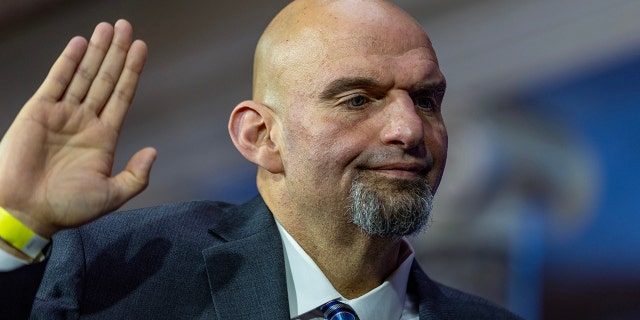
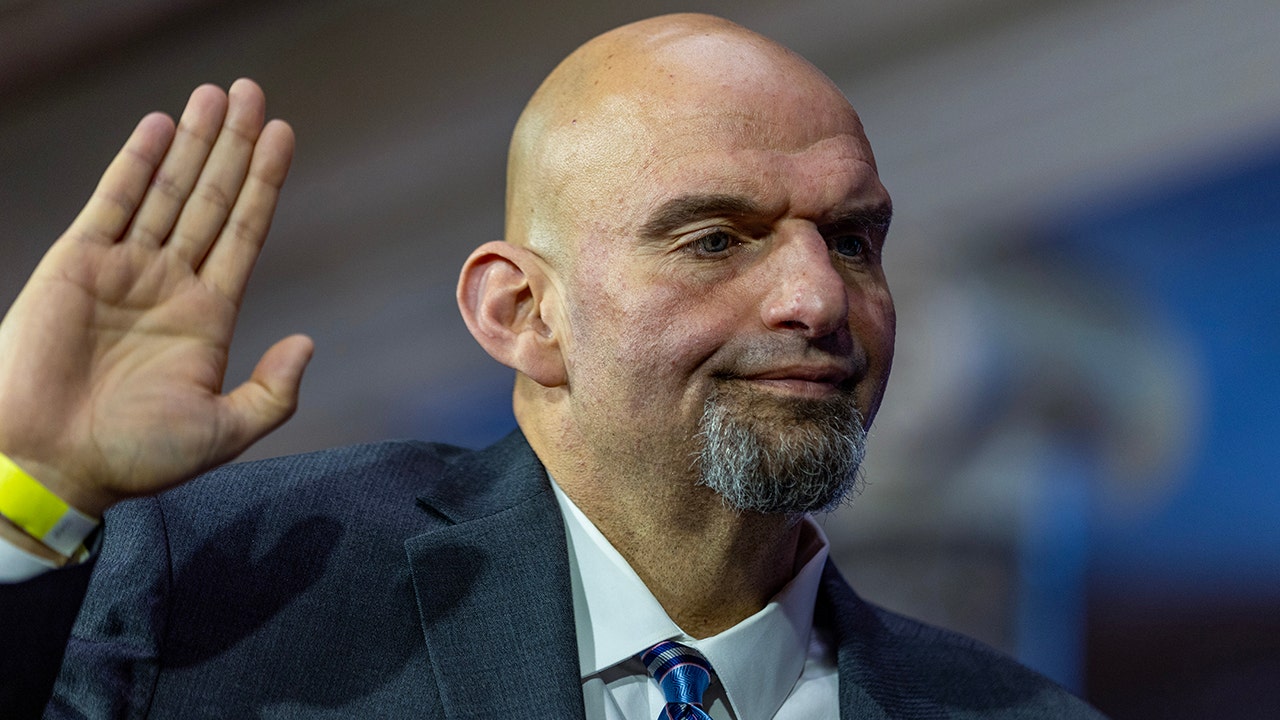
Sen. John Fetterman (D-PA) in the old senate chamber for the Ceremonial Swearing on January 03, 2023 in Washington, DC. 

Sen. John Fetterman (D-PA) in the outdated senate chamber for the Ceremonial Swearing on January 03, 2023 in Washington, DC.  (Tasos Katopodis/Getty Images)

FETTERMAN HEARS VOICES LIKE THE Instructors IN ‘PEANUTS’ Following STROKE, STRUGGLES TO Modify TO SENATE Existence: REPORT

“But his adjustment to serving in the Senate has been made vastly extra complicated by the strains of his restoration, which remaining him with a physical impairment and severe psychological health challenges that have rendered the transition extraordinarily difficult — even with the accommodations that have been made to assistance him adapt,” according to The Periods.

“He has had to come to terms with the point that he may perhaps have established himself back completely by not having the recommended total of relaxation for the duration of the campaign,” the posting explained. “And he continues to thrust himself in approaches that people today shut to him fear are harmful.”

In light-weight of this information, numerous commentators across Twitter condemned media outlets for obfuscating Fetterman’s well being problems in order to make certain he gained the election in 2022.

Media temperament Steve Krakauer tweeted, “NYT is completely ready to inform the real truth about John Fetterman – who continues to be in the clinic for a 3rd working day – now that the truth of the matter isn’t going to subject.” He then quoted from the article: “a physical impairment and severe psychological wellbeing problems that have rendered the transition terribly tough.”

Unbiased journalist Glenn Greenwald slammed quite a few media shops for getting hidden or minimized Fetterman’s wellbeing fears although he was operating for office environment. 

“Modern NYT short article on Fetterman will make clear his incapacities and overall health troubles are much graver than were being identified,” he wrote. “Almost nothing but the finest of needs to Fetterman and his restoration, but it is urgent to remember how aggressively and intentionally the media lied about this to elect him.” 

He singled out tech journalist Kara Swisher, suggesting she cynically defended Fetterman’s concerns as a political ploy.

“Appropriate prior to the election, an NBC reporter, @DashaBurns, did her most primary occupation by actually reporting Fetterman seemed incapable of speaking and knowing her,” Greenwald tweeted, “She was mauled by liars like @karaswisher who, eager to elect Dems, attacked the reporter.”

Greenwald recommended this was component of a significantly larger sized phenomenon in American politics.

“This is why I genuinely regard [Podcaster] Sam Harris’ admission as one of the most important statements in a long time,” he wrote. “When he said nearly anything and almost everything is justified to help Dems earn – lying, censorship, disinformation – he was conveying what most in media and remaining-liberal politics consider.”

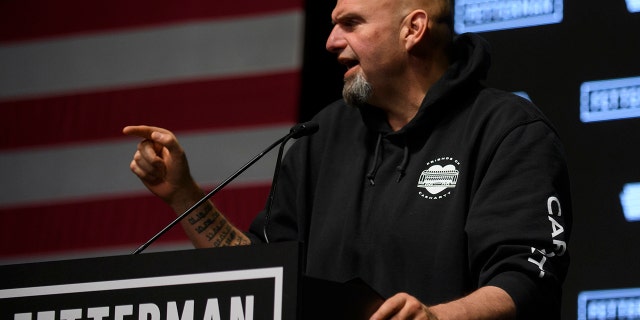
Democratic Senate candidate John Fetterman speaks to supporters during an election night party at StageAE on November 9, 2022 in Pittsburgh, Pennsylvania.

Democratic Senate candidate John Fetterman speaks to supporters during an election night time get together at StageAE on November 9, 2022 in Pittsburgh, Pennsylvania. (Jeff Swensen/Getty Photos)

SENATE Receives Digital UPDATE TO Help JOHN FETTERMAN AS HE RECOVERS FROM STROKE

X Procedures LLC senior electronic strategist Greg Price tweeted, “The Democrat Social gathering practically gave John Fetterman lasting brain damage just to have a vote in the senate to get rid of unborn toddlers.”

Fox New senior political analyst Brit Hume tweeted that this info from the New York Times is hardly a shock to a lot of.

“Some of us warned for the duration of his marketing campaign that his stroke experienced still left him unable to complete everyday obligations of a U.S. Senator,” he wrote. “Now the New York Times reports that, his latest hospitalization aside, he continue to just isn’t.”

Defense of Flexibility spokeswoman Angela Morabito tweeted an excerpt of the write-up and wrote, “What they’re doing to John Fetterman is abuse, plain and easy.”

The Spectator contributing editor Stephen L. Miller explained, “In accordance to an outraged 19th News reporter, NY Periods stealth edited out the phrase ‘special needs’ about the point John Fetterman essential particular captioning displays put throughout the Senate developing.”

He copied and pasted an impression of a tweet from Sara Luterman right after she experienced condemned The Times for applying the phrase “unique demands” simply because Fetterman’s “demands are not ‘special.” She wrote, “Update: ‘Special needs’ has been eradicated. Thank you for earning the correction, @nytimes. I’m still form of stunned it designed it by means of in the 1st put.”

He added in a following tweet that this kind of a expression is not out of location, “Sort of assume installing caption displays on the floor of the Senate for one Senator to be equipped to fully grasp spoken language and debate is a really particular require.”

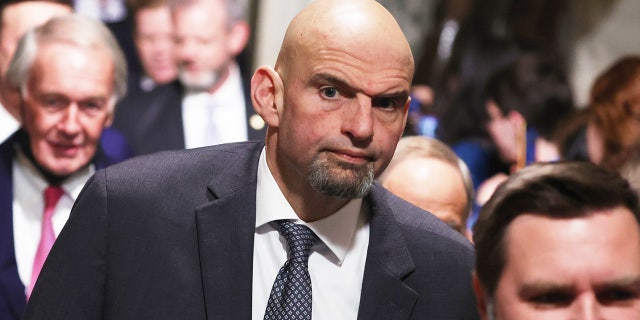
U.S. Sen. John Fetterman (D-PA) walks through the Statuary Hall of the U.S. Capitol prior to President Joe Biden’s State of the Union address at a joint meeting of Congress in the House Chamber of the U.S. Capitol on February 07, 2023 in Washington, DC. 

U.S. Sen. John Fetterman (D-PA) walks via the Statuary Corridor of the U.S. Capitol prior to President Joe Biden’s Condition of the Union address at a joint conference of Congress in the Dwelling Chamber of the U.S. Capitol on February 07, 2023 in Washington, DC.  (Alex Wong/Getty Illustrations or photos)

Click Listed here TO GET THE FOX Information App

Pluribus editor Jeryl Bier reported the incident casts question on whether significantly of the media would report honestly on President Joe Biden’s health and fitness. 

“If Pres. Biden actually does have wellbeing difficulties, what about the way John Fetterman’s overall health was noted prior to the election would give the general public any self-confidence we’d study anything about it? Or would we just be informed afterwards how the White Property ‘adapted’?” he asked.

Artist Nan Goldin on addiction and taking on the Sackler dynasty: ‘I wanted to tell my truth’ | Nan Goldin

Artist Nan Goldin on addiction and taking on the Sackler dynasty: ‘I wanted to tell my truth’ | Nan Goldin

In September 2016, I met with Nan Goldin in C Wing of Reading Gaol. She was there alongside several other artists at the invitation of Artangel, the London-based organisation that specialises in often ambitious site-specific installations. The ensuing group exhibition paid homage to Oscar Wilde, the prison’s most famous inmate, whose writings Goldin first encountered as a teenager. The message she took from his life and work, she told me, “is that you can remake yourself completely.”

Since then, that is in effect what she has done, becoming a high-profile activist who has used her status as an artist to radically change the landscape of the American and European art world. Goldin’s much-publicised war on the billionaire Sackler dynasty, whose company, Purdue Pharma, fuelled the deadly opioid epidemic in America, has resulted in the family’s name being removed from a raft of major galleries and museums, including the Tate, the Louvre and the Guggenheim. For a long time, the Sackler name was a byword for almost unparalleled philanthropy and largesse towards the arts; it is now synonymous with shame and misery on an even grander scale. “If that’s what a group of 12 people can do,” says Goldin, referring to the friends and assistants who form the core of her small, but dramatically effective, organisation, Pain (Prescription Addiction Intervention Now), “then anything is possible.”

Goldin’s transformation from artist to activist is brilliantly traced in a new documentary feature film, All the Beauty and the Bloodshed, which won the Golden Lion at this year’s Venice film festival. It is directed by Laura Poitras, who is best known for her Academy Award-winning 2014 film Citizenfour, about the American whistleblower Edward Snowden. Poitras deftly weaves Goldin’s activism into the bigger story of her life and art, including the rawly intimate photographic projects such as The Ballad of Sexual Dependency and Sisters, Saints and Sibyls, that reflect how deeply the two are intertwined. From the off, her photography drew directly on her life and her circle of friends: bohemians, transexuals, addicts and fellow self-made artists in her native Boston and later in New York. Her style, often described as diaristic, has been enormously influential and made her one of the world’s most famous photographers, whose work now resides in prestigious museums and collections around the world.

Goldin’s anti-Sackler campaign was already well under way, and being documented by an assistant, when Poitras came on board in 2019. “A producer said to me, ‘If you want this to be seen, you need a name director,’” explains Goldin. “He put me in touch with Laura and it was a good call, even though it was hard at times for me and her to work together. We’re two strong women who are not used to anyone saying no to them. It was difficult at times, but we’re still friends.”

From the series The Ballad Of Sexual Dependency.
From the series The Ballad Of Sexual Dependency. Photograph: © Nan Goldin, courtesy of Marian Goodman Gallery, New York

I ask Poitras if she had any reservations about taking over the project. “Apart from being a little intimidated by Nan herself, no,” she says, laughing. “She is definitely a formidable presence, but as soon as she told me about the project, I volunteered. This was essentially a story about an individual taking on the big forces of power and that is exactly the kind of subject I’m drawn to.”

Poitras describes Goldin as “a no-bullshit person” and says she admires the artist’s almost reckless approach. “There’s a rawness and a drive to what she does. She’s not calculated. If she decides something has to be done, she finds a way to do it and worries about the possible consequences later. Here is an artist using her position in the art world to try to hold this family accountable. I just wish more people would use their power in that way.”

When we chatted outside Oscar Wilde’s prison cell on that afternoon in 2016, though, Nan Goldin did not seem focused or driven. As she talked me through her installation of photographs and videos, she appeared at times distracted and edgy. When I accompanied her outside into a courtyard for a cigarette break, I asked her outright if she was using heroin again – Goldin had struggled with addiction in the late 80s and we had talked about it in the past. She shook her head and said, “No, it’s Oxy.”

It was the first time I had heard the street term for OxyContin, the prescription painkiller mass-produced and marketed by Purdue Pharma that would soon become one of America’s biggest news stories as addiction rates and deaths by overdose soared to unprecedented levels. Goldin had been prescribed it in 2014 in Berlin before surgery for tendonitis in her left wrist and had become addicted. When we met in Reading, I was unaware of the burgeoning opioid crisis and assumed that she was probably in denial about relapsing into heroin use and was spinning a cover-up story, as users often do.

“Well, it was junkie bullshit in a way,” she says now, laughing, when I mention my misplaced scepticism. “Oxy is a good drug for surgical pain, but it’s basically dope in a pill and I got addicted really fast. You recognised what was going on, but it took me another year to go into rehab.”

Back in the 80s, Goldin tells me, it had taken her a long time to become a heroin addict, but with OxyContin, she was hooked in 48 hours and, within two weeks, was taking 15 pills a day. When she returned to New York, she quickly found a dealer who was on call 24 hours a day. Soon, she was crushing the pills and snorting them through a straw, only rarely leaving the house and seldom moving from her bed. “It’s scarily addictive,” she says, “particularly for someone with a history of drug use, who has what they call opiate receptors’ effect left over from before. OxyContin attaches to your brain immediately. That’s what happened with me.”

Nan Goldin with protesters at the V&A’s Sackler Centre
Nan Goldin with protesters at the V&A’s Sackler Centre, calling for the museum to remove the Sackler name from the wing. Photograph: Antonio Olmos/The Observer

In a now-famous open letter to the Sacklers published in Artforum in January 2018, after she had recovered, Goldin wrote, “I survived the opioid crisis. I narrowly escaped.”

She went on to explain that, at one point in her addiction, she had ended up snorting fentanyl (a powerful synthetic opioid that is up to 100 times more powerful than heroin) and overdosed. Incredibly, she had somehow managed to produce work during her lost years, including the Artangel commission, and had even carried out a few public engagements. “I remember meeting you that time, but I have a lot of brown-out from that period,” she says now. “Not a total black-out, but close. When I was in the rehab clinic, a woman came to visit and she said, ‘Oh, Nan, I really liked your New Yorker talk.’ I had absolutely no memory of having done a public talk for the New Yorker. None. Which is kind of scary.”

Today, Goldin is speaking to me over Zoom from her apartment in Brooklyn, where she has lived for the past eight years or so, surrounded by photographs by friends such as the late Peter Hujar – “the stillness and depth of his work is unsurpassed” – and some unsettling taxidermy specimens including a fierce-looking coyote that stands sentinel at her door. Goldin, who is 69, looks healthy and speaks thoughtfully, and with her customary honesty and the occasional flash of anger. “All the time I was on Oxy, I was not even aware there was an opioid crisis in America,” she says. “I had no idea. I didn’t keep up with the news. I was totally hermetic. I didn’t know shit.”

It was while in recovery in a rehab clinic, under the care of the same doctor who had weaned her off heroin in 1989, that she first began to wake up to the scale of the problem. A pivotal moment for her was reading Patrick Radden Keefe’s long and detailed New Yorker story on the Sacklers, The Family That Built an Empire of Pain, in October 2017. (The article was a precursor to his acclaimed book, Empire of Pain, published last year.) It begins by documenting the history of the family’s extravagant art world philanthropy, before shifting focus. “The bulk of the Sacklers’ fortune has been accumulated only in recent decades, yet the source of their wealth is to most people as obscure as that of the robber barons,” he wrote, before citing Purdue Pharma as the source of their billions.

Then came the statistics: between 1999 and 2017, 200,000 deaths had occurred from overdoses of OxyContin and other prescription opioids; at the time of writing, around 145 people were dying every day from opioid overdoses; four out of five Americans who had been prescribed prescription painkillers were now using street heroin. “The sheer scale of what was happening seemed almost unbelievable,” says Goldin, “but Patrick’s article gave me a sense of purpose and showed me how to go forward.”


In Poitras’s deftly structured film, we see the Pain campaign grow and its interventions become more audacious: a mass die-in at the Met as pill bottles floated in the gallery fountain; fake prescriptions falling like snow from the upper walkways of the Guggenheim. The latter action is almost an art piece in itself, a subversive take on a now-infamous phrase used by Richard Sackler at a launch party for OxyContin, in which he predicted that “a blizzard of prescriptions” would follow. We also witness the celebrations – cheering, cakes and impromptu speeches in Goldin’s living room – as, one by one, the art institutions cave in to the pressure of the protests and the welter of press coverage they attracted.

Some took longer than others: London’s Victoria & Albert Museum held held out until October of this year. “I was so happy about that,” says Goldin, “because it looked like they were never going to do the right thing.”

Does she now feel differently towards the art establishment given its collusion with the Sacklers? “Well, if you scratch the skin of any billionaire, there are usually bodies behind their money. I mean, name one ethical billionaire? It’s hard to. And the boards are still full of those people. The fact that there is pretty much no state or federal help for museums means they are dependent on these people. Plus, there is dirty money everywhere. But, I have to say, I still love museums. In the end, most of them did the right thing and hopefully we have at least started a conversation.”

Did she ever feel that she might be ostracised by the art world for her high-profile activism? “It’s funny, because people have said to me, ‘How could you do that? Didn’t you think about how it might affect your career?’ I guess I may have spent a few minutes thinking about it. I suppose the fear was that I could have been erased somehow and it’s probably true that I was not invited into exhibition in those years. Right now, I have a big retrospective in Sweden and there are museums that we thought might want it, but don’t. I don’t know if that’s related to me now being seen as a trouble-maker.” Wasn’t she always seen as a bit of a trouble-maker? “Yeah, but before they probably thought I was too fucked up to be dangerous.”

Throughout Poitras’s film, the Sacklers remain an invisible presence until a riveting scene in which Goldin and her fellow activists are gathered around a screen to watch a remote federal court proceeding in which board members Theresa and David Sackler listen impassively to the testimonies of those who have lost loved ones to OxyContin. Under court rules, they could not respond and had to sit silently while roughly two dozen people gave emotional statements. “I am one of the survivors of your monumental greed,” says one man. “I hope that every single victim’s face haunts your every waking moment, and your sleeping ones too.”

At one point, a recording of an emergency ambulance call is played and the camera captures the silence in the room as Goldin and her friends listen to a panicked father’s frantic phone conversation with the emergency service, while his distraught wife screams in the background. They had just discovered their 20-year-old son on the floor, unconscious and unresponsive following an overdose of OxyContin. The tape is followed by the parents’ video testimonies, a glimpse of the well of sorrow and grief that opened up with the death of their only child. “I want to point out to the Sacklers,” the father says, in conclusion, “that, by the time this two-hour hearing is over, you can add 16 more people to your death list.”

It is a viscerally powerful moment in a film not short on drama, and one made all the more disturbing by the silence of the accused. “Richard Sackler refused to come on screen and I don’t know how he got away with that,” says Goldin, angrily. “The other two just sat there. David had this moronic, depressed look. Theresa, she didn’t blink. It was as if she was listening to something mildly interesting that did not affect her reality.” She pauses for a moment. “There was not one iota of empathy in this family for other human beings. That’s what astounds me. How can you live without any empathy for other people?”

Misty and Jimmy Paulette in a taxi, NYC 1991. From the series The Other Side.
Misty and Jimmy Paulette in a taxi, NYC 1991. From the series The Other Side. Photograph: © Nan Goldin, courtesy of Marian Goodman Gallery, New York

As yet, none of the Sacklers has been held to account for the havoc that OxyContin wreaked on America. Goldin shakes her head as if still in disbelief when I mention this. “At least they are shamed,” she says. “That was my first goal: to shame them among their peers in order to put pressure on the museums. But I must have been naive to think anyone from that family was gonna flip and talk to us or do the right thing on any level. They are born entitled and they live in a cocoon of wealth. They are not aware of the rest of the world at all.”

Poitras describes All the Beauty and the Bloodshed as, on one level, “a window into the brutality of American capitalism”. “Oh my God, totally,” says Goldin. “And there is no accountability for rich people. All these billionaires are protected by huge legal teams and they pump money into the state and the congress so that laws don’t get changed. Doesn’t matter who is in power, Republicans or Democrats, America is totally broken and it’s scary.”


As its title suggests, though, All the Beauty and the Bloodshed is not just a film about one woman’s fight against a powerful global corporation, it also traces Goldin’s singular life as a transgressive artist as well as her troubled youth in suburban Boston and the wildly dissolute downtown scene she gravitated towards on her arrival in New York. As she has said before, photography saved her life, but it also turned her life, and the lives of those around her, into a new kind of intimate visual poetry: raw but tender, unflinching but vulnerable.

Her earliest realised work, The Ballad of Sexual Dependency, remains her most celebrated. It was originally shown by her as a slideshow with an ever-evolving soundtrack – the Velvet Underground, Charles Aznavour, camp show-tunes, breathtaking arias – at loft parties and in downtown dives. The audience back then was mainly comprised of her dissolute friends – fellow struggling artists, hustlers, transvestites and other outsiders – but, in 1985, it caused a big stir at the Whitney Biennial and the rest is history.

Its gestation is traced early on in All the Beauty and the Bloodshed, as Goldin recalls the wild times over her archive footage of the friends and fellow travellers she has helped immortalise in her work: the underground actress Cookie Mueller; photographer David Armstrong; artist, writer and Aids activist David Wojnarowicz, as well as the transsexuals, outsiders and scenesters of another scuzzy, less corporate era in downtown Manhattan. There is a moving section on the many friends she lost during the Aids crisis in the 1980s and an acknowledgment of the huge influence the Act Up activism campaign of that time had on the tactics employed by Pain. There are one or two personal revelations, including Goldin’s decision to talk about the time she became a sex worker to pay the rent. “I don’t have many secrets in my life, but this is one of them,” she tells Poitras, describing it as “one of the hardest jobs you could have”. Was Poitras surprised by the extent of her openness? “I just thought it was so very brave. It’s not looking for attention, it’s not about her; it’s about the importance of addressing these almost taboo issues. Plus, I think she made a decision that it was time to talk about some of these very intense and personal subjects.”

Some of the most poignant moments in the film address Goldin’s troubled childhood and the circumstances of her beloved sister, Barbara’s suicide, aged 19. Nan was born Nancy Goldin, the youngest of four children, to Jewish parents in Lexington, a middle-class suburb of Boston. Her father was an economist, her mother a housewife, and their dedication to maintaining a veneer of utter respectability despite myriad family rows and simmering generational tensions seems to have created a stifling atmosphere that fuelled her older sister’s rebellion. “My sister taught me to hate suburbia from a very young age,” Goldin told me in a previous interview, “the suffocation, the double-standards. ‘Don’t let the neighbours know’, was the gospel. Well, the neighbours certainly knew what was going on in our house, because they heard it at every turn.”

Goldin and director Laura Poitras at the Venice premiere of All the Beauty and the Bloodshed.
Goldin and director Laura Poitras at the Venice premiere of All the Beauty and the Bloodshed. Photograph: Kate Green/Getty Images

I tell her that I was surprised at how open she was in the film about the one subject – her family and, in particular, her sister – that she has previously been reluctant to talk about. “I know, and that was painful, very painful,” she says, quietly. “I gave those interviews on the condition that I would have some control over them, otherwise I would not have done them. Then, when I finally watched the film in May of this year, when it was very nearly a final cut, I really didn’t like how it came across at all. I re-edited it so that it is my voice speaking my truth in a way that is as accurate as can be. It had to be accurate to what I wanted to say.”

What did she want to say exactly? “I just wanted to tell my truth,” she replies, echoing Poitras. “And it’s also my desire to help eradicate the stigma around subjects like suicide, as well as drug use and prostitution – all of that stuff. But it’s also important to say that, when I do the work, it’s not coming from that instinct. That’s not where the work comes from at all. It’s something that comes much later, perhaps as a result of doing the kind of work I do.”

Using the artist’s rich trove of personal material – family photographs, grainy home movies, snapshots – the sections that Poitras shapes around Barbara’s death are deeply moving, not least because Goldin’s love for her older sister who, she says, “parented” her, is palpable. Likewise the sadness she still feels all these years later. In Goldin’s telling, Barbara was essentially too rebellious for her parents to handle. “She had a wildness to her,” she tells Poitras in the film, before describing her parents’ attempts to quell it by exiling her sister in various mental institutions from an early age. “Once they started sending her away, they kept sending her away,” she says. “They silenced her.”

For all that, in the footage of her family made in the years after Barbara’s death, her father seems so deeply affected by the suicide that he has retreated into silence. In one image Goldin made of him, he is sitting with a dark sheet over his head. His sadness is made all the more telling in contrast to his wife’s forced gaiety.

“My father was much more deeply affected.” says Goldin. “He was depressed for the rest of his life and very guilty about what had happened. Never got over it. And he lived till 99, so he had a lot of years to experience those feelings. My mother was more cut off in a way.” She falls silent for a moment. “But, you know, they both came from extreme poverty. And they had children because that’s what people did back in those years. They really weren’t meant to be parents. Mind you,” she adds, chuckling, “most people aren’t meant to be parents.” Does she think one ever really escapes one’s childhood? Another pause. “Yes. I think so,” she says, nodding but looking a little uncertain. “I think so.”

All the Beauty and the Bloodshed, then, is a Laura Poitras film, but it is also quintessentially a Nan Goldin film: brutally honest, deeply poetic. It is freighted by great loss: lost friends, lost family, the lost years of drug addiction, and by Goldin’s encroaching sense of her own mortality. “I think that people who make stories out of their lives tend to repeat the stories over and over again,” she says, towards the end of our conversation. “But it’s not easy to access the real deep stuff, the real memories. As you get older, those memories keep coming back to you and they can take you by surprise because you don’t know when they will come back. And, unlike stories, you can’t tie them up in a tidy ending.”

Recently, when Goldin attended the opening of the current retrospective of her work, pointedly titled This Will Not End Well at the Moderna Museet in Stockholm, she was taken by surprise by the sheer number of images in the various slideshows. “I realised there were around 2,000 pictures. And I’m thinking, who the fuck took all these pictures? How could one person have taken them all? I just lived so many lives, I guess. Some, I don’t remember at all, but there’s a lot I do remember.”

Does she remember the people and places in the photographs because of the photographs? “That’s such an interesting question,” she says, “I’m not sure. I don’t think so. I mean, with the Ballad…, it’s full of people who died. And it’s the same with the queens and trans people I photographed back then. So many of them have died. It’s kind of like I have embalmed them for myself. I’m somehow keeping them with me through the pictures. And I’m also keeping them young and beautiful. Most of the people around me are younger, because I don’t have a lot of people to get old with. If they were still around, I probably wouldn’t recognise most of them now. But, with the photographs, it’s always the way they were.”

I ask her, in conclusion, if her activism has profoundly changed her as a person? “Yes, it has,” she answers immediately. “I feel more present in the world. It’s still a scary place, but it doesn’t scare me as much any more.” And is she less angry at the world now? “Oh yeah. Much less. I still get angry and when I do, I get real angry. I’m still a bitch at times. And, I’m still a fighter.”