From Orgasms to Overdoses: How Marie Nyswander Went from Treating ‘Sexual Frigidity’ to Heroin Addiction

From Orgasms to Overdoses: How Marie Nyswander Went from Treating ‘Sexual Frigidity’ to Heroin Addiction

In the early 1950s Marie Nyswander was ready to move on from addiction. She set up a private practice and specialized in treating women afflicted with what she would call one of the “gravest problems of our time”: sexual frigidity. She and her adoring husband were living the good life, hanging out with rich art collectors and members of New York City’s literary scene. But when Nyswander started getting phone calls for help, she got pulled in a very different direction.

[New to this season of Lost Women of Science? Listen to Episode One here first.]

EPISODE TRANSCRIPT

The Lost Women of Science podcast is made for the ear. We aim to make our transcripts as accurate as possible, but some errors may have occurred nonetheless. In addition, important aspects of speech, like tone and emphasis, may not be fully captured, so we recommend listening to episodes, rather than reading transcripts, when possible.

—-

CAROL SUTTON LEWIS: This is the second episode of our series about Marie Nyswander. If you haven’t heard the first episode, stop now and go back and listen to that one. This episode will make much more sense if you do.

And a reminder that this season of Lost Women of Science is for adults. It will occasionally include adult language, and we’ll be talking about drugs and sex. Please, also note that some archival audio includes outdated language about drug addiction. Okay, I think we’re ready! 

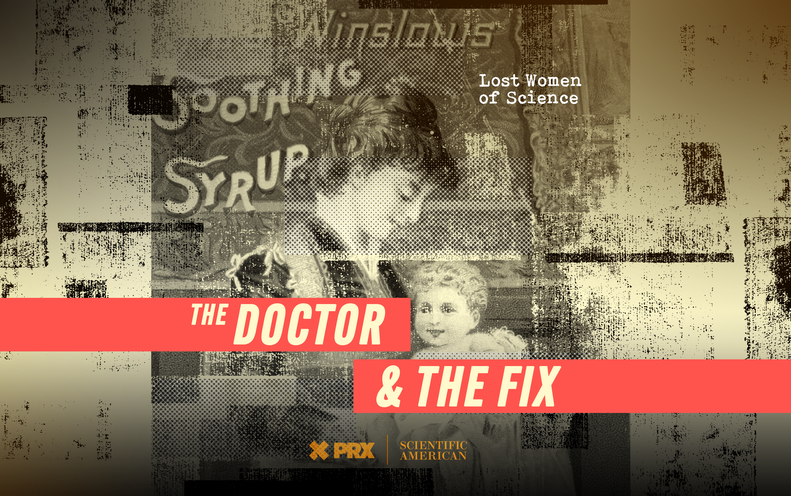
CAROL SUTTON LEWIS: In 1912, the German pharmaceutical company Bayer ran an ad for cough syrup in a Spanish newspaper. The ad features a little girl sitting on a chair with a big bow in her hair. She smiles as a woman spoon feeds her medicine. The caption reads, “la tos desaparece” – “the cough disappears.”

The ad goes on to explain how this syrup will help with everything from bronchitis to laryngitis, even tuberculosis. And then, at the bottom, in big, bold letters, we see the name of the medicine: “Heroína.”

KATIE HAFNER: Just in case you missed that, the miracle cough syrup for kids is heroin. 

Bayer—yes, the same company that makes Aspirin—ran multiple ads like this in Spain: one features a boy grabbing at a heroin bottle in his mother’s hands, there’s another that depicts two kids in a standoff, both reaching for a vial of heroin on the table.

American ads were just as sweet, touting heroin’s many benefits, saying it was a non-addictive alternative to morphine. Some ads even suggested heroin for more vulnerable patients who couldn’t handle morphine.

CAROL SUTTON LEWIS: By the time these ads ran in 1912, Bayer might have had some inkling that heroin wasn’t actually so kid-friendly or adult friendly for that matter. It had been selling heroin for over a decade by then, and it was becoming very apparent just how addictive it was. Just one year after these ads ran, the company stopped making heroin for good.

But it was too late. And when Marie Nyswander arrived in New York half a century later, this “cough medicine” was wreaking havoc in the city, and around the world. And though Marie thought she was done with addiction, addiction was far from done with her.

KATIE HAFNER: This is Lost Women of Science. I’m Katie Hafner.

CAROL SUTTON LEWIS: And I’m Carol Sutton Lewis, and this season is the story of Marie Nyswander. 

CAROL SUTTON LEWIS: In 1950, Marie was living in New York City, ready to start fresh. After her miserable year at the Narcotic Farm in Lexington, Kentucky, she’d spent a couple of years finishing up her residency at Bellevue Psychiatric Hospital in Manhattan, where she saw even more of the terrors of withdrawal  up close—diarrhea, vomiting, fevers, weight loss, pleas from patients that were so heartbreaking, it made the doctors keeping them away from drugs look like monsters. Marie was ready to move on.

CAROL SUTTON LEWIS: Fortunately, during those early years back in New York she’d also done some post-grad training at the New York Medical College, learning all about the hottest psychiatric method of the day: Freudian psychoanalysis.

DAVID COURTWRIGHT: Well, why psychoanalysis then? 

MARIE NYSWANDER: Oh, well, you have to remember, that’s again historical.

CAROL SUTTON LEWIS: Back in 1981, Marie told the historian, David Courtwright, it was just that most psychiatrists were into Freud back then.

MARIE NYSWANDER: And the Freudian explanation for behavior seemed to be the most dynamic and correct and true, and we took it just right down the line. It was like a bible. [laughs]

KATIE HAFNER: Marie soon started seeing private clients. And her specialty? What she would later call one of the “gravest problems of our times”? Carol, it was sexual frigidity, of course.

CAROL SUTTON LEWIS: Sexual frigidity? Can we even say that?

KATIE HAFNER: Uh, we said it a lot back then, at least Marie did. And here’s how Marie defined it.  Sexual frigidity is “the inability to enjoy physical love to the limits of its potentiality.” In lay person’s terms, the sexually frigid woman can’t orgasm. Or if she can it’s not very good.

So Marie, she was so taken with this particular subject that she later wrote an entire book about it. Are you ready for the title of the book? The Power of Sexual Surrender.  It is exactly what it sounds like, a treatise on female submission.  

Carol, I have to read you some quotes from this book. I couldn’t believe it was the same Marie Nyswander I had been reading about. I mean, here’s just one quote: “The biological role of woman is motherhood. If a woman cannot dare to accept this aspect of her destiny, she will be deeply defeated in her life.”

And she thought frigidity came from problems in childhood like having an absent father, or worse, a feminist mother.

CAROL SUTTON LEWIS: What?

KATIE HAFNER: Yeah, in this book, I mean, I was pretty surprised. Marie really goes after feminists for disrupting gender norms – claiming feminists make their daughters wanna live like men.

 And the book, it staunchly decries women who put their careers first, imagine that. A woman’s most important role, according to Marie, is in the home as a wife and mother.

KATIE HAFNER: So yeah, a very interesting read. Some real contradictions with the life Marie actually lived.

DAVID COURTWRIGHT: Marie was always a career woman. 

KATIE HAFNER: David Courtwright again, professor emeritus of history at the University of North Florida.

DAVID COURTWRIGHT: Um, she never had any children, and she was devoted to her patients, to her research, to her writing. 

So she’s off in Freud land now in the mid fifties. Okay, uh, and this is also when she meets and marries Leonard Robinson.  

CAROL SUTTON LEWIS: Leonard wasn’t her first husband. It turns out Marie actually had quite a bit of experience with marriage and its pitfalls. Because by the time she met Leonard, Marie had already been married and divorced twice. The first marriage, when she was just 16-years-old was to a man named Gordon Woodrow Raleigh, a pre-med student  at the University of Utah. We don’t have a lot of details on that, but we do know that marriage lasted no more than a year. And then, while Marie was at medical school at Cornell, she married Charles Miles Berry, an anatomy instructor at the school.  We actually asked Cornell whether he’d been her instructor, but they didn’t know. That marriage was short-lived too.

CAROL SUTTON LEWIS: But then, along came husband number three. 

KATIE HAFNER: Yes, Leonard Wallace Robinson, another guy who went by all three of his names.

And Carol, just in case anybody thinks we’re being judgmental here, we are definitely not. I mean, we are people—well, I am person—who has been married a few times herself. 

Anyway, Leonard was a writer and lecturer at Columbia University. And when Marie breezed into his life, Leonard fell hard, hard enough that he wrote a novel all about her and their relationship. The title is The Man Who Loved Beauty. 

KATIE HAFNER: In the book, Leonard – codename “Jonathan” –  recounts meeting Marie – codename Elizabeth – at a Columbia faculty party. He describes her blonde hair, her deep, textured voice, and their electric connection on the dance floor.

KATIE HAFNER: And Carol, I wanted you to hear this passage about that meeting on the dance floor. I actually got my husband Bob to read it for us. He was a little bit reluctant at first.

KATIE HAFNER: Okay, take it away

BOB: I wanna guarantee that you’re gonna use it. If I, if I do it, I need a guarantee you’re gonna use it.

KATIE HAFNER: He’s kidding. 

BOB: My, my union insists on it.  

KATIE HAFNER: Okay

BOB AS LEONARD: The feeling of her body against mine was simply not describable. It was different in kind from all that went before. And many (laugh) had gone before. I had not naiveté left. But with Elizabeth in my arms that night on the dance floor, the great complex mysterious and marvelous body of woman seemed to make itself known to me for the first time, with all its primal attributes streaming from it, passion and purity, and the heavy mystery waiting to be explored.

BOB AS LEONARD: Geez, you should have warned me.

KATIE HAFNER: So as far as Leonard was concerned, they had a fantastic marriage.   

CAROL SUTTON LEWIS: In the 50s, Marie is living the good life. She’s got her private practice, she’s married to Leonard, who is absolutely enthralled with her, and she starts hanging out with a fashionable group of art collectors. She even starts collecting art herself.

 It sounded like a comfortable life, and it seemed to suit her.  But then, she started getting these calls.

EMILY DUFTON: She started getting phone calls from an increasing number of people saying, you know, my son has this problem. My daughter has this problem, my husband has this problem. She was being sought out. 

The problem was heroin addiction. During the war, there’d been a temporary interruption in supplies, but in the 50s, heroin was back in full force, and New York City was its capital.

LOW: When I, when I, when I, when I was on dope, it seemed like everybody was on dope. 

CAROL SUTTON LEWIS: During an oral history interview decades later, a man named Low recalled how bad things were back in the 50s. Low had grown up in Spanish Harlem, and he remembered being afraid of heroin. He’d seen how it ruined people. They’d go from being well dressed to wearing rags. But then one day, in 1949, a guy at a bar offered Low a free sample. And for whatever reason, that day, he decided to take it.

LOW: And I started to vomit. I vomit so much I couldn’t…

Q: Was this the first time you…

LOW: The first time.  And then, when after the vomiting, you have, you, you, you feel a sensation. A sensation that no other high like marijuana or liquid could give you, you just sit down and you be, you’ll be asleep, but you’ll be hearing everything that’s going on.

CAROL SUTTON LEWIS: And that was it. Low kept using heroin until he ran out of money. So he got a second job, and used some more. He was addicted to heroin. And in the 50s and 60s, he had a lot of company. 

LOW: It was like an epidemic, like everybody was using it. You know, it seems to me that everybody in every street corner, 10, 25 guys. You know, pedaling, heroin. I said, gee, whiz, I mean, I thought, I thought, that the world would come to an end.

CAROL SUTTON LEWIS: Now, something else that’s happening at this point is the demographics of heroin use is shifting rapidly. That’s actually one of the things we’ve learned—that what an opiate user looks like is always changing. During the 19th century, opiates were actually a middle or upper class white woman’s drug. When Marie was at Lexington in the 40s, opiate users were mostly white men. And in the 50s, the people hardest hit were young, poor, Black and Puerto Rican men. 

COMMISSIONER STEVE CANADAY: Narcotics traffic is a dirty business. Its victims are the walking dead. (fade under)

CAROL SUTTON LEWIS: In this WNYC program from 1959, New York City’s police commissioner, Steve Canaday, sounded the alarm. All these drugs were coming into New York City from abroad; thousands were addicted. He urged anyone who had tips about illegal sales to call the narcotics hotline.

COMMISSIONER STEVE CANADAY:  Call the Narcotics Squad at DIGBY 4 9 4 3 0. That is DIGBY 4 9 4 3 0

CAROL SUTTON LEWIS: Phone lines were open 24/7.

COMMISSIONER STEVE CANADAY: Action will be immediate, and your identity will be kept in strictest confidence. Give us the leads. We’ll do the rest. Remember, someone you love may be the next victim.

CAROL SUTTON LEWIS: The way Canaday described it, drug addiction was spreading in New York City like a zombie apocalypse.

SAM K. ROBERTS: In the period between 1955 and 1965, the change is certainly dramatic. All the data I’ve seen indicates that it, it was not good. I will say that. It wasn’t Night of the Living Dead, but it wasn’t um, it was not a rare occurrence either.

CAROL SUTTON LEWIS: Samuel Kelton Roberts is an associate professor of history, sociomedical sciences, and African-American and African diaspora studies at Columbia University. And he explains that a lot of that heroin ended up in Harlem thanks to Italian organized crime.

SAM K. ROBERTS: Are you all Godfather fans? You know the film?

CAROL SUTTON LEWIS: Oh yes. Just thinking. Yes. If you know The Godfather, then you know that they could sit around the table with five families.

DON ZALUCHI: I want to control it as a business. To keep it respectable. I don’t want it near schools. I don’t want it sold to children. (table slam) That’s an infamia. In my city we would keep the traffic in the dark people, the colored. They’re animals anyway so let them lose their souls.

SAM K. ROBERTS: ​​That scene is based on reality

CAROL SUTTON LEWIS: After World War II, the sale of heroin in New York was dominated by Italian crime syndicates, with some help from Jewish organized crime. Italian gangsters were able to smuggle in a lot of heroin from their connections in Europe, especially Corsica. So that was the supply side. 

And according to Ralph Salerno, a New York City police detective in those days, when it came to distributing the heroin, it wasn’t so much about consciously targeting Black communities, as it was about protecting their own neighborhood. 

RALPH SALERNO: In the, in the lower part of Manhattan, the Italian gangster’s image was we keep the drug pushers out of the neighborhood. And they did. And they did. As long as they’re not selling it or allowing it to be sold in their community, whoever they might be selling it to, isn’t that we’re gonna sell it to blacks and therefore it’s, we will not allow it to be sold here.

CAROL SUTTON LEWIS: But the upshot was that soon, the streets of Harlem were flooded with heroin. In some parts, it was easier to get than cigarettes.

SAM K. ROBERTS: Circa 1965, in Harlem, if you had been living there for anything more than about three, four years, you probably knew somebody who had like negative impact of heroin. Not just using and here and there, but like you probably knew had been acquainted with somebody who had had problems. 

KATIE HAFNER: So in the 1950s, Marie Nyswander started getting these calls asking for help, as we mentioned before. And she’s kind of an odd choice. Remember, Marie was a Freudian psychoanalyst, spending a good deal of her time teaching women how to enjoy sex. So why were people coming to her about addiction?

CAROL SUTTON LEWIS: Yeah really?

KATIE HAFNER: Well, back when Marie was a resident at Bellevue, she wrote this paper. It was a how-to for drug withdrawal, based on what she saw at Lexington. And in this paper, she explained, for example, how much morphine to give people to ease their symptoms, and then how to slowly wean them off of it, and how to make sure they didn’t smuggle any drugs into the hospital. You know, like practical tips.

And that’s why people turned to Marie. There weren’t a lot of doctors treating  addiction in the 50s. In fact, medical schools weren’t even teaching about it.

SAMUEL K. ROBERTS: If you were a first year medical student, you know, at Columbia or Hopkins or Penn or wherever else, certainly during this period, if you raised your hand and said, professor, you know, how do you treat drug addicts? The answer likely would’ve been something to the effect of, you don’t.

KATIE HAFNER: Historian Sam Roberts again.

SAMUEL K. ROBERTS: What was more likely is that you would have social workers who would try to help, um, churches would be involved. You know, sometimes they, you know, depending on the church, you know, they’d help you pray away the demon of addiction. That usually doesn’t work.

KATIE HAFNER: So Marie stood out just by publishing this short paper.

MARIE: Far from being rid of the problem, more calls. How can you walk away when there’s a woman in the hospital on barbiturates? So the intern has cut off from all barbiturates and she’s starting to convulse. You cannot not treat that woman. And on it goes, you see, you’re kind of by default forced into these thing.

KATIE HAFNER: Okay, so Marie wants to help. But, how helpful could she really be? She didn’t have a lot of tools at her disposal, like almost none, and almost nothing was understood about addiction. 

And now, in the 50s, Marie was up to her ears in Freud, who actually didn’t have that much to say about addiction. Though, he thought maybe it had something to do with a substitute for masturbation in childhood?

CAROL SUTTON LEWIS: Oh, that Sigmund

KATIE HAFNER: Yes, very on brand for Freud. 

In any case,  miles away, in the great nation of Canada, a pair of neuroscientists made an accidental and important discovery. 

CAROL SUTTON LEWIS: In 1953, in Montreal, two researchers embarked on an experiment that wasn’t supposed to have anything to do with pleasure or addiction. But thanks to a rookie’s mistake, it would change our understanding of both for decades to come.

KENT BERRIDGE: Our understanding of the brain reward system really began with the experiments of Jim Olds and Peter Milner in Montreal at McGill University in the 1950s. 

CAROL SUTTON LEWIS:  Kent Berridge is a professor at the University of Michigan. His full title is actually the James Olds distinguished professor of psychology and neuroscience. Seventy years later, Jim Olds is still a very big deal.

KENT BERRIDGE: It was thought at the time that a lot of people’s motivation was driven by unpleasant states, like hunger, thirst, drug withdrawal, things you’d rather not be in.

CAROL SUTTON LEWIS: Jim Olds was a postdoc, and he was specifically interested in the arousal system of the brain. Not in the sense of sexual arousal, but arousal meaning kind of overstimulated or agitated.

Jim wanted to show that this kind of arousal is generally not a pleasant thing. So if you stimulate a rat’s arousal system, it will do its best to avoid that experience. That was his plan anyway.

KENT BERRIDGE: It turned out he wasn’t a very good surgeon to start off, and his electrode went to a wrong place.  And he turned it on, he expected the rat to want to avoid that stimulation, so he put the rat on a table top and he said to the rat, basically, if you go to one corner of the table, I’m gonna turn this electrode stimulation on. But if you don’t want it, all you have to do is avoid that corner of the table. So he let the rat wander around, explore the table, sometimes going to the corner and getting the stimulation. And to his surprise, the rat didn’t avoid that corner, and it went back to the corner and it ended up staying entirely in that corner so it could get the brain stimulation. And this was a total surprise.

CAROL SUTTON LEWIS: And sure enough, when Peter Milner took an x-ray of the rat, they saw Jim’s electrode had missed the mark by quite a bit. Instead of the brainstem, where Jim was aiming, his electrode ended up roughly in the septal area of the brain, likely in something called the nucleus accumbens.

And Jim and Peter found that rats would do just about anything to stimulate that part of the brain—not just sit on a corner of a table. They’d also press levers, run through mazes, and even endure strong electric shocks, just to get that hit. 

And at the time, the takeaway of these experiments was this: if these rats want this kind of stimulation, they must like it. We must have found the brain’s pleasure center.

And maybe that could explain something about addiction. The behavior of these rats at least looked a lot like addiction. So maybe addiction was also about seeking pleasure on a very basic neurological level.

It turned out a lot of this was probably wrong – and we’ll get to that. But this idea, that addiction could be something other than a moral failing or the product of a psychopathic mind, that it could actually come from a fundamental neurological issue – that was the promise of these kinds of discoveries. 

KATIE HAFNER: Back in New York, Marie decides she’s going to step up to the plate. So she rolls up her sleeves and gets to work in the neighborhood where she’s needed most, East Harlem. She teams up with the East Harlem Protestant Parish and sets up shop inside a storefront on the first floor of a bleak tenement building on East 103rd Street. 

And what she offered was unique. Unlike other addiction programs in the country, you didn’t need to be an inpatient to get treatment, and you didn’t have to quit drugs before she’d see you. That made no sense to her, if the whole point was to treat your drug addiction. Instead, Marie offered therapy to anyone who needed it.  Anyone could walk in, have some coffee, sit and talk with Marie. No appointment or payment needed. 

CAROL SUTTON LEWIS: It all sounds very noble. And Marie, in her interviews, often reminds us of just how noble it all is. So Katie, not to be horribly cynical, but I got a whiff of a savior complex from some of Marie’s interviews.

KATIE HAFNER: I didn’t get that sense. Well, which interview?

CAROL SUTTON LEWIS: Well, listen. Listen to her. 

MARIE NYSWANDER: I think if there had just been one other person in the city that would see addicts, I, I would probably have washed my hands. But there wasn’t anybody, and I just said, you can’t abandon them. At least the way I was raised, you simply can’t abandon someone when there’s nobody to give them a glass of water, you know.

CAROL SUTTON LEWIS: Ok, so when I hear that I hear her saying no one else got it. No one else cared. She was the only one who gave a damn.

SAM ROBERTS: That’s certainly not true. I mean, there were people who gave a damn when she came to  New York, um, I think in her social circle, she was the one who gave a damn. 

She’s a- a white professional woman. She’s from a middle class family. So I think in her social circles, shit, so probably was the only one who gave a damn.

CAROL SUTTON LEWIS: Heroin just wasn’t hitting the white people downtown the way it was hitting Harlem at this point. And yeah, it seemed like a lot of white people didn’t care, but Marie did. 

KATIE HAFNER: And in Harlem, people really appreciated her. 

EMILY DUFTON: Oh, man, they just love her. They just, like, eat her up with a spoon. Everyone’s just like this, she’s the greatest. 

KATIE HAFNER: What was it about her that made them fall in love with her? 

EMILY DUFTON: I think it’s because she really wasn’t pretentious, you know, like she, she was trying to understand the issues that, you know, it’s mostly men, like, mostly like young Black and Puerto Rican men are coming to see her at this storefront. And she’s really trying to understand what it is that’s driving them to these, you know,these harmful habits. And I think she leveled with them, you know. She really came to it with a lot of curiosity and compassion as opposed to like judgment and trying to demean them into better behavior. I think everybody fell in love with her because if she turned her sun beam on you, you’d feel good. 

KATIE HAFNER: One of the reasons we know this is thanks to the very long New Yorker article that came out in 1965, written by Nat Hentoff, who was a leading journalist at the time. In fact, one of the most famous jazz critics of the 20th century. And Hentoff got The New Yorker to devote a whole forty-five pages of print to Marie, and later Hentoff expanded those pages into a full biography. It was clear, he deeply admired Marie.  

And so did her patients. One man tells Hentoff that Marie was different from the other doctors. She “didn’t put us all in one box, she sorted us out, because she got inside. I could walk in next door and just blow my top if I want to; and believe me, she could blow her top too. I dig her because she swings. She’s really alive.” 

The bottom line was that Marie talked to her patients like people, and they loved her for it. And the results?

EMILY DUFTON: The results are terrible. 90{35112b74ca1a6bc4decb6697edde3f9edcc1b44915f2ccb9995df8df6b4364bc} relapse rates.

CAROL SUTTON LEWIS: To Marie’s disappointment, her patients were relapsing at about the same rate as patients  at Lexington or Bellevue.

EMILY DUFTON: You’re gonna get about as good a relapse rate as, you know, hospital detoxification with no follow up care apparently, as you will with, you know, psychoanalysis about your mom

KATIE HAFNER: And doing this work, not seeing results she wanted, it was really getting to Marie, as she told David in 1981.

DAVID COURTWRIGHT: You had played about every card in your hand. 

MARIE NYSWANDER: Every card. Very frustrated. Very depressed, very. Nothing I could do. 

DAVID COURTWRIGHT: All, all the more impressed. Because you were really fond of these people. I mean, that’s, that’s-

MARIE NYSWANDER: I, I respected them, yes, I respected the, the courage to keep going. I would often say, my God, if I were in their shoes, it seems to me I would call Dr. Nyswander and ask her for money and procedure for drugs and in general, make your life miserable. And they never do. They, no matter how miserable they were, they. It made life difficult for me. I was around trying to help ’em. I couldn’t help them. They understood that. 

CAROL SUTTON LEWIS: But what if Marie was just using the wrong tools? What if addiction wasn’t a psychological problem at all? Remember those  rats being studied by the two researchers up in Canada? The way those rats acted looked a lot like addiction, but they didn’t have mother or father issues or prolonged adolescence, at least not that we knew of.

The problem was in their brain. What if the same thing was happening in people with addiction? If the problem was neurological or physiological, then talk therapy probably wasn’t going to fix it. 

And it seems like Marie would have known it wouldn’t all along. At that 1951 hearing in New York that we heard in the first episode, she’d been asked a final question:

SIDNEY TARTIKOFF: I know that you are a very fine practicing psychiatrist. Do you think that psychiatry in and of itself is the answer to the treatment and cure of addicts?

MARIE NYSWANDER: No, no. Far more complicated. 

SIDNEY TARTIKOFF: Far more than that? 

MARIE NYSWANDER: Far more, actually. 

ANOTHER VOICE: It’s just a partial element in the answer?

MARIE NYSWANDER: Oh, yes, yes. A very small part too, probably. 

SIDNEY TARTIKOFF: Thank you. Thank you so much, doctor.  The meeting stands adjourned. I mean, the hearing until tomorrow at one, thank you.

CAROL SUTTON LEWIS: Marie’s brand of psychiatry wasn’t enough, not on its own. But what was the alternative? If Marie knew about the rats in Canada or the studies that followed, it didn’t seem to shift her practice. And what could she do about a neurological problem anyway? She could only use the tools she had at the time. 

KATIE HAFNER: But it turns out another approach was just around the corner. Marie was about to get a call from one Vincent Dole, a researcher at Rockefeller:

VINCENT DOLE: I read as much as I could and I made a point of meeting everybody in the field that pretended any sort of expertise or had been recognized experts. And, uh, actually the only person that made sense to me just as a clinician was, uh, Marie Nyswander.

KATIE HAFNER: Together, Vincent Dole and Marie Nyswander made a discovery that would radically change how we treat addiction in this country. And much to her husband Leonard’s dismay, the Dole-Nyswander alliance would become a powerful one.

CAROL SUTTON LEWIS:  The Lost Women of Science podcast is hosted by me, Carol Sutton Lewis.

KATIE HAFNER: And me, Katie Hafner. This episode was produced by Zoe Kurland and Elah Feder, our senior producer, with help from Nora Mathison, Alexa Lim, Hilda Gitchell, and Dominique Janee.

CAROL SUTTON LEWIS: We had fact checking help from Danya AbdelHameid [UB-dell hah-MEED]. All of our music is by Lizzy Younan. D Peterschmidt mixed and designed the sound for this episode. 

KATIE HAFNER HAFNER: Amy Scharf is my co-executive producer at Lost Women of Science. We are funded in part by the Alfred P. Sloan Foundation, and Schmidt Futures. Our podcast is distributed by PRX and published in partnership with Scientific American.

CAROL SUTTON LEWIS:  For show notes and more about the whole team that makes this show happen, visit lostwomenofscience.org. 

KATIE HAFNER HAFNER: Finally, if you like what you’ve heard (or even if you hate it) tell your friends! I know people say that all the time, but seriously, it really helps the show. Text five people right now. Start a chain letter, with those ominous threats at the end that tell people if they don’t write five more people, their lives will be in shambles. Oh wait, no, don’t do that. But the texting is good. We’d really appreciate it.

CAROL SUTTON LEWIS: See you next week!

P-Cure Receives FDA Approval For Proton Therapy System For Treatment in Seated Position and Will Begin Treating Patients In Israel

P-Cure Receives FDA Approval For Proton Therapy System For Treatment in Seated Position and Will Begin Treating Patients In Israel

April 3, 2023 — P-Overcome announced clearance of its Adaptive Proton Therapy Solution by the Food and drug administration for gross sales in the Usa.

P-Heal, an Israel-based large-med-tech enterprise, has made cost-effective proton remedy engineering for specific cure of cancer with substantially minimized therapy connected side outcomes. Cure of most cancers with proton therapy is regarded the gold typical for managing many kinds of most cancers web sites with one of a kind clinical capabilities. Nonetheless, existing legacy engineering needs 200 tons proton tools, and with the expense exceeding $50 million for every one area (tools and design) appreciably boundaries institution of proton remedy services at most cancer care amenities globally. Until eventually now, only much less than 1{35112b74ca1a6bc4decb6697edde3f9edcc1b44915f2ccb9995df8df6b4364bc} of hospitals provide proton treatment to their individuals. P-Remedy managed to reduce the measurement and the value of the proton treatment tools, enabling institution of this very long-awaited cure modality pretty much in all radiotherapy departments. The P-Overcome progressive upright solution is the world’s very first Fda approved methodology for affected individual all set most cancers remedy.

“P-Overcome started by building a patient-centric impression guided adaptive positioning method, and has now expanded the present by furnishing the most compact complete proton treatment method that simulates, designs, positions and treats patients with increased affected person convenience and medical results, treating all indications with adaptive, individualized proton treatment protocols,” claimed CEO Michael Marash.

“The likelihood to install proton remedy in just current linac remedy rooms opens up a one of a kind advertising and marketing possibility for P-Overcome. This radiotherapy substitute sector accounts for sales of around 1,000 radiation remedy modalities each individual year. We certainly believe that this is a new period of radiation remedy, and a new option for P-Cure to become a marketplace chief in delivering the most specific modality to take care of cancer with radiation. The P-Get rid of answer radically decreases the value of setting up a proton treatment process, doing away with massive rotating gantries, enabling for faster installation, and decreasing operational costs,” Marash adds.

The Fda clearance has been granted in parallel to announcing the clinical investigate initiation for the use of the system in treatment options of people in Israel. The corporation answer will be used by the clinical crew of the Hadassah Clinical Heart under the leadership of Prof. Aron Popovtzer, the review principal investigator and the Head of Oncology Institute at Hadassah. The firm collaboration with Hadassah is the very first ever proven initiative to supply entry to Israeli individuals to acquire this centered cure in the state saving monumental psychological and economical value for clients, their families, and the national health care system. Until finally now, qualified Israeli patients have been urged to vacation to Europe and the US for months investing at least $140,000 for a solitary treatment class.

“Uniquely, the Hadassah clients will be handled working with a thoroughly operational medical facility inside of the P-Treatment Scientific Advancement Heart. The web page is conveniently located among Tel Aviv and Jerusalem and hosts the world’s most compact proton remedy process, which is mounted inside the footprint of a conventional radiotherapy linac vault. The web page is recognized as a scientific system of excellence to supply and establish proton treatment protocols for people as well as educate current and new shoppers. This schooling will permit rapidly technological innovation adaptation by new procedure providers not common with proton treatment. The extensive internet site contains a absolutely operational clinically designed proton procedure process, which includes a compact accelerator, a 360 o gantry-less therapy area, and obtain to all treatment and shipping and delivery setting up – all in the house of present linac vaults,” Marash claimed.

The business is supported by traders from the US, Canada, Israel and Hong Kong. Amongst the Israeli investors is Medipress Enterprise.

Prof. Joseph Push, the Medipress CEO, who previously headed the only Little ones Clinic in Israel, remarks that “The P-Overcome accomplishment shifts the use of Proton Remedy from marginal to mainstream medical apply letting virtually all radiotherapy departments to install the alternative in existing treatment method rooms.” Prof. Press adds that for the reason that of the P-Remedy answer, the fiscal boundaries are eradicated to including the proton treatment cure option at healthcare amenities planet-broad.

The Fda clearance of the P-Overcome technique is one more evidence of the unprecedented affect of Israel in the battle versus cancer, saving life and keeping away from suffering for tens of millions of sufferers in Israel and overseas.

“P-Overcome is happy to grow to be a member of the planet-huge study local community expanding the medical benefits of proton treatment and demonstrating what is the most price-powerful technique accessible to present oncology centers,” explained Marash.

For much more info: www.p-overcome.com

Treating opioid addiction with Suboxone is easier. Will doctors get on board? : Shots

Treating opioid addiction with Suboxone is easier. Will doctors get on board? : Shots

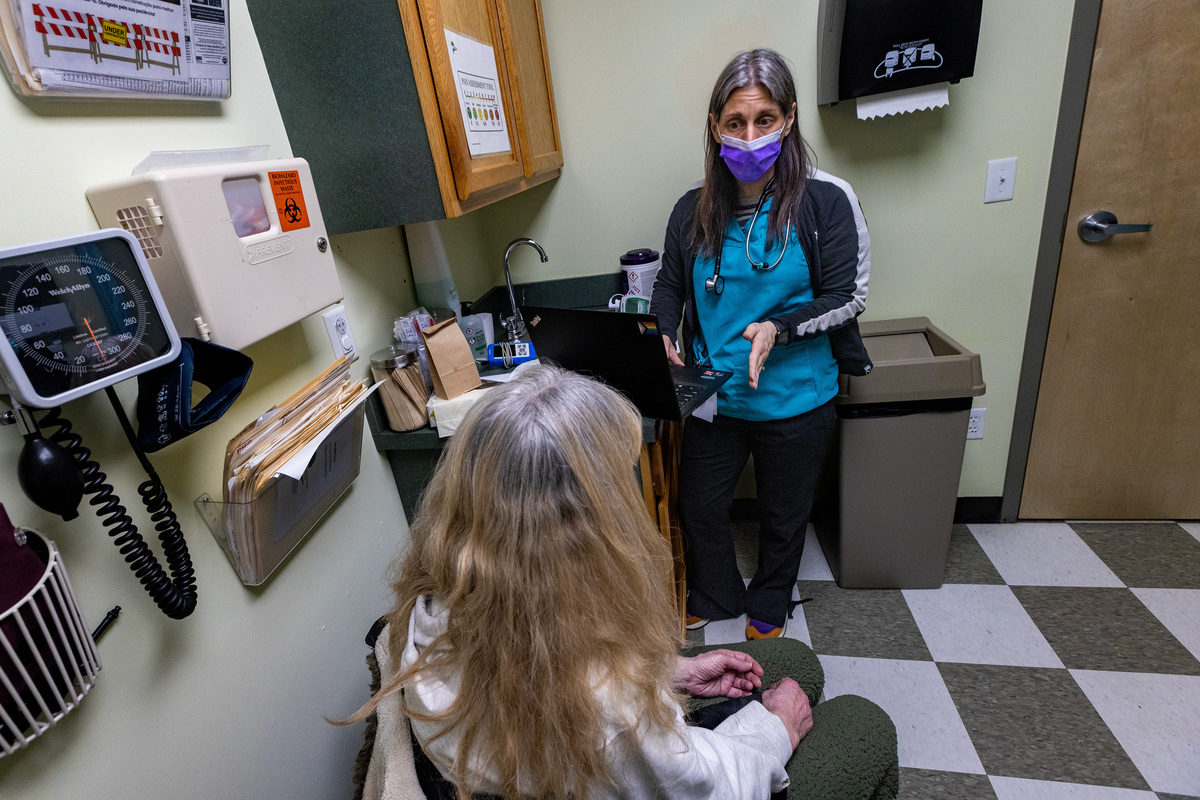
Registered nurse Jamie Simmons speaks with a patient during an appointment at the Greater New Bedford Community Health Center in Massachusetts. The patient, whose first name is Kim, says buprenorphine has helped her stay off heroin and avoid an overdose for nearly 20 years.

Jesse Costa for KHN


hide caption

toggle caption

Jesse Costa for KHN


Registered nurse Jamie Simmons speaks with a patient during an appointment at the Greater New Bedford Community Health Center in Massachusetts. The patient, whose first name is Kim, says buprenorphine has helped her stay off heroin and avoid an overdose for nearly 20 years.

Jesse Costa for KHN

For two decades — as opioid overdose deaths rose steadily — the federal government limited access to buprenorphine, a medication that addiction experts consider the gold-standard for treating patients with an opioid use disorder. Study after study shows it helps people continue addiction treatment while reducing the risk of overdose, and death.

Clinicians who wanted to prescribe the medicine had to complete an 8-hour training. They could only treat a limited number of patients and had to keep special records. They were given a Drug Enforcement Administration (DEA) registration number starting with X, a designation that many doctors say made them a target for drug enforcement audits.

“Just the process associated with taking care of our patients with a substance use disorder made us feel like, ‘boy, this is dangerous stuff,'” says Dr. Bobby Mukkamala, who chairs the American Medical Association’s task force on substance use disorder.

“The science doesn’t support that but the rigamarole suggested that.”

That rigamarole is mostly gone. Congress eliminated what became known as the “X-waiver” in legislation President Biden signed late last year. Now begins what some addiction experts are calling a truth serum moment.

Was the X-waiver and the burdens that came with it the real reason only about 7{35112b74ca1a6bc4decb6697edde3f9edcc1b44915f2ccb9995df8df6b4364bc} of clinicians in the U.S. were cleared to prescribe buprenorphine? Or was it an excuse that masked hesitation about treating addiction, if not outright disdain for these patients?

There’s great optimism among some leaders that getting rid of the X-waiver will expand access to buprenorphine and reduce overdoses. One study from 2021 shows taking buprenorphine reduces the risk by 50{35112b74ca1a6bc4decb6697edde3f9edcc1b44915f2ccb9995df8df6b4364bc}. The medication is an opioid that produces much weaker effects than heroin or fentanyl and reduces cravings for those deadlier drugs.

The nation’s drug czar, Dr. Rahul Gupta, says getting rid of the X-waiver will ultimately prevent millions of deaths.

“The impact of this will be felt for years to come,” Gupta says. “It is a true historic change that, frankly, I could only dream of being possible.”

Gupta and others envision obstetricians prescribing buprenorphine to their pregnant patients, infectious disease doctors adding it to their medical tool box, and lots more patients starting buprenorphine when they come to emergency rooms, primary care clinics and rehabilitation facilities.

We are “transforming the way we think to make every moment an opportunity to start this treatment and save someone’s life,” says Dr. Sarah Wakeman, the medical director for substance use disorder at Mass General Brigham in Boston.

Wakeman says clinicians who she’s been reaching out to for the past decade are finally willing to consider treating patients with buprenorphine. Still, she knows stigma and discrimination could undermine efforts to help those who aren’t being served. In 2021, a national survey showed just 22{35112b74ca1a6bc4decb6697edde3f9edcc1b44915f2ccb9995df8df6b4364bc} of people with an opioid use disorder received buprenorphine or methadone, which is another form of medication-assisted treatment.

The truth serum experiment

The truth serum experiment – what will test whether clinicians will now step up prescribing – is underway in hospitals and clinics across the country as patients struggling with addiction queue up for treatment.

One woman named Kim, 65, is among them.

Kim’s recent visit to the Greater New Bedford Community Health Center in southern Massachusetts began in an exam room with Jamie Simmons, a registered nurse who runs the center’s addiction treatment program but doesn’t have prescribing powers. NPR agreed to use only Kim’s first name to limit discrimination linked to her drug use.

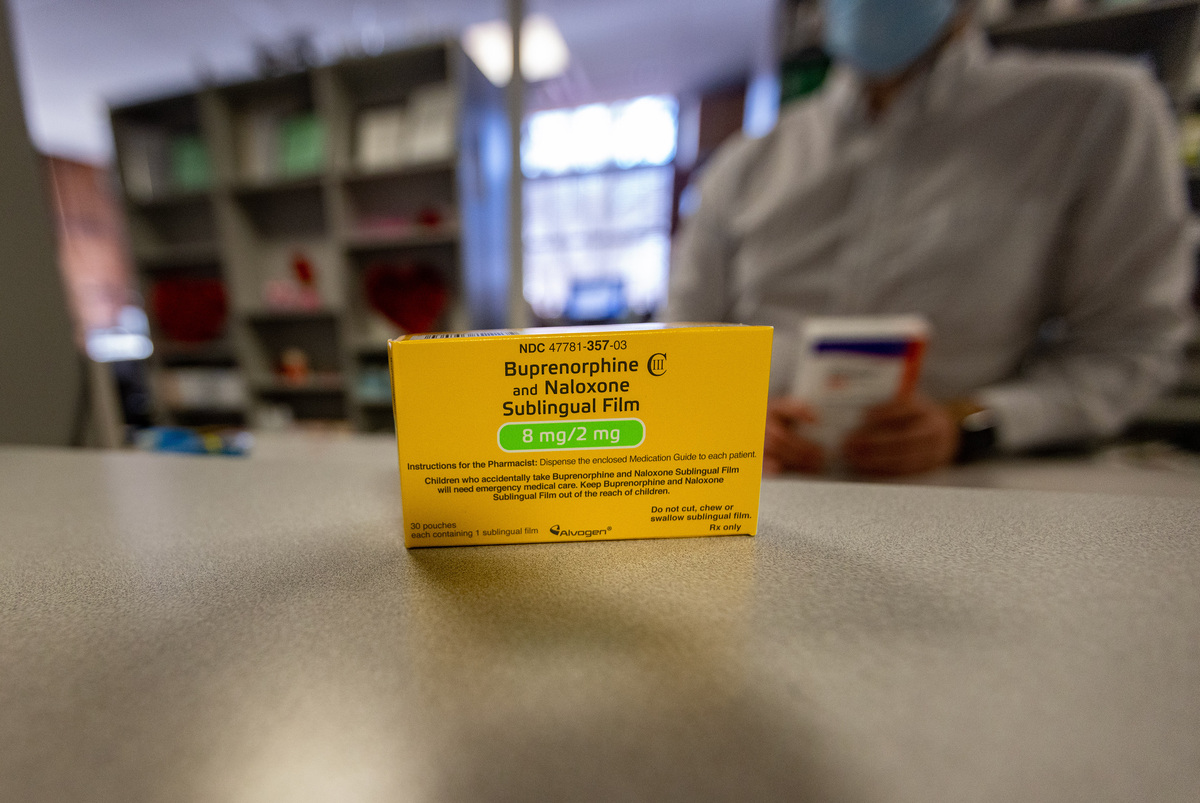
Kim tells Simmons that buprenorphine has helped her stay off heroin and avoid an overdose for nearly 20 years. Kim takes a brand of the medication called Suboxone, which comes in the form of thin film-like strips she dissolves under her tongue.

“It’s the best thing they could have ever come out with,” Kim says, “I don’t think I ever even had a desire to use heroin since I’ve been taking them.”

Buprenorphine can produce mild euphoria and slow breathing but there’s a ceiling on the effects. Patients like Kim may develop a tolerance and not experience any effects.

“I don’t get high on Suboxones,” Kim says, “they just keep me normal.”

Still many clinicians have been hesitant to use buprenorphine – known as a partial opioid agonist – to treat an addiction to more deadly forms of the drug.

Kim’s primary care doctor at the health center never applied for an X-waiver. So for years Kim has bounced from one treatment program to another, seeking a prescription. When there were lapses in her access to buprenorphine, the cravings returned – an especially scary prospect now that the powerful opioid fentanyl has replaced heroin on the streets of Massachusetts, where Kim lives.

“I’ve seen so many people fall out [overdose] in the last month,” says Kim, her eyes wide, “that stuff is so strong that within a couple minutes, boom.”

Because fentanyl can kill so quickly, the benefits of taking buprenorphine and other medications to treat an opioid use disorder have increased as deaths linked to even stronger types of fentanyl rise. Buprenorphine is present in a small percentage of overdose deaths nationwide, 2.6{35112b74ca1a6bc4decb6697edde3f9edcc1b44915f2ccb9995df8df6b4364bc} – virtually always with a mix of other drugs, often benzodiazepines. Fentanyl is in 94{35112b74ca1a6bc4decb6697edde3f9edcc1b44915f2ccb9995df8df6b4364bc} of overdose deaths in Massachusetts.

“Bottom line is, fentanyl kills people, buprenorphine doesn’t,” Simmons says.

That reality adds urgency to Kim’s health center visit because Kim took her last Suboxone before arriving. Her latest prescription has run out. Cravings for heroin could resume tomorrow if she doesn’t get more Suboxone. Simmons confirms the dose and tells Kim that her primary care doctor may be willing to renew the prescription now that the X-waiver is not required. But Dr. Than Win has some concerns after reviewing Kim’s most recent urine test.

It showed traces of cocaine, fentanyl, marijuana and Xanax, and Win says she’s worried about how the street drugs might interact with buprenorphine.

“I don’t want my patients to die from an overdose,” Win says. “But I’m not comfortable with the fentanyl and a lot of narcotics in the system.”

Kim is adamant that she’s not intentionally ingesting fentanyl. It might have been in the cocaine she says her roommate shares occasionally. Kim says she takes the Xanax to sleep. Her drug use presents complications that many primary care doctors don’t have experience managing. Some clinicians are apprehensive about using an opioid to treat an addiction to opioids, despite compelling evidence that it saves patients’ lives.

Win is worried about writing her first prescription for Suboxone. But she agrees to help Kim stay on the medication.

“I wanted to start with someone a little bit easier,” Win says. “It’s hard for me, that’s the reality and truth.”

About half of the providers at the health center had an X-waiver when it was still required. Simmons says some of the resistance to having the waiver was rooted in stigma or misunderstanding about addiction. She urges doctors to treat addiction as they would any other disease.

“You wouldn’t not treat a diabetic, you wouldn’t not treat a patient who is hypertensive,” Simmons says. “People can’t control that they formed an addiction to an opiate, alcohol or a benzo.”

Suboxone film

Jesse Costa/WBUR


hide caption

toggle caption

Jesse Costa/WBUR


Suboxone film

Jesse Costa/WBUR

Searching for solutions to soften stigma

Although the restrictions on buprenorphine prescribing are no longer in place, Dr. Mukkamala says the perception created by the X-waiver lingers.

“That legacy of elevating this to a level of scrutiny and caution, that needs to be sort of walked back,” says Mukkamala with the AMA. “That’s going to come from education.”

Mukkamala sees promise in the next generation of doctors, nurse practitioners and physician assistants coming out of schools that have added addiction training. The AMA and the American Society of Addiction Medicine have online resources for clinicians who want to learn on their own.

Some of these resources may help fulfill a new training requirement for clinicians who prescribe buprenorphine and other controlled narcotics. It will take effect in June. The DEA has not issued details about that training.

But training alone may not shift behavior: take the experience of Rhode Island.

The number of doctors approved to prescribe buprenorphine jumped more than 200{35112b74ca1a6bc4decb6697edde3f9edcc1b44915f2ccb9995df8df6b4364bc} from 2016 to 2022 after the state said physician training should include an X-waiver. Still, having the option to prescribe buprenorphine “didn’t open the floodgates” for patients in need of treatment, says Dr. Jody Rich, an addiction specialist who teaches at Brown University. The number of patients taking buprenorphine in Rhode Island increased – from 2016 to 2022 when the number of qualified prescribers jumped – but at a much slower rate .

“It all comes back to stigma,” Rich says.

He says longstanding resistance among some providers to treating addiction is shifting as younger people enter medicine. But the opioid crisis can’t wait for a generational change, he says. To expand buprenorphine access now, Rich’s research shows states could use pharmacists, partnered with doctors, to help manage the care of more patients with an opioid use disorder.

Wakeman, at Mass General Brigham, says it might be time to hold clinicians who don’t provide addiction care accountable through quality measures tied to payments.

“We’re expected to care for patients with diabetes or to care for patients with heart attack in a certain way and the same should be true for patients with an opioid use disorder,” says Wakeman.

One quality measure could be to track how often prescribers start and continue buprenorphine treatment. Wakeman says it would also help if insurers reimbursed clinics for the cost of staff who aren’t traditional clinicians but are critical in addiction care, like recovery coaches and case managers.

Will ending the X-waiver close racial gaps?

Wakeman and others are paying especially close attention to whether eliminating the X-waiver helps narrow racial gaps in buprenorphine treatment.

The medication is much more commonly prescribed to white patients with private insurance or who can pay cash. But there are also stark differences by race at some health centers where most patients are on Medicaid and would seem to have equal access to this addiction treatment.

At the New Bedford health center, Black patients represent 15{35112b74ca1a6bc4decb6697edde3f9edcc1b44915f2ccb9995df8df6b4364bc} of all patients but only 6{35112b74ca1a6bc4decb6697edde3f9edcc1b44915f2ccb9995df8df6b4364bc} of those taking buprenorphine. For Hispanics that comparison is 30{35112b74ca1a6bc4decb6697edde3f9edcc1b44915f2ccb9995df8df6b4364bc} to 23{35112b74ca1a6bc4decb6697edde3f9edcc1b44915f2ccb9995df8df6b4364bc}. Most of the health center patients prescribed buprenorphine are white, 61{35112b74ca1a6bc4decb6697edde3f9edcc1b44915f2ccb9995df8df6b4364bc}, while they are just 36{35112b74ca1a6bc4decb6697edde3f9edcc1b44915f2ccb9995df8df6b4364bc} of patients overall.

Dr. Helena Hansen, who co-authored a book on race in the opioid epidemic, says access to buprenorphine doesn’t guarantee that patients will benefit from it.

“People are not able to stay on a life-saving medication unless the immense instability in housing, employment, social supports — the very fabric of their communities — is addressed,” says Hansen. “That’s where we fall incredibly short in the United States.”

Hansen says expanding access to buprenorphine has helped reduce overdose deaths dramatically among all drug users in France, including those who are low-income and immigrants. There, patients with an opioid use disorder are seen in their communities and offered a wide range of social services.

“Removing the X-waiver,” says Hansen, “is not in itself going to revolutionize the opioid overdose crisis in our country. We would need to do much more.”

This story is from NPR’s partnership with WBUR and KHN. KHN (Kaiser Health News) is a national newsroom that produces in-depth journalism about health issues.

Treating Bladder Cancer: Latest Advancements in Care

Treating Bladder Cancer: Latest Advancements in Care

Toward the end of the 19th century, a New York Town surgeon named Dr. William Coley purposely injected just one of his sufferers with streptococcal microorganisms. Coley wasn’t crazy. He hoped the bacterial an infection would encourage an immune reaction that would sluggish the unfold of his patient’s cancer, which was inoperable. The experiment labored the patient’s tumor shrank.

For the following 40 several years, Coley and his exploration collaborators would test comparable remedies on more than 1,000 most cancers people. They experienced failures but also quite a few successes, in particular amid persons with bone or delicate-tissue cancers. These days, Coley is occasionally termed the father of immunotherapy, which is a branch of drugs that tries to activate or modify a person’s immune system in means that assistance take care of ailment.

Cancer remains 1 of the most lively locations of immunotherapy study, and people with bladder cancer are between all those who stand to gain most from these medicines. “Bladder most cancers is a single of the cancers—along with melanoma, head and neck cancers, and kidney cancer—that are very responsive to immunotherapy,” claims Dr. Joaquin Bellmunt, director of the Bladder Cancer Application at the Harvard-affiliated Beth Israel Deaconess Medical Centre in Boston.

Bellmunt suggests that bladder most cancers is characterized by a large variety of tumor mutations. The human overall body tends to regard these kinds of mutations as “antigens”—meaning unwelcome threats that would generally instigate an immune reaction. Even so, most cancers cells have capabilities that permit their mutations to fly underneath the radar and evade the immune system’s antibodies. Immunotherapies perform in part by counteracting these defenses. In Bellmunt’s words, they “release the brakes” that prevent the immune technique from launching a much more formidable assault.

Any dialogue of new treatments for bladder most cancers ought to spotlight the latest immunotherapies, which have been sport changers. But professionals say that other the latest advancements—including refinements in chemotherapies, radiation solutions, and surgery—are bettering prognoses for people today identified with bladder most cancers.

Right here, oncologists and other bladder-most cancers specialists describe the newest breakthroughs, as properly as areas of investigate that could yield larger advancements in the potential.

The hottest in immunotherapy

Immunotherapy for the treatment of bladder cancer is not new. Since the 1970s, medical practitioners pursuing intently in Coley’s footsteps have given some bladder-most cancers sufferers injections of bacillus Calmette–Guérin, or BCG, a bacteria that triggers a handy sort of irritation. “BCG has been conventional treatment method for non-invasive bladder cancers”—meaning early-phase cancers that have not distribute over and above the bladder—“for the past 40 yrs,” Bellmunt says. “But when BCG failed, we had practically nothing still left but cystectomy,” or bladder elimination surgery.”

The problem was a lot the very same for men and women with state-of-the-art bladder cancers that had metastasized to other areas of the system. If chemotherapy didn’t work, there have been number of choices. (Even when these therapies do work, the median survival time tends to be calculated in months, not decades.)

The most recent immunotherapies are encouraging rewrite the script for men and women with both early-stage and later-stage bladder cancers. “2016 is the yr the newer immunotherapies display up, and quickly some of these drugs were being conditionally authorised based mostly on Stage 1 and 2 trials,” Bellmunt states.

Numerous of these rather new immunotherapies are recognised as checkpoint inhibitors. They reduce (or inhibit) the motion of specific immune pathways that would in any other case block a far more strong immune response. Also regarded as anti-PD-1 or anti-PD-L1 medicines, these remedies have “changed the cure landscape” for persons with state-of-the-art bladder cancers, according to a 2020 analyze in the New England Journal of Medicine (NEJM).

“With immunotherapy, if you really seem at the all round gains, it is very modest,” states Dr. Simon Crabb, a bladder-cancer professional and affiliate professor in clinical oncology at the University of Southampton in the U.K. To his level, that 2020 NEJM research located that, in comparison with normal cure (like chemotherapy), immunotherapy lengthened regular overall survival duration by about 7 months. “But in a minority of clients, it’s possible 20{35112b74ca1a6bc4decb6697edde3f9edcc1b44915f2ccb9995df8df6b4364bc} to 30{35112b74ca1a6bc4decb6697edde3f9edcc1b44915f2ccb9995df8df6b4364bc}, you see outstanding responses,” Crabb suggests. “I’ve bought folks who’ve been on these drugs for 4 or five yrs.”

Figuring out why this happens—why some answer so substantially far better than many others to immunotherapy—is a focal place of present-day study initiatives. “Something we have arrive to fully grasp is that this isn’t one sickness, it is a subset of diseases that can be divided up dependent on genetic subtypes,” he describes. By mapping the genetic properties of distinct bladder cancers, professionals hope to achieve a -stronger being familiar with of how every responds to the present-day therapies—whether that includes a solitary immunotherapy medication or, as is getting to be additional widespread, immunotherapies combined with chemotherapies or other prescription drugs.

Researchers are also actively discovering the use of immunotherapies in earlier-stage bladder cancers. For example, there is some hope that administering these medicines before bladder-removal surgical treatment may possibly be helpful. “A extensive time ago, we found out that you can improve survival by offering chemotherapy before medical procedures, but it’s quite toxic,” states Dr. Yair Lotan, main of urologic oncology at UT Southwestern Health-related Middle at Dallas. “Now we’re wanting at utilizing immunotherapy, or a mix of immunotherapy with focused therapies, to keep away from the require for systemic chemotherapy.”

Immunotherapies, like all medicine, have their downsides. The aspect-outcomes of the procedure can be difficult to predict. “If the immune procedure is overstimulated, almost any organ process can be impacted,” Bellmunt says. Skin reactions—dry or itchy pores and skin, rashes—are the most frequent grievance among men and women on these drugs. A smaller sized proportion of sufferers, 5{35112b74ca1a6bc4decb6697edde3f9edcc1b44915f2ccb9995df8df6b4364bc} or a lot less, acquire inflammation of the bowels, lungs, or thyroid. This irritation can induce indications like diarrhea, shortness of breath, or body weight obtain. “In rare situations we’ve even observed cardiovascular toxicity the place individuals made myocarditis [heart inflammation] and died,” he suggests. In this article yet again, scientists are doing the job to much better understand—and greater predict-—how a particular person will react to these remedies.

Whilst loads of function remains, these medicines have provided a lifestyle-conserving action forward for some. “Once you strengthen the immune method, there are clients whose immunologic memory helps prevent the tumor from recurring,” Bellmunt states. “These people have a clear improvement in survival.”

Go through Far more: Changing Cancer Treatment, So Patients No Extended Really feel Like a Number

New improvements in qualified therapies

Despite the enjoyment and progress involving immunotherapies, chemotherapy stays the to start with-line treatment for highly developed bladder cancers. There, as well, clinical researchers are generating development.

The cells of bladder-most cancers tumors consist of a substantial range of surface antigens, which are molecules capable of triggering an immune response. These antigens are the purpose immunotherapies can be efficient for the therapy of bladder cancer, and these antigens also help the action of newer chemotherapy medications regarded as antibody-drug conjugates. “These medication use these very clever molecules that have an antibody on one particular end—something that will hopefully bind on to the antigens on cancer cells in a selective manner—and a chemotherapy agent on the other,” Crabb says.

The huge problem with common chemotherapy, he points out, is that it struggles to differentiate in between typical cells and most cancers cells. Rapidly-developing cells that resemble most cancers cells—such as those people of the bone marrow, digestive tract, mouth, and scalp—typically draw friendly fireplace. This is why people today on chemo often knowledge various intense aspect-results, which include hair decline, exhaustion, nausea, and sores. Antibody-drug conjugates, by selectively binding to antigens on bladder most cancers cells, can decrease this form of collateral injury. “What it does is lock the chemotherapy on to this molecule that exists on major of the most cancers cells, which with any luck , spares the standard cells the direct publicity to chemotherapy,” Crabb suggests.

Bellmunt likens these medicines to -microscopic taxis that have a bomb strapped into the passenger seat. “The taxi drives to the most cancers cell, which internalizes it, and then it releases the bomb,” he states. “This is a new way of providing chemotherapy that allows stay clear of side consequences, and some trials have also proven a survival edge in contrast to typical chemotherapy.” Right now, he suggests these prescription drugs are utilised as a “third-line” treatment method, or only in situations where by regular chemotherapy and immunotherapy fall short. But there is hope that improvements in these medicines may well soon press them increased up in the pecking get.

Antibody-drug conjugates are just a single of various new “targeted” remedies for bladder cancer. A further is a variety of drug known as a tyrosine kinase inhibitor. “This is a drug that is able to swap off a genomic result in identified in the tumor,” Bellmunt points out. Switching off this trigger is handy because, in some circumstances, it may perhaps be contributing to the development or progression of that tumor.

Scientists are hunting at tyrosine kinase inhibitors and connected precision medication along with chemotherapy or immunotherapy solutions. Combining these medicines may possibly lead to therapy breakthroughs in the a long time to arrive. “We all hope that the proper blend might change the long term,” Bellmunt provides.

Read Additional: 4 Essential Measures to Get Soon after a Cancer Analysis

What is future in bladder-cancer treatment?

The breakthroughs mentioned listed here are among the most promising, but there are loads much more.

For illustration, new imaging methods could shortly make radiation solutions more specific. Genetic sequencing of cancer cells is also a hot spot of study. “We’re finding better at pinpointing biomarkers of the condition that allow for us to tailor our techniques,” Lotan states. “In just the previous 3 or 4 several years, we have moved ahead in pinpointing underlying signatures of cancers and gene expressions that can support us personalize treatment method selections.”

Lotan notes that quite a few in his industry are also hopeful that the long term will generate exact screening protocols for bladder cancer. “From a detection standpoint, there has not been any main advancement,” he states. “Newer detection solutions use panels of RNA or DNA, which are far more advanced, but so much we have not accomplished the large scale studies necessary to display medical utility.” All those trials include thousands of men and women and “a lot of funds,” he provides, and will ideally transpire quickly.

“It may be achievable to use urine as a screening solution, and there’s pretty a good deal of perform heading on in that spot,” Crabb adds. He’s optimistic this do the job will sooner or later bear fruit. “I assume urine screening is the way forward,” he suggests. “It’s all effectively and fantastic to acquire these pricey new remedies, but avoidance, or at the very least early detection, would be much better.”

There was a time when cancer experts hoped for a solitary breakthrough treatment that would, by by itself, eradicate any and all cancers. As their being familiar with of the illness has broadened, all those hopes have pale. Now, most affirm that cancer is far too variable to succumb to any silver bullet, and so the path forward will be paved with a various array of customized solutions. The very good news for persons with bladder cancer is that just about every new yr seems to generate meaningful strides in healthcare science’s capability to battle the illness. The photograph now is radically transformed from what it was 10 or even five yrs back. Men and women with bladder most cancers are dwelling lengthier and with fewer side results than ever right before. There is explanation to assume more enhancements in the near long run.

Far more Have to-Browse Stories From TIME


Get hold of us at letters@time.com.

Biden vs. Trump: What a Difference Two Years Make for Treating COVID

Biden vs. Trump: What a Difference Two Years Make for Treating COVID

Donald Trump might have been additional sick than everyone suspected when he checked in at Walter Reed Nationwide Military Healthcare Middle on Oct 2, 2020. The then president, 74 many years aged at the time, had major signals of condition in his lungs and minimal blood oxygen ranges. He was speedily started on an aggressive program of treatments, which includes an intravenous infusion of the antiviral treatment remdesivir and a cocktail of monoclonal antibodies.

What a big difference these few of a long time make. Soon after testing favourable for COVID, the entirely vaccinated and boosted 79-year-previous Joe Biden has been carrying out his presidential responsibilities even though isolating at the White Property with what have been characterised as moderate indications. A movie of Biden was released at midday on July 21: “I’m accomplishing properly, obtaining a ton of perform carried out, likely to keep on to get it carried out,” he mentioned.

“The variances in the two the ailment course and therapy for COVID in Trump versus Biden is stark,” states Akiko Iwasaki, an immunologist at Yale University, who has labored on vaccine growth. It may be clear to all, but it bears repeating that the most hanging variation is that Trump was infected with the virus that causes COVID just prior to the vaccines in opposition to it were offered. Right after a trip to Walter Reed by helicopter, Trump was specified a steroid in addition to a class of remdesivir and a significant-dose injection of the monoclonal antibody cocktail, the latter an experimental treatment at the time.

In contrast, Biden was thoroughly vaccinated and boosted, and he only been given an orally administered antiviral capsule. “This exhibits the incredible gain of the COVID vaccines, especially following booster doses, to prevent severe COVID,” Iwasaki states.

The differing classes of the disease among the these two men demonstrates the goal of the vaccines’ accelerated advancement endeavours. “It’s a great illustration of particularly what the vaccines are supposed to do,” states Edy Kim, a critical treatment medical professional at Brigham and Women’s Medical center in Boston. Kim has witnessed a marked reduction in patients hospitalized with COVID and an even bigger decline in this sort of patients going into the intense treatment device. “The reason of the vaccines is not to keep away from COVID totally, but if you get COVID, they assist you steer clear of hospitalization,” he suggests.

The scientists and well being treatment employees who have witnessed these ahead of-and-just after time periods marvel at the current defense even for the most susceptible teams. “In common, individuals in Biden’s and Trump’s age group are now undertaking so significantly superior than they were being as a consequence of vaccinations,” states Monthly bill Hanage, an epidemiologist at the Harvard T. H. Chan College of Community Health. And doses make a difference. In fact, he claims “four pictures are improved than three, and a few are incredibly substantially improved than two.”

Just final 7 days the Facilities for Ailment Manage and Avoidance documented that, for nutritious grown ups age 50 and older, a second booster prevented hospitalizations triggered by the Omicron variant and its subvariants in 80 percent of people, in comparison with 55 percent in these who only experienced a person booster. “The simple fact that President Biden is tweeting from the White Household, sitting up and fully dressed despite his new COVID diagnosis, is not an incident,” claims Peter Hotez, an infectious disorder expert at Baylor School of Drugs.

Hotez credits Biden’s mild sickness to his two booster photographs from COVID plus his early cure with the antiviral drug Paxlovid. Despite the fact that all presidents receive fantastic clinical remedy, Trump was offered an experimental medicine that was not greatly obtainable at the time. Biden, on the other hand, is becoming treated with a drug that can be readily attained at community pharmacies. “His ailment is a reminder for everyone to just take comprehensive gain of vaccinations and treatment options, which unfortunately is not going on in lots of sections of the region,” Hotez states.

Hanage also hails the prevalent availability of antiviral solutions these types of as Paxlovid. These days the regular of everyday new COVID situations tally up to about 126,000, which is practically a few occasions what they had been when Trump’s an infection was disclosed in early Oct 2020. But the recent amount of normal everyday deaths is half of what it was at that time. “That’s a enormous big difference,” Hanage states. “I think that a great deal of that is owing to the exceptional innovations that we’ve produced above the very last couple of yrs and becoming in a position to present individuals with safety.”

Diagnosing and Treating Chronic Hypertension

Diagnosing and Treating Chronic Hypertension

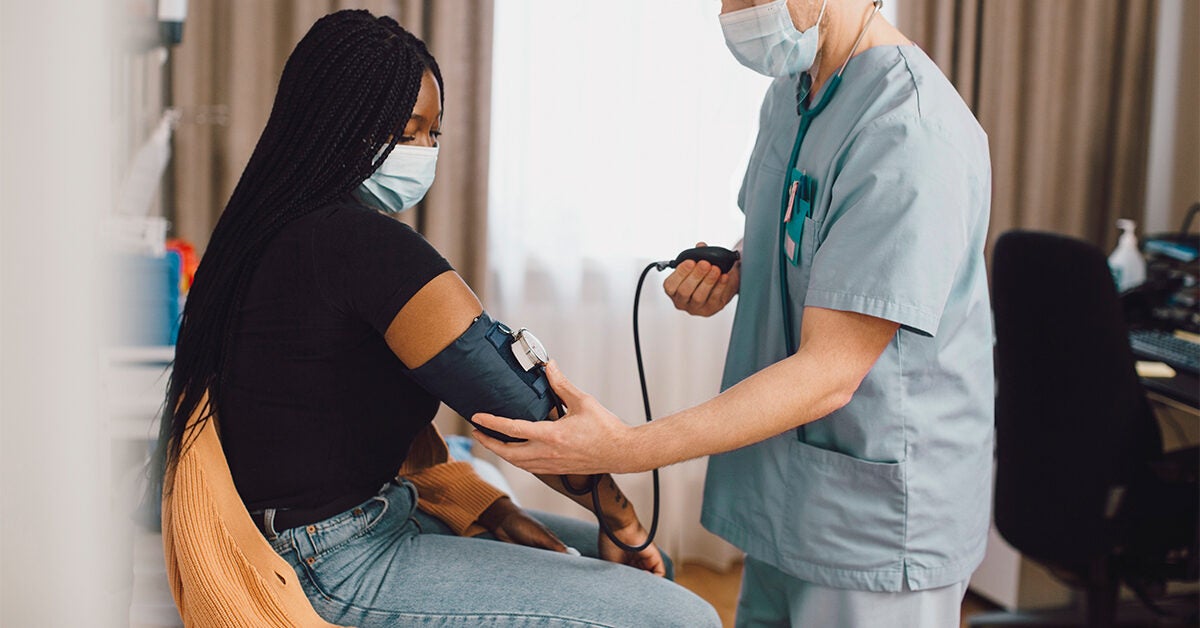
Blood force is the drive of blood towards the interior walls of your arteries. This can alter during the working day and through your existence. When your blood tension is very well earlier mentioned the usual wholesome variety, it is known as higher blood strain or hypertension.

From time to time you can have momentary spikes in blood tension, brought about by anxiety or other variables — like pregnancy. But when higher blood tension results in being an ongoing issue, it is regarded as continual.

There is no treatment for long-term hypertension, but there are drugs and way of living changes that can aid continue to keep your blood pressure below handle.

No matter how hypertension begins, it is important to get the job done intently with a health practitioner and adopt a heart-healthy way of living to reduce chronic hypertension from resulting in critical and potentially lifestyle-threatening troubles.

Blood pressure is expressed by two quantities: the systolic tension or top quantity on your blood force studying, and the diastolic strain or bottom selection. The pressures are measured in millimeters (mm) of mercury (Hg).

Systolic pressure refers to the stress of blood in your arteries when your coronary heart contracts and pumps blood out to the entire body. Diastolic stress is the drive of blood against the artery walls when your heart is at rest.

Higher blood force is thought of a systolic force of 130 mm Hg or better or diastolic strain of 80 mm Hg or greater. The Facilities for Sickness Handle and Prevention (CDC) estimates that approximately fifty percent of all grownups in the United States have higher blood stress.

Long-term hypertension is also identified as important hypertension or main hypertension. It accounts for about 90{35112b74ca1a6bc4decb6697edde3f9edcc1b44915f2ccb9995df8df6b4364bc} of higher blood force conditions, in accordance to the World Heart Federation. There is usually no acknowledged result in of primary or chronic hypertension, nevertheless there’s a prolonged listing of danger factors, which includes:

  • advancing age
  • diabetes
  • abnormal alcohol consumption
  • loved ones history
  • superior sodium consumption
  • being overweight
  • sedentary life style
  • tobacco use

Secondary hypertension, which accounts for considerably much less situations than serious hypertension, is high blood strain induced by yet another health-related problem, these kinds of as kidney disease or thyroid problems. It is not thought of persistent hypertension due to the fact dealing with the fundamental condition can normally result in a return to normal blood stress.

It is rather common for a pregnant specific to develop large blood stress. The CDC studies that hypertension happens in about 1 of every single 12 to 17 pregnancies. But in being pregnant, serious hypertension requires on a slightly distinctive this means and concern.

Serious hypertension differs from other superior blood strain troubles related with pregnancy, like preeclampsia and gestational hypertension. Chronic hypertension indicates you experienced large blood tension just before you became pregnant (or ahead of the being pregnant achieved 20 weeks) and you keep on to have large blood strain through the being pregnant and afterward.

Preeclampsia is significant blood pressure that 1st develops through being pregnant and means that there’s protein in your urine or there are other connected wellbeing difficulties immediately after 20 months. Gestational hypertension is also higher blood tension that 1st develops during being pregnant, but is not accompanied by protein in the urine or other heart or kidney problems.

Since long-term hypertension in pregnancy is these types of a common prevalence, it has been an active location of investigation for a extended time.

For example, a 2017 analyze indicates that a person who had gestational hypertension or preeclampsia may perhaps be a lot more inclined to establish continual hypertension, although that chance can be substantially lowered by keeping a average pounds and adhering to heart-healthful life style behaviors.

A 2022 study implies that dealing with persistent hypertension in expecting persons to a blood strain of beneath 140/90 mm Hg potential customers to superior being pregnant outcomes, even among all those who have mild long-term hypertension.

Focus on the life style possibilities for reducing your blood force when you’re identified with most important or chronic hypertension.

Reducing your blood stress may possibly be done with a mixture of drugs and way of living modifications developed to guidance healthy coronary heart purpose. Among the the behaviors that must assist are:

Diet plan

Currently being over weight or overweight is affiliated with substantial blood tension although dropping excess weight, and holding a average fat is a critical to controlling your blood strain.

In addition, a diet regime significant in sodium and harmful fat is linked with superior blood tension.

To that stop, wellness authorities propose the Dietary Methods to Prevent Hypertension (Sprint) diet program or the Mediterranean-style ingesting approach to aid superior cardiovascular health and fitness. These eating plans emphasize fruits, greens, complete grains, and lean proteins, whilst the Dash eating plan in particular focuses on minimizing sodium consumption.

A 2020 study implies that adhering to the Sprint diet is an in particular successful means of bringing your blood force below command.

Training

The American Coronary heart Association recommends 150 minutes a 7 days of moderate-depth exercise for better coronary heart well being. Preferably, you want to workout at minimum 30 to 40 minutes most times of the 7 days.

A brisk stroll or similar activity not only can help help excess weight administration, but it offers your cardiovascular method a great training, which supports vascular health and blood strain management.

Other methods

Other life style adjustments can make a significant variation in reducing blood force. Consider the subsequent adjustments for lessen blood strain and superior over-all well being:

  • Get at least 7 to 8 hours of slumber for every night time and tackle any rest conditions, these kinds of as obstructive sleep apnea.
  • Preserve alcoholic beverages consumption to a bare minimum.
  • Deal with pressure by way of relaxation initiatives, this kind of as meditation and deep respiratory techniques.
  • Stop cigarette smoking.

In addition to living a coronary heart-healthy way of life, the primary way to regulate persistent hypertension is with drugs that decreased blood tension. Some of the extra popular antihypertensives involve:

  • Diuretics: These medications cut down fluid levels in the entire body to relieve the burden in the arteries, but can also lower potassium stages, ensuing in muscle-related facet results. Men and women with diabetic issues may perhaps knowledge spikes in blood glucose amounts immediately after using diuretics.
  • Angiotensin-changing enzymes (ACE) inhibitors: These ACE inhibitors assistance hold the arteries relaxed and open to boost blood circulation and reduce blood pressure. They’re frequently harmless for most men and women, however anyone who’s expecting or is looking at turning into expecting should chat with a medical doctor about an alternative medicine.
  • Angiotensin II receptor blockers: Generally recognized as ARBs, these enable preserve blood vessels calm and open, although they do so as a result of a diverse system. ARBs should also not be applied through pregnancy.
  • Calcium channel blockers: These meds simplicity the force by which the coronary heart contracts, therefore reducing the tension of blood flowing even though the arteries.

A 2019 examine of hypertension management also implies that blood pressure-reducing drugs — also regarded as anti-hypertensives — are secure and helpful treatment plans for most men and women and that they can be in particular handy in decreasing the chance of cardiovascular troubles, this sort of as coronary heart attack and stroke.

Continual hypertension is a widespread, but treatable, situation that can have an effect on adults of all ages and often little ones. Managing significant blood tension requires discipline and the potential to undertake coronary heart-balanced lifestyles, such as a wholesome diet regime and common physical exercise. It typically calls for day-to-day medications, much too.

If you stick to your medication routine and a plan of healthy ingesting and day by day training, you could steer clear of some of the extra intense complications of superior blood strain.