
How WA’s plan to transform its mental health system has faltered

How WA’s plan to transform its mental health system has faltered

The Mental Health Project is a Seattle Times initiative focused on covering mental and behavioral health issues. It is funded by Ballmer Group, a national organization focused on economic mobility for children and families. The Seattle Times maintains editorial control over work produced by this team.

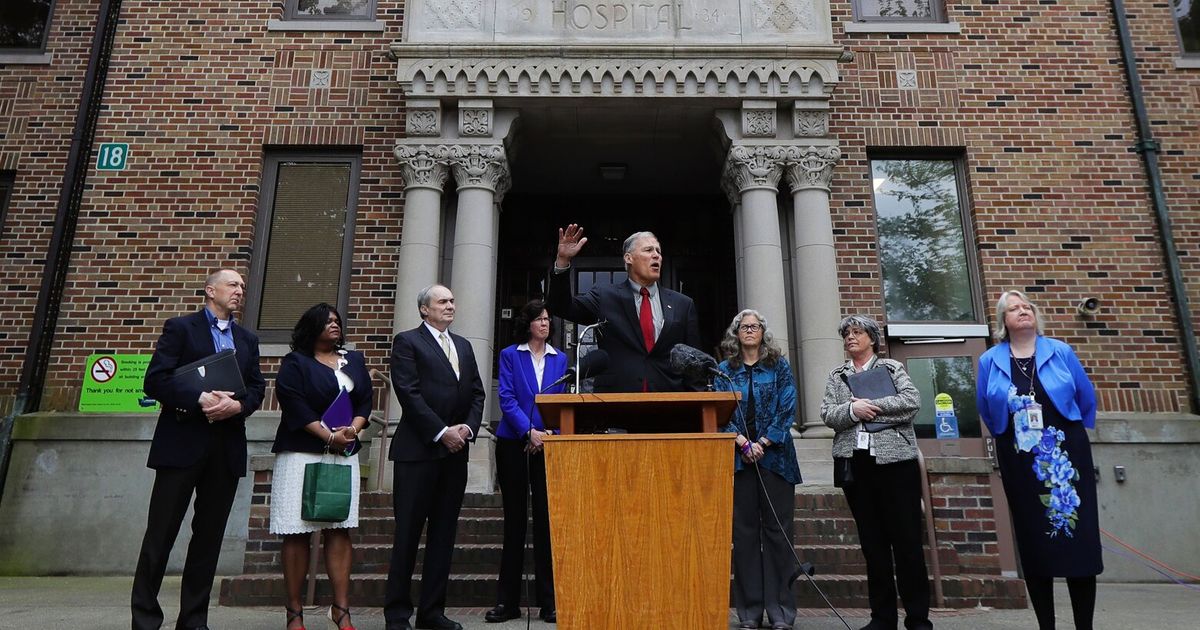
The suits were in town, prepping for a Friday news conference on the brick steps of Western State Hospital.

A photo from that day in Lakewood in May 2018 shows a united front. Hospital officials shoulder to shoulder with state lawmakers, and at the center, Gov. Jay Inslee. These officials were ready to “transform the state’s mental health system” after years of underfunding, lawsuits and federal warnings that threatened to close down Washington state’s largest psychiatric hospital — nearly 800 beds that served some of the most vulnerable residents.

“This is a heavy lift,” Inslee said.

He presented a plan that by 2023 would focus Western State on only serving patients who had been accused of crimes and were coming from jails. State agencies would build new, smaller centers across the state to serve people who weren’t facing charges but were sent for psychiatric commitment by the civil courts.

“It’s an aggressive timeline,” Inslee acknowledged. “2023 is tough, but doable. And it’s necessary.”

It is now 2023. The state failed to meet its goals.

In a quest to revamp mental health care, state officials made a challenging transition even harder — shutting down some of Western State’s wards without the planned community facilities that were supposed to take the people who relied on the state hospital. Combined with the unexpected effects of the pandemic, the resulting logjams have overloaded both jails and psychiatric facilities and left hundreds of incarcerated people languishing without mental health services.

The repercussions have left families and advocates frustrated and have embittered local law enforcement. Often the only two options seem to be either letting people struggle on the streets without care or criminalizing mental health and warehousing them in jail.

Staff and advocates say they warned state officials that the plan needed changes. Mike Yestramski, a social worker by training, remembers that day at Western State in 2018 clearly because he and other hospital union staff were asked to stand in that photo alongside the smiling politicians.

They refused.

“It’s not that we were not supportive of the vision,” explained Yestramski — though union leaders were also concerned that the plan could lead to fewer union jobs in the future. “It was the details, the logistics being worked out … What we’re seeing now come true.”

“We’re moving along by shutting down the civil beds before the community beds were built and ready to go.”

Indeed, this June, another ward is slated for closure — and the patients must go somewhere.

The blueprint

Western State has historically served two main types of patients. Those coming from jails — the state calls them “forensic patients” — need basic mental health services, like evaluations to determine whether they’re competent to stand trial, and restoration treatment to get them back to competency. It also houses “civil patients,” who are not criminally detained but are so seriously sick that they meet the threshold for involuntary commitment through a separate civil court system.

In the past, most of the patients were on the civil side, but in 2015, moves began to shut down the wards where they stayed.

Washington officials were facing challenges on a couple of fronts: The Centers for Medicare & Medicaid Services was scrutinizing Western State more closely after patient-on-patient assaults, threatening a loss of accreditation and federal dollars.

We’d like to hear from you.

The Mental Health Project team is listening. We’d like to know what questions you have about mental health and which stories you’d suggest we cover.

Get in touch with us at mentalhealth@seattletimes.com.

Around the same time, state officials at the Department of Social and Health Services faced a federal lawsuit over allegations they were violating incarcerated people’s due-process rights. People deemed potentially incompetent to stand trial were being held in jail for weeks or months because the state was failing to get them to Western State to get them evaluated or treated.

A federal judge ultimately ordered hospital officials to provide timely services within one to two weeks. Even today, the state is still failing to meet those timelines: In January it was taking about 100 days for patients to receive treatment. Currently, about 464 people are detained in jails across Washington state awaiting competency or restoration mental health services — an additional 344 are waiting out of custody.

In response to these ongoing issues, Washington legislators by spring 2016 had convened a special committee to improve the state hospitals.

Consultants came back with a lengthy report that fall that included nine recommendations. Among their suggestions: Transition the state hospitals into facilities that focus on patients coming from the jails. Build six more long-term civil facilities for patients transitioning out of state hospitals and into the community. Add three mobile crisis teams, and two new crisis centers to pull off the transition. 

In May 2018, Inslee, state legislators and government officials announced a plan building off that blueprint, which included the construction of a new forensic hospital on the Western State campus with 350 beds for people coming from jail. 

Today, while some of Western State’s last civil wards are set to close in June (delayed from a previous April 1 deadline), few of the other solutions recommended by the consultants exist. Washington has built two of the six civil facilities, most notably a 16-bed facility that debuted in January at Maple Lane near Centralia. Another treatment center in Snohomish County will break ground this spring — with two more facilities in Clark County expected in the winter of 2024. 

Additional beds are expected to come online at the University of Washington’s new behavioral health teaching facility at the end of 2023 and at Western State’s forensic hospital in 2027, at the earliest. 

In the meantime, however, there are no walk-in crisis centers in King County and by and large, hospital emergency rooms and jails take the responsibility of caring for people, despite the high cost and being ill-equipped to treat people in psychiatric emergencies. Mobile crisis teams are limited in size and are siloed among mental health service providers, police and fire services. 

“Do I think everything that we contemplated five years ago is going to be done this year? No,” said Amber Leaders, the senior policy adviser on behavioral health, aging and disability with Inslee’s office. 

“We are at a pinch point,” she said, with the civil wards winding down while other housing and treatment options are still coming on line.

“We have made a lot of progress in terms of building up the community capacity that we’ve talked about. But building a brand-new, shiny new forensic hospital takes some time,” Leaders acknowledged. 

State Rep. Nicole Macri, who has been deeply involved in the transition of the mental health system since she joined the Legislature in 2017, acknowledged the plan is “behind schedule,” but said “we haven’t lost sight of the goal.”

“We invested over $800 million in behavioral health in the ‘21 and ‘22 sessions. We should have been investing at that scale for years before that,” added Macri, D-Seattle. 

She points to the ripple effects of the Great Recession and how it led to significant cuts in funding for these services through the following years. Around that time, under former Gov. Christine Gregoire, state leaders similarly tried to “transform” Washington’s ailing mental health system but found limited success in restitching a complex, fragmented system.

Still, others note missteps in the latest iteration: 

“Five years is never a long enough runway when you’re talking about problems that need to be faced with a complete systemic overhaul from top to bottom,” said Lauren Simonds, the executive director of the Washington chapter of the National Alliance on Mental Illness. 

Kim Mosolf, director of treatment facilities with the advocacy organization Disability Rights − Washington — which sued over the delays in mental health evaluations and treatment for people in jails — points out that the new community beds that have come up are at best a replacement for what was lost.

“HCA [Washington Health Care Authority] has opened roughly 190 long-term community civil commitment beds since 2018 when they started this project,” she said. “However, they’re [closing] 180 beds at Western State Hospital. So it appears to be a zero sum game.” 

Yestramski, the social worker and now president of the Washington Federation of State Employees, said the idea of small facilities closer to patients’ homes was a “great idea on paper” but as state officials soon found out, “the problem is once they set out to build those, you have a lot of issues with NIMBYism.” 

Indeed, the construction of a new civil facility in Snohomish County faced “not-in-my-backyard” pushback from the community. Similar attempts to build enhanced services facilities for people with mental illnesses in Auburn and Burien were floated in the last few years but failed when local residents objected. 

Kinks in the system

One of the biggest reasons for delays at Western State, though, is the rising number of a particular type of patient. In prioritizing patients coming from jails, officials didn’t account for the fact that the civil and forensic patient populations often intermingle; closing one door had ripple effects in the other. 

One perfect example of that is called a civil conversion. 

If a patient coming from jail cannot be restored to competency, their criminal charges are typically dropped. Prosecutors can then “flip” their case, kick-starting a separate process that sends the person back to a state hospital but this time for civil treatment. This occurs most often in serious, felony-level cases.

But flipped patients often take four times as long to go through treatment at Western State because they receive more thorough mental health treatment. In comparison, the medication and services given to their jail-based counterparts are often only enough to make them competent in court — meaning they can identify the role of a judge or how to communicate effectively with their attorney. 

While a patient coming from jail may spend up to 90 days at the hospital for services, a civil patient can stay for a year or longer. 

That valuable space at the hospital causes backlogs for people who are languishing in jail while they wait for a spot to open at Western State. The number of patients being civilly converted has grown dramatically.

On any given day, “That number in the last year has climbed from say traditionally about 30 to 175,” said Thomas Kinlen, the director of the DSHS Office of Forensic Mental Health Services.

Prosecutors increasingly opt for this practice to try to keep people who might be a public safety threat off the street. Both Seattle and King County prosecutors have told The Seattle Times that this method offers at least some treatment for people with severe mental illness — and some respite from community complaints. 

However, even when community beds are present, another barrier exists for people discharging from state hospitals — especially if they have complicated backgrounds, like developmental disabilities or a history of violence. The facilities meant to house those civil patients can often decline to take certain people or rescind their placement, a practice common in other parts of the behavioral health system. 

Often it’s not financially or logistically feasible for providers to take those patients because they require more staff time and services. That means some of the most vulnerable patients go without appropriate long-term care or housing. 

Rick Deluga, a clinical supervisor on the community outreach and assessment team at Downtown Emergency Service Center, sees this first hand. Most of his clients are coming from jails or the hospital, and “they’re basically just getting stabilized and then being returned to where they came from,” he said.

“That’s usually an environment that continues to induce trauma, whether it’s because they’re on the street or they are released to a housing site or a shelter that may not be the best place for them to be due to the level of vulnerability,” he said. 

In a 2021 report, the Washington Health Care Authority told legislators about those concerns, saying that some people’s “complex and challenging needs” exceeded what community-based resources could provide.

The report cites the need for better payment rates for these hard-to-place patients, further training for the staff handling their care, specialized facilities for geriatric populations or those with additional needs, and the creation of “no-refusal” facilities who would be forced to accept all patients — essentially, state-run services like those Western State and Eastern State used to provide. 

Lisa Corthell, a psychiatrist working at DSHS’ Maple Lane residential treatment facility, said the Western State backlogs are trickling into her work as well. 

“Historically, [Western State has] been pretty good about freeing up a bed for us,” Corthell said. Her facility typically takes patients who are considered less acute or sick than the patients who go to the state hospitals. 

But in December, a patient of hers had to be transferred to a higher level of care at Western State and she found herself negotiating with the staff: “They said, ‘We can’t take them unless you take one of ours,’” she explained. 

“We’re going ‘What?’ We’re not supposed to be getting patients from Western. We’re supposed to be taking patients in from the jails.”

Moving forward

For Western State, the 2018 plan was a little too much, too late. By that summer, the hospital lost the federal accreditation it had hoped to earn back, and with it, about $53 million of funding. Still, the state poured millions into programs to ameliorate delays for mental health services for incarcerated people, and those time frames were starting to improve at last. 

Then the pandemic decimated the mental health sphere: More people sought care as workers simultaneously left the field for better pay and safety. 

Nevertheless, in 2021 the Legislature tasked DSHS with closing six of Western State’s civil wards in order to make room for the construction of the new forensic hospital that would focus on people coming from jails. In total, 180 people have been or will soon be transferred to community settings. 

King County behavioral health officials saw the challenge ahead and pleaded with state legislators not to close the wards before other facilities were in place

“Additional civil ward closures will leave individuals stuck on waiting lists, in community hospitals not designated for psychiatric care and, for some, in homelessness,” they wrote in a 2021 behavioral health agenda. 

Mental health resources from The Seattle Times

Police and prosecutors say we’re seeing the effects now. To keep the public safe even as mental health resources remain limited and local jail and police staff numbers drop, law enforcement has relied on arrests to keep people considered dangerous off the street, even as those same people fail to get proper care and get sicker in jail. 

Currently, at least 87 people in the King County Jail system are waiting for court-appointed mental health services, out of a population of about 1,200.

Seattle City Prosecutor Ann Davison, who ran on a platform of law and order, is especially frustrated with the inability to get misdemeanor-level detainees mental health services through the state hospitals. State officials chose to focus on providing mental health services to people accused of felonies instead, she said.

Often, if King County prosecutors don’t charge a person with a felony, their case “rolls downhill” to her office, she said. But then that person loses priority for restoration. If they’re not competent, that person will likely just cycle through the jail again.

“It’s as if we’re asking both the community and that person who is struggling to wait until they commit a more serious crime, “ said Davison. 

“Only then will we step in and say ‘Well now you are worth it, the problem is worth it.’” 

Residents, too, are reckoning with the consequences. 

“We feel helpless,” said Tanya Woo, a local volunteer with the CID Community Watch, a group that organizes weekly walks and provides homeless residents with basic needs like socks and food. 

Woo has seen residents with mental illnesses cycle through jails, hospitals, drug use and homelessness. While she doesn’t want police to be the first response, she also acknowledges the cycle takes a toll on the local neighborhood, especially when people in crisis become physically combative as a symptom of their illness. 

In one instance, Woo tells of a 49-year old man with a history of mental illness who’s had over two dozen interactions with police since the early 2000s — at times he’s spat on people or been arrested for harassment and assaultive behavior.

His charges are often dismissed and Woo wishes there was a way to get him treatment — or at least a heads-up when he is released. Prosecutors or judges tend to dismiss “less serious” charges precisely because of the deadlines that kick in if the detained person is not competent. 

Prosecutors then respond by focusing on offenders with the most serious charges, or by going the route of the civil conversion. 

Most recently, however, DSHS sent a memo to local officials in December stating the “ability to admit new patients to Eastern State Hospital and Western State Hospital has reached a critical point.” 

The state hospitals would no longer admit civil conversion patients, and those individuals could end up being “released from jail into the community.” 

While crisis facilities are being floated in King County, and agencies like the state Department of Commerce have invested $160 million in the last biennium to build up facilities, the mental health system transformation promised in 2018 remains stunted with years left to go. 

For Washington mental health professionals like Corthell, Yestramski and Deluga and their patients, change has been painstakingly slow. 

Still, state officials seem keen with their Sisyphean task. 

“This is the first time in quite a long time that I can remember that it feels like the Legislature is truly grasping that we are at an emergency sort of crisis level,” Yestramski said.

The Top 10 Fitness and Health Industry Leaders That Will Transform Your Lifestyle in 2023

The Top 10 Fitness and Health Industry Leaders That Will Transform Your Lifestyle in 2023


In a world where health and physical fitness are becoming increasingly important to people of all ages, these individuals are leading the way in shaping the future of the industry. 

From developing innovative fitness routines to creating cutting-edge health advice, these leaders significantly impact how we live our lives. 

In this list, we’ll highlight some of the most influential figures in the world of health and fitness and discuss how they’ve made a difference in the lives of countless people.

Whether you’re a fitness enthusiast looking for inspiration or a health professional seeking guidance, these industry leaders are sure to inspire and inform. 

So, without further ado, let’s dive in and discover the top 10 fitness, health, and well-being industry leaders for 2023.


1. Maik Wiedenbach


Maik Wiedenbach, though a man of many talents, is first and foremost a fitness coach. Over the years, he has added sports, business, and writing to his knowledge base. But his greatest achievement is making getting in shape more straightforward and down-to-earth for the average person. 

Maik invented the 4-3-2-1 system, revolutionizing physical health for all fortunate enough to be under his wing. A true professional can’t leave any stone unturned if they want to get the best results. So Maik’s programs also include nutritional guidance on protein, carbohydrate, and fat intake.

Above all, he puts his clients’ success down to consistency, not jumping on the latest diet or exercise trend. You don’t survive in the fitness industry if you don’t get results. Maik uses good old-fashioned science to make sure his clients see their dream physique when they look in the mirror.


2. Elizabeth Colen

More people than ever realize that everything has an impact on their well-being. But Elizabeth Colen, CEO of Ms. FitOne Lifestyles, is discovering that getting wellness right could be the key to weight loss and better health.

It’s not about rigid plans that only create temporary solutions. Elizabeth’s clients come to her to experience long-lasting wellness and vitality. If a slimmer physique comes from that, so be it.

Her formula is aptly named ‘F.I.T.’—for Focus, Fitness, and Transform—which her clients can follow through online courses. Beside her coaching work, Elizabeth also presents her insight on TV, radio, and more. As a result, women unsatisfied with themselves have spent less than ten minutes speaking to Elizabeth and achieved significant improvements. A 12-week course with her could go a long way towards complete physical and mental betterment.


3. Yash Vardhan Swami

Whatever the fitness question, Yash Vardhan Swami has the answer. As the founder and CEO of two businesses, TrainedByYVS and Fitness Business Accelerator, he helps his clients realize their personal and commercial fitness goals.

The Indian fitness industry is growing, and by covering all the bases, Yash Vardhan Swami wants to be one of its first pioneers. TrainedByYVS makes its clients’ next diet their last by working on the mentalities that keep them stuck in unhealthy lifestyles. As a result, over 4,000 have lost weight and seen a change due to the program.

If you’re just as excited about this emerging market as Yash, Fitness Business Accelerator may be to your taste. All of its clients receive the tools to be the next pioneer in the fitness market. It’s a venture for the more entrepreneurially-minded fitness enthusiasts who just need a mentor to reach that coveted six-figure revenue.


4. Nicko Dumadaug 

Coach Nicko, CEO of Goal Crusher, understands that you know your body best. But he also has some universal steps to get business owners, C-level executives, ex-military service people, and healthcare practitioners started on their fitness journeys. This combination of a sustainable pace and proven methods makes him an award-winning coach—between himself and his clients, they’ve won 50.

Over a thousand clients have lost between 20-30 lbs due to Nicko’s techniques. The core of his approach is a nutrition system (which Nicko calls ‘no-nonsense’) combined with workout plans and a military-grade accountability system. For hard-working people who just need a bit of guidance, staying on track should be a breeze.

Everybody has the opportunity to apply to work with Nicko and his team. It’s all flexible from there, as Nicko constantly adjusts his strategies to ensure his clients keep progressing. That includes sleep, hydration, recovery, energy, discipline, and stress levels.

5. Cory Roboch

Cory Roboch is the CEO of Elite Lifestyle Coaching, where he’s helped over 1000 people, from high-level business people to professional athletes, reach their fitness goals. At a young age, he knew that helping people transform their lives through fitness was his calling. So, he graduated college with a degree in kinesiology, sociology, and psychology. 

Afterward, Cory spent 8 years as an in-person trainer before opening his own gym and now runs a successful online fitness business. With a total of 13 years of experience, he’s seen it all and been through challenges himself. In fact, he struggled with bulimia for a while, meaning he fully understands where his clients come from and knows how to serve them best.

By giving them simple and easy strategies, Cory helps his clients restore their metabolisms while bringing overall balance to their health. His approach is fast, easy, and effective. He is also a motivational speaker and uses humor to educate his audience and highlight the brighter sides of health and fitness, making the gym, working out, and eating healthy more enjoyable.


6. Daria Johnston


Daria is a 29-year-old female yoga instructor and owner of a boutique hot yoga studio named The Yoga Spot Gladwyne, PA. She offers a unique yoga experience by incorporating detoxing infrared heat in all her classes, which are known for being fun, hard, and never the same flow twice.

Her classes are open to all levels and ages and are based around a great playlist. Daria’s studio is designed to be a community where she gets to know each client and creates relationships with them.

She has a background in dance, pilates, barre, and yoga, which she incorporates into her classes, and her classes are based on music and feature vinyasa-based flows that link breath to movement.

Daria’s biggest achievement is opening her own yoga studio in April 2022, which has been her lifelong dream. She started and runs her business on her own as a 29-year-old female with no investors, and her clients have become addicted to her classes and the space, especially the infrared heat.


7. Amy De Seyn

Amy is a sports performance coach and owner of Momentum Strength and Endurance. She helps runners prevent injuries and become faster, stronger, and more efficient by providing them with strength and conditioning training.

Traditionally, runners have simply been expected to “run more” to improve their fitness or to just “add hills!” to improve their strength. However, as a runner herself, Amy has found that this approach can lead to serious body imbalance and injuries. She believes in order to get better as a runner. You have to dial in all aspects of your life, not just the running part. You need a strong body, a healthy mind, a good diet, and so much more.

So far, Amy has helped her athletes on their journeys to the Boston Qualifying times, Olympic Trials-qualifying times, and opportunities running at Division I, II, or III-level colleges. She’s also been just as proud to strengthen women through and after their pregnancies and to help tackle the root of their adrenal fatigue and thyroid issues.


8. Charlie Johnson

Charlie is the CEO at CJ coaching, where he helped over ten thousand clients, mostly busy executives, transform their bodies and become better versions of themselves. He does that by tailoring a specific program to each of his clients. As Charlie explains, every person leads a certain lifestyle with different schedules, workloads, and situations, so they must be treated individually.

Charlie believes that the body is the temple of the mind, and one can’t operate at full capacity without the other. This explains why his executives perform better in all aspects of their lives when their health and fitness get dialed in. Hence, taking care of yourself is not simply a fun hobby but also an investment.

At CJ coaching, the team is committed to getting their clients the results they want, so they frequently organize live events, training seminars, and photo shoots to keep the morale and motivation present.


9. Soraya Zidane

Soraya Zidane is a no-nonsense health, fitness, and nutrition coach who is passionate about helping her clients transform their bodies and lives. 

She is a certified personal trainer and nutrition coach who believes that movement and food are medicine and should be mandatory for optimal health. Soraya’s unique approach is to create customized programs that are tailored to each individual’s unique needs rather than relying on cookie-cutter plans or restrictive diets. 

She is also a business-minded coach who understands the challenges that busy executives and entrepreneurs face in maintaining their health and wellness. Soraya’s biggest achievement is seeing the positive impact that her clients have on their families, children, colleagues, and friends as they improve their health, mindset, and lifestyle. She is dedicated to helping her clients achieve their goals and does not tolerate excuses, keeping them accountable every step of the way.

With Soraya, you can expect to not only look your best but feel your best as well.


10. Ana Katic

Ana Katic is a highly qualified personal trainer and online coach who has dedicated her career to helping others achieve their fitness goals. With a background in hospitality, Ana has always had a passion for fitness and decided to pursue it as a career in 2017. 

She began working in London, offering face-to-face sessions in a public gym before starting her own business. Since then, Ana has worked closely with Coach Mark Carroll and has competed in the WBFF London show, winning her PRO card in her first competition. 

Her unique style of coaching is science-based, and she has invested in a number of seminars and courses on nutrition, comp prep, biomechanics, and program design. Ana’s goal is to inspire and change other women’s lives and help them be the best version of themselves. She offers personalized coaching through her app and a supportive community of women from all over the world. 

In conclusion, the fitness, health, and well-being industries are constantly evolving, thanks to the innovative ideas and dedication of industry leaders like those on this list.

These individuals have significantly impacted how we approach our overall well-being and have inspired countless people to live healthier, more fulfilling lives.

We hope this list has introduced you to some new leaders in the industry and has inspired you to take control of your own health and wellness journey. Remember always to prioritize self-care and to seek out the guidance and support of industry professionals when necessary. With the help of these top 10 fitness, health, and well-being industry leaders, you can reach your goals and live a happier, healthier life.

Sabrina Stocker is a columnist at Grit Daily.

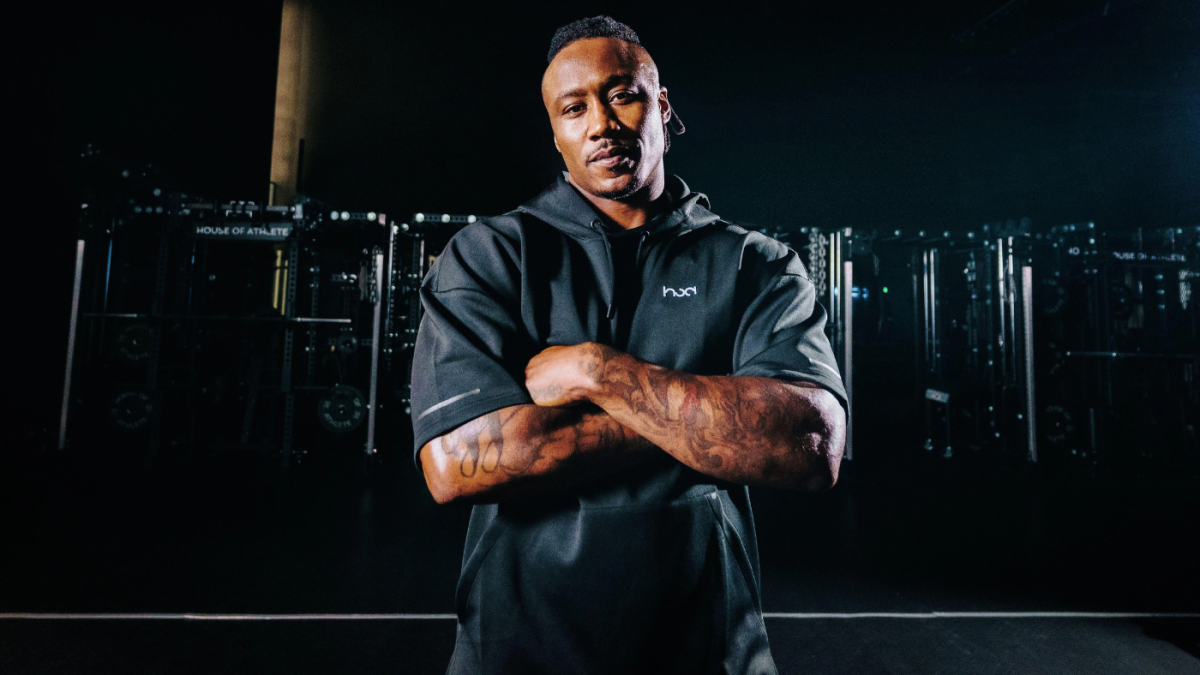
A longtime advocate of mental health, former NFL star Brandon Marshall is still helping to transform lives

A longtime advocate of mental health, former NFL star Brandon Marshall is still helping to transform lives

How are you feeling today, on a scale of one to 10? Like, really feeling?

Because Brandon Marshall would like to know.

He doesn’t need to listen. He doesn’t need to care. His resume, as a six-time Pro Bowl wide receiver who earned an estimated $80 million over 13 seasons in the NFL, gives him the freedom to focus on himself, and little else. He could remain comfortably retired at age 38, pouring resources exclusively into his family of four. He could rest easy, knowing his name is already etched in the record books, with more career receiving yards than all but 22 players to ever play the game.

But that aspect of Brandon Marshall’s life is no more.

“My entire life, since I was 6, I had this dream, this vision of making it to the National Football League,” Marshall tells CBS Sports. “And so everything was self-serving. It was me, me, me, me, me. It was my goals, what I want. My contract. My stats.”

In 2011, at the height of his playing career, following a string of off-field arrests, everything changed. He was diagnosed with borderline personality disorder. He vowed to seek the care he needed. He found a new identity through Christianity. And he discovered his purpose — not just as an athlete — but as a man.

“[That] is when I realized that I was here to push the Gospel forward and to also bring others along,” he explains. “How can I make this world better? This whole mental health thing … is my ministry.”

No one would argue that. Since revealing his diagnosis more than a decade ago, Marshall has increasingly put his vulnerability on display while advocating for others’ well-being. His unscripted athlete-led talk show, “I AM ATHLETE,” prioritizes raw perspectives, in some ways modeling the transparency of therapy sessions. And his House of Athlete initiative, which just launched the HOA+ holistic training program, goes a step further.

“HOA is the new therapy,” Marshall says. “It’s the new therapist’s office. That’s what we’re doing here. … As a professional athlete, when I walked into the Jets and Giants locker room, everything was integrated. My nutritionist was here. … My strength and conditioning coach was right across the hall. I had a mental health practitioner that was in the building. We had doctors, we had clinicians. Everything was integrated.”

Marshall’s goal, in creating HOA+ and offering live one-on-one coaching, isn’t to further burden people with a checklist. It’s to prioritize the right things — like making space for focused efforts such as exercise and meditation — in a distracted world.

“The way I’ve been trained, the way I’ve been coached, the way I’ve been taught — the structure, the lifestyle, the routine — that’s what [this] is, it’s a routine,” he says. “How are we able to do what we do? It’s because of the routine, leaning into the fundamentals. Every day I have an itinerary. When I walked into [locker rooms], from 8 a.m. to 6 p.m. was mapped out for me. When am I working out? When am I eating? When am I meeting with my coaches? When am I seeing this doctor, that doctor? When I am getting in the hot tub, cold tub? … Now that I’m not performing on a football field, I think my lifestyle, you [wanna] take that and give that to the masses.”

The endgame, however, isn’t just self-improvement. It’s positively transforming those around you.

“I think where it starts for us is knowing that strength is asking your brother for help,” Marshall says. “Strength is, you know, being able to show vulnerability. A lot of times we internalize these things and we don’t share them.”

It’s a coincidence that Marshall’s HOA+ went live days before Martin Luther King Jr. Day. But Dr. King, in particular, has long served as an inspiration for the pass catcher, being that he was civic-minded by way of the faith that changed his own life. Few community leaders have been so publicly vulnerable, and affected culture as a result.

“I’m living a dream,” Marshall explains, “because I’m able to walk in a restaurant and sit with everyone else. I’m living a dream because I’m able to sit on [shows] today with my dreads. I’m living a dream because I’m able to speak the same way — whether I’m in front of a coach, in front of an executive, a TV producer — the same way I speak with my friends and at home. I’m living a dream because Martin Luther King stood up and marched and fought for us.”

And now? It’s Marshall’s dream to keep pouring his own story — and his own resources — right back into the community.

“There’s still a ton of work to do,” he says. “I think we need to continue to be bold and unapologetic and share our experiences and share our stories. … The biggest thing I want to see is … investing in each other.”

Sometimes, that can be as simple as asking a question, and genuinely caring for the answer. A question as simple as, how are you feeling today?

How Should We Transform the Delivery of Women’s Health?

How Should We Transform the Delivery of Women’s Health?

Digital overall health technologies have gained record financial investment over the previous ten years but as a modern report from TT Cash Associates details out, the women’s well being marketplace has significantly lagged driving other sectors in healthcare. It is ripe for innovation for the reason that of the “the sheer scale of the area, its fast progress and the reality that its acute suffering points are at odds with the reasonably low stage of historical financial investment and innovation we’ve witnessed in the market.”

Today, forecasters estimate the market opportunity for women’s well being will exceed $60 billion by the 12 months 2027. Women’s health is no longer considered a market. At the very same time, a new examine from the CDC discovered that extra than 80 per cent of being pregnant-similar fatalities are preventable. Accessibility to maternal treatment has diminished in the final calendar year, in accordance to March of Dimes. And Black ladies are continue to dying from pregnancy-relevant complications at 3-4x the charge of White ladies. There is a large amount of possibility to remodel the delivery of treatment for girls in this state but there’s also a whole lot at stake.

Where do we start out? 

The total obstacle we confront in women’s overall health now is easy, at minimum when it arrives to the prognosis. Individuals are not constantly empowered to do what they need to do. Providers are not geared up to do what they want to do.

We all know this to be correct. People are confused and baffled by a procedure that’s really hard to navigate and generally deficiency the obtain or ability to actively take part in their treatment. Meanwhile providers are burned out, stretched slender and deficiency time, data and instruments expected to deliver the incredibly best treatment.

As a result, when you glimpse at all the major levers we have at our disposal, these kinds of as doctor visits, diagnostic tests. prescriptions and way of living modifications, there are gaps throughout the board that result in excellent that is far too lower and expenditures that are too high.

There are two most important disconnects that develop these undesired outcomes. 1 is the delta in between the provider’s care system and what the affected individual does. The other is the delta concerning evidence-dependent benchmarks and the provider’s treatment prepare. Let’s pause for a instant. I’m not suggesting that clients really don’t frequently want to do the appropriate thing, or that sufferers lack the drive to actively participate in their care. I’m also not implying that clinicians are not using proof-primarily based medicine to treatment for their clients. What I am expressing is that a barrage of hurdles are hindering the greatest of intentions from both of those clients and providers.

On the patient facet of the equation, there are a number of challenges that impede adherence to care plans and healthy selections. Social, financial and behavioral components play a main purpose. A patient’s biology and genetics, as well as actual physical environment, also significantly impact well being outcomes. All these motorists need to have to be considered as we discover how to more successfully engage people in care.

In the meantime, for providers, there are worries with conversation, analysis and stick to up with sufferers. In lots of cases, clinicians lack access to information, important resources and ideal time and resources to deliver care the way they want.  As if all of this was not sufficient, there are also systemic difficulties avoiding accomplishment. Access to treatment can be a authentic barrier for quite a few sufferers. The present procedure also produces true difficulties for coordination of care. To leading it off, cost-for-services payment versions generate misaligned incentives and missed opportunities to gas constructive outcomes.

So, what do we do about all of this? 

At the beginning of this post, I mentioned the diagnosis of the issue is simple. The response is not pretty as straightforward. But there is a crystal clear path for fixing it. We need to have real transformation in women’s health and fitness, both equally in the way we provide care and how we fork out for it.

When it comes to transforming care shipping, we need to build personalized ordeals for people. We will have to boost overall health literacy and educate individuals on how to be active individuals in their health and fitness. We must make guaranteed girls are conscious of the means they have readily available by means of their wellness system, health and fitness program and area community. We must leverage technologies to create 24/7 assist. We will need to develop entry to care, particularly in spots that have been outlined as maternity treatment deserts. Making use of telehealth networks of specialty expert services is one particular technique that can make a major change.

On the company aspect of the equation, we will have to get much better at checking individuals and notifying clinicians when there is an urgent want. We will have to maximize timely entry to actionable info, and we have to come across methods to alleviate some of the stress of patient activation and adherence so that clinicians can concentrate on caring for the people they see each individual day. We also need to make it a priority to deeply combine the assets that are offered as a result of payers and providers so that patients can conveniently navigate and get the treatment they need to have.

In terms of payment styles, we must put into action new funding mechanisms that share value and reward wholesome outcomes. Benefit-centered care can be complex, and it needs thoughtful discussion and style. Value-dependent treatment is also the only way we will properly finance and gasoline meaningful improvement in maternal wellness outcomes in this place. In the conclude, value-dependent treatment is much more than worthy of the effort and hard work. In point, I would argue it is the only way ahead.

We are approaching a new period for women’s overall health. This new period will usher in genuine transformation in both equally the shipping of treatment and the fiscal products that underpin it. This evolution will not be painless, but it is absolutely strong and 1 thousand p.c needed. Both of those payers and vendors will have to answer strategically to this shift. Entrepreneurs and innovators will have to phase up their activity to fulfill the new requires that appear with this transformation. It will call for a significant determination and unparalleled partnerships.

But this is a journey that we will have to just take if we want to generate greater outcomes for gals and babies and people. And the best component?  If we are profitable, anyone positive aspects. We will deliver much healthier moms and babies, together with more healthy bottom lines for each payers and suppliers. Higher high quality, lessen expenses. And a greater knowledge for all stakeholders. This is a long run that is fully within arrive at, if we achieve for it jointly.

Picture: FotografiaBasica, Getty Photos

Blockchain Technology May Transform The Future Of Healthcare

Blockchain Technology May Transform The Future Of Healthcare

Blockchain know-how has definitely revolutionized the eyesight for the foreseeable future of data and details. At the most basic level, blockchain technological innovation permits decentralization of info that is, it lets for the command of information and facts to transfer absent from a centralized entity (e.g. an individual or business) to a dispersed network. By employing a distributed network to regulate information and facts, society can create much better transparency, trust, and fidelity in that data.

In an early whitepaper produced by the College of California Berkeley’s Sutardja Middle for Entrepreneurship & Engineering, the authors clarify that “blockchain is in essence a dispersed database of documents or community ledger of all transactions or electronic occasions that have been executed and shared among the taking part functions. Just about every transaction in the community ledger is verified by consensus of a greater part of the contributors in the process. And, as soon as entered, data can never be erased.” The most well-liked utilization of blockchain therefore considerably has been the famed cryptocurrency Bitcoin, which is a decentralized variation of digital currency.

Proponents of the technological innovation postulate that blockchain will revolutionize the entire world throughout all industries, creating data and info trade easier, much more reputable, and safe. However some sectors are making an attempt to develop into early adopters of this technological innovation, many others are careful in how particularly it can be used, and are treading very carefully.

In a presentation late past yr, the United States Division of Health and Human Providers (HHS) talked about the possible for blockchain in health care. The paper presented many possible situation examples for its use, ranging from offer chain transparency and securing entry to health-related records, to streamlining interaction with insurance corporations, and even better enabling remote patient monitoring capabilities.

Especially with regards to healthcare info, blockchain lovers believe that the technological know-how can provide enhanced protection and fidelity when in contrast to present answers. An write-up posted by the Globe Financial Discussion board explains: “Blockchain-centered answers for health documentation provide protected encryption procedures that safeguard the integrity of individuals’ information and facts when speaking with diverse events. Via tokenisation, intelligent contracts and the encryption tactics that are concerned in blockchain network transactions, the procedure of pre-authorisation will be reduced massively, enabling individuals to get the important and educated treatment much more effectively. This is a result of the healthcare supplier staying ready to access the pertinent information and facts swiftly, when they would have formerly been dependent on the affected person or on data files physically mailed or emailed from disparate sources, these types of as neighborhood physicians, labs, and so on.”

But other folks are cautious. For a person, blockchain is not very well understood by the masses, developing skepticism and reluctance by a lot of in making use of the technological innovation to anything as vital as health care infrastructure. Additionally, use situations for blockchain, although escalating, are even now limited. The basis for the technology by itself is not brand new, nonetheless. In truth, as discussed by the HHS presentation, the earliest varieties of blockchain theory was introduced in the 1980s, with iterations of the modern-day technological know-how additional definitively taking condition around the previous two a long time.

Unnecessary to say, health care facts and knowledge is extended overdue for innovation, primarily in a earth wherever cybersecurity threats and info fidelity is constantly at difficulty. Certainly, blockchain technology is very likely here to keep nevertheless, innovators, policy leaders, and engineering enthusiasts will have to devise approaches to use this technologies to healthcare in a protected, accountable, and patient-centric method.

How hiking helped Chelle transform from being a ‘functioning alcoholic’ and climb out of addiction

How hiking helped Chelle transform from being a ‘functioning alcoholic’ and climb out of addiction

An Albany woman has plumbed the lowest depths and climbed high peaks in a battle with the bottle.

Chelle Fisher spent 23 years struggling with drug and alcohol addiction but has now kicked those habits and this month climbed eight peaks in West Australia’s south to help people escaping domestic violence.

Ms Fisher turned to alcohol and drugs as a child after experiencing family violence.

“I go hiking every year,” the 43-year-old said.

“Part of my sobriety, or how I got sober, was basically instead of drinking that six-pack of an afternoon, I replaced that with going for a hike.”

It is now eight years since Ms Fisher had her last drink and she challenged herself to scale eight mountains in eight days to celebrate.

“I started at the age of 13,” she said.

“I started because that was my coping mechanism. I was going through a lot of family domestic violence.

“My coping was drugs and alcohol. So I battled with that addiction for 23 years.”

Some days it was more than a six-pack.

“It was half a carton and I was functioning. I was a functioning alcoholic; I started a business, I was a mum — I had to run a household,” she said.

But it couldn’t go on forever.

A woman giving peace sign
Chelle Fisher now uses hiking as an alternative to drinking.(Supplied: Chelle Fisher)

Starting new, healthy habits

Tired of waking up feeling like hell, Ms Fisher started to make changes.

“There’s so much that I don’t remember, which is sad. Because I got married, I had two children and I was kind of just on autopilot,” she said.

“I wasn’t really living, I was just kind of surviving.

“It was in my early 20s, probably about eight years later, that I sort of started to realise, ‘Hey, there’s got to be more to life than what I’m doing’. 

“Slowly and surely, I began to creep out of the hole that I was in and find my way.”

It was July 2014 and a “mother of all hangovers” got Ms Fisher off the couch and onto the mountains.

“I was so badly hungover. It was very scary. And I just said, ‘No more’. And it was easier when I made that choice,” she said.

“And that’s when I was able to start [to] just get out and hike.”

Ms Fisher said challenging any negative thoughts helped her along her new path.

“I also had to remind myself that this was a pattern,” she said.

“It wasn’t so much that I was weak, it was just a pattern that I was playing over and over because I didn’t know anything else.

“So I had to give myself something else, which was hiking.”

A woman on a mountain
Chelle Fisher has been raising funds to support other family violence survirors.(Supplied: Chelle Fisher)

Peaks raise money and awareness

Over eight days, Ms Fisher climbed eight mountains in the Great Southern. She started with Mt Hallowell near Denmark and finished with Mt Frankland near Walpole.