How brain blast injuries hurt soldiers’ mental health.

How brain blast injuries hurt soldiers’ mental health.

Welcome to State of Mind, a section from Slate and Arizona State University dedicated to exploring mental health. Follow us on Twitter.

I’ll never forget the way my body felt after that blast inside a dugout trench in northern Iraq. It was 2016, and I was there as my unit’s journalist, accompanying Sgt. Joshua James and the seven other men in his team. Each time James and his section fired their artillery piece—a long-range cannon that could shoot high-explosive rounds for miles—the force of the explosion was so strong it knocked the breath out of me and caused a shudder in my bones. As the dust cloud began to form from the sand blown off the walls and ground, filling our noses and staining our uniforms, I also felt a dull pain in my head, like I had just gotten hit in the face.

Blast overpressure, it’s called: the “near-instantaneous pressure rise” in the area around an explosion, according to researchers. The men in James’ unit experienced it each time they stood feet away from their gun as it fired. During their nine-month deployment, the unit would launch shells toward their enemies around 6,000 times. As a result, some incurred noticeable concussions, and each blast had the potential to cause what the Centers for Disease Control now call “primary blast injury of the brain,” with symptoms similar to other types of mild traumatic brain injuries, or mTBIs: headaches, irritability, cognitive deficits, and even death.

Each brain injury suffered from blast exposure also increases the chances of a service member developing symptoms akin to those seen in Chronic Traumatic Encephalopathy, or even developing CTE itself. CTE, a degenerative brain disease, is understood as a driver behind negative mental health outcomes for NFL players, including Andre Waters, Junior Seau, and Aaron Hernandez. For the thousands of military personnel who serve in units like James’, the threat to brain health comes not only from IEDs or incoming artillery fire, but from their own weapons systems.

The Department of Defense has estimated that more than 380,000 personnel have suffered some sort of mTBI since the start of the War on Terror in 2001. Over that same period, the suicide rate among service members has skyrocketed. More than 30,177 service members and veterans who served during the War on Terror alone have died due to suicide, four times the number of troops lost in combat during that period. Importantly, not all these deaths are related to blast injuries—the military’s mental health crisis is complex and involves factors including military sexual trauma, poor leadership, combat exposure, quality of life issues, and many others. But medical research released in March found military personnel with mTBIs have a suicide rate that is almost three times the national average, and that risk is even higher if they seek care through the VA.

When they returned home from Iraq, half of the men in James’ eight-man section found themselves with mental health conditions such as depression and PTSD. One of them was James himself; on Nov. 15, 2022, James, age 35, died by suicide, the second in five years from his platoon of fewer than 30 people, leaving behind his wife and two young children. We may never know the exact role multiple blast overpressure events played in deaths like James’—in large part due to military failures which continue today.

The DoD has not properly documented the role of blast-related brain injuries in the military’s mental health crisis. This is despite explicit instruction by Congress to do so; for example, in 2020 Congress required the agency to include detailed records of troops’ blast exposure in their medical records. This tracking is critical for service members and veterans who want to receive treatment for their injuries. In February, the DoD released the findings from its Suicide Prevention and Response Independent Review Committee, a research program mandated by Congress. The report highlighted a lack of mental health workers and issues with the military’s promotion system and suicide prevention training, among other problems. But in discussing the next steps to be taken in light of the findings, the DoD did not highlight the effect of TBIs on suicide risk at all.

This omission is especially glaring because the DoD has known for years about the risks from blast exposure. In 2017, the same year James’ unit returned home, a Marine artillery unit in Syria found itself with multiple members stumbling around in a daze from concussions at times. Others began literally bleeding from their ears during the fighting. The DoD grew so concerned by the prevalence of these injuries that it conducted a study the following year on the Marines.

Their findings were startling: Based on the rate of head injuries the Marines in Syria suffered, the DoD estimated that an artillery crew firing at the same rate would find themselves with degraded combat abilities within three weeks and be almost totally ineffective in two months.
Furthermore, the report (based on service members’ medical records) highlighted that head injuries among these personnel began to occur during training, before they even got into combat. The DoD calculated that in a larger unit with similar demands, brain injuries could disable hundreds of personnel, and replacements could not be trained fast enough to make up for the losses.

The Syria report suggested having Marines wear devices that would notify a service member when they reached the maximum level of blast exposure in a 24-hour period, but that suggestion has effectively gone nowhere. In fact, simple helmet sensors that gather, monitor, record, and maintain data on blast pressure exposure have been available since at least 2009. But James and his unit weren’t even given these before they deployed. Put simply: Tech that could help aid in the diagnosis of concussions and TBIs should be widely distributed. It isn’t.
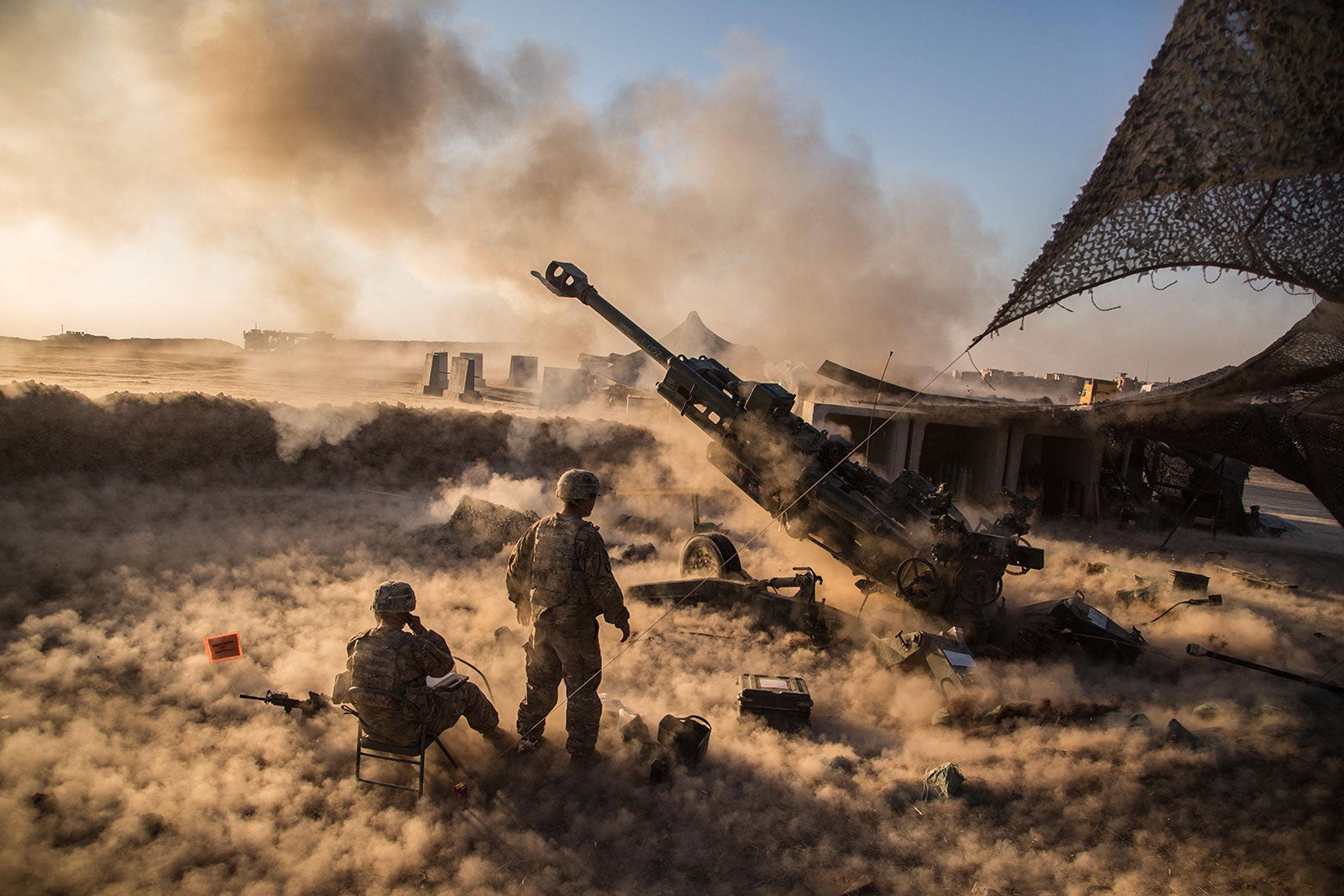
Two soldiers stand next to a smoking cannon as sand swirls around them dramatically.
U.S. soldiers in Iraq on Nov. 29, 2016.
Spc. Christopher Brecht/U.S. Army

This wasn’t the only way the DoD failed James and his unit. Although the soldiers underwent a pre-Iraq health assessment that looked at neurological health, they told me there was no follow-up upon their return to analyze potential damage incurred during their deployment. (Pentagon policy requires such a follow-up if servicemembers display signs of a brain injury). Soldiers in James’ unit also told me that they were rebuffed or ignored when they asked their superiors about the post-deployment assessment, even as the military continued to send artillery units to the Middle East with combat tempos that were just as high as before. I had a similar experience: Three years after I returned from Iraq, I attempted to go to an on-base TBI clinic after suffering from headaches and dizziness, but I was refused treatment and analysis because I hadn’t “underwent evaluation in time,” the medical personnel at my unit told me. When I asked a Department of Defense spokesperson about these experiences in a telephone interview, they were surprised to hear the issues we had obtaining access to these assessments and told me the agency was moving toward a more holistic continuous evaluation system that isn’t just based on pre- and post-deployment health assessments.

As for the status of military brain-health initiatives, in the same interview the Department of Defense pointed me to interim guidance on managing brain risk from blast overpressure, which is meant to raise awareness of the issue among military personnel (there is no ETA for when this text will be finalized). This guidance, on one page, suggests units and commanders follow rules about explosive safety that have been in place for more than a decade. (These rules, the Syria report shows, have done little to keep service members truly safe from blasts.) Making potential interventions trickier, each service branch has different safety requirements—and in an email exchange, the DoD did not answer my question about what is being done to standardize policy.

In response to congressional efforts in 2018 and 2020, there has been some attempt to better document cognitive health. The DoD added a specific diagnostic code for primary blast injuries to the brain, which the DoD spokesperson said in the email would make such injuries easier to track. Before that change, blast history was regularly documented “as a mechanism of injury in the medical record, but no diagnostic code existed for blast injury to the brain specifically,” the spokesperson wrote. This progress is admirable, but the Pentagon’s own December 2022 statement to Congress acknowledges that lawmakers requested more than just a diagnostic code. The congressional correspondence also explained that monitoring and documentation of blast events had “not routinely included a measure of blast pressure” or tracked blast exposure history as the 2020 law had requested, and that there was no current ETA for when it would.

The science behind blast brain injuries is still developing, alongside knowledge of TBIs from other “physical” events, such as tackles, car accidents, or punches. Research suggests the recurrence of exposure matters. Injuries caused by objects around the blast are important, in addition to the pressure itself. And these injuries are hard to recover from. Although PTSD symptoms and TBIs are often concurrent, they are two separate phenomena with unclear influences on each other.

Further research, enabled by routine and widespread blast-pressure tracking, is especially urgent as militaries domestically and abroad shift toward relying more on artillery in current and potential future conflicts, including in the war in Ukraine.

The DoD often cites prospective recruits fearing for their safety—such as the expectation that they will develop mental health or other health issues due to military service—as a reason that it finds itself in a recruiting crisis, and this is a legitimate fear. By failing to complete even the bare minimum task given to it by Congress three years ago to begin tracking blast exposure correctly, the DoD has not fully supported service members like Joshua James and his unit. All the soldiers in the firing pit with me that day in northern Iraq were in their 20s or even teens. None had any idea that they were trading a piece of their future each time they fired.

The research is far enough along that the next generation of service members shouldn’t have to face such a destructive bargain.

​​If you need to talk, or if you or someone you know is experiencing suicidal thoughts, text the Crisis Text Line at 741-741 or call or text 988 to reach the Suicide & Crisis Lifeline.

U.S. military sees alarming trend in loss of fitness among soldiers: ‘The numbers have not gotten better’

U.S. military sees alarming trend in loss of fitness among soldiers: ‘The numbers have not gotten better’

After attaining 30 lbs in the course of the COVID-19 pandemic, U.S. Army Staff Sgt. Daniel Murillo is ultimately obtaining back into battling shape.

Early pandemic lockdowns, unlimited several hours on his notebook and heightened pressure led Murillo, 27, to access for cookies and chips in the barracks at Fort Bragg in North Carolina. Fitness centers have been shut, organized exercise was out and Murillo’s commitment to get the job done out on his own was small.

“I could detect it,” claimed Murillo, who is 5 toes, 5 inches tall and weighed as substantially as 192 pounds. “The uniform was tighter.”

Murillo wasn’t the only provider member dealing with additional pounds. New research discovered that obesity in the U.S. armed forces surged all through the pandemic. In the Military by yourself, practically 10,000 active obligation soldiers produced being overweight among February 2019 and June 2021, pushing the amount to just about a quarter of the troops researched. Increases have been viewed in the U.S. Navy and the Marines, much too.

“The Military and the other expert services will need to aim on how to deliver the forces back to physical fitness,” claimed Tracey Perez Koehlmoos, director of the Centre for Health and fitness Products and services Exploration at the Uniformed Expert services College in Bethesda, Maryland, who led the exploration.

Obese and overweight troops are a lot more most likely to be injured and much less probably to endure the bodily demands of their occupation. The navy loses far more than 650,000 workdays each individual calendar year because of extra bodyweight and being overweight-connected health prices exceed $1.5 billion each year for latest and former support users and their households, federal research demonstrates.

Much more modern data won’t be accessible until finally later this calendar year, reported Koehlmoos. But there is no signal that the trend is ending, underscoring longstanding worries about the readiness of America’s battling forces.

Obese soldiers

Army Team Sgt. Daniel Murillo conducts bodily training at Ft. Bragg on Wednesday, Jan. 18, 2023, in Fayetteville, N.C. Weight problems in the U.S. navy surged during the COVID-19 pandemic. (AP Image/Chris Carlson)AP

Military leaders have been warning about the affect of being overweight on the U.S. military for a lot more than a 10 years, but the lingering pandemic effects spotlight the have to have for urgent motion, stated retired Maritime Corps Brigadier Typical Stephen Cheney, who co-authored a new report on the trouble.

“The numbers have not gotten better,” Cheney said in a November webinar held by the American Safety Undertaking, a nonprofit feel tank. “They are just acquiring worse and worse and worse.”

In fiscal yr 2022, the Army failed to make its recruiting goal for the first time, slipping quick by 15,000 recruits, or a quarter of the requirement. That is largely for the reason that three-quarters of Us residents aged 17 to 24 are not qualified for army service for a number of reasons, such as additional body weight. Remaining overweight is the largest individual disqualifier, impacting far more than 1 in 10 possible recruits, in accordance to the report.

“It is devastating. We have a spectacular nationwide protection problem,” Cheney stated.

Added body weight can make it challenging for services users to fulfill main health requirements, which vary dependent on the military services branch. In the Army, for instance, if soldiers just can’t move the Military Beat Exercise Examination, a not long ago up-to-date measure of ability, it could end result in probation or stop their army professions.

Koehlmoos and her workforce analyzed health care documents for all energetic obligation Military soldiers in the Military Wellbeing Process Details Repository, a extensive archive. They appeared at two durations: ahead of the pandemic, from February 2019 to January 2020, and throughout the disaster, from September 2020 to June 2021. They excluded troopers without the need of full records in both of those durations and all those who had been pregnant in the calendar year just before or in the course of the research.

Of the cohort of nearly 200,000 troopers who remained, the researchers uncovered that just about 27{35112b74ca1a6bc4decb6697edde3f9edcc1b44915f2ccb9995df8df6b4364bc} who ended up nutritious just before the pandemic turned chubby. And almost 16{35112b74ca1a6bc4decb6697edde3f9edcc1b44915f2ccb9995df8df6b4364bc} of people who ended up previously chubby grew to become overweight. Prior to the pandemic, about 18{35112b74ca1a6bc4decb6697edde3f9edcc1b44915f2ccb9995df8df6b4364bc} of the troopers were overweight by 2021, it grew to 23{35112b74ca1a6bc4decb6697edde3f9edcc1b44915f2ccb9995df8df6b4364bc}.

Obese soldiers

Army Workers Sgt. Daniel Murillo, correct, runs up hill as component of his bodily instruction at Ft. Bragg on Wednesday, Jan. 18, 2023, in Fayetteville, North Carolina. (AP Photo/Chris Carlson)AP

The researchers relied on conventional BMI, or system mass index, a calculation of excess weight and top employed to categorize body weight status. A human being with a BMI of 18.5 to 25 is deemed balanced, even though a BMI of 25 to a lot less than 30 is regarded as overweight. A BMI of 30 or greater is classified as obese. Some gurus claim that the BMI is a flawed evaluate that fails to account for muscle mass or fundamental wellness standing, although it continues to be a commonly used software.

In Murillo’s circumstance, his BMI during the pandemic reached virtually 32. The North Carolina Military soldier knew he necessary support, so he turned to a armed forces dietician and started a stringent work out regime by the Army’s Holistic Wellness and Health and fitness, or H2F, software.

“We do two runs a 7 days, 4 to 5 miles,” Murillo said. “Some mornings I needed to give up, but I hung in there.”

Bit by bit, above months, Murillo has been able to reverse the trajectory. Now, his BMI is just above 27, which falls inside of the Defense Department’s standard, Koehlmoos said.

She located boosts in other services branches, but centered to start with on the Army. The research squares with traits famous by the Facilities for Disorder Handle and Avoidance, which warned that in 2020, nearly 1 in 5 of all service users were overweight.

The constant creep of weight problems between service associates is “alarming,” claimed Cheney. “The state has not approached obesity as the issue it seriously is,” he added.

Placing on added kilos through the pandemic was not just a armed forces problem. A survey final 12 months of American grown ups identified that almost 50 percent reported getting weight immediately after the initial calendar year of the COVID-19 emergency. One more research observed a sharp increase in weight problems among the young children during the pandemic. The gains came in a nation in which a lot more than 40{35112b74ca1a6bc4decb6697edde3f9edcc1b44915f2ccb9995df8df6b4364bc} of American grown ups and approximately 20{35112b74ca1a6bc4decb6697edde3f9edcc1b44915f2ccb9995df8df6b4364bc} of young children wrestle with being overweight, according to the CDC.

“Why would we consider the armed forces is any various than a human being who is not in the armed forces?” claimed Dr. Amy Rothberg, an endocrinologist at the University of Michigan who directs a pounds-decline plan. “Under pressure, we want to retail store energy.”

It will consider broad steps to address the dilemma, such as seeking at the food supplied in armed forces cafeterias, knowledge slumber designs and dealing with provider members with issues these as PTSD, or article-traumatic tension problem, Rothberg explained. With regards to weight problems as a chronic condition that requires thorough care, not just willpower, is important. “We need to have to meet up with navy associates where by they are,” she claimed.

A new group of effective anti-being overweight medications, which include semaglutide, marketed as Wegovy, could be a impressive assist, Rothberg reported. TRICARE, the Protection Department’s wellbeing system, covers these types of prescription drugs, but uptake continues to be low. Considering that June 2021, when Wegovy was accepted, just 174 services members have acquired prescriptions, TRICARE officials explained. Novo Nordisk, which would make Wegovy, funded the security group’s report, but didn’t affect the exploration, Rothberg claimed.

“People are operating tricky at their fat and we have to give them what ever applications we have,” Rothberg said.

Jonel Aleccia of The Linked Push wrote this tale.

The Connected Press Wellness and Science Division receives support from the Howard Hughes Professional medical Institute’s Science and Academic Media Team. The AP is solely accountable for all information.

More:

‘Tiger King’ Joe Exotic, working for president from prison, has concept for Trump: ‘Welcome to the party’

Texas grandma shoots robber immediately after ‘God jammed his gun’

10th Mountain Division Soldiers learn the basics about Holistic Health and Fitness while in-processing at Fort Drum | Article

10th Mountain Division Soldiers learn the basics about Holistic Health and Fitness while in-processing at Fort Drum | Article


10th Mountain Division Soldiers learn the basics about Holistic Health and Fitness while in-processing at Fort Drum


1 / 4

Show Caption +
Hide Caption –


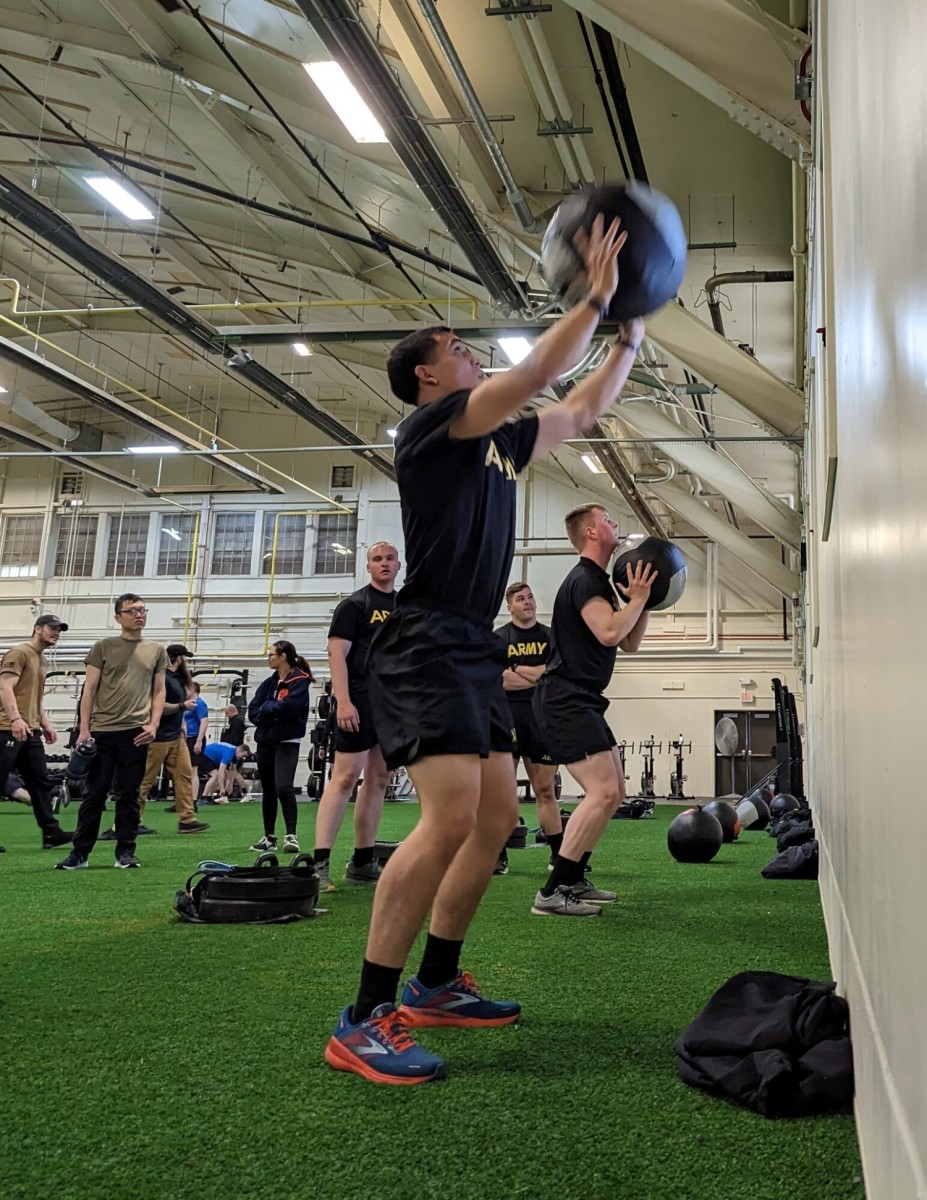
Soldiers participate in a team-building functional fitness competition March 8 inside the Nash Training Facility. This is part of the 10th Mountain Reception Company’s H2F (Health and Holistic Fitness) Integration Program where in-processing Soldiers learn about H2F resources available at their units and receive instruction on movement fundamentals and injury prevention. (Photo by Mike Strasser, Fort Drum Garrison Public Affairs)
(Photo Credit: Michael Strasser)

VIEW ORIGINAL


10th Mountain Division Soldiers learn the basics about Holistic Health and Fitness while in-processing at Fort Drum


2 / 4

Show Caption +
Hide Caption –


Soldiers participate in a team-building functional fitness competition March 8 inside the Nash Training Facility. This is part of the 10th Mountain Reception Company’s H2F (Health and Holistic Fitness) Integration Program where in-processing Soldiers learn about H2F resources available at their units and receive instruction on movement fundamentals and injury prevention. (Photo by Mike Strasser, Fort Drum Garrison Public Affairs)
(Photo Credit: Michael Strasser)

VIEW ORIGINAL


10th Mountain Division Soldiers learn the basics about Holistic Health and Fitness while in-processing at Fort Drum


3 / 4

Show Caption +
Hide Caption –


A Health and Holistic Fitness (H2F) trainer leads a group of Soldiers on techniques of foam rolling after completing an injury prevention screening March 8 inside the Nash Training Facility. (Photo by Mike Strasser, Fort Drum Garrison Public Affairs)
(Photo Credit: Michael Strasser)

VIEW ORIGINAL


10th Mountain Division Soldiers learn the basics about Holistic Health and Fitness while in-processing at Fort Drum


4 / 4

Show Caption +
Hide Caption –


Ben Smith, 10th Combat Aviation Brigade H2F strength and conditioning coach, watches a Soldier’s form on the rower during a functional fitness competition March 8 inside the Nash Training Facility. This is part of the 10th Mountain Reception Company’s H2F (Health and Holistic Fitness) Integration Program where in-processing Soldiers learn about H2F resources available at their units and receive instruction on movement fundamentals and injury prevention. (Photo by Mike Strasser, Fort Drum Garrison Public Affairs)
(Photo Credit: Michael Strasser)

VIEW ORIGINAL

FORT DRUM, N.Y. (March 8, 2023) — Before Soldiers begin their “Climb to Glory” with the 10th Mountain Division (LI), they enter the 10th Mountain Reception Company for 12 days of in-processing activities.

The 10th MRC staff helps newly arrived Soldiers with their transition to Fort Drum, which includes an introduction to the Holistic Health and Fitness (H2F) program and the team of dietitians, occupational therapists and strength and conditioning coaches who are helping to define what readiness means in the Army.

The Fort Drum H2F Integration Program began in June 2022 with the support of the 10th Combat Aviation Brigade and 10th Mountain Division Sustainment Brigade H2F teams at the Nash Training Facility and 10th MRC Barracks.

“The program focuses on education of H2F resources available to Soldiers, movement fundamentals and injury prevention,” said 1st Lt. Evan Murray, 10th MRC executive officer. “Over the course of 12 days, new Soldiers are brought into the PT (physical training) culture of Fort Drum with daily education coupled with their workouts.”

In addition to several hands-on H2F classes from trainers, Soldiers also receive an injury prevention screening, complete an Army Combat Fitness Test (ACFT), and participate in a competitive team workout with senior leaders from the 10th Mountain Division (LI).

Maj. Gen. Gregory Anderson, 10th Mountain Division (LI) and Fort Drum commander, participated in the workout March 8 with the in-processing Soldiers.

“H2F is one of the most important things we do here,” he said. “Fitness is not just about strength. It also includes range of motion, flexibility, endurance, agility, and all the things our trainers are teaching us. Pay attention to those techniques because they will serve you through life. The Army is doing physical fitness better now than ever before. We are far more advanced, and the science and technology is there so we can take care our bodies.”

The workout consisted of a 1,500-meter row, 150 burpees, 150 wall balls and then another 1,500-meter row. A team of three second lieutenants finished first to earn the Warhammer trophy, but they said the real prize was the knowledge they have gained through the H2F program.

“I thought this was a phenomenal functional fitness workout, and it was good to get a competition going after focusing on techniques these past couple of days,” said 2nd Lt. Dylian Jackson, with 1st Brigade Combat Team. “I didn’t really know much about H2F before coming here, and now I feel comfortable coming here and knowing that all these resources are available.”

Second Lt. John Salerno said he lifts weights every day in the gym, but H2F is providing him with useful information about injury prevention and physical training techniques he didn’t know.

“This is going to help my own physical fitness and my ability to bring those training aspects to my Soldiers,” he said. “There’s a lot of ways to be fit, and physically fit is a big one, but H2F also focuses on nutrition and mental health. And those are just as important as being able to run two miles, bench two plates or whatever it may be.”

Ben Smith, 10th Combat Aviation Brigade H2F strength and conditioning coach, said changing the Army culture on physical fitness means showing Soldiers that it is a privilege, not a punishment.

“One of the stigmas is that Army PT is a grind session, and that if you’re not sore or suffering then you’re not doing it right,” he said. “I like to take the concepts and methods of PT and show Soldiers the ‘why.’ We show them the purpose and intent of physical training, and go over it in detail, so we can move away from that stigma. If you approach it correctly with the right intent and intensity then you’re going to get the most out of it, instead of feeling torn down all the time.”

The 10th CAB H2F motto is “Wisdom in Strength,” and Smith said that is a lesson he wants to teach new Soldiers.

“We want to show them there is a deeper level of understanding to fitness and physical readiness in general,” he said. “We try to give them a good foundation – making sure they are moving in all the ways human beings are designed to move – and challenging that with load, speed, and intensity. Staying healthy is the goal for a career Soldier, and that’s what we are trying to do.”

Retired Sgt. Maj. of the Army Dan Dailey had told Soldiers that physical training may not be the most important thing they do in a single day, but it’s the most important thing they do every day. Smith said that is a mindset that the H2F staff is passionate about.

“That will take time to achieve,” he said. “And in my experience with H2F so far, it’s about us having that presence here and being people who care for Soldiers.”

Murray said that Fort Drum is the only installation to provide in-processing Soldiers with an H2F integration program, and it has been recognized at the TRADOC (U.S. Army Training and Doctrine Command) level for its positive impact on troops.

“The program is also the subject of a white paper published through the 10th Mountain Division on the value of early intervention and integration to change physical training culture,” Murray said.

In recent months, the 10th MRC has improved the way new Soldiers integrate into their units and the community. The Keys to Connection Program was established late last year as a spiritual readiness forum to get Soldiers thinking about goals and how they will make the most of their time at Fort Drum. A “Powder Keg” patching ceremony created a formal way for leaders to welcome Soldiers to their units and instill pride in division history and a sense of purpose.

“We’re really proud of how we bring our new teammates into the division and get them set up with everything they need to be successful once they leave the reception company,” Anderson said.

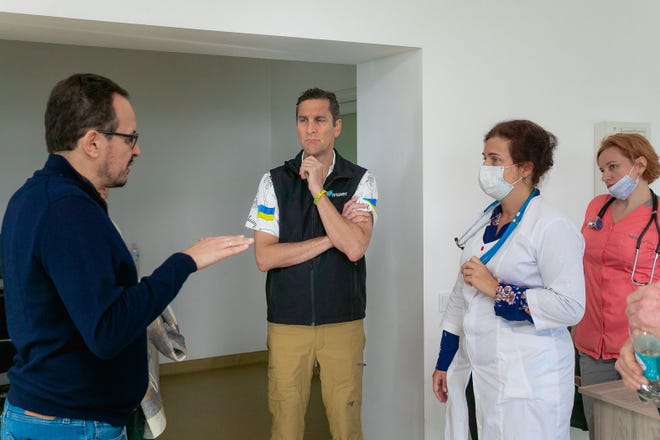
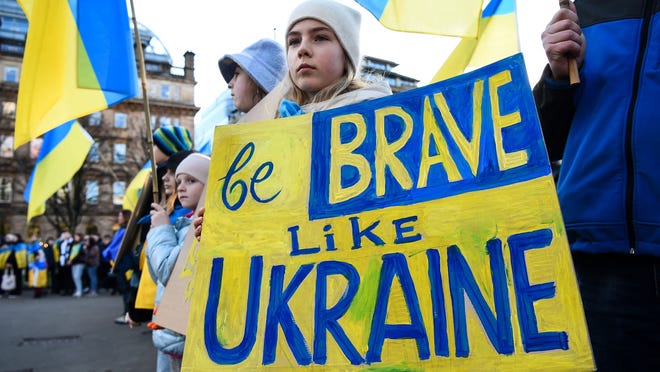
Ukraine gets new mental health center for soldiers, locals with trauma

Ukraine gets new mental health center for soldiers, locals with trauma

Aviation Soldiers Volunteer to Coach, Lead Functional Fitness > U.S. Department of Defense > Story

Aviation Soldiers Volunteer to Coach, Lead Functional Fitness > U.S. Department of Defense > Story

&#13
&#13
Our neighborhood is pretty big—we are an Army—so, we are a household. These classes are going to bring you a physical fitness cohesion with people today outdoors your device, and basically make camaraderie and new partnerships.”&#13

Military 2nd Lt. Meagan M. O’Leary

It can be not unusual to come across troopers repeatedly doing their individual exercise session routines even though deployed. The U.S. Army’s new Army Battle Fitness Test proceeds to serve as the fitness necessity for all Army factors, and troopers stationed abroad are performing every thing they can to continue to keep physical fitness expectations in check across their formations. 

Many soldiers will also go the extra mile to assistance others access their health and fitness and conditioning plans, turning health and fitness issues into possibilities for accomplishment. 

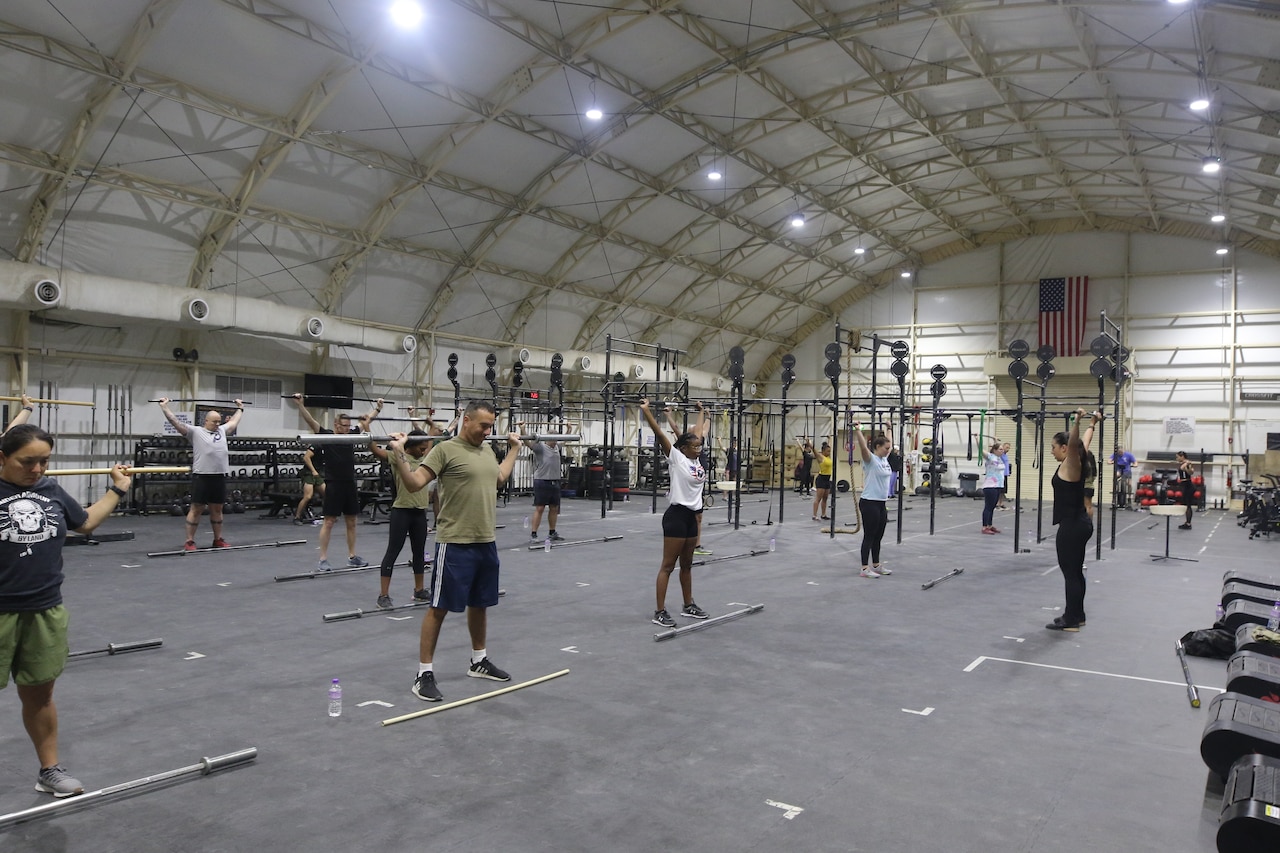
Military 2nd Lt. Meagan M. O’Leary, platoon chief from 2nd Battalion, 149th Aviation Regiment, Normal Help Aviation Battalion, 36th Battle Aviation Brigade, Texas Army Nationwide Guard, shares about her initiative in supporting fellow troopers with their energy instruction workout routines at Camp Buehring, Kuwait. 

“This is my 1st deployment, and on my first day here—not even 24 several hours on ground—I sort of ‘barged’ into the foundation commander’s office and stated, ‘I want to volunteer!'” stated O’Leary. “I introduced myself and said I required to be a coach. So, now I coach Olympic weightlifting.” 

O’Leary previously competed as an Olympic figure skater for in excess of 19 a long time. Ten years in the past, she expanded her very own health and fitness journey in CrossFit instruction, and then transitioned to Olympic weightlifting for the previous 5 a long time. 

“My objective is to qualify for nationals when I get residence,” she extra. “I have had it in my brain to do additional with the deployment than just my occupation. So, in addition to executing own and professional growth like using online lessons, I desired to perform on my techniques and volunteer to give back again.” 

Due to the fact September, O’Leary runs one particular-hour weightlifting classes throughout her off-duty hrs at the camp’s armed forces-affiliated CrossFit gymnasium. Each and every weekend you can locate her instructing and motivating teams of contributors to correctly workout compound movements with barbell weights. Every participant achieves a workout immediately after training fundamentals of the snatch, cleanse and jerk, and clean and press part lifts. Class dimensions fluctuate just about every 7 days, but she has managed to fill out the overall gymnasium in quite a few of her classes. 

Accompanying O’Leary as her assistant teacher through the weightlifting lessons is  Army Spc. Megan Caffey, CH-47 Chinook helicopter repairer assigned to the 449th Aviation Support Battalion, 36th Taxi. 

“I also did the identical detail [2nd] Lt. O’Leary did when I arrived listed here working day one—I wished to be a mentor,” reported Caffey. “I have been able to coach and instruct troopers pretty considerably every single day, and I like it simply because I have actually had people thanking and demonstrating me with ‘hey, you corrected me on my workout routines, now I can elevate 50 lbs. far more than I have at any time done before’—that has been very worthwhile.” 

Caffey serves in the Army Reserve again home, and considering the fact that July, she volunteers as a useful physical fitness coach at Camp Buehring. She stands by her perception in how group CrossFit routines can reward troopers coaching to max the ACFT. 

“To me, CrossFit is like a spouse and children. In all places I go, no make a difference in which I live or provide, I usually close up discovering my physical fitness help group at the closest CrossFit health club,” she extra. “I like how CrossFit workouts and the ACFT coincide with each individual other, introducing extra purposeful actions for all soldiers. This presents them the ability use all ranges of their bodily physical fitness, alternatively of just concentrating on push-ups and sit-ups. So, which is been actually excellent.” 

Army Lt. Col. Chris Nohle, commander of the Foundation Support Battalion, Army Aid Group – Kuwait, for Camp Buehring, participated in his 1st session with the Olympic weightlifting class. 

“The method of instruction furnished by [2nd] Lt. O’Leary and her crew is just phenomenal,” Nohle remarked. “I’ve been lifting for in excess of 25 yrs and was humbled by the training. Her concentration on kind and mobility is the good quality of instruction that will help our troopers securely see people gains.” 

Nohle actively supports all service members at Camp Buehring to grow on their physical fitness journeys and choose benefit of the many work out classes presented. Together with the Olympic weightlifting course, Camp Buehring provides a selection of volunteer-primarily based instruction for practical physical fitness, such as CrossFit, spinning, and Jujitsu courses. CrossFit classes run 4 moments a day, Monday via Friday, although spinning and Jujitsu courses run 3 evenings per week at the aerobics tent. 

“These soldier-led courses effortlessly max out each working day and have some of the best participation figures for the set up,” he extra. “Whilst our camp’s inhabitants is continuously revolving, the [BSB] performs alongside Morale, Welfare, and Recreation physical fitness groups to continually evaluate our community’s needs and direct sources to fulfill them. Troopers will see new classes and choices in excess of the up coming several months.” 

Nohle also experienced some information for soldiers conducting their to start with ACFT diagnostics even though stationed in Kuwait. 

“The new ACFT presents our soldiers with an prospect to develop practical health and fitness abilities and are basically made to make improvements to their daily lives,” stated Nohle. “Some of the test’s activities do have to have practice but need to not be viewed as daunting. I persuade all soldiers at our camp to use the possibility to educate and discover from some of the other 7,000 support members stationed here. That is what these courses and MWR services do – they make a local community of soldiers creating soldiers to get superior and stronger.” 

Caffey recalled witnessing troopers accomplishing overall body transformations when sharing their workouts with neighboring assistance associates at Camp Buehring. 

“We’ll acquire service associates in our classes who get right here and haven’t experienced good exercise session routines in rather a when or truly feel like they really don’t know what to do with them selves when it arrives to conditioning because they are unmotivated,” mentioned Caffey. “But simply because of our neighborhood help, we have witnessed fellow troopers experience favourable changes in their exercise. I experienced the honor of performing out with a soldier who dropped from 265 lbs. down to 185 lbs. All he did was show up and sign up for a course on a constant basis. His transformation was remarkable.” 

O’Leary more emphasised how sticking with a exercise group will generate final results. 

“Our local community is quite big—we are an Army—so, we are a spouse and children. These classes are going to carry you a exercise cohesion with men and women outside the house your device, and essentially construct camaraderie and new partnerships,” she included. “You will always have a harmless spot to go, and a healthy outlet to arrive exercising, burn up off steam, and be with like-minded people outside the house your place of work. All it requires is placing on your training shoes and showing up!”

&#13
slideNumber/numSlides&#13
&#13
slideTitle&#13
&#13
-&#13
&#13
&#13
slideCaption&#13

&#13
slideInfo.slideNumber/numSlides&#13
&#13
slideInfo.slideTitle&#13
&#13
-&#13
&#13
&#13
slideInfo.slideCaption&#13

(Army Capt. Steven Wesolowski is assigned to the 36th Beat Aviation Brigade, Texas Military Nationwide Guard.)

DVIDS – News – Fort Bliss Holistic Health and Fitness team hosts swim instruction for soldiers

DVIDS – News – Fort Bliss Holistic Health and Fitness team hosts swim instruction for soldiers

&#13
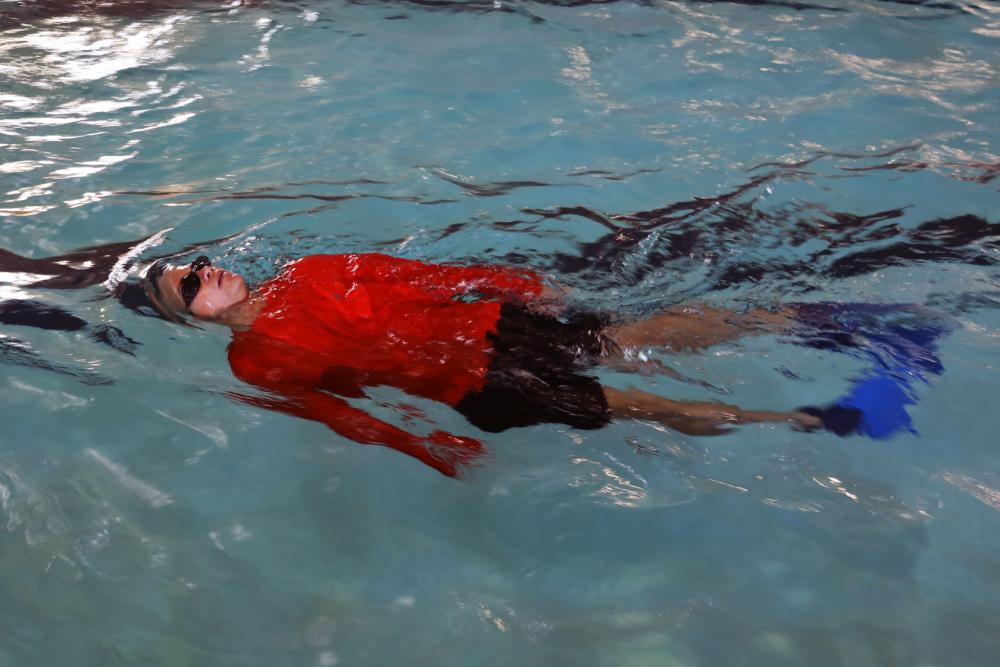
Fort Bliss, Texas – Soldiers from Fort Bliss gained a week of instruction on how to swim from a professional at the installation’s Aquatics Coaching Center Sept.19-23.

The Fort Bliss Holistic Well being and Fitness group hosted this training to expand Soldiers’ expertise on good swimming techniques and exhibit the added benefits pool physical instruction can have on bodily readiness when done effectively.

Whilst there are careers that give Troopers the prospect to be out on oceans, lakes and rivers, the Army is primarily a ground pressure, not recognised for its capability to carry out waterborne operations, so why would Soldiers require to find out how to swim?

“Being in the h2o can support us be much better on our dry land missions so we can recover more quickly,” said Jeff Utsch, a tactical swim teacher. “[Swimming] can be a profession enhancer, extend professions, lengthen operating time, lengthen capabilities and other items.”

Utsch suggests that with appropriate technique, a individual can get in a pool and operate as challenging as they ever have to max their coronary heart fee but get better extra quickly from the exertion.

“As we get older, it will get more challenging to do these rucks and operates because our bodies start off to get tired,” he claimed. “We get folks coming in that possibly have a hip damage or aren’t managing as quick or have aches and pains, but swimming, with correct strategy can keep them match with out resulting in more damage.”

Utsch emphasised the first rule when swimming is to do no damage and to do so people have to utilize the right strategies.

“Too several persons arrive to the pool and do not know what they are undertaking or do not know how to strategy a swim, so they just stay away from the water,” he explained. “When they do get in the drinking water, they just feel of it as unexciting. The laps are as well substantially of a wrestle so why even do it?”

Utsch’s objective is to educate the competencies for proper approach to prevent harm and then extend Soldiers’ minds on what being in the water can do for them.

“There is a ton of study out of Indiana College Bloomington’s Counsilman Center for the Science of Swimming about all the positive aspects of swimming, like just getting in the water and what it does to our blood pressure,” he reported. “They did a 40 or 50-yr review concerning runners, walkers and swimmers. The added benefits of receiving in the h2o and what it does for good quality of daily life, longevity and just about all well being.”

Well being is just a single of the gains of h2o actions he suggests.

“We have restoration, rehabilitation, off-year conditioning, in-season conditioning, alternative bodyweight loss teaching, schooling for all of the energy devices that you can do in the drinking water if you are much too worn out to do it on dry land,” Utsch explained. “It is seriously extra arrows in the quiver, added equipment in the instrument box that not more than enough people today are applying.”

He extra that lots of older athletes like Tom Brady use h2o exercise routines to prolong their capacity to compete.

“Instead of tightening points, we have to have to work much more on elongating our muscular tissues to retain them more youthful particularly as we age,” Utsch mentioned. “Swimming can form of be the antidote for tightening up, growing older and emotion a good deal a lot less flexible.”

This education is not just for athletes or military any one can benefit from understanding these techniques he mentioned.

“I have taught people today who simply cannot appear off the base of the pool and worried to get in all the way to Olympic swimmers,” he reported. “They are both equally heading to get a little something out of this.”

Just one Soldier figured out a lot about his individual talents during the instruction.

“I think I’ve realized fairly a little bit,” mentioned Sgt. Christopher Higgins, a health care expert with 1st Battalion, 67th Armored Regiment, 3rd Armored Brigade Combat Team. “I assumed I was an okay swimmer, but this course taught me that I truly was not as very good as I imagined I was.”

Higgins hopes to see additional of this kind of instruction and desires to see it included for recovery or reconditioning actual physical education for Soldiers that have to have it.

“Units are normally seeking for factors that are not operating and rucking or press-ups and sit-ups, and this is a person of those items that when carried out appropriate is just as helpful if not additional,” Higgins said. “Even if you have hurt Troopers, you can even now integrate them in a swim.”

Utsch, who mainly performs with the Navy, reported this was his initially time doing work with Army Troopers. He does this instruction to give back again and be affiliated with great males and women of all ages of patriotic spirit.

“If the Military instituted a swimming plan, it would extend occupations. There would be significantly less injuries, a lot quicker recovery from accidents, fitter Troopers and just over-all it would raise the abilities of all those in our armed forces,” he stated. “We have revealed how this can extend occupations of big athletes, specifically if they augment their teaching with swimming.”

He said that by producing great swimmers, we conclusion up with fitter Troopers mainly because the proof demonstrates that folks who get in the drinking water are healthier and have greater actual physical stamina.

Troopers should really make contact with their Holistic Wellness and Exercise instructors for far more data on what swimming can do for their units.

&#13

&#13

&#13

&#13

&#13

&#13

&#13

&#13

&#13

&#13

&#13

&#13

&#13

&#13

&#13

&#13

&#13

&#13

&#13

Day Taken: 09.20.2022
Day Posted: 09.23.2022 10:21
Tale ID: 429830
Area: FORT BLISS, TX, US 

&#13

&#13

&#13

&#13

&#13

&#13

&#13

&#13

&#13

&#13
&#13

&#13

Net Sights: 14
Downloads:

&#13
General public Area  &#13
&#13