COVID update for Dec. 22-28: Here’s what you need to know this week

COVID update for Dec. 22-28: Here’s what you need to know this week

Here’s your weekly update with everything you need to know on the COVID situation in B.C. and around the world.

Article content

Here’s your update with everything you need to know about the COVID situation in B.C. and around the world for the week of Dec. 22-28. This page will be updated with the latest COVID news and related research developments daily throughout the week, so be sure to check back often.

Advertisement 2

Article content

You can also get the latest COVID-19 news delivered to your inbox weeknights at 7 p.m. by subscribing to our newsletter here.

Article content


Here are the latest weekly B.C. figures given on Dec. 22:

• Hospitalized cases: 349 (down 25)
• Intensive care: 35 (up four)
• New cases: 609 over seven days ending Dec. 17 (down 50)
• Total number of confirmed cases: 391,897
• Total deaths over seven days ending Dec. 17: 22 (total 4,806)

Read the full report here | Next update: Dec. 29


LATEST NEWS

Number of deaths decreases slightly

A weekly COVID update from the B.C. Centre for Disease Control revealed 22 deaths of people who died within 30 days of a positive COVID test as of Dec. 17, a drop of five from the previous week.

That number is preliminary, however, and will be updated in later reports as more data comes in.

Advertisement 3

Article content

There were 349 people in hospital who tested positive for the virus, with 35 of those in intensive care, as of Thursday.

Three out of 10 Canadians say they wear masks in public: Study

Three out of 10 Canadians say they mask-up in public, according to a new Angus Reid Institute study.

It says a large group of unmasked Canadians say they wouldn’t like the government to force them to take a more cautionary approach.

Half of Canadians are in favour of re-implementing mask mandates if cases of COVID-19 go up this winter.

Thirty-one per cent of people in the study say they wear a mask more than half of the time in public.

Read the full story here.

Health Canada monitoring massive outbreak ‘starting to rip through’ China

Health Canada says it’s monitoring the growing wave of COVID-19 cases in China, which experts are warning could kill a million people in the next few months, as the country allows the virus free rein.

Advertisement 4

Article content

China has done a dramatic U-turn in recent weeks, ending its zero-COVID policy that required regular COVID tests, mandatory quarantine and sweeping, restrictive lockdowns to control the virus.

Dr. Isaac Bogoch, an infectious disease physician at Toronto’s University Health Network, said ending the zero-COVID policy, especially in a population with lower vaccine rates, will mean a wave of new infections.

“They don’t have the same degree of community-level protection that other parts of the world have, either through vaccination, through recovery from infection or from both,” he said. “What we’re seeing obviously, very sadly, is that, you know, the virus is starting to rip through populations.”

Read the full story here.

Advertisement 5

Article content

— The Canadian Press

China hospital data absent from WHO’s latest COVID reports, raising concern

The World Health Organization has received no data from China on new COVID-19 hospitalisations since Beijing lifted its zero-COVID policy, prompting some health experts to question whether it might be hiding information on the extent of its outbreak.

However, the WHO has said gaps in data might be due to Chinese authorities simply struggling to tally cases.

WHO weekly reports showed rising hospitalisations for COVID-19 in China running up to Beijing’s Dec. 7 decision to ease restrictions on movement that were meant to stamp out any transmission of the virus but which prompted extraordinary public protests and hobbled the world’s second largest economy.

Advertisement 6

Article content

They peaked at 28,859 through to Dec. 4, according to a WHO graph, the highest reported figure in China since the virus first emerged three years ago, but figures have been absent in the last two reports.

Read the full story here.

— Reuters

Regular exercise protects against fatal COVID, study shows

Men and women who worked out at least 30 minutes most days were about four times more likely to survive COVID-19 than inactive people, according to an eye-opening study of exercise and coronavirus outcomes among almost 200,000 adults in Southern California.

The study found that exercise, in almost any amount, reduced people’s risks for a severe coronavirus infection. Even people who worked out for as little as 11 minutes a week — yes, a week — experienced lower risks of hospitalization or death from covid than those who moved about less.

Advertisement 7

Article content

“It turns out exercise is even more powerful than we thought” at protecting people from severe covid, said Robert Sallis, a clinical professor at Kaiser Permanente Bernard J. Tyson School of Medicine in Los Angeles and senior author of the new study.

The findings add to mounting evidence that any amount of exercise helps lower the ferocity of coronavirus infections, a message with particular relevance now, as holiday travel and gatherings ramp up and COVID cases continue to rise.

Read the full story here.

— The Washington Post

Immunity debt is not a myth: Why it seems like everybody is sick right now

Although Canada has never maintained a running tally of seasonal illnesses, it’s clear that the country is being absolutely hammered by a tidal wave of flu and respiratory viruses right now.

Advertisement 8

Article content

Children’s hospitals have been overwhelmed since Halloween with what one Montreal physician has described as an “explosive” flu season. The country’s critical shortage of childhood cold medication also continues apace, with Health Canada now saying the backlog won’t fully clear until sometime in 2023.

There is compelling evidence that much of this sickness is a side effect of COVID restrictions — although there remain members of the medical community who are resolutely claiming otherwise.

The basic idea is that social distancing, masking and school closures not only slowed the circulation of COVID-19, but also curbed the usual spread of illnesses such as the flu, respiratory syncytial virus (RSV) and common cold. And now, with civil society reopened, all these seasonal viruses are playing a vicious game of catchup.

Advertisement 9

Article content

Read the full story here.

— Tristin Hopper

China’s COVID wave spurs fears that dangerous new variant could emerge

The tsunami of COVID-19 that’s taking hold across China is spurring concern that a dangerous new variant could emerge for the first time in more than a year, just as genetic sequencing to catch such a threat is dwindling.

The situation in China is unique because of the path it’s followed throughout the pandemic. While almost every other part of the world has battled infections and embraced vaccinations with potent mRNA shots to varying degrees, China largely sidestepped both. The result is a population with low levels of immunity facing a wave of disease caused by the most contagious strain of the virus yet to circulate.

Advertisement 10

Article content

The expected surge of infections and deaths are taking hold in China within a black box since the government is no longer releasing detailed COVID data. The rise has medical experts and political leaders in the U.S. and elsewhere worried about another round of disease caused by the mutating virus. Meanwhile, the number of cases sequenced globally each month to find those changes has plunged.

“There will certainly be more Omicron subvariants developing in China in the coming days, weeks and months, but what the world must anticipate in order to recognize it early and take rapid action is a completely new variant of concern,” said Daniel Lucey, a fellow at the Infectious Diseases Society of America and professor at Dartmouth University’s Geisel School of Medicine. “It could be more contagious, more deadly, or evade drugs, vaccines and detection from existing diagnostics.”

Advertisement 11

Article content

Read the full story here.

— Bloomberg News


What are B.C.’s current public health measures?

MASKS: Masks are not required in public indoor settings though individual businesses and event organizers can choose to require them.

Masks are also encouraged but not required on board public transit and B.C. Ferries, though they are still required in federally regulated travel spaces such as trains, airports and airplanes, and in health care settings.

GATHERINGS AND EVENTS: There are currently no restrictions on gatherings and events such as personal gatherings, weddings, funerals, worship services, exercise and fitness activities, and swimming pools.

There are also no restrictions or capacity limits on restaurants, pubs, bars and nightclubs; and no restrictions on sport activities.

Advertisement 12

Article content

CARE HOMES: There are no capacity restrictions on visitors to long-term care and seniors’ assisted living facilities, however, visitors must show proof of vaccination before visiting. Exemptions are available for children under the age of 12, those with a medical exemption, and visitors attending for compassionate visits related to end-of-life.

Visitors to seniors’ homes are also required to take a rapid antigen test before visiting the facility or be tested on arrival. Exemptions to testing are available for those attending for compassionate visits or end-of-life care.


How do I get vaccinated in B.C.?

Everyone who is living in B.C. and eligible for a vaccine can receive one by following these steps:

• Get registered online at gov.bc.ca/getvaccinated to book an appointment in your community.
• Or, if you prefer, you can get registered and then visit a drop-in clinic in your health authority.
• The system will alert you when it is time to go for your second dose.
• The same system will also alert you when it is time for your booster dose.

Advertisement 13

Article content

We apologize, but this video has failed to load.


Where can I get a COVID-19 test?

TESTING CENTRES: B.C.’s COVID-19 test collection centres are currently only testing those with symptoms who are hospitalized, pregnant, considered high risk or live/work with those who are high risk. You can find a testing centre using the B.C. Centre for Disease Control’s testing centre map.

If you have mild symptoms, you do not need a test and should stay home until your fever is gone. Those without symptoms do not need a test.

TAKE-HOME RAPID ANTIGEN TESTS: Eligible British Columbians over the age of 18 with a personal health number can visit a pharmacy to receive a free take-home test kit containing five COVID-19 rapid antigen tests.

We apologize, but this video has failed to load.


More news, fewer ads: Our in-depth journalism is possible thanks to the support of our subscribers. For just $3.50 per week, you can get unlimited, ad-lite access to The Vancouver Sun, The Province, National Post and 13 other Canadian news sites. Support us by subscribing today: The Vancouver Sun | The Province.

Advertisement 1

Comments

Postmedia is committed to maintaining a lively but civil forum for discussion and encourage all readers to share their views on our articles. Comments may take up to an hour for moderation before appearing on the site. We ask you to keep your comments relevant and respectful. We have enabled email notifications—you will now receive an email if you receive a reply to your comment, there is an update to a comment thread you follow or if a user you follow comments. Visit our Community Guidelines for more information and details on how to adjust your email settings.

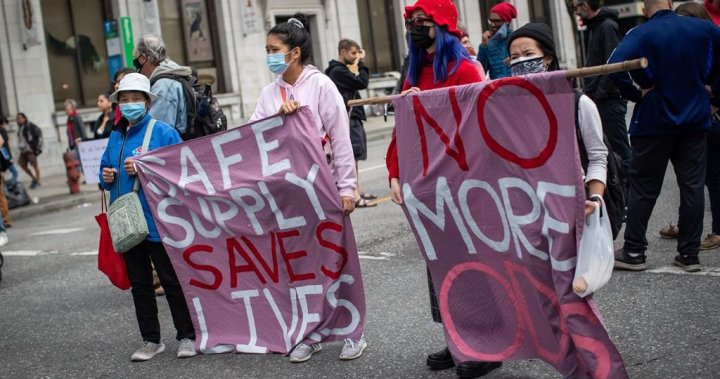
Is safe supply for opioid use effective? Here’s what the experts, data say – National

Is safe supply for opioid use effective? Here’s what the experts, data say – National

Front-line staff of Canada’s opioid crisis say damage reduction approaches like safe materials for those people navigating compound use are clear even amid renewed political debate close to the difficulty.

Debate all-around risk-free offer a short while ago reignited right after Conservative Party Leader Pierre Poilievre posted a video to his Twitter account saying initiatives like harmless intake websites and supplying a safer offer of medications to persons in the throes of habit “will only guide to their ultimate fatalities.”

Browse extra:

Amid grim opioid dying projections, Ottawa faces phone calls to move quicker on safe and sound provide

World News spoke to specialists who have been functioning on the frontlines of the opioid crisis to hear their experiences, and all those who weighed in voiced issues. A rising overall body of information, specialists instructed, indicates initiatives like risk-free provide and hurt reduction really decrease overdose fatalities and hospitalizations and help connect people to more health treatment and treatment selections.

Story carries on beneath advertisement

“To describe harmless supply as producing homelessness, as producing an enhance in criminal offense is genuinely just the reverse of what we’re seeing from the investigation alone,” claimed Mish Waraksa, medical guide for the Parkdale Queen West Safer Opioid Supply Application in Toronto.

Here’s what the info and experts say about the usefulness of safe offer.

The video, “Everything is damaged,” was shared in November on the Conservative leader’s Twitter account.

It shows Poilievre in the foreground, pointing behind him to a collection of tents along a shoreline in Vancouver, B.C., saying the people today in the tents are “hopelessly addicted to drugs, placing poisons in their bodies.”

“The addictions that we see, that have terrorized these folks and our communities, they are the result of a failed experiment,” Poilievre says in the video.

Story proceeds under advertisement

“This is a deliberate policy by woke Liberal and NDP governments to provide taxpayer-funded medications, flood our streets with easy accessibility to these poisons.”

The video clip drew criticism from many in Canada’s political realm, like a former adviser to former Conservative key minister Stephen Harper, Ben Perrin, who mentioned it reflected “tropes that have prolonged been discredited.”

Examine more:

Safe use forefront of countering the overdose disaster, prime minister claims

Federal Mental Health and fitness and Addictions Minister Carolyn Bennett, known as the video “irresponsible.”

“Using (people dwelling in tents) as props to peddle his snake oil was disgraceful,” Bennett mentioned at a Residence of Commons committee meeting on Nov. 29, stressing that all federally-funded harm reduction initiatives are rooted in proof-dependent results.

“This is about generating a community of compassion… this is about the poisonous drug provide, but (also) it’s understanding dependancy.”

A request for remark from Poilievre for this story went unanswered.

Hunting at the knowledge on opioid fatalities does paint a grim photo of the deadly and developing toll the opioid disaster is getting on Canadians.

Story proceeds down below ad

A full of 29,052 Canadians have died due to opioids due to the fact 2016, according to the most current federal data released in June.

In 2021, the amount of deaths reached an all-time significant: 21 Canadians for every day died from opioids, which represents a 162 per cent raise from 2016, and a 101 for every cent raise from the year prior to.

A complete of 7,560 Canadians died from opioid use very last yr, up from 3,747 in 2020.

Even though these data are sobering, there is also facts to propose some hurt reduction steps that have been executed are saving lives.

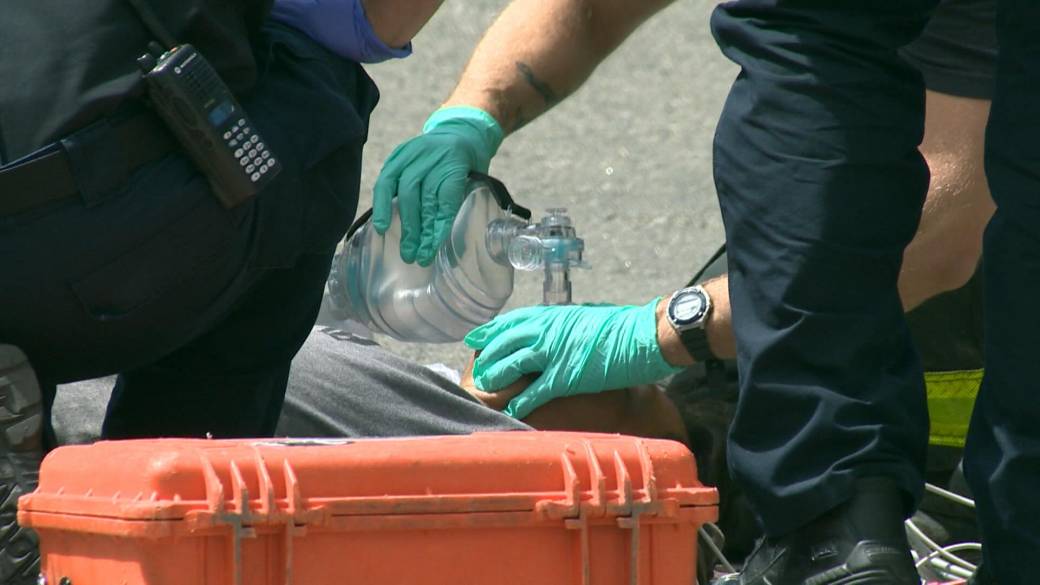
For illustration, supervised usage web pages across the region been given almost 2.2 million visits amongst 2017 and 2020, where by nearly 17,400 overdoses have been reversed devoid of a single loss of life at a web site, federal information reveals.


Click to play video: 'Advocates say Alberta should revisit safe supply in light of new research'


Advocates say Alberta should revisit risk-free offer in gentle of new investigate


These visits also led to about 84,400 referrals to wellness and social companies.

Tale continues below advertisement

And when it comes to safer supply plans, exactly where people are given access to prescriptions of pharmaceutical-grade opioids, some new scientific studies have also revealed positive outcomes.

A assessment of 10 federally-funded safer supply pilot assignments in three provinces, commissioned by Well being Canada and unveiled previously this year, cited members reporting advancements in their life and well-getting.

Purchasers claimed having entry to a safer provide of medication saved their lives, designed much more security, allowed them to turn into housed and used and gave them hope for their foreseeable future.

A different impartial research published in September in the Canadian Health-related Affiliation Journal (CMAJ) discovered protected opioid provide packages can appreciably lower down on crisis office visits and hospitalizations for persons at substantial hazard for overdose.

Go through a lot more:

Safer opioid provide program potential customers to fall in Ontario hospitalizations, ER visits: study

That review seemed at men and women who utilized a safer source program in London, Ont., for a few years, and located ER visits and healthcare facility admissions declined a person year after participants entered the plan.

It also observed no elevated risk of bacterial infections or overdoses and a drop in wellness-treatment prices unrelated to major care or outpatient remedies following a calendar year.

In addition, there ended up no opioid-connected deaths among the individuals who ended up part of this software.

Story proceeds beneath ad


Click to play video: 'Safe drug supply key recommendation in reducing toxic illicit drug-related deaths'


Secure drug offer critical suggestion in decreasing poisonous illicit drug-related fatalities


Why are opioid fatalities still rising?

The greatest driver of the overdose disaster in Canada considering that 2016 is the contamination of the street drug supply with more powerful medication like fentanyl, states Cheyanne Johnson, executive director at the B.C. Middle on Compound Use. 

But this has also shifted in excess of time, notably accelerating as a problem throughout the pandemic, when closed borders and suspended treatment programs triggered even far more contamination and overdoses, she claimed.

Tale carries on down below advertisement

For example, preliminary information for 2022 launched by the B.C. Coroner’s Company has located that fentanyl or similar medicine have been detected in 81 for every cent of all illicit drug toxicity fatalities in that province.

Even though Poilievre contrasted statistics on opioid use towards knowledge from just before 2015, which is when the Liberals gained govt, Johnson stated the distribute of fentanyl has altered the realities on the ground.

Examine a lot more:

New analyze highlights efficiency of Halifax protected offer drug software

“It’s very tough to compare pre-2015 stages of overdose to what is going on now mainly because the supply chain has thoroughly transformed,” she reported.

Blaming damage reduction systems that have reversed overdoses and that present access to medicines that are not “poisoned” shows a misunderstanding of the realities of this disaster, claimed Rob Boyd, CEO of Ottawa Internal City Health, which runs a safer supply program and other harm reduction initiatives.

Virtually any entrance-line worker who supports applications for drug customers would concur with Poilievre that far more funding is necessary for detox and in-individual rehabilitation therapy systems, he said.

But it doesn’t have to be a binary choice of “either” remedy systems “or” damage reduction initiatives like safer offer, he mentioned.

Lower-barrier applications that really do not call for comprehensive abstinence have established helpful at serving to persons who may possibly not if not be able to receive enable, Boyd explained.

Tale proceeds down below ad

Read through additional:

A lot more medical doctors are prescribing opioids to avoid their individuals from dying of overdoses

“That is way too substantial a threshold for any person who is injecting fentanyl five or 6 situations a day. We have to be equipped to start off conceptualizing treatment, commencing where by people today are at,” he mentioned.

“In some instances, safer provide can be a treatment for somebody since it delivers them a little bit of steadiness in that moment or in that working day in their lives.”

Due to the fact most safer supply pilot programs throughout Canada have wraparound supports, these kinds of as housing, wellbeing and social supports, clients who regularly get non-toxic medicines can slowly raise their ability and commitment for change, he stated.

Waraksa echoed this, indicating safer offer “keeps people alive until they are capable to accessibility other varieties of treatment.”

Over-all, Johnson states she finds it “disheartening” to see the opioid disaster remaining politicized.

“It really even further stigmatizes them and generates much more disgrace all around substance use.”

Teen mental health issues are on the rise. Here’s how parents can help.

Teen mental health issues are on the rise. Here’s how parents can help.

Remark

As a clinical psychologist, I generally come across myself sitting across from higher education college students having difficulties with difficulties this kind of as stress and anxiety and suicidality, who confide that their mom and dad don’t get it. Not surprisingly, I also function with mothers and fathers of youthful adults who want to enable their youngsters but simply cannot appear to be to connect. It can be disheartening that folks who subject deeply to just about every other misread cues at vital psychological junctures, but component of what I educate mother and father is how to assist their teenagers experience read and supported so they can move forward.

Around 50 percent of adolescents meet the requirements for a psychiatric analysis at some level, and we have all heard of the unmet mental overall health concerns in teens alongside with relating to prices of suicidality. Whilst young grownups crave autonomy, the prefrontal cortex — the component of the brain that manages wondering flexibly and controlling impulses — carries on to establish till age 25, which indicates that nonetheless experienced they look, your teenager requirements adult support when it arrives to regulating thoughts and handling crises.

Nonetheless, I’ve observed even the most effectively-which means dad or mum worry when their boy or girl is having difficulties with mental health troubles, then inadvertently say the incorrect issue this sort of as, “you’re overreacting.” In some cases they supply youngsters much too substantially place, assuming their teenager will come to them with a dilemma. But there are effective ways to empower your adolescent, together with doing the job on taking care of your individual emotions, asking the appropriate questions and helping to decide the amount of guidance they will need.

Observe remaining variety and nonjudgmental: To increase the probability of your teenager opening up to you in really hard situations, it’s practical to be open and heat in normal times. It can also assist to remind by yourself that experience distress is portion of remaining a young grownup, says psychologist Lisa Damour, writer of “Under Tension,” and the co-host of the podcast “Ask Lisa: The Psychology of Parenting.” “Part of how we can assist young individuals is to normalize tension,” she states.

Do not be a “snowplow parent”: It is not your task to remove any possible complications your adolescent is facing. Suffering from and coping with problems and failures can show to be a “hidden curriculum” that will help young older people increase and discover their intent, say Belle Liang and Timothy Klein, authors of “How to Navigate Everyday living.”

A lot of mother and father I deal with, specifically all those who working experience anxiety on their own, come to feel eager to rush in to help you save the working day close to non-urgent troubles these types of as assisting their teenager make up for a late assignment. That only retains their youthful adult from mastering from repercussions and acquiring far better trouble-resolving techniques. In its place, Damour recommends listening and empathizing, which decreases the intensity of unfavorable emotions. Relatively than coming into repair-it mode, the purpose should really be to “help your young particular person construct a broader repertoire for managing,” Damour advises. That may well incorporate talking about cultivating wholesome behavior such as having ample slumber, working out and steering very clear of substances.

Give them hope: If your teen is having difficulties with troubles more critical than ordinary stress, this kind of as depression or anxiousness, enable them know that what they’re suffering from is not permanent and that emotion improved is possible and inside attain. “Symptoms of melancholy never define you, they are portion of your lifestyle encounter and will alter through energy, adaptive coping strategies and locating the appropriate supports,” advises Jessica Schleider, a psychologist and assistant professor at Stonybrook University. Schleider developed transient one session interventions that are cost-free on line, that help lower hopelessness and depression, especially if you are waiting around to satisfy with a professional.

Talk to about self-damage ideas: If you are anxious, having said that, that your boy or girl is thinking of suicide or self-damage, “the solitary greatest issue is to collect by yourself and uncover a way to request about that immediately,” claims David Jobes, a psychologist and professor at Catholic College who created the Collaborative Assessment and Administration of Suicidality, an evidence-dependent scientific intervention to aid prevent suicide. He encourages moms and dads to rally their power, technique their cherished one at a good time when you have their undivided awareness, then be immediate — “Are points at any time so negative that you believe about suicide? Do you at any time have ideas of doing things to hurt your self?” — and make absolutely sure you’re ready to listen to the response. “You need to listen and just listen to it and keep it, fairly than invalidating, preempting or pointing items out,” Jobes suggests. “You want to convey the concept that we’re in this article, regardless of whether that’s bodily, or emotionally on the mobile phone, or by textual content. We’ve acquired you.”

Lots of young older people are terrified of broaching suicidal feelings with their parents, which can imply that suicidal views aren’t talked over right up until there is an emergency. That’s why it’s so crucial to lay the groundwork for your teen to truly feel relaxed sharing. Also, retain in thoughts views of suicide are pretty frequent, with almost 10 percent of people possessing these feelings around the study course of their lives.

“We can all have views that come to feel eerie, they are just feelings, and we can converse about them collectively,” Schleider claims, introducing that it is crucial your teenager is aware of they can occur to you. While suicidal feelings can feel terrifying and warrant in search of professional help, keep in mind that you will have to be an individual your baby can change to, so really do not overreact. Alternatively, intention to go into these discussions organized with probable means.

Lean on analysis-centered techniques: As a mum or dad, Jobes claims, you can call disaster hotlines and use resources, these types of as the Stanley-Brown protection system, and share these with your teen, offering them some company around what appears to be helpful to them. Some of the aid Jobes encourages exploring, when waiting to meet up with with a specialist, includes the crisis text line, the nationwide hotline 988, checking out Dialectical Conduct Remedy — an evidence-dependent method to treating suicidal inner thoughts — articles on Now Issues Now or DBT-RU, or becoming a member of the Lived Experience Academy or the peer-led Possibilities to Suicide. Undoubtedly consider precautions and take away access to any deadly means.

Despite conventional wisdom, when the chance of suicide is not imminent, there may not be a have to have for medications these as SSRIs, or hospitalizations. Instead, Jobes encourages comprehending the drivers that are creating your kid look at suicide and supplying your little one a variety of solutions, which include psychotherapies identified to lower danger of suicide, such as Dialectical Conduct Remedy, to specifically offer with problems that fuel suicidal feelings. Soon after a long time of experience in the subject of adolescent suicidology, Jobes has noticed that “what’s at the heart of most suicidal struggles are relational problems.” These can consist of anything from problems at household to university bullying to romantic breakups, and medications or hospitalizations frequently never meaningfully increase people issues as considerably as very good psychotherapy, Jobes says.

Just one of the research in suicide prevention that I normally consider about in my do the job, is psychiatrist Jerome Motto’s simple but lifesaving obtaining that clinicians sending temporary, caring examine-in messages that demonstrate someone is invested in a person’s properly-staying can significantly lower suicide danger. Communicating that you genuinely treatment and are there, frequently, and with out judgment, is a profound reward.

No matter what the young grownup you appreciate is struggling with, contemplate your purpose, as Jobes prescribes, “Like a lighthouse, just hold sending the message, I’m below. There are rocks out there. I will continue to ship out a beacon of mild to assistance guideline you, but you are the captain of your individual ship, and with each other we can get you securely to the shore.”

Jenny Taitz, PsyD, ABPP, is a clinical psychologist and an assistant clinical professor in psychiatry at the College of California at Los Angeles. She is the writer of a forthcoming e book on worry, “How to be Single and Happy,” and “Finish Emotional Taking in.”

Sign up for the Perfectly+Becoming newsletter, your supply of pro information and uncomplicated suggestions to aid you live perfectly every single day

We welcome your remarks on this column at OnYourMind@washpost.com.

COVID-19 update for Sept. 29: Here’s what you need to know

COVID-19 update for Sept. 29: Here’s what you need to know

The superior news is that most of the inhabitants has accrued some immunity to SARS-CoV-2, the virus that triggers COVID-19, from vaccination or an infection, overall health officials claimed at a news conference Wednesday.

Nevertheless, that solid immunity will wane more than time and so wellness officials are urging British Columbians to get a booster shot that guards versus the Omicron variant.

Hospitalizations and fatalities from COVID-19 are drastically down from a peak in January, according to B.C. governing administration knowledge. There was a slight surge in May perhaps and then there has been a constant drop.

Choose upholds B.C. employer’s mandatory COVID vaccination coverage

A B.C. judge has upheld an employer’s ideal to put an worker on an unpaid leave of absence for failing to comply with a necessary COVID vaccination coverage.

The selection of B.C. Supreme Court docket Justice Heather MacNaughton was designed in the case of a senior manager of a assets management firm who had declined to get vaccinated.

In her lawsuit, Deepak Parmar alleged that she had been constructively dismissed from her work with Tribe Administration, professing that the organization had breached its contractual obligations by imposing the required plan.

Parmar, an accounting skilled who is not an anti-vaxxer, in accordance to the choose, was worried that the vaccines have been ready and distributed unexpectedly and that there was limited info about their lengthy-expression efficacy and potential detrimental overall health implications.

Go through the complete tale right here.

— Keith Fraser

Healthcare specialists reiterate that COVID-19 is still a menace

The removal of mask mandates and vaccine needs has clinical experts and entrance-line staff reiterating that COVID-19 is even now a threat.

The federal federal government declared on Monday that starting Oct. 1, all COVID-19 entry limitations will be taken off, together with screening, quarantine and isolation specifications for anybody getting into Canada.

A professor of epidemiology at the University of Saskatchewan, Nazeem Muhajarine, claimed that the lifting of constraints did not appear as a shock to him and other professional medical professionals as Canada could only very last so extensive just before becoming a member of other countries’ regulatory practices.

Canada is one particular of the final nations around the world to get rid of journey demands following the U.S. and the U.K. — still, Muhajarine said, the removal of the needs does not necessarily mean the elimination of the risk of COVID-19.

“On the 1 hand expressing that there is no constraints now applied, and on the other hand indicating that the pandemic is not over, people two items seem to not go hand in hand,” explained Muhajarine.

—The Canadian Press

Additional than 1.6 million travellers arrived at border without having making use of ArriveCAN: governing administration doc

The Liberal governing administration will end requiring travellers to use the ArriveCAN app — even though new details reveals that given that the start off of the 12 months, a lot more than 1.65 million men and women already flaunted the policies by arriving at the border with no offering the info as a result of the app.

The federal government explained Monday it would elevate all COVID-19-associated travel actions on Oct. 1, such as the prerequisite that travellers to Canada use the ArriveCAN application to provide COVID-19 vaccine, health and vacation info in advance of they arrive. The shift follows opposition to the app from small business teams, which includes the journey and tourism industry, and the Conservative Occasion.

In accordance to a doc tabled in the Property of Commons previous 7 days, among Jan. 1 and Aug. 31, a total of 1,651,900 travellers experienced “presented by themselves at the border for entry into Canada devoid of possessing submitted their community wellness facts through ArriveCAN prior to arrival.” That selection accounts for about 4.3 for every cent of the 38.5 million people today who entered Canada by way of air or land from the start of the year to Sept. 11.

Read through the total storyhere.

— The Countrywide Post

Employers stretched to recruit personnel in B.C.’s pandemic restoration economy

Cafe provider Russell Hendrix’s administrators experienced to do a lot of juggling in the company’s flagship showroom to cover for two flooring income work that took months to fill, even providing $1,000 signing bonuses.

“Vancouver was a obstacle for me before the pandemic, but the pandemic just designed it a lot more challenging,” said Anna Blaszczynska, the company’s vice-president of human assets, who has taken the “unprecedented” step of using a recruiting company to find these showroom profits reps, which is ordinarily an entry-amount place.

And with B.C.’s province-large unemployment amount close to file lows, 4.8 per cent as of August, in accordance to Data Canada’s labour power study, Blaszczynska does not know “if there is heading to be an conclude to this.”

B.C. is not on your own. Country-broad, the workforce that was first upended by significant job losses at the beginning of the COVID-19 pandemic is being upended again by a number of forces.

In quite a few circumstances, employees aren’t returning to employment they missing, owning opted to swap occupations. Then there is the basic demographic strain of personnel retiring quicker than new candidates moving into the workforce.

Examine the whole storyhere.

— Derrick Penner

Employees nervous about basic safety of returning to office environment as potential COVID wave looms this tumble

Some Canadian staff are elevating fears about a full return to office and do the job vacation as Ottawa lifts all remaining border restrictions and gurus warn of a most likely huge wave of new COVID-19 situations this drop.

The “living with COVID” stage has viewed most mask mandates dropped, self-isolation regulations nixed and necessary place of work vaccine polices rescinded. Nevertheless as the possibility of repeat infection and very long COVID is greater understood, some personnel stress about exposure from a each day commute, travelling for conferences or working in a shared space.

Some are even leaving their positions that require business office attendance or major travel.

Ben MacLeod give up his aspiration task in excess of overall health concerns. Before this 12 months he moved again to his hometown of Halifax from Asia in look for of occupation experience and risk-free harbour during the pandemic.

Nova Scotia’s reaction to the novel coronavirus was between the most cautious in the earth and he considered it was a safe guess.

— The Canadian Push

Feds elevate border vaccine mandates, mandatory masks on planes and trains

Federal ministers say all COVID-19 border limits will finish as of Saturday, like necessary vaccinations, testing and quarantine of intercontinental travellers, as nicely as necessary masks on planes and trains.

The cupboard get preserving COVID-19 border steps will not be renewed when it expires on Sept. 30.

The modify will suggest foreign nationals no lengthier have to have an approved sequence of vaccinations to enter the place.

It also implies Canada-bound travellers will no for a longer time be matter to random required COVID-19 checks, and unvaccinated Canadians will not will need to isolate when they return to the nation.

— The Canadian Press

Popular Chinese commentator urges COVID specialists to ‘speak out’

Distinguished Chinese commentator Hu Xijin reported on Sunday that as China ponders its COVID-19 policies, epidemic experts have to have to converse out and China should to conduct in depth exploration and make any experiments transparent to the general public.

Hu’s abnormal call on Chinese social media for candour and transparency earned him 34,000 likes on the common Twitter-like microblog Weibo, as effectively as frank responses from netizens in a usually tightly policed world wide web swift to censor voices considered a hazard to social stability.

China’s top leaders warned in May well amid the COVID lockdown of Shanghai and prevalent constraints in the Chinese capital Beijing that they would struggle any remark or action that distorted, doubted or repudiated the country’s COVID procedures.

“About the future, China requires pretty rational study and calculations,” mentioned Hu, former editor-in-main of nationalist condition tabloid World Situations. “Experts should discuss out, and the state should really arrange extensive experiments and make them transparent to the community: what are the execs and cons for our frequent persons, and what are the over-all pros and drawbacks for the country?”

— Reuters

Ontario opens Omicron-focused vaccine bookings for all grownups

All adults in Ontario can now e-book an appointment to get an Omicron-specific COVID-19 vaccine as of Monday.

The province produced the bivalent vaccine readily available to its most vulnerable populations earlier this month, but said appointments to acquire the new shot would be open up to all people 18 or more than as of Sept. 26.Overall health Minister Sylvia Jones suggests getting a booster dose is primarily significant with the commence of the drop and winter respiratory sickness year.
— The Canadian Push

COVID-19 update for Sept. 28: Here’s what you need to know

COVID-19 update for Sept. 29: Here’s what you need to know

All grown ups in Ontario can now book an appointment to receive an Omicron-targeted COVID-19 vaccine as of Monday.

The province produced the bivalent vaccine available to its most susceptible populations earlier this thirty day period, but claimed appointments to acquire the new shot would be open up to all citizens 18 or more than as of Sept. 26.Health and fitness Minister Sylvia Jones suggests getting a booster dose is especially important with the get started of the slide and winter season respiratory sickness time.— The Canadian Push

HIV spike amid B.C. drug consumers affiliated with COVID-19 lockdown, investigation says

A new study states reduced accessibility to HIV expert services throughout early COVID-19 lockdowns in British Columbia was connected with a “sharp increase” in HIV transmission among the some drug buyers.

The examine by College of British Columbia researchers suggests that while diminished social conversation in the course of the March-May well 2020 lockdown worked to reduce HIV transmission, that may well not have “outweighed” the enhance induced by decreased accessibility to solutions.

The research, released in Lancet Regional Overall health, found that much less people commenced HIV antiretroviral treatment or undertook viral load tests underneath lockdown, although visits to overdose avoidance services and secure intake web-sites also lowered.

The over-all selection of new HIV diagnoses in B.C. proceeds a a long time-extended decline.

But Dr. Jeffrey Pleasure, direct author of the report printed on Friday, said he identified a “surprising” spike in transmission amongst some drug consumers all through lockdown.

— The Canadian Push

Combat to end virus pandemic normally takes location on UN’s sidelines

In four days of fiery speeches around war, climate transform and the threat of nuclear weapons, a person problem felt like an afterthought during this year’s UN Common Assembly: the coronavirus pandemic.

Masks were being often pulled under chins — or not worn at all — and any point out of COVID-19 by globe leaders normally arrived at the tail-conclude of a extended listing of grievances.

But on the sidelines of the once-a-year meeting, the pandemic was even now very substantially part of the discussion.

On Thursday, UN Secretary-Standard Antonio Guterres gathered with Entire world Well being Corporation chief Tedros Adhanom Ghebreyesus, UNICEF Govt Director Catherine Russell and some others to discuss equitable entry to COVID vaccines, checks and solutions.

— The Involved Press

22 fatalities, 305 in clinic: Weekly facts from BCCDC

British Columbia observed 22 far more people who not too long ago examined constructive for COVID-19 die about the week of Sept. 11-17 in preliminary information unveiled by the B.C. Centre for Disease Handle on Thursday.

The number of men and women in hospital with COVID dipped a bit to 305 as of Thursday, with 22 of those in intensive treatment.

Which include up to date mortality data from several the latest months, a whole of 4,253 persons have died of COVID-19 due to the fact the starting of the pandemic.

One more 637 circumstances of COVID-19 have been verified this week, but minimal testing usually means this understates the prevalence of the virus in the population.

For a primer on how to interpret info in the BCCDC weekly reviews, click on here.

— Joseph Ruttle


What are B.C.’s present-day community wellbeing steps?

MASKS: Masks are not needed in public indoor settings nevertheless individual corporations and function organizers can select to demand them.Masks are also encouraged but not expected on board community transit and B.C. Ferries, however they are nevertheless required in federally regulated vacation house.

GATHERINGS AND Occasions: There are now no restrictions on gatherings and situations these types of as individual gatherings, weddings, funerals, worship products and services, workout and health activities, and swimming swimming pools.There are also no restrictions or potential restrictions on eating places, pubs, bars and nightclubs and no restrictions on activity routines.

Treatment Residences: There are no potential restrictions on website visitors to very long-time period care and seniors’ assisted living services, however, readers ought to exhibit proof of vaccination prior to viewing.

Exemptions are out there for kids beneath the age of 12, those with a healthcare exemption, and readers attending for compassionate visits linked to close-of-daily life. Guests to seniors’ residences are also demanded to take a swift antigen test prior to traveling to the facility or be examined on arrival. Exemptions to tests are obtainable for those people attending for compassionate visits or conclusion-of-lifestyle treatment.


How do I get vaccinated in B.C.?

Everyone who is living in B.C. and suitable for a vaccine can obtain one particular by adhering to these ways:

• Get registered on-line at gov.bc.ca/getvaccinated to book an appointment in your neighborhood.
• Or, if you prefer, you can get registered and then take a look at a drop-in clinic in your well being authority.
• The method will notify you when it is time to go for your 2nd dose.
• The similar process will also warn you when it is time for your booster dose.


Where can I get a COVID-19 take a look at?

Tests CENTRES: B.C.’s COVID-19 exam collection centres are now only tests those with signs and symptoms who are hospitalized, pregnant, thought of substantial hazard or are living/perform with those people who are significant chance. You can obtain a screening centre making use of the B.C. Centre for Ailment Control’s screening centre map.

If you have gentle signs and symptoms, you do not have to have a check and should continue to be household until your fever is long gone. Those people devoid of signs do not need to have a check.

Acquire-Dwelling Immediate ANTIGEN Assessments: Eligible British Columbians over the age of 18 with a own overall health number can take a look at a pharmacy to obtain a free of charge just take-property check package made up of five COVID-19 fast antigen checks.


Much more news, much less adverts: Our in-depth journalism is probable many thanks to the assistance of our subscribers. For just $3.50 per 7 days, you can get limitless, advert-lite accessibility to The Vancouver Solar, The Province, Countrywide Write-up and 13 other Canadian news web-sites. Assist us by subscribing now: The Vancouver Sun | The Province.

COVID-19 update for Sept. 15: Here’s what you need to know

COVID-19 update for Sept. 29: Here’s what you need to know

Here’s your daily update with everything you need to know on the coronavirus situation in B.C. and around the world.

Article content

Here’s your update with everything you need to know on the COVID-19 situation in B.C. and around the world for Sept. 15, 2022.

Advertisement 2

Article content

We’ll provide summaries of what’s going on right here so you can get the latest news at a glance. This page will be updated regularly every day this week, with developments added as they happen, so be sure to check back often.

Article content

You can also get the latest COVID-19 news delivered to your inbox weeknights at 7 p.m. by subscribing to our newsletter here.


Here are the latest weekly B.C. figures given on Sept. 15 for the week of Sept. 4-10:

• Hospitalized cases: 314
• Intensive care: 23
• New cases: 574 over seven days ending Sept. 10
• Total number of confirmed cases: 383,628
• Total deaths over seven days ending Sept. 10: 16 (total 4,216)

Read the full report here | Next update: Sept. 22


Headlines at a glance

• The latest COVID-19 numbers from the BC CDC show the number of people admitted to hospital with the illness is declining.
• Dr. Bonnie Henry says the findings of a study she co-authored showing high COVID-19 rates among children and youth should not be interpreted to suggest those infections occurred mostly in schools.
• The director-general of the World Health Organization said the end of the pandemic “is in sight” but “we are not there yet.”
• B.C.’s top trial court judge has dismissed four legal challenges to the province’s COVID-19 health orders.
• A study co-authored by B.C.’s top doctor says 80 per cent of kids, youth have had COVID-19.
• New research suggests at least 17 million people in the European Union may have experienced long COVID-19 symptoms during the first two years of the pandemic.
• A new study has found that the pandemic provided Canadians the opportunity to rethink their financial goals, with many moving, switching careers and planning to travel.
• An Ontario court has ruled college’s vaccine mandate is legal.
• Nunavut rolling out new COVID-19 vaccine to older residents
• New Zealand has scrapped mask wearing rules and vaccine mandate, bringing an end to some of the toughest COVID-19 pandemic rules in the world.

Advertisement 3

Article content


LATEST NEWS

B.C. reports 314 people in hospital, 16 deaths over seven days

The latest COVID-19 numbers from the British Columbia Centre for Disease Control show the number of people admitted to hospital with the illness is declining.

The weekly report says 142 people were hospitalized during the week of Sept. 4 to 10, down from 180 admissions during the previous week.

The centre’s COVID-19 dashboard shows a total of 314 patients hospitalized with the illness on Thursday, with 23 in critical care.

The weekly report from the centre for disease control also shows decreasing deaths, with 16 last week, 36 the week before and 44 during the week of Aug. 21

In April, provincial authorities began reporting COVID-19 deaths by including anyone who died from any cause within 30 days of a positive test result for the disease.

Advertisement 4

Article content

The centre says it will evaluate the cause of each person’s death retroactively to better understand “true COVID-19 mortality.”

Read the full story here.

— The Canadian Press

Some B.C. health care workers no longer need to be vaccinated, provincial health officer rules

Provincial health officer Dr. Bonnie Henry has dropped the requirement for private regulated health professionals to be vaccinated.

This includes dentists, opticians and naturopathic doctors.

“Given the high rates of vaccination in these professions, and the current state of the pandemic, the PHO has decided to not require private, regulated health professionals to be vaccinated at this time,” Henry said in a statement released on Thursday.

Advertisement 5

Article content

This came as the World Health Organization declared the end of the COVID-19 pandemic is in sight.

Read the full story here.

— David Carrigg

Don’t blame schools for high COVID rates among B.C. youth: provincial health officer

B.C.’s provincial health officer says the findings of a study she co-authored showing children and youth have had the highest rates of COVID-19 in parts of the province should not be interpreted to suggest those infections occurred mostly in schools.

Dr. Bonnie Henry has been criticized by some parents, advocacy groups and health-care professionals who say a major jump in infections occurred during the school year among children under age 10.

They say measures like masking for all students and air filtration upgrades in schools could have been taken earlier to protect children in classrooms from a virus that was known to spread through the air.

Advertisement 6

Article content

However, Henry says some youth were becoming infected when they were not eligible for a vaccine, and illness among those under 19 was comparable with transmission of the virus in the community.

Read the full story here.

— The Canadian Press

End of COVID pandemic is ‘in sight’: WHO chief

The world has never been in a better position to end the COVID-19 pandemic, the head of the World Health Organization said on Wednesday, his most optimistic outlook yet on the years-long health crisis which has killed over six million people.

“We are not there yet. But the end is in sight,” WHO Director-General Tedros Adhanom Ghebreyesus told reporters at a virtual press conference.

That was the most upbeat assessment from the UN agency since it declared an international emergency in January 2020 and started describing COVID-19 as a pandemic three months later.

Advertisement 7

Article content

The virus, which emerged in China in late 2019, has killed nearly 6.5 million people and infected 606 million, roiling global economies and overwhelming healthcare systems.

Read the full story here.

— Reuters

B.C. Supreme Court chief judge dismisses four challenges to COVID-19 health orders

B.C.’s top trial court judge has dismissed four legal challenges to the province’s COVID-19 health orders.

In one of the cases presided over by Chief Justice Christopher Hinkson of the B.C. Supreme Court, the judge rejected a constitutional challenge to B.C.’s COVID health orders filed by a group called the Canadian Society for the Advancement of Science in Public Policy.

The society argued requiring vaccinations for health-care workers was unconstitutional and also that the orders failed to provide reasonable exemptions and accommodations for people with religious objections, vaccination risks, immunity from prior injection and recent negative COVID testing.

Advertisement 8

Article content

In ruling against the group, Hinkson found that Dr. Bonnie Henry, the provincial health officer, had assessed available scientific evidence to determine the COVID-19 risk for gatherings in B.C., including data regarding transmission of the virus globally, nationally and in B.C.

Read the full story here.

— Keith Fraser

Study co-authored by B.C.’s top doctor says 80{35112b74ca1a6bc4decb6697edde3f9edcc1b44915f2ccb9995df8df6b4364bc} of kids, youth have had COVID-19

A study co-authored by B.C.’s top doctor says at least 70 to 80 per cent of children and youth in Greater Vancouver and the Fraser Valley have been infected with COVID-19.

The study, which lists Dr. Bonnie Henry among 13 authors, says that in contrast, 60 to 70 per cent of adults aged 20 to 59 and about 40 per cent of those aged 60 and over have been infected.

Advertisement 9

Article content

The preprint study, which has not been peer-reviewed, was published online on Sept. 9 and says a series of surveillance reports of infections were understating the actual levels of infection by 92 times.

It says the overall rate of infection rose from below 15 per cent to about 60 per cent between October last year and this August, as the highly infectious Omicron variant took hold.

The study is based on 14,000 anonymized blood samples obtained since March 2020 from a network of outpatient laboratories.

—The Canadian Press

Canadians rethinking their financial goals post-pandemic: Poll

A new study has found that the pandemic provided Canadians the opportunity to rethink their financial goals, with many moving, switching careers and planning to travel.

Advertisement 10

Article content

The study, conducted by Maru Public Opinion on behalf of CIBC in early August, found that 67 per cent of Canadians are re-evaluating their priorities as COVID-19 restrictions come to an end.

The poll asked about 1,500 randomly selected Canadian adults about their financial planning habits now and over the last two years.

Those surveyed reported having made significant life decisions during the pandemic, such as 17 per cent changing jobs and 12 per cent moving to a new home.

Looking ahead, more than one-third of Canadians say they are planning to travel within the next 12 months and 13 per cent say they are planning for a large purchase.

— The Canadian Press

WHO report: 17 million in EU may have suffered long COVID-19

Advertisement 11

Article content

New research suggests at least 17 million people in the European Union may have experienced long COVID-19 symptoms during the first two years of the coronavirus pandemic, with women more likely than men to suffer from the condition, the World Health Organization said Tuesday.

The research, conducted for the WHO/Europe, was unclear on whether the symptoms that linger, recur or first appear at least one month after a coronavirus infection were more common in vaccinated or unvaccinated people. At least 17 million people met the WHO’s criteria of long COVID-19 — with symptoms lasting at least three months in 2020 and 2021, the report said.

“Millions of people in our region, straddling Europe and Central Asia, are suffering debilitating symptoms many months after their initial COVID-19 infection,” said Hans Henri P. Kluge, WHO Regional Director for Europe, during a conference in Tel Aviv.

Advertisement 12

Article content

The modelling also suggests that women are twice as likely as men to experience long COVID-19, and the risk increases dramatically among severe infections needing hospitalization, the report said. One-in-three women and one-in-five men are likely to develop long COVID-19, according to the report.

— The Associated Press

College’s COVID-19 vaccine mandate is legal and enforceable, Ontario court rules

In a precedent-setting decision, the Ontario Superior Court of Justice has upheld Seneca College’s vaccine mandate for the current school year.

A motion for an injunction against the school’s vaccine policy was issued in January 2022 by two unvaccinated Seneca students. They were represented by lawyers from the Justice Centre for Constitutional Freedoms (JCCF).

Advertisement 13

Article content

The students argued that the vaccine policy contradicts instructions issued by Ontario’s Chief Medical Officer of Health and that it violates a number of their rights under the Canadian Charter of Rights and Freedoms.

This decision is especially important, said Howard Levitt, one of the lawyers representing Seneca College, as it shows, even now – two and a half years into the pandemic – that vaccine mandates are legal and institutions have a right to enforce them.

In the decision, Superior Court Judge William D. Black found that Seneca College did not contradict the Ontario Chief Medical Officer of Health’s vaccination guidance.

—Jessica Mundie, National Post

Nunavut rolling out new COVID-19 vaccine to older residents

Advertisement 14

Article content

Nunavut says it is rolling out the newly approved bivalent COVID-19 vaccine.

The territory is now offering the booster shots to people 70 and older and all residents and staff in long-term care facilities.

It says it will expand eligibility for the vaccine as supply increases.

Residents must have received their primary series of a COVID-19 vaccine at least three months ago to be eligible for the shot.

Earlier this month, Health Canada approved Moderna’s Spikevax bivalent COVID-19 vaccine for people 18 and older.

—The Canadian Press

Ontario opens bivalent vaccine bookings for most vulnerable

Ontario is offering Omicron-targeted COVID-19 vaccines to residents considered the most vulnerable, including people aged 70 and older, long-term care residents and health-care workers.

Advertisement 15

Article content

The province says its booking system opened Monday morning for bivalent vaccines, and the first appointments can also begin starting today.

Indigenous people and their household members aged 18 and older, immunocompromised people aged 12 and older, pregnant people and health-care workers who are 18 and older are also eligible as of today.

Booster appointments will be paused for people outside those populations to accommodate distribution to the highest-priority groups.

But the province says people aged 18 and older can start booking bivalent booster appointments today for planning purposes.

The vaccine rollout comes after the province received its first shipment of the shots last week.

— The Canadian Press

Advertisement 16

Article content

New Zealand ends most COVID restrictions as pandemic worry eases

New Zealand scrapped mask wearing rules and vaccine mandates on Monday, bringing an end to some of the toughest COVID-19 pandemic rules in the world about two years after they were put in place.

Prime Minister Jacinda Ardern said in a weekly news conference that it was time to safely turn the page on the country’s COVID-19 management and live without the extraordinary measures it previously used.

“Finally, rather than feeling that COVID dictates what happens to us, our lives, and our futures, we take back control,” Ardern said.

For the first time in two years we can approach summer with the much needed certainty New Zealanders and business need, helping to drive greater economic activity critical to our economic recovery,” she added.

Advertisement 17

Article content

All mask wearing requirements were removed, except in healthcare and aged care facilities. Only COVID-19 positive individuals will be required to isolate for seven days, while household contacts no longer need to, the government said in a statement.

—Reuters


What are B.C.’s current public health measures?

MASKS: Masks are not required in public indoor settings though individual businesses and event organizers can choose to require them.Masks are also encouraged but not required on board public transit and B.C. Ferries, though they are still required in federally regulated travel space.

GATHERINGS AND EVENTS: There are currently no restrictions on gatherings and events such as personal gatherings, weddings, funerals, worship services, exercise and fitness activities, and swimming pools.There are also no restrictions or capacity limits on restaurants, pubs, bars and nightclubs; and no restrictions on sport activities.

Advertisement 18

Article content

CARE HOMES: There are no capacity restrictions on visitors to long-term care and seniors’ assisted living facilities, however, visitors must show proof of vaccination before visiting.

Exemptions are available for children under the age of 12, those with a medical exemption, and visitors attending for compassionate visits related to end-of-life. Visitors to seniors’ homes are also required to take a rapid antigen test before visiting the facility or be tested on arrival. Exemptions to testing are available for those attending for compassionate visits or end-of-life care.


How do I get vaccinated in B.C.?

Everyone who is living in B.C. and eligible for a vaccine can receive one by following these steps:

• Get registered online at gov.bc.ca/getvaccinated to book an appointment in your community.
• Or, if you prefer, you can get registered and then visit a drop-in clinic in your health authority.
• The system will alert you when it is time to go for your second dose.
• The same system will also alert you when it is time for your booster dose.

Advertisement 19

Article content


Where can I get a COVID-19 test?

TESTING CENTRES: B.C.’s COVID-19 test collection centres are currently only testing those with symptoms who are hospitalized, pregnant, considered high risk or live/work with those who are high risk. You can find a testing centre using the B.C. Centre for Disease Control’s testing centre map.

If you have mild symptoms, you do not need a test and should stay home until your fever is gone. Those without symptoms do not need a test.

TAKE-HOME RAPID ANTIGEN TESTS: Eligible British Columbians over the age of 18 with a personal health number can visit a pharmacy to receive a free take-home test kit containing five COVID-19 rapid antigen tests.


More news, fewer ads: Our in-depth journalism is possible thanks to the support of our subscribers. For just $3.50 per week, you can get unlimited, ad-lite access to The Vancouver Sun, The Province, National Post and 13 other Canadian news sites. Support us by subscribing today: The Vancouver Sun | The Province.

Advertisement 1

Comments

Postmedia is committed to maintaining a lively but civil forum for discussion and encourage all readers to share their views on our articles. Comments may take up to an hour for moderation before appearing on the site. We ask you to keep your comments relevant and respectful. We have enabled email notifications—you will now receive an email if you receive a reply to your comment, there is an update to a comment thread you follow or if a user you follow comments. Visit our Community Guidelines for more information and details on how to adjust your email settings.