It was January 2021, after a long day of virtual school, and a cold sense of intense dread and an inexplicable feeling like I’m going to die settled over me.
I’m safe in my house – I can see the light where my mom’s working downstairs – but I feel like I’m in danger. I make my way to my room, keeping all of the lights off, and sit on my bed. The task of breathing becomes laborious; any calm I had turns into panicked, gasping breaths, and the more I try to right myself, the worse the attack gets.
It’s only when I jam earbuds into my ears and blast a song that I finally calm down. I rock myself back and forth until the tears stop, then haul myself onto my feet. It was my first panic attack. Navigating uncharted territory I felt devastatingly alone.
The following month, on Feb. 3, a classmate killed herself.
She was a few days younger than me, and to imagine the pain she was in sends an electric shock to my nervous system. The impact of her death echoes throughout my community in the whispers we exchange, sudden shifts of the eyes and the heaviness in our heels as we walk.
We’re drowning.
Student mental health was already at a low before lockdown; the pandemic exacerbated the issue and strained the relationship between student and counselor. Counselors say anxiety rates are up, and with a big developmental chunk missing from most student’s lives, social-emotional skills are suffering, too. This hits especially hard for teenage girls and LGBTQ students, studies say.
During the 2021 school year when I had my first panic attack, schools in my state of Georgia did not meet the state mandated counselor-to-student ratio of 1 to 450. They still don’t. This is a long way from the 1-to-250 ratio recommended by the American School Counselor Association.
Without fully funded mental health services, students are left to suffer alone. Months after my classmate’s suicide, I felt isolated and depressed. I didn’t know how to deal with my emotions, and the idea of receiving help felt inconceivable.
In the absence of trained professionals, we as students are left to pick up our own pieces. Even when I was in pain, I found myself taking the role of the “therapist friend.” I’d talk my friends through every panic attack they had, every suicidal thought – every crisis. I noticed isolated classmates without anyone to talk to, people who didn’t feel safe enough to reach out to professionals. They often cited previous negative encounters as the reason why. Appointments were hard to access; meetings were uncomfortable or unhelpful.
It’s not the school counselors’ fault. The counselor role has shifted from solely academic to also taking care of student mental health, many counselors aren’t adequately trained to meet student mental health needs, and counselors are often understaffed and overworked.
The presence of school resource officers means fearmongering and brutality, and increases incidents of excessive force, usually to Black and Latino students. According to the Advancement Project, more than 25{35112b74ca1a6bc4decb6697edde3f9edcc1b44915f2ccb9995df8df6b4364bc} of school police assaults were on students with disabilities or students who reported mental health concerns, and over 80{35112b74ca1a6bc4decb6697edde3f9edcc1b44915f2ccb9995df8df6b4364bc} of victims of school police assaults since 2011 have been Black students.
These politicians are funding culture wars, not children. Rather than enforcing “zero-tolerance policies” that put students of color at risk, schools should turn their attention to reforming counseling and creating positive school environments and support systems.
They should answer school counselors’ calls for more staffing and funding, as well as the cries for help from students, who with the right support, all have bright futures ahead of them. Funding for adequate counseling gives students the resources and strength to build better lives for themselves. It’s what we deserve.
In May 2021, I started to get better. I learned that asking for help was essential. I started seeing a psychologist. I explored new hobbies and rediscovered old ones. I didn’t just pull myself out of a depressive state; I learned how to cope – and I didn’t do it alone.
Systems of punishment do not mitigate fear, nor do they negate the need for care and compassion of our overall well-being. We’re safer and healthier when we have school counselors and social workers who are trained to support students’ emotional needs instead of neglecting them or pretending they don’t exist.
Prioritizing our mental health needs is what care looks like. It is what safety looks like. In an uncertain and sometimes scary world, it’s the least we can do. It’s what we as children deserve.
If you or someone you know is experiencing a mental health crisis, call the 988 Suicide and Crisis Lifeline that provides confidential 24/7 support by dialing 988, or visit 988lifeline.org
Five community-based businesses to get funding and complex assistance as portion of the new Overall health Fairness & Access Leadership Education Hub, or The Health System.
Washington, D.C., Feb. 27, 2023 (World NEWSWIRE) — The Nationwide Women’s Health and fitness Network (NWHN), based mostly in Washington, D.C., introduced the Wellbeing Equity & Access Leadership Instruction Hub (The Wellbeing Method) early this yr. The Wellness Program is developed to shift paradigms and shape plan by partnering with grassroots wellbeing organizations throughout the country to:
Handle health inequities that disproportionately impression traditionally and systematically marginalized communities
Develop overall health care accessibility as a result of legislative advocacy!
Make improvements to well being outcomes for women throughout the lifespan and in all their diversities
The selection method for the pilot program began in June 2022. The NWHN seemed for companies that demonstrated a determination to health and fitness equity and aligned with the Network’s mission, eyesight, and values. In January 2023, the software introduced with an inaugural team of five organizations:
These organizations provide available, expansive, culturally congruent treatment and services with focuses ranging from group wellness, prenatal treatment, doula and lactation providers, psychological overall health and wellness, sexual and reproductive health and fitness schooling, and reproductive justice advocacy.
The Wellbeing Program’s grantee corporations obtain each funding and specialized help from the NWHN, such as:
$14,000 in unrestricted grant monies for their participation in the 6-month plan
Professional progress from Ms. Byllye Avery, preeminent general public health and fitness professional
Bi-weekly trainings on subject areas like translating follow to coverage, federal advocacy, strategic setting up, and sustainable improvement
Exclusive participation in an NWHN-organized and led Advocacy Working day on Capitol Hill
“For just about 50-years, the NWHN’s commitment to advancing reproductive well being, legal rights, and justice has remained unwavering,” said Denys Symonette Mitchell, NWHN’s Director of Federal Coverage and founder of The Wellness Program. “With the introduction of this system, we hope to aid rising and evolving businesses include their voices to the discussion and convert insight into influence on Capitol Hill and outside of by sharing our system and skills. Our eyesight of good quality, thorough, accessible, and equitable healthcare can only be recognized by ensuring an equitable distribution of methods, starting with our possess here at the National Women’s Overall health Community.”
###
The National Women’s Well being Community is a 501c3 nonprofit firm currently serving in excess of 2 million men and women nationwide. Our mission is to make improvements to health by strategically shaping policy, expanding accessibility, and furnishing correct, unbiased information and facts. If you’d like to master a lot more about our function, check out https://www.nwhn.org.
Speak to: Adele Costa Nationwide Women's Health and fitness Network 6315386348 acosta@nwhn.org
Tara Ghormley has always been an overachiever. She finished at the top of her class in high school, graduated summa cum laude from college and earned top honors in veterinary school. She went on to complete a rigorous training program and build a successful career as a veterinary internal medicine specialist. But in March 2020 she got infected with the SARS-CoV-2 virus—just the 24th case in the small, coastal central California town she lived in at the time, near the site of an early outbreak in the COVID pandemic. “I could have done without being first at this,” she says.
Almost three years after apparently clearing the virus from her body, Ghormley is still suffering. She gets exhausted quickly, her heartbeat suddenly races, and she goes through periods where she can’t concentrate or think clearly. Ghormley and her husband, who have relocated to a Los Angeles suburb, once spent their free time visiting their “happiest place on Earth”—Disneyland—but her health prevented that for more than a year. She still spends most of her days off resting in the dark or going to her many doctors’ appointments. Her early infection and ongoing symptoms make her one of the first people in the country with “long COVID,” a condition where symptoms persist for at least three months after the infection and can last for years. The syndrome is known by medical professionals as postacute sequelae of COVID-19, or PASC.
People with long COVID have symptoms such as pain, extreme fatigue and “brain fog,” or difficulty concentrating or remembering things. As of February 2022, the syndrome was estimated to affect about 16 million adults in the U.S. and had forced between two million and four million Americans out of the workforce, many of whom have yet to return. Long COVID often arises in otherwise healthy young people, and it can follow even a mild initial infection. The risk appears at least slightly higher in people who were hospitalized for COVID and in older adults (who end up in the hospital more often). Women and those at socioeconomic disadvantage also face higher risk, as do people who smoke, are obese, or have any of an array of health conditions, particularly autoimmune disease. Vaccination appears to reduce the danger but does not entirely prevent long COVID.
The most common, persistent and disabling symptoms of long COVID are neurological. Some are easily recognized as brain- or nerve-related: many people experience cognitive dysfunction in the form of difficulty with memory, attention, sleep and mood. Others may seem rooted more in the body than the brain, such as pain and postexertional malaise (PEM), a kind of “energy crash” that people experience after even mild exercise. But those, too, result from nerve dysfunction, often in the autonomic nervous system, which directs our bodies to breathe and digest food and generally runs our organs on autopilot. This so-called dysautonomia can lead to dizziness, a racing heart, high or low blood pressure, and gut disturbances, sometimes leaving people unable to work or even function independently.
The SARS-CoV-2 virus is new, but postviral syndromes are not. Research on other viruses, and on neurological damage from the human immunodeficiency virus (HIV) in particular, is guiding work on long COVID. And the recognition that the syndrome may cause its many effects through the brain and the nervous system is beginning to shape approaches to medical treatment. “I now think of COVID as a neurological disease as much as I think of it as a pulmonary disease, and that’s definitely true in long COVID,” says William Pittman, a physician at UCLA Health in Los Angeles, who treats Ghormley and many similar patients.
Although 16 million U.S. sufferers is a reasonable estimate of the condition’s toll, there are other, more dire assessments. A meta-analysis of 41 studies conducted in 2021 concluded that worldwide, 43 percent of people infected with SARS-CoV-2 may develop long COVID, with about 30 percent—translating to approximately 30 million people—affected in the U.S. Some studies have offered more conservative numbers. A June 2022 survey reported by the U.S. National Center for Health Statistics found that among adults who had had COVID, one in five was experiencing long COVID three months later; the U.K. Office for National Statistics put the estimate at one in 10. Even if only a small share of infections result in long COVID, experts say, they will add up to millions more people affected—and potentially disabled.
Most of the first recognized cases of long COVID were in patients who needed extended respiratory therapy or who had obvious organ damage that caused lasting symptoms. People reporting neurological symptoms were often overlooked or dismissed as traumatized by their initial illness and hospitalization. But as 2020 came to an end, says Helen Lavretsky, a psychiatrist at the University of California, Los Angeles, “we started getting to a place of sorting through what was really going on … and it became very evident at that time that neuropsychiatric symptoms were quite prevalent,” most commonly fatigue, malaise, brain fog, smell loss and post-traumatic stress disorder, as well as cognitive problems and even psychosis.
Ghormley was in her late 30s and relatively healthy when she caught the virus, but she had underlying conditions—including rheumatoid arthritis and asthma—that put her at risk for severe COVID. She spent several days at home, struggling to breathe, and then she went to the hospital, where her blood pressure soared and her blood glucose dropped precipitously. She mostly recovered from this acute phase within a few weeks, but, she says, “I never really got better.”
Soon after coming home from the hospital, Ghormley developed what her husband called “goldfish brain.” “I’d put something down and have no idea where I put it,” she recalls. “It kept happening over and over. I was thinking, ‘This is getting weird.’ My husband said I was not remembering anything. I’d try to talk, and I knew what I wanted to say, but I couldn’t think of the word.”
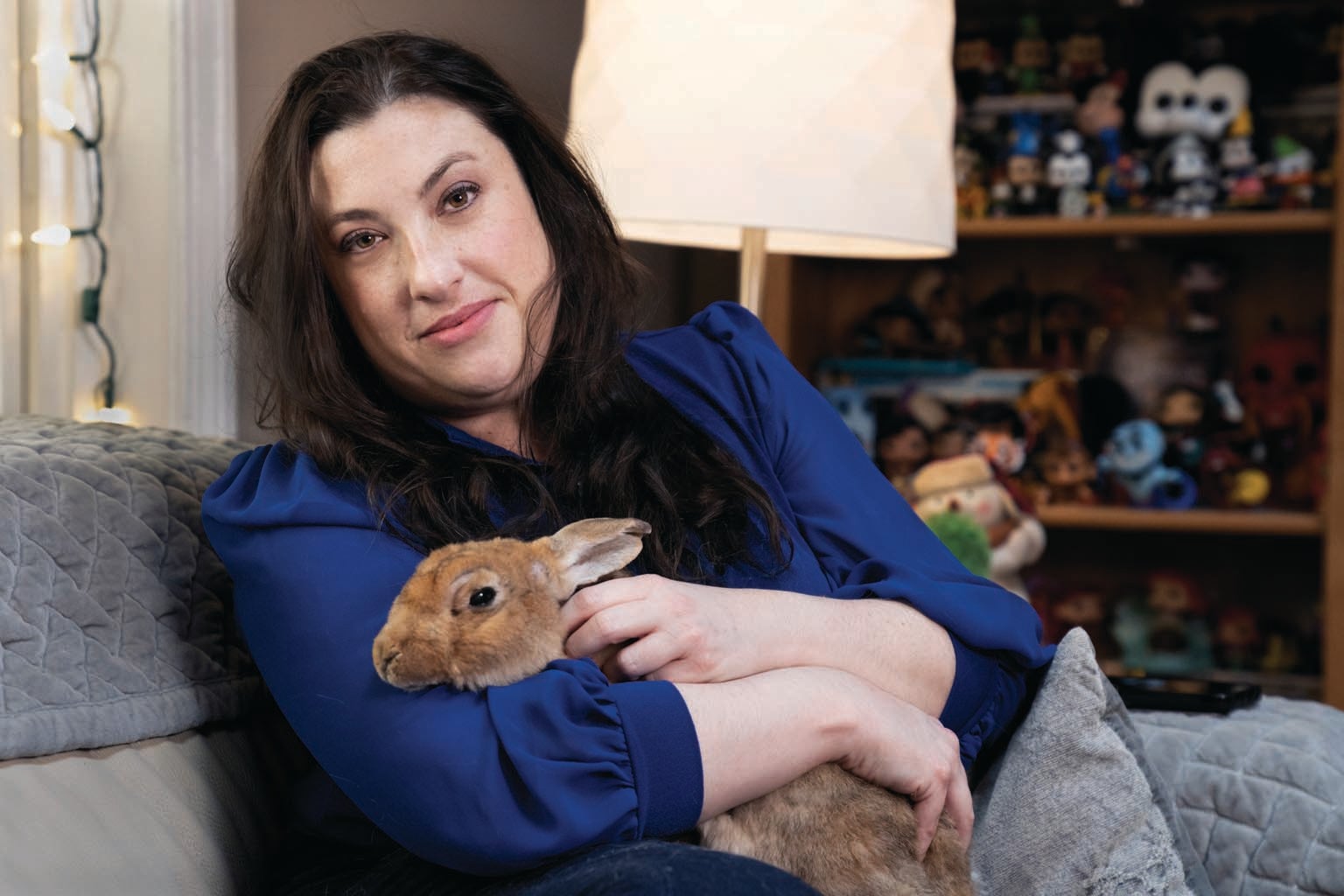
“Everything fell apart for me,” says Tara Ghormley, who has been struggling with long COVID since 2020. Credit: Ewan Burns
She also experienced tremors, dramatic mood swings and painful hypersensitivity to sounds. “My husband opening a paper bag felt like knives stabbing me in the ear,” she recounts. Any exertion—physical or mental—left her exhausted and in pain. The changes were jarring to Ghormley, who prided herself on her sharp mind. “The thing that bothered me the most was that I was really having trouble thinking, speaking, remembering—trying to complete a task and having no idea what it was. Suddenly I had quite profound neurological deficits. Everything fell apart for me at that time. That was horribly traumatic … it kind of broke me. I didn’t feel like me.”
Roots of Dysfunction
As a veterinary internist, Ghormley says, it’s her job to problem solve when mysterious symptoms arise, including her own. “I was actively trying to find reasons and find what I could do.” She theorized that some of her neurological symptoms might be the result of thrombotic events, blood clots that can cause ministrokes. Several early studies showed that COVID attacks endothelial cells, which line blood vessels. That can lead to clotting and oxygen deprivation in multiple organs, including the brain. Even subtle disruption of endothelial cells in the brain could contribute to cognitive dysfunction.
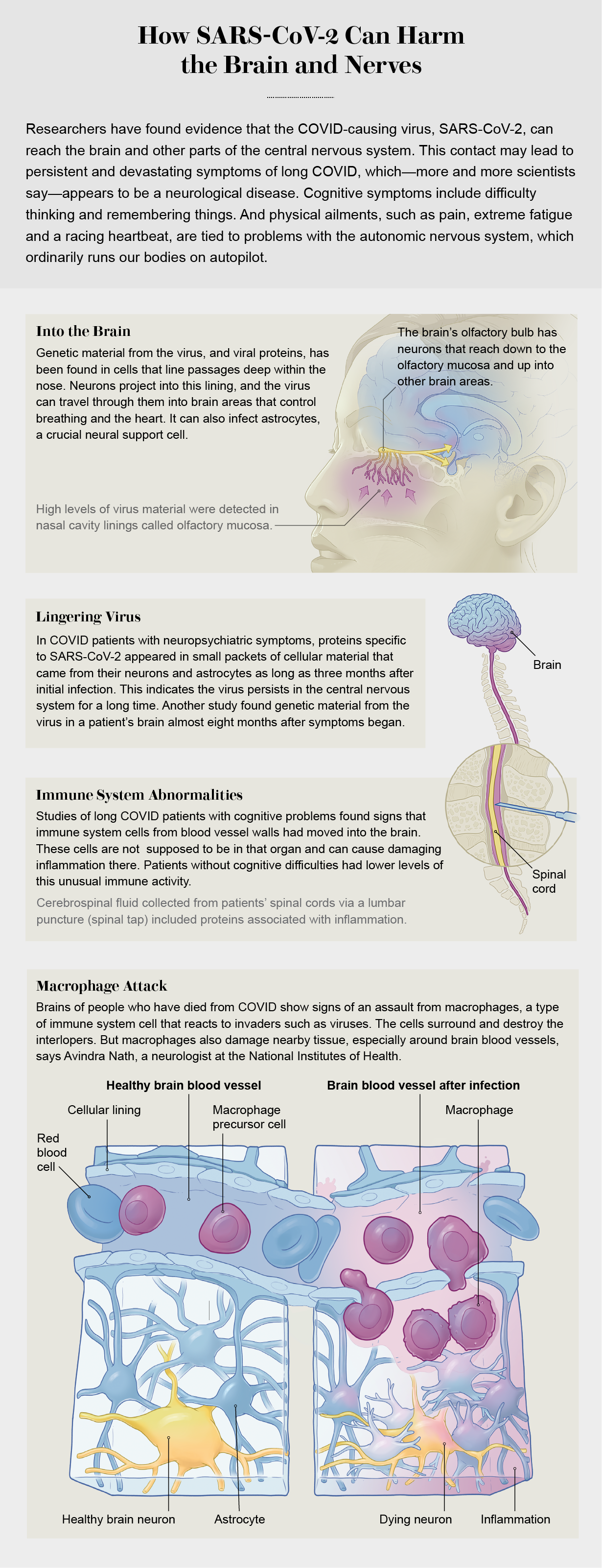
One study found that in people with neurological COVID symptoms, the immune system seems to be activated specifically in the central nervous system, creating inflammation. But brain inflammation is probably not caused by the virus infecting that organ directly. Avindra Nath, who has long studied postviral neurological syndromes at the National Institutes of Health, found something similar in an autopsy study of people who died of COVID. “When you look at the COVID brain, you don’t actually find [huge amounts of virus, but] we found a lot of immune activation,” he says, particularly around blood vessels. The examinations suggested that immune cells called macrophages had been stirred up. “Macrophages are not that precise in their attack,” Nath says. “They come and start chewing things up; they produce all kinds of free radicals, cytokines. It’s almost like blanket bombing—it ends up causing a lot of damage. And they’re very hard to shut down, so they persist for a long time. These are the unwelcome guests” that may be causing persistent inflammation in the brain.
Determining which patients have ongoing inflammation could help inform treatments. Early research identified markers that often are elevated in people with the condition, says Troy Torgerson, an immunologist at the Allen Institute in Seattle. Three cell-signaling molecules—tumor necrosis factor alpha, interleukin 6 and interferon beta—stood out in long COVID patients. But this pattern wasn’t found in absolutely everyone. “We’re trying to sort through long COVID patients and say, ‘This would be a good group to take to trials of an anti-inflammatory drug, whereas this group may need to focus more on rehabilitation,’” Torgerson says. He led a study (currently released as a preprint, without formal scientific review by a journal) in which his team measured proteins from the blood of 55 patients. The researchers found that a subset had persistent inflammation. Among those people, they saw a distinct immune pathway linked to a lasting response to infection. “One subset of patients does appear to have an ongoing response to some virus,” Torgerson says.
Isolated pockets of SARS-CoV-2 or even pieces of viral proteins may remain in the body well after the initial infection and continue to elicit an immune attack. The first solid evidence for “viral persistence” outside the lungs came in 2021 from researchers in Singapore who found viral proteins throughout the gut in five patients who had recovered from COVID as much as six months earlier. A study conducted at the University of California, San Francisco, found evidence for viral particles in the brains of people with long COVID. Scientists collected exosomes, or tiny packets of cellular material, released specifically from cells of the central nervous system. The exosomes contained pieces of viral proteins as well as mitochondrial proteins, which may indicate an immune attack on those vital cellular organelles. Amounts of such suspicious proteins were higher in patients with neuropsychiatric symptoms than in those without them.
The virus could linger in the brain for months, according to research conducted at the NIH and reported in Nature in December 2022. The autopsy study of 44 people who died of COVID found rampant inflammation mainly in the respiratory tract, but viral RNA was detected throughout the body, even in the brain, as long as 230 days after infection. Two other studies, both published last year in the Proceedings of the National Academy of Sciences USA, showed evidence that SARS-CoV-2 may infect astrocytes, a type of neural support cell, gaining entrance via neurons in the skin lining the nose.
Researchers are examining inflammatory signals in patients with long COVID in increasingly fine detail. A small study led by Joanna Hellmuth, a neurologist at U.C.S.F., found that patients with cognitive symptoms had immune-related abnormalities in their cerebrospinal fluid, whereas none of the patients without cognitive symptoms did. At the 2022 meeting of the Society for Neuroscience, Hellmuth reported that she had looked at more specific immune markers in people with cognitive symptoms and found that some patients had an elevated level of VEGF-C, a marker of endothelial dysfunction. Higher VEGF-C concentrations are associated with higher levels of immune cells getting into the brain, she says, and “they’re not doing their normal function of maintaining the blood-brain barrier; they’re distracted and perhaps activated.” Although the studies are small, Hellmuth adds, they reveal “real biological distinctions and inflammation in the brain. This is not a psychological or psychosomatic disorder; this is a neuroimmune disorder.”
What keeps the immune system in attack mode? According to Torgerson, “one option is that you’ve developed autoimmunity,” in which antibodies produced by the immune system to fight the virus also mark a person’s own cells for immune attack. The response to the virus “turns the autoimmunity on, and that doesn’t get better even when the virus goes away,” he says. Several studies have found evidence of autoimmune components called autoantibodies that interact with nerve cells in people with long COVID.
Clues about the inflammatory processes at work could point toward treatments for neurological symptoms. “If it’s a macrophage-mediated inflammatory process … intravenous immunoglobulin could make a difference [to] dampen the macrophages,” Nath says. The treatment, referred to as IVIg, contains a cocktail of proteins and antibodies that can mitigate an overactive immune response.
IVIg can also be used to block autoantibodies. And a therapy called rituximab that targets antibody-producing B cells provides “a time-tested therapy for a lot of autoantibody-mediated syndromes,” Nath says. Another strategy is to use corticosteroids to dampen immune activity altogether, although those drugs can be used for only a limited time. “That’s a sledgehammer approach, and you can see if it makes a difference. At least it gives you an idea that, yes, it’s an immune-mediated phenomenon, and now we need to find a better way to target it,” Nath says.
If the virus does hang around in some form, antiviral medications could potentially clear it, which might help resolve neurological symptoms. That’s the hope of scientists running a clinical trial of Paxlovid, Pfizer’s antiviral drug for acute COVID.
A Chronic Fatigue Connection?
Postviral syndromes have been documented for more than a century, arising after infection with viruses from HIV to the flu. Epstein-Barr virus, which causes mononucleosis, is one of several viruses linked to a condition called myalgic encephalomyelitis/chronic fatigue syndrome (ME/CFS), which is estimated to affect at least one and a half million people in the U.S. ME/CFS bears striking resemblances to long COVID, with symptoms such as immune system dysregulation, fatigue and cognitive dysfunction. “One of the patterns we see is patients who definitely meet the criteria for ME/CFS. This is something we are seeing and treating all the time” in long COVID patients, Pittman says. ME/CFS can be severe, with some people losing mobility and becoming bedbound.
Credit: Now Medical Studios; Sources: “Neurovascular Injury with Complement Activation and Inflammation in COVID-19,” by Myoung-Hwa Lee et al., in Brain, Vol. 145; July 2022 (blood vessel reference); “Olfactory Transmucosal SARS-CoV-2 Invasion as a Port of Central Nervous System Entry in Individuals with COVID-19,” by Jenny Meinhardt et al., in Nature Neuroscience, Vol. 24; February 2021 (nasal passage reference)
Nath, who also studies ME/CFS, says that “we think mechanistically they are going to be related.” Researchers suspect that ME/CFS, like some cases of long COVID, could be autoimmune in nature, with autoantibodies keeping the immune system activated. ME/CFS has been difficult to study because it often arises long after a mild infection, making it hard to identify a viral trigger. But with long COVID, Nath says, “the advantage is that we know exactly what started the process, and you can catch cases early in the [development of] ME/CFS-like symptoms.” In people who have had ME/CFS for years, “it’s done damage, and it’s hard to reverse that.” Nath speculates that for long COVID, if doctors could study people early in the illness, they would have a better chance of reversing the process.
Torgerson hopes that researchers will ultimately come to better understand ME/CFS because of COVID. “COVID has been more carefully studied with better technology in the time we’ve had it than any other infectious disease ever. I think we’ll learn things that will be applicable to other inflammatory diseases driven by infection followed by an autoimmune process.”
Team Treatment
Ghormley, after months of illness, sought care at UCLA Health’s long COVID clinic, among the country’s few comprehensive, multidisciplinary programs for people with this syndrome. Even though her symptoms are rooted in nervous system dysfunction, she needed an array of medical specialists to treat them. The clinic grew out of a program aimed at coordinating care for medically complex COVID patients, says its director Nisha Viswanathan, an internist and primary care physician. In following up with COVID patients after several months, she realized that “we had a group of patients who still had symptoms. There was no understanding around the condition; we were just trying to see what we could offer them.” Viswanathan and others convened a biweekly meeting of UCLA Health doctors in pulmonology, cardiology, neurology, psychiatry and other specialties to discuss individual cases and overall trends.
At UCLA Health, Pittman coordinates Ghormley’s treatment. He says the interdisciplinary team is crucial to getting patients the best possible care. “Oftentimes there are so many symptoms,” and some patients have seen multiple specialists before arriving, but not necessarily the right ones. As long COVID primary care providers, he says, “we do the initial testing and get them to the right person.” For Ghormley, that list of providers includes Pittman, along with a neurologist, a pulmonologist, a cardiologist, a psychiatrist, a trauma counselor, a rheumatologist and a gynecologist.
The team approach has also been critical for doctors trying to understand a brand-new disease, Pittman says. “It’s been a very interesting journey from knowing almost nothing to knowing a little bit now, and we’re learning more every day, every week, every month,” he says. The term “long COVID” “is an umbrella, and I think there are multiple diseases under that umbrella.” Although each long COVID patient is unique, Pittman says, “we start to see patterns developing. And with Ghormley, we saw a pattern of dysautonomia, which we see frequently.”
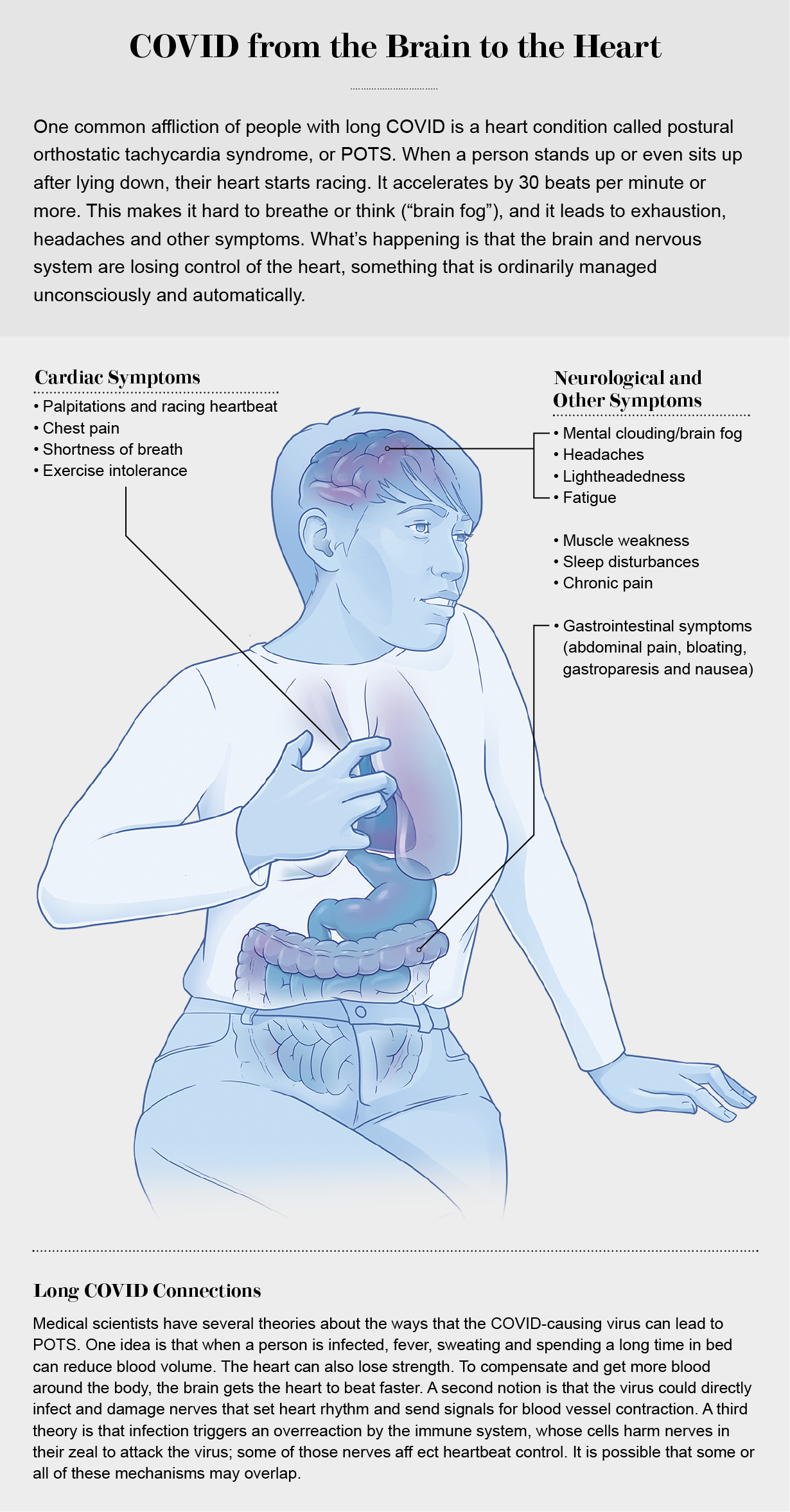
Dysautonomia impairs the autonomic nervous system, a network of nerves that branch out from the brain or spinal cord and extend through the body, controlling unconscious functions such as heartbeat, breathing, sweating and blood vessel dilation. For Ghormley, like many people with long COVID, dysautonomia takes the form of postural orthostatic tachycardia syndrome, or POTS. The syndrome encompasses a collection of symptoms that include a racing heart rate—particularly on standing—and fatigue, and it can cause bowel and bladder irregularities. POTS can also be a component of the exhaustion that comes with PEM. Although the symptoms may seem to affect the body, they stem from nervous system dysfunction.
Ghormley’s dysautonomia led her to see cardiologist Megha Agarwal at a UCLA clinic near her home. Many physicians are not familiar with POTS, but Agarwal is particularly attuned to it, having seen it in some of her patients before COVID hit. “There’s dysregulation of the nervous system, and so many things can cause it: some cancer therapies, viruses, autoimmune conditions.” Agarwal recognized POTS in Ghormley in the fall of 2020, when very little was known about long COVID. Now she believes “POTS is really what long-haul COVID is causing” in many patients. Luckily, Agarwal says, there are medical interventions that can help.
Tachycardia—the T in POTS—causes the heartbeat to speed up, contributing to exhaustion and fatigue in addition to stressing the heart itself. Drugs called beta-blockers (for the beta-adrenergic receptors they shut off in the heart) can lower the heart rate and improve symptoms. “When heart rate is controlled, not only does the pump improve,” Agarwal says, “[but people’s] energy improves, their fatigue is gone, and sometimes there’s better mental clarity.” For some patients like Ghormley, beta-blockers are not enough, so Agarwal adds a medication called ivabradine. “It’s a bit off-label, but it’s currently being aggressively studied” for POTS. For Ghormley, the combination led to real improvements, “so now she doesn’t feel like she ran the Boston Marathon when all she did was sit down and stand up at work or take a shower,” Agarwal says.
Among Ghormley’s toughest symptoms is her brain fog, a catchall term for a slew of cognitive problems that make it hard for her to function. For days when Ghormley works, her psychiatrist prescribes Adderall, a stimulant used to treat attention deficit hyperactivity disorder that helps her concentrate and stay focused. That has “helped immensely,” Ghormley says.
Ghormley credits her doctors and Agarwal in particular with doing the detective work to dig into her symptoms. “Nobody knew anything about it, but everyone listened to me,” Ghormley says. Perhaps because she was a professional from a medical field, no one “brushed me aside.”
That’s unusual for people with long COVID, many of them women, who are often dismissed by physicians who doubt their complaints are real. “Patients just don’t feel heard,” Viswanathan says. “I had a patient who told me everything, and after, I just said, ‘This must be so hard for you. I want you to know that everything you’re feeling is real, and I’ve seen so many patients like you.’ And she started crying. She said, ‘No one has told me that. I can’t tell you the number of times I was told it was in my head.’”
Credit: Now Medical Studio; Sources: “Postural Orthostatic Tachycardia Syndrome as a Sequela of COVID-19,” by Cameron K. Ormiston et al., in Heart Rhythm, Vol. 19; November 2022; “Long COVID-19 and Postural Orthostatic Tachycardia Syndrome—Is Dysautonomia to Be Blamed?” by Karan R. Chadda et al., in Frontiers in Cardiovascular Medicine; March 2022 (references)
In addition to drugs, other types of therapies, including physical therapy, can help improve some symptoms. But people who experience PEM face a particular challenge when using movement therapies. Pittman says the exertion can make these patients feel worse. “We don’t want patients to go to not moving at all, but sometimes the type of movement they’re doing may be flaring their symptoms.” He notes that often PEM strikes young, previously healthy people who will say, “‘I need to push myself,’ and then they go way too far and get worse. Our job is to try to find that middle ground and then make that consistent over time, so they’re not getting further deconditioned but they don’t have the PEM, which has been shown to set them back.”
The Long Haul
Some patients, Pittman says, “have the expectation that they’re going to come in, and within a month they’re going to be back to normal. And resetting those expectations can be really challenging. You have to be really empathetic because people’s lives have completely changed.” But sometimes patients’ quality of life can improve noticeably when they are able to adjust to a new normal. Still, he says, “patients have so many questions, and I can’t lead them down a physiological pathway. I can tell them there’s neuroinflammation, maybe there’s autoimmunity, but we still don’t have the answers. Sometimes it’s really tough for us to accept and for the patient to accept that we just have to try our best.”
A number of people, Viswanathan says, benefit from reducing various treatments they have accumulated. Some people become so desperate that they will try anything from supplements to off-label medications to untested potions from the Internet. Stopping those sometimes leads to improved symptoms, she says.
Psychological care and support groups can help. Lavretsky adds that “lifestyle choices can play a huge role in improvement,” particularly better sleep habits and the use of breathing exercises to control anxiety. She tells people their bodies can heal themselves if the patients and clinicians find the right tools.
Whether that’s true for everyone remains to be seen, Viswanathan says. “We see many patients who have gotten better with time. I have patients whose symptoms have disappeared in the course of a year, or they disappear and occasionally flare up again.” But for some, she says, “it could last many years.”
“We’re going to be addressing this for probably decades,” Viswanathan says. “COVID is not going to go away so much as we’re just going to get used to living with it, but part of [that] means that people will continue to develop long COVID.”
Vaccination appears to reduce the risk of long COVID. But a study published in May 2022 in Nature Medicine suggests the protection, though real, is not as good as one might hope. The survey of electronic health records from the U.S. Department of Veterans Affairs looked at the relatively small portion of vaccinated people who subsequently became infected. They developed long COVID only 15 percent less often than unvaccinated people. “These patients can have symptoms for one to two years or longer, and so every month you’re racking up more patients. Even if it’s 15 percent less, the total population of patients is still growing and exploding,” Pittman says. The best way to avoid getting long COVID, experts all agree, is to avoid getting COVID at all.
The syndrome is still mired in a lot of medical uncertainty. Patients might have one or a combination of the problems investigated so far: Long COVID might be caused by viral particles that persist in the brain or other parts of the nervous system. Or it might be an autoimmune disorder that lasts long after the virus has disappeared. Maybe overactive immune cells continue to perturb the nervous system and nearby blood vessels. Fortunately, the increasing ability to recognize specific problems is helping clinicians hone treatments that give patients the best chance of recovery.
Although Ghormley says her care has dramatically improved her symptoms and allowed her to “do some normal things again,” she continues to experience flare-ups that make it impossible for her to work for weeks at a time. One day last year she skipped a dose of her heart medication and made a Target run in the southern California heat. “I got home and basically collapsed in the hallway. Since then, everything has been out of whack. If I try to move around, my legs give out.” Most frustrating—and scary—to Ghormley is the unpredictability of her symptoms. “They have changed so much; some are manageable, some debilitating. One thing will get better, and another thing comes back. I’m always hopeful that it’s going to get better, but I just don’t know.”
Robbie Hamza became entangled in a world of criminal offense and prescription drugs when he was just 13 decades previous, but he at some point obtained out and turned his lifestyle all around.
When Mr Hamza saw that drug addiction was an difficulty in the Muslim local community, he resolved to consider motion.
“I have been working around dealing with these issues with households in just our local community for almost 9 yrs,” he explained to the ABC.
“[I’m] obtaining cellular phone calls from moms and dads who are involved about their little ones and reaching out for help, or husbands and wives.
“All sorts of folks who know that you can find someone they can speak to that understands our methods of accomplishing items.”
A neighborhood-operate organisation, The Rehabilitation Project has a aid service designed for Muslim local community users.(Equipped: The Rehabilitation Task)
Although there is no knowledge on illicit drug use in the Muslim local community, Mr Hamza claims the problem is “bigger than we believe”.
The 2019 Countrywide Drug Approach Residence Survey estimated that 9 million or 43 for every cent of Australians aged 14 and over had illicitly utilised a drug.
The study observed that hashish, cocaine, and ecstasy had been amongst the most typical illicit medicine applied.
Private story used to deal with stigma
Mr Hamza said people sought his assistance mainly because he was not ashamed to share his story at mosques and gatherings, so he could reach youthful Muslims.
He often starts his tale with how his lifetime adjusted when he felt insecurities in his early teenage a long time.
Mr Hamza had no-one to search up to, so he made “short-sighted and terrible choices”, injecting amphetamines by the time he was 18 decades outdated.
“One particular detail led to a further,” he said.
Immediately after embracing Islam in 2012, Mr Hamza said he stopped having medication and still left his daily life of crime powering.
Now, serving as a Muslim chaplain with a Brisbane prison, Mr Hamza raises awareness about drug troubles in the Muslim community.
The Rehabilitation Challenge operates a non-residential assistance software with treatment groups and recreational routines.(Equipped: The Rehabilitation Venture)
He hosts a podcast called The Talk with Robbie Hamza with imams, the place he tackles the taboo subject of drug use in the Muslim neighborhood.
“It is really not a dialogue that a large amount of families are delighted to have with their buddies or their imams,” he reported.
In Islamic training, using medication — much like alcohol use — is haram, that means it is not permitted. It is the reverse of halal.
That is for the reason that drug and alcohol use are regarded as to lead to extra harm than benefit to individuals and societies.
There is also an expectation that a Muslim particular person would stay away from medication and alcohol for the reason that they have been taught to expand a religious connection, find inner peace and practise it appropriately.
As end result of people beliefs, Muslim leaders instructed the ABC if there was a household member addicted to drugs or alcoholic beverages, often kinfolk would not want the broader group to know about it.
Lucy Verwey says people with addictions can truly feel isolated when they face problems that are not overtly reviewed.(Provided)
Lucy Verwey, a clinical psychologist in south-west Melbourne, said shame was frequently related with substance abuse in the Muslim community.
“It is problematic that [drug misuse] is not being brazenly discussed because it means that folks are suffering with these kinds of challenges, they are still left sensation pretty isolated,” Dr Verwey stated.
“And that stigma can avoid them from having the therapy that they will need.
“It lets misunderstanding and misinformation to proliferate when [the issues] are not openly reviewed by individuals who have the know-how and practical experience to shed light-weight on it.”
‘No judgement’ help service for Muslim group
Mohamad Fenj says recovery from habit normally takes time and help from some others.(ABC News: Erwin Renaldi)
In addition to stigma and disgrace, there can be a absence of empathy for folks with drug abuse challenges in the Muslim community.
“It is a lack of knowledge,” Mr Hamza said.
“Unless you’ve lived as a result of it on your own, it’s very simple to stand and judge that man or woman.”
His message for Muslim group users is to not only acknowledge the challenges, but also to enable people know assist services are offered.
“In their intellect, rehab is this scientific terrible place where drug addicts have to go,” Mr Hamza said.
” [I] help them understand that it truly is not like that.”
Mohamad Fenj also noticed these notion complications so he established The Rehabilitation Task, a community-primarily based drug and liquor dependancy assistance assistance focused at, but not constrained to, the Muslim group.
The services has a “no judgement” approach supported by professionals.
“When somebody feels accepted, then they will acknowledge you again. And then they will acknowledge your aid that you supply,” Mr Fenj mentioned.
Some folks with drug addiction need to rediscover a feeling of identity, states Mr Fenj.(ABC Radio Sydney: Dayvis Heyne)
Much more than 110 people have contacted his organisation for help and guidance considering that July final yr.
Mr Fenj claimed other products and services presently providing support to break addictions did “wonderful employment”, but were being not specially developed for Muslim local community members.
“For Muslims, their faith is at the core of their id. And when anyone utilizes medicine or alcohol, it removes that perception of identity quickly,” he explained.
Mainly because recovery is the procedure of returning to their “original point out”, Mr Fenj states Muslims who want to get better are trying to rediscover their identity and reconnect with their faith.
Mr Fenj also focuses on restoring confidence and rebuilding a sense that the person’s life has meaning and value.
“It truly is vital not to judge … [but] empower them with the welcome and the really like and the respect,” he mentioned.
‘A new natural environment changes everything’
Sarah helps women in her group who have knowledgeable domestic violence, homelessness, and are in rehabilitation.(ABC Information: Erwin Renaldi)
Mr Hamza said nine out of 10 youthful folks he worked with experienced marriage complications at property, though some others had been affected by their social circles, or emotion insecure.
“Insecurities will not go absent by doing bad stuff and pretending to be a thing you might be not,” he reported.
“They go absent by accomplishing good factors and receiving to know your self and really carrying out factors that you can be happy of, and make your have self-regard.”
Sarah, who only required to use her very first name simply because she has served time in jail, turned her life around after rehabilitation.
Sarah was in jail for four years due to drug-connected offences.
A new setting normally aids persons find hope.(Reuters: Olivia Harris)
She mentioned she had “transferred competencies” of drug dealing to assistance her make good contributions in the community and convey people today with each other.
“As a substitute of contacting folks to offer medications, how about [bringing] them to fun and positive activities?” she stated.
Sarah is the founder of Melbourne Muslimah, an organisation run by and for Muslim women who frequently feel excluded at mosques or are “doubtful about themselves”.
The character fanatic supports charities for susceptible women of all ages and organises situations like hiking to assist people be more included in communities.
“You can generally leave your background guiding with new mates, so you’ve got acquired to improve your natural environment,” said Sarah, who also not long ago developed a Melbourne Muslim hikers team.
“A new environment changes almost everything, it presents you hope,” she claimed.
Sarah claimed when she produced other people today smile once more, she understood she had last but not least rediscovered her real self.
Virtually two many years in the past, I rushed to the unexpected emergency place for the reason that a person of my patients had overdosed.
I had satisfied the patient a thirty day period just before as section of my newly minted key treatment follow in Florala, Alabama, a city of 1,800 inhabitants just over the Florida panhandle. He had been receiving agony remedies from distinct medical professionals for years, and I experienced identified him with opioid use disorder.
Federal restrictions permitted me to prescribe an addictive class of opioids for discomfort to my people, but prevented me from treating my patient for his opioid dependancy without a special prescribing license (the so-called X-waiver).
So, I experienced to refer him to a expert nearly 100 miles absent. But he provided for his family of 4 doing work at a tiny organization in city on minimum wage, and my referral intended he would will need to just take time off do the job and expend dollars on gas to get there.
My patient by no means manufactured it to the specialist. As a substitute, he started off acquiring illicit medicines on the street.
These are sons and daughters, teachers and neighbors, co-workers and pals who have been lacking at the supper desk or at household gatherings. Tragically, well timed remedy was not accessible to most of them because much less than 1 out of 10 men and women who essential procedure in the United States were being able to access it.
I preferred to assistance my sufferers with opioid use ailment without the need of getting to refer them to treatment hours away. So, I went through the schooling and certification to acquire my X-waiver from the Drug Enforcement Administration. Now, which is no for a longer time important.
Final thirty day period, President Joe Biden expanded obtain to remedy for opioid use disorder to thousands and thousands of People in america when he signed the bipartisan omnibus government funding bill into legislation.
As a medical professional who has treated patients with habit for far more than 20 many years, it is significant to note that as we develop treatment and help you save lives, we are getting decisive actions to end the stigma encompassing habit in health treatment.
I have noticed how pervasive this stigma is in the medical industry. For years, a lot of in my job employed the justification of not acquiring an X-waiver to refuse to deal with clients struggling from addiction with lifesaving buprenorphine.
New law eases access to cure
But the bipartisan Mainstreaming Addiction Treatment Act, which was included in the omnibus invoice, eliminated the X-waiver. That implies any DEA-registered prescriber of managed substances can now offer you buprenorphine procedure to patients with opioid use dysfunction with no added federal approvals.
In his National Drug Manage Tactic, President Biden called for building obtain to therapy for material use problem common by 2025. By signing this monthly bill, he has ongoing his document of breaking down obstacles to remedy and took a historic action to mainstreaming dependancy treatment.
Now, well being care providers throughout the nation can start to deal with dependancy – a condition of the brain – just as they handle diabetic issues, heart disorder and emphysema.
This is a activity changer.
I want to thank each and every member of Congress and the mother and father, loved ones and advocates who fought for this bill’s passage. I also want to thank the Office of Justice, the Drug Enforcement Administration, the Office of Well being and Human Services and the Material Abuse and Mental Health Companies Administration for their shared vision and collaboration in endorsing this important coverage objective. Their initiatives will assistance save life.
And I’m contacting on them and our nation’s medical suppliers, patients, pharmaceutical companies and pharmacies to keep on this march forward simply because there’s still so significantly to do.
To America’s health-related providers, now is the time to figure out material use disorder just like any other disorder and sign up for colleagues who are already screening and managing individuals for it.
To Americans with opioid use condition, now is the time to get the cure you require from your health care service provider. Treatment with buprenorphine can get started with telehealth appointments. If you want treatment – or consider you require care – simply call them up.
To the pharmaceutical companies, suppliers and pharmacies, now is the time to make absolutely sure remedy is readily available, accessible and inexpensive.
Now is the time to close this disaster, and these steps will help.
As President Biden mentioned soon after Congress handed the laws, “This monthly bill is further evidence that Republicans and Democrats can come jointly to supply for the American folks.”
Dependancy isn’t a crimson point out issue or a blue condition issue – it’s America’s challenge, and we all have to get the job done jointly to fix it.
This moment reminds me of the life we’ve missing, like my affected person who died approximately 20 yrs in the past. Each individual 5 minutes we have a prospect to save an additional lifetime. Let’s all make the most of every single possibility we have.
Dr. Rahul Gupta is director of the White Residence Business office of Countrywide Drug Regulate Plan.
How are you feeling today, on a scale of one to 10? Like, really feeling?
Because Brandon Marshall would like to know.
He doesn’t need to listen. He doesn’t need to care. His resume, as a six-time Pro Bowl wide receiver who earned an estimated $80 million over 13 seasons in the NFL, gives him the freedom to focus on himself, and little else. He could remain comfortably retired at age 38, pouring resources exclusively into his family of four. He could rest easy, knowing his name is already etched in the record books, with more career receiving yards than all but 22 players to ever play the game.
But that aspect of Brandon Marshall’s life is no more.
“My entire life, since I was 6, I had this dream, this vision of making it to the National Football League,” Marshall tells CBS Sports. “And so everything was self-serving. It was me, me, me, me, me. It was my goals, what I want. My contract. My stats.”
In 2011, at the height of his playing career, following a string of off-field arrests, everything changed. He was diagnosed with borderline personality disorder. He vowed to seek the care he needed. He found a new identity through Christianity. And he discovered his purpose — not just as an athlete — but as a man.
“[That] is when I realized that I was here to push the Gospel forward and to also bring others along,” he explains. “How can I make this world better? This whole mental health thing … is my ministry.”
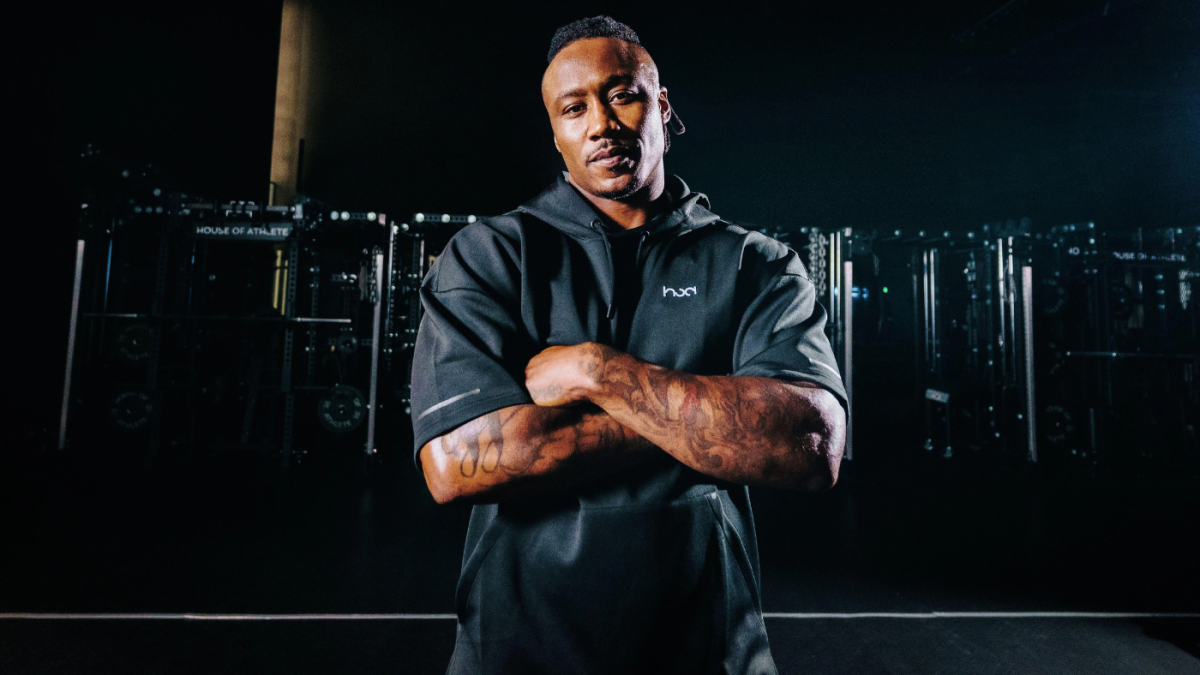
No one would argue that. Since revealing his diagnosis more than a decade ago, Marshall has increasingly put his vulnerability on display while advocating for others’ well-being. His unscripted athlete-led talk show, “I AM ATHLETE,” prioritizes raw perspectives, in some ways modeling the transparency of therapy sessions. And his House of Athlete initiative, which just launched the HOA+ holistic training program, goes a step further.
“HOA is the new therapy,” Marshall says. “It’s the new therapist’s office. That’s what we’re doing here. … As a professional athlete, when I walked into the Jets and Giants locker room, everything was integrated. My nutritionist was here. … My strength and conditioning coach was right across the hall. I had a mental health practitioner that was in the building. We had doctors, we had clinicians. Everything was integrated.”
Marshall’s goal, in creating HOA+ and offering live one-on-one coaching, isn’t to further burden people with a checklist. It’s to prioritize the right things — like making space for focused efforts such as exercise and meditation — in a distracted world.
“The way I’ve been trained, the way I’ve been coached, the way I’ve been taught — the structure, the lifestyle, the routine — that’s what [this] is, it’s a routine,” he says. “How are we able to do what we do? It’s because of the routine, leaning into the fundamentals. Every day I have an itinerary. When I walked into [locker rooms], from 8 a.m. to 6 p.m. was mapped out for me. When am I working out? When am I eating? When am I meeting with my coaches? When am I seeing this doctor, that doctor? When I am getting in the hot tub, cold tub? … Now that I’m not performing on a football field, I think my lifestyle, you [wanna] take that and give that to the masses.”
The endgame, however, isn’t just self-improvement. It’s positively transforming those around you.
“I think where it starts for us is knowing that strength is asking your brother for help,” Marshall says. “Strength is, you know, being able to show vulnerability. A lot of times we internalize these things and we don’t share them.”
It’s a coincidence that Marshall’s HOA+ went live days before Martin Luther King Jr. Day. But Dr. King, in particular, has long served as an inspiration for the pass catcher, being that he was civic-minded by way of the faith that changed his own life. Few community leaders have been so publicly vulnerable, and affected culture as a result.
“I’m living a dream,” Marshall explains, “because I’m able to walk in a restaurant and sit with everyone else. I’m living a dream because I’m able to sit on [shows] today with my dreads. I’m living a dream because I’m able to speak the same way — whether I’m in front of a coach, in front of an executive, a TV producer — the same way I speak with my friends and at home. I’m living a dream because Martin Luther King stood up and marched and fought for us.”
And now? It’s Marshall’s dream to keep pouring his own story — and his own resources — right back into the community.
“There’s still a ton of work to do,” he says. “I think we need to continue to be bold and unapologetic and share our experiences and share our stories. … The biggest thing I want to see is … investing in each other.”
Sometimes, that can be as simple as asking a question, and genuinely caring for the answer. A question as simple as, how are you feeling today?