
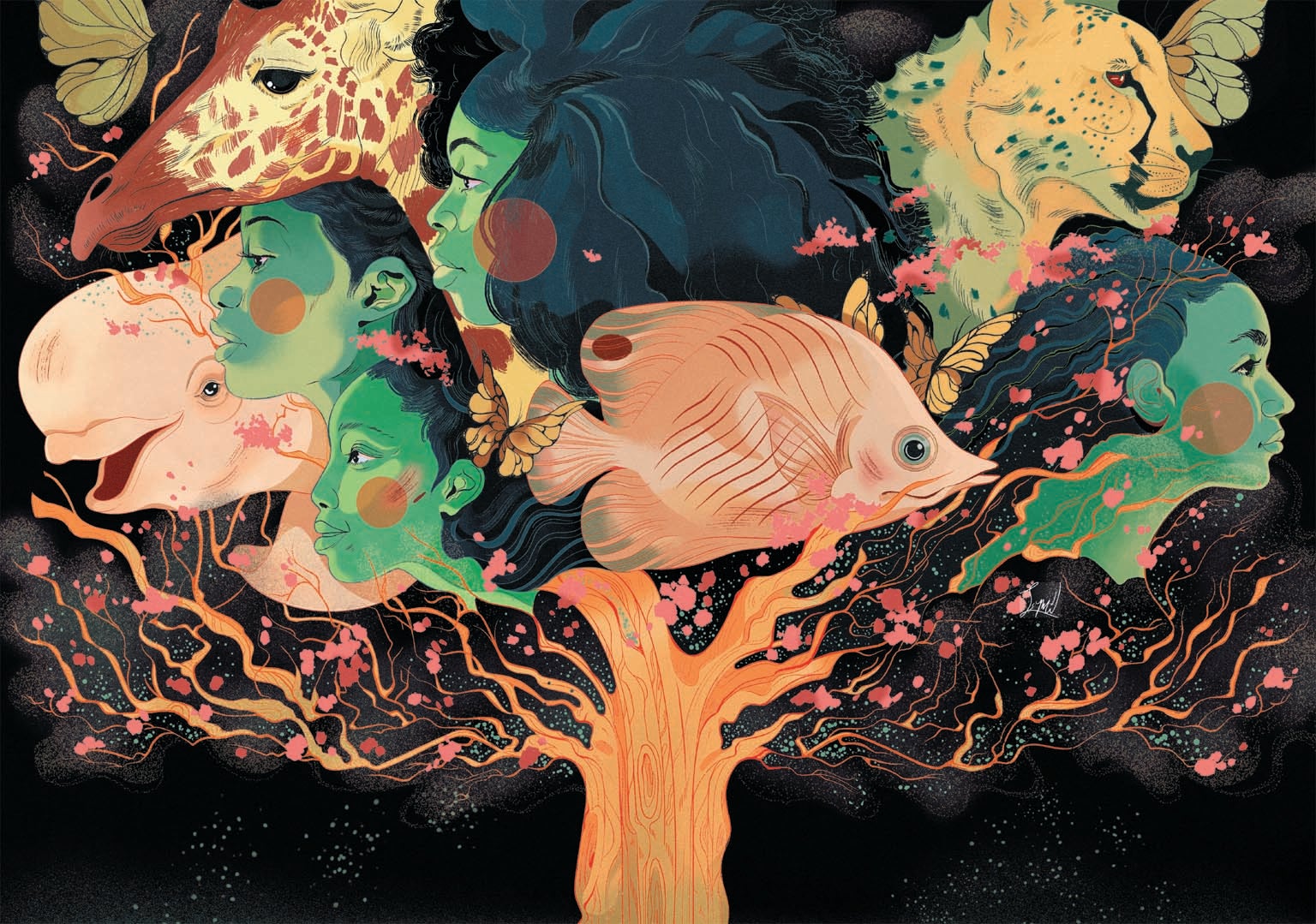
Here’s What Scientists Are Learning about Women’s Health from Other Female Animals

Here’s What Scientists Are Learning about Women’s Health from Other Female Animals

Projected on the massive screen behind me onstage, a herd of giraffes rushes across a sweep of savanna. With the video set to loop, the giraffes gallop endlessly, giving me time to slowly lean across the podium and ask my audience: “Did you spot the pregnant giraffes?” I am delivering a plenary lecture at the 2019 Nobel Conference in Stockholm. The theme of that year’s conference was bioinspired medicine—finding solutions in nature to human health problems—and I wanted to call attention to the connections between women and other female animals.

As a cardiologist and evolutionary biologist, I’d been posing this question about the giraffes to medical students in my courses at Harvard University and the University of California, Los Angeles, for years, so I could tell it had landed as planned. I watched the crowd scan the troop of giraffes for evidence of pregnancy—a baby bump, a lagging mother-to-be. I suspected that few, if any, of the assembled scientists and physicians had considered this question when first taking in the scene. That was precisely my point. Given the importance of female health challenges such as pregnancy to the survival of a species—including our own—shouldn’t the realities of female life in the wild be more than an afterthought for doctors and biomedical researchers?

Predators pose a daily threat to survival for all prey species, and they don’t give pregnant animals a pass. Even in their final, heaviest days of pregnancy, females must evade predators. To do so, they have evolved impressive physiological adaptations.

Consider a giraffe in the last weeks of her nearly 15-month gestation. She has gained hundreds of pounds—her fetus alone weighs up to 150 pounds, but the load is much heavier when you add in the placenta, extra fluid and fat. Yet pregnant giraffes appear to flee as fast as nonpregnant individuals. If they couldn’t, predators would quickly target them as easy prey. That would be the end of the line for that mother, her gestating calf and ultimately the species itself.

As I publicly expressed admiration for the giraffe’s gestational athleticism, I privately cringed a bit recalling how unathletic—how un-giraffe-like—I had felt as a cardiologist in the final weeks of my own pregnancies. I was the slowest doctor in the herd of physicians responding to code blue alerts for medical emergencies at the hospital. I’d become so breathless and exhausted rushing up just two flights of stairs that once, on my way to a cardiac arrest, another physician pulled me aside to express concern for my cardiac health.

I understood why they were worried. Late in pregnancy, women are at risk of developing life-threatening diseases such as preeclampsia and heart failure. Even a healthy pregnancy places significant stress on the heart. The volume of blood that is circulating expands nearly 50 percent. To deal with this increased workload, the cardiac cells and pumping chambers of the heart must grow and transform in size and shape. Cardiologists use the term “remodeling” to describe these changes, but when things go wrong, the consequences are far more serious than a misplaced sofa throwing off the feng shui. Problems with how the heart cells get remodeled during pregnancy are linked to reduced cardiac function and even heart failure soon after delivery.

Fortunately, my cardiac health turned out to be fine: the source of my shortness of breath and fatigue was the nearly 40 pounds of fetus, fluid and fat I’d packed on by the end of the third trimester. Slowing down in the last weeks of pregnancy is perfectly normal for humans—including female cardiologists who can use the elevator instead of sprinting up the stairs.

But in the wild, pregnant animals must maintain their speed and stamina to save their lives. For pregnant gazelles, zebras, and other prey species, the ability to flee swiftly protects them from predation. The animals giving chase are often also female and sometimes also pregnant. To avoid starvation, pregnant cheetahs, hyenas, and other predators need to pursue, overtake and capture fleeing prey. A species in which pregnant females can’t evade predators or capture food is doomed to extinction.

I’ve become fascinated by how females of other species have adapted to these challenges. I now study their biology to find possible solutions to women’s health issues ranging from heart failure to breast cancer. This field of research is still emerging, but already it is generating insights that could lead to lifesaving treatments for some of the most prevalent human health concerns.
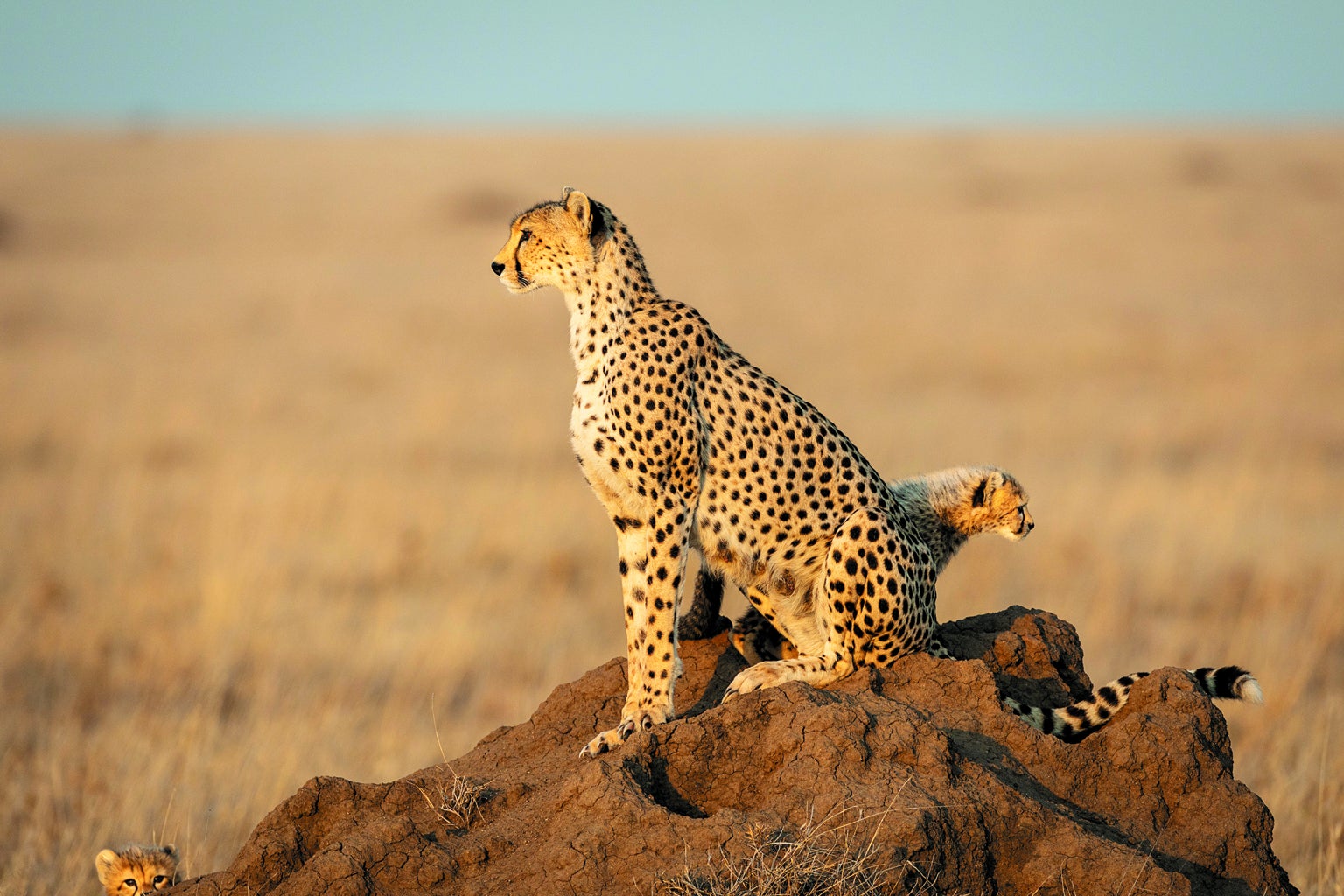
Two cheetahs
Cheetahs and other predators need to be able to chase down prey during pregnancy. Credit: StuPorts/Getty Images

Missing Females

A multispecies approach never would have occurred to me as a young professor of medicine in the 1990s. For the first 10 years of my career, I treated many forms of heart disease but always in one species—my own. Then, in 2005, I became a cardiovascular consultant to the Los Angeles Zoo. (Zoo veterinarians occasionally invite physicians to weigh in on diagnoses or assist in medical procedures, especially when the conditions are far more common in humans than in nonhuman animals.) My patient roster expanded to include great apes, bears, lions and raptors, among others. Animal health hadn’t been included in my formal medical education, so the learning curve was steep. The zoo’s veterinarians and the animals themselves became my teachers as I learned that most of the diseases affecting my human patients—cardiovascular disease and cancer among them—can also develop in other species.

Over the years I grew increasingly convinced that species-spanning medicine could reveal insights for my patients that traditional human-centered approaches had not. Partnering with naturalist and science writer Kathryn Bowers, I made it my mission to raise awareness about the relevance of animal health to that of humans, launching educational and professional programs, leading research teams and writing books meant to bring the fields of human medicine, veterinary science and evolutionary biology closer together. The reception to these efforts was mostly positive, but I received a surprising degree of pushback from my own field of medicine. Some physicians seemed resistant to connecting the health of their patients and other species (beyond the transmission of certain diseases from animals to humans). Maybe they took issue with the humbling notion that veterinarians could teach them about their human patients.

Human exceptionalism, I could see, was deeply entrenched in our medical traditions. People haven’t always been comfortable accepting that humans are animals. It has been my experience that human health professionals reflexively assume diseases they treat in their patients are unique to our species. (They aren’t.)

Anthropocentrism wasn’t the only distorted worldview slowing down the progress of medical science. Biomedical research has also long focused on males to the exclusion of females. Until 1993 the National Institutes of Health didn’t require the clinical trials they funded to include women—not even studies of diseases known to be more common in women than men. Mind-bogglingly, it wasn’t until 2015 that the NIH mandated the inclusion of female laboratory animals in preclinical safety studies of new medical treatments. There were rationales for not including females in biomedical studies: researchers wanted to avoid the potentially confounding effects of the estrus cycle, which can introduce variations in physiology and behavior not seen in males, and they wanted to protect potentially pregnant women, and fetuses, from thalidomide-type tragedies. Yet however well intended these investigators might have been, excluding females from studies proved enormously damaging to women’s health.
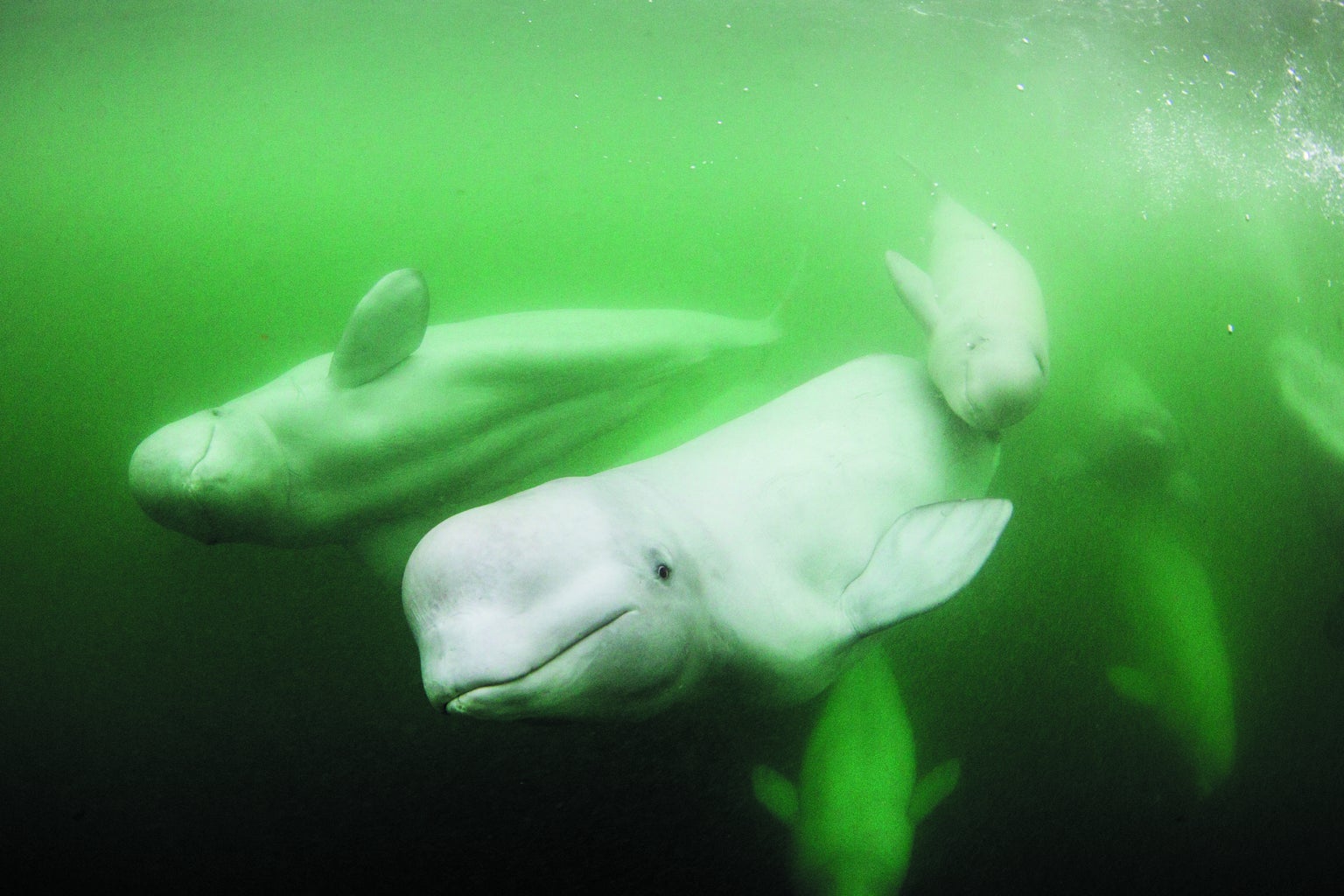
Beluga whales
A cluster of breast cancer cases in beluga whales near Montreal brought attention to a threat to human health. Credit: Paul Souders/Getty Images

To address the gaps in our medical knowledge, I began to focus my species-spanning research on major challenges in women’s health. The health connections between human and nonhuman females weren’t hard to find. I’ve published studies on ovarian cancer in flamingoes, pythons, fish and humans; hosted symposia on menstrual difficulties in great apes (including us), bats and tree shrews; and collaborated with dairy veterinarians who have deep knowledge of lactation in cows to help women with common breastfeeding problems. These experiences have transformed my understanding not only of my patients but of myself as a female. I’ve learned when it comes to certain aspects of my health, I may have more in common with other female animals than with my husband, brother, son or the other men in my life. I call the shared bond that links human and animal females the “sisterhood of species.”

Lions Get Breast Cancer

I first glimpsed the connection among female animals while examining Cookie, a geriatric lioness, at the Los Angeles Zoo in 2021. After an operation, a lion’s heartbeats sound pretty much the same as those of a human who has been through the same procedure. So the clarity of the lub-dup, lub-dups streaming through the stethoscope I had pressed against Cookie’s huge, furry chest reassured me. It meant the dangerous buildup of fluid we had removed from the sac around her heart hadn’t returned. The pathology report on the cause of the fluid buildup wasn’t back yet, however, and the veterinarians were worried that it might be metastatic breast cancer. There were two reasons for this specific concern. First, breast cancer is one of the tumors that sometimes spreads to the heart, creating inflammation and the kind of fluid buildup that had threatened Cookie’s life. The other reason, the veterinarians explained, was that compared with other zoo animals, lions, jaguars, cheetahs, and other cats are especially susceptible to breast cancer.

This connection between human and animal health was personal. Breast cancer is a health concern for many women, and I was no exception. Around the time I first learned about breast cancer in cats, I was being tested for the BRCA mutations following several borderline breast biopsies. The BRCA mutations are well known to put women at increased risk of breast and ovarian cancers. To my amazement, I learned that BRCA mutations also put some dog breeds, including Cavalier King Charles Spaniels, and certain other carnivores at increased risk. In all my years caring for women, as well as some men, with breast cancer, I hadn’t considered what other species might also be vulnerable. In fact, as I showed in a recently published study, breast cancer is a threat across nearly all mammalian lineages, with cases found in creatures ranging from kangaroos and koalas to wombats and water buffalos.

Ultimately Cookie and I were both lucky. Cookie’s fluid buildup turned out not to be cancerous, and she went on to live another four years. I tested negative for BRCA mutations, and my biopsies did not show breast cancer. Other creatures have not fared so well. But we have learned from their misfortune.

Whales don’t usually develop breast cancer—leukemia and lymphoma are the more common cetacean cancers. So when researchers found that 27 percent of the dead belugas they examined in and around the St. Lawrence Estuary near Montreal between 1983 and 1999 had died of breast cancer, their discovery raised questions.

Looking for causes, investigators quickly locked on to several aluminum smelting factories near the estuary that were spewing chemicals known to induce breast and other cancers. The scientists determined that these chemicals probably contributed to the disease not only in the whales but also in humans who lived in the area and exhibited abnormally high cancer rates themselves. Recognizing the breast cancer “epidemic” in mammals living in this urban waterway helped to alert authorities to an environmental hazard that was also threatening human health.


Credit: Dino Pulerà


Like the canaries that British coal miners brought with them to detect the presence of hazardous gases in the mines, the female belugas signaled that contaminants were putting humans at risk. Today rising levels of pollution are implicated in many challenges to women’s health, including cancers, infertility, premature labor, and other disorders of the female reproductive system. Nonhuman female animals living around human communities are increasingly exposed to the same pollutants as women and girls, as the lines that once separated human and animal environments become blurred. Simply stated, the health of female animals is too important to our own to ignore. All female animals—including women and girls—are now canaries for one another. Our coal mine is the planet we share.

Giraffes Avoid Heart Failure

The connection among female animals extends beyond shared vulnerabilities. Some members of the sisterhood have evolved unique physiologies to defend against disease. The remarkable biology of some female animals prevents them from falling prey to diseases that claim millions of women’s lives every year. To understand how and why such unique biology evolved and how it could save women’s lives, consider my new take on the evolution of the giraffe and its improbably long neck.

Rewind to 11.5 million years ago, when the common ancestors of the modern giraffe and its closest evolutionary cousin, the okapi, roamed what is now Africa. Some of those ancestors wandered toward the rain forest and present-day Congo and eventually gave rise to the okapi. Other ancestors migrated toward the savanna and gave rise to the giraffe. Those differing environments helped to produce very different necks in these two lineages. In the rain forest, okapis were able to survive and thrive with perfectly fine albeit unspectacular necks. The ancestral giraffe’s environments, in contrast, lacked dense foliage for hiding. A longer neck would have permitted horizon scanning and earlier detection of predators in an open grassland setting. At the same time, getting taller may have given proto-giraffes better access to sometimes limited foliage.

A downside to having a neck that places the head more than 2.5 meters away from the heart is that this all-important muscle must work harder with each beat to push blood vertically to the brain. This greater pressure on the heart is what we call blood pressure, and in a healthy giraffe, systolic blood pressure (the pressure when the heart is contracting) can exceed 250 millimeters of mercury (mm HG), compared with 120 mm HG or less for a healthy human.

Generally the problem with high blood pressure is that when a muscle like the heart works harder, it thickens. In humans and mice, when hearts thicken this way, they develop scarlike tissue, known as fibrosis. Hearts become stiffer than normal, limiting how far or fast an individual can move. To make matters worse, high blood pressure, also known as hypertension, can damage and weaken the heart over time. In humans, it results in a condition called HFpEF (for heart failure with preserved ejection fraction, pronounced “hef-pef”), which leads to exhaustion, shortness of breath and, potentially, death. HFpEF is the leading cause of heart failure in women, responsible for tens of thousands of deaths a year in the U.S. alone.

On the wide-open savanna, such stiffening could slow an animal down, threatening its survival. Hello, lion; goodbye, giraffe. But giraffes have found a workaround. Despite having blood pressure well above the levels that would earn human patients a stern talking-to from their doctor, both male and female giraffes can gallop at lion-evading speeds, and they appear to be resistant to HFpEF. Recent genomic research hints at how giraffes are able to flout the rules that constrain shorter animals.
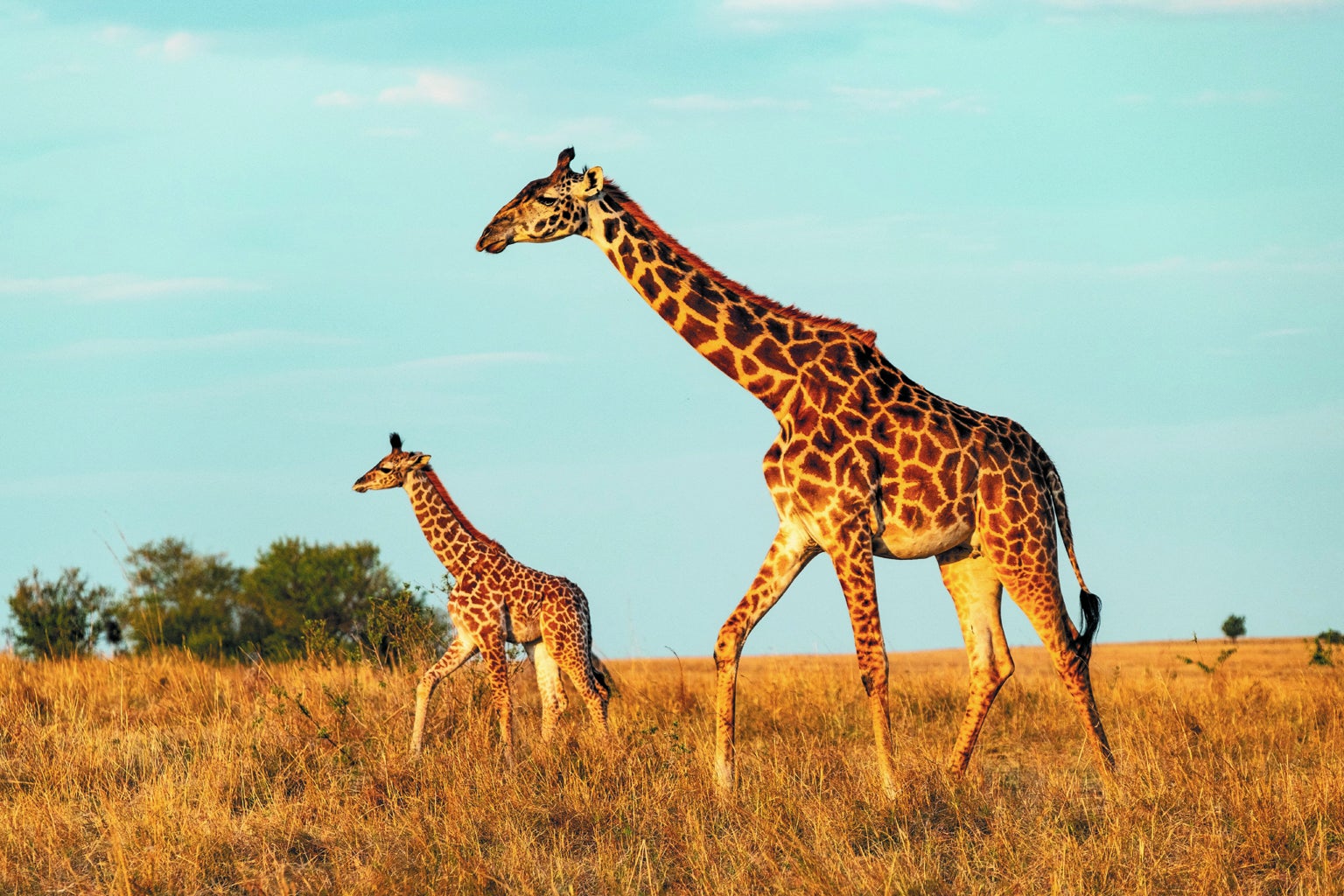
Two giraffes
The giraffe’s unique biology shields it from the damaging effects of high blood pressure and could inspire treatments for heart disease in women. Credit: Michel and Christine Denis-Huot/Biosphoto/Minden Pictures

In the past few years Chang Liu and his colleagues at Northwestern Polytechnical University in Xi’an, China, have published high-quality genomes of giraffe, okapi and other related animals. They discovered several mutations in the giraffe genome that are not found in the other species. One of the affected genes, FGFRL1, is linked to high blood pressure, which can lead to heart failure in humans. Could giraffe FGFRL1 explain the longer-necked species’ resistance to diseases associated with increased blood pressure?

To find out, the scientists tested two groups of mice to see how each would respond to an infusion of a hormone that causes blood pressure to rise. The first group of mice were “wild type,” meaning that all their genes, including FGFRL1, were mouse genes. The second group had their FGFRL1 sequence edited with CRISPR technology to mimic a giraffe’s. After 28 days of exposure to the blood pressure–raising chemical, the wild-type mice had high levels of fibrosis, a common finding in humans with heart failure caused by hypertension. The hearts of the mice with giraffe FGFRL1, in contrast, appeared nearly fibrosis-free. This finding suggests that giraffes may have evolved a unique ability to suppress some of the damaging fibrosis of the heart.

Giraffes also appear to have evolved mechanisms to shield against other damaging effects of hypertension, including when it occurs during pregnancy. In humans, gestational hypertension—having high blood pressure during pregnancy—is pathological. A leading cause of fetal and maternal mortality, it occurs in up to 25 percent of pregnancies worldwide and is on the rise. For pregnant giraffes, in contrast, higher blood pressure is normal, and neither mothers nor babies seem to suffer any consequences from it. I’ve brought together a team of veterinarians, pathologists and OB-GYNs to uncover the unique biology that protects giraffes from gestational hypertension. We are comparing the placentas of giraffe and okapi, looking for clues to the evolution of this trait.

It will take time to figure out how to use the knowledge we obtain from such studies of female animals to prevent diseases in women. The principle is clear, though: many of the greatest threats to women’s health may have already been neutralized in other species. The fixes are out there, in the bodies of the animals with whom we share our planet. As ingenious as we humans may be, the natural world is even smarter. Evolution’s ability to solve problems is, according to Charles Darwin himself, “immeasurably superior to man’s feeble efforts.”

Rachel Carson is one of my scientific heroes, not only because she launched the modern environmental movement but also because she recognized the powerful connections across species. “In nature,” she wrote, “nothing stands alone.” I would add that no female stands alone. Members of the sisterhood of species are linked by common ancestry and the shared challenges and joys of being a female animal.

Data brokers are now selling your mental health status

Data brokers are now selling your mental health status

Remark

1 firm advertised the names and property addresses of people with depression, stress and anxiety, put up-traumatic strain or bipolar dysfunction. Yet another bought a database featuring countless numbers of aggregated psychological wellness data, setting up at $275 for each 1,000 “ailment contacts.”

For a long time, information brokers have operated in a controversial corner of the internet financial system, accumulating and reselling Americans’ individual facts for govt or business use, such as targeted ads.

But the pandemic-period rise of telehealth and treatment apps has fueled an even extra contentious products line: Americans’ psychological health info. And the sale of it is flawlessly legal in the United States, even without the person’s awareness or consent.

In a examine published Monday, a study group at Duke University’s Sanford Faculty of Public Policy outlines how expansive the market for people’s health details has develop into.

After getting in touch with details brokers to question what types of psychological well being information and facts she could buy, researcher Joanne Kim documented that she eventually found 11 companies prepared to promote bundles of details that incorporated data on what antidepressants folks ended up using, regardless of whether they struggled with insomnia or awareness challenges, and particulars on other clinical conditions, like Alzheimer’s ailment or bladder-regulate challenges.

Some of the info was offered in an mixture form that would have permitted a buyer to know, for instance, a tough estimate of how many persons in an particular person Zip code may be depressed.

But other brokers supplied personally identifiable details featuring names, addresses and incomes, with just one details-broker income consultant pointing to lists named “Anxiety Sufferers” and “Consumers With Clinical Depression in the United States.” Some even provided a sample spreadsheet.

It was like “a tasting menu for getting people’s wellness info,” claimed Justin Sherman, a senior fellow at Duke who ran the study staff. “Health details is some of the most delicate info out there, and most of us have no concept how much of it is out there for sale, normally for just a couple hundred bucks.”

The Health and fitness Insurance policy Portability and Accountability Act, known as HIPAA, restricts how hospitals, doctors’ offices and other “covered overall health entities” share Americans’ health and fitness information.

But the regulation doesn’t defend the identical information when it’s sent wherever else, allowing for application makers and other firms to legally share or promote the details nevertheless they’d like.

Some of the facts brokers offered formal client grievance processes and choose-out sorts, Kim claimed. But because the firms generally did not say where by their knowledge experienced come from, she wrote, a lot of people almost certainly didn’t comprehend the brokers experienced gathered their details in the to start with location. It was also unclear no matter if the applications or web sites had authorized their customers a way to not share the knowledge to begin with a lot of firms reserve the right, in their privateness plan, to share info with advertisers or other third-occasion “partners.”

Privateness advocates have for years warned about the unregulated information trade, saying the info could be exploited by advertisers or misused for predatory implies. Wellness insurance organizations and federal regulation enforcement officers have utilised data brokers to scrutinize people’s professional medical expenses and go after undocumented immigrants.

Psychological well being info, Sherman stated, should be taken care of especially meticulously, offered that it could pertain to men and women in vulnerable predicaments — and that, if shared publicly or rendered inaccurately, could guide to devastating benefits.

In 2013, Pam Dixon, the founder and govt director of the Entire world Privateness Forum, a investigation and advocacy group, testified at a Senate listening to that an Illinois pharmaceutical promoting organization experienced advertised a listing of purported “rape sufferers,” with 1,000 names beginning at $79. The organization taken off the listing shortly just after her testimony.

Now, a ten years later on, she anxieties the overall health-info issue has in some strategies gotten even worse, in significant part because of the rising sophistication with which providers can accumulate and share people’s personalized info — which include not just in described lists, but through frequently up to date lookup resources and device-studying analyses.

“It’s a hideous apply, and they’re however accomplishing it. Our health facts is part of someone’s enterprise product,” Dixon explained. “They’re constructing inferences and scores and categorizations from designs in your everyday living, your actions, where by you go, what you take in — and what are we supposed to do, not reside?”

The quantity of locations individuals are sharing their facts has boomed, many thanks to a surge of on line pharmacies, treatment apps and telehealth expert services that Us residents use to search for out and receive medical assistance from household. Quite a few mental health and fitness applications have questionable privateness techniques, in accordance to Jen Caltrider, a researcher with the tech business Mozilla whose team analyzed more than two dozen previous year and uncovered that “the large majority” had been “exceptionally creepy.”

Federal regulators have proven a current interest in extra aggressively examining how providers deal with people’s wellness specifics. The Federal Trade Commission claimed this month that it had negotiated a $1.5 million civil penalty from the on the net prescription-drug support GoodRx soon after the business was charged with compiling lists of consumers who experienced purchased specific medicines, which includes for heart disease and blood force, and then making use of that information to much better goal its Facebook ads.

An FTC representative said in a assertion that “digital health corporations and cell applications ought to not money in on consumers’ incredibly delicate and personally identifiable health and fitness facts.” GoodRx mentioned in a statement that it was an “old issue” similar to a popular program exercise, known as monitoring pixels, that authorized the enterprise to “advertise in a way that we truly feel was compliant with regulations.”

Right after the Supreme Court overturned Roe v. Wade past summer and opened the doorway to a lot more state abortion bans, some knowledge brokers stopped advertising area knowledge that could be utilized to observe who frequented abortion clinics.

A number of senators, together with Elizabeth Warren (D-Mass.), Ron Wyden (D-Ore.) and Bernie Sanders (I-Vt.), backed a invoice that would improve state and federal authority against overall health info misuse and restrict how a great deal reproductive-well being facts tech firms can collect and share.

But the details-broker business stays unregulated at the federal degree, and the United States lacks a in depth federal privateness law that would established guidelines for how apps and internet sites treat people’s info far more broadly.

Two states, California and Vermont, have to have the companies to sign up in a details-broker registry. California’s lists additional than 400 corporations, some of which say they focus in overall health or medical facts.

Dixon, who was not included in the Duke analysis, reported she hoped the results and the Supreme Court docket ruling would serve as a wake-up connect with for how this information could direct to authentic-globe dangers.

“There are virtually thousands and thousands of women of all ages for whom the consequences of data bartered, trade and sold about elements of their wellness can have legal consequences,” she reported. “It is not theoretical. It is ideal below, suitable now.”

Samsung 990 Pro Firmware Update Addresses Failing SSD Health

Samsung 990 Pro Firmware Update Addresses Failing SSD Health

It appears as however Samsung’s SSD nightmare involving its 980 Professional and 990 Professional SSDs may possibly shortly be coming to an end — at minimum of kinds. Each SSD people have endured reviews of promptly declining wellness, but the 980 Pro’s woes were dealt with with the 5B2QGXA7 firmware. Previously this thirty day period, Samsung moderator DavidB acknowledged that engineers were investigating “anomaly inquiries connected to the Clever Percentage Utilized (on Samsung Magician) and/or Wellbeing Position (on Crystal Disk Information) of the Samsung SSD 990 Pro.” 

DavidB extra that a new 990 Pro firmware update would get there later this month to handle the SSD overall health deterioration. Sadly, there is good information and lousy information with this new update (1B2QJXD7), which was pushed to 990 Pro homeowners about the weekend through the Samsung Magician utility (opens in new tab). 

Ashley Wilke Launches Vegan Health and Fitness Coaching for Women

Ashley Wilke Launches Vegan Health and Fitness Coaching for Women

Ashley Wilke has introduced the premier health and fitness and wellness plan for girls, known as Ashley Wilke Fit. The program is developed to aid women of all ages reach their exercise plans and enhance their total overall health by means of a compassionate, plant-dependent life-style.

Ashley Wilke, the founder of Ashley Wilke Fit, thinks that fitness and a vegan life style are essential elements to a wholesome and confident existence. She says, “I support ladies get match and get assurance as a result of a compassionate, vegan life-style!” 

As a overall health and conditioning coach, it is Ashley Wilke’s real enthusiasm and honor to enable girls come to be the ideal variations of by themselves! ”Nothing tends to make me happier than viewing YOU prosper! With certifications from Cornell in Plant-Based mostly Nourishment, NASM as a Personalized Trainer, On the internet Mentor, and Women’s Conditioning Specialist, I am uniquely qualified to produce personalized designs for every single client’s unique objectives.” she claimed. 

The program options personalized diet and workout plans built specially for each and every female, based mostly on her exclusive objectives and lifestyle. Ashley Wilke tracks her client’s progress, monitoring their progress weekly and altering their approach as essential to guarantee their achievement.

Ashley Wilke offers consistent aid and conversation by way of her application, generating it simple for females to stay on keep track of and receive guidance through their journey. The application also includes a completely personalised vegan meal system that is not only scrumptious, but also simple to put together, creating it less complicated for women to sustain a wholesome diet.

Ashley notes that she at first went vegan because of the animals. Through this changeover, the biggest obstacle she faced was acquiring the suitable nourishment that her body desired. ”I have usually experienced a enthusiasm and enjoy for all animals. Eight many years back, I transitioned to vegan life style because I no for a longer period needed to be a section in the horrific animal agriculture field.”

Shortly immediately after commencing her new plant-based mostly journey, she located herself misplaced and confused when it came to correctly fueling her body. Ashley made a decision to educate herself and turned certified in plant-centered nourishment. ”I fell in appreciate with the plan and was eager to share my newfound expertise on just how healthier and remarkable for you a vegan diet genuinely is!” she said. 

“Several decades afterwards, I begun growing in my health and fitness and made a decision that it would be awesome to blend my passions for vegan nutrition and conditioning! I decided to grow to be a personal health and fitness and exercise coach so that I could assistance many others on their journey to bettering by themselves via a proper, vegan eating plan and physical exercise method! My on line courses are wholly customizable to every single clients’ precise goals and demands.”

Ashley Wilke is committed to encouraging women obtain their plans and increase their wellness via a compassionate, plant-primarily based life style. With Ashley Wilke In shape, females can expect a entirely personalized experience, customized to their specific requires and tastes.

For a lot more info on Ashley Wilke Match, please take a look at her web-site at ashleywilkefit.com

Also follow Ashley on Instagram at instagram.com/ashley__wilke.

Media Make contact with
Business Name:

Ashley Wilke Healthy


Make contact with Man or woman:

Ashley Wilke


Email:Mail Email
State:

United States


Web-site:https://www.ashleywilkefit.com/

Tips to be Fit: Control over their body fat can be a benefit for seniors | Health

Tips to be Fit: Control over their body fat can be a benefit for seniors | Health

If you have a exercise problem or problem, generate to “Tips to be In shape,” P.O. Box 53443, Philadelphia, PA 19105 or mail an electronic mail to tipstobefit@gmail.com. Past articles or blog posts can be found at www.phillytrib.com by hunting “Tips to be Healthy.”

Recognizing the Impacts of Underinvesting in Women’s Health

Recognizing the Impacts of Underinvesting in Women’s Health

healthcare

Healthcare

For considerably far too prolonged, women’s overall health troubles have been underfunded, less than researched and underserved. Foremost up to Intercontinental Women’s Working day on March 8, Organon, a world-wide women’s health and fitness firm with headquarters in Jersey City, is difficult the health care ecosystem – alongside with academia, traders, policymakers, researchers, and other people – to look at the repercussions of continuing to take care of women’s health and fitness as an afterthought. For the next consecutive year, the business is also providing its workers, which includes over 400 staff in the Center East, North Africa, and Turkey area (MENAT), with paid time off to shine a gentle and discuss out in services of women’s overall health.

Women account for extra than 50 {35112b74ca1a6bc4decb6697edde3f9edcc1b44915f2ccb9995df8df6b4364bc} of the inhabitants and mothers make around 80{35112b74ca1a6bc4decb6697edde3f9edcc1b44915f2ccb9995df8df6b4364bc} of wellness treatment selections. Regardless of this, great gaps exist in exploration and improvement initiatives to progress remedy selections for women. In simple fact, only 1{35112b74ca1a6bc4decb6697edde3f9edcc1b44915f2ccb9995df8df6b4364bc} of healthcare analysis and innovation is invested in disorders special to girls, according to a 2020 examine, Across the MENAT area, plenty of untapped chances and issues continue to be. According to a Q4 2021 investigation launched by FemTech Analytics – a subsidiary of the United kingdom-primarily based Deep Awareness Team – financial investment in healthtech in the MENA region grew by 280{35112b74ca1a6bc4decb6697edde3f9edcc1b44915f2ccb9995df8df6b4364bc} but none directed at femtech (ladies-led well being begin-ups). Furthermore, in accordance to the report, MENA’s over-all share of the full amount of femtech firms hardly reaches 6{35112b74ca1a6bc4decb6697edde3f9edcc1b44915f2ccb9995df8df6b4364bc}.

“The start of Organon in the MENAT region arrived with a promise to provide a much better and much healthier entire world to girls and their households. As a company that is centered on improvements that increase women’s health and fitness, it is pivotal for us to realize and address the desires of our over 400 staff in the region. For our 2nd calendar year as a younger business, Organon is launching a global initiative on the situation of Intercontinental Women’s Working day where by all employees will get paid time off to emphasis on their health and fitness and wellbeing” claimed Ramy Koussa, associate vice president for the MENAT location at Organon.

Koussa added: “The first phase of advancing women’s wellbeing is listening to females, to have an understanding of her needs definitely. Furthermore, to achieve this objective, it is crucial to engage all appropriate stakeholders associated and fully commited to this result in, and we simply call on these stakeholders to sign up for us in marking intercontinental women’s working day with us. In the MENAT location, because we released our organization in the area, we have been engaged in many things to do, panels, initiatives, and initiatives to assist her wellness and increase consciousness about her requires. We continue to do the job closely with key government stakeholders and a variety of health-related societies to teach and empower women”.

Several investigate and reports across a lot of parts of women’s wellbeing expose essential and harmful gaps that impact practically all phases of a woman’s lifer existence. For instance:

  • Menopause: Ladies can knowledge physical indicators of menopause, this kind of as incredibly hot flashes, for up to ten several years. These indicators can disrupt sleep, lessen electrical power and have an affect on psychological well being as very well as efficiency in the office. 1 review observed that 83{35112b74ca1a6bc4decb6697edde3f9edcc1b44915f2ccb9995df8df6b4364bc} of respondents felt menopause negatively impacted their working day-to-day. A different analyze exhibits that the average age for menopause in the Middle East is 46.9-47.8.
  • Maternal wellbeing: In accordance to UNICEF, although the maternal mortality ratio (MMR) declined by 50 for each cent in the MENA region from 1990 to 2015 (from 220 to 110 maternal fatalities for every 100,000 live births) substantially is to be remaining to be accomplished. The main leads to of maternal mortality in the MENA area are pregnancy and shipping and delivery-related difficulties these kinds of as hemorrhage and abnormal bleeding, hypertensive disorders, maternal sepsis and other linked bacterial infections.
  • Endometriosis: Endometriosis is a widespread and persistent condition that has an effect on up to 1 in 10 ladies of reproductive age, leads to significant stomach pain and is affiliated with infertility. Endometriosis can also restrict financial opportunities for some women of all ages who working experience debilitating suffering that helps prevent them from going to do the job or faculty. The prevalence of endometriosis is believed to be 12.9{35112b74ca1a6bc4decb6697edde3f9edcc1b44915f2ccb9995df8df6b4364bc} in Middle Eastern women of all ages going through laparoscopy.

To access much more company news, visit NJB Information Now.

Linked Content: