Over the past five years, digital mental health has risen from a niche topic to a global health priority. Patients, researchers, regulators, and investors alike are thrilled by the potential of ubiquitous mobile technology like smartphones to help diagnose problems, monitor health, and even deliver evidence-based therapies. Two companies that came to embody this potential were Mindstrong for smartphone monitoring of mental health and Pear Therapeutics for FDA-approved apps and digital interventions. Mindstrong raised nearly $160 million, and Pear Therapeutics once had a $1.6 billion evaluation.
But in March, Mindstrong announced it was ceasing operations. And on April 7, Pear Therapeutics announced that it was filing for bankruptcy.
Both companies were founded by smart and passionate people who wanted to improve access to mental health care. They were staffed by hard-working employees who wanted to help change the world. The concept of using data from personal patterns of smartphone use to help diagnose a mental illness or track recovery is appealing. So is the concept of using a smartphone app to receive evidence-based care from the palm of your hand. Pear Therapeutics even received some of the first Food and Drug Administration clearances for software as a medical device for mental health.
But the companies went wrong in a way that is symptomatic of the rest of the digital mental health field.
Both companies tackled the pressing need for a transformation in mental health care. They drew on the global need for a paradigm shift in mental health and offered a scientific pathway toward that vision. Mindstrong built off a 2018 pilot study of 27 subjects capturing smartphone data over seven days to pilot digital biomarkers of cognitive function, which could remotely diagnose or monitor mental health conditions. Pear Therapeutics had many products but was likely most well-known for its apps that promised to help treat addiction.
The story of using technology to monitor and help support mental health made sense five years ago and in fact still makes sense today. Digital technology will help increase access to and quality of mental health care.
But the story only goes so far.
The next step is to prove out the story with science. Just as a new drug for a mental illness like depression undergoes numerous careful studies on its pathway to approval, the same process is necessary for digital software. Both Mindstrong and Pear Therapeutics undertook research and began the scientific journey. In Mindstrong’s case, the company founders have come out on the record stating they felt pressured to commercialize too soon and before the science was sound. Looking in the scientific literature, the lack of peer-reviewed publications corroborates this narrative. We need more research before smartphone sensing to detect mental illness is even clinically validated, let alone commercially viable for a business like Mindstrong.
Pear Therapeutics appeared to have the evidence since it obtained FDA clearance on some of its software. Yet in 2020 the Institute for Clinical and Economic Review wrote a public report noting that the “evidence is inadequate to demonstrate a net health benefit.”
In fact, that evidence was not based on any smartphone at all. It came from a related computer program called the Therapeutic Education System. This was tested in 2014, in a study where patients came twice a week, in person, to a clinic to log on and use the program on computers in the clinic. Even in 2014, the authors of that study wrote “additional research is needed to assess effectiveness in non-specialty clinical settings.” Pear Therapeutics acquired the rights to this program, worked to get an adapted version FDA-cleared, and then marketed it as a digital therapeutic. (It’s worth noting that there is no consensus on the definition of a digital therapeutic.) Nearly a decade later, it’s still unclear whether this system can work outside of a specialty clinic.
Thus, in both the case of Mindstrong and Pear Therapeutics, there was no dramatic story of something going wrong. The problem was that neither company was able to invest the money to carry out the necessary scientific research. While Mindstrong and Pear Therapeutics are two of the most well-known, the lack of resources for clinical science is widespread in the industry. A 2022 report suggested that 44{35112b74ca1a6bc4decb6697edde3f9edcc1b44915f2ccb9995df8df6b4364bc} of digital health companies has a clinical robustness score of zero.
But that does not mean these products and digital mental health have no future. These failures tell us that patients, clinicians, and payers want digital tools that are effective in real-world settings. That means promising pilot studies, like those that launched this industry in the 2010s, must be followed by high-quality studies. When my colleagues and I conducted a meta-review in 2022, we found that overall, the quality of most digital mental health studies was low. Now it is time to think about a new generation of evidence and new studies to build the type of real-world data we need to ensure products offered are both safe and truly effective. This means studies that account for digital placebo effects, are run in real-world clinical settings, involve diverse patients, and can be replicated by outside teams.
We already know how to do this. Pharmaceutical companies offer one example of high investment in medical research and development. They invest in thousands of potential drugs and take the top-performing ones through more and more rigorous studies. The National Institute of Mental Health is another example, now investing heavily in digital research and supporting rigorous mechanism of action studies. As patients, payers, and investors demand more evidence and proof that digital software really works as promised, new companies will rise to the challenge. Of course, there is a major difference between drug R&D and digital mental health care, which is that software needs additional research to prove it can successfully work in the context it is deployed in. But even this is a surmountable hurdle.
Digital mental health might be stumbling in 2023, but these disappointments may signal a new era in how we approach the next generation of digital tools. The stories that founded and sustained both MindStrong and Pear Therapeutics are still valid today — they are just waiting for the next generation to take them off the page and into a scientific reality.
John Torous is an assistant professor of psychiatry at Harvard Medical School and staff psychiatrist at Beth Israel Deaconess Medical Center. He is the scientific advisor for Precision Mental Wellness, a company he holds equity in.
Rev. Al Sharpton speaks throughout the March on Washington at the Lincoln Memorial on August 28, 2020 in Washington, DC.
Pool/Getty Photographs
cover caption
toggle caption
Pool/Getty Visuals
Rev. Al Sharpton speaks in the course of the March on Washington at the Lincoln Memorial on August 28, 2020 in Washington, DC.
Pool/Getty Illustrations or photos
Editor’s note: This story features detailed descriptions of violence.
Irvo Otieno was killed in custody before this month at a psychiatric medical center while suffering from psychological overall health distress. Reverend Al Sharpton says this has to be a turning point.
Who is he? Sharpton is a civil legal rights activist identified for numerous things: as a Baptist minister, an advocate for social justice and equity, and the founder of the Nationwide Motion Network.
What’s the large deal? Previously this month, Otieno, a 28-year-aged Black male in Virginia, was killed in custody at a psychiatric medical center.
Otieno was enduring a mental health and fitness crisis, and had been taken to medical center.
Ben Paviour, a reporter for member station VPM in Richmond, facts what transpired: “He was pinned to the floor by seven sheriff deputies and a few clinic personnel when he was handcuffed and his feet were being shackled, and he in no way received up once again. All 10 men and women have been charged for his dying by a regional prosecutor, who mentioned they smothered Otieno to dying.”
Sharpton, who shipped a eulogy at Otieno’s funeral on Wednesday, says that his demise is indicative of an overdue adjust for how authorities deal with psychological health and fitness crises. Sharpton is calling on Virginia Governor and probable presidential hopeful, Glenn Youngkin, for reforms.
Caroline Ouko, mom of Irvo Otieno, retains a portrait of her son with attorney Ben Crump, still left, and her older son, Leon Ochieng at the Dinwiddie Courthouse in Dinwiddie, Va., on Thursday, March 16, 2023.
Daniel Sangjib Min/AP
disguise caption
toggle caption
Daniel Sangjib Min/AP
Caroline Ouko, mom of Irvo Otieno, retains a portrait of her son with lawyer Ben Crump, remaining, and her older son, Leon Ochieng at the Dinwiddie Courthouse in Dinwiddie, Va., on Thursday, March 16, 2023.
Daniel Sangjib Min/AP
What’s he declaring? Sharpton spoke with NPR’s Juana Summers on Thursday about his practical experience at Otieno’s funeral, and what he expects moving forward.
On changes he and Otieno’s relatives hope for:
The mom, Caroline, reported she would like to see a regulation that would offer with how you tackle the dilemma of mental illness, where law enforcement won’t always kick in, but it [instead] kicks in with folks that are experienced in the mental health and fitness discipline, with their supervision, and the place there is a serious kind of instruction on how you offer with causal psychological overall health, [with] people today, sufferers, and from families.
On why he identified as especially on VA Gov. Glenn Youngkin:
Governor Youngkin is getting touted by some to be a presidential applicant. And wellness solutions in Virginia are underneath his governorship, beneath his course.
As he attempts to build a nationwide standing, he wants to offer with a genuine tragedy ideal there in Virginia.
How he operates on this tragedy will tell people of us about the place a ton about him. You are talking about an unarmed, non-threatening, youthful Black male who was handcuffed and shackled, whilst these people piled on him, to where they practically choked the existence out of him. The governor ought to respond with far more than sympathy. He ought to reply with some motion, [some] laws exactly where this can not materialize all over again.
On how he talks to the grieving family members that facial area these tragedies:
I explain to them the fact, that we can’t bring your boy or girl back again. But we can undoubtedly elevate your kid’s circumstance and your condition, to wherever there is certainly that means.
That is tough to see through the instant soreness, and hard to experience there’s which means, and [that] your kid could be a symbol that we are not able to continue to enable this take place.
And we get other relatives members that will arrive in. I have thrown Eric Garner’s mother, and Trayvon Martin’s mom, and Ahmaud Arbery’s mom and other folks about, for the reason that only they comprehend that pain.
And I convey to them, “I can’t promise you when it truly is going to occur on a federal stage. But I can promise you that we are going to be there until eventually it occurs. And we will be there with you for what ever you need to have. In conditions of counseling and other folks, we’ll get industry experts for you. Simply because we are dedicated to this.” And in that candor, and honesty, I consider that’s why they remain with us. And we stay with them because they know that we told them in the 1st area what was heading to transpire.
Want to study far more? Pay attention to the Contemplate This episode on how specialised law enforcement units are in the spotlight yet again.
So, what now?
All through the eulogy, Sharpton urged for an “Irvo law” that would stop this from happening once again.
“Jesus explained, ‘I’ll make him a image where by individuals all about who offer with mental well being will have to now test on their own.’ Mainly because they will say, ‘Wait a minute, you bear in mind what transpired when Irvo bought killed? We improved behave differently.’ You can be prosecuted and held accountable, there will be an Irvo law.”
FOX Enterprise correspondent Lydia Hu has the newest on the antibiotic scarcity on ‘Varney & Co.’
Bayer, 1 of the world’s premier pharmaceutical businesses, announced on Friday that it will be shifting its target absent from women’s health and fitness.
The enterprise programs to set extra investigate efforts into scarce disorders, cardiovascular illness, neurology, oncology and immunology.
“When it will come to investigation and the subsequent clinical phases, we will no for a longer period have an express emphasis on women’s well being,” the head of Bayer’s pharmaceuticals unit, Stefan Oelrich, advised Reuters.
Nevertheless, the company — which helps make the typical shopper medicines Aleve, Midol, MiraLAX, Alka-Seltzer and Claritin — will keep on growth of elinzanetant, a non-hormonal medication supposed to deal with menopausal signs and symptoms.
Bayer, a person of the world’s major pharmaceutical companies, has declared that it will be shifting its aim away from women’s health. (iStock / iStock)
Bayer’s immunology study could however end result in some women’s health and fitness drugs, but the company’s targeted attempts on therapeutics experienced unsuccessful to fulfill expectations, Oelrich instructed Reuters.
The enterprise will proceed growth of elinzanetant, a non-hormonal treatment supposed to address menopausal indications. (iStock / iStock)
The corporation will as a substitute intention to increase its existence in mobile and gene remedy.
In other women’s health and fitness medicine information, the Swiss pharma enterprise Novartis has noted optimistic trial info for its breast-most cancers procedure Kisqali.
GET FOX Business ON THE GO BY CLICKING Here
In a enterprise statement, Novartis mentioned the drug exhibited beneficial topline results from an interim assessment of NATALEE, a Phase III trial evaluating Kisqali, in a broad population of clients with early breast cancer.
Joe Toppe of FOX Small business, as properly as Reuters, contributed reporting to this report.
Fair, authentic, helpful, friendly, caring, enthusiastic, energetic, ethical, knowledgeable, uncompromising, strategic, risk taking and, most important, loving. The list goes on, but sit down for a chat with Joanna Bronowicka, owner of Well Bred, The Healthy Pet Marketplace, a pet retailer with six New Jersey locations, and the conversation is replete with these descriptors.
Bronowicka’s journey to the world of pet retail commenced in the far-removed corporate realm, when she arrived in the United States to pursue a Master of Business Administration at the University of Michigan.
“I came from Poland, where I’d worked for an equipment manufacturer, responsible for international markets,” she says. “I wanted to have a big career here in the United States.”
While enrolled in an entrepreneurial class during her course of study, Bronowicka completed a student project outlining a proposal to develop a pet boutique.
“I focused on premium products, pet adoptions and other pursuits,” she says.
Upon earning her degree, the business professional stayed in the United States, working in a strategy group for an industrial gas company.
“We analyzed strategic projects and presented them to the board of directors,” she says.
However, disarray in the corporate sphere caused Bronowicka to take a hard look back at that college project, saved in her computer. In 2013, she decided to bring that plan to fruition. At the same time, kismet intervened when a friend informed her that Well Bred, which had opened in 2001 in Chester, N.J., was for sale.
“I thought that having something to start with was a great idea,” she says.
Bronowicka relied heavily on her business acumen during the purchase proceedings.
“I had a lot of business experience and was able to do my own analysis from a financial perspective,” she says. “Patti Storms, Well Bred’s founder and owner, worked with me and passed along all the information and secrets she’d come up with.”
Academic blueprint in hand, the entrepreneur went to work.
“I put my plan in place, which was to grow a more substantial business,” Bronowicka says. “I switched the profile from a pet boutique with gift items, treats and some foods to focusing on healthy nutrition and high-quality products for dogs and cats.”
The strategist and dog lover researched nutritional options and all things pet health.
“I’m a dog lover; I show my dogs and they are a huge part of my life, so I was already very interested in pet nutrition overall,” she says.
At the time, raw foods were beginning to garner interest, and the retailer brought in Answers Pet Food.
“I spent a lot of time talking with them and learning about their foods,” she says.
To further complement existing knowledge and bolster her credentials, Bronowicka searched for university-level nutritional study. She enrolled in Southern Illinois University, which offered a feline and canine nutrition course carved out of its Ph.D. program and available online.
While the design from the beginning was to create a more corporate-leaning endeavor, the new owner’s retail education began at the hands-on level.
“I started in that one store and worked as the store manager to learn everything about retail, because I had no experience there,” she says.
Well Bred owner Joanna Bronowicka
Photos courtesy of Well Bred, The Healthy Pet Marketplace
Sales came naturally to Bronowicka.
“It’s easy to sell something you believe in, and I used the selling tactics I learned in the corporate world,” she says. “My business began growing because we focused strategies on the nutritional aspect of the business and on high-end products.”
By 2014, she felt ready to open store No. 2 in Clinton, N.J.
“It was not a good idea actually,” she says. “In fact, opening that store almost put me in bankruptcy. I didn’t realize at the time that selling pet food on a main street is a big problem because if you don’t have parking, they won’t be buying food. But we survived.”
When a small space in Bronowicka’s hometown of Catham, N.J., became available in 2016, she took a leap of faith.
“I really wanted to have a store where I lived, so I took the risk,” she says. “It is my smallest store, under 1,000 square feet.”
The following year, the Clinton store relocated from the Main Street to a plaza, resulting in an immediate boost in food sales, followed by a former pet store in Livingston reopening under the Well Bred banner.
“I thought it was a good idea to jump on that space,” she says.
When the pandemic closed many doors in 2020, pet supplies were deemed essential and Well Bred remained open. Business picked up.
“Mostly because our competition didn’t do very well,” Bronowicka says. “Well Bred was open all the time, and our main competitor basically closed their doors and employees handed items to customers through [plexiglass].”
During this time, Well Bred began offering an online store with home delivery.
“I worked with a developer to create a very functional, good-looking website, and the service started right away,” Bronowicka says. “Since we don’t have a central warehouse, we deliver from the individual stores within what we call a delivery zone.”
Initially, employees were enlisted to accomplish this task using their own cars; however, as demand increased, a delivery service took over.
“My senior store manager takes the orders, schedules deliveries, and the transportation company picks up the order at the store closest to the customer,” she says. “Most items are delivered the same day, which customers love.”
The 2020 closure of a large big-box pet store chain in the area inspired Bronowicka to inquire about taking over some of the spaces.
“I managed to get a really great location in Madison, and that same year we moved the original Chester store from Main Street to a larger site next to a grocery store,” she says.
In 2022, Well Bred began welcoming customers to a former location of the same chain in Bernardsville.
Bronowicka considers sites adjacent to a grocery store or in a service plaza to be premium, not only because of visibility, convenience and added foot traffic, but also due to the ability to create more uniform branding.
“On a Main Street you can only do so much with the look,” she notes.
To this aim, each store features a color scheme unique to Well Bred.
“The inside is painted a soothing light green and white; it’s a high-end feel,” Bronowicka says. “We get a lot of comments about how pretty our stores are.”
Cleanliness furthers a pleasant customer experience, as does a lack of clutter.
“We don’t overstock our inventory to where people feel overwhelmed,” she says.
Energy, Enthusiasm & Ethics
Stellar customer service is the bedrock of the Well Bred experience, and friendly, knowledgeable and helpful associates form the heart of the company.
In a new hire, Bronowicka looks first for an outgoing personality, one able to connect to people and their pets with energy and enthusiasm.
“It makes for really good customer service employees and real, true salespeople,” she adds.
A love of dogs is essential, and an interest in nutrition a strong plus.
“Obviously it is difficult to find someone who is already knowledgeable in nutrition, but that’s fine because we do our own training,” she says.
Integrity is pivotal to the Well Bred credo.
“I want to make sure that we are an ethical company,” she says. “If we are fair with our customers, and I’m fair with my staff, and they’re fair with me, we create a very good energy and people find us to be authentic.”
Once onboard, fledgling staff members become familiar with the extensive product mix by spending time shadowing an experienced manager on the sales floor. Participation in weekly inventory counts and ordering furthers that understanding.
“It’s a great introduction to what we carry,” she says.
Once a grasp of the basics is established, further tutelage takes place with Bronowicka at the podium.
“I personally do a two-day training, four hours each day,” she says. “The first day, I cover basic strategy—who we are, why we do what we do, the satisfaction we have in helping pets.”
Day two covers foods, treats and chews, providing further insight. For employees and customers wishing to expand their nutritional edification, the Well Bred website features informational blogs penned primarily by Bronowicka, with the occasional guest contributor weighing in.
“We have articles covering different topics, for example, gently cooked foods, or those that are good for itchy pets, or skin or coat problems,” she adds.
From there, associates are poised for a deeper dive.
“I’ll take two or three employees to a restaurant where we just sit and talk for hours,” she says.
This instruction is presented to newer staff members, or as a refresher course to those already onboard. A recently hired growth and training manager, with extensive nutritional knowledge, will further this avenue of study.
Manufacturer trainings are also utilized in order to provide an overview of products offered.
Associates wishing to delve further into the world of pet nutrition have the option of enrolling in Dogs Naturally magazine’s certification program.
“It’s good training that I gladly pay for,” she adds.
As a result of this extensive tutelage, the Well Bred team is able to interact with confidence when assisting pet owners, whether it be finding the best food or in solving issues.
“Our customers are smart, and our employees need to be able to articulate information in a way that makes sense,” Bronowicka says.
Heart & Soul
If stellar customer service forms the heart of the company, a passion for the health and well-being of pets through proper care and nutrition is the core, or soul, of Well Bred.
“We are truthful and uncompromising, and our customers appreciate that,” Bronowicka says. “Even in a food that might be more expensive, it goes back to knowledge of nutrition and what’s best for the dog.”
Well Bred spotlights natural and organic raw, freeze-dried and gently cooked foods.
“We do offer kibble but focus on quality foods with the highest amount of meat and less processing,” she says. “We also carry canned but actually prefer raw or gently cooked foods.”
Bronowicka notes an advantage to feeding a gently cooked diet is the ability to focus on variety.
“Alternating proteins is a big thing for us,” she says. “The dogs who get that variety are healthier, less picky, enjoy their food more and don’t develop allergies.”
Staffers are always at the ready to provide free-of-charge, in-the-moment nutritional consultations, some with pet food certification from Dogs Naturally.
However, pet owners wishing to examine the health and nutritional needs of their pet more extensively often enlist Bronowicka’s services as “diet guru.”
“Basically, I provide a deep nutritional consultation, which can be scheduled online, and I spend at least two hours discussing the pet,” she says. “We come up with a diet plan, and I can be contacted by text any time of the day with questions afterward.”
Freeze-dried treats, and those made from meat and without additives, are in the product mix.
“That’s the most important consideration,” she says.
The majority of these treats are prepackaged.
“We do have some bulk treats because some customers want them,” she says. “But I prefer a packaged treat because with bulk, they are exposed.”
An assortment of bakery goodies is presented in bakery cases or on fancy food carts, depending on the store.
“It makes it boutique-y looking and fun,” she says.
True to her passion for nutrition, Bronowicka considers these treats to be exceptions rather than staples.
“Our bakery treats are more for special occasions, like a dog’s birthday or Christmas,” she says. “Just like with children, you don’t feed cookies every day, but you buy one for an occasion because it’s a fun thing.”
Well Bred also stocks a broad array of high-quality pet supplies.
“People buy from us because they want quality. In fact, 50 to 60 percent of our revenues are from products for dogs and cats,” Bronowicka says. “We offer what we know, have expertise in and can speak to.”
One-on-one grooming services are offered at the Livingston store, with an emphasis on providing pups with a premium, soothing experience.
“It’s very important that our groomers are gentle. They take one dog at a time, from beginning to end,” she says. “We don’t have helpers with one washing, one scissoring and another drying.”
To further the stress-free ambiance, dogs are not crated. The physical comfort of furry clients is another factor.
“The floors are padded, and dogs like walking on it; it’s not tough on their feet,” she says. “It’s very friendly for the dogs, and they love it.”
Self-serve spa suites, sited in the Livingston and Bernardsville stores, offer do-it-yourself convenience for pets and their owners. These facilities were on site when Well Bred took over. At this time, Bronowicka has no plans to expand these services, opting instead to concentrate on Well Bred’s specialty—pet health and nutrition.
“If we had more, our employees would be cleaning the self-washes instead of focusing on nutrition and retail,” she says.
Reaching Out
Pets and people in need are supported in myriad ways.
“We work a lot with rescues,” Bronowicka says. “For example, rescues or shelters wishing to hold adoptions with us are always welcomed, and we will organize and advertise the effort.”
Food drives benefitting these organizations provide further assistance.
“In December, we hold a food drive with foods, treats and toys available for customers to purchase and donate,” she says.
In 2022’s drive, approximately $6,000 in donations was gathered storewide. Bronowicka credits this success to staff members.
“Advertising is not going to do it. Email is not going to do it. It’s about our employees talking to our customers,” she says.
Donation bins, sited in all stores, allow customers to donate to shelters and rescues year-round.
Those fostering rescue pets in their own homes are not forgotten.
“If they need food or supplies, we donate,” she says.
Families in need of assistance for their pets are also embraced.
“That can be through word-of-mouth, or I post on local groups that people in need can come to me,” she says. “We are happy to help.”
Providing for Pets in Need
Linda Noecker
As a volunteer, Linda Noecker has been fostering rescued dogs for the past five years, one dog at a time. These pets join her own furry family members: 10-year-old Chiweenie Casey and Fletcher, a six-month-old potcake puppy from the Caribbean island of Anguilla.
“The founder of the rescue that I foster with, Fly To Freedom Dog Rescue, donated Fletcher to me when we tragically lost our pit bull, Lily,” Noecker says. “I took one look at him, and here he is.”
The potcake, a canine of mixed breed, exists on several Caribbean islands. The name is derived from the caked remains of a traditional island dish, which is often mixed with other scraps and fed to the island strays. The hardy potcake dogs have proliferated, and Fly to Freedom Dog Rescue sees to the medical needs of the animals populating the island of Anguilla. The rescue also flies pups to be rehomed with adoptive families in the United States.
“Typically, I pick them up at the airport and foster anywhere from one to seven weeks until I can find an adopter,” Noecker says.
In addition, Noecker provides temporary housing to animals recused by Lost Paws Animal Rescue.
The expenses of feeding and caring for fostered canines can add up, and several years ago, Noecker contacted her local Well Bred store in Livingston to seek donations. It was the perfect match.
“Joanna Bronowicka provides my fosters with expired foods, which are still good but unsalable, or chews, which are great because if I get a puppy in, it needs to chew,” she says. “It’s wonderful; the store is right around the corner from my home, and I can send a message, and a package will be put together that I just pick up.”
Noecker adds that unused donated goods are not wasted.
“Whether it’s collars, leashes or food, we have someone else in town who collects these items to donate to families in need,” she adds. “It’s a great cycle.”
Well Bred contributes as well, providing donations or discounts to families experiencing hardship.
“Joanna is amazing,” Noecker says. “A lot of people would have to give their dog away if they can’t afford it. This helps.”
As a dedicated Well Bred customer, Noecker appreciates the one-on-one service from well-educated staffers.
“When shopping at a big box, you get anyone who needs a job,” she says. “Well Bred staff members understand nutrition, or the types of product that are best for your dog.
“As a matter of fact, Fletcher is ready for a new collar, so we’ll be going there soon,” Noecker adds.
It’s A Retail Life
What is Well Bred best known for?
Joanna Bronowicka: Healthy foods and the best products for dogs and cats.
What is the greatest challenge for the independent pet retailer today?
Bronowicka: Veterinarians who don’t have knowledge in nutrition but act like they do. I really would like for them to learn more about raw and cooked foods so they can properly advise their clients.
Challenges for the pet industry overall?
Bronowicka: It’s a growing industry, but there is a big challenge—the players who sell below their costs, who deliver foods where there is no profit and basically undercut the market. I think these are predatory practices.
Are you watching any interesting trends?
Bronowicka: People love the idea of cooked foods. They smell good, are more nutritious, and dogs like them versus kibble. Another trend is that customers are becoming more educated, which is awesome. They understand nutrition, know what they want, ask really good questions and follow people like Dr. Judy Morgan.
What do you see for the future of Well Bred?
Bronowicka: We will continue [to do] what we do the best: educate customers, make them feel welcome, happy and loved. I want to be a loved company and want my employees to feel that love. This creates great energy. I am so fortunate to have an outstanding team who stay with us, love their job and are really proud of working within the company.
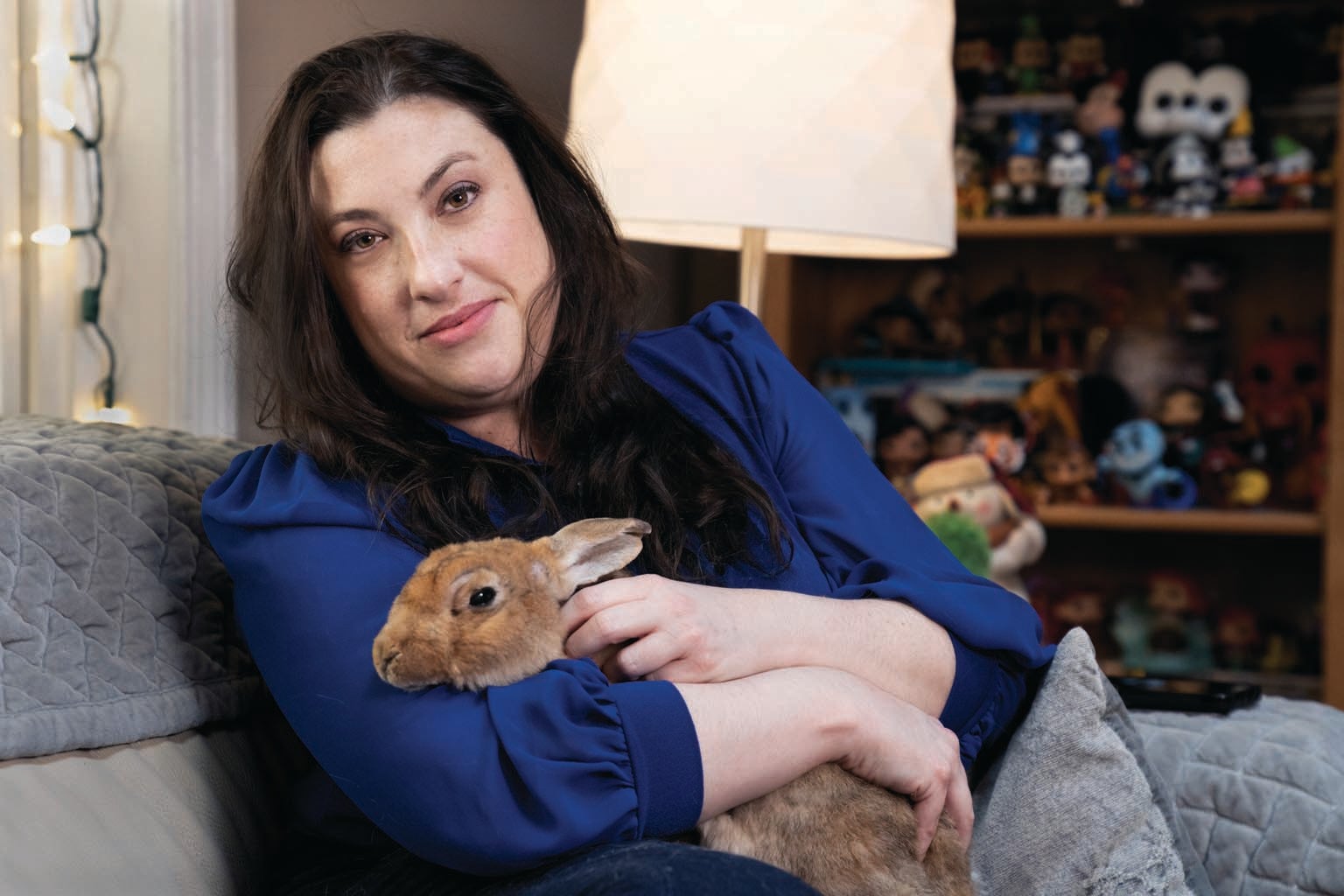
Tara Ghormley has always been an overachiever. She finished at the top of her class in high school, graduated summa cum laude from college and earned top honors in veterinary school. She went on to complete a rigorous training program and build a successful career as a veterinary internal medicine specialist. But in March 2020 she got infected with the SARS-CoV-2 virus—just the 24th case in the small, coastal central California town she lived in at the time, near the site of an early outbreak in the COVID pandemic. “I could have done without being first at this,” she says.
Almost three years after apparently clearing the virus from her body, Ghormley is still suffering. She gets exhausted quickly, her heartbeat suddenly races, and she goes through periods where she can’t concentrate or think clearly. Ghormley and her husband, who have relocated to a Los Angeles suburb, once spent their free time visiting their “happiest place on Earth”—Disneyland—but her health prevented that for more than a year. She still spends most of her days off resting in the dark or going to her many doctors’ appointments. Her early infection and ongoing symptoms make her one of the first people in the country with “long COVID,” a condition where symptoms persist for at least three months after the infection and can last for years. The syndrome is known by medical professionals as postacute sequelae of COVID-19, or PASC.
People with long COVID have symptoms such as pain, extreme fatigue and “brain fog,” or difficulty concentrating or remembering things. As of February 2022, the syndrome was estimated to affect about 16 million adults in the U.S. and had forced between two million and four million Americans out of the workforce, many of whom have yet to return. Long COVID often arises in otherwise healthy young people, and it can follow even a mild initial infection. The risk appears at least slightly higher in people who were hospitalized for COVID and in older adults (who end up in the hospital more often). Women and those at socioeconomic disadvantage also face higher risk, as do people who smoke, are obese, or have any of an array of health conditions, particularly autoimmune disease. Vaccination appears to reduce the danger but does not entirely prevent long COVID.
The most common, persistent and disabling symptoms of long COVID are neurological. Some are easily recognized as brain- or nerve-related: many people experience cognitive dysfunction in the form of difficulty with memory, attention, sleep and mood. Others may seem rooted more in the body than the brain, such as pain and postexertional malaise (PEM), a kind of “energy crash” that people experience after even mild exercise. But those, too, result from nerve dysfunction, often in the autonomic nervous system, which directs our bodies to breathe and digest food and generally runs our organs on autopilot. This so-called dysautonomia can lead to dizziness, a racing heart, high or low blood pressure, and gut disturbances, sometimes leaving people unable to work or even function independently.
The SARS-CoV-2 virus is new, but postviral syndromes are not. Research on other viruses, and on neurological damage from the human immunodeficiency virus (HIV) in particular, is guiding work on long COVID. And the recognition that the syndrome may cause its many effects through the brain and the nervous system is beginning to shape approaches to medical treatment. “I now think of COVID as a neurological disease as much as I think of it as a pulmonary disease, and that’s definitely true in long COVID,” says William Pittman, a physician at UCLA Health in Los Angeles, who treats Ghormley and many similar patients.
Although 16 million U.S. sufferers is a reasonable estimate of the condition’s toll, there are other, more dire assessments. A meta-analysis of 41 studies conducted in 2021 concluded that worldwide, 43 percent of people infected with SARS-CoV-2 may develop long COVID, with about 30 percent—translating to approximately 30 million people—affected in the U.S. Some studies have offered more conservative numbers. A June 2022 survey reported by the U.S. National Center for Health Statistics found that among adults who had had COVID, one in five was experiencing long COVID three months later; the U.K. Office for National Statistics put the estimate at one in 10. Even if only a small share of infections result in long COVID, experts say, they will add up to millions more people affected—and potentially disabled.
Most of the first recognized cases of long COVID were in patients who needed extended respiratory therapy or who had obvious organ damage that caused lasting symptoms. People reporting neurological symptoms were often overlooked or dismissed as traumatized by their initial illness and hospitalization. But as 2020 came to an end, says Helen Lavretsky, a psychiatrist at the University of California, Los Angeles, “we started getting to a place of sorting through what was really going on … and it became very evident at that time that neuropsychiatric symptoms were quite prevalent,” most commonly fatigue, malaise, brain fog, smell loss and post-traumatic stress disorder, as well as cognitive problems and even psychosis.
Ghormley was in her late 30s and relatively healthy when she caught the virus, but she had underlying conditions—including rheumatoid arthritis and asthma—that put her at risk for severe COVID. She spent several days at home, struggling to breathe, and then she went to the hospital, where her blood pressure soared and her blood glucose dropped precipitously. She mostly recovered from this acute phase within a few weeks, but, she says, “I never really got better.”
Soon after coming home from the hospital, Ghormley developed what her husband called “goldfish brain.” “I’d put something down and have no idea where I put it,” she recalls. “It kept happening over and over. I was thinking, ‘This is getting weird.’ My husband said I was not remembering anything. I’d try to talk, and I knew what I wanted to say, but I couldn’t think of the word.”
“Everything fell apart for me,” says Tara Ghormley, who has been struggling with long COVID since 2020. Credit: Ewan Burns
She also experienced tremors, dramatic mood swings and painful hypersensitivity to sounds. “My husband opening a paper bag felt like knives stabbing me in the ear,” she recounts. Any exertion—physical or mental—left her exhausted and in pain. The changes were jarring to Ghormley, who prided herself on her sharp mind. “The thing that bothered me the most was that I was really having trouble thinking, speaking, remembering—trying to complete a task and having no idea what it was. Suddenly I had quite profound neurological deficits. Everything fell apart for me at that time. That was horribly traumatic … it kind of broke me. I didn’t feel like me.”
Roots of Dysfunction
As a veterinary internist, Ghormley says, it’s her job to problem solve when mysterious symptoms arise, including her own. “I was actively trying to find reasons and find what I could do.” She theorized that some of her neurological symptoms might be the result of thrombotic events, blood clots that can cause ministrokes. Several early studies showed that COVID attacks endothelial cells, which line blood vessels. That can lead to clotting and oxygen deprivation in multiple organs, including the brain. Even subtle disruption of endothelial cells in the brain could contribute to cognitive dysfunction.
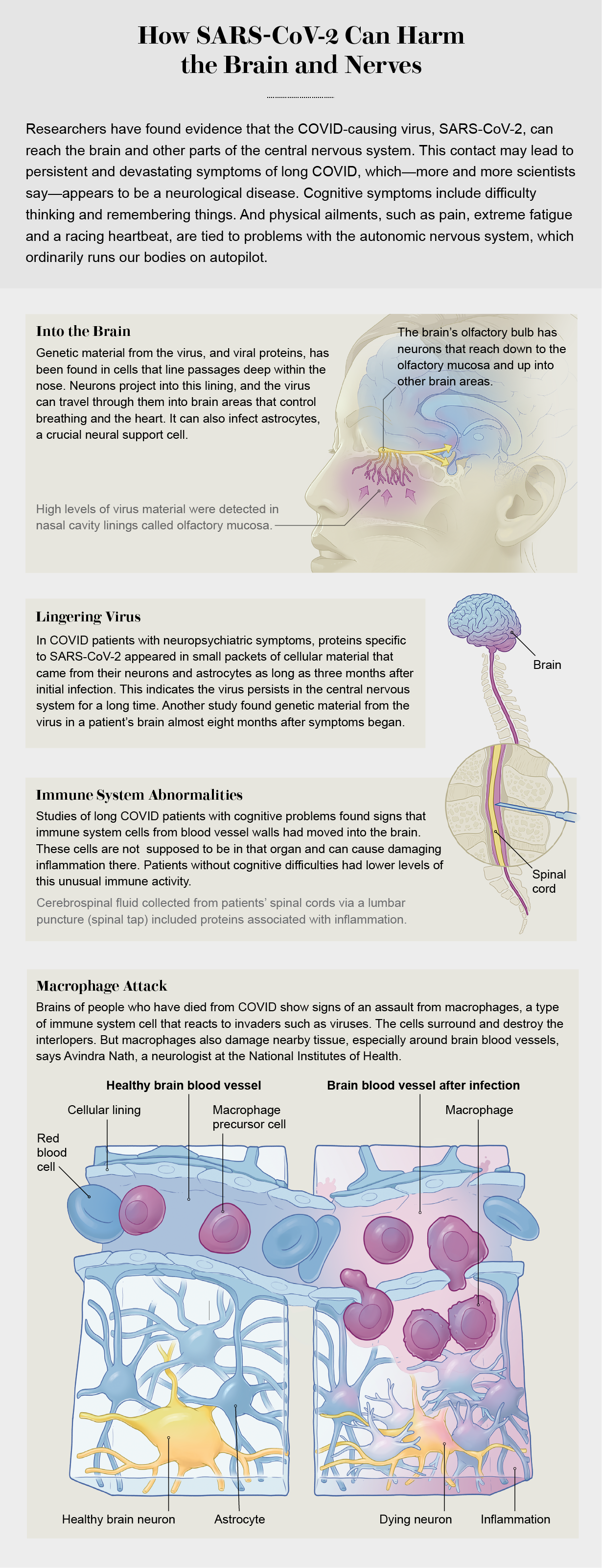
One study found that in people with neurological COVID symptoms, the immune system seems to be activated specifically in the central nervous system, creating inflammation. But brain inflammation is probably not caused by the virus infecting that organ directly. Avindra Nath, who has long studied postviral neurological syndromes at the National Institutes of Health, found something similar in an autopsy study of people who died of COVID. “When you look at the COVID brain, you don’t actually find [huge amounts of virus, but] we found a lot of immune activation,” he says, particularly around blood vessels. The examinations suggested that immune cells called macrophages had been stirred up. “Macrophages are not that precise in their attack,” Nath says. “They come and start chewing things up; they produce all kinds of free radicals, cytokines. It’s almost like blanket bombing—it ends up causing a lot of damage. And they’re very hard to shut down, so they persist for a long time. These are the unwelcome guests” that may be causing persistent inflammation in the brain.
Determining which patients have ongoing inflammation could help inform treatments. Early research identified markers that often are elevated in people with the condition, says Troy Torgerson, an immunologist at the Allen Institute in Seattle. Three cell-signaling molecules—tumor necrosis factor alpha, interleukin 6 and interferon beta—stood out in long COVID patients. But this pattern wasn’t found in absolutely everyone. “We’re trying to sort through long COVID patients and say, ‘This would be a good group to take to trials of an anti-inflammatory drug, whereas this group may need to focus more on rehabilitation,’” Torgerson says. He led a study (currently released as a preprint, without formal scientific review by a journal) in which his team measured proteins from the blood of 55 patients. The researchers found that a subset had persistent inflammation. Among those people, they saw a distinct immune pathway linked to a lasting response to infection. “One subset of patients does appear to have an ongoing response to some virus,” Torgerson says.
Isolated pockets of SARS-CoV-2 or even pieces of viral proteins may remain in the body well after the initial infection and continue to elicit an immune attack. The first solid evidence for “viral persistence” outside the lungs came in 2021 from researchers in Singapore who found viral proteins throughout the gut in five patients who had recovered from COVID as much as six months earlier. A study conducted at the University of California, San Francisco, found evidence for viral particles in the brains of people with long COVID. Scientists collected exosomes, or tiny packets of cellular material, released specifically from cells of the central nervous system. The exosomes contained pieces of viral proteins as well as mitochondrial proteins, which may indicate an immune attack on those vital cellular organelles. Amounts of such suspicious proteins were higher in patients with neuropsychiatric symptoms than in those without them.
The virus could linger in the brain for months, according to research conducted at the NIH and reported in Nature in December 2022. The autopsy study of 44 people who died of COVID found rampant inflammation mainly in the respiratory tract, but viral RNA was detected throughout the body, even in the brain, as long as 230 days after infection. Two other studies, both published last year in the Proceedings of the National Academy of Sciences USA, showed evidence that SARS-CoV-2 may infect astrocytes, a type of neural support cell, gaining entrance via neurons in the skin lining the nose.
Researchers are examining inflammatory signals in patients with long COVID in increasingly fine detail. A small study led by Joanna Hellmuth, a neurologist at U.C.S.F., found that patients with cognitive symptoms had immune-related abnormalities in their cerebrospinal fluid, whereas none of the patients without cognitive symptoms did. At the 2022 meeting of the Society for Neuroscience, Hellmuth reported that she had looked at more specific immune markers in people with cognitive symptoms and found that some patients had an elevated level of VEGF-C, a marker of endothelial dysfunction. Higher VEGF-C concentrations are associated with higher levels of immune cells getting into the brain, she says, and “they’re not doing their normal function of maintaining the blood-brain barrier; they’re distracted and perhaps activated.” Although the studies are small, Hellmuth adds, they reveal “real biological distinctions and inflammation in the brain. This is not a psychological or psychosomatic disorder; this is a neuroimmune disorder.”
What keeps the immune system in attack mode? According to Torgerson, “one option is that you’ve developed autoimmunity,” in which antibodies produced by the immune system to fight the virus also mark a person’s own cells for immune attack. The response to the virus “turns the autoimmunity on, and that doesn’t get better even when the virus goes away,” he says. Several studies have found evidence of autoimmune components called autoantibodies that interact with nerve cells in people with long COVID.
Clues about the inflammatory processes at work could point toward treatments for neurological symptoms. “If it’s a macrophage-mediated inflammatory process … intravenous immunoglobulin could make a difference [to] dampen the macrophages,” Nath says. The treatment, referred to as IVIg, contains a cocktail of proteins and antibodies that can mitigate an overactive immune response.
IVIg can also be used to block autoantibodies. And a therapy called rituximab that targets antibody-producing B cells provides “a time-tested therapy for a lot of autoantibody-mediated syndromes,” Nath says. Another strategy is to use corticosteroids to dampen immune activity altogether, although those drugs can be used for only a limited time. “That’s a sledgehammer approach, and you can see if it makes a difference. At least it gives you an idea that, yes, it’s an immune-mediated phenomenon, and now we need to find a better way to target it,” Nath says.
If the virus does hang around in some form, antiviral medications could potentially clear it, which might help resolve neurological symptoms. That’s the hope of scientists running a clinical trial of Paxlovid, Pfizer’s antiviral drug for acute COVID.
A Chronic Fatigue Connection?
Postviral syndromes have been documented for more than a century, arising after infection with viruses from HIV to the flu. Epstein-Barr virus, which causes mononucleosis, is one of several viruses linked to a condition called myalgic encephalomyelitis/chronic fatigue syndrome (ME/CFS), which is estimated to affect at least one and a half million people in the U.S. ME/CFS bears striking resemblances to long COVID, with symptoms such as immune system dysregulation, fatigue and cognitive dysfunction. “One of the patterns we see is patients who definitely meet the criteria for ME/CFS. This is something we are seeing and treating all the time” in long COVID patients, Pittman says. ME/CFS can be severe, with some people losing mobility and becoming bedbound.
Credit: Now Medical Studios; Sources: “Neurovascular Injury with Complement Activation and Inflammation in COVID-19,” by Myoung-Hwa Lee et al., in Brain, Vol. 145; July 2022 (blood vessel reference); “Olfactory Transmucosal SARS-CoV-2 Invasion as a Port of Central Nervous System Entry in Individuals with COVID-19,” by Jenny Meinhardt et al., in Nature Neuroscience, Vol. 24; February 2021 (nasal passage reference)
Nath, who also studies ME/CFS, says that “we think mechanistically they are going to be related.” Researchers suspect that ME/CFS, like some cases of long COVID, could be autoimmune in nature, with autoantibodies keeping the immune system activated. ME/CFS has been difficult to study because it often arises long after a mild infection, making it hard to identify a viral trigger. But with long COVID, Nath says, “the advantage is that we know exactly what started the process, and you can catch cases early in the [development of] ME/CFS-like symptoms.” In people who have had ME/CFS for years, “it’s done damage, and it’s hard to reverse that.” Nath speculates that for long COVID, if doctors could study people early in the illness, they would have a better chance of reversing the process.
Torgerson hopes that researchers will ultimately come to better understand ME/CFS because of COVID. “COVID has been more carefully studied with better technology in the time we’ve had it than any other infectious disease ever. I think we’ll learn things that will be applicable to other inflammatory diseases driven by infection followed by an autoimmune process.”
Team Treatment
Ghormley, after months of illness, sought care at UCLA Health’s long COVID clinic, among the country’s few comprehensive, multidisciplinary programs for people with this syndrome. Even though her symptoms are rooted in nervous system dysfunction, she needed an array of medical specialists to treat them. The clinic grew out of a program aimed at coordinating care for medically complex COVID patients, says its director Nisha Viswanathan, an internist and primary care physician. In following up with COVID patients after several months, she realized that “we had a group of patients who still had symptoms. There was no understanding around the condition; we were just trying to see what we could offer them.” Viswanathan and others convened a biweekly meeting of UCLA Health doctors in pulmonology, cardiology, neurology, psychiatry and other specialties to discuss individual cases and overall trends.
At UCLA Health, Pittman coordinates Ghormley’s treatment. He says the interdisciplinary team is crucial to getting patients the best possible care. “Oftentimes there are so many symptoms,” and some patients have seen multiple specialists before arriving, but not necessarily the right ones. As long COVID primary care providers, he says, “we do the initial testing and get them to the right person.” For Ghormley, that list of providers includes Pittman, along with a neurologist, a pulmonologist, a cardiologist, a psychiatrist, a trauma counselor, a rheumatologist and a gynecologist.
The team approach has also been critical for doctors trying to understand a brand-new disease, Pittman says. “It’s been a very interesting journey from knowing almost nothing to knowing a little bit now, and we’re learning more every day, every week, every month,” he says. The term “long COVID” “is an umbrella, and I think there are multiple diseases under that umbrella.” Although each long COVID patient is unique, Pittman says, “we start to see patterns developing. And with Ghormley, we saw a pattern of dysautonomia, which we see frequently.”
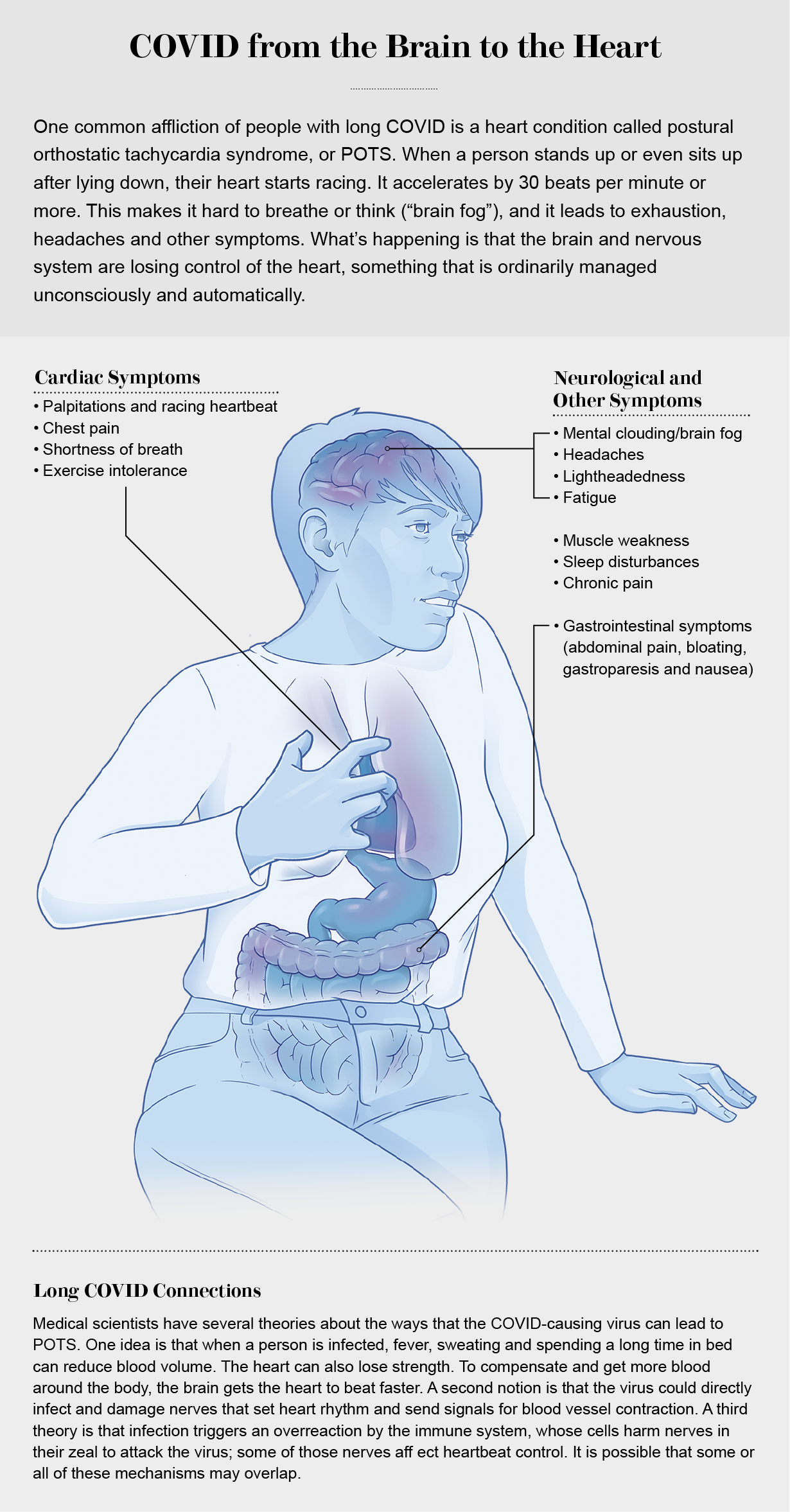
Dysautonomia impairs the autonomic nervous system, a network of nerves that branch out from the brain or spinal cord and extend through the body, controlling unconscious functions such as heartbeat, breathing, sweating and blood vessel dilation. For Ghormley, like many people with long COVID, dysautonomia takes the form of postural orthostatic tachycardia syndrome, or POTS. The syndrome encompasses a collection of symptoms that include a racing heart rate—particularly on standing—and fatigue, and it can cause bowel and bladder irregularities. POTS can also be a component of the exhaustion that comes with PEM. Although the symptoms may seem to affect the body, they stem from nervous system dysfunction.
Ghormley’s dysautonomia led her to see cardiologist Megha Agarwal at a UCLA clinic near her home. Many physicians are not familiar with POTS, but Agarwal is particularly attuned to it, having seen it in some of her patients before COVID hit. “There’s dysregulation of the nervous system, and so many things can cause it: some cancer therapies, viruses, autoimmune conditions.” Agarwal recognized POTS in Ghormley in the fall of 2020, when very little was known about long COVID. Now she believes “POTS is really what long-haul COVID is causing” in many patients. Luckily, Agarwal says, there are medical interventions that can help.
Tachycardia—the T in POTS—causes the heartbeat to speed up, contributing to exhaustion and fatigue in addition to stressing the heart itself. Drugs called beta-blockers (for the beta-adrenergic receptors they shut off in the heart) can lower the heart rate and improve symptoms. “When heart rate is controlled, not only does the pump improve,” Agarwal says, “[but people’s] energy improves, their fatigue is gone, and sometimes there’s better mental clarity.” For some patients like Ghormley, beta-blockers are not enough, so Agarwal adds a medication called ivabradine. “It’s a bit off-label, but it’s currently being aggressively studied” for POTS. For Ghormley, the combination led to real improvements, “so now she doesn’t feel like she ran the Boston Marathon when all she did was sit down and stand up at work or take a shower,” Agarwal says.
Among Ghormley’s toughest symptoms is her brain fog, a catchall term for a slew of cognitive problems that make it hard for her to function. For days when Ghormley works, her psychiatrist prescribes Adderall, a stimulant used to treat attention deficit hyperactivity disorder that helps her concentrate and stay focused. That has “helped immensely,” Ghormley says.
Ghormley credits her doctors and Agarwal in particular with doing the detective work to dig into her symptoms. “Nobody knew anything about it, but everyone listened to me,” Ghormley says. Perhaps because she was a professional from a medical field, no one “brushed me aside.”
That’s unusual for people with long COVID, many of them women, who are often dismissed by physicians who doubt their complaints are real. “Patients just don’t feel heard,” Viswanathan says. “I had a patient who told me everything, and after, I just said, ‘This must be so hard for you. I want you to know that everything you’re feeling is real, and I’ve seen so many patients like you.’ And she started crying. She said, ‘No one has told me that. I can’t tell you the number of times I was told it was in my head.’”
Credit: Now Medical Studio; Sources: “Postural Orthostatic Tachycardia Syndrome as a Sequela of COVID-19,” by Cameron K. Ormiston et al., in Heart Rhythm, Vol. 19; November 2022; “Long COVID-19 and Postural Orthostatic Tachycardia Syndrome—Is Dysautonomia to Be Blamed?” by Karan R. Chadda et al., in Frontiers in Cardiovascular Medicine; March 2022 (references)
In addition to drugs, other types of therapies, including physical therapy, can help improve some symptoms. But people who experience PEM face a particular challenge when using movement therapies. Pittman says the exertion can make these patients feel worse. “We don’t want patients to go to not moving at all, but sometimes the type of movement they’re doing may be flaring their symptoms.” He notes that often PEM strikes young, previously healthy people who will say, “‘I need to push myself,’ and then they go way too far and get worse. Our job is to try to find that middle ground and then make that consistent over time, so they’re not getting further deconditioned but they don’t have the PEM, which has been shown to set them back.”
The Long Haul
Some patients, Pittman says, “have the expectation that they’re going to come in, and within a month they’re going to be back to normal. And resetting those expectations can be really challenging. You have to be really empathetic because people’s lives have completely changed.” But sometimes patients’ quality of life can improve noticeably when they are able to adjust to a new normal. Still, he says, “patients have so many questions, and I can’t lead them down a physiological pathway. I can tell them there’s neuroinflammation, maybe there’s autoimmunity, but we still don’t have the answers. Sometimes it’s really tough for us to accept and for the patient to accept that we just have to try our best.”
A number of people, Viswanathan says, benefit from reducing various treatments they have accumulated. Some people become so desperate that they will try anything from supplements to off-label medications to untested potions from the Internet. Stopping those sometimes leads to improved symptoms, she says.
Psychological care and support groups can help. Lavretsky adds that “lifestyle choices can play a huge role in improvement,” particularly better sleep habits and the use of breathing exercises to control anxiety. She tells people their bodies can heal themselves if the patients and clinicians find the right tools.
Whether that’s true for everyone remains to be seen, Viswanathan says. “We see many patients who have gotten better with time. I have patients whose symptoms have disappeared in the course of a year, or they disappear and occasionally flare up again.” But for some, she says, “it could last many years.”
“We’re going to be addressing this for probably decades,” Viswanathan says. “COVID is not going to go away so much as we’re just going to get used to living with it, but part of [that] means that people will continue to develop long COVID.”
Vaccination appears to reduce the risk of long COVID. But a study published in May 2022 in Nature Medicine suggests the protection, though real, is not as good as one might hope. The survey of electronic health records from the U.S. Department of Veterans Affairs looked at the relatively small portion of vaccinated people who subsequently became infected. They developed long COVID only 15 percent less often than unvaccinated people. “These patients can have symptoms for one to two years or longer, and so every month you’re racking up more patients. Even if it’s 15 percent less, the total population of patients is still growing and exploding,” Pittman says. The best way to avoid getting long COVID, experts all agree, is to avoid getting COVID at all.
The syndrome is still mired in a lot of medical uncertainty. Patients might have one or a combination of the problems investigated so far: Long COVID might be caused by viral particles that persist in the brain or other parts of the nervous system. Or it might be an autoimmune disorder that lasts long after the virus has disappeared. Maybe overactive immune cells continue to perturb the nervous system and nearby blood vessels. Fortunately, the increasing ability to recognize specific problems is helping clinicians hone treatments that give patients the best chance of recovery.
Although Ghormley says her care has dramatically improved her symptoms and allowed her to “do some normal things again,” she continues to experience flare-ups that make it impossible for her to work for weeks at a time. One day last year she skipped a dose of her heart medication and made a Target run in the southern California heat. “I got home and basically collapsed in the hallway. Since then, everything has been out of whack. If I try to move around, my legs give out.” Most frustrating—and scary—to Ghormley is the unpredictability of her symptoms. “They have changed so much; some are manageable, some debilitating. One thing will get better, and another thing comes back. I’m always hopeful that it’s going to get better, but I just don’t know.”
Digitising healthcare and health and fitness data is becoming the norm for most designed nations around the world. Some countries are searching for to introduce technological solutions into their health care systems. This can enhance consumer support, lower waiting around time, improve precision, and end result in a a lot more productive and successful healthcare sector.
However, the implementation of a electronic healthcare procedure will have to be performed with because of warning and diligence. More than the previous two and a 50 {35112b74ca1a6bc4decb6697edde3f9edcc1b44915f2ccb9995df8df6b4364bc} yrs, wellness documents have been the primary target of hackers. An October 2022 report by Assume Protected Community states that the hacking of heathcare programs is on the increase.
A 2022 Intense Health care Health TECH report states that in 2020, 30-four million individuals ended up affected by heathcare hacks. This range grew to 45 million in 2021, symbolizing a 32 per cent boost. The Fortified Wellness Security’s mid-year report factors out that in the initially half of 2022, the health care marketplace experienced about 337 claimed breaches, with 19 million data compromised, affecting millions of people. Doug Halsall, in an post in The Gleaner titled “Data security in the innovative world”, indicated that on the black current market, the regular value of a patient’s health care information/document can range in between US$ 355 and US$ 363 as opposed to US$1 and US$2 for credit card information and facts. This price tag is steadily rising as the regular value of a health care details breach as at September 2022 was US$10.1 million for every incident. This figure represents a 9.4 for each cent increase above 2021 in accordance to IBM’s yearly “Cost of a Details Breach” report.
As Jamaica normally takes a further leap into the electronic jungle by digitising health and fitness records, permit us be mindful of the possible hurdles and make as several provisions as we can for the inevitable unidentified. There are way too several potential risks lurking in the cyber jungle for us to overlook the enhanced challenges affiliated with digitising health care. Health information have really sensitive and non-public details. The breach of the JamCOVID database unveiled several planning, implementation, and security issues that ended up not in put, imagined about, or enforced.
Privacy AND Safety Concerns
Privacy, described as “the correct to be remaining alone’, is a elementary appropriate of each individual human and is in chapter a few of the Jamaican Constitution and less than Posting 12 of the United Nations’ Universal Declaration of Human Rights. The act of arbitrarily taking a person’s information and inserting it in databases without their consent hinges on breaching the person’s basic proper to privacy. People should really be authorized to make your mind up irrespective of whether they want their heath information and facts put into a databases that can be accessed by other individuals and applied for malicious motives.
Using a database of people’s personalized info can be a hassle-free and effective way to accessibility facts, but its malicious use can also spoil peoples’ lives, and this need to not be taken lightly. The need for safety of health and fitness data was the cause driving the implementation of the Wellness Insurance Portability and Accountability Act (HIPAA) by the American Congress. The Typical Information Protection Regulation (GDPR) has distinct suggestions relating to the use of personalized facts and the consent necessary for use of this details. There are provisions enabling health care practitioners to access information with out violating protection assures if there is require to do so. The Entry Command structures alongside with the Access Command lists can be applied in these situations.
It must be apparent that everyone has a appropriate to determine if their info should really be digitiesd and accessed. The GDPR states that customers of individual knowledge should be lawful and respectful of the individual’s suitable. It outlines six standards and is eager to level out that community authorities may without a doubt have genuine scenarios for wanting to obtain info but that they are also bound by the rule of regard for the individual’s ideal to privacy.
LANGUISH IN THE System
Jamaica’s Facts Defense Act is not however/completely implemented and carries on to languish in the program. We need to guarantee that our procedures and methods line up with intercontinental criteria. Internationally, a number of nations around the world have implemented e-overall health units, and study implies that administration of these programs can be really complicated, specially in a sector exactly where there are community and non-public enterprises and competing pursuits.
For the duration of the COVID-19 pandemic in 2020, India digitised their health and fitness units below their Countrywide Digital Wellness Mission exactly where all people was provided a health ID. In accordance to the governing administration, this would considerably improve healthcare shipping. On the other hand, in late November 2022, a huge cyberattack crippled the entire wellness sector. The Indian government was pressured to halt the health care digitisation method. Ireland’s heathcare program was hacked in 2021, leaving individuals needing significant treatment, these as radiation, in turmoil, and only expecting moms 38 months and around, alongside with dire emergency scenarios, ended up handled. A number of health care systems in the United States of The united states and many other nations have been hacked. In Jamaica, we have had cases of genuine and suspected situations of breaches of individual details databases. There may perhaps be quite a few others of which we are not even knowledgeable.
The JamCOVID incident that still left 1000’s of persons’ health-related information at threat could have value us millions of bucks. An write-up in the The Gleaner in July 2021 highlighted “Staff, clients involved about info breach at college hospital”. These are just two illustrations of incidents that have been documented. There may well be quite a few additional occasions that have not been recognized. While we search for to get on the digital train, allow us strategy with warning, mastering from our problems and the mistakes of other individuals. A single could check with, will we be equipped to prevent health care hacking? The reply is no. But we can minimize the effects by staying intentional and strategic in our approach.
Addressing the root is considerably extra significant than managing the indications. Halting or lessening hacking is a marathon, not a sprint. There is a answer for each individual difficulty, and we are regarded to be resilient. Enable us get this a person right.
– Nadine Barrett-Maitland, PhD, is a senior lecturer at the School of Computing and Facts Technology, University of Technologies, Jamaica.