Alex Murdaugh’s best friend testifies he admitted to drug addiction and stealing money

Alex Murdaugh’s best friend testifies he admitted to drug addiction and stealing money


CNN
 — 

An attorney who said he was Alex Murdaugh’s best friend testified at his murder trial Thursday that Murdaugh admitted he had a drug addiction and had been stealing money from his law firm and clients.

“He said, ‘I’m sorry I’ve had a drug problem, I’m addicted to opioids … for something like 20 years,’ ” the friend, Chris Wilson, testified. “He said he had a drug addiction and he admitted that he had been stealing money from his law firm and from clients.”

“I sh– you up,” Murdaugh said, according to Wilson. “I’ve sh– a lot of people up.”

The conversation occurred in September 2021, three months after the deaths of Murdaugh’s wife and son and after Murdaugh’s law firm said it had discovered extensive financial wrongdoing.

Wilson’s testimony comes three weeks into the murder trial for the killings of Maggie and Paul Murdaugh on June 7, 2021. Alex Murdaugh has pleaded not guilty to two counts of murder and two weapons charges.

Murdaugh, 53, called 911 and reported he found his wife and son dead of gunshot wounds outside of their home in Islandton.

Wilson is one of a series of witnesses who have accused Murdaugh of extensive financial wrongdoing at his namesake law firm. Prosecutors have argued Murdaugh killed his wife and son as an attempt to distract attention from his financial crimes and stave off a “day of reckoning.”

Prosecutors also have presented evidence that Murdaugh had opportunity to commit the murders. Audio from a Snapchat video recovered from his son’s phone places Murdaugh at the murder scene, prosecutors contend, contrary to his alibi to investigators that he was not there that night.

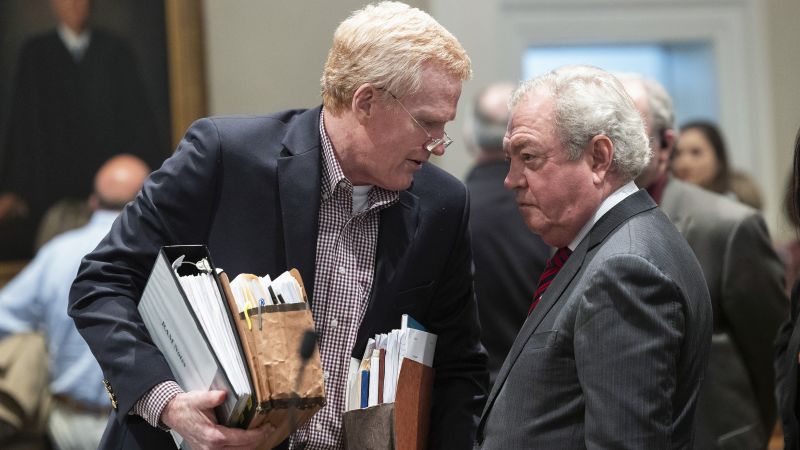
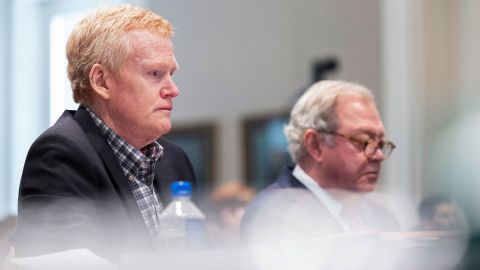
Alex Murdaugh listens in court Thursday as an attorney testifies about a case they worked on together.

However, there is effectively no direct evidence – no witnesses, no murder weapon, no DNA and no ballistics – that link Murdaugh to the murders. Instead, prosecutors have offered circumstantial evidence, such as the gunshot primer residue found on Murdaugh’s clothes and on a blue raincoat, and the financial motive.

The defense has argued this financial evidence is beside the point.

“They’ve got a whole lot more evidence about financial misconduct than they do about evidence of guilt in a murder case. And that’s what this is all about,” defense lawyer Jim Griffin said last week.

In court Thursday, Wilson, an attorney in Bamberg, South Carolina, testified he was one of Murdaugh’s financial victims.

He and Murdaugh had worked on a personal injury case together and won a verdict of $5.5 million, with each attorney earning about $792,000. Murdaugh asked Wilson to write the check to him personally rather than his law firm, and Wilson did as requested.

“I’ve known him for 30-plus years and didn’t have any reason not to trust him,” he said.

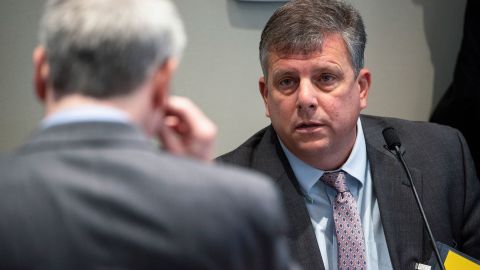
Witness Chris Wilson testifies during Alex Murdaugh's murder trial on Thursday.

Murdaugh later asked Wilson to rewrite the check and make it out to the law firm, he testified. Murdaugh wired him back $600,000 but said he didn’t have the full funds, so Wilson had to spend $192,000 of his own money to cover the difference, he said.

The checks ultimately played a key role in Murdaugh’s law firm’s discovery that he had been misappropriating funds, according to testimony from his coworkers.

Wilson also testified he spoke with Murdaugh on the phone at 9:11 p.m., 9:20 p.m. and 9:53 p.m. on June 7, 2021, around the time of the murders. In the short conversations, nothing sounded out of the ordinary, Wilson said.

Also in court Thursday, Michael “Tony” Satterfield, the son of Murdaugh’s former housekeeper Gloria Satterfield, testified about being defrauded by Murdaugh.

Gloria Satterfield had worked for the Murdaugh family for about 20 years and died in 2018 after a fall at the Murdaugh family’s home.

Murdaugh offered to file a claim against his insurance company to get money for his housekeeper’s sons, Michael Satterfield testified. However, Satterfield did not see any of that money and did not know Murdaugh had collected more than $4 million in settlements, he testified.

Satterfield testified that he learned of the settlement from his family, who heard about it through media reports. He said when he asked Murdaugh about it in June 2021, Murdaugh told him “it was still making progress” and to be ready to settle by the end of the year.

In December 2021, Satterfield and his brother received a settlement of $4.3 million and an apology from Murdaugh in a confession of judgment.

Further, the CEO of a local bank testified for the jury that Murdaugh’s account was overdrafted by about $350,000. As of August 2021, Murdaugh had a total debt to the bank of $4.2 million, according to Palmetto State Bank CEO Jan Malinowski.

All three witnesses previously testified outside of the jury’s presence last week.

Much of the testimony this week has focused on Murdaugh’s financial issues. The judge overseeing the case ruled on Monday to allow such evidence, saying it was “so intimately connected” with the state’s case “that proof of it is essential to complete the story.”

Thursday’s session ended with attorney Mark Tinsley on the stand. He represents the family of 19-year-old Mallory Beach, who was killed in February 2019 when a boat, owned by Murdaugh and allegedly driven by Paul, crashed.

At the time Maggie and Paul were killed, Murdaugh was facing a lawsuit from Beach’s family. A hearing in that civil case was scheduled for June 10, 2021, and had the potential to reveal Murdaugh’s financial problems, prosecutors have said.

But that hearing was delayed after Maggie and Paul were killed.

On Thursday, the prosecution asked Tinsley about how that lawsuit was proceeding. He testified he was seeking $10 million from Murdaugh, but was told Murdaugh was broke and might only be able to come up with $1 million. Tinsley was not cross-examined Thursday and is expected to resume his testimony Friday morning.

Another prosecution witness this week spoke about Murdaugh’s financial dealings. The chief financial officer of his law firm testified she had confronted Murdaugh about missing funds on the morning of June 7, hours before the killings. Afterward, his coworkers offered him sympathy and gave him a reprieve on the financial issues.

“We weren’t going to go in there and harass him about money when we were worried about his mental state and the fact that his family had been killed,” the CFO, Jeanne Seckinger, testified.

Indeed, that “day of reckoning” didn’t come for another three months, when his law firm again confronted him about misappropriated funds, leading to his resignation, a bizarre murder-for-hire and insurance scam plot, a stint in rehab, dozens of financial crimes, his disbarment and, ultimately, the murder charges.

The defense has said the June 10 civil hearing was not a “day of reckoning” but just one in a series of hearings. Murdaugh faces 99 charges for various financial crimes – but those charges will be adjudicated in a separate case and are unrelated to the murders.

Sheboygan man spreads positivity after recovering from drug addiction

Sheboygan man spreads positivity after recovering from drug addiction

Accounts of overcoming addiction told as Drug Facts Week kicks off in southern Indiana

Accounts of overcoming addiction told as Drug Facts Week kicks off in southern Indiana

A group in southern Indiana dedicated to preventing addiction is starting its once-a-year drug week.Clark County CARES was started eight a long time back to beat strong and perilous medications that generally wreck lives. At an emotional kickoff event, an viewers heard stories of tragedy and triumph from those people who’ve experienced from dependancy. It truly is element of drug 7 days in Jeffersonville and the relaxation of Clark County, Indiana. There had been 74 overdose deaths listed here very last year.Coleen Nelms spoke to the crowd through the eye-opening discussion board on abuse and restoration held at St. Paul’s Episcopal Church. Nelms advised those in attendance about becoming approved hydrocodone for a spinal personal injury when she was just 10 decades previous.>> More community top rated tales hereCollen states she received hooked on pain drugs, then heroin. At 19, she was homeless and hit rock base. “I had overdosed a few occasions by the time I bought enable. 3 ODs in three months. I received the very same ER nurse each and every one time. Ultimately, when I came to three times later after my 3rd OD, that’s when I checked myself into rehab,” Nelms said.The restoration application worked.Immediately after 10 yrs in very long-phrase restoration, Nelms is now a mother and functions as an dependancy restoration coach.“Just inquire for aid, even if it is really just calling and finding sources,” mentioned Nelms, who adds, “If you are unable to do inpatient, there is outpatient. There are free courses that will choose you to cure.”Treatment is what John Benningfield needed far too. Benningfield says he struggled with methamphetamine and heroin although shelling out time in and out of jail.It went on like that for several years right until Benningfield says he resolved he desired out of that daily life, and entered a therapy application.The revelation he experienced fathered a daughter and wished custody was added motivation.”I started functioning on a software and buried myself in recovery. I started a Daddy and Me home, and two many years later, I bought custody of her. I have full custody now, and that minor girl is five,” Benningfield states.These are just two of many tales about recovery and survival, which are a large element of Clark County’s drug 7 days.It is a continuing battle, which former drug buyers say can be gained.Helms suggests, “Get assist. It truly, really improvements your lifetime.” For information and facts on gatherings going on throughout drug info 7 days, electronic mail clarkincares@gmail.com.

A group in southern Indiana dedicated to combating addiction is commencing its once-a-year drug week.

Clark County CARES was established 8 yrs ago to beat strong and dangerous medicines that often wreck lives.

At an emotional kickoff function, an audience read tales of tragedy and triumph from individuals who’ve suffered from addiction.

It’s portion of drug week in Jeffersonville and the relaxation of Clark County, Indiana. There had been 74 overdose fatalities here past yr.

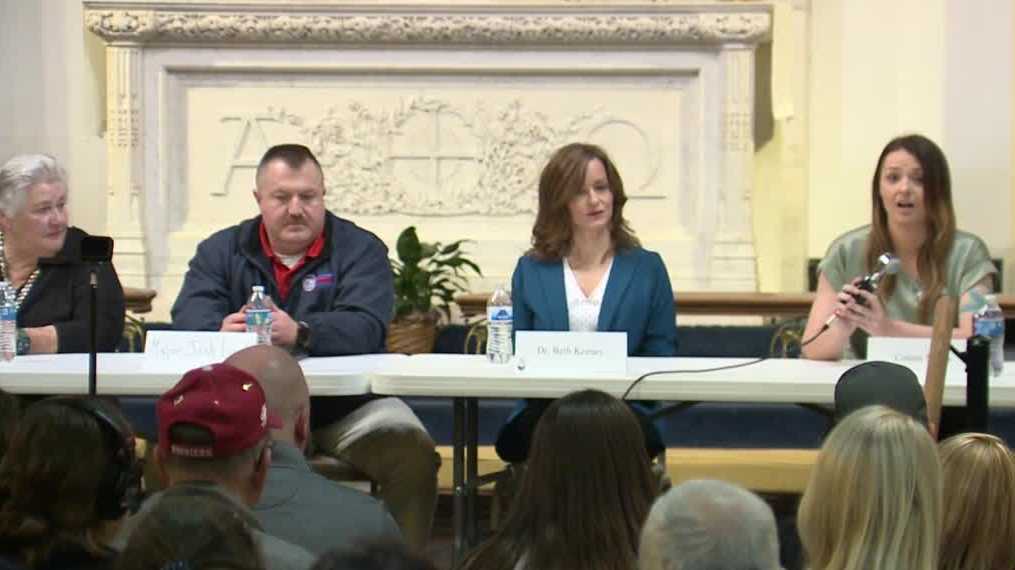
Coleen Nelms spoke to the group for the duration of the eye-opening forum on abuse and restoration held at St. Paul’s Episcopal Church.

Nelms explained to these in attendance about getting prescribed hydrocodone for a spinal personal injury when she was just 10 years outdated.

>> Far more regional major tales listed here

Collen suggests she got hooked on ache pills, then heroin. At 19, she was homeless and strike rock base.

“I had overdosed a few situations by the time I acquired assistance. Three ODs in a few months. I received the exact same ER nurse each and every single time. Finally, when I arrived to 3 times afterwards after my third OD, which is when I checked myself into rehab,” Nelms said.

The recovery system labored.

Following 10 many years in extended-phrase recovery, Nelms is now a mother and is effective as an dependancy restoration coach.

“Just ask for aid, even if it’s just contacting and obtaining means,” stated Nelms, who adds, “If you are not able to do inpatient, you will find outpatient. There are free programs that will take you to treatment.”

Treatment method is what John Benningfield required too.

Benningfield states he struggled with methamphetamine and heroin even though expending time in and out of jail.

It went on like that for many years until finally Benningfield states he resolved he needed out of that lifetime, and entered a procedure program.

The revelation he experienced fathered a daughter and wanted custody was additional inspiration.

“I began performing on a system and buried myself in restoration. I started off a Daddy and Me house, and two decades later on, I obtained custody of her. I have total custody now, and that minor woman is five,” Benningfield says.

These are just two of several tales about restoration and survival, which are a huge aspect of Clark County’s drug week.

It is a continuing struggle, which previous drug people say can be received.

Helms states, “Get support. It seriously, really adjustments your lifestyle.”

For details on gatherings going on during drug points 7 days, e mail clarkincares@gmail.com.

‘I’ve suffered for a long time’: My mother demanded I return my inheritance so she could give it to my brother, who has a drug addiction. What should I have done?

‘I’ve suffered for a long time’: My mother demanded I return my inheritance so she could give it to my brother, who has a drug addiction. What should I have done?

I’ve read your advice to other people. I’ve suffered for a long time with my own financial and family problems. I would value your thoughts.

My younger brother developed a lifelong drug addiction when he was a teenager. My father, who grew up in an orphanage, provided him with financial support that enabled him to, as my brother once said, have a home and family while “being too drugged to ever see them clearly.”

He saw his whole world through a haze. He also said that getting off drugs was difficult enough, but because our parents were financially supporting his addiction, life became impossible for him. My father purchased some things for my brother, including a house and cars, but kept them in his name so my brother could not sell them. 

But my father also created opportunities for my brother to steal from him. Sometimes he would send my brother to collect thousands of dollars from a customer, and the money would of course go missing. 

“‘My father created opportunities for my brother to steal from him. Sometimes he would send my brother to collect thousands of dollars from a customer, and the money would go missing.’”

Another time he sent my brother to his house, where he had left several bank passbooks on a counter. These situations let my father claim that he had been robbed by my brother and that he was not giving my brother money to buy drugs.

This went on for decades. I often had nightmares that my brother needed me to rescue him, but I couldn’t figure out how to do it. Of course, I pleaded with my father many times. I even had thoughts of harming him to free my brother. 

Once I called the district attorney’s office and begged for help, but I was told that no crime was being committed. 

Question 1: What else could I have done?

After my father died, my mother continued this practice, with excuses like this one: “He calls me for money. He says it’s for medical bills or to pay gambling debts.” She told me, “I can’t say no to him.”

She distributed almost all of my father’s estate to his children. I used my own share and other savings to take advantage of a really good real-estate opportunity. I have a small pension and have lived very modestly for 5 to 10 years. 

“‘Eight years after my father passed away, my mother asked me to return the money she gave me from my father’s estate. Of course, she really wanted the money for my brother.’”

Eight years after my father passed away, my mother asked me to return the money she had given me from my father’s estate. Of course, she really wanted the money for my brother. She said that she was at the end of her life and didn’t want to die penniless. I told her that I needed time to sell the land. 

She became very angry with me, saying that I had enough money to live on and I should give her those funds. I explained that I had enough liquid assets to live off of for a few years, but that if I was to pay her back immediately, I would have to try to sell my real estate during the 2008 financial crisis. 

I was in good health, close to 70 years old. I was planning to sell the property when the market recovered and use the funds to live on for the next couple of decades. Liquidating my investment in 2008 would have put me in poverty for the rest of my life. 

My mother was always a very frugal woman, and even at an advanced age her intellect and personality had not changed. She would never imagine wanting to die holding a large amount of cash. It had to be my brother’s idea.

“‘My mother enlisted my sister and my son to help her. We all agreed that it was her money and I should return it. But they all felt I should give her the money immediately.’”

My mother enlisted my sister and my son to help her. We all agreed that it was her money and I should return it. But they all felt I should give her the money immediately, and that after that, my finances would be my problem. 

Whether she wanted the money for herself or my brother didn’t matter to them. I felt that after holding the money for eight years, I should be given some time to liquidate the property efficiently, which I did. My mother remained angry with me for the remaining two years of her life. 

Over the years, my brother frequently called me asking for money. I always told him I loved him, then turned him down. Once I agreed to meet him, but instead I took him to a good rehab center. He always appreciated me and told me he loved me. Not being able to help him was the curse of my life.

Question 2: What, if anything, should I have done differently regarding my mother’s request?

For years, my mother took her three children out to dinner at least once a year. After the main course, my mother would always order cake, ice cream or pie for my brother, who also had diabetes. He never asked for it, nor did he refuse it. 

I’d get angry with my mother and protest that my brother had severe diabetes, which was already destroying the nerves in his feet. She, being obese herself, would respond that nobody had put me in charge of his diet and that he deserved some sweets just like the rest of us. 

I always let it end like that until one dinner after my mother had died. I was visiting my hometown, and my sister and her husband invited my brother and me to dinner at their favorite new restaurant. 

I was surprised that she invited my brother, but I was happy to see him. During the dinner she took charge of the ordering, even requesting a very expensive wine, thus making it clear that we were her guests, and she was paying for the evening.

“‘After the main course my mother would always order cake, ice cream or pie for my diabetic brother. He never asked for it, nor did he refuse it. I’d get angry with my mother and protest.’”

After the main course, she ordered dessert for herself and for my brother. I wanted to object again, but knowing that my objections didn’t matter when my mother was alive, I thought they probably still wouldn’t matter now that my sister was taking over.  

Besides, the people who think it’s a good idea to give cake to a very sick diabetic person aren’t going to listen to what I have to say. So I yanked the plate of cake away from my brother. My sister became enraged. The whole family descended on me in a rage: “You come for a visit and think you’re taking over? He can decide for himself!”

Question 3: What should I have done at the dinner?

All I could say in my defense was that he’s my little brother, he’s sick and I need to protect him. In the days to come, my daughter and other family members all unanimously agreed that I was an evil, controlling person.

Only one person came up to me, hugged me, told me he loved me, and thanked me: my brother.

Sincerely,

A Brother and Son Who Tried to do the Right Thing

Dear Brother,

Let me answer your questions in reverse order.

You did what you did. When you’re dealing with a family member who has had a substance-misuse disorder for most of his life, and your family has chosen to enable, ignore or finance his addiction. You do not need to be forgiven for intervening. This was an act of frustration and pain decades in the making. We are all human. Your family’s history of acquiescence may go back not years, but generations.

Snatching the plate away was a minor infraction of dinner-party etiquette. Their response was totally out of proportion. Your family did not see red because you yanked away a plate with a piece of pie on it; they lost the plot because you addressed the elephant in the room — not your brother’s diabetes, but his long history of addiction and your family’s willingness to turn a blind eye to it.

Your brother has two diseases: addiction and diabetes. Your family’s creed was built on sweet desserts and secrets. You had the courage and the tenacity to unmask that. Your father enabled your brother, perhaps because he himself had not been given the tools to address the problem. Your mother stood by and then asked for your inheritance back to ensure your brother had enough money to live on. 

Your sister, for better or for worse, is your mother’s daughter. She grew up with the same lessons: that the best thing to do was to ignore your brother’s addiction. Nobody in your family had the knowledge or capacity or, perhaps more accurately, the willingness to address this problem. Your sister played along, and she showed her love and support the only way she was taught to do.

“‘Your family did not see red because you yanked away a plate with a piece of pie on it. They lost the plot because you directly addressed the elephant in the room.’”

You have been held hostage by your brother’s disease and by your family’s unwritten rules and values. You found a rehab facility. But he had to want to get better, and he was the only one who could do it. You tried time and again. The dessert was the last straw. It’s never best to act out of frustration, but you did shine a big neon sign on decades of silence and facilitation. You broke their rules.

Regarding Question 2: You ask what else you could have done in response to your mother’s request. Of course, you could have said no. It was your money. But as your brother’s relationship with the rest of your family shows, this is not a family built on people saying “no” to others. It is a family based on “yes.” But always saying “yes” does not leave room for your own happiness. You did the best you could at the time.

As to Question 3: What else could you have done to protect your father from your brother? Your father may have felt under pressure to help your brother financially, but he was not under your brother’s care, and you do not cite any signs of emotional abuse, aside from the financial needs of a person who was in the throes of the disease of addiction and, perhaps, did not have a steady income.

You could have staged a family intervention, but you would have needed the cooperation of your/his family, or your brother’s friends. You did find a rehab facility for your brother, but he also needs to stay the course and want to get sober. You can’t live other people’s lives for them, and it’s a mistake to punish yourself for not doing enough for someone who could not or would not help themselves.

“You can use phrases like, ‘I will support you if you take this path.’ You are letting him know that you care about him, you want to help him, and you will be behind him 100{35112b74ca1a6bc4decb6697edde3f9edcc1b44915f2ccb9995df8df6b4364bc} if he seeks the path of recovery. ”

No one thanked you for selling the land. Instead, your mother was angry that you did not do it on her terms — and, lest we forget, her anger helped persuade you to hand over the money. You stood by your brother, a man who acknowledged that one person at that dinner table was strong enough and bold enough to set a boundary in order to protect him. Forgive yourself for doing the best you could do.

You loved your brother, and you protested at how you believe your family enabled him. They acted as a tribe that does things their way. Your brother took drugs and he ate sweet desserts. Your family was beholden to his addiction and tied to the ways they have always done things. You attempted to break those rules. I’m not sure even Mahatma Gandhi could have succeeded where you did not.

We are all a product of our upbringing. The 12-step program Al-Anon has a very simple message for family members of people who have drug and alcohol problems — family members who have spent their lives putting other people first: “You didn’t create it, you’re not responsible for it and you can’t cure it.” But you can be there to offer your help, and let your brother know that you will support his recovery.

You can use phrases like, “I will support you if you take this path.” You are letting him know that you care about him, you want to help him, and you will be behind him 100{35112b74ca1a6bc4decb6697edde3f9edcc1b44915f2ccb9995df8df6b4364bc} if he seeks the path of recovery. But you are making it clear that you do not support his ongoing misuse of substances. In the absence of a family intervention, continue to encourage your brother to seek treatment.

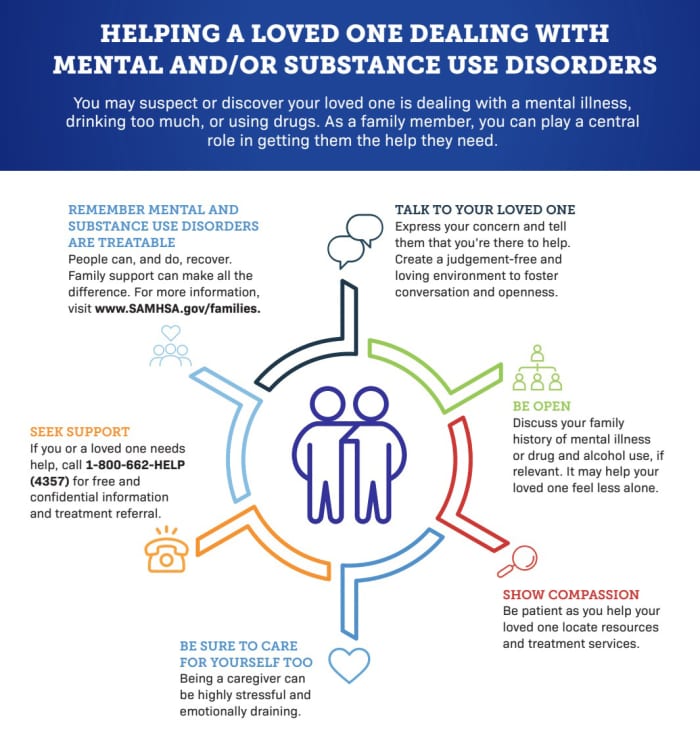
The Substance Abuse and Mental Health Services Administration, a branch of the U.S. Department of Health and Human Services, aims to help families dealing with addiction issues. It offers advice on how to start a conversation with a loved one: “1. Identify an appropriate time and place. 2. Express concerns, and be direct. 3. Acknowledge their feelings and listen. 4. Offer to help. 5. Be patient.”

If you, or a family member, needs help with a mental or substance use disorder, call SAMHSA’s National Helpline at 1-800-662-HELP (4357) or TTY: 1-800-487-4889, or text your zip code to 435748 (HELP4U), or use SAMHSA’s Behavioral Health Treatment Services Locator to get help. You can also find more resources and advice for families from SAMHSA here.

Here are other resources for people with family members who have addiction issues: The Center for Motivation and Change published this book, “Beyond Addiction: How Science and Kindness Help People Change.” Dr. Robert Meyers, who has been working in the field of addiction for four decades, developed the CRAFT approach to encourage a family member to engage in treatement.


Source: SAMHSA

You can email The Moneyist with any financial and ethical questions related to coronavirus at qfottrell@marketwatch.com, and follow Quentin Fottrell on Twitter.

Check out the Moneyist private Facebook group, where we look for answers to life’s thorniest money issues. Readers write in to me with all sorts of dilemmas. Post your questions, tell me what you want to know more about, or weigh in on the latest Moneyist columns.

The Moneyist regrets he cannot reply to questions individually.

More from Quentin Fottrell:

‘This has bugged me all my life’: My estranged father gave me $1,000 a month to buy a house in California. My brother cried foul, and told me to stop. Who’s right?

My stepmother has been less than ethical’: I suspect my stepmom removed me as beneficiary from my late father’s life-insurance policy. What can I do?

My mother cut me from her will and my sibling cashed out her annuity, on which I was a beneficiary. Should I sue?

As B.C. marks another 2,272 toxic drug deaths, addictions doctor tells families: ‘I am so sorry’

As B.C. marks another 2,272 toxic drug deaths, addictions doctor tells families: ‘I am so sorry’

Additional than 2,200 people died in British Columbia from harmful medicine over the system of 2022, generating it the 2nd deadliest yr on history.

The province’s coroner on Tuesday stated there were 2,272 suspected drug toxicity deaths previous 12 months, just shy of the record 2,306 people who died in 2021. Most were center-aged men inside personal residences.

The figures necessarily mean B.C. has noticed far more than six fatalities each individual working day, or all around one individual each and every 4 several hours, for two decades.

“To the families of the 45 folks who have passed absent in the final 7 days on your own … to their friends and their colleagues and their communities and loved types: my coronary heart goes out to you and I am so sorry that we’re continuing to fail,” reported dependancy drugs specialist Dr. Paxton Bach in the course of an psychological information convention Tuesday.

“I hope that we can sit with that grief and that outrage. I hope that just about every citizen of the province reflects on this report and feels that outrage and takes advantage of that to drive the advocacy that is required to deliver adjust.”

The studies were released on the first working day of B.C.’s drug decriminalization initiative, which will make possession of pretty little amounts of sure illicit prescription drugs authorized for all those aged 18 and above.

B.C. chief coroner Lisa Lapointe said the modify is a “crucial initially stage,” but “only one particular evaluate of several that are necessary to end this disaster.”

‘This has gone on far far too long’

Bach spoke in much better terms, saying the province requires a critical and detailed response system with “everything” from a regulated safe provide, helpful client-centred treatment to financial commitment in upstream drivers of material use in buy to avert use. 

“This has long gone on much too extensive,” reported Bach, who is also co-health care director at the B.C. Centre on Compound Use.

“It is an emergency and it requires an urgent response that is commensurate with the scale of injury that we’re viewing and a single that’s reflective of the reaction that our citizens, our household customers, our mates and our communities deserved from the commencing.”

Bach reported the overall health-treatment system has grow to be far more and much more challenging as the crisis wears on.

“Each individual day, myself and my colleagues see sufferers in our offices or in hospitals who are telling us about their ordeals navigating this poisonous drug source. … I hear of blackouts, assaults, seizures, infections, non-deadly overdoses and so several more penalties that we’re not viewing in this report now,” he explained.

“For all people of these deaths we see here today, there are 10 extra folks who are dealing with non-fatal overdoses, infections or lots of other consequences … Not to point out the trauma, the unbelievable trauma, these deaths are inflicting.”

Decriminalization much from enough on its possess, advocates say

The federal minister of psychological overall health and addictions touted the three-calendar year decriminalization pilot job as “daring actions and important plan alter” to aid “carry an end to [the] crisis,” even though advocates lamented it was just a further small phase from an emergency that has lengthy demanded significant motion.

Beneath the new exemption, British Columbians around 18 can now carry up to 2.5 grams of cocaine, opioids, MDMA and methamphetamine for personal use. Officials say law enforcement have been instructed not to seize medication from individuals, but in its place offer “facts about well being and social supports.”

Possession for the goal of trafficking — or dealing — is nevertheless unlawful.

The 2.5-gram threshold is about fifty percent the sum the province had requested when it initially applied for the exemption in late 2021. Drug people have mentioned each thresholds were being far far too lower, specified how most individuals consume substances.

Illicit drug toxicity continues to be the top induce of unnatural demise in the province, in accordance to the B.C. Coroners Support, much earlier mentioned automobile crashes or suicides. Intense concentrations of the powerful opioid fentanyl were detected in the huge the vast majority of deadly overdoses.

Check out | Decriminalization aided Portugal cut down overdose fatalities: 

Poisonous drug deaths remain high in B.C. as decriminalization commences

New facts confirms fatalities from harmful drugs remained substantial in British Columbia final calendar year, with the quantity of deaths only somewhat reduce than the 2021 report. Most of the victims ended up middle-aged males who overdosed inside private properties, B.C.’s coroner states.

Extra than 11,000 British Columbians have died owing to toxic illicit prescription drugs considering the fact that a general public wellbeing emergency was declared more than drug deaths in April 2016.

The previous two months of 2022 were being among the the deadliest of the calendar year, with 182 people misplaced in November and yet another 210 in December.

The report said there is no indication prescribed protected source contributed to illicit drug deaths.

The coroner had previously documented 2,224 individuals had died in 2021 centered on preliminary figures. That determine was up to date Tuesday.

Why vending machines with a lifesaving drug are growing in the US | Opioids crisis

Why vending machines with a lifesaving drug are growing in the US | Opioids crisis

The police chief of the compact Kentucky city of Vine Grove knew from coronary heart-rending encounter why he desired a vending device outdoors his business.

Kenneth Mattingly’s daughter was 2 times introduced to the brink of dying by heroin and 2 times pulled again by paramedics carrying an antidote, naloxone. Then Mattingly responded to an opioid overdose get in touch with early previous 12 months at which a lady saved a friend’s lifestyle simply because she was carrying a naloxone spray, generally identified by its manufacturer title Narcan.

“She was a recovering addict herself and she took place to have Narcan she experienced gotten from a person of her treatment amenities. So she hit him with a dose and introduced him close to. We strike him with a pair extra and mainly saved his daily life,” he explained.

“That received me to thinking. He would almost certainly have died if she hadn’t had Narcan. I gave my law enforcement officers Narcan to have on obligation but it nonetheless usually takes them time to get there and people die in the meantime.”

Police officers and paramedics regard naloxone as one thing of a miracle drug. A spray of the antidote can reverse an overdose so quickly that inside a couple minutes a person is standing up and strolling absent, occasionally unaware just how shut they arrived to dying. But it usually takes almost 10 minutes on normal for a paramedic or the police to access someone overdosing. In rural regions, it can be a large amount more time.

There is, on regular, a demise a 7 days from opioids in Vine Grove and bordering Hardin county – not atypical for a location tough hit by the worst drug epidemic in US record. Mattingly believed it would be a superior notion if absolutely everyone who understood anyone addicted to the medicines had naloxone on hand. But how to get what was technically a prescription drug into the arms of the general general public?

Watching the news one night, the law enforcement main was struck by a report about a clinic in Indiana putting in a vending equipment to dispense naloxone for cost-free and with no inquiries questioned.

Within months, Mattingly had gained the assistance of the city’s mayor and put in location Kentucky’s first naloxone vending machine, repurposed with a disabled payment purpose from the similar type that dispense chocolate bars and cans of gentle beverages, in an alcove outside the house Vine Grove police division.

A Narcan (naloxone) vending machine.
A Narcan (naloxone) vending machine. Photograph: Jim West/ZUMA Push Wire/REX/Shutterstock

The place was seemingly not a deterrent as the machine was emptied in just 24 several hours, a reflection of the extent of the opioid epidemic in a condition wherever overdose deaths jumped 49{35112b74ca1a6bc4decb6697edde3f9edcc1b44915f2ccb9995df8df6b4364bc} in 2020. Kentucky has the 3rd greatest drug overdose death charge in the region.

Mattingly, who remaining the law enforcement office last thirty day period to get the job done as a detective in a neighbouring city, often spoke to those people gathering naloxone as the machine was consistently restocked.

“It ran the gamut of individuals. I experienced a 75-year-previous grandfather whose son is an addict and he was coming over to check out that weekend. He mentioned he wanted to have Narcan at dwelling in case his grandson overdoses. There ended up some design workers who encountered men and women who overdosed, so they were coming to get it,” he claimed.

“I explained to individuals, get two or three packing containers. Set it in your house, keep it in your motor vehicle, maintain it in your bathroom, preserve it wherever you feel you may possibly want it.”

Naloxone vending machines have proliferated throughout the nation, from rural counties to college or university campuses and jails, as the US continues to wrestle to include the climbing toll of an epidemic the Facilities for Condition Command and Prevention estimates has claimed extra than 700,000 lives due to the fact the disaster took off in 1999, driven by drug producers pushing prescription painkillers.

Virtually 110,000 people today died of drug overdoses in the US last 12 months, the vast the greater part from opioids. But now the climbing loss of life toll is primarily the final result of fentanyl, a potent opioid up to 100 moments much better than morphine. The drug is regularly created in China and smuggled into the US by way of Mexico to be laced into heroin, cocaine and methamphetamine.

Before this thirty day period, New York, which sees a drug overdose each and every 4 hours, announced that it will be part of cities from Philadelphia to San Diego in setting up vending devices stocked with naloxone sprays. Municipalities and businesses throughout the nation are positioning them in fireplace stations, libraries, even churches. No payment is demanded while some machines present the user the chance to enter essential demographic information and to find counseling.

Wayne Point out University in Michigan has currently installed 15 naloxone vending equipment in community squares, neighborhood jails and its very own campus in Detroit. It has funding to area yet another 20 this calendar year.

Matt Costello, the programme manager for the Middle for Behavioral Health and fitness and Justice at Wayne Condition, stated the equipment are intended to make it rapid and effortless to get naloxone, no queries asked. They have already distributed a lot more than 19,000 antidote kits.

The overdose-reversal drug Narcan.
The overdose-reversal drug Narcan. Photograph: Matt Rourke/AP

“Our assumed was ‘How do we develop a minimal-barrier, productive way of producing naloxone accessible to even these who weren’t opioid-included?’ We understand that people today who get a naloxone kit might not even be an opiate consumer because you are not heading to use it on you. It’s for a rescue circumstance. Several occasions persons are having these kits to assistance other folks,” he said.

The food stuff and drug administration and Biden govt have sought to make it easier to receive naloxone with out a prescription by declaring a general public overall health unexpected emergency, and states have passed their very own obtain laws. But Costello mentioned that is not without having its challenges.

“We experienced two different instances the place a deputy went in to a pharmacy and bought a free naloxone kit, no problem. But when they went to their primary care medical professional for a different appointment, the health practitioner stated: ‘I did not know you have a difficulty with opioids. I see you have been acquiring naloxone.’ It was exhibiting up on their medical information. That is a barrier we felt did not want to be there,” he claimed.

There are nearly no downsides to the drug. It is safe and sound to administer regularly to somebody overdosing. It is not addictive and are not able to be misused to get higher.

New Jersey’s governor, Phil Murphy, regards naloxone as so risk-free that before this month he declared that his condition will allow for everyone as younger as 14 to get cost-free supplies from a pharmacy without having a prescription or acquiring to establish on their own.

“To be sure, naloxone by itself is not going to conclusion the opioid epidemic. Turning back this obstacle demands regular vigilance from all of us,” he claimed. “But this nation-main plan will ensure that a very important and lifesaving device is place in the hands of extra persons, cost-free and anonymously, so we can help save more precious lives and permit individuals struggling with habit to seek out remedy.”

Nonetheless Mattingly said there had been continue to objections to the vending device in Vine Grove.

“I obtained accused of bringing drug addicts in. Individuals explained they were likely to sit in our parking great deal to inject heroin and get their close friends to Narcan them, and that they ended up then going to split into people’s automobiles in purchase to get dollars to get additional medications. Which is hardly ever at any time happened,” he mentioned.

“I caught a lot of flack for it, as did the mayor. But we rode the storm out and it grew to become something, that once that the negativity died down, I’m telling you, every single time I loaded that machine up, inside of a few of days it was vacant. There was absolutely a humongous need in the community.”

Mattingly, who has saved various life with naloxone, explained Vine Grove has felt the advantage with a fall in crisis phone calls simply because of overdoses, whilst it is much too early to say how numerous life are remaining saved.

Costello stated the proliferation of naloxone vending equipment is a reflection of how deep the opioid epidemic has penetrated American modern society, and how far it however has to operate.

“Change is a gradual course of action but we now see that there is the recognition of the need to have for rescue, like Narcan, as nicely as the have to have for therapy. That adverse perception of folks who turn into embroiled in a challenging dependancy is changing,” he reported.

“The evolution of this has been monumental. Now we’re viewing resourceful other utilizes for Narcan distribution. Old newspaper boxes you used to place a coin in are being repurposed now for Narcan distribution.”