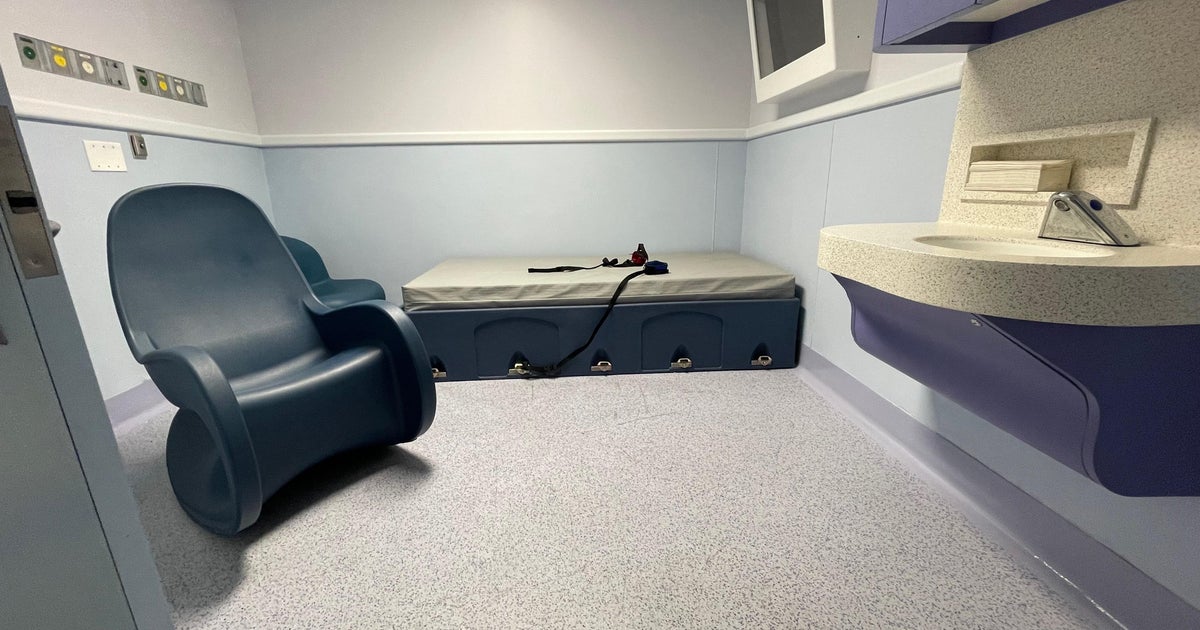
A quarter of a million children in the UK with mental health problems have been denied help by the NHS as it struggles to manage surging case loads against a backdrop of a crisis in child mental health.
Some NHS trusts are failing to offer treatment to 60{35112b74ca1a6bc4decb6697edde3f9edcc1b44915f2ccb9995df8df6b4364bc} of those referred by GPs, the research based on freedom of information request responses has found.
The research carried out by the House magazine and shared with the Guardian also revealed a postcode lottery, with spending per child four times higher in some parts of the country than others, while average waits for a first appointment vary by trust from 10 days to three years.
In 2021-22, trusts were forced to raise the threshold at which they would offer support to tackle backlogs, which resulted in hundreds of thousands of children being turned away or abandoning treatment after long waits.
The total represents 32{35112b74ca1a6bc4decb6697edde3f9edcc1b44915f2ccb9995df8df6b4364bc} of all referrals, up from a quarter the previous year, according to the FoI requests sent to 70 UK trusts and boards providing children and adolescent mental health services (CAMHS).
Previous studies have shown that many of the NHS’s 54 mental health trusts in England have raised the threshold of how ill under-18s have to be before they get treatment, in response to the major and ongoing increase in demand for care, which Covid has exacerbated.
That has sparked complaints from the troubled young people affected, their families and GPs who have referred to Camhs that even under-18s who are seriously unwell and have self-harmed or considered suicide are being denied care because they are deemed not ill enough. Mental health services are also struggling with major shortages of psychiatrists and specialist nurses.
Former children’s commissioner Anne Longfield said long waits are resulting in only the worst crises being prioritised. She has heard repeated stories of children who had attempted suicide failing to be offered support because they did not meet a threshold of multiple attempts. “First there is a judgment of whether they actually meant it,” she said, adding: “the threshold is so high because the system is buckling. It was struggling pre-Covid but the pandemic poured rocket fuel on it.”
Olly Parker, head of external affairs at YoungMinds, said the FoI findings showed a “system is in total shutdown” with “no clear government plan to rescue it”, after the 10-year mental health plan was scrapped.
“In the meantime, young people are self-harming and attempting suicide as they wait months and even years for help after being referred by doctors,” he said. “This is not children saying ‘I’m unhappy.’ They are ill, they are desperate and they need urgent help.”
Average waiting lists rose by two-thirds over two years in England, meaning children are waiting on average 21 weeks for a first appointment in England, although the figure drops to just three weeks in Wales. Only 12{35112b74ca1a6bc4decb6697edde3f9edcc1b44915f2ccb9995df8df6b4364bc} of the trusts which responded to the FoI have met a four-week government target for first appointments.
Almost three-quarters of the English trusts surveyed said they had at least one young person who had been waiting at least a year to be seen, and two-fifths had someone waiting at least two years. The longest wait was 217 weeks, with the average longest wait at all trusts currently 87 weeks across the UK.
This has been Roanna Brewer’s experience. She has two children, 15 and 11, who have been diagnosed with ADHD and autism, and have other mental health problems including self-harm. She has spent more than four years on a CAMHS waiting list for her son, who is still waiting for his formal ADHD assessment, while her daughter has only been offered online group therapy, which is inappropriate for her.
“No parent wants to do what I’ve done, which is lie on the floor of my child’s bedroom every night because they are so terrified and so anxious. They’ve been traumatised enough,” she said.
She has had to take her children out of school due to the lack of support, and despite being a low earner has spent thousands of pounds on private doctors, who have prescribed her children SSRIs.
She believes that CAMHS lumps all her daughter’s mental health problems under the umbrella of autism, which has made it hard to get targeted support, despite promises from before the pandemic of a new funded neurodiversity pathway at the trust which would speed up progress through the waiting list. “We still haven’t seen anyone,” she said.
The figures are echoed in a recent report from the children’s commissioner for England, which warned that too many children are being seen in crisis and hospitalised, which earlier intervention could have prevented.
Dame Rachel de Souza, the children’s commissioner, said children’s mental health was a “key pillar” of her work. “I am particularly concerned to see such a surge in demand for help in my recent research. We’re seeing waiting times increase for the first time in years, and evidence of an increasing postcode lottery for children referred for treatment.”
She urged the government to roll out mental health support teams in every school by the end of 2025, and for any mental health investment to target children. “It is vital that this support is available – without it, too many children may end up in crisis.”
Responding to the FoI findings, a Department of Health and Social Care spokesperson said: “We’re determined to do everything we can to support children and young people with their mental health, no matter their background or location.
“Support in school is vital and that’s why we are increasing the number of school mental health teams to almost 400 by April 2023, providing support to 3 million children and young people.
“We’re also working closely with NHS England to introduce new access and waiting time standards for mental health services, ensuring quicker access to high-quality care across the country.”
One parenting design can practically double a child’s danger of building signs and symptoms of mental health and fitness problems, according to new exploration.
Kids uncovered to “hostile” parenting, characterised by in excess of-controlling habits and severe physical or psychological discipline, have almost 2 times the chance of their friends of acquiring mental health challenges by the time they are 9 years previous, scientists from the College of Cambridge and the College School of Dublin found following researching extra than 7,500 children from infancy via age 9. They thorough their conclusions in a new examine released in the clinical journal Epidemiology and Psychiatric Sciences.
“We are not for a moment suggesting that parents should not established agency boundaries for their children’s behavior, but it is tough to justify repeated severe self-control, offered the implications for psychological overall health,” explained Dr. Ioannis Katsantonis, a doctoral researcher at the College of Cambridge and an author of the study.
Parenting models are deeply connected to a child’s progress and can both be a danger or a protecting aspect for a child’s psychological overall health.
Hostile parenting, in accordance to the researchers, can contain shouting at little ones consistently, plan bodily punishment, isolating kids when they misbehave, damaging their self-esteem or punishing small children depending on the parent’s mood.
Warm and engaged parenting can decrease the likelihood of psychological health concerns in a little one, whilst “over-involved/protective, severe and disciplinary parenting” is a predictor of poor mental wellness indications, the study’s authors pointed out. All those indicators can range from anxiousness and social withdrawal to impulsive or intense actions and hyperactivity.
A growing childhood psychological health crisis
Stress and anxiety and depression diagnoses have been on the increase in children in current yrs, in accordance to details from the U.S. Section of Health and fitness and Human Providers. Stress diagnoses for young children rose 29{35112b74ca1a6bc4decb6697edde3f9edcc1b44915f2ccb9995df8df6b4364bc} in between 2016 and 2020, and depression increased 27{35112b74ca1a6bc4decb6697edde3f9edcc1b44915f2ccb9995df8df6b4364bc}.
Meanwhile, info showed a major minimize in parents’ and caregivers’ psychological and emotional nicely-becoming.
“Our conclusions underline the importance of performing anything attainable to make certain that mothers and fathers are supported to give their kids a heat and favourable upbringing, particularly if wider instances set individuals children at hazard of inadequate psychological wellness results,” reported Dr. Jennifer Symonds, affiliate professor at College Higher education Dublin and an creator of the parenting kinds research.
Parenting design does not entirely decide psychological health and fitness results all those can be shaped by gender, physical health and socioeconomic standing, researchers observed.
“The simple fact that just one in 10 small children (in the analyze) were in the significant-risk category for psychological well being problems is a problem and we ought to be informed of the element parenting might play in that,” Katsantonis stated.
What’s a parenting model?
Someone’s parenting type isn’t the exact as that person’s parenting techniques.
A parenting observe is a specific goal-oriented behavior, like insisting on fantastic desk manners.
Parenting styles have to do with the parent’s crafted-in emotional attributes – this kind of as how delicate they are to their child’s demands – which set the tone for how the parent interacts with their youngster.
In the planet of psychology, there are different names and classifications of parenting models, together with permissive, authoritative, authoritarian or neglectful.
This review grouped parenting styles into 3 categories: – heat: exhibiting affection and attentive to a child’s demands – steady: location apparent expectations and policies – hostile: more than-managing parental behaviors and severe actual physical or psychological self-discipline
Scientists found hostile parenting lifted a child’s prospects of currently being equally large-risk and mild-risk for mental health and fitness difficulties. Scientists identified reliable parenting had a limited protective part for children in the delicate-danger category, but ended up amazed to obtain heat parenting didn’t improve the likelihood of children slipping into the very low threat group. This could be because of to the way other variables, like gender or socioeconomic standing, affect psychological wellbeing outcomes.
Ladies were being extra possible to be in the higher-risk group than boys. Little ones from wealthier backgrounds were being a lot less probably to demonstrate signs or symptoms of mental wellness concerns, though kids with 1 dad or mum ended up much more probable to be significant-possibility for difficulties.
Scientists advised extra intervention and assist not just for small children, but for new dad and mom as nicely.
“Appropriate assist could be a thing as straightforward as giving new mothers and fathers clear, up-to-day info about how most effective to handle young children’s conduct in diverse situations,” mentioned Katsantonis. “There is evidently a danger that parenting style can exacerbate mental overall health challenges. This is some thing we can very easily acquire measures to deal with.”
Need to have support?
The Countrywide Dad or mum Helpline is a free useful resource that presents emotional aid for mother and father from a trained advocate. It’s accessible at 1-855-427-2736.
The Children’s Bureau also retains a list of parenting methods, including information and backlinks to local community businesses, readily available here.
This story includes discussions of suicide. If you or someone you know is in crisis, you can get help from the Suicide and Crisis lifeline by calling or texting 988.
While most kids his age were wrapping up their junior year of high school, Daniel was in a box.
“It was like I was sitting in a gigantic FedEx box being shipped somewhere,” he said. “But like, add one bed and the door had to be closed at all times.”
Daniel’s years of mental health struggles, stretching back into his early childhood, came to a head in early 2022. His often-uncontrollable emotional outbursts became unmanageable; he was “unraveling,” his parents said.
CBS News is only using the first names of former patients interviewed for this story to protect their privacy.
Fearing Daniel might harm himself, his parents took him to the only place they could: the emergency room. After seven days in the ER, Daniel was discharged; hospital staff felt he was no longer in danger. His parents disagreed.
“We were like no, no, no, he is so not ready,” his mom Kathe said. “We’ve been waiting and waiting, but he is not ready.”
Daniel’s therapist even wrote a letter to the hospital saying he wasn’t ready to be released. But the hospital said he needed to go home.
Ten days later, he was back in the ER — this time at another nearby hospital, where he would stay for 19 days.
“There’s barely any room in the [hospital] room to walk around,” Daniel, now 18, said. “So I was just sitting on my bed all of the time. I had some rough times there, like it was really difficult to, like, stay put, you know, and that’s what they expected [me] to do.”
Read more: Inside America’s youth mental health crisis
Instead of the intensive mental health care he needed, Daniel said he got very little help while in the room.
“Dan, rightfully so, he was like, what am I doing here?” Kathe said. “This is not help. You promised help. Where’s the help?”
“Severe shortage”
Stories similar to Daniel’s are growing more common in the U.S., fueled by a critical shortage of doctors, therapists and resources to address the needs of kids in crisis.
In Massachusetts, the number of kids landing in ERs for mental health treatment soared 200{35112b74ca1a6bc4decb6697edde3f9edcc1b44915f2ccb9995df8df6b4364bc}-400{35112b74ca1a6bc4decb6697edde3f9edcc1b44915f2ccb9995df8df6b4364bc} during the pandemic. That same trend is reflected across the country: a 2021 study found the number of kids stuck in ERs awaiting treatment tripled between 2019 and 2021.
“I do think it is very bad,” said Dr. Muniya Khanna, research scientist at Children’s Hospital Philadelphia and a former faculty member at the University of Pennsylvania’s Department of Psychiatry. “Suicide is now the number two leading cause of death in children 10 to 24. And this trajectory is only getting worse after the COVID pandemic. And so, we are absolutely in a crisis.”
Experts say it’s a demand and supply issue: demand for mental health services has increased after the pandemic and the supply of trained staff hasn’t increased enough to fulfill the needs.
Forty U.S. states and Puerto Rico all have “severe” shortages of child psychiatrists, according to data from the American Academy of Child and Adolescent Psychiatry (AACAP) analyzed by CBS News. Only the District of Columbia reported having enough child and adolescent psychiatrists to meet AACAP standards.
RELATED: Half of all Texas school districts have no mental health services
Amid this lack of formal mental health treatment options, ERs have become the last and only option for many families, according to numerous mental health experts interviewed by CBS News.
“Kids languish for days, weeks, sometimes even over a year in children’s hospitals around the country,” said Zach Zaslow, vice president of advocacy and community health at Children’s Hospital Colorado. “This is not just a Colorado problem, and it happens because there’s nowhere else that’s safe for them to go.”
In Colorado, Michaela, who grew up in foster homes, told CBS News she tried get a special therapist to address her anger, anxiety and depression nearly a dozen times.
“I would be crying out for help,” Michaela said. “I would say I need support. And it wouldn’t happen until I came to a point where it was too late to really come back and not make a bad decision that in the end would hurt me.”
Michaela said she tried to hurt herself, including several suicide attempts, over those years. She said the system in its current form does not do enough for young people until they reach a crisis point.
“I think it’s really hard to get into a good therapist or just a therapist in general,” Michaela said. “It doesn’t matter if they’re good or bad.”
Michaela said she had a total of eight ER visits for mental health crises, and often left the ER without seeing a therapist. The few times she did meet with a mental health expert, she said her therapy was cut short.
“It did cause me to have to go back [to the ER] again like less than a year later just because I didn’t get the help that I needed,” said Michaela. “And I think it was partly because I left too early.”
Michaela, who is now 20, said she is proud that she’s “beat the odds” and survived. She now sits on a youth advisory board as part of a partnership between the University of Colorado and Children’s Hospital Colorado.
“It definitely made me feel like all of that pain and suffering that I had to go through wasn’t a waste,” said Michaela. “Because now I can be the voice of power for so many other young people who are stuck in the same situation that I was and give them hope that I didn’t have then.”
A revolving door at ERs
Experts told CBS News the use of ERs as stopgap mental health treatment measures simply doesn’t work.
“For anybody who’s been in an emergency department for more than a few hours, it is not an ideal place to be,” said Dr. Kevin Carney, an emergency room physician at Children’s Hospital Colorado.
Massachusetts General Hospital in Boston, where Daniel stayed for 19 days, acknowledged the problem, saying in a statement to CBS News that “shortages [of proper mental health treatment options] have forced youth in crisis — and their families — to turn to their local emergency departments where ongoing capacity challenges may mean waiting for days or weeks for appropriate inpatient care to become available.”
For kids in crisis, ER visits can make matters even worse.
A December 2022 American Academy of Pediatrics study found more than a quarter of children who went to ERs for mental health issues were hospitalized — either in ERs or in mental health facilities — within six months. And about 26.5{35112b74ca1a6bc4decb6697edde3f9edcc1b44915f2ccb9995df8df6b4364bc} were back in the ER within a week.
Dr. Sandra DeJong, a psychiatrist and the secretary with the American Psychiatric Association, said if kids don’t get proper care early, their condition can rapidly get worse.
“My fear is that we really have significant risk for the future,” DeJong said. “Because if we don’t address the needs of particularly young people now, then they are going to grow up to be people who are diminished and don’t have the capacity to function in the way that they could have if they had gotten the treatment.
“And frankly, they’re going to be expensive to care for because if they go untreated, there are situations that are likely to get worse and then they will need higher intensity care. It’s just not an effective way to approach the problem.”
Meanwhile, more and more kids find themselves in crisis. Suicide attempts by teen girls jumped more than 51{35112b74ca1a6bc4decb6697edde3f9edcc1b44915f2ccb9995df8df6b4364bc} between 2019 and 2021, according to a study by the CDC. And a recent study published in the journal JAMA Pediatrics found the number of suicide attempts by overdose reported to poison control centers more than doubled between 2000 and 2020.
The number of kids with mental health issues coming to the ER “has been unrelenting,” said Zaslow.
“And it’s not acceptable,” he added. “It means ultimately, at the end of the day, that there are kids waiting for those beds every single minute as soon as one frees up.”
Dr. Taylor Louden, medical director at Cook Children’s Medical Center in Fort Worth, Texas, said that in recent years he’s seen more and more young patients come into his ER for mental health problems.
“We are seeing even younger and younger kids, 8-, 9-year-olds — ages of my kids,” said Louden. “Some are expressing that they want to hurt themselves that they want to die and it’s really tough to hear.”
Not only are there more kids showing up in ERs, Louden said, but they’re staying longer, too.
“No one should ever be in an ER longer than a few hours,” he said. “That means that the system is broken, in my mind.”
Inside an ER’s psych room
04:04
“It’s not acceptable”
Numerous experts CBS News interviewed said serious investments are needed to increase the mental health resources available to kids in crisis.
CBS News went to the person in charge of the system in the U.S.: Health and Human Services Secretary Xavier Becerra, who said “we have to do a lot” to fix the problem.
“It wasn’t until recently that you could get an insurer who actually gave you access to mental health services,” Becerra said. “And we still have a system where mental health is what you get at a primary care physician when you go to a family doctor.
“That’s got to change. Mental health, it’s got to be part of primary health, not something where you get a referral to a specialist.”
When asked about children getting stuck in ERs rather than proper mental health treatment facilities, Becerra said it was “not acceptable.”
“It’s not care,” Becerra said. “It’s housing them until we can get somebody who could give them professional help. They’re crying out and shame on us that we haven’t prepared.”
Becerra pointed out that several states and the federal government are investing billions of dollars into mental health care. And last summer, the Biden White House announced $300 million to expand mental health services in schools.
“That’s where the president last year in the State of the Union and again, double down this year has said, Congress, we’ve got to step up, we’ve got to finish the job of making sure that mental health is treated like any other aspect of health,” Becerra said.
But doctors Khanna and DeJong both said much of this federal spending comes in the form of one-time grants that will eventually expire.
“Now it’s really time to start investing time and resources on all levels for making that happen more on a regular basis,” said Khanna.
Attracting more people to work in youth mental health must be part of the equation, DeJong said.
“You can build all the beds and clinics in the world,” DeJong said. “But if you don’t have enough people to staff them, which is a real problem right now, we’re not going to meet the needs that we’re facing.”
Secretary Becerra agreed.
“You just got to put your money where your mouth is. And President Joe Biden is trying to put his money there,” Becerra said. “We need now the partnership with Congress to make it happen.”
HHS Secretary Xavier Becerra speaks about youth mental health crisis
06:53
Some aren’t waiting on the federal government to help, instead trying new approaches in attempts to address this crisis and meet young people where they are.
One of those approaches comes in the form of a youth advisory group at Children’s Hospital Colorado. The advisory group consists of teenagers who regularly meet to give advice to therapists and hospital officials about how to meet the needs of young people.
Another new approach: construction of a new, first-of-its-kind facility at the Cherry Creek School District outside Denver that will combine a mental health medical facility and a school when it’s completed in the fall of 2023.
When kids in crisis leave ERs
Finding help after a hospital stay can be even more challenging.
The Academy of Pediatrics study found just 31.2{35112b74ca1a6bc4decb6697edde3f9edcc1b44915f2ccb9995df8df6b4364bc} of children had a mental health follow-up visit within seven days of leaving the hospital and only about half had a mental health follow-up with a specialist within 30 days of leaving the hospital.
“I think what is very distressing about this mental health crisis that we’re facing is that while we very much take as part of our responsibility to make sure that we are keeping kids safe and stabilizing them when they’re in crisis or have harmed themselves,” Dr. Carney said. “The very hard thing is knowing that at that point I can’t do anything else for that child.”
Dr. Glenda Wrenn Gordon knows those statistics firsthand: she and her 18-year-old son lived them.
Wrenn Gordon said even though she’s an Atlanta-area psychiatrist herself, she was surprised by the effort she had to put in to find help for her son in crisis after she got him to the ER. She said she thought she knew what to do, but still found the system of finding and getting care post-hospital visit to be daunting.
“We moved very quickly through the ER because I knew exactly what to say and how to say it to get us where we needed to go,” she said. “I was extremely frustrated for how hard it was. I was thinking about these other families. What hope do they have and what it must be like?”
When asked what she fears most if the system is not changed, Wrenn Gordon was blunt.
“We will continue to bury our children,” she said.
Atlanta psychiatrist struggles to find help for her son
02:56
If you or someone you know is in crisis, get help from the Suicide and Crisis Lifeline by calling or texting 988.
In addition, help is available from the National Alliance on Mental Illness, or NAMI. Call the NAMI Helpline at 800-950-6264 or text “HelpLine” to 62640. There are more than 600 local NAMI organizations and affiliates across the country, many of which offer free support and education programs.
Items featured are independently selected by editors. Products purchased through our links may earn us a commission.
To take care of your furry bestie, pet insurance is something to consider. Since rescuing my dachshund, who I named Relish in honor of the hot dog topping, I have been going back and forth on it. Was it worth the cost? Would it cover anything? Dachshunds are especially prone to back problems, which often require surgery, physical therapy, or both, so it’s of extra concern for me.
But when I started my research, I quickly found that not all pet policies are the same — the cost and the coverage all varies. Here are six of the most well-known providers, what they cover, the upsides and the downsides.
Embrace has pet insurance plans with various deductibles and annual coverage limits for pet parents to find the best fit for them. In the standard accident and illness plans, physiotherapy, chiropractic and some alternative therapies are included. Plus, exam fees for covered conditions are included and there is a reimbursement for vet-provided behavioral treatments.
For the nervous pet parent (I definitely fall into that category), it also includes access to a 24/7 pet health line. Additionally, for those with more than one pet, there’s a 10{35112b74ca1a6bc4decb6697edde3f9edcc1b44915f2ccb9995df8df6b4364bc} discount and also a 5{35112b74ca1a6bc4decb6697edde3f9edcc1b44915f2ccb9995df8df6b4364bc} discount for active military members and veterans (excluding New York and Tennessee).
Plans available: Accident and illness, accident-only, wellness.
Deductible options: $100 to $1,000 annually.
Coverage limits: $5,000 to unlimited per year.
Reimbursement options: 70{35112b74ca1a6bc4decb6697edde3f9edcc1b44915f2ccb9995df8df6b4364bc}, 80{35112b74ca1a6bc4decb6697edde3f9edcc1b44915f2ccb9995df8df6b4364bc} or 90{35112b74ca1a6bc4decb6697edde3f9edcc1b44915f2ccb9995df8df6b4364bc}.
Pros:
Veterinarian office visits for illness and accidents are covered and only a two day waiting period for accident coverage.
The coverage includes a 24/7 pet telehealth line.
The deductible goes down by $50 each year you don’t file a claim. That means more money in your pocket if your pet stays healthy.
Cons:
There’s a waiting period before a dog’s orthopedic injuries are covered (there are also ways to reduce it with a vet examination).
If you increase your coverage, pre-existing conditions reset.
Pets Best is the best of both worlds in a way. It’s great coverage with a good price. And it is very customizable with so many plans available. There are standard waiting periods: three days for accidents, 14 days for illnesses and six months for cruciate ligament issues (in most states).
Plans available: Accident and illness, accident-only, wellness.
Deductible options: $50 to $1,000 per year.
Reimbursement options: 70{35112b74ca1a6bc4decb6697edde3f9edcc1b44915f2ccb9995df8df6b4364bc}, 80{35112b74ca1a6bc4decb6697edde3f9edcc1b44915f2ccb9995df8df6b4364bc} or 90{35112b74ca1a6bc4decb6697edde3f9edcc1b44915f2ccb9995df8df6b4364bc}.
Pros:
There is an ample range of deductibles options.
You can pay your vet directly if they agree, so you don’t have to wait for reimbursement.
There’s a 5{35112b74ca1a6bc4decb6697edde3f9edcc1b44915f2ccb9995df8df6b4364bc} multipet discount.
You probably know the American Society for the Prevention of Cruelty to Animals (ASPCA) for those sad commercials and the animal shelters that it runs. But they also offer pet insurance plans.
This plan is pretty simple: the waiting period is 14 days for all conditions, including accidents, illnesses and cruciate ligament injuries (compared to other plans who have six month waiting periods for some problems).
Plus, the premium rates are some of the most affordable on the market.
Plans available: Accident and illness, accident-only, wellness.
Deductible options: $100, $250 or $500 per year.
Reimbursement options: 70{35112b74ca1a6bc4decb6697edde3f9edcc1b44915f2ccb9995df8df6b4364bc}, 80{35112b74ca1a6bc4decb6697edde3f9edcc1b44915f2ccb9995df8df6b4364bc} or 90{35112b74ca1a6bc4decb6697edde3f9edcc1b44915f2ccb9995df8df6b4364bc}.
Pros:
That shorter waiting period of 14 days compared to some with monthslong waits.
The standard plans cover alternative therapies, behavioral issues and congenital conditions.
It covers stem cell therapy and microchipping.
If you’re a horse owner, you can get coverage in certain states.
Cons:
A claims process can take up to 30 days.
Monthly payments incur a transaction fee.
You must call (rather than getting a quote online) if you’re interested in unlimited annual coverage.
Nationwide doesn’t have the breadth of customizations that some other companies offer but it’s got some interesting options nonetheless. The first, Whole Pet covers a range of accidents and illnesses and reimburses part of your vet bills — up to your annual limit. For the second option, Major Medical offers a less comprehensive option where you pay a set amount for each condition, regardless of the vet charge.
Plans available: Accident and illness, wellness.
Deductible options: $250 per year.
Reimbursement options: For Whole Pet plans, 50{35112b74ca1a6bc4decb6697edde3f9edcc1b44915f2ccb9995df8df6b4364bc} or 70{35112b74ca1a6bc4decb6697edde3f9edcc1b44915f2ccb9995df8df6b4364bc}. For Major Medical plans, there are set reimbursement caps for each condition.
Pros:
Exotic pets can be coerced under their plan but you have to call to get those options versus adding it online.
Covers holistic and alternative treatments under the plan.
Cons:
Premiums are some of the more expensive when compared to other plans.
Pets must be younger than 10 years old to be covered.
You can’t customize the deductible or coverage limits online, you have to call.
There’s a 12-month waiting period for cruciate ligament injuries (which is longer than many others).
In most states, Trupanion deals with deductibles differently than most other pet insurance providers. Instead of deductibles being charged each year, they charge deductibles per condition.
On the downside, Trupanion doesn’t have a wellness plan offering, and charges pet parents extra for acupuncture, physical therapy and behavioral treatments.
Plans available: Accident and illness.
Deductible options: $0 to $1,000 lifetime deductible per condition. In Florida, plans have no deductibles.
Reimbursement options: 90{35112b74ca1a6bc4decb6697edde3f9edcc1b44915f2ccb9995df8df6b4364bc} in most states. In Florida, you can select any percentage between 50{35112b74ca1a6bc4decb6697edde3f9edcc1b44915f2ccb9995df8df6b4364bc} and 90{35112b74ca1a6bc4decb6697edde3f9edcc1b44915f2ccb9995df8df6b4364bc}.
Pros:
There is unlimited coverage for all pets under the plan, including breed-specific conditions and congenital conditions.
Your premium doesn’t automatically rise as your pet gets older.
Short waiting period of five days for injuries.
Cons:
There’s a long waiting period for illnesses
There are extra charges for acupuncture, physical therapy and behavioral treatments.
This story was at first printed February 17, 2023, 12:00 AM.
The American Academy of Pediatrics recently published guidelines for the diagnosis and management of pediatric obesity for ages 2-19 years.
Initially, media outlets have seized on a very small part of the document that focuses on medication and surgery treatments for severe obesity. While these treatments for children certainly deserve consideration, there is so much more to these guidelines than that.
The guidelines emphasize the complexity of pediatric obesity as a medical problem but also a socioeconomic, psychological, cultural and racial problem. A total of 19{35112b74ca1a6bc4decb6697edde3f9edcc1b44915f2ccb9995df8df6b4364bc} of all children in the United States have obesity. It is a chronic medical problem associated with increased disability and disparity. Having overweight makes it more likely that a child will have diabetes, heart disease, high blood pressure, arthritis, chronic pain and depression. And, it is associated with increased health care expenditure; in fact, the document quotes a cost of $9.4 to $14 billion lifetime medical costs for the population of 10-year-olds with obesity alone.
A child has obesity if they are greater than the 95th percentile for body mass index. The precursor to this is overweight, which is a BMI in the 85th to 95th percentile. While numbers certainly matter, most pediatricians have moved away from strict BMI discussions in favor of expressing concerns for current and long-term health, mental health and family history. There is a long history of judgment and stigma conveyed towards children with overweight/obesity from both the medical establishment and society in general.
This publication emphasizes the importance of awareness of this stigma and moving past it to recognize weight concerns as a medical diagnosis not a personal or parenting failure. The first step towards reversing this stigma is to move to person-first language: a child with obesity, not an obese child, or a teen with overweight, not who is overweight.
Messages from report
Important take-home messages from the document include:
— Obesity and overweight are multifactorial problems that must be addressed individually, locally and globally. The first step towards improving the lives of those affected by obesity is to acknowledge and begin to understand the complexity of the problem.
— The greater the number of Adverse Childhood Experiences, the greater the likelihood of obesity in a child. Poverty, mental illness and divorce all serve as increased risk factors for obesity.
— Obesity is a chronic disease that leads to metabolic and anatomical changes. Children with obesity become adults with obesity. They are at risk for heart disease, diabetes, high cholesterol, mobility challenges and mental health disorders.
— Socioeconomic status and living in an under-resourced community have a direct correlation with pediatric obesity. If future programs are to be successful, they must address these big problems in addition to focusing on the individual child. Food insecurity has been shown to alter eating patterns and lead to higher risk of overweight.
— Neighborhoods matter: A prevalence of fast food restaurants, safe outdoor play and fresh produce all have an impact on pediatric obesity. Communities who take these things into consideration can make changes to have long-term effects on this problem.
— Parents have the greatest effect on childhood obesity. A combination of genetics, culture and habits contribute to the passing on of obesity from parent to child. Maternal weight gain during pregnancy to controls on screen time of adolescents and everything in between, exemplify the many diverse ways parents affect a child’s risk of obesity. Healthy weight maintenance can only be achieved through family-focused care.
Multidisciplinary approach
The guidelines recommend that pediatricians evaluate children and teens with overweight and obesity carefully including a complete history, family history, physical exam and lab work. While the initial screening may take place at a wellness checkup, the time needed to properly address this problem will require follow-up appointments.
Further, a multidisciplinary approach using a dietitian, physical therapy and mental health provider expertise is essential after the diagnosis of obesity. It is also critical that providers make “co-morbid” diagnoses such as diabetes, sleep apnea, high blood pressure or depression and begin to address those medically.
Early intervention for problems such as these has been shown to decrease long-term impact and even reverse detrimental changes.
The guidelines share recommendations for 26 or more hours of face-to-face, family-centered, multi-component intervention being an effective way to treat pediatric obesity. This includes practical nutritional expertise, exercise support and behavioral therapy.
Availability of these types of care are very limited in Lancaster and nationwide. Pediatricians must work to provide access to what is available while advocating for the development of improved services in their communities.
Small changes
Providers are encouraged to help families focus on small changes such as eliminating sugar beverages or adding in 60 additional minutes of exercise a week.
Despite some media-coverage emphasis, the use of medication or surgery to combat pediatric obesity is a very small part of the content.
There are several medications available for use in children over the age of 12 that can be used as an adjunct to other therapies for children and teens whose condition requires further intervention.
Some of these medications require off-label use, and most of them have side effects, for these reasons many pediatricians may choose to refer a child to a Weight Management Expertise Clinic for surveillance. There is no evidence to suggest that medication alone is a sufficient treatment for pediatric obesity.
The American Academy of Pediatrics guidelines state that bariatric surgery has been shown to be safe and effective in children over the age of 12. Any child or teen with a consistent BMI greater than 35 can be considered for escalated care in the form of intensive therapies, and perhaps medication and/or surgery. Eligibility for bariatric surgery is based on multiple factors, with the presence of secondary problems such as diabetes placing more urgency on intervention.
The American Academy of Pediatrics publishes guidelines like this to inform and guide providers, but also for the importance of advocacy. Guidelines like these will hopefully affect decisions at a local and national level about things like physical education, housing developments, programs to address food insecurity, and of course insurance coverage.
If you are concerned about your child’s weight, start with their healthcare provider. Remember that overweight and obesity are chronic, multifactorial diagnoses that can respond to many different interventions.
Educate yourself about your family history, and consider other problems that could be contributing to your child’s weight gain. And finally, consider starting with small, household-wide changes, as they have been shown to make a big difference.
Dr. Pia Fenimore, of Lancaster Pediatric Associates, answers questions about children’s health. You can submit questions at Features@LNPnews.com.
Success! An email has been sent with a link to confirm list signup.
Error! There was an error processing your request.
When you inform an grownup to not take in sure foodstuff owing to a wellness issue, it doesn’t drop on deaf ears. But attempt telling your child to substitute cookies or chips with a thing more healthy. Shortly, you will see their lips quivering and right before you know it, you allow them to eat what their heart wants. When it will come to diabetic children, you have to have to regulate their diet program as healthy food arranging is a critical element of diabetic issues management. There is no want for your very little 1 to try to eat distinctive meals, but as a mom, you can use very easily offered elements to cook dinner nutritious and tasty foods for your diabetic baby. Listed here are some food guidelines for a diabetic child.
Diabetic little ones must consume a assortment of foodstuff, primarily various types of greens.
Overall health Photographs consulted Dr Sumeet Arora, Guide – Paediatric Endocrinology, Artemis Hospitals, Gurugram, to locate out what diet of a diabetic baby really should appear like. But initial, it’s vital to know about diabetic issues in young children.
Continue to keep children absent from unhealthy foods. Impression courtesy: Shutterstock Freepik
How can you detect diabetes in kids?
If your child urinates a great deal or feels thirsty most of the moments or will get exhausted conveniently and loses bodyweight, you really should take the child for a check. Dr Arora says a basic random blood sugar take a look at displaying a degree clearly far more than 200 milligrams for every decilitre is indicative of diabetic issues.
Prevalent types of diabetes in young children
In kids, variety 1 diabetes can manifest at any age team from six months to 18 many years of age. It is a lot much more common in young children, however, with rising cases of weight problems in little ones, the incidence of type 2 diabetic issues has shot up significantly, shared the specialist.
Wholesome and tasty diet program ideas for diabetic little ones
You don’t have to hunt for unique veggies for your child’s eating plan. Dr Arora advised the outdated fashioned home-cooked thali, which has a great mix of non-starchy veggies, protein and sophisticated carbs. He states that it is the finest way moms can present nutritious and healthier foods to their baby with diabetic issues.
Breakfast selections for a child with diabetic issues
Their breakfast can contain besan cheela rolls containing greens and cottage cheese. This offers a great equilibrium of carbs and protein. Poha is yet another option, but incorporate a lot of veggies, including beans and carrots.
Lunch solutions for a child with diabetic issues
For lunch, you can make a healthier meal with a quarter plate salad, a bowl of raita, vegetable of your preference like bhindi (okra) and 1 bowl of of dal with rice.
Supper possibilities for a boy or girl with diabetes
Evening meal can be spinach with roti, and if you want then you can incorporate salad, raita and dal to it. According to the qualified, okra and spinach are non-starchy and fiber-rich vegetables. They aid to lessen the food’s glycemic index, which is a benefit assigned to food items things. It is primarily based on how swiftly and how higher people foodstuff induce increase in blood glucose amounts.
It’s not like diabetic young children can’t eat in a cafe. Although feeding on outside, portion dimensions should really be taken into consideration to prevent overindulgence.
Never allow youngsters with diabetes have sweetened drinks. Image courtesy: Shutterstock
Food items merchandise to be averted by diabetic children
They must keep absent from sweetened beverages, which includes juices, carbonated beverages and sweet lassi. They just insert empty calories, which implies they will get no nutrition from them. Packages things like cookies and nuts as effectively as oils that are made use of consistently during deep frying, improve the quantity of transfats and need to be minimised to avoid the threat of potential cardiovascular ailment and most cancers.