
How Better Financial Literacy Could Improve Women’s Health | News & Community

How Better Financial Literacy Could Improve Women’s Health | News & Community

Published in partnership with the USC Price Center for Social Innovation in support of the Neighborhood Data for Social Change platform (NDSC): The platform is a free, publicly available online data resource that provides reliable, aggregated data at the city, neighborhood and census tract level. The mission of the USC Price Center for Social Innovation is to develop ideas and illuminate strategies to improve the quality of life for people in low-income urban communities.

Beyond genetics, many factors affect our health — some are related to personal behaviors and lifestyle choices, but others are connected to the material and social conditions under which we live.

The Social Determinants of Health (SDOH) were developed as a way to understand those overarching social and economic conditions embedded in our lives that influence our health status.

The SDOH are currently understood to be:

  • Economic Stability
  • Health Care and Quality
  • Neighborhood and Built Environment
  • Social and Community Context
  • Education Access and Quality.

Of the factors that influence the SDOH, the association between personal economics and health is one of the most significant.

Health & Wealth

A Black woman with a ponytail over her left shoulder runs through a green landscape while smiling and holding a water bottle

Financial resources directly influence our quality of living conditions, standard of food and caliber of healthcare. | Igor Alecsander/Getty Images

Wealth has cascading effects throughout the lives of individuals and families. In our society, the quality of one’s living conditions, standard of food and the caliber of healthcare are all directly related to financial resources.

A study of over a billion tax records spanning 15 years by the Journal of the American Medical Association found that lower incomes were correlated with higher disease prevalence, severity and lower overall life expectancy.
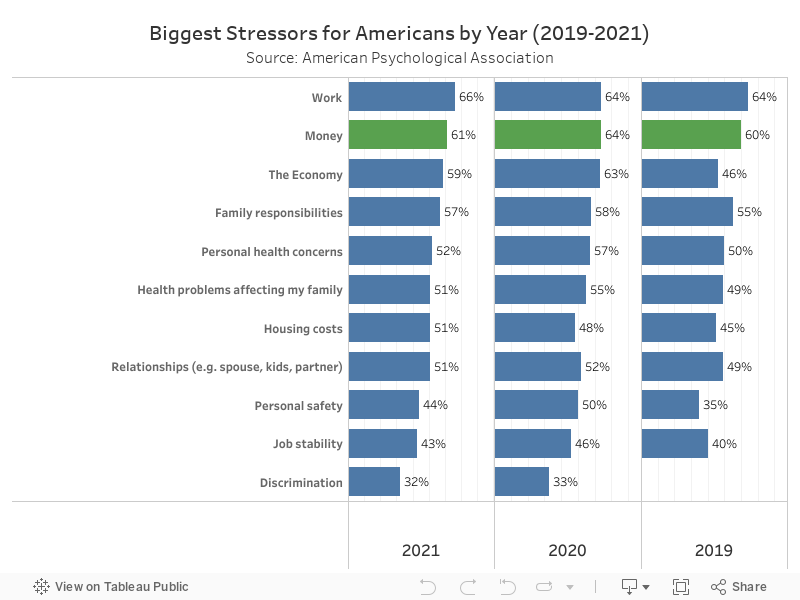
It is not surprising, then, that anxiety around finances and health consistently ranks as one of the top stressors for Americans.

Because health disparities are associated with unequal financial means, they overlap with traditional inequities connected with gender and race as well.

Gender & Race

A Black woman wearing blue protective gloves works at a commercial kitchen sink

During the COVID-19 pandemic, women were overrepresented in public-facing and low-wage industries that shed workers. | IVAN ARAGON ALONSO/Getty Images/iStockphoto

Overall, women are generally poorer than men, earning just 85 cents for every dollar their male coworkers earn, making the link between finance and health particularly salient.

Single-family households headed by females were almost twice as likely as those headed by males to be living in poverty.

According to the American Psychological Association, women “report higher levels of stress about money and are more likely than men to say they feel stress about money all or most of the time.”
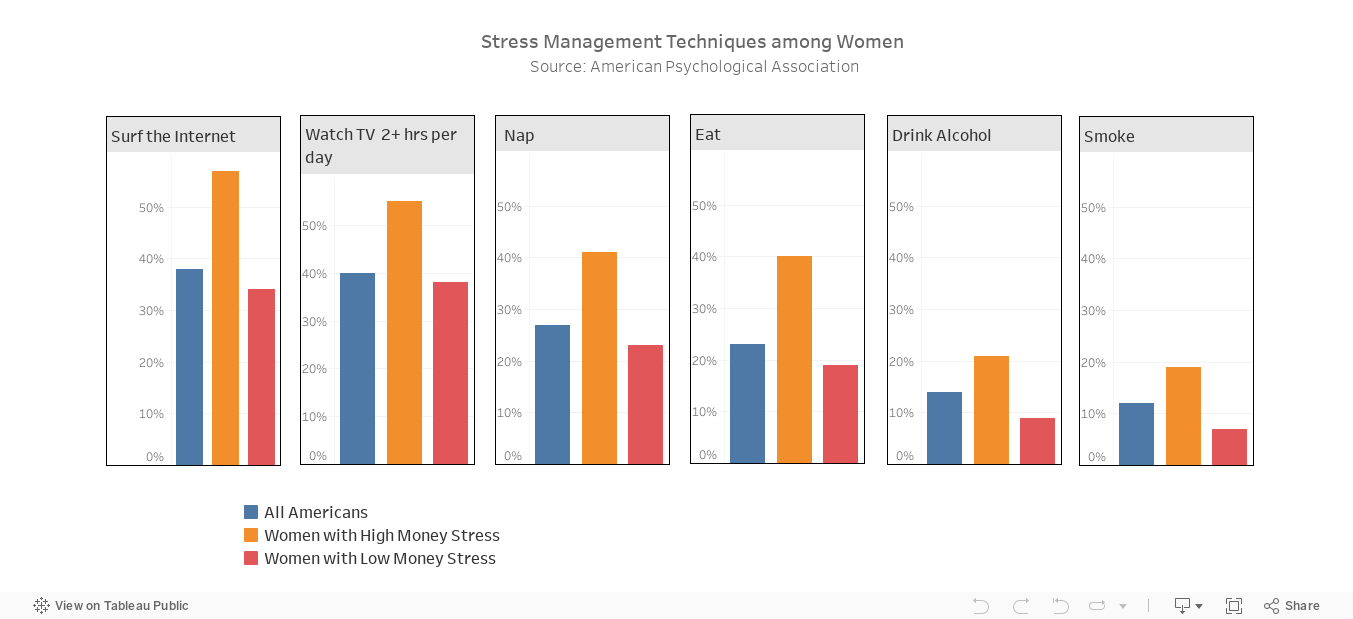
Stress about money can manifest in unhealthy coping mechanisms that may have negative health consequences of their own. Women who experience financial stress are more likely to engage in sedentary or unhealthy behaviors to manage stress — which include watching TV or surfing the internet, eating, drinking alcohol or smoking — than their low-stress counterparts.

Black, Latina and Asian women all self-report worse health than their white counterparts.
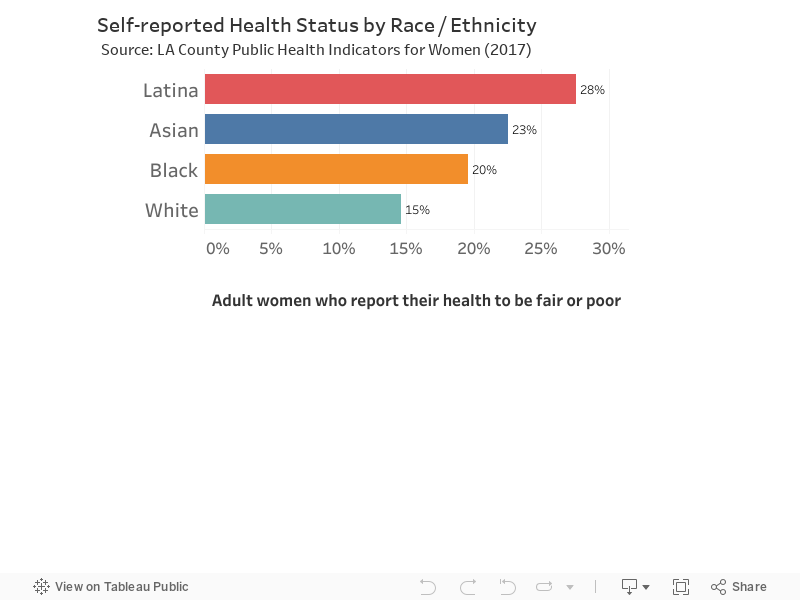
Women who earn less than 100{35112b74ca1a6bc4decb6697edde3f9edcc1b44915f2ccb9995df8df6b4364bc} of the Federal Poverty Level all have more poor mental- and physical-health days than white women. Additionally, compared with white women, Black women have higher levels of smoking, obesity, heart disease, cancer and infant and maternal mortality; Latinx women have high levels of obesity and diabetes-related mortality.

The COVID-19 pandemic only exacerbated these financial disparities, as women were overrepresented in public-facing and low-wage industries that shed workers during the crisis.

Despite earning less, women also suffer from a financial knowledge gap.

The Need for Financial Literacy

Overall, financially knowledgeable individuals are more likely to accumulate wealth and stave off the negative health effects that stem from poverty.

But according to a Standard and Poor’s Global Financial Literacy survey, women in the United States and throughout the world display less financial literacy than men.
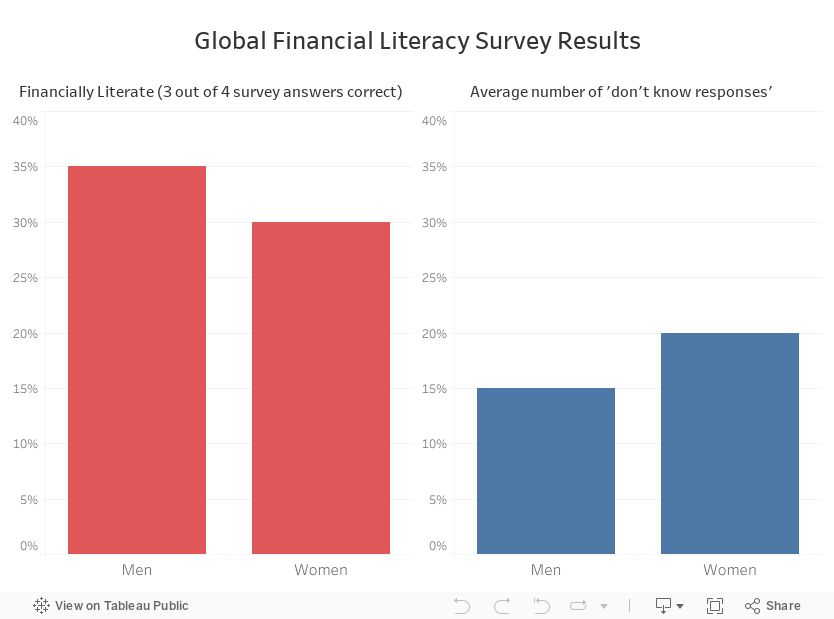
Experian defines financial literacy as “the confident understanding of concepts including saving, investing and debt that leads to an overall sense of financial well-being and self-trust.” Financial literacy can include everything from increasing 401k contributions as salary increases, to having an emergency fund, to understanding credit card interest rates or knowing how to check a personal credit score.

The reasons for this knowledge gap are complicated and still being understood. Past literature suggested that traditional roles within the family have given men more control over finances and therefore allowed them to accumulate more financial knowledge. However, these gender differences persist even among single men and women.

Others have hypothesized that the financial knowledge gap is a result of unequal gender roles within the broader society.

A masked woman works at a bakery cash register while another masked woman arranges loaves of bread on a shelf behind her

Financial literacy programs may provide an answer to closing the financial knowledge gap and helping women leverage their assets in ways that benefit their wealth and health. | alvarez/Getty Images

Given the precarious position women find themselves in with respect to money, one solution might be to help them understand how to do more with less. Financial education may provide an answer to closing this knowledge gap and helping women leverage their financial assets in ways that benefit their overall financial and physical health. While there is limited research, a small Creighton University study on the effect of financial education on the single, low-income women showed an $8,026 increase in average annual income and significant enhancements in health-related quality of life for women who completed the program.

In the Standard and Poor survey, although men generally had more financial knowledge, they were also more likely to be “very confident” about their answers, even when they were wrong, with women more likely to admit when they were unsure of the answer to a question. This suggests that they may be more amenable to education from financial literacy programs.

Closing the Knowledge Gap

The Iris Cantor – UCLA Women’s Health Education and Research Center (WHERC) is attempting to close this knowledge gap and provide a valuable service for women. Founded in 1995, the Center aims to fuse research, medical instruction, clinical care for women and public health education around the common goal of improving women’s health throughout the life cycle.

The program format and curriculum for one of the public programs offered by the Center, called Women’s Health & Money, were built on a focus group study conducted by WHERC to explore the connection between finances and mental health among Latinas in Los Angeles. The study concluded that interventions should incorporate peer support, education on financial products and tools and therapeutic approaches to addressing financial stress.

A side-by-side composite of two headshots, each of smiling women with dark hair wearing business attire

Two instructors of the Women’s Health & Money public program offered by The Iris Cantor – UCLA Women’s Health Education and Research Center are Consultant Health Coach Luz Chacón (left), a wellness coach, and Financial Capabilities Coach Erika Toriz-Kurkjian (right), founder and executive director of Haven Neighborhood Services.

Utilizing study outcomes and evidence-based health and financial education programs, the initiative was originally a series of four free health and financial education sessions aimed at improving women’s health and financial literacy. Initially, it was offered at job-training centers, worksites, schools and community centers, but since the pandemic the format has been consolidated and moved online. The program’s focus is on the social components that influence the health and financial stability of low-to-moderate-income women in Los Angeles. These factors include meaningful work, stability, living wages, equity, education, community and mobility. Low-to-moderate-income women receive life skills training with financial and health coaching, assistance accessing health care and individualized money management assistance. The objective is to move women towards achieving self-sufficiency, financial security, housing stability, fulfilling employment and optimal health.

Over half of the participants in the program described their financial situation as “just getting by.” More than half also indicated that they were only making the minimum payments on their credit cards. Sixty percent of the participants had incomes below $23,700. After completing the program follow-up, surveys of participant cohorts indicated that knowledge of good financial management practices was improved by 13 to 18{35112b74ca1a6bc4decb6697edde3f9edcc1b44915f2ccb9995df8df6b4364bc} and motivation to follow those practices was enhanced by 20 to 32{35112b74ca1a6bc4decb6697edde3f9edcc1b44915f2ccb9995df8df6b4364bc}. On the health side, health-related knowledge gains ranged from 17 to 23{35112b74ca1a6bc4decb6697edde3f9edcc1b44915f2ccb9995df8df6b4364bc} with 23 to 35{35112b74ca1a6bc4decb6697edde3f9edcc1b44915f2ccb9995df8df6b4364bc} of participants vowing to follow through on health behavior improvements.
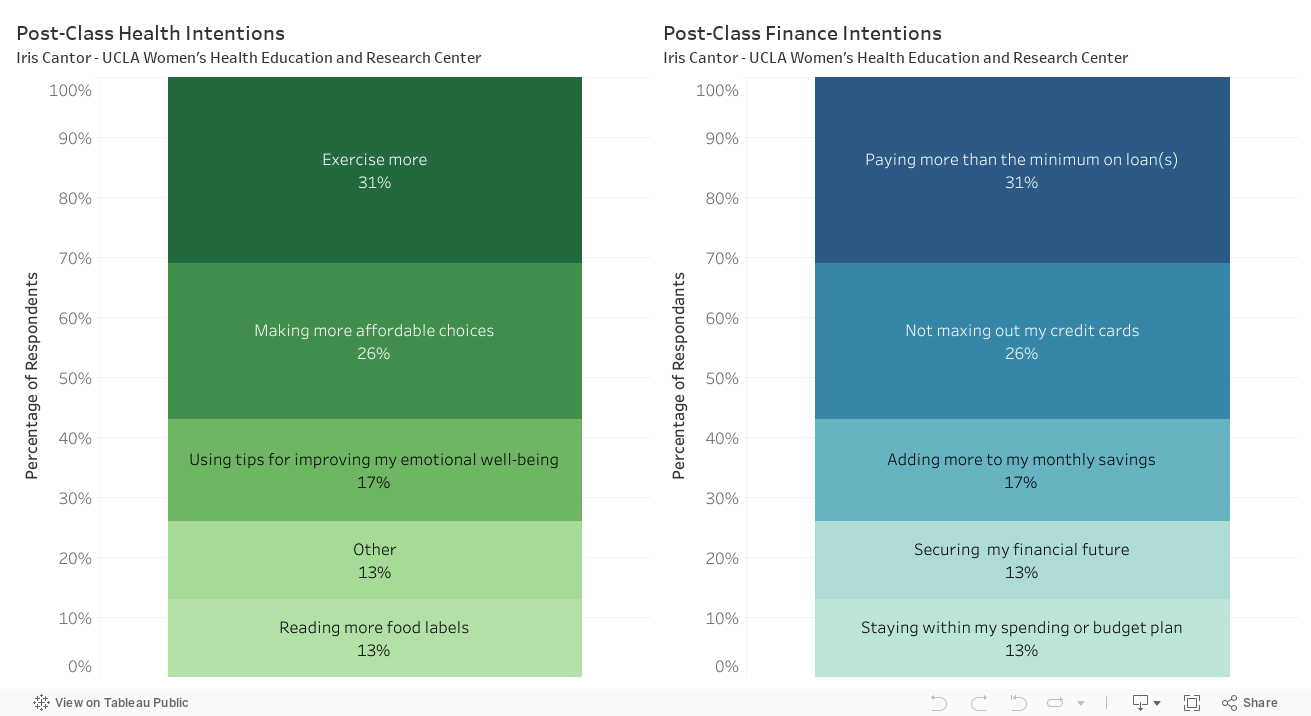
By recognizing the intimate connection between financial stability and mental and physical well-being, the Women’s Health and Money program makes a real difference in the lives of working-class women and helps families achieve financial stability.

One participant, Carmen, said of the program, “Before receiving these workshops, I didn’t know much about finances and eating healthy, but now I’m making positive changes. As soon as I get the amount of my expenses, I make my own budget. After receiving the nutrition workshop, I have also begun to drink water and eat vegetables and fruits. Thank you!”

Sources:

American Psychological Association. (2015). Stress in America: Paying with our Health https://www.apa.org/news/press/releases/stress/2014/stress-report.pdf

American Psychological Association. (2021). Stress in America 2021, Stress and Decision-Making During the Pandemic. https://www.apa.org/news/press/releases/stress/2021/decision-making-october-2021.pdf

Bucher-Kohen, T., Lusardi, A., Alessie, R & van Rooj, M. (2016). How Financially Literate Are Women? An Overview and New Insights. The Journal of Consumer Affairs. https://onlinelibrary.wiley.com/doi/10.1111/joca.12121

Blanco, L. R., Baker, J. A., Friedman, J. A., Singh, K. T., Brown, A. F., Moon, S. D., Carson, S. L., Hsu, A., & Pregler, J. (2020). Perspectives on Finances and Mental Health Status among Low-Income Los Angeles Latinas. Journal of Financial Therapy, 11 (2) 4. https://doi.org/10.4148/1944-9771.1221

Chetty, R., Stepner, BA., & Abraham, S. (2016). The Association Between Income and Life Expectancy in the United States, 2001-2014. Journal of the American Medical Association, 315(16), 1750–1766. https://jamanetwork.com/journals/jama/article-abstract/2513561

Closing the Women’s Wealth Gap. (2020). On the Margins: Economic Security for Women of Color Through the Coronavirus Crisis and Beyond.  https://womenswealthgap.org/wp-content/uploads/2020/04/OnTheMargins_April2020_CWWG.pdf

Klapper, L., Lusardi, A., Oudheusden, P., (2016). S&P Global Ratings.  Financial Literacy Around the World. https://gflec.org/wp-content/uploads/2015/11/3313-Finlit_Report_FINAL-5.11.16.pdf

Los Angeles County Department of Public Health. (2017). Health Indicators for Women in Los Angeles County. http://publichealth.lacounty.gov/owh/reports/EnhancedPDF/OWH-WomensDataReport.Enhanced2018.pdf

Robin, B., Khattar, R., Joceyln, F., (2021). Center for American Progress. Women of Color and the Wage Gap. https://www.americanprogress.org/article/women-of-color-and-the-wage-gap/

White, N.D., Packard, K.A., Flecky, K.A., Kalkowski, J.C., Furze, J.A., Ryan-Haddad, A.M., Black, L.L., Rusch, L.M., Qi, Y., (2018). Two Year Sustainability of the Effect of a Financial Education Program on the Health and Wellbeing of Single, Low-Income Women. Journal of Financial Counseling and Planning, 29(1), n.p. https://connect.springerpub.com/content/sgrjfcp/29/1/68

Photo Credits: iStock

Idaho Republican Sorry for Comparing Women’s Health to Milking Cows

Idaho Republican Sorry for Comparing Women’s Health to Milking Cows
  • An Idaho Republican reported his encounter milking dairy cows available insights into reproductive health care.
  • Idaho Rep. Jack Nelsen apologized for the remark, expressing he respected women’s “suitable to select.”
  •  Earlier this month, US Supreme Courtroom upheld Idaho’s in close proximity to-overall abortion ban, which has few exceptions.

A freshly-elected Idaho lawmaker apologized immediately after he compared reproductive health guidelines to his practical experience milking cows as a farmer. 

Republican Rep. Jack Nelsen explained he was “humiliated” that he advised his working experience as a “lifelong dairy farmer” provided him insight into reproductive concerns, according to the Idaho Statesman. 

“I have milked a couple of cows, expended most of my time going for walks driving strains of cows, so if you want some tips on repro and the women’s well being point, I have some definite thoughts,” Nelson mentioned with a laugh in the course of a assembly of the state’s House Agricultural Affairs Committee, for each the Statesman.

The remark sparked immediate backlash from Idaho’s Democratic social gathering, who tweeted a video clip of the incident, adding that “politicians like Jack Nelsen have no small business mandating our reproductive health and fitness care decisions.” 

Before this month, the US Supreme Courtroom upheld Idaho’s close to-complete abortion ban, which has exceptions for rape, incest, and saving a pregnant patient’s daily life. 

Nelsen mentioned in a assertion to the Statesman that he was “ashamed” and “offended other people,” the outlet noted. 

“The way I phrased my statement about girls and reproductive legal rights yesterday absolutely missed the mark,” Nelson stated, for each the Statesman. “I am deeply sorry. I realize the mistake and dedicate to performing superior in the long term.”

According to the Statesman, Nelson stated through his campaign that the authorities should not be included in abortion treatment, a sentiment he recurring in his apology. 

“I absolutely respect women and the correct to select their possess overall health treatment,” Nelson explained in his statement, for every the Statesman. “I have normally operated and will go on to operate under the standard that the authorities does not belong in the doctor’s workplace.”

A spokesperson for Nelson did not promptly respond to Insider’s request for remark on Saturday. 

Medical Gaslighting in Women’s Health: How to Take Action

Medical Gaslighting in Women’s Health: How to Take Action

Gaslighting, a type of psychological abuse in which a man or woman or team brings about anyone to question their own sanity, memories or notion of fact, was the 2022 phrase of the yr, according to Merriam-Webster. Medical gaslighting, specially, is a phenomenon in which patients’ health problems and signs or symptoms are dismissed, overlooked, dealt with as minimal or insignificant, or instructed they are purely psychological. This can guide to misdiagnosis, or a lack of diagnosis, and delay health care intervention. Sadly, I have own encounter with this.

Associated: Autoimmune sickness occurs in way far more women of all ages than adult males

Experience dismissed and overlooked when seeking well being care

The initially time I seasoned clinical gaslighting was when I was seeking fertility treatment method in 2018, and I didn’t recognize it right up until just after the reality. As an alternative of hoping to help me at last get and remain expecting again, I was dismissed and dealt with as if it was all in my head. I experienced true infertility concerns, but I have under no circumstances felt so modest or so ignored. 1 nurse actually informed me that my fertility challenges have been my fault, simply because the physician was fantastic and never manufactured issues. That is unacceptable! 

I had to discover to advocate for my requires and stand up for myself, but in the stop, all I could do was depart that clinic. 

A few months ago, I was in the ER, in which several practitioners instructed me that my abdominal suffering was in all probability just from “women issues.” They mentioned that females frequently “mistake serious soreness for cramps or  constipation”. I consistently described my record of fertility troubles and asked to see an OB-GYN to get a proper diagnosis for my agony. The final physician I saw actually laughed at this strategy and claimed, “Well, I never will need to know that and I won’t request whose difficulty that is.” I obtained really upset, felt incredibly compact and demanded to leave the hospital—I was not likely to get answers there. I’ve considering that satisfied and spoken with my OB, and I am scheduled for a diagnostic laparoscopy for endometriosis.

Recognizing clinical gaslighting transpires way way too commonly, it’s significant to fully grasp how widespread health-related gaslighting is, know how to location the warning signs—and recognize upcoming techniques to choose if this transpires to you.

Relevant: How to know when panic, despair and exhaustion are indicators of bodily problems

How frequent is health care gaslighting?

Professional medical gaslighting can transpire to any person, but it’s most common for gals and people of shade. Even when they have the similar indications as guys, girls are taken care of considerably less aggressively for autoimmune problems, traumatic mind injury and persistent agony. 

Women of all ages are also made to hold out lengthier for discomfort medicine than guys when suffering from the identical significant bodily signs and symptoms. Doctors are additional very likely to describe Black people as agitated or non-compliant than white clients, and this generally prospects to discrepancies in health treatment. It is also very typical for men and women of coloration to get bad-excellent medical care, or for their signs and symptoms to be misdiagnosed or dismissed completely.

Relevant: How to prevent gaslighting and begin listening to your child’s soreness

Warning symptoms of medical gaslighting

It can be difficult to recognize professional medical gaslighting as it is happening, since numerous people come to feel they should really only have confidence in no matter what a physician says. But it’s vital to know what to glimpse out for. 

A main indicator of healthcare gaslighting is when a health practitioner promptly downplays your signs, or clearly does not consider you. Right here are other crimson flags.

Indications of professional medical gaslighting

  • Not listening or engaging in a dialogue with you
  • Not asking queries, or attempting to enable determine out what’s happening
  • Refusing to give you a referral to yet another professional that could assistance you even further
  • Shutting down your grievances or disregarding your problems
  • Blames you for any of your signs (these as saying “you’re just on your period” or “you’re most likely just stressed from work”)
  • Forcing you to argue just to be taken severely and listened to
  • Striving to convince you it is just in your head
  • Supplying you a generalized data or stereotypes as a response (as a substitute of seeking into your precise symptoms and overall body)

How to choose motion

If you have skilled health care gaslighting in the past, or do in the potential, know that it is not your fault. Absolutely no a single justifies to be ignored or dismissed, and there are people in health treatment who want to assist you. 

Here are some concrete ways you can advocate for on your own in a healthcare setting:

  • Produce down a list of your inquiries and concerns
  • Talk to for a duplicate of your healthcare data
  • Take be aware of the names of medical doctors and nurses that meet with you
  • Get a family member or pal with you to help listen and talk up for you
  • Talk to to communicate with yet another doctor or expert, if you really feel that’s wanted
  • Know your legal rights and what is unacceptable therapy at any overall health care facility
  • Be agency and assertive—but only you know how you sense

It can be devastating to working experience health care gaslighting, but if it takes place to you, you should attempt to obtain one more health care provider or health care practitioner who will hear to you and who will acquire your worries significantly. Your wellness care issues, and you deserve to be heard—without acquiring to fight this challenging.

Postmenopausal hormone therapy and mortality before and after the Women’s Health Initiative study

Postmenopausal hormone therapy and mortality before and after the Women’s Health Initiative study

We observed a diminished systemic HT prevalence and an elevated mortality danger for systemic HT end users in the two study populations in the wake of the 2002 WHI publication with the most pronounced inclination offered in the singleton populace. The conclusions suggest an alteration in the HT user profile just after 2002 with a unique pattern of HT use, most likely owing to the healthiest users determining to either fall systemic HT or switching to local HT, as tips improved subsequent the WHI publication. It highlights the value of satisfactory baseline characteristics when inspecting HT use, as confounders may possibly differ markedly with altering HT person profile over time.

In line with earlier reports, we noticed a drop in systemic HT prevalence concerning 2000 and 2005 for systematic HT people in the menopausal or postmenopausal age9,10,11,12. The WHI publication in 2002, and subsequent media consideration and alteration in HT prescription guidelines, is generally deemed the principal explanation for the observed decrease, as systemic HT was recommended kept in the lowest probable dosage for the shortest amount of money of time and was not to be utilised by asymptomatic girls15,23,24.

Scientific trials evaluating HT users to non-people uncovered no association in between systemic HT and all-induce mortality3. This is supported by a Danish observational study of HT initiated ahead of 2002, which observed no association concerning systemic HT and general mortality in a large cohort of just about 30,000 girls25. But, meta-analyses of both scientific and observational studies found a lessened danger of all-result in mortality, if systemic HT was initiated at age < 60 years26,27. This finding aligns with our study, as we observed a lower risk of all-cause mortality for systemic HT users in the age group 56–60 in 2000, before the WHI publication. However, a change occurred in 2005, after the WHI study, as the mortality risk among systemic HT users was like that of non-users, supporting a selection hypothesis rather than causality.

A smaller German observational study examined differences in the pre- and post-WHI HT user profile shortly after the 2002 WHI publication and found a decline in prevalence especially amongst women with higher social status, lower body mass index (BMI), and healthier lifestyle28.

This aligns with a Canadian study also performed shortly after the 2002 WHI publication, which indicated a shift in the profile of HT users. A decline in prescriptions was observed and gynaecologists now preferred to prescribe lower doses of systemic HT if necessary. Women who were prescribed HT in the year after the WHI publication had fewer medical visits on average (7.47 vs. 6.36), yet a higher number of different classes of drugs per month (1.07 vs 1.18)29.

Our study, designed to examine long term outcomes and HT user differences in a large study population, supports these previous findings, as we observed a decreased prevalence, changing mortality risk from lower than to similar to that of the background population, and increased years of education for systemic HT users between 2000 and 2005, which altogether suggests an alteration in the systemic HT user profile following the 2002 WHI publication.

Danish twins have previously shown to have a mortality rate similar to that of the background population30. While the association between HT and mortality in the twin study population showed no clear trend across all age groups, likely due to the small sample size, it did show an increasing mortality for systemic HT users aged 56–60 between 2000 and 2005.

Alignment of the findings from the singleton and twin study populations suggests that the increased mortality after 2002 is due to a selection rather than causal effects. The selection may be a result of the abrupt discontinuation of systemic HT following the WHI publication, indicating a paradigm shift away from the otherwise generalised perception of systemic HT users being healthier than non-users13,28,31,32. Our study supports this hypothesis, as we observed an increased mortality risk after the 2002 WHI publication, but it must also be mentioned that the mortality risk is still close to one. So even if the post-WHI HT user is considered unhealthier, the overall mortality risk is not increased compared to the background population.

The strengths of our study include the linkage of nationwide registries enabled by the unique personal identification number, which allows us to study data from the universal healthcare system on a large, random sample from the general Danish population and Danish twins. This, combined with the access to information on education, provided a favourable setting for investigation of the association between HT and all-cause mortality as the registries provided a long and full follow-up with minimal room for selection bias. A major strength is the access to a unique study population of Danish twins provided by the DTR enabling the exposure-discordant twin design, which controls for potential genetic confounding and shared environmental confounding17.

Some limitations must also be mentioned. Our findings of systemic HT users being better educated than non-users and being slightly better educated after the 2002 WHI publication indicates a shift in the HT user profile. Our study could have benefitted from additional information on lifestyle and menopause e.g., age of menopause, smoking, and BMI, to illuminate other potential differences in HT user profiles. Another limitation was lack of statistical power in the twin study population, which hindered a further examination of HT user category differences. Lack of statistical power in both study populations further prevented us from dividing HT exposure into dosage and regimen. There is also the possibility of left truncation bias, as the DNPR only contains information on HT exposure from 1995 onwards. Although the DNPR provides excellent assessment of prescriptions and complete national coverage21, we only have information on redeemed prescriptions and thus have no indication of the HT user’s compliance. This could potentially overestimate the use of HT.

Following the 2002 WHI publication, we found a decreased systemic HT prevalence and a change from lower to similar mortality risk compared to the background population for systemic HT users within the singleton and twin study populations. These findings suggest an altogether different HT user profile with a different pattern of HT use, perhaps driven by the healthiest users deciding to either drop systemic HT or switching to local HT as recommendations changed following the WHI publication. Mortality is a crude outcome and is, in this study, used as a summary measure of health and could in future studies be complemented by suggested HT user alteration in other measures of health and lifestyle. Our study highlights the importance of examining, in future studies, not only the differences between HT users and non-user, but also the differences between HT users before and after 2002, as they may vary on subtle and not easily assessed health and lifestyle risk factors, which may be related to initiation, regimen and dose of HT28,33. This emphasises that confounder control is required when investigating the influence of HT, but also that confounders may alter with the altered HT user profile before and after 2002.

Aspira Women’s Health Announces Preliminary Fourth Quarter 2022 Volume, Preliminary Results in Line with Cash Utilization Guidance, and Other Highlights

Aspira Women’s Health Announces Preliminary Fourth Quarter 2022 Volume, Preliminary Results in Line with Cash Utilization Guidance, and Other Highlights
Aspira Women's Health Inc.

Aspira Women’s Wellness Inc.

Preliminary tests quantity in the course of the fourth quarter of 2022 was 5,643, an increase of 18 {35112b74ca1a6bc4decb6697edde3f9edcc1b44915f2ccb9995df8df6b4364bc} compared to the fourth quarter of 2021

Preliminary final results consistent with previously supplied dollars utilization direction for the fourth quarter and comprehensive yr of 2022

Additional lowered employees to realize anticipated 12 months-more than-year salary charge personal savings of about $6 million in 2023

AUSTIN, Texas, Jan. 09, 2023 (Globe NEWSWIRE) — Aspira Women’s Wellbeing Inc. (“Aspira”), a bio-analytical based women’s well being organization focused on the progress of gynecologic illness diagnostic applications, right now announced preliminary fourth quarter highlights.

Preliminary Fourth Quarter Highlights

  • The selection of OvaSuiteSM exams executed elevated 23{35112b74ca1a6bc4decb6697edde3f9edcc1b44915f2ccb9995df8df6b4364bc} to 21,424 assessments all through the year ended December 31, 2022, as opposed to 17,377 assessments in 2021.

  • The selection of OvaSuite checks carried out increased 18{35112b74ca1a6bc4decb6697edde3f9edcc1b44915f2ccb9995df8df6b4364bc} to 5,643 exams in the course of the quarter ended December 31, 2022, when compared to 4,768 checks for the fourth quarter of 2021.

  • Common day-to-day check volume reached a new superior in the fourth quarter, escalating to 86.6.

  • Preliminary benefits reveal that Aspira has reached previously offered dollars utilization steerage for the fourth quarter of concerning $6 million and 8 million.

Aspira President and CEO, Nicole Sandford, said, “This yr-more than-12 months increase in test quantity demonstrates steady provider adoption and the developing have faith in in our Ova1Plus® ovarian cancer threat assessment exam. To further accelerate the trajectory of our OvaSuite products portfolio in 2023, we have determined our most impactful product sales and promoting procedures and have built quick changes to our methods as a outcome. Territories have been expanded for our most helpful industry associates, and we prepare to generate additional superior-touch medical professional instructional opportunities based mostly on the OvaWatch medical review a short while ago revealed in Frontiers in Drugs . We are also using techniques to keep on to greatly enhance our partnership with BioReference adhering to the prosperous start of our co-advertising and distribution arrangement in the fourth quarter.”

Ms. Sandford ongoing, “We proceed to make progress on price tag containment, and preliminary effects display we comfortably satisfied our earlier furnished money utilization guidance for the fourth quarter and entire yr of 2022. Such as the pressure reduction we executed very last 7 days, we hope to save additional than $6 million dollars, in addition the charge of rewards, in 2023 relevant to redundant roles. We do not assume these reductions to have a substance effects on our development ideas. We imagine our current sources and incremental revenue will maintain the company by means of its solution innovation and development goals in 2023,” Ms. Sandford concluded.

About Aspira Women’s Overall health Inc.
Aspira Women’s Overall health Inc. is transforming women’s gynecological wellbeing with the discovery, development, and commercialization of progressive testing options for ladies of all races and ethnicities. OvaSuite is the company’s portfolio of blood-based mostly ovarian most cancers risk evaluation checks designed to enable healthcare providers move confidently from assessment to action for gals with adnexal masses. Ova1Plus combines our Food and drug administration-cleared solutions, Ova1® and Overa®, to detect hazard of ovarian malignancy in females with adnexal masses prepared for operation. OvaWatchSM, a lab-formulated check with a 99{35112b74ca1a6bc4decb6697edde3f9edcc1b44915f2ccb9995df8df6b4364bc} Adverse Predictive Value, was built to rule out ovarian cancer threat in people with masses that appear benign or indeterminate dependent on the clinician’s preliminary evaluation. EndoCheckTM, Aspira’s 1st-of-its-kind non-invasive diagnostic check for endometriosis, is now in growth. Visit our internet site for much more details at www.aspirawh.com.

Forward-On the lookout Statements
This push launch has ahead-on the lookout statements, as defined in the Personal Securities Litigation Reform Act of 1995, which include statements pertaining to strategic plans, development with respect to charge containment, believed examination volumes, estimated hard cash utilization for the fourth quarter and complete yr of 2022, hard cash means and anticipated financial savings and impacts from workforce reductions. Forward-seeking statements include a quantity of risks and uncertainties. Text these kinds of as “may,” “expects,” “intends,” “anticipates,” “believes,” “estimates,” “plans,” “seeks,” “could,” “should,” “continue,” “will,” “potential,” “projects” and comparable expressions are meant to determine ahead-on the lookout statements. These ahead-on the lookout statements talk only as of the date of this press release and are subject matter to a range of pitfalls, uncertainties and assumptions, together with those people described in the segment entitled “Risk Factors” in Aspira’s Once-a-year Report on Sort 10-K for the calendar year finished December 31, 2021, as supplemented by the part entitled “Risk Factors” in Aspira’s Quarterly Report on Form 10-Q for the quarter ended September 30, 2022. Amid other items, there can be no assurance that Aspira’s precise whole calendar year 2022 financial and operating effects will not differ, potentially significantly, from the preliminary money and functioning results contained in this press release. In addition, Aspira has not accomplished its fourth quarter and comprehensive year 2022 closing and evaluate approach, and the remaining effects for the whole year 2022 might vary, most likely considerably, from the statements designed in this press release. In the course of the training course of planning our 2022 money statements and throughout our evaluate method, we might detect things that would require us to make adjustments that may perhaps be substance to the quantities described in this press launch. Genuine success could also differ from all those contemplated by ahead-searching statements due to challenges which include, but not limited to: our skill to proceed as a heading issue our potential to comply with Nasdaq’s continued listing needs impacts resulting from potential modifications to coverage of Ova1 by our Medicare Administrative Carrier for Ova1 impacts ensuing from or relating to the COVID-19 pandemic and actions taken to consist of it anticipated use of money and its results our capacity to enhance the quantity of our product or service profits failures by third-occasion payers to reimburse for our solutions and services or modifications to reimbursement premiums our potential to continue building present systems and to develop, safeguard and boost our proprietary technologies designs to establish and complete laboratory made checks our capacity to comply with Foods and Drug Administration (“FDA”) restrictions that relate to our merchandise and to get any Fda clearance or acceptance demanded to develop and commercialize professional medical units our skill to acquire and commercialize extra diagnostic items and accomplish current market acceptance with regard to these goods our potential to compete successfully our skill to obtain any regulatory acceptance required for our foreseeable future diagnostic goods or our suppliers’ skill to comply with Fda demands for manufacturing, promoting and submit-sector monitoring of our items our skill to maintain adequate or satisfactory supplies of immunoassay kits from our suppliers in the occasion that we do well in commercializing our items outside the United States, the political, financial and other circumstances influencing other countries improvements in healthcare plan our ability to comply with environmental legislation our means to comply with the further legislation and polices that implement to us in connection with the operation of ASPiRA LABS our capability to use our internet running loss carryforwards our capacity to use mental residence our skill to effectively defend our proprietary technology versus 3rd parties our means to attain licenses in the celebration a third get together effectively asserts proprietary legal rights the liquidity and buying and selling quantity of our frequent inventory the concentration of ownership of our frequent stock our skill to retain crucial personnel our potential to secure further capital on appropriate conditions to execute our company system business enterprise interruptions the performance and availability of our data systems our capability to integrate and obtain anticipated success from any acquisitions or strategic alliances upcoming litigation versus us, which includes infringement of mental assets and merchandise liability publicity and more costs that could be needed to make even further enhancements to our laboratory functions. The gatherings and situations mirrored in Aspira’s forward-on the lookout statements may perhaps not be obtained or come about, and true results could vary materially from all those projected in the ahead-hunting statements. Aspira expressly disclaims any obligation to update, amend or clarify any ahead-looking statements irrespective of whether as a result of new info, long term occasions or in any other case, other than as needed by law.

Trader Relations Speak to:
Monique Kosse
Running Director
LifeSci Advisors, LLC
Tel: 212-915-3820

OB-GYN Mary Jane Minkin, M.D., Shares Considerations for Women’s Health Resolutions in 2023

OB-GYN Mary Jane Minkin, M.D., Shares Considerations for Women’s Health Resolutions in 2023

NEW HAVEN, Conn.–(Business WIRE)–Each individual calendar year, practically 40{35112b74ca1a6bc4decb6697edde3f9edcc1b44915f2ccb9995df8df6b4364bc} of American adults make a new year’s resolution. Best factors for resolutions normally involve improving upon one’s wellness, these as sticking to a physical fitness plan or committing to a proper food plan. Though these are reputable health and fitness targets, Mary Jane Minkin, M.D., OB-GYN, Scientific Professor of Obstetrics, Gynecology and Reproductive Sciences at Yale University Faculty of Medication encourages ladies to prioritize all elements of their physical, psychological and emotional health in the new calendar year and provides her suggestions for setting resolutions.

“Creating plans for the new 12 months is a terrific way to re-consider one’s wellbeing routines,” suggests Dr. Minkin. “I inspire girls to contemplate all the distinctive alterations – substantial or smaller – that they can make to make improvements to their well being and wellbeing from vaginal, sexual and reproductive health to mental wellness.”

Dr. Minkin presents the pursuing considerations for women’s well being resolutions in the new calendar year.

  • Routine a Go to with Your Gyno (HCP) – Quite a few girls postponed their regular gyno visits due to the fact of the pandemic. The new calendar year is a very good time to get back again into the routine of normal visits to the gynecologist, so start off the year off powerful by scheduling an yearly checkup. Ladies avoid the gynecologist for a number of reasons ranging from thoughts of individual intrusion to common pain. Getting a reliable HCP can mitigate distress and permit for open up and truthful conversations encompassing vaginal overall health.
  • Swear Off Scented Solutions – The vagina is a obviously acidic surroundings with a pH that need to continue being in the 3.8 to 4.5 range to really encourage the harmony of superior, beneficial micro organism like Lactobacillus. Nevertheless, this fragile stability can very easily be disrupted with the use of scented soaps, douches and perfumes, which generally perform to mask abnormal vaginal odor triggered by a pH imbalance versus fixing the dilemma at hand. Keep the vaginal hygiene regime to a minimal as the vagina is self-cleansing and only wash the vulva with drinking water. Use clinically backed solutions like RepHresh Gel which rebalances pH and eliminates odor for up to three days.
  • Get Sufficient Slumber – Slumber quality can influence a assortment of facets of a woman’s health, which include being pregnant, postpartum intervals, perimenopause, menopause and growing old. Experiments have also proven inbound links in between reproductive hormones and sleeping designs in men and ladies. A extended-phrase absence of snooze in females affects the release of the luteinizing hormone (LH) that triggers ovulation in the menstrual cycle. If you are hoping to conceive in the new calendar year, it’s important to be aware how cycle irregularity can postpone the prospects of acquiring expecting.
  • Make Adjustments to Aid Fertility – Partners could glimpse to the new 12 months as the time to begin making an attempt to conceive as perfectly as reevaluate sure lifestyle routines that can affect fertility. Excessive exercising, for illustration, can have an affect on ovulation, and cigarette smoking and overconsumption of liquor have been shown to influence fertility in both men and ladies. Trying to keep a clean way of life and talking with a well being care service provider about what preserving a nutritious bodyweight appears like is advisable. Common lubricants usually interfere with sperm good quality and motility, so it is significant to use a fertility lubricant this sort of as Pre-Seed that supports sperm well being and lets it to meet the egg properly.
  • Ditch Dryness Down There – Vaginal dryness, even though usually expert by menopausal ladies, can have an effect on all those heading as a result of anxiety and melancholy, postpartum, and taking birth regulate, between other components. Incorporating a vaginal moisturizer, these as Replens Prolonged-Long lasting Moisturizer, into wellness routines to reduce dryness at the resource, as nicely as a top quality silicone lubricant like Replens Silky Sleek just in advance of sex, can enable ease ache and distress.
  • Establish a Vitamin + Nutritional supplement Schedule – Using a multivitamin like vitafusion Women’s Multivitamin is a good way to leap-commence one’s day by furnishing the overall body with important vitamins and crucial vitamins like C, D, and A. On the other hand, though vitamins assist, it is even now significant to have a balanced diet of fruits and greens to get all the required everyday vitamins and minerals to keep nutritious. For females who are expecting or making an attempt to conceive, I suggest incorporating vitafusion’s PreNatal Gummy Vitamin into their regimen to hold health and fitness a precedence ahead of and throughout being pregnant. Prenatal kinds with additional folic acid enable to protect against birth defects and aid women who are making an attempt to conceive.
  • Carve Out Some Time for By yourself – In the U.S., 35{35112b74ca1a6bc4decb6697edde3f9edcc1b44915f2ccb9995df8df6b4364bc} of women are going through emotions of anxiousness and worry is at a 10-calendar year significant. Carving out time for oneself assists recharge and declutter busy brains. “Me time” acts as a reset button and has a great number of rewards, like relieving strain, boosting self-self-assurance, and improving upon relationships concerning oneself and other individuals. Check out building a schedule with pre-established blocks of time for you, even if just a 5-minute wander about the block.

“To make sure a healthful calendar year ahead, it is significant that girls educate by themselves on all elements of well being. Speaking with a wellness treatment service provider to understand assets accessible and keeping knowledgeable on the latest health and fitness improvements and trends can help a person conquer their wellbeing aims in the new yr,” adds Dr. Minkin.