Digital mental health companies need to focus on evidence

Digital mental health companies need to focus on evidence

Over the past five years, digital mental health has risen from a niche topic to a global health priority. Patients, researchers, regulators, and investors alike are thrilled by the potential of ubiquitous mobile technology like smartphones to help diagnose problems, monitor health, and even deliver evidence-based therapies. Two companies that came to embody this potential were Mindstrong for smartphone monitoring of mental health and Pear Therapeutics for FDA-approved apps and digital interventions. Mindstrong raised nearly $160 million, and Pear Therapeutics once had a $1.6 billion evaluation.

But in March, Mindstrong announced it was ceasing operations. And on April 7, Pear Therapeutics announced that it was filing for bankruptcy.

Both companies were founded by smart and passionate people who wanted to improve access to mental health care. They were staffed by hard-working employees who wanted to help change the world. The concept of using data from personal patterns of smartphone use to help diagnose a mental illness or track recovery is appealing. So is the concept of using a smartphone app to receive evidence-based care from the palm of your hand. Pear Therapeutics even received some of the first Food and Drug Administration clearances for software as a medical device for mental health.

But the companies went wrong in a way that is symptomatic of the rest of the digital mental health field.

Both companies tackled the pressing need for a transformation in mental health care. They drew on the global need for a paradigm shift in mental health and offered a scientific pathway toward that vision. Mindstrong built off a 2018 pilot study of 27 subjects capturing smartphone data over seven days to pilot digital biomarkers of cognitive function, which could remotely diagnose or monitor mental health conditions. Pear Therapeutics had many products but was likely most well-known for its apps that promised to help treat addiction.

The story of using technology to monitor and help support mental health made sense five years ago and in fact still makes sense today. Digital technology will help increase access to and quality of mental health care.

But the story only goes so far.

The next step is to prove out the story with science. Just as a new drug for a mental illness like depression undergoes numerous careful studies on its pathway to approval, the same process is necessary for digital software. Both Mindstrong and Pear Therapeutics undertook research and began the scientific journey. In Mindstrong’s case, the company founders have come out on the record stating they felt pressured to commercialize too soon and before the science was sound. Looking in the scientific literature, the lack of peer-reviewed publications corroborates this narrative. We need more research before smartphone sensing to detect mental illness is even clinically validated, let alone commercially viable for a business like Mindstrong.

Pear Therapeutics appeared to have the evidence since it obtained FDA clearance on some of its software. Yet in 2020 the Institute for Clinical and Economic Review wrote a public report noting that the “evidence is inadequate to demonstrate a net health benefit.”

In fact, that evidence was not based on any smartphone at all. It came from a related computer program called the Therapeutic Education System. This was tested in 2014, in a study where patients came twice a week, in person, to a clinic to log on and use the program on computers in the clinic. Even in 2014, the authors of that study wrote “additional research is needed to assess effectiveness in non-specialty clinical settings.” Pear Therapeutics acquired the rights to this program, worked to get an adapted version FDA-cleared, and then marketed it as a digital therapeutic. (It’s worth noting that there is no consensus on the definition of a digital therapeutic.) Nearly a decade later, it’s still unclear whether this system can work outside of a specialty clinic.

Thus, in both the case of Mindstrong and Pear Therapeutics, there was no dramatic story of something going wrong. The problem was that neither company was able to invest the money to carry out the necessary scientific research. While Mindstrong and Pear Therapeutics are two of the most well-known, the lack of resources for clinical science is widespread in the industry. A 2022 report suggested that 44{35112b74ca1a6bc4decb6697edde3f9edcc1b44915f2ccb9995df8df6b4364bc} of digital health companies has a clinical robustness score of zero.

But that does not mean these products and digital mental health have no future. These failures tell us that patients, clinicians, and payers want digital tools that are effective in real-world settings. That means promising pilot studies, like those that launched this industry in the 2010s, must be followed by high-quality studies. When my colleagues and I conducted a meta-review in 2022, we found that overall, the quality of most digital mental health studies was low. Now it is time to think about a new generation of evidence and new studies to build the type of real-world data we need to ensure products offered are both safe and truly effective. This means studies that account for digital placebo effects, are run in real-world clinical settings, involve diverse patients, and can be replicated by outside teams.

We already know how to do this. Pharmaceutical companies offer one example of high investment in medical research and development. They invest in thousands of potential drugs and take the top-performing ones through more and more rigorous studies. The National Institute of Mental Health is another example, now investing heavily in digital research and supporting rigorous mechanism of action studies. As patients, payers, and investors demand more evidence and proof that digital software really works as promised, new companies will rise to the challenge. Of course, there is a major difference between drug R&D and digital mental health care, which is that software needs additional research to prove it can successfully work in the context it is deployed in. But even this is a surmountable hurdle.

Digital mental health might be stumbling in 2023, but these disappointments may signal a new era in how we approach the next generation of digital tools. The stories that founded and sustained both MindStrong and Pear Therapeutics are still valid today — they are just waiting for the next generation to take them off the page and into a scientific reality.

John Torous is an assistant professor of psychiatry at Harvard Medical School and staff psychiatrist at Beth Israel Deaconess Medical Center. He is the scientific advisor for Precision Mental Wellness, a company he holds equity in.

‘Buckling’ NHS fails to treat 250,000 children with mental health problems | Mental health

‘Buckling’ NHS fails to treat 250,000 children with mental health problems | Mental health

A quarter of a million children in the UK with mental health problems have been denied help by the NHS as it struggles to manage surging case loads against a backdrop of a crisis in child mental health.

Some NHS trusts are failing to offer treatment to 60{35112b74ca1a6bc4decb6697edde3f9edcc1b44915f2ccb9995df8df6b4364bc} of those referred by GPs, the research based on freedom of information request responses has found.

The research carried out by the House magazine and shared with the Guardian also revealed a postcode lottery, with spending per child four times higher in some parts of the country than others, while average waits for a first appointment vary by trust from 10 days to three years.

In 2021-22, trusts were forced to raise the threshold at which they would offer support to tackle backlogs, which resulted in hundreds of thousands of children being turned away or abandoning treatment after long waits.

The total represents 32{35112b74ca1a6bc4decb6697edde3f9edcc1b44915f2ccb9995df8df6b4364bc} of all referrals, up from a quarter the previous year, according to the FoI requests sent to 70 UK trusts and boards providing children and adolescent mental health services (CAMHS).

Previous studies have shown that many of the NHS’s 54 mental health trusts in England have raised the threshold of how ill under-18s have to be before they get treatment, in response to the major and ongoing increase in demand for care, which Covid has exacerbated.

That has sparked complaints from the troubled young people affected, their families and GPs who have referred to Camhs that even under-18s who are seriously unwell and have self-harmed or considered suicide are being denied care because they are deemed not ill enough. Mental health services are also struggling with major shortages of psychiatrists and specialist nurses.

Former children’s commissioner Anne Longfield said long waits are resulting in only the worst crises being prioritised. She has heard repeated stories of children who had attempted suicide failing to be offered support because they did not meet a threshold of multiple attempts. “First there is a judgment of whether they actually meant it,” she said, adding: “the threshold is so high because the system is buckling. It was struggling pre-Covid but the pandemic poured rocket fuel on it.”

Olly Parker, head of external affairs at YoungMinds, said the FoI findings showed a “system is in total shutdown” with “no clear government plan to rescue it”, after the 10-year mental health plan was scrapped.

“In the meantime, young people are self-harming and attempting suicide as they wait months and even years for help after being referred by doctors,” he said. “This is not children saying ‘I’m unhappy.’ They are ill, they are desperate and they need urgent help.”

Average waiting lists rose by two-thirds over two years in England, meaning children are waiting on average 21 weeks for a first appointment in England, although the figure drops to just three weeks in Wales. Only 12{35112b74ca1a6bc4decb6697edde3f9edcc1b44915f2ccb9995df8df6b4364bc} of the trusts which responded to the FoI have met a four-week government target for first appointments.

Almost three-quarters of the English trusts surveyed said they had at least one young person who had been waiting at least a year to be seen, and two-fifths had someone waiting at least two years. The longest wait was 217 weeks, with the average longest wait at all trusts currently 87 weeks across the UK.

This has been Roanna Brewer’s experience. She has two children, 15 and 11, who have been diagnosed with ADHD and autism, and have other mental health problems including self-harm. She has spent more than four years on a CAMHS waiting list for her son, who is still waiting for his formal ADHD assessment, while her daughter has only been offered online group therapy, which is inappropriate for her.

“No parent wants to do what I’ve done, which is lie on the floor of my child’s bedroom every night because they are so terrified and so anxious. They’ve been traumatised enough,” she said.

She has had to take her children out of school due to the lack of support, and despite being a low earner has spent thousands of pounds on private doctors, who have prescribed her children SSRIs.

skip past newsletter promotion

She believes that CAMHS lumps all her daughter’s mental health problems under the umbrella of autism, which has made it hard to get targeted support, despite promises from before the pandemic of a new funded neurodiversity pathway at the trust which would speed up progress through the waiting list. “We still haven’t seen anyone,” she said.

The figures are echoed in a recent report from the children’s commissioner for England, which warned that too many children are being seen in crisis and hospitalised, which earlier intervention could have prevented.

Dame Rachel de Souza, the children’s commissioner, said children’s mental health was a “key pillar” of her work. “I am particularly concerned to see such a surge in demand for help in my recent research. We’re seeing waiting times increase for the first time in years, and evidence of an increasing postcode lottery for children referred for treatment.”

She urged the government to roll out mental health support teams in every school by the end of 2025, and for any mental health investment to target children. “It is vital that this support is available – without it, too many children may end up in crisis.”

Responding to the FoI findings, a Department of Health and Social Care spokesperson said: “We’re determined to do everything we can to support children and young people with their mental health, no matter their background or location.

“Support in school is vital and that’s why we are increasing the number of school mental health teams to almost 400 by April 2023, providing support to 3 million children and young people.

“We’re also working closely with NHS England to introduce new access and waiting time standards for mental health services, ensuring quicker access to high-quality care across the country.”

‘Vanderpump Rules’ star Raquel Leviss checks into mental health treatment facility

‘Vanderpump Rules’ star Raquel Leviss checks into mental health treatment facility
WATCH WHAT HAPPENS LIVE WITH ANDY COHEN -- Episode 20041 -- Pictured: Raquel Leviss -- (Photo by: Charles Sykes/Bravo via Getty Images)

Raquel Leviss has checked into a facility for mental overall health treatment in wake of her affair with Tom Sandoval staying exposed. (Image: Charles Sykes/Bravo by means of Getty Visuals)

Raquel Leviss — the Vanderpump Rules individuality, whose affair with co-star Tom Sandoval has been splashed all over the net for the final thirty day period — has checked into a mental well being remedy facility.

“Raquel and her household made the decision prior to the marriage was identified that she would enter a voluntary facility for mental overall health counseling,” a rep for the Bravo individuality explained in a statement acquired by several information stores. “She was scheduled to go in pre-reunion,” which taped on March 23, “but resolved she preferred to complete her filming motivation. Bravo and output have been informed and in support of her journey in the direction of far better psychological health.”

The rep additional that Leviss is not in rehab for substance abuse concerns but in a application concentrated on “psychological health and trauma therapy.”

Leviss’s spokesperson has not still responded to Yahoo Entertainment’s request for comment.

In early March, it was unveiled that Leviss and Sandoval carried on a months-prolonged affair although he was in a nine-calendar year connection with Ariana Madix. Madix uncovered the connection right after seeing a sexually explicit movie of Leviss on Sandoval’s mobile phone and scrolling via their chat historical past. Madix broke up with the TomTom bar owner and musician.

Each Leviss and Sandoval apologized for their roles in the cheating scandal. For her aspect, Leviss apologized “for my actions and my choices foremost to Ariana, and to my buddies and the fans so invested in our interactions. There is no excuse, I am not a target and I should very own my actions and I deeply regret hurting Ariana.”

Leviss went on to reveal that she experienced been in counseling finding out about her “styles of codependency and habit to becoming and experience liked.” She said she was hopeful treatment would assistance to conclusion her “harmful behavioral cycle” and vowed to make it a priority to “secure” her mental wellness and “find out” from these blunders.

Previously this 7 days, Sandoval gave his 1st job interview amid the scandal dubbed “Scandoval” on the Howie Mandel Does Stuff podcast. In it, he comprehensive his first kiss with the SUR server — very last yr in the yard of the household he shared with Madix.

“We just kissed,” he reported. “It was magnetic. We have been talking, relocating closer, and as we ended up speaking, as time went on, we would just start out conversing nearer and nearer, and then all of a sudden, we’re kissing.”

Of the spark, he reported, I felt some thing that I hadn’t felt in so extended, like, emotionally.” He went on to simply call Leviss “magnificent,” form,” “clever,” witty,” entertaining,” “wonderful” and “f***ing remarkable.”

He also explained that in advance of factors took a romantic transform, Leviss was “a supply of strength” for him as he navigated his allegedly not happy and harmful romance with Madix.

Texas Senate passes child mental health funding bill

Texas Senate passes child mental health funding bill

2 things teens need for healthy development amid mental health crisis

2 things teens need for healthy development amid mental health crisis

Teenagers are in the middle of a mental health and fitness crisis – but there are issues mother and father can do to assist their youngsters. 

Throughout an interview with CBS News’ Norah O’Donnell, scientific psychologist and creator of “The Psychological Lives of Teens” Lisa Damour shared two points all kids require for healthful progress: heat and framework. 

“If you took all of the science we have performed about many years in psychology for what mothers and fathers can offer at house that is most supportive to young men and women – not just loving our young children but owning them have the feeling of we’d like them to is the heat,” Damour shared. “And the structure is that there are roles and predictability to household everyday living. That seriously has in excess of and about once more verified to be the magic blend.”

Damour admits it can be more durable often with young people, as “they are not always as receptive to our warmth.” 

“They can really feel like they’re pushing absent from us, but I believe the crucial with young people is to don’t forget which is their position and to not get it personal.”

An additional component that is exclusive to youngsters, she explains, is they will from time to time have an upsetting emotion they want to share – and nothing at all a lot more.

“They’re going to get a lousy grade at college, and they will be carrying it about and they’re going to want to get rid of it. And so they attain out to their moms and dads occasionally by text or by phone or in human being. And they will convey to them something terrible like, ‘Oh, I got this awful test. I am heading to fail. I am never likely to you know be ready to perform in the outside environment.’ And the guardian will try to aid … and the teenager will reduce them off or not respond to their texts or just stroll away.”

Generally, the consequence is the teen feels much better, even if the father or mother feels they weren’t valuable. This is due to the fact the act of expressing a sensation helps lower distress. 

“They have dumped the discomfort on the mother or father, and the mother or father feels really a bit worse than they did in advance of it took place, and what we have to recognize is that usually that is truly what enables adolescents to have on with their day,” she clarifies. “Just to get it out.”

When young children share their pain, a parent’s 1st reaction is generally to give suggestions, make ideas or ask queries.

But as an alternative, Demour advises remembering that teenagers are just on the lookout for empathy.  

“I would say my selection a single phrase as a father or mother, when my very own daughters chat about their distress, I say, ‘Oh, man, that stinks.’ And these kinds of a large proportion of the time, that is all they are searching for,” she suggests.

How brain blast injuries hurt soldiers’ mental health.

How brain blast injuries hurt soldiers’ mental health.

Welcome to State of Mind, a section from Slate and Arizona State University dedicated to exploring mental health. Follow us on Twitter.

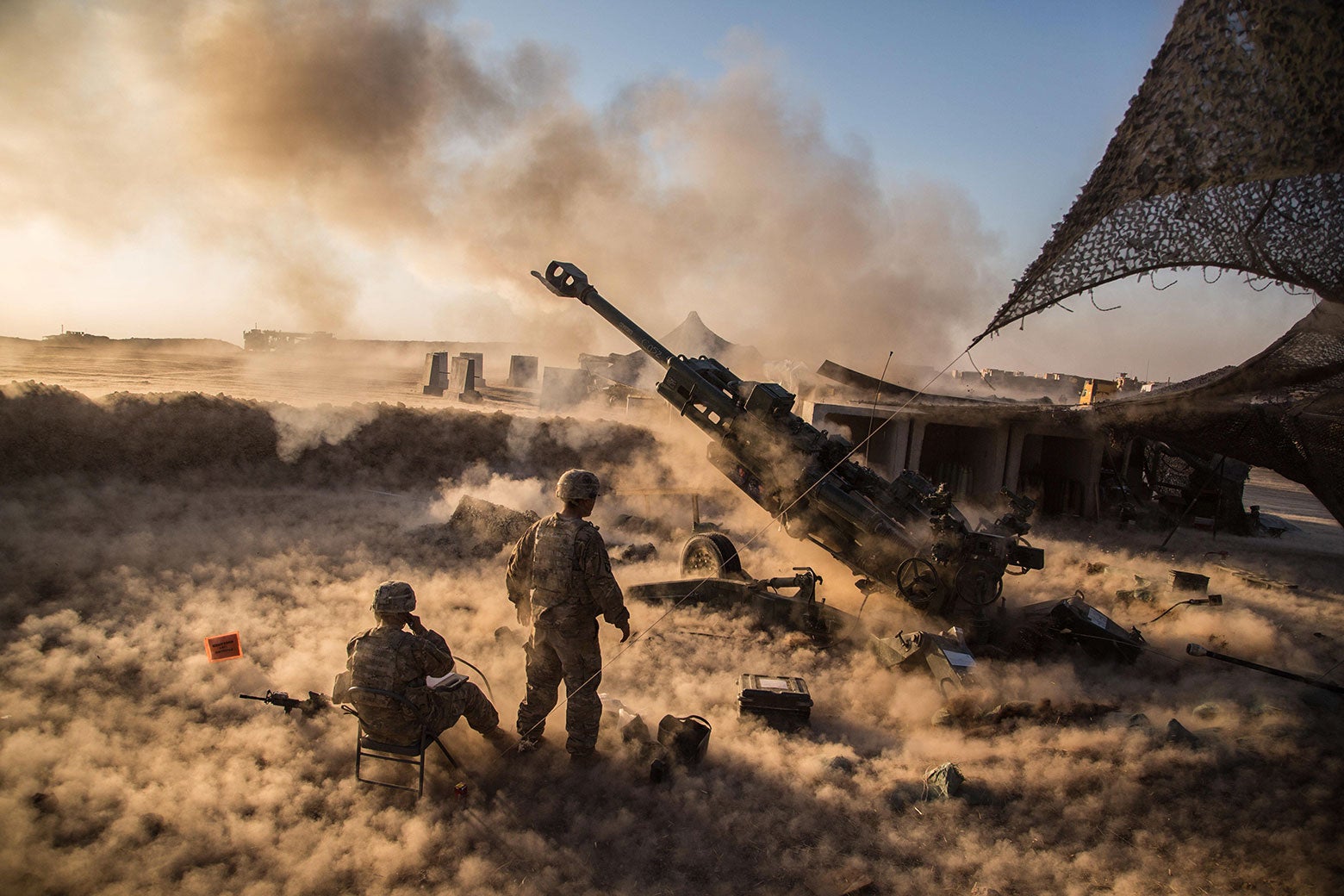
I’ll never forget the way my body felt after that blast inside a dugout trench in northern Iraq. It was 2016, and I was there as my unit’s journalist, accompanying Sgt. Joshua James and the seven other men in his team. Each time James and his section fired their artillery piece—a long-range cannon that could shoot high-explosive rounds for miles—the force of the explosion was so strong it knocked the breath out of me and caused a shudder in my bones. As the dust cloud began to form from the sand blown off the walls and ground, filling our noses and staining our uniforms, I also felt a dull pain in my head, like I had just gotten hit in the face.

Blast overpressure, it’s called: the “near-instantaneous pressure rise” in the area around an explosion, according to researchers. The men in James’ unit experienced it each time they stood feet away from their gun as it fired. During their nine-month deployment, the unit would launch shells toward their enemies around 6,000 times. As a result, some incurred noticeable concussions, and each blast had the potential to cause what the Centers for Disease Control now call “primary blast injury of the brain,” with symptoms similar to other types of mild traumatic brain injuries, or mTBIs: headaches, irritability, cognitive deficits, and even death.

Each brain injury suffered from blast exposure also increases the chances of a service member developing symptoms akin to those seen in Chronic Traumatic Encephalopathy, or even developing CTE itself. CTE, a degenerative brain disease, is understood as a driver behind negative mental health outcomes for NFL players, including Andre Waters, Junior Seau, and Aaron Hernandez. For the thousands of military personnel who serve in units like James’, the threat to brain health comes not only from IEDs or incoming artillery fire, but from their own weapons systems.

The Department of Defense has estimated that more than 380,000 personnel have suffered some sort of mTBI since the start of the War on Terror in 2001. Over that same period, the suicide rate among service members has skyrocketed. More than 30,177 service members and veterans who served during the War on Terror alone have died due to suicide, four times the number of troops lost in combat during that period. Importantly, not all these deaths are related to blast injuries—the military’s mental health crisis is complex and involves factors including military sexual trauma, poor leadership, combat exposure, quality of life issues, and many others. But medical research released in March found military personnel with mTBIs have a suicide rate that is almost three times the national average, and that risk is even higher if they seek care through the VA.

When they returned home from Iraq, half of the men in James’ eight-man section found themselves with mental health conditions such as depression and PTSD. One of them was James himself; on Nov. 15, 2022, James, age 35, died by suicide, the second in five years from his platoon of fewer than 30 people, leaving behind his wife and two young children. We may never know the exact role multiple blast overpressure events played in deaths like James’—in large part due to military failures which continue today.

The DoD has not properly documented the role of blast-related brain injuries in the military’s mental health crisis. This is despite explicit instruction by Congress to do so; for example, in 2020 Congress required the agency to include detailed records of troops’ blast exposure in their medical records. This tracking is critical for service members and veterans who want to receive treatment for their injuries. In February, the DoD released the findings from its Suicide Prevention and Response Independent Review Committee, a research program mandated by Congress. The report highlighted a lack of mental health workers and issues with the military’s promotion system and suicide prevention training, among other problems. But in discussing the next steps to be taken in light of the findings, the DoD did not highlight the effect of TBIs on suicide risk at all.

This omission is especially glaring because the DoD has known for years about the risks from blast exposure. In 2017, the same year James’ unit returned home, a Marine artillery unit in Syria found itself with multiple members stumbling around in a daze from concussions at times. Others began literally bleeding from their ears during the fighting. The DoD grew so concerned by the prevalence of these injuries that it conducted a study the following year on the Marines.

Their findings were startling: Based on the rate of head injuries the Marines in Syria suffered, the DoD estimated that an artillery crew firing at the same rate would find themselves with degraded combat abilities within three weeks and be almost totally ineffective in two months.
Furthermore, the report (based on service members’ medical records) highlighted that head injuries among these personnel began to occur during training, before they even got into combat. The DoD calculated that in a larger unit with similar demands, brain injuries could disable hundreds of personnel, and replacements could not be trained fast enough to make up for the losses.

The Syria report suggested having Marines wear devices that would notify a service member when they reached the maximum level of blast exposure in a 24-hour period, but that suggestion has effectively gone nowhere. In fact, simple helmet sensors that gather, monitor, record, and maintain data on blast pressure exposure have been available since at least 2009. But James and his unit weren’t even given these before they deployed. Put simply: Tech that could help aid in the diagnosis of concussions and TBIs should be widely distributed. It isn’t.

Two soldiers stand next to a smoking cannon as sand swirls around them dramatically.
U.S. soldiers in Iraq on Nov. 29, 2016.
Spc. Christopher Brecht/U.S. Army

This wasn’t the only way the DoD failed James and his unit. Although the soldiers underwent a pre-Iraq health assessment that looked at neurological health, they told me there was no follow-up upon their return to analyze potential damage incurred during their deployment. (Pentagon policy requires such a follow-up if servicemembers display signs of a brain injury). Soldiers in James’ unit also told me that they were rebuffed or ignored when they asked their superiors about the post-deployment assessment, even as the military continued to send artillery units to the Middle East with combat tempos that were just as high as before. I had a similar experience: Three years after I returned from Iraq, I attempted to go to an on-base TBI clinic after suffering from headaches and dizziness, but I was refused treatment and analysis because I hadn’t “underwent evaluation in time,” the medical personnel at my unit told me. When I asked a Department of Defense spokesperson about these experiences in a telephone interview, they were surprised to hear the issues we had obtaining access to these assessments and told me the agency was moving toward a more holistic continuous evaluation system that isn’t just based on pre- and post-deployment health assessments.

As for the status of military brain-health initiatives, in the same interview the Department of Defense pointed me to interim guidance on managing brain risk from blast overpressure, which is meant to raise awareness of the issue among military personnel (there is no ETA for when this text will be finalized). This guidance, on one page, suggests units and commanders follow rules about explosive safety that have been in place for more than a decade. (These rules, the Syria report shows, have done little to keep service members truly safe from blasts.) Making potential interventions trickier, each service branch has different safety requirements—and in an email exchange, the DoD did not answer my question about what is being done to standardize policy.

In response to congressional efforts in 2018 and 2020, there has been some attempt to better document cognitive health. The DoD added a specific diagnostic code for primary blast injuries to the brain, which the DoD spokesperson said in the email would make such injuries easier to track. Before that change, blast history was regularly documented “as a mechanism of injury in the medical record, but no diagnostic code existed for blast injury to the brain specifically,” the spokesperson wrote. This progress is admirable, but the Pentagon’s own December 2022 statement to Congress acknowledges that lawmakers requested more than just a diagnostic code. The congressional correspondence also explained that monitoring and documentation of blast events had “not routinely included a measure of blast pressure” or tracked blast exposure history as the 2020 law had requested, and that there was no current ETA for when it would.

The science behind blast brain injuries is still developing, alongside knowledge of TBIs from other “physical” events, such as tackles, car accidents, or punches. Research suggests the recurrence of exposure matters. Injuries caused by objects around the blast are important, in addition to the pressure itself. And these injuries are hard to recover from. Although PTSD symptoms and TBIs are often concurrent, they are two separate phenomena with unclear influences on each other.

Further research, enabled by routine and widespread blast-pressure tracking, is especially urgent as militaries domestically and abroad shift toward relying more on artillery in current and potential future conflicts, including in the war in Ukraine.

The DoD often cites prospective recruits fearing for their safety—such as the expectation that they will develop mental health or other health issues due to military service—as a reason that it finds itself in a recruiting crisis, and this is a legitimate fear. By failing to complete even the bare minimum task given to it by Congress three years ago to begin tracking blast exposure correctly, the DoD has not fully supported service members like Joshua James and his unit. All the soldiers in the firing pit with me that day in northern Iraq were in their 20s or even teens. None had any idea that they were trading a piece of their future each time they fired.

The research is far enough along that the next generation of service members shouldn’t have to face such a destructive bargain.

​​If you need to talk, or if you or someone you know is experiencing suicidal thoughts, text the Crisis Text Line at 741-741 or call or text 988 to reach the Suicide & Crisis Lifeline.