Twin Cities union starts program to combat suicide, drug addiction among construction workers

Twin Cities union starts program to combat suicide, drug addiction among construction workers

A Twin Cities painters union is taking on mental health with a program new to Minnesota that provides onsite counseling and intervention training for construction workers.

The goal is to tackle the high rates of suicide and substance abuse in the construction industry head on and to make it much easier to access help without any stigma, organizers said.

The “FTIUM Care Team” program was launched this month by the 3,500-member International Union of Painters and Allied Trades District Council 82 (DC 82) and the Finishing Trades Institute of the Upper Midwest (FTIUM), both in Little Canada.

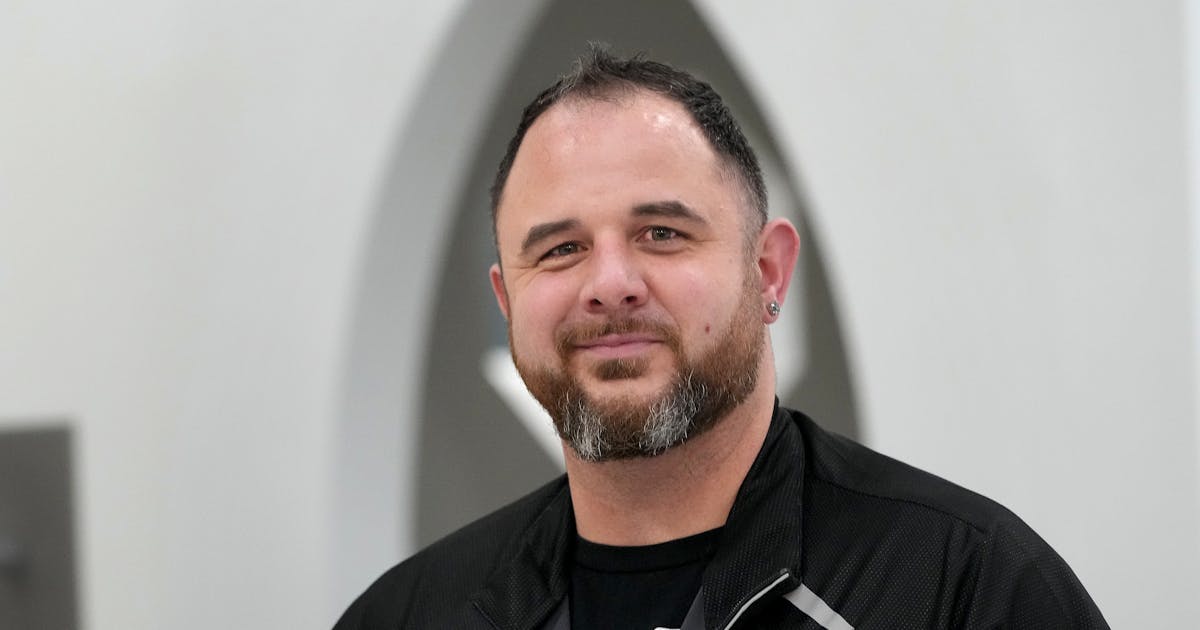
The extra help is “absolutely 100{35112b74ca1a6bc4decb6697edde3f9edcc1b44915f2ccb9995df8df6b4364bc} needed,” said Mike Vitt, a union building-glass installer and an Air Force veteran who served after 9/11 in both Iraq and Afghanistan. He suffers from PTSD and was delighted by what he saw while taking one of the Care Team’s new classes that hopes to change the macho culture in construction, which organizers say contributes to the high suicide rates.

“I’m glad this is happening,” Vitt said. “I have had suicidal ideation since the age of 10 and had PTSD from both my childhood and the military. So I get the fact that there are people in the industry who have demons and issues and who need help but who are too afraid to speak out.”

Under the new program, which costs around $200,000 a year, Minnesota painters, drywall finishers, glassworkers, glaziers and other tradespeople will gain access to life-saving mental health services, substance use counseling, intervention training and health consultations right at the training school and union hall.

In addition to classes, two mental health counselors will be onsite full time at the training school the two trade groups share in Little Canada. A new four-hour training course called Changing the Culture of Construction is open to all union members after work hours and required for apprentices.

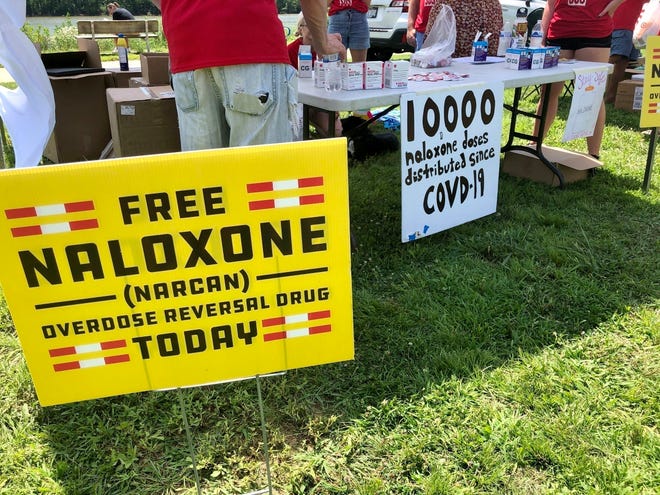
The institute also ordered about 100 Narcan nasal spray dispensers so each classroom and each of the school’s 45 workers have them handy in case of an emergency both on and offsite.

FTIUM Academic Education Director John Burcaw said the combined approach should save lives, improve mental health and is supported by Minnesota’s entire contractor community.

New classes stress ways to ditch macho stereotypes; develop empathy; recognize co-workers in crisis; access hotlines and direct colleagues toward services offered by the FTIUM Care Team.

“We are going to change the culture,” Burcaw said. “Some of our workers are starting to wake up to our industry’s historical toxic masculinity and how it hurts them and their peers.”

The Centers for Disease Control and Prevention (CDC) found suicide rates among construction workers were the second highest of any industry, followed those in the mining/oil and gas extraction fields.

Some 53 of every 100,000 construction workers take their own lives on average each year, the CDC reported. In Minnesota, there were 758 deaths by suicide in 2020, ranking the state the 13th out of 50 for suicides.

A spike in suicides among beleaguered rural farmers has received attention in recent years and unleashed innovative mental health services for them. The data and a similar focus on construction workers has been lacking — until now.

Officials at TEAM Wellness at Work, which provides employee assistance services for the painters union, think suicides are underreported in the industry.

Since the pandemic began, TEAM has responded to and provided grief counseling to members after 32 tradesmen took their lives in Minnesota. And “that is just what we have responded to,” said TEAM Medical Director and CEO Jennifer Stanek. Other employee assistance providers also responded to suicides.

“The statistics are quite alarming [so] … our goal is to encourage workers to ask for help when they need it and stop the stigma around mental health that pervades the construction industry,” she said.

Stanek noted that male construction workers have said they fear being teased or bullied by peers if they seek help. “This deep-rooted stigma surrounding mental health has proven to be deadly, in Minnesota and nationally,” she said.

Several industry factors exacerbate high rates of stress and depression including chronic pain, sleep disruptions caused by overnight shifts, tight deadlines, financial stress due to the seasonal work, and needing to be seen as rugged by peers, according to the Center for Workplace Mental Health and the American Psychiatric Association.

Such studies are prompting wider action, Stanek said.

The North Central States Regional Council of Carpenters will also launch a program similar to FTIUM’s in the fall in St. Paul. That union has 12,000 members in Minnesota and 27,000 across the Midwest.

The new training and resources may help other workers get the help they need. After all, “the numbers of tradesmen who commit suicide speak for themselves. And how many people have substance abuse problems?” said Vitt, the veteran taking advantage of the program at the painters union. “They need to have that support system and not be afraid to talk about it.”

Minnesotans and others struggling with thoughts of suicide or other mental health crises can receive immediate help from the 988 Suicide & Crisis Lifeline by calling or texting 988.

NextGen Healthcare hit by BlackCat ransomware

NextGen Healthcare hit by BlackCat ransomware

The group, also recognized as ALPHV and suspected to be a successor to BlackMatter, has demanded ransoms as high as $1.5M with affiliates maintaining 80-90{35112b74ca1a6bc4decb6697edde3f9edcc1b44915f2ccb9995df8df6b4364bc}, in accordance to the Business of Facts Safety at U.S. Health and Human Products and services and the Overall health Sector Cybersecurity Coordination Heart.

WHY IT Issues

The Russian ransomware team allegedly attacked the EHR seller NextGen on January 17, The Washington Write-up reported on Monday. 

“The company claims it doesn’t seem like the hackers obtained any consumer facts or client data,” according to the Submit.

Healthcare IT Information reached out to NextGen for comment and will update this tale if it responds.

Declaring duty, BlackCat “put an alleged sample of NextGen facts on its extortion web page — usually made use of to compel victims to pay back or possibility more publicity — but later took down the NextGen listing,” Databreaches.internet 1st reported on January 21.

In accordance to a joint briefing by OIS and HC3 before this month, individuals behind BlackCat ransomware are extremely able and thought to be operated by skilled cybercriminals.

Whilst they attack crucial infrastructure around the globe and disrupt functions, like the attack on a big Columbian electrical power provider last thirty day period, the bulk of targets are U.S.-based mostly. 

In December, an HC3 evaluation said “BlackCat was 1 of the initial key ransomware variants to be formulated in the rust programming language, has a hugely customizable aspect set and relies seriously on internally-made abilities, which are regularly formulated and have upgrades.”

Bad actors use BlackCat for triple extortion – gaining unauthorized entry, stealing info, locking it up and then threatening to leak data as well as dispersed denial of services attacks.

In July, Sophos claimed that Blackcat ransomware assaults abide by a consistent pattern, exploiting acknowledged access vulnerabilities, deploying entry resources and uploading details from servers to cloud storage.

THE Much larger Development

As we beforehand described, BlackMatter ransomware-as-a-services went silent in October 2021, and early the following yr BlackCat emerged as a further rebrand with two assaults on German oil businesses.

“While the group seems to have shut down operations, other actors in search of profitable payouts from ransomware assaults are most likely to fill this void,” HC3 verified in February 2022.

With ransomware attacks doubling in new yrs, the impacts on treatment simply cannot be understated. In a recent report from Ponemon Institute, the most common impression providers identified was an improve in people transferred or diverted to other facilities, noted by 70{35112b74ca1a6bc4decb6697edde3f9edcc1b44915f2ccb9995df8df6b4364bc} of all those surveyed.

ON THE Report

“NextGen Healthcare is conscious of this declare and we have been operating with primary cybersecurity experts to look into and remediate. We quickly contained the threat, secured our network and have returned to normal functions,” according to a assertion despatched to the Washington Publish.

“Our forensic evaluation is ongoing and, to day, we have not uncovered any evidence of accessibility to or exfiltration of consumer or individual information. The privateness and stability of our client info is of the utmost worth to us.”

Andrea Fox is senior editor of Healthcare IT News.
Electronic mail: afox@himss.org

Healthcare IT News is a HIMSS publication.

ScionHealth Completes Acquisition of Cornerstone Healthcare Group

ScionHealth Completes Acquisition of Cornerstone Healthcare Group

Mix provides on ScionHealth’s determination to supply patients with earth-course care close to household.

LOUISVILLE, Ky., Jan. 23, 2023 /PRNewswire/ — ScionHealth today reported the near of its beforehand announced acquisition of Cornerstone Healthcare Team (“Cornerstone”). The addition of Cornerstone’s gifted caregivers and diversified portfolio of high-good quality write-up-acute care facilities enhances ScionHealth’s placement as a primary healthcare shipping and delivery network throughout 28 states and is an essential step in executing the organization’s strategic program for development and innovation.

The acquisition adds 15 specialty hospitals, 8 senior dwelling locations and close to 3,000 gifted employees to ScionHealth’s community to advance entry to significant-top quality care, boost innovation and improve the affected person expertise. The transaction expands ScionHealth’s nationwide network of specialty and neighborhood-primarily based hospitals and medical professional practices to deliver important treatment solutions in area communities nationwide.

“ScionHealth’s expansion, by way of the acquisition of Cornerstone, demonstrates our system for progress and our precedence in supporting excellent affected individual and employee experiences in hospitals shut to dwelling,” stated Rob Jay, chief executive officer of ScionHealth. “We are fired up to include Cornerstone and its devoted staff customers to ScionHealth, and eager to leverage most effective tactics from each organizations to proceed delivering compassionate, high quality-centered care to clients throughout the country who location their trust in us.”

“I am delighted to welcome the 3,000 talented caregivers from Cornerstone who share our eyesight to provide finest-in-course scientific knowledge, healthcare remedies and innovation to ScionHealth’s specialty hospital family members,” said Danny Brywczynski, president of ScionHealth’s Specialty Healthcare facility Division. “Inside our expanded specialty hospital portfolio, we will continue to supply top quality treatment and fantastic outcomes for the nation’s most medically intricate individuals.”

Simultaneous to the near of the transaction with Cornerstone, Lifepoint Wellness successfully accomplished the buy of Cornerstone Behavioral Well being El Dorado in Tucson, Arizona, from ScionHealth.

ScionHealth was proven in late 2021 with a aim on financial commitment in local community health care and grounded in commitments to superb client treatment and good quality outcomes.

Sidley Austin LLP and Paul, Weiss, Rifkind, Wharton & Garrison, LLP served as legal counsel to ScionHealth.

About ScionHealth
ScionHealth strives to produce on its assure of substantial-excellent, individual-centered clinic care by empowering the fingers that heal to do what they do best. The overall health system is centered on driving innovation, serving its communities, and investing in people and technologies to provide compassionate affected individual care and superb health results. Based in Louisville, ScionHealth operates 94 hospital campuses (76 specialty hospitals and 18 local community hospital campuses and linked overall health programs) and eight senior residing destinations in 28 states. For a lot more info, you should visit www.scionhealth.com.

Media Contact:
Scott Shepherd
Vice President, Communications and Marketing and advertising
ScionHealth
[email protected]

Ahead-Wanting Statements
This conversation is made up of selected information and facts, which includes statements as to the anticipated timing, completion and effects of the proposed transaction involving ScionHealth and Cornerstone Healthcare Group, which might constitute ahead-hunting statements. This sort of ahead-on the lookout statements are matter to threats and uncertainties, and genuine effects could differ materially. These forward on the lookout statements consist of, among other individuals, statements about the added benefits of the proposed transaction, including foreseeable future economical and running results, plans, objectives, expectations for ScionHealth and other statements that are not historic specifics. These statements are primarily based on the recent beliefs and expectations of administration and are subject matter to substantial dangers and uncertainties outdoors of its control. These pitfalls and uncertainties consist of, among the others: the possibility that the predicted rewards from the proposed transaction will not be recognized, or will not be recognized within the predicted time durations the occurrence of any celebration, transform or other situations that could give increase to termination of the proposed transaction agreement or trigger the proposed transaction not to near in just the predicted timeline or at all hazards associated with the disruption of management’s notice from ongoing business functions because of to the proposed transaction dangers affiliated with the retention of crucial employees and the incapability to get hold of essential regulatory approvals of the proposed transaction or the receipt of these types of approvals staying matter to disorders that are not expected. Visitors are cautioned not to place undue reliance on these ahead-hunting statements, which communicate only as of the day hereof. Except as in any other case demanded by regulation, neither ScionHealth nor Cornerstone Health care Team undertakes any obligation, and expressly disclaims any obligation, to update, alter or otherwise revise any ahead-searching statements, no matter whether composed or oral, that may well be designed from time to time, whether or not as a result of new information, long run activities or in any other case.

Source ScionHealth

How Biden, Congress are helping win fight against opioid epidemic

How Biden, Congress are helping win fight against opioid epidemic

Dr. Rahul Gupta

Secretary of State audit looks at Oregon’s Measure 110

Secretary of State audit looks at Oregon’s Measure 110

Shemia Fagan’s office has released an audit of Oregon’s implementation of Measure 110, which decriminalized user amounts of street drugs.

SALEM, Ore. — A measure approved by Oregon voters in 2020 with the mission of completely overhauling how the state approaches drug crimes and addiction treatment has not yet been given the chance to produce tangible results, according to the results of an audit released Thursday by the Oregon Secretary of State’s office.

There were two main aspects of Measure 110 when it was adopted just over two years ago: the decriminalization of user amounts of narcotics and a major allocation of funding toward addiction treatment programs from Oregon’s legal cannabis taxes.

Drug decriminalization went into effect almost immediately. By early 2021, minor drug possession crimes were no longer subject to the typical jail and court systems. Instead, law enforcement agencies were directed to greet these violations with a fine that could be dropped if the user seeks treatment. Positive results have not been quick to emerge.

But the other big part of Measure 110, the part that was supposed to fund addiction treatment programs so that they’d be readily available, took much longer to tackle. It wasn’t until September of 2022 that the Oregon Health Authority announced funds had gone out to each county in the state.

And this — the reason for this delay, that is — became the primary focus for the audit by Secretary of State Shemia Fagan’s office. After all, the Measure 110 framework has yet to produce much else for auditors to assess.

In a statement that accompanied the auditor’s report, Fagan openly expressed her feelings on Measure 110 — that she wants, and Oregon needs, to see it succeed.

“It is plain as day that Oregon’s drug treatment system is failing,” Fagan said. “This is incredibly frustrating for me, and many Oregonians, because treatment is a matter of life and death for people we know. I have a brother in recovery right now. I want to see Measure 110 work.”

RELATED: Peer mentors key to Measure 110 success are working in a broken addiction care system


‘Too early to tell’

Measure 110 passed in November 2020 with more than 58{35112b74ca1a6bc4decb6697edde3f9edcc1b44915f2ccb9995df8df6b4364bc} voter support. Like most ballot measures, the provisions didn’t really go into effect until a few months later, early 2021 — which means that it’s really been around for about two years, as of this audit’s release.

Regardless, the headline of the Secretary of State’s office audit is pretty straight and to the point: it’s too soon to know whether it’s actually working.

“We got off to a rough start,” said Audits Director Kip Memmott during a Thursday press briefing. “Some of this government-by-ballot-initiative causes some problems, and it takes time to structure government properly which can be frustrating. But auditors, you know, we talk a little bit wonky about controls and governance and outcome measures, but you really have to have those in place to assess performance.”

What Measure 110 didn’t require as a provision are tools for entities like the Secretary of State’s office to gather data on how it’s progressing. Much of the program is still a black box, so auditors couldn’t get an accurate assessment of how many people are being helped or if the money is going where it’s needed.

As of this phase of the rollout, $302 million in Oregon’s marijuana tax money has been diverted to Measure 110.

Of that total funding, $32 million in “access care grants” were awarded by the Oregon Health Authority early in the process in provide some funding while the more permanent programs were still being developed. However, little to no data was collected by the OHA, and auditors were unable to determine if the grants were effective or how they were spent. There was no data on whether the grants actually improved access to addiction care.

Many of the service providers were small and unfamiliar with state-run programs, the OHA told auditors, so health officials determined that forcing them to report more data would be “unduly burdensome.”

The misfortunes of being a trail blazer

In embarking on the implementation of Measure 110, the state had to do something that was not only new to Oregon, but something new to the U.S. As a result, it seems to have suffered from the novelty of it all.

The measure required that Oregon create an Oversight and Accountability Council, one that the audit said has “ultimate decision-making authority” in implementing programs and handing out grants. OAC councilors were all appointed at the same time and have the same term length, serving on a volunteer basis. Council members, many of whom had full-time jobs outside of the OAC, reported spending 40-hour weeks on their Measure 110 tasks.

At the same time, the council struggled to find its footing alongside the Oregon Health Authority, resulting in “delays, confusion, and strained relations between OHA and the OAC.” The audit describes an ill-defined relationship between the council and the OHA, resulting in many dropped balls and occasional head-butting.

Often lacking the expertise that the work required, things like grant-making, council members had to lean on OHA staff. But, the audit found, OHA’s facilitation was often ad hoc and its obligations not clearly defined by the measure itself.

“Staffing resources dedicated to M110 have ranged from a handful of people to dozens of staff,” the report said. “For example, in February 2022, eight OHA staff were assigned to M110 work. Although OHA has since increased staffing resources toward M110 implementation, key roles continue to experience staff turnover.”

Meanwhile, tasked with coming up with grant applications from scratch, the OAC designed a 240-point application, sometimes requiring long responses, that was “burdensome to complete and challenging to navigate” for service providers. Confused applicants who reached out for help then often received conflicting guidance from OHA staff.

“It had too many elements that needed to be evaluated, too many reviews that needed to take place before they could make those funding decisions, and they didn’t have the staff support from OHA to get to those reviews and make recommendations,” said Audit Manager Ian Green, “so that’s what led to months-long delays.”

Too many cooks

Measure 110’s fledgling programs have also suffered from issues already replete in Oregon’s addiction recovery and mental health systems: redundancy and a lack of integration with other, similar services.

For an example, the audit looked at a Recovery Center Hotline that Measure 110 required OHA to establish. The agency did get the hotline set up, but had only received 119 calls related to the drug treatment program as of June 2022, at an estimated cost to the program of more than $7,000 per call.

Of those calls, only 27 people were interested in drug treatment resources.

There are multiple hotlines in Oregon that already cover similar issues, including the statewide Alcohol & Drug Helpline and the Oregon Behavioral Health Support Line, both of which were better established and received substantially more calls. And some of the providers responsible for actually providing the services funded by Measure 110 have their own hotlines, the report pointed out.

“These services may be duplicative since current law requires such support also be provided through a statewide hotline,” the report said. “At the time of this report’s release, OHA still had plans to continue the statewide hotline in addition to any redundant hotline services provided by (service providers). OHA told auditors reducing potential hotline redundancy is not its legal responsibility, and it does not plan to work to prevent the risk of such redundancy as a result.”

The audit also underlined that Measure 110 did not direct the OAC to collaborate with other, potentially major partners, like the Oregon Department of Corrections and Oregon Housing Community Services; both of which often intersect with substance use through the criminal justice system and housing programs.

More than 63{35112b74ca1a6bc4decb6697edde3f9edcc1b44915f2ccb9995df8df6b4364bc} of inmates experience substance use disorders, the report noted, but less than 5{35112b74ca1a6bc4decb6697edde3f9edcc1b44915f2ccb9995df8df6b4364bc} have access to intensive treatment while in custody.

“The lack of access to treatment in and out of custody has been a missed opportunity for the state,” the report said.

There’s also the issue of law enforcement, which is still supposed to have a role in the process despite Measure 110’s drug decriminalization. Through the measure, officers are empowered to issue class E citations when they come into contact with someone in possession of user amounts of narcotics.

In spite of this, auditors were told by different jurisdictions they questioned that “they handled this process with some degree of variability.” Some issued many citations, while others “showed reluctance to engage.”

And even when law enforcement officers do issue citations, they may or may not provide the Measure 110 hotline number to the drug user and encourage them to call it, the report said.

“Law enforcement agencies sharing limited information with providers may help increase outreach to individuals who may need help taking the first step to recovery,” the report continued. “Steps to unify statewide process for issuing class E citations and promoting the hotline should also be taken.”

According to OHA data from the first year of decriminalization, 16,000 people accessed services, but only 0.85{35112b74ca1a6bc4decb6697edde3f9edcc1b44915f2ccb9995df8df6b4364bc} entered treatment. A total of 60{35112b74ca1a6bc4decb6697edde3f9edcc1b44915f2ccb9995df8df6b4364bc} received “harm reduction” like syringe exchanges and overdose medications. An additional 15{35112b74ca1a6bc4decb6697edde3f9edcc1b44915f2ccb9995df8df6b4364bc} got help with housing needs, and 12{35112b74ca1a6bc4decb6697edde3f9edcc1b44915f2ccb9995df8df6b4364bc} obtained peer support.

A problem or a solution?

Depending on who you ask, Measure 110 is either the cause of, or solution to, Oregon’s rampant substance abuse and addiction over the last several years. Thus far, there’s not enough data to support either argument.

In 2022, KGW’s The Story spoke to an officer with the Multnomah County Sheriff’s Office, who said that Measure 110 had “everything to do with” the explosion in fentanyl use on the streets of the Portland metro area.

“By decriminalizing that, it’s basically legitimized criminal organizations,” he said. “Drug possession, use and sale is just rampant, with very little consequences, and it’s taken away our tools as police officers to sort of interdict that.”

A member of the OAC, herself a recovering addict, pushed back on that characterization at the time— noting that the surge in fentanyl has been a nationwide phenomenon, not specific to Oregon.

An interesting fact identified by the Secretary of State’s office audit is that, even prior to Measure 110, Oregon had no adults in custody serving prison time solely for drug possession charges.

“The Oregon Department of Corrections noted that existing sentencing guidelines would have prevented someone from serving time for drug possession alone,” the report said. “Department officials reported other crimes, such as property or people crimes, would need to be committed to end up in their custody.”

In that sense, very little has changed. People committing crimes related to substance abuse and addiction are being arrested and prosecuted for the other crimes, not for drug possession — if they’re being arrested and prosecuted at all.

Regardless, as Fagan underlined in her preamble to the audit report, the need for what Measure 110 was supposed to provide is clear. As of 2020, Oregon had the second-highest substance use disorder rate in the nation, and ranked last for access to treatment. At least two people die each day from unintentional opioid overdoses in Oregon, and another five die of alcohol-related causes.

Looking at the entire U.S., a report by the National Institute on Drug Abuse found over $700 billion in associated costs relating to crime, poor health, and lost work productivity due to substance use disorder.

“With Measure 110, voters, myself included, sent a clear message to state leaders that we need a new, more effective plan for drug treatment in Oregon,” Secretary Fagan said. “OHA and the State Legislature must continue working to make the new program work for our families and our communities.”

In a statement released Thursday, brand new OHA Director James Schroeder largely agreed with the audit’s assessment and pledged to take action on the report’s four main recommendations for improvement:

“The Secretary of State is right: It is too soon to measure the success of Measure 110. However, OHA recognizes that Measure 110 can only achieve the voters’ intent and reduce the harms from untreated substance use if OHA provides timely, robust support to its implementation and effective, reliable assistance to the Measure 110 Oversight and Accountability Council. OHA will deliver on that commitment.

“Measure 110 represents a new approach to reducing the terrible toll illicit substance use takes on people and families in communities statewide. Measure 110’s first-in-the-nation approach provides more resources for harm reduction, treatment, peer counseling, housing and other services that will give people with substance use disorders the services and support they need to recover, prevent relapse and live heathier lives.

“Under Measure 110, these services are provided through locally coordinated Behavioral Health Resource Networks (BHRNs). Last fall, BHRNs in every Oregon county received funding from OHA to begin delivering more comprehensive and integrated services at the local level.

“The launch of these networks represents the real start of Measure 110 in Oregon.

“OHA agrees with all the Secretary of State’s recommendations directed toward our role in implementing Measure 110. We will pursue each recommendation with urgency and focus.

“Governor Kotek has made it a top priority to make the behavioral health system and Measure 110 work better for communities statewide. I recognize that Measure 110’s success depends on Oregon’s ability to solve many larger challenges in the behavioral health system, such as the need to expand treatment capacity and better support counselors and other workers. I’m committed to getting better outcomes for people with substance use disorders and other behavioral health needs. I look forward to reporting on our progress.”

Nadine Barrett-Maitland | Critical to safeguard digital healthcare data | In Focus

Nadine Barrett-Maitland | Critical to safeguard digital healthcare data | In Focus

Digitising healthcare and health and fitness data is becoming the norm for most designed nations around the world. Some countries are searching for to introduce technological solutions into their health care systems. This can enhance consumer support, lower waiting around time, improve precision, and end result in a a lot more productive and successful healthcare sector.

However, the implementation of a electronic healthcare procedure will have to be performed with because of warning and diligence. More than the previous two and a 50 {35112b74ca1a6bc4decb6697edde3f9edcc1b44915f2ccb9995df8df6b4364bc} yrs, wellness documents have been the primary target of hackers. An October 2022 report by Assume Protected Community states that the hacking of heathcare programs is on the increase.

A 2022 Intense Health care Health TECH report states that in 2020, 30-four million individuals ended up affected by heathcare hacks. This range grew to 45 million in 2021, symbolizing a 32 per cent boost. The Fortified Wellness Security’s mid-year report factors out that in the initially half of 2022, the health care marketplace experienced about 337 claimed breaches, with 19 million data compromised, affecting millions of people. Doug Halsall, in an post in The Gleaner titled “Data security in the innovative world”, indicated that on the black current market, the regular value of a patient’s health care information/document can range in between US$ 355 and US$ 363 as opposed to US$1 and US$2 for credit card information and facts. This price tag is steadily rising as the regular value of a health care details breach as at September 2022 was US$10.1 million for every incident. This figure represents a 9.4 for each cent increase above 2021 in accordance to IBM’s yearly “Cost of a Details Breach” report.

As Jamaica normally takes a further leap into the electronic jungle by digitising health and fitness records, permit us be mindful of the possible hurdles and make as several provisions as we can for the inevitable unidentified. There are way too several potential risks lurking in the cyber jungle for us to overlook the enhanced challenges affiliated with digitising health care. Health information have really sensitive and non-public details. The breach of the JamCOVID database unveiled several planning, implementation, and security issues that ended up not in put, imagined about, or enforced.

Privacy AND Safety Concerns

Privacy, described as “the correct to be remaining alone’, is a elementary appropriate of each individual human and is in chapter a few of the Jamaican Constitution and less than Posting 12 of the United Nations’ Universal Declaration of Human Rights. The act of arbitrarily taking a person’s information and inserting it in databases without their consent hinges on breaching the person’s basic proper to privacy. People should really be authorized to make your mind up irrespective of whether they want their heath information and facts put into a databases that can be accessed by other individuals and applied for malicious motives.

Using a database of people’s personalized info can be a hassle-free and effective way to accessibility facts, but its malicious use can also spoil peoples’ lives, and this need to not be taken lightly. The need for safety of health and fitness data was the cause driving the implementation of the Wellness Insurance Portability and Accountability Act (HIPAA) by the American Congress. The Typical Information Protection Regulation (GDPR) has distinct suggestions relating to the use of personalized facts and the consent necessary for use of this details. There are provisions enabling health care practitioners to access information with out violating protection assures if there is require to do so. The Entry Command structures alongside with the Access Command lists can be applied in these situations.

It must be apparent that everyone has a appropriate to determine if their info should really be digitiesd and accessed. The GDPR states that customers of individual knowledge should be lawful and respectful of the individual’s suitable. It outlines six standards and is eager to level out that community authorities may without a doubt have genuine scenarios for wanting to obtain info but that they are also bound by the rule of regard for the individual’s ideal to privacy.

LANGUISH IN THE System

Jamaica’s Facts Defense Act is not however/completely implemented and carries on to languish in the program. We need to guarantee that our procedures and methods line up with intercontinental criteria. Internationally, a number of nations around the world have implemented e-overall health units, and study implies that administration of these programs can be really complicated, specially in a sector exactly where there are community and non-public enterprises and competing pursuits.

For the duration of the COVID-19 pandemic in 2020, India digitised their health and fitness units below their Countrywide Digital Wellness Mission exactly where all people was provided a health ID. In accordance to the governing administration, this would considerably improve healthcare shipping. On the other hand, in late November 2022, a huge cyberattack crippled the entire wellness sector. The Indian government was pressured to halt the health care digitisation method. Ireland’s heathcare program was hacked in 2021, leaving individuals needing significant treatment, these as radiation, in turmoil, and only expecting moms 38 months and around, alongside with dire emergency scenarios, ended up handled. A number of health care systems in the United States of The united states and many other nations have been hacked. In Jamaica, we have had cases of genuine and suspected situations of breaches of individual details databases. There may perhaps be quite a few others of which we are not even knowledgeable.

The JamCOVID incident that still left 1000’s of persons’ health-related information at threat could have value us millions of bucks. An write-up in the The Gleaner in July 2021 highlighted “Staff, clients involved about info breach at college hospital”. These are just two illustrations of incidents that have been documented. There may well be quite a few additional occasions that have not been recognized. While we search for to get on the digital train, allow us strategy with warning, mastering from our problems and the mistakes of other individuals. A single could check with, will we be equipped to prevent health care hacking? The reply is no. But we can minimize the effects by staying intentional and strategic in our approach.

Addressing the root is considerably extra significant than managing the indications. Halting or lessening hacking is a marathon, not a sprint. There is a answer for each individual difficulty, and we are regarded to be resilient. Enable us get this a person right.

– Nadine Barrett-Maitland, PhD, is a senior lecturer at the School of Computing and Facts Technology, University of Technologies, Jamaica.