
When you look at the numbers, it’s easy to gape in horror.
In Ghana, a nation of 32 million people, there are only 62 psychiatrists.
Zimbabwe, with a population of 15 million, has only 19 psychiatrists.
And in Uganda, there are 47 psychiatrists serving a country of 48 million — less than one single psychiatrist for every million people.
These are staggering ratios. To get your head around them, take the US as a comparison. There are around 45,000 psychiatrists for all 333 million Americans, which translates to about 135 psychiatrists for every million people. That’s still not enough — experts are actually warning of an escalating shortage — and yet it’s a whopping 135 times more coverage than exists in Uganda.
These numbers have very real, and sometimes very brutal, implications for people’s lives. When psychiatry and other forms of professional mental health care are not accessible, people suffer in silence or turn to whatever options they can find. In Ghana, for instance, thousands of desperate families bring their ailing loved ones to “prayer camps” in hopes of healing, only to find that the self-styled prophets there chain their loved ones to trees. Instead of receiving medical treatment for, say, schizophrenia, the patients receive prayers.
The scandal of mental health care in developing countries has been well documented, and surveying it, you could be forgiven for thinking the solution is straightforward: These countries just need to train more psychiatrists and mental health professionals of the type you’d find in the US.
But that’s too simplistic. Yes, training more mental health specialists will be part of the answer for these nations. But what’s most interesting is that developing countries have also figured out a new way to tackle the deficit in mental health care — and it could hold lessons for the developed world as well.
Specifically, these nations have been serving as a proving ground for a model called community-based care, where non-specialist providers or lightly trained laypeople — picture someone like your grandmother, not a doctor — deliver brief mental health interventions in informal settings like homes or parks.
Whereas importing Western norms can alienate local populations, who may not view mental health problems as medical, brain-based problems, community-based care has found acceptance because it pays attention to cultural context. Lay counsellors meet patients where they are — both literally, in terms of physical space, and conceptually, in terms of their beliefs about mental health.
This model has turned out to be not only cheap to operate and easy to scale, but also incredibly effective for treating issues like depression. So effective, in fact, that the model is now being exported to the US, which stands to learn a lot from these poorer countries.
:format(webp):no_upscale()/cdn.vox-cdn.com/uploads/chorus_asset/file/24221139/GettyImages_1297778820.jpg)
In 19th-century Europe, the reigning paradigm of mental health care was the asylum. The belief was that people suffering from psychiatric conditions should be institutionalized and treated on an inpatient basis. As Europeans exported this belief to the territories they colonized, asylums sprang up everywhere, from Ghana to India.
By the middle of the 20th century, asylums were becoming discredited: They were too often sites of coercion and violence, not to mention notoriously overcrowded and unhygienic. At the same time, the discovery of new psychiatric medications fostered hope that patients could be treated on an outpatient basis. In Europe, many asylums shut down.
But in the colonies, they didn’t.
In Accra, the capital city of Ghana, a psychiatric hospital built on this model in 1904 still houses hundreds of patients, some voluntary and some involuntary. Their issues range from depression to psychosis. It’s a resource-strapped, overcrowded institution. When I visited the hospital in 2019, I found that some patients sleep outdoors in a courtyard, where a motley collection of beds draped in mosquito nets was scattered around.
Thinking about the legacy of colonialism helps explain why this warehousing of the mentally ill persists, explained Vikram Patel, a psychiatrist and a professor of global health at Harvard Medical School.
“When the Europeans left Africa, Asia, and Latin America, they left virtually no higher education infrastructure for the native people. Basically, the colonizers left nothing,” he said. Upon gaining independence, some postcolonial countries had just one medical school for the whole nation. “And if psychiatrists can only be trained in medical schools, well, then, you know. There’s nothing.”
The very limited training capacity — and very limited funding to increase that capacity — has led to a supply-side problem. Today, that problem is aggravated by a major brain drain: The few who do train in psychiatry tend to move to richer nations offering them a more comfortable life.
And most would-be doctors in Africa don’t want to specialize in psychiatry. For some, that’s because it’s associated with institutionalization or incarceration. Others, aware that their cultures stigmatize mental illness as the work of evil spirits, may fear being viewed as “tainted” by contact with mentally ill people. And this stigma creeps all the way up to the policymakers debating how to allocate scarce resources.
“We bring these stigmas into the boardrooms and into decisions we make around fiscal planning,” Tina Ntulo, who leads the mental health nonprofit StrongMinds in Uganda, told me. “You do not budget for a person who you think is cursed or bewitched.”
Many would-be patients are also hesitant to see psychiatrists, who represent a foreign idea.
“People just don’t conceive of their mental health problem as a biomedical problem,” Patel said. “They do not say ‘I feel the way I do because I have an illness in the brain.’ That is exquisitely uncommon.”
And in cultures that don’t view mental health problems through a medical lens, stigma is a major barrier to seeking out professional care. In one large-scale survey in Nigeria, for example, 83 percent of respondents said they would be afraid to even have a conversation with someone with a mental health problem. The social costs of being branded as mentally unwell are just too high.
This is part of why some developing countries are moving toward community-based care. When you receive care from someone who’s familiar and helps you without necessarily applying a diagnostic label, it can mean there’s less stigma.
Despite being a psychiatrist himself, Patel does not believe the answer to the mental health care deficit is to just train more doctors like him. Instead, he’s become one of the most influential advocates for community-based care, where people with just a bit of training — weeks or months, not years — offer focused therapy. Empowering non-specialist providers or laypeople to take on tasks formerly done by specialists is what the World Health Organization refers to as “task-shifting” or “task-sharing.”
You might think that therapy delivered by a layperson is fine for countries that can’t afford more mental health professionals, but certainly not the ideal. Yet Patel and others who embrace the community-based model are making a much more radical claim.
“A lot of people think this is just a stopgap arrangement. It’s not,” Patel told me. “In the US itself, you need community health workers. What we need in all countries is the same model. We need to have an army of community-based health workers, nurses, social workers, delivering evidence-based interventions.”
And they are, in fact, evidence-based. Over the past two decades, dozens of randomized controlled trials (RCTs) and other studies have come out in favor of the community-based model.
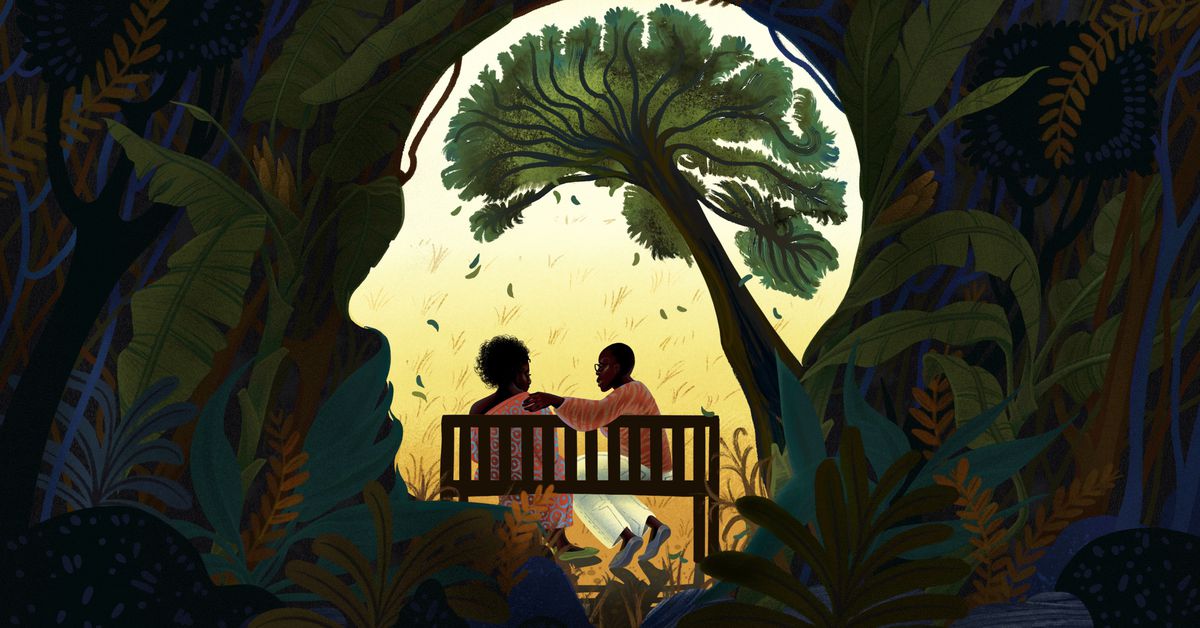
Friendship Bench offers a prime example of what community-based care can look like. Rather than expecting people who are mentally unwell to seek out a psychiatrist’s office, this Zimbabwean nonprofit recruits “grandmothers” — middle-aged or older women who help out in their communities — to learn enough about depression and anxiety to recognize them, and then to treat those disorders using problem-solving therapy. That’s exactly what it sounds like: a therapy that teaches people the skills to devise their own solutions to the problems they face.
Each grandmother, recognizable in her uniform, will then go sit on a bench in a yard. People come along, wanting to talk. In fact, since Friendship Bench was created in 2006, more than 1,600 grandmothers have been trained, and they’ve already served more than 158,000 people — to great effect.
:format(webp):no_upscale()/cdn.vox-cdn.com/uploads/chorus_asset/file/24221120/GettyImages_1297778551.jpg)
In a 2016 study, 573 patients were assigned to either a Friendship Bench or to a bolstered version of standard psychiatric care available in Zimbabwe, which includes antidepressants. Six months later, only 14 percent of those who’d sat with a grandmother were still depressed, compared to 50 percent of those in the standard care group.
Another great example can be found in Uganda and Zambia: StrongMinds, a nonprofit founded in 2013, trains laypeople to lead group talk therapy sessions as a way to treat women with depression. Over a 12-week period, the women learn to identify the triggers of their depression and devise strategies to overcome them, using a form of therapy called group interpersonal therapy.
“This therapy is culturally appropriate. It sees interpersonal relationships as the treatment for depression,” said Tina Ntulo, the country director for Uganda. “And on this continent we are still highly relational and dependent on each other.”
Working with laypeople has enabled StrongMinds to scale up quickly, reaching more than 160,000 women to date.
“One of the amazing things our staff found is that the village volunteers [who’ve been trained to deliver the therapy] are so much better at mobilizing the women to come for therapy,” Ntulo told me. “Our staff said they never saw such high attendance for therapy when they were running it.”
Two RCTs have demonstrated that this intervention is both powerful and cost-effective. Independent researchers estimate that StrongMinds prevents the equivalent of one year of severe major depressive disorder for a woman at a cost of $248 — a pretty good deal, especially when you consider this helps the woman as well as her dependents.
Such interventions have spillover effects. The researchers note that mental health care can lead to material benefits: A non-depressed woman is more likely to be able to work, earn income, and get her kids to school so they can one day work and earn income, too.
A third example of community-based care can be found in India, where Patel co-founded an organization called Sangath. It developed a six-session program in which lay counselors treat patients with severe depression. The program showed strong results, leading to significantly lower symptom severity and higher remission than in a control group after three months.
But what’s really amazing about it is that, a full five years after researchers conducted the initial trial in India, a followup still showed significant differences between those who had received the treatment and a control group. The benefits, it turned out, could really last.
Right about now, you may be thinking: This laypeople stuff sounds all well and good for people dealing with common mental disorders like depression or anxiety, especially if they’ve got mild cases, but some people need an actual psychiatrist.
Even ardent proponents of community-based care agree with that.
“You need some psychiatrists. There’s no question that they play a role,” Patel said. That can be true even when it comes to the common mental disorders: After all, though Sangath’s community-based program for treating depression in India showed strong results, about a third of participants remained depressed after the program.
So the claim is not that community-based care should replace psychiatry. It’s that making mental health care primarily the business of psychiatrists, with little room for alternative approaches depending on context, is a mistake.
Of course, achieving the right balance between the two models is tricky.
At StrongMinds, Ntulo is very clear with the laypeople being trained about what is and isn’t within their remit. “When a person’s symptoms fall outside depression, this is not your client,” she said. “So you refer the person to the health center, and a clinician there will assess.”
At a health center, some of the tasks reserved in the West for a psychiatrist have been shifted to nurses. They can prescribe certain medications, for instance. They consult a flow chart that makes it easier to assess a patient — is he hearing voices or not? — and when symptoms indicate the patient’s problem is beyond their capacity, the nurses refer him to the next level of care above them. Essentially, laypeople handle the easier cases, nurses handle somewhat more complex cases, and the really complex cases may be referred to a psychiatrist for treatment.
StrongMinds is not anti-medication on principle, but doesn’t dispense it — partly because current-generation psychiatric medications are less available in developing countries like Uganda, and partly because much of the population would balk at the idea that a mental health condition is something they should treat with medication. Instead, StrongMinds uses the methods it thinks are most effective for the context.
It’s a system that makes sense to Ntulo, who says only a minority of people need a psychiatrist. “Everybody else could actually receive services through talk therapy and they’d probably be able to stay well for a long time,” she told me.
Patel agrees. He estimates that community-based care could probably address 80 percent of mental health morbidity. “The irony is that 80 percent of the money that’s being spent — this is my back-of-the-envelope calculation — is for that 20 percent that need hospitalization,” he said. “I think the real problem is that we do not spend enough at the base of the pyramid.”
Kwabena Kusi-Mensah, a Ghanaian psychiatrist, is a little skeptical about how far community-based care can go. “On paper, it’s a brilliant idea, really fantastic,” he said. “But having watched it be implemented for over 10 years now, there have been serious problems and challenges.”
Ghana, he explained, has trained a lot of mid-level staff called community psychiatric officers. These CPOs are like physicians’ assistants who’ve been given some additional training in psychiatry. The idea was that they would work in small villages or towns, to help bridge the treatment gap there.
In reality, the CPOs have drifted into major urban centers; now that they’ve got specialized training, they want to use it to secure a better life for themselves. But what’s even more worrying to Kusi-Mensah is that some of them are going over and above what they’ve been trained to do. He worries that this overreach could put patients at risk — if, for instance, they try to treat problems they’re not qualified to treat.
For that reason, he actually prefers task-sharing of the sort that Friendship Bench does with its grandmothers. “These are not medical people,” he said, “so they are less likely to overreach and do things they’re not supposed to do.”
:format(webp):no_upscale()/cdn.vox-cdn.com/uploads/chorus_asset/file/24221129/GettyImages_1297778727.jpg)
When it comes to tasks that require medical know-how, he’d prefer to see psychiatrists in place to handle those, not mid-level staff. And he told me he’s “hyped up psychiatry” to many young medical students, enticing them to enter the field. But he’s careful not to entrench himself too much in either a pro-psychiatry camp or a pro-community-care camp because he doesn’t want to become too ideologically attached to one or the other.
“With extremes of ideology, if you lean too much to one way or another, you end up in a ditch,” he said. “So stay in the middle of the road, is the way I think about it.”
What all these community-based programs, and others in a similar vein, have discovered is the power of getting local laypeople to meet folks where they are.
Kusi-Mensah emphasized that importing Western norms just doesn’t work: If you want to help people in a place like West Africa, you can’t discount the importance of traditional beliefs, including religion.
“In our cultural background, where things are overspiritualized, our biggest competitors in mental health provision are the prophets,” he told me, referring to those who profess to heal patients with prayers, like in Ghana’s notorious prayer camps.
Efforts are now underway to work with, not against, faith-based healers to improve care. Some mental health professionals have gone to the prayer camps and introduced medications as a complementary treatment. Instead of saying “prayer doesn’t work, take this pill instead,” they might encourage prayers to be said alongside medical treatment. This type of collaboration has resulted in improved clinical outcomes for the patients.
But working within the camps is controversial because it could give the appearance of condoning them. Less controversial are efforts to partner with religious leaders in various towns and villages. Pastors and imams often double as informal mental health counselors anyway — that’s true in the US, too — so, the thinking goes, why not view them as another cadre of laypeople who can be trained? And for mental health problems that are beyond their ken, why not establish a referral pathway between them and the mental health care professionals?
“I’m a bit of a pragmatist,” Kusi-Mensah told me. “So I think the best we’re going to get is this sort of rapprochement, where it’s like, ‘Okay, there’s a spiritual component, so let the pastor handle that, but also there’s a medical component, so the doctor will handle that.’”
Western nations like the US favor a biomedical and highly individualistic view of mental health. Compared to, say, a Ghanaian, an American is more likely to conceive of her mental health problem as a brain problem and seek out medication from a psychiatrist. And she’s got a far better chance of accessing one.
Yet Americans’ mental health is in such bad shape that the US Preventive Services Task Force recently recommended that doctors screen every patient under 65 for anxiety. And 90 percent of American adults say the US is experiencing a mental health crisis, according to a new poll from CNN and the Kaiser Family Foundation.
To Patel, this indicates that the biomedical system can’t be the whole solution. “Mental health care is inadequate not because there’s not enough psychiatrists in most countries,” he said. “If that was the case, the US should have a perfect system. But it has a huge number of problems. It is living proof that the problem isn’t only about the lack of psychiatrists.”
America once flirted with the idea of community-based care. As Vice explained:
When state facilities and asylums began to be shut down in the 1960s, in an initiative known as deinstitutionalization, there was a vision expressed, first by President John F. Kennedy and then by the Carter administration, of a community-centered mental health model that would step in to replace it. But funding cuts from the Reagan administration in the 1980s halted the funding and legislation dedicated to community health centers.
It’s taken a few decades, but America now seems ready to experiment with community-based care again as a supplement to psychiatry. What’s exciting is that, this time, it’s taking inspiration from poorer countries.
Zimbabwe’s Friendship Benches have made their way to New York City. Walk around Manhattan and you might see a trained layperson sitting on a big orange bench, waiting to listen or talk about issues ranging from depression to addiction. These are issues some of the laypeople have experienced themselves, so they’re nonjudgmental. They literally meet people where they are, lugging their bench around from spot to spot, as part of the Thrive NYC program aiming to create a mental health system that works for everyone.
India’s Sangath program for depression, meanwhile, is now being rolled out in Texas, where Patel is collaborating with the Meadows Mental Health Policy Institute and Baylor Scott and White, the largest not-for-profit health care system in the state.
And this year, Uganda’s StrongMinds is setting up a pilot in New Jersey. The idea is to address the US mental health gap by reaching people who can’t afford to pay for a licensed professional, with a focus on serving Black people, Indigenous people, and people of color.
“We just finished training the team in New Jersey!” Ntulo told me. “They’re going to use the same model we use. It’s an amazing solution for a health system that is so commoditized, like yours.”
Reader gifts support this mission by helping to keep our work free — whether we’re adding nuanced context to unexpected events or explaining how our democracy got to this point. While we’re committed to keeping Vox free, our distinctive brand of explanatory journalism does take a lot of resources. Advertising alone isn’t enough to support it. Help keep work like this free for all by making a gift to Vox today.