Effective Ways to Lose Weight Without Exercise

Effective Ways to Lose Weight Without Exercise

The most effective approach to losing weight is to include dietary changes and regular physical activity. But is it possible to lose weight without exercising?

For some people, physical activity just isn’t an option when trying to lose weight. There may be several reasons why you have to try losing weight without exercising:

Close up woman in white t-shirt cooking salad with motion effect at home kitchen. Process of cooking healthy food, vegetable concept

Getty Images

Exercise and Weight Loss

Exercise helps the body burn calories more efficiently, says Dr. Scott A. Cunneen, director of metabolic and bariatric surgery at Cedars-Sinai Medical Center in Los Angeles and author of “Weighty Issues: Getting the Skinny on Weight Loss Surgery.”

This is because your metabolism elevates during physical activity. Over time, if exercise results in increased levels of lean body mass and less fat mass, your baseline metabolic rate (the amount of calorie your body burns when sitting still) should increase, as well, says Tamara Duker Freuman, a registered dietitian with New York Gastroenterology Associates. Without exercise, your metabolism will likely remain the same.

A speedier metabolism is one reason exercise is a natural companion to eating differently for weight loss. Depending on how much you exercise, it can help you lose weight more quickly. By watching what you eat, taking in fewer calories and burning off calories with exercise, you can create a greater energy deficit, helping to expedite weight loss, Duker Freuman explains.

Weight Loss Without Exercise

If you can’t exercise, it may take you longer to lose weight. This isn’t necessarily a bad thing because losing weight slowly can help you keep it off more easily than quick weight loss, says registered dietitian Jill Weisenberger, a registered dietitian, author of “Prediabetes: A Complete Guide” and “Diabetes Weight Loss – Week by Week” and owner of Food & Nutrition Solutions by Jill, based in Yorktown, Virginia.

Think Long-Term for Weight Loss

Weisenberger encourages those interested in losing weight without exercise to think about their long-term goals. One approach is to focus on weekly weight goals versus daily check-ins. A healthy weight loss is half a pound to 2 pounds a week, according to the Centers for Disease Control and Prevention.

For instance, you can set a goal of losing 10{35112b74ca1a6bc4decb6697edde3f9edcc1b44915f2ccb9995df8df6b4364bc} of your body weight in three to six months. If you weigh 200 pounds, that’s 20 pounds to lose.

“Oftentimes we overestimate the impact exercise has on calorie expenditure, but the most impactful thing you can do for weight loss is focus on creating health dietary patterns, drinking your water, managing your stress and sleeping well,” says Ashley Bannister, a registered dietitian and coach with the weight loss app Noom in New York City.

Losing weight without exercise is attainable, but it means you must focus more on cutting the calories you consume, while still making sure you eat nourishing food. Research indicates changes in diet as the primary method of successful and sustainable weight loss.

“The best strategy to do this is to increase your intake of fiber-rich foods that make you feel satisfied for longer even with modest amounts of calories; doing so helps ‘crowd out’ portions of more energy dense foods, especially lower fiber or higher sugar ones that don’t keep you feeling full for very long,” Duker Freuman says.

Examples of foods that promote satiety and are foundational to a diet that promotes a healthy weight include:

  • Fruits and vegetables.
  • Whole grains, such as whole-wheat spaghetti or whole-wheat bread.
  • Protein, such as beans, fish, poultry and low fat dairy like Greek yogurt.
  • A small amount of heart healthy fats, such as nuts, canola or olive oil.

Foods and drinks to cut out or consume less of if you’re looking to lose weight include:

  • Alcohol-based and sweetened drinks, including juices and some coffees. 
  • Baked goods, such as cookies and cake.
  • Candy.
  • Snacks, such as chips, pretzels and crackers.
  • Fried foods, such as french fries and onion rings.
  • Low-fiber or refined carbohydrates, such as white bread, tortillas, white rice and grits.

Tips to Lose Weight Without Exercise

Losing weight without exercise is possible, it just takes extra planning and dedication. Here are 17 tips to lose weight without exercise:

Even when you can exercise, losing weight in a limited time period, such as in the weeks before a surgery, can be a challenge. Since you can’t move as much, it’s important to realize it may take longer and you may have some setbacks.

Another plate idea: If you’re at a holiday or special event with some of your favorite desserts, don’t deprive yourself, advises registered dietitian Heidi Katte, an instructor with Milwaukee Area Technical College in Milwaukee. Instead, serve yourself a portion using a small plate instead of a large plate.

At many restaurants, you have the option of a salad or soup before your main entrée, says Leslie Bonci, sports dietitian for the Kansas City Chiefs and owner of the nutrition business Active Eating Advice. If you choose a healthier soup or salad, you can fill up on fiber before moving on to your entrée. If you’re already somewhat full, you’ll eat less of the main meal and perhaps even skip dessert.

In the U.S., especially at restaurants, we’re accustomed to getting super-sized meals, Weisenberger says. Plan to eat only half of what you’re served. And don’t be afraid to take home leftovers.

  • One medium whole fruit.
  • 2 cups of salad greens.
  • A ½-cup of cooked rice, pasta or cereal.
  • 2 cups of milk.
  • 1 ounce of cheese.
  • 1 ounce of cooked seafood or meat.

This doesn’t mean you shouldn’t ever eat portion sizes bigger than these or that you have to measure everything you eat, according to the AHA. You may end up eating more than one serving at one meal and then eat less than one serving at another meal. Just aim for average portion sizes overall in any two- or three-day period.

We’ve all been there: You’re ready for a snack and open up the pantry. You see chips, cookies and other less nutritious options. It’s only natural to want to reach out and make those unhealthy choices. To help avoid this trap, stock your pantry with healthier snack options that will keep you feeling full longer, helping support your weight loss efforts.

Snacks that combine protein, healthy fat and/or complex carbs can achieve these goals. Some healthy snack options include foods such as:

  • Greek yogurt with fruit.
  • An apple or banana with a nut butter, such as peanut or almond butter.
  • Cottage cheese with fruit on a piece of whole-grain bread.
  • Hummus with whole-grain crackers and sliced veggies.
  • A handful of nuts and a piece of fruit.

Think about the last few meals and snacks you ate. Were you reading or watching something on a screen? Maybe driving and eating? It’s easy to eat too much if you’re not focused on what you’re eating. Put away the phone, turn off the TV or remove whatever else distracts you to enjoy each bite.

Eating mindfully by chewing slowly is another way to focus on what you’re eating, so you’re truly aware of when you’re full, Katte says. Eating without distractions also can make you aware of whether you’re eating because you’re truly hungry or if you’re just bored.

Chewing your food helps with weight loss goals for several reasons, Bannister says:

  • You slow down your meal and may be more mindful of your body’s hunger and fullness cues.
  • You may burn slightly more calories through digestion when you chew thoroughly.
  • Taking your time to chew thoroughly can positively affect the hormones related to hunger and feeling full so you ultimately consume fewer calories.

Fiber helps to fill you up so you stay full longer, meaning you’re eating less overall. The recommended serving for fiber is 25 grams a day for women and up to 38 grams a day for men, but most Americans struggle to get even 10 grams daily, Katte says.

Foods that are rich in fiber include:

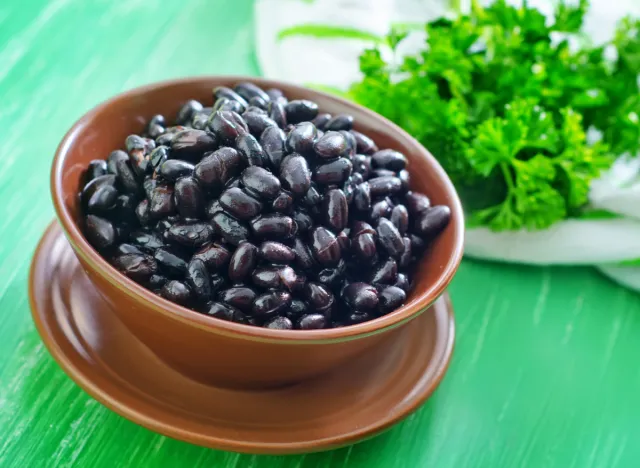
  • Beans. For example, 1 cup of black beans has 15 grams of fiber.
  • Broccoli. 1 cup contains 5 grams of fiber.
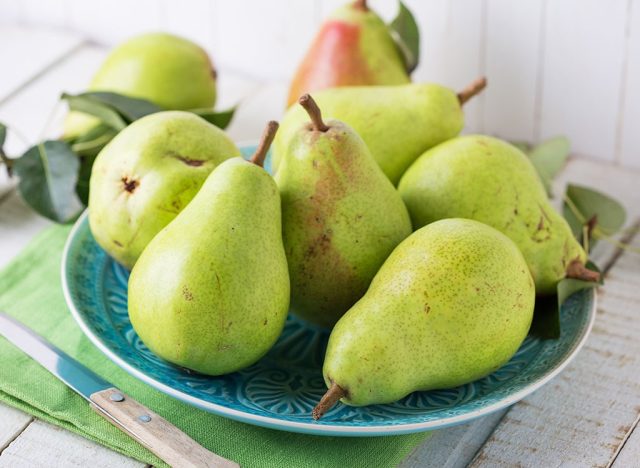
  • Pears. A medium pear has 5½ grams of fiber.
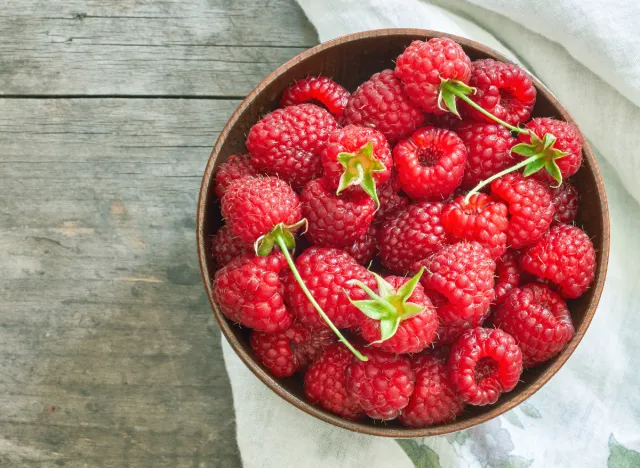
  • Raspberries. 1 cup has 8 grams.
  • Whole-wheat spaghetti or bread. 1 cup of whole-wheat spaghetti gives you 6 grams of fiber.
  • Nuts, which are high in protein.

Most fruits and vegetables are rich in fiber. Make sure to increase your water intake as you add more fiber to your diet. Otherwise, it’s hard for the body to absorb the extra fiber, and you may end up feeling bloated or have extra intestinal gas.

Eating more fiber-rich foods while drinking more water is a winning weight-loss combination, Weisenberger says. Water helps to fill you up more, just like fiber does.

Here are a few ways to increase your water intake:

  • Carry a water bottle with you.
  • Set a water drinking schedule, so you make sure to drink water regularly during the day.
  • If you’re working, make it a point to get up regularly and refill your water. This could mean going to the water fountain or the kitchen more regularly, Katte says. In either case, you’re getting more water and sneaking in a few extra steps.

Most sweetened drinks add empty calories and no nutritional benefit. Because they’re liquid, it’s easy to consume them quickly and then not feel full after. Sugary drinks like soda are often filled with calories and also can lead to a rise in blood sugar followed by a crash. The end result? You then feel hungry again, Bannister says.

  • Water infused with fruits, like lemon or cucumber, or just a splash of 100{35112b74ca1a6bc4decb6697edde3f9edcc1b44915f2ccb9995df8df6b4364bc} fruit juice. “This enhances the flavor without going overboard with a ton of sugar,” Bannister says.
  • Smoothies made with fruit and unsweetened coconut or almond milk.
  • Sparkling water with or without natural flavors.
  • Unsweetened tea.
  • Unsweetened coffee.

If you know you can’t exercise but want to lose weight, it can be easy to assume skipping meals is a good solution. Not true, Bonci says. That’s because skipping meals often makes you overly hungry.

“That can be a recipe for disaster when you finally do eat,” says Bannister, adding that you may then find yourself binge eating once you reach your next meal.

Skipping meals may also backfire if you’re recovering from an injury and your body is relying on food for healing nutrients.

Your body and brain need fuel after you’ve slept. A healthy breakfast can help you literally break that fast and minimize chances for overeating later in the day, Bonci says. A healthy breakfast combines protein, fiber and some fat to add flavor and make you feel full longer.

  • Two scrambled eggs with spinach, peppers and onions in a high-fiber wrap with two tablespoons of guacamole.
  • A smoothie made with a half cup of milk, 5 ounces of Greek yogurt, 1 tablespoon of nut butter, ¼ cup of oats and ½ cup of berries.
  • Overnight oats made with Greek yogurt or milk of your choice.
  • Premade egg muffin cups made with veggies along with whole-grain toast.

Although we all need a healthy mix of complex carbohydrates, healthy fats and protein, protein-rich foods in particular can help you fill up and fuel your body, Weisenberger says. She recommends about 25 to 30 grams of protein per meal instead of eating a massive amount of protein at once. This keeps your body fueled throughout the day, but may feel like a lot – especially if you don’t eat meat. Most women only need about 50 grams of protein daily. Working with a nutritionist or registered dietitian can help identify the best amounts for you.

According to the Institute of Medicine, the recommended share of protein in one’s diet can range from 10{35112b74ca1a6bc4decb6697edde3f9edcc1b44915f2ccb9995df8df6b4364bc} to 35{35112b74ca1a6bc4decb6697edde3f9edcc1b44915f2ccb9995df8df6b4364bc} of your overall daily calories, but many health experts favor ramping that up under certain circumstances, including weight loss.

There’s a wide range of acceptable intake levels though, Duker Freuman adds. For example, if you’re aiming to consume 1,600 calories daily, 10{35112b74ca1a6bc4decb6697edde3f9edcc1b44915f2ccb9995df8df6b4364bc} of calories would amount to 40 grams of protein. On the high end, 35{35112b74ca1a6bc4decb6697edde3f9edcc1b44915f2ccb9995df8df6b4364bc} of daily calorie consumption would amount to 140 grams of protein.

Here are a few protein-rich food choices:

  • Atlantic salmon, 3.5 ounces: 22 grams of protein.
  • Canned tuna, 3 ounces: 20 grams of protein.
  • Chicken breast, 3 ounces: 27 grams of protein.
  • Greek yogurt, a half-cup: 11 grams of protein. Weisenberger adds a dollop of Greek yogurt to stews and black beans, another protein-rich food.
  • Cow’s milk, one cup: 8 grams of protein.


Let your weight loss goals push you to get more z’s. Most adults need seven to eight hours of sleep a night. And adequate sleep helps to regulate the hormones tied to hunger. When you’re sleep-deprived, your body often signals that it’s hungry. It also raises your cortisol levels, the stress-related hormone that triggers your body to hold on to fat.

If you need to improve your sleep, here are a few suggestions:

  • Aim to go to sleep and wake up at the same time every day, with no more than an hour of variation, advises Andrea Allison, a physical therapist with Physical Therapy Central in Oklahoma City, Oklahoma.
  • Set a bedtime routine. “It works for adults just like it works for kids,” Allison says.
  • Avoid caffeine in the afternoon, and limit or avoid alcohol. Both of these can negatively affect your sleep.
  • Consider writing down your thoughts before you go to bed. “This can help you calm chaotic thoughts about work, life or whatever is bringing you stress,” Allison says.
  • Invest in wearable fitness technology to better understand your sleep. These devices, although pricey, can give you more insight into your sleep patterns so you can work on improving them.
  • Talk to a health care provider if you continually have problems with sleep. They can help rule out a health issue affecting your sleep, such as insomnia or obstructive sleep apnea.

When you’re stressed, your body lets out stress hormones that then cause the release of glucose, or blood sugar, for energy to battle the stressful situation. “As you come down from that stress, your body sends signals to replenish glycogen stores and that often leads to more sugar cravings,” Bannister says. Stress is often associated with stress eating, and that can pack on pounds.

The best way to cope with stress will vary for everyone, Bannister says. You will probably have to experiment to find what works best for you, but here are a few ideas:

  • Guided meditation.
  • Deep breathing.
  • Getting more sleep.
  • Listening to music you enjoy.
  • Listening or watching things that make you laugh.
  • Talking with a trusted friend or family member.
  • Writing down what makes you feel stressed out.

If you’re an emotional eater, you’re not alone. Eating to cope with stress or worry is something many people do. Sweating out your emotions with a tough workout is a popular alternative. However, if you can’t exercise, or simply don’t want to, you have one less outlet to let out those challenging emotions. The solution? Plan ahead on how you can avoid emotional eating with other strategies, Bonci recommends.

  • Doing arts or crafts that you enjoy.
  • Journaling.
  • Meditating.
  • Taking a bath or doing something that relaxes you.
  • Talking to a close friend or family member.
  • Using a stress ball.

It’s also common to use food to celebrate positive achievements, Bannister says. If you use food to celebrate, consider other ways to reward yourself. This may include a new shirt or pants, a new book or self-care acts like a nap or a massage.

Tracking what and when you eat helps make you more aware of what you’re consuming and helps keep you accountable. There are a few ways to track what you eat:

  • Write what you consume daily on paper or on an electronic device.
  • Use an app that helps with food tracking, such as MyFitnessPal.
  • Take pictures of your meals and snacks.

Bonci also advises keeping track of hunger between meals and fullness after meals. Don’t worry if your notes about your meals aren’t perfect — there’s no such thing.
“We know there will always be some error in tracking, so I like to focus more on the awareness it’s creating rather than being 100{35112b74ca1a6bc4decb6697edde3f9edcc1b44915f2ccb9995df8df6b4364bc} accurate,” Bannister says.

Some Final Words About Exercise

If your health care provider has recommended you limit physical activity, you should respect that. However, if you can still do some movement during your weight loss period, you’ll get a multitude of health benefits. Physical activity can give you an energy boost, improve your mood and help with weight management, for instance.

Here are some easy ways to work in simple movements:

  • Consider setting an appointment with a physical therapist. A physical therapist can evaluate and educate you on safe physical activity modifications based on your current health status. If you’re able to do even light activity, they can teach you how to use any relevant exercise equipment, Allison says. 
  • Start out where you can with exercise and aim to do something every day, even if it’s just for five minutes.
  • Get up every so often and walk around. Start taking movement breaks between calls or binge watching.
  • If you have to rest one part of your body, see if you can exercise other parts of your body. For instance, if you can’t exercise your legs much, perhaps you can use dumbbells to exercise your upper body, Weisenberger says. Or, you can use a device like an underdesk elliptical or underdesk cycle if you can’t exercise your upper body but you can move your lower body. These devices probably won’t help with weight loss but they can help activate your muscles and build your cardio endurance, Allison says.
  • Ask your health care provider what physical activity is OK versus what’s not OK. This will help you know what exercise is safe for you versus what isn’t.
  • Think about physical activity that makes you happy – what Kimberlain calls “joyful movement.” “Exercise shouldn’t be something that people dread but rather look forward to,” she says.

With a combination of thoughtful healthy eating, it’s possible to lose weight without exercise.
12 Low-Calorie Foods for Weight Loss That Will Keep You Full

12 Low-Calorie Foods for Weight Loss That Will Keep You Full

Whether the idea was prompted by a doctor’s recommendation or the decision was of your own volition, committing to losing weight based on a low-calorie diet (and exercise) is no easy feat. Rationally speaking, we’re all aware that the potential rewards accompanying effective follow-through on a healthy diet and exercise regimen can certainly outweigh the stress of coping with potential health complications stemming from unhealthy eating habits (think: a lack of energy, diabetes, high cholesterol, cardiovascular and metabolic problems, etc.). However, that doesn’t make the temptation to veer off your healthy path any less real or challenging. Although adjusting to a healthier lifestyle may mean dealing with a little discomfort at first, the tweaks you make to your regular routine don’t have to feel like daunting sacrifices—not if you know which delicious low-calorie foods can also work to your advantage as you embark on your weight loss journey.

As the Mayo Clinic notes, “Your weight is a balancing act, but the equation is simple. If you eat more calories than you burn, you gain weight. And if you eat fewer calories and burn more calories through physical activity, you lose weight.”

The Dietary Guidelines for Americans 2020–2025 suggest that to maintain a healthy weight, men should eat between 2,200–3,000 calories per day, and women should stay within a 1,600–2,400 calorie range each day. With that in mind, it’s safe to assume that eating anything less than these respective ranges could constitute as a low-calorie diet.

But eating fewer calories doesn’t always mean eating less food. In fact, there are plenty of tasty low-calorie foods that encourage weight loss which you can eat by the fistful while also satisfying and even curbing your appetite.

What kinds of low-calorie foods should you stock up on for weight loss?

healthy foods weight loss woman pushes grocery cart in store
Shutterstock

While on your weight loss journey, you will soon realize there is an innumerable variety of low-calorie foods at your disposal. However, you’ll likely want to target those foods that are not only nutrient-dense but also satiating. This is because when your body experiences feeling full, it mitigates the temptation to overeat. Many vitamins, minerals, and nutrients cater well to weight loss, but some of the real heavy hitters to look out for include protein, fiber, vitamin C,  B vitamins, iron, magnesium, and quality carbohydrates from whole sources like fruits, veggies, and legumes.

There are probably more foods of this ilk already in your orbit than you may even realize. And if you already happen to love a particular low-calorie food that’s high in fiber and protein while also offering a diverse range of vitamins and minerals, you’re already one step closer to achieving your weight loss goals. But if you’re unsure which low-calorie foods check other nutritional boxes that enable weight loss, don’t worry—we’ve got you covered right here!

Read on to find out which low-calorie foods for weight loss can also keep you full—and for more healthy eating tips to help support your weight loss goals, be sure to check out 20 Best Superfoods To Eat for Weight Loss.

Cucumbers
Shutterstock

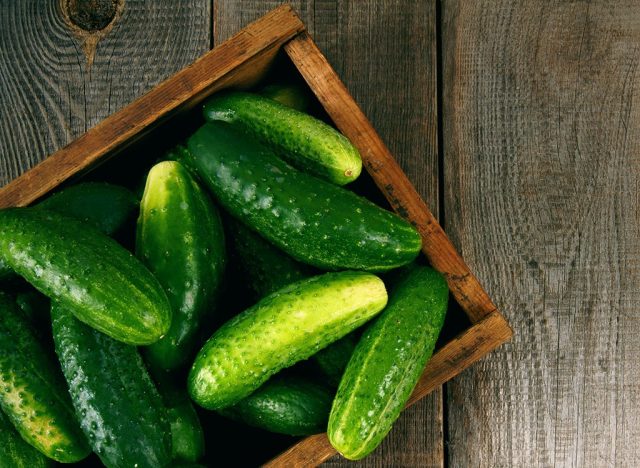
Comprised of over 95{35112b74ca1a6bc4decb6697edde3f9edcc1b44915f2ccb9995df8df6b4364bc} water, cucumbers are a refreshing palate cleanser offering a host of health benefits—yet only a few measly calories. One cup of cucumber slices is only about 15 calories, and if you keep the skin on, you’ll get about a gram of fiber, too. As one Nutrients study assessing the correlation between food energy density and body weight changes notes, there is a clear link between weight loss and eating foods that are lower in calories.

RELATED: 8 Science-Backed Benefits of Eating Cucumbers

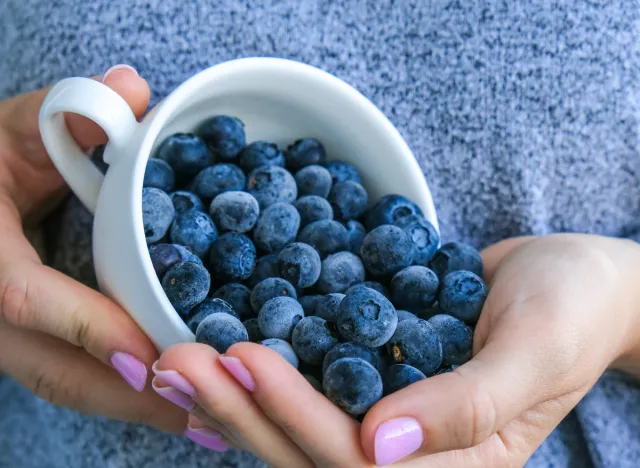
close-up woman pouring cup of blueberries into hand, foods to burn belly fat
Shutterstock

Not only does one cup of blueberries contain 85.5 calories, almost 4 grams of fiber, and 1.1 grams of protein, but it’s also loaded with an assortment of beneficial vitamins and nutrients that can help make weight loss a breeze. One recent Nutrients study, in particular, observed the effects of consuming the equivalent of a cup of natural blueberries as favorable for weight loss because of their ability to help your body burn fat amid exercise.
broccoli
Shutterstock

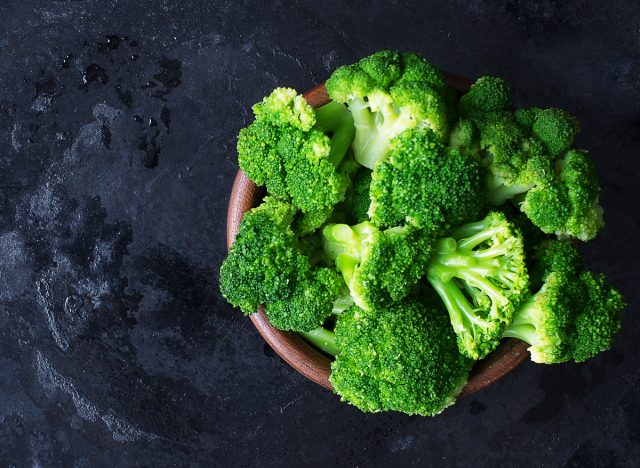
At only 30 calories per cup, chopped broccoli florets will fuel your body with over 2 grams of protein and fiber, respectively. A single cup of chopped broccoli also contains 82 milligrams of vitamin C, which—at 90{35112b74ca1a6bc4decb6697edde3f9edcc1b44915f2ccb9995df8df6b4364bc} of your DV for this vitamin— is also conducive to weight loss. This is because the more vitamin C in your system during workouts, the easier it is for your body to burn more fat. A study published in the Journal of Nutrition also found that those who ate greater amounts of vitamin C tended to weigh less than those who did not get much of it into their diets. 

red ruby grapefruit
Shutterstock

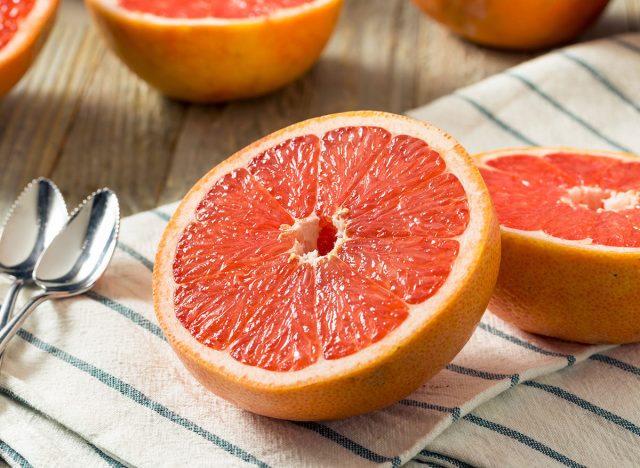
A classic citrus delight, one-half of a grapefruit is only 52 calories. With that, you’re also getting 2 grams of fiber and nearly 40 milligrams of vitamin C, which is over 42{35112b74ca1a6bc4decb6697edde3f9edcc1b44915f2ccb9995df8df6b4364bc} of your DV of vitamin C. While this fruit has developed a controversial reputation as the focal point of a few questionable and toxic fad diets, when eaten as part of a well-balanced, diversified meal plan, grapefruit is an excellent snack to help burn off a few lbs. For instance, a 12-week pilot study published via The Journal of Medicinal Food on the effects of consuming grapefruit relative to weight and insulin resistance found that participants who either drank a glass of grapefruit juice or ate half a grapefruit with every meal experienced significant weight loss.

RELATED: 7 Surprising Benefits of Eating Grapefruit, According to Dietitians

Handful of almonds
Shutterstock

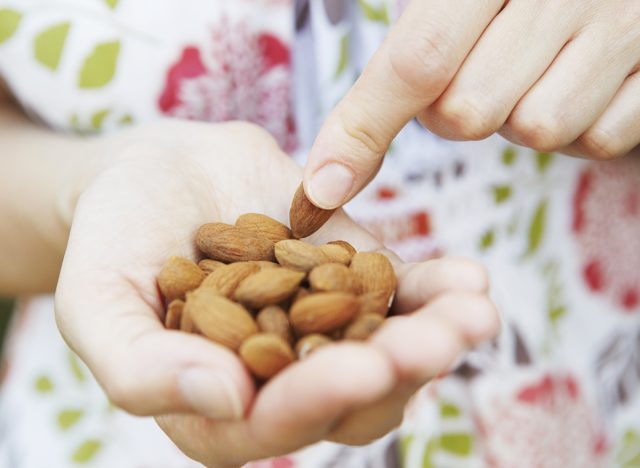
A one-ounce serving of almonds is only 164 calories yet packs a protein punch equal to 6 grams and 3.5 grams of fiber. Thus, almonds are the perfect portable healthy snack to help keep hunger at bay. As previously mentioned, the less peckish you get throughout the day, the less inclined you’ll be to indulge in ways that will derail your weight loss goals.

greek yogurt
Shutterstock

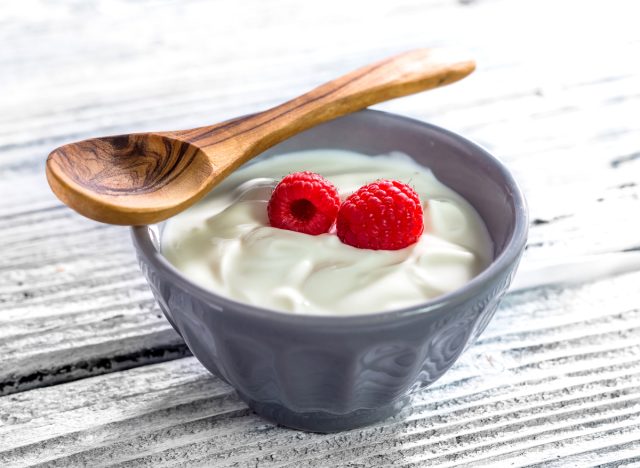
Greek yogurt is an excellent neutral canvas that helps to elevate the flavors of other nutritious foods, like almonds, berries, cucumbers, and even baked potatoes. At over 25 grams of protein per cup, Greek yogurt is a filling protein powerhouse that’s less than 150 calories per serving. Best of all, research suggests that its propensity to keep you full may support weight loss. One study published in Appetite found that female participants who consumed high-protein Greek yogurt felt less hungry and more full for longer than when they snacked on other protein-forward foods.

oatmeal with apples and almonds
Shutterstock

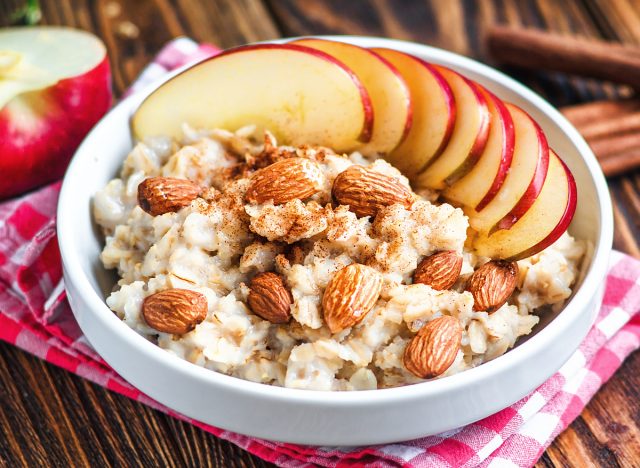
Like Greek yogurt, oatmeal is also a versatile, healthy food capable of beautifully complementing either sweet and savory flavors. And from a nutritional standpoint, this particular food is a superb option to help you achieve your weight loss goals. Just a half-cup of rolled oats will provide you with 150 calories, 5 grams of protein, and 4 grams of fiber. While a half-cup may seem like a meager portion size, underestimating what this food is capable of on the fiber front would be a huge mistake. Not only will this stick to your ribs and tide you over till your next meal, but 4 grams of fiber accounts for 15{35112b74ca1a6bc4decb6697edde3f9edcc1b44915f2ccb9995df8df6b4364bc} of your DV of this nutrient.

raspberries
Shutterstock

Raspberries should be at the top of your grocery list when shopping for low-calorie foods. Here’s why: At only 64 calories per cup, these bite-sized berries seem like a caloric steal!  Also, a one-cup serving contains a whopping 8 grams of fiber. Some studies have also observed a connection between weight loss and the primary aroma compound in raspberries, known as raspberry ketone.

Pears on a plate
Shutterstock

A cup of pear slices is only a mere 80 calories, yet it also contains a little over 4 grams of fiber, making them an excellent eating choice as you work toward losing weight. In fact, one study published via Nutrition found that female participants who ate either 3 pears (or 3 apples) each day were able to accelerate their weight loss compared to those who ate fewer fruits over the course of 12 weeks.

Peas with pods
Shutterstock

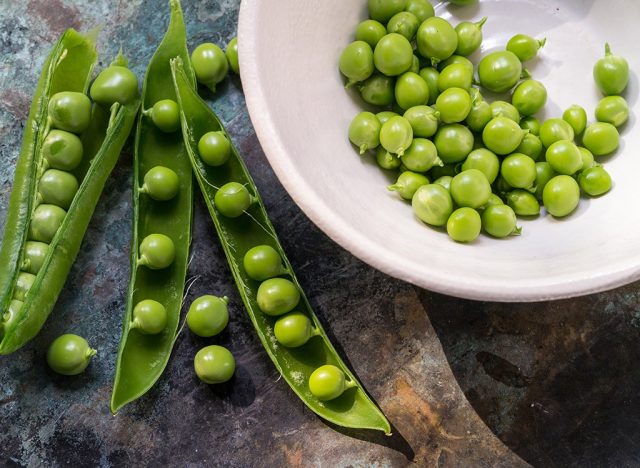
Long before Kenan Thompson asked audiences, “What’s up with that?” on Saturday Night Live, he was on the Nickelodeon sketch comedy show All That preaching the benefits of eating peas. Although his lunch lady character Ms. Piddlin was as quirky as they come, she also delivered (well, sang) this sage advice to the students of Dullmont Jr. High: “Peas are the champions.” Just one cup of peas is only 117 calories, while also containing around 8 grams of fiber and protein, respectively. Furthermore, peas have been scientifically linked to supporting and sustaining weight loss, along with beans, lentils, and chickpeas. So, if you are still skeptical about eating peas yet are hoping to lose weight, to quote Ms. Piddlin, “Give peas a chance.”

black beans
Shutterstock

One half-cup of black beans provides almost 7 grams of protein and nearly 5 grams of fiber, which is also about 18{35112b74ca1a6bc4decb6697edde3f9edcc1b44915f2ccb9995df8df6b4364bc} of your DV. You might assume that this would mean these legumes are caloric bombs, but actually, this amount of black beans is only 110 calories. In fact, the results of a 2020 study published in the Journal of Nutrition and Metabolism suggest that black beans can even help you achieve the snatched waistline you’ve always wanted while reducing your body fat because “beans and other legumes seem to have dietary qualities that may be beneficial in the battle against obesity.”

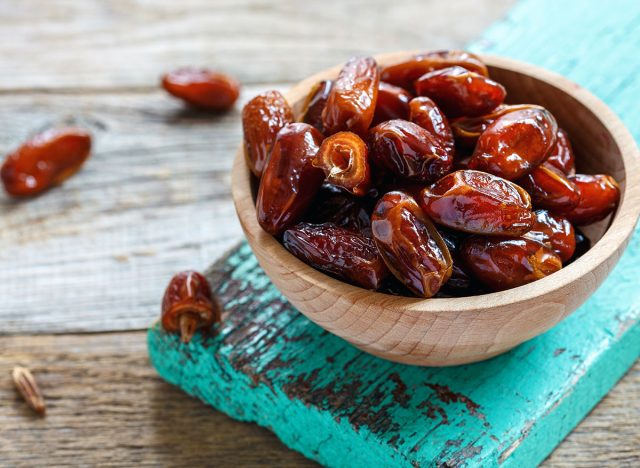
dates in wood bowl
Shutterstock

While the jury is still out on whether or not there is a direct correlation between date consumption and weight loss on the research front, a 2020 clinical trial found that “eating three dates per day did not lead to an increase in body mass index (BMI). Therefore, it seems that people can eat a small number of dates each day without this leading to weight gain,” according to Medical News Today. One pitted date may contain 18 carbohydrates lots of natural sugar, but research has shown that quality carbohydrates from whole foods can be more satiating than fats. Additionally, they are only 66.5 calories each and provide almost 2 grams of fiber, making it a filling fruit able to satisfy your sweet tooth when tempted by other less-than-nutritious treats that can really set you back on your weight loss journey.

12 Best Weight Loss Meal Delivery Services of 2023

12 Best Weight Loss Meal Delivery Services of 2023

We include products we think are useful for our readers. If you buy through links on this page, we may earn a small commission Here’s our process.

Healthline only shows you brands and products that we stand behind.

Our team thoroughly researches and evaluates the recommendations we make on our site. To establish that the product manufacturers addressed safety and efficacy standards, we:
  • Evaluate ingredients and composition: Do they have the potential to cause harm?
  • Fact-check all health claims: Do they align with the current body of scientific evidence?
  • Assess the brand: Does it operate with integrity and adhere to industry best practices?
We do the research so you can find trusted products for your health and wellness.

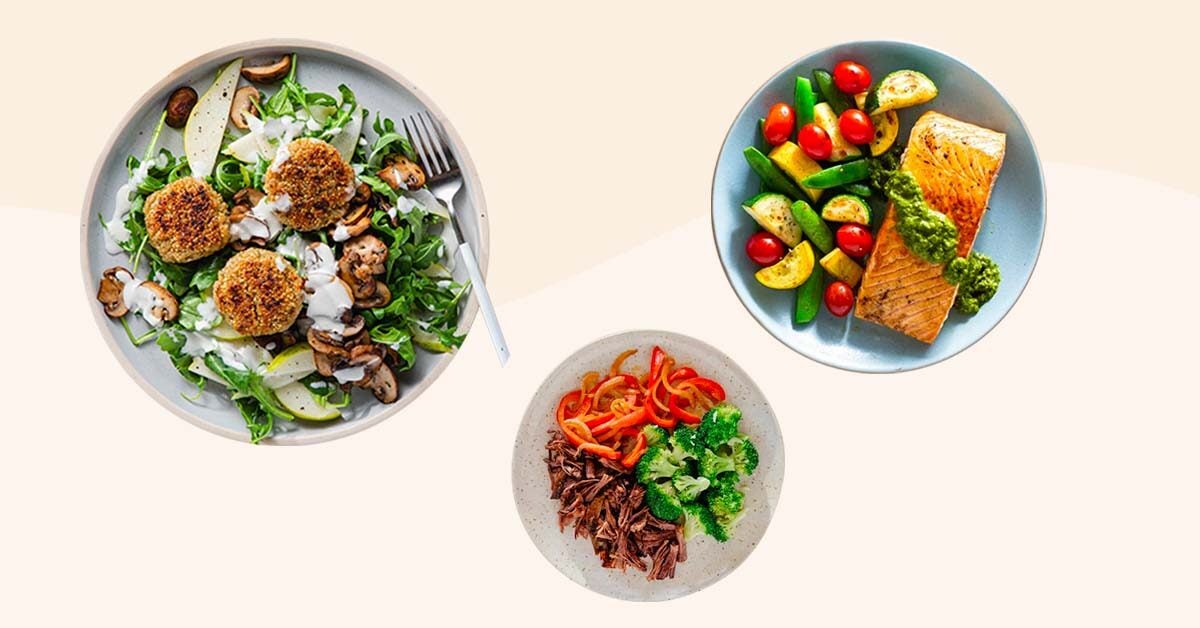
Our registered dietitians tested the best meal delivery services for weight loss and found that Factor, BistroMD, Trifecta Nutrition, and 9 others offer quality options. Here’s why they made the list.

Meal delivery services have become increasingly popular among health-conscious consumers and those following specific diets.

In addition to being simple and convenient, many meal delivery services can:

  • support weight loss efforts
  • promote nutrient-rich eating habits
  • make it easier to follow a balanced and nutritious diet

Keep reading for our dietitians’ picks for the 12 best weight loss meal delivery services.

Disclaimer: All of the services tested below were tried by Healthline writers or editors, who received the meals for free. All opinions are our own.

Take a look at how these meal deliveries for weight loss compare:

  • Convenience: We looked for meals that were convenient to prepare to minimize the extra time it might take customers to fit healthy meals into their schedules.
  • Meal plans: We looked for meal delivery services that offered diet-specific meal plans that help customers reach their weight loss goals.
  • Nutrient-rich meals: We looked for meal delivery services that offer balanced and nutrient-dense meals to help customers feel supported in their weight loss goals.
  • Nutritional content: We looked for meal delivery services that provide low calorie, high protein, or high fiber options to promote weight management.
  • Taste and ease of preparation: We looked for services that offer meals that are easy to prepare, and we also tried many of them to find out whether they offered a good variety of flavors and textures.
  • Price: We included meal delivery services at a variety of price points to accommodate any budget.
  • Vetting: The services on our list have been vetted to ensure that they align with Healthline’s brand integrity standards and approach to well-being. You can read more about our vetting process.
  • Price: Make sure to choose the meal delivery service that best fits your weekly or monthly food or grocery budget, and don’t forget to consider shipping costs and whether you’ll have to shop for additional meals or foods.
  • High quality ingredients: Look for services that prioritize fresh ingredients and use little or no artificial additives or heavily processed ingredients. Some people may also prefer a service that offers organic produce, sustainable seafood, or grass-fed beef.
  • Nutritional information: Look for services that offer nutritionally balanced meals or disclose each meal’s nutritional information. That way, you’ll better understand your calorie and macro intake.
  • App compatibility: If you use an app to keep track of your calories or macros, it can be helpful to choose a service with meals that are already entered into your app.
  • Variety: Look for alternatives that offer a varied menu, which will prevent you from getting bored with their dishes. It is also important that they accommodate your specific diet, be it omnivorous, vegan, gluten-free, low carb, etc.
  • Convenience: Whether you have time to do a little cooking or just have a few minutes to warm up and eat, choose an option that meets your convenience needs. This will help you avoid wasting food and time.

If you’re looking to lose weight, meal delivery services can be strategic allies for several reasons, including:

  • Portion control: Meal delivery services offer preportioned meals with a fixed and known total calorie and macronutrient content. Portion sizes are directly linked to energy intake, so reducing them can be helpful for creating a calorie deficit to support weight loss (13, 14).
  • Adherence: Whether you lack the time or resources, following a diet can be difficult because it requires careful meal planning. Meal delivery services can make adherence to diets like the Mediterranean diet or keto easier by delivering diet-compliant meals or meal kits directly to your door.
  • Improved diet quality: Depending on the recipe, meal delivery services can provide meals that are more nutritious than what you might typically eat. In particular, these meals can provide lean proteins and good sources of fiber, like vegetables, to help keep you full. Protein is also important for preserving muscle mass (2, 5, 15, 16).

What’s more, research shows that exposure to greater healthful food variety — which is the case with most meal delivery services — can increase the intake of low calorie, energy-dense foods like fruits and vegetables, helping support and sustain weight loss (17).

Here are five healthy and quick tips if you’re looking to manage your weight:

  • Create a small calorie deficit: Taking in fewer calories than you burn every day will result in weight loss. However, cutting calories too drastically can result in compensatory changes over time, such as increased appetite, that make it harder to maintain weight loss. This is why many experts recommend making small reductions in daily calorie intake to promote healthy, sustainable weight loss (18).
  • Limit ultra-processed foods: High intakes of ultra-processed foods — such as sugary drinks, fast food, sweets, and even diet foods — cause excess calorie intake that leads to weight gain while providing little to no nutrients at all (19).
  • Stay physically active: Increasing your physical activity or exercise also helps with losing weight and maintaining weight by creating a negative energy balance (20).
  • Get enough sleep: Sleep deprivation is associated with weight gain due to hormonal changes that may alter the metabolism of sugars and behavioral changes that increase caloric intake. Thus, evidence recommends adults get at least 7 hours of sleep (21).

Check out this article for more science-backed tips on losing weight healthily and sustainably.

Is it easier to lose weight with a meal delivery service?

While you can lose weight without using a meal delivery service, many people find they can be an easy and convenient way to enjoy more nutritious meals at home.

Additionally, meal delivery services help promote portion control and often offer meals low in calories or high in protein designed to support weight loss.

What food delivery service is best for weight loss?

Trifecta Nutrition is our choice as the best overall meal delivery service for weight loss thanks to its portion-controlled, nutritionally balanced meals. We also like that each meal contains at least 20 g of protein, and that there are menus to suit a variety of dietary needs.

If you prefer a meal kit to cook yourself, Sunbasket is our best overall pick because it offers menus to suit a variety of dietary patterns that may be helpful for weight loss, including Mediterranean, Diabetes-Friendly, Vegetarian, and Carb-Conscious.

Can you lose weight on HelloFresh meals?

Weight loss is achieved by reaching and maintaining a calorie deficit. Yet, because caloric needs are influenced by physical activity, height, and age, among other factors, one person’s calorie deficit can differ significantly from another person’s (22).

HelloFresh offers six different plans, including a lower calorie option called Calorie Smart, which provides meals under 650 calories per serving.

Consuming 650 calories per meal can easily fit into a calorie deficit. If it does not match yours, you could always plan around the rest of your daily meals to avoid a calorie surplus.

That said, weight loss is not guaranteed.

Which meal delivery service works best with Weight Watchers?

Blue Apron is a great option if you’re using WeightWatchers, as many of the meals on their Wellness menu are WeightWatchers approved.

However, many other meal delivery services also offer low calorie, nutritious meals that can fit into weight loss programs like WeightWatchers. Some other options include Purple Carrot, Sunbasket, and BistroMD.

There are many meal delivery services available that can help you reach your weight loss goals — each of which varies in price, flexibility, and effectiveness.

They also vary by the amount of time and preparation they require, with some offering fully prepared meals and others providing recipes and preportioned ingredients to allow you to make your own nutritious meals at home.

With a bit of research and experimentation, you can likely find a plan that works for you.

The 30 Best Foods for Weight Loss

The 30 Best Foods for Weight Loss

Good nutrition is the cornerstone of attaining and maintaining a healthy weight. And we’re not talking about taking part in the latest fad diet promising fast fat loss. (I hate to be the bearer of bad news, but those never really work.) If dropping a few pounds is your ultimate aim, you’ll need to nourish your body with a nutrient-dense, balanced diet, which requires knowing which items are considered among the best foods for weight loss.

“A balanced diet, one with adequate calories and a good balance of carbohydrates, protein, and healthy fats is essential to weight loss, as this will help you keep hunger at bay and resist the urge to overeat,” says registered dietitian Katherine Brooking, MS, RD.

However, the focus here is on balance—no singular food will magically melt away fat.

“Specific foods may help you curb cravings, but no one food on its own will be enough. You’ll need a balance of macronutrients and micronutrients to lose weight in a healthy way,” says Brooking. “Fiber and protein, in particular, have been shown to help keep you fuller for longer.”

Below, you’ll find the best foods for weight loss to include in your weekly meal plan on the regular. After stocking up on these delicious foods, be sure to also check out 15 Best Healthy Breakfast Foods for Weight Loss.

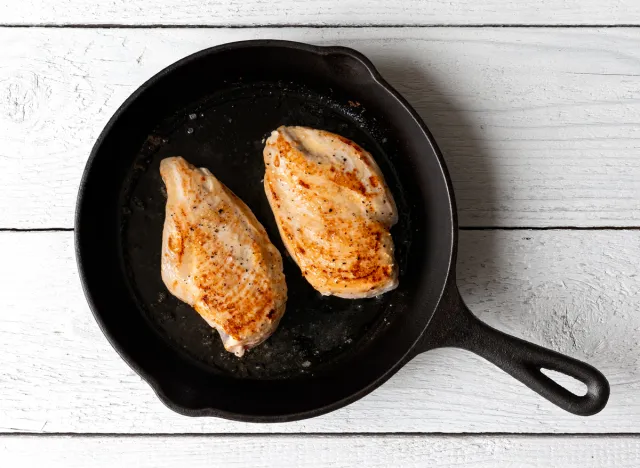
chicken breast pan seared
Shutterstock

Chicken breast is the poster child for healthy foods that help you lose weight, and for a good reason. Just 3 ounces cooked of cooked chicken breast provides 26 grams of protein. A 2012 review in the British Journal of Nutrition also found that foods rich in protein provide the perfect trifecta that supports weight loss: They can help with satiety, maintaining muscle mass, and increasing your metabolism.

alaskan cod
Shutterstock

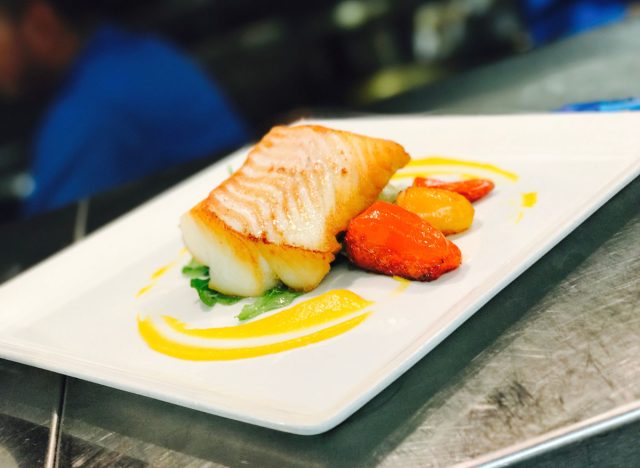
Make cod a part of your weekly meal plan, and you might notice the number on the scale drop. A 2009 study published in Nutrition, Metabolism and Cardiovascular Diseases found that folks with overweight and obesity who ate cod five times a week lost nearly four more pounds in two months than people who didn’t eat seafood. Just make sure to skip the butter when you’re cooking cod to avoid adding too many calories to your meal.

RELATED: The 12 Healthiest Fish You Should Be Eating—and 3 to Avoid

baked artichokes
Shutterstock

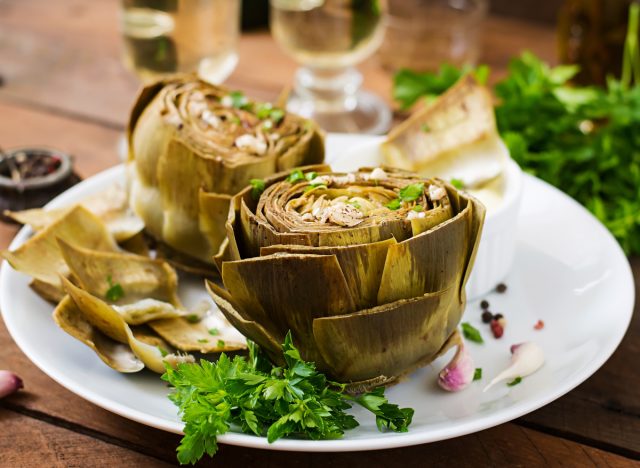
One of the highest-fiber foods you can get, artichokes are a superstar veggie that fits into most diet plans. One medium artichoke supplies about 7 grams of fiber—that’s an impressive 25{35112b74ca1a6bc4decb6697edde3f9edcc1b44915f2ccb9995df8df6b4364bc} of your Daily Value (DV), which can help keep you fuller for longer. A 2017 study published in the journal Annals of Internal Medicine also showed that people who ate more fiber lost nearly four more pounds than those who didn’t eat as much of the nutrient.

sweet potatoes
Shutterstock

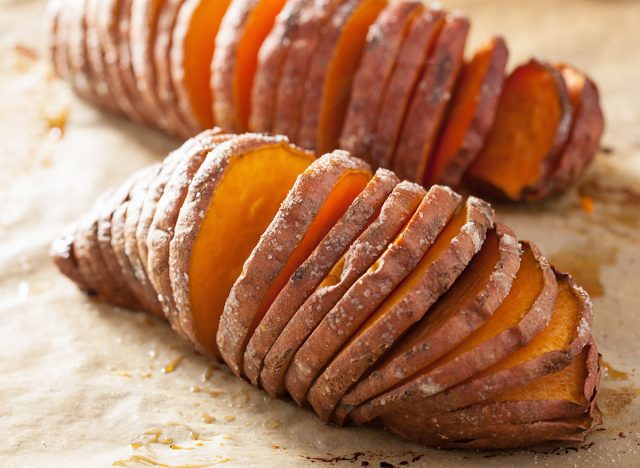
Sweet potatoes are loaded with dietary fiber—one sweet orange tater has nearly 4 grams of fiber, or 14{35112b74ca1a6bc4decb6697edde3f9edcc1b44915f2ccb9995df8df6b4364bc} of your DV.

“This, in turn, promotes satiety, slows down digestion, and improves blood sugar level,” says Brooking, echoing the 2017 aforementioned study in Annals of Internal Medicine. “Also, the fiber and carbohydrate content of this root vegetable provides sustainable energy and can be an excellent food option pre- and post-workout,” she adds.

Whole grain bread
Shutterstock

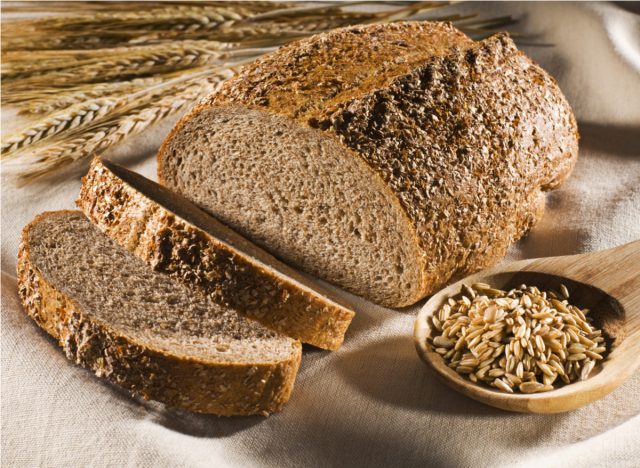
Gone are the days when folks feared bread. In fact, quality, whole grain bread (not the fluffy white loaves) can and should be a part of your weight loss diet. According to a 2010 study in The American Journal of Clinical Nutrition, people who ate three or more servings of whole grains per day were observed to have 10{35112b74ca1a6bc4decb6697edde3f9edcc1b44915f2ccb9995df8df6b4364bc} less belly fat than those who didn’t eat any whole grains.

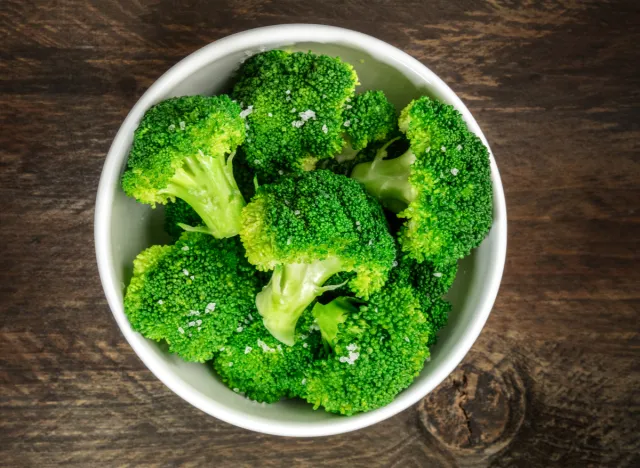
cooked broccoli with sea salt in a bowl
Shutterstock

“Cruciferous vegetables like broccoli are high in fiber and low in calories, making them a stellar food for weight loss,” says Brooking.

In fact, a 2012 Journal of Functional Foods study showed that eating more of these veggies is linked to a reduced incidence of obesity. Try stir-frying broccoli with garlic, then serving it alongside your favorite protein and a half cup of brown rice for a balanced meal.

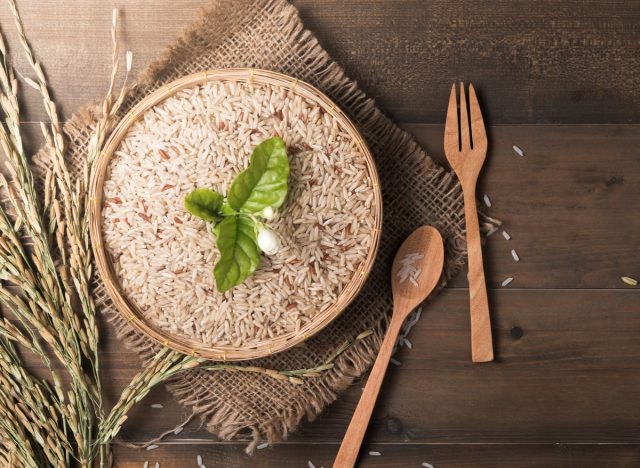
brown rice
Shutterstock

Speaking of brown rice, this stellar side dish is easy to digest and versatile. Eating whole grains, such as brown rice, regularly is linked to having less belly fat, per the previously referenced 2010 study in The American Journal of Clinical Nutrition. For a delicious and balanced meal, pair it with your favorite protein, like grilled chicken, tofu, or roasted salmon, and a non-starchy veggie, like zucchini or asparagus.

RELATED: What Happens to Your Body When You Eat Brown Rice

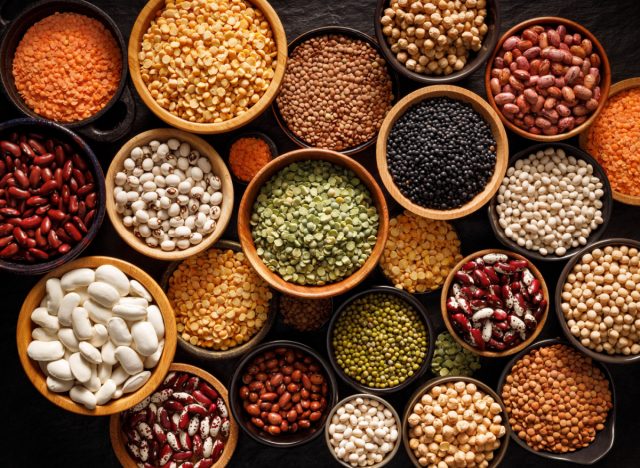
dried beans, lentils, and legumes
Shutterstock

Beans and other legumes, like peas and lentils, are high in both protein and fiber—a combo that spurs weight loss. According to a 2020 Journal of Nutrition and Metabolism study, women who ate more beans and legumes (about 3 cups a month) had less body fat and smaller waists than those who didn’t include as many legumes in their meal plans.

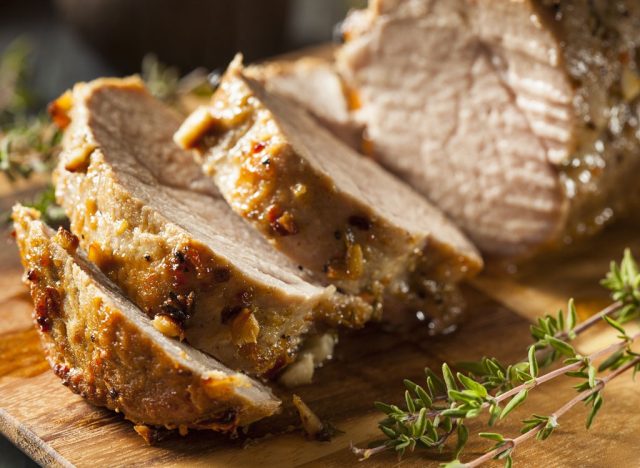
Pork tenderloin
Shutterstock

Unlike pepperoni and sausage, pork tenderloin is a lean cut that can help support your weight-loss goals. A 2012 study in the journal Nutrients found that overweight study participants who included lean pork in their diet for three months saw their waist size, BMI, and belly fat significantly drop. Even better: the study participants didn’t appear to lose any muscle mass, suggesting that all the corresponding weight loss was from fat.

salmon salad
Shutterstock

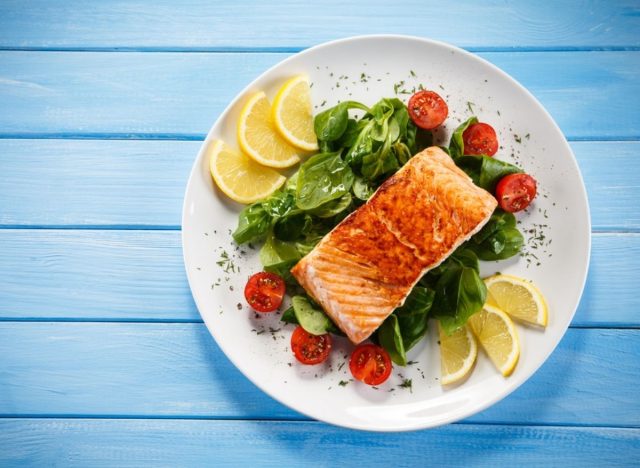
“Rich in protein and healthy fats, salmon can help you feel fuller and reduce cravings,” Brooking says. And despite containing upwards of 24 grams of fat per fillet, there’s no reason to fear salmon’s fat content when trying to lose weight. In fact, it may be the reason why eating this oily fish is linked to weight loss. A 2012 study published in Nutrients showed that fatty seafood might help people lose weight, and the researchers suspect that these weight loss effects may be due to salmon’s high amount of omega-3 fatty acids.

avocados
Shutterstock

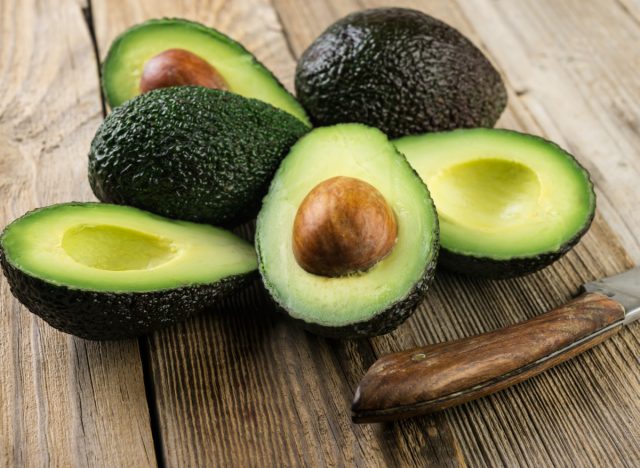
As if you needed another reason to bite into avocado toast for breakfast, a study in the journal Internal Medicine Review found that folks who ate about a third of an avocado (about 2.5 ounces) every day weighed less and had smaller waists than those who didn’t. Additionally, those who enjoyed the creamy fruit were 33{35112b74ca1a6bc4decb6697edde3f9edcc1b44915f2ccb9995df8df6b4364bc} less likely to be overweight or obese and 32{35112b74ca1a6bc4decb6697edde3f9edcc1b44915f2ccb9995df8df6b4364bc} less likely to have a wider waist circumference.

cutting cauliflower
Shutterstock

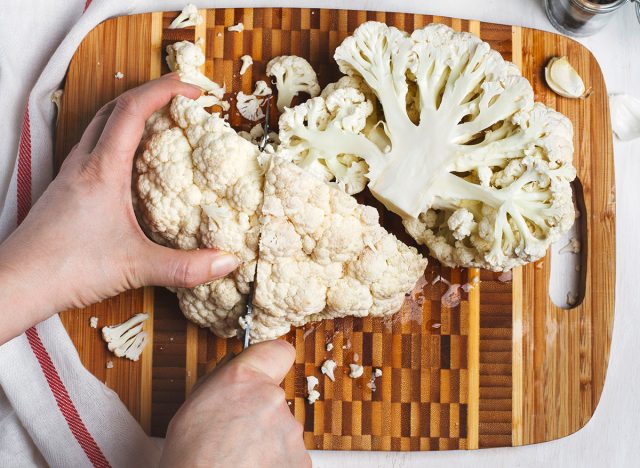
“Vegetables like cauliflower are high in fiber and low in calories, making them a great food for weight loss,” Brooking says.

Two cups of cooked cauliflower provide 5.7 grams of fiber or 20{35112b74ca1a6bc4decb6697edde3f9edcc1b44915f2ccb9995df8df6b4364bc} of your DV. As previously mentioned and supported by the 2017 study in the Annals of Internal Medicine assessing the effects of increased fiber consumption, people who ate more fiber were observed to lose more weight.

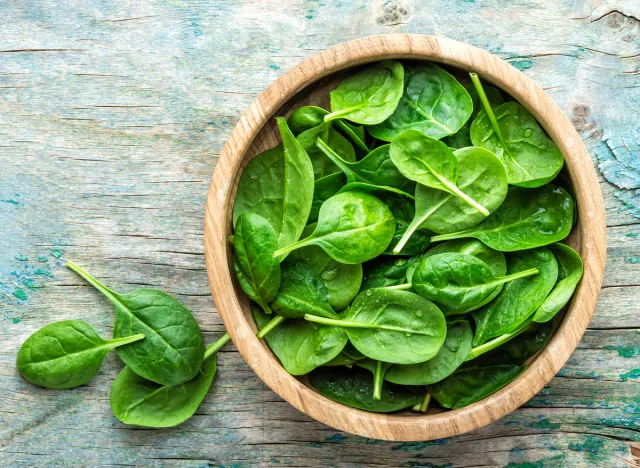
fresh baby spinach
Shutterstock

“Low in calories and high in fiber, leafy greens such as spinach can help you feel fuller and reduce calorie intake,” says Brooking.

The research backs up Brooking’s assertion. A review in Nutrients found that eating more than four servings of veggies a day reduced the risk of weight gain. One cup raw or 2 cups cooked equals a single serving of spinach.

deviled eggs restaurant
Shutterstock

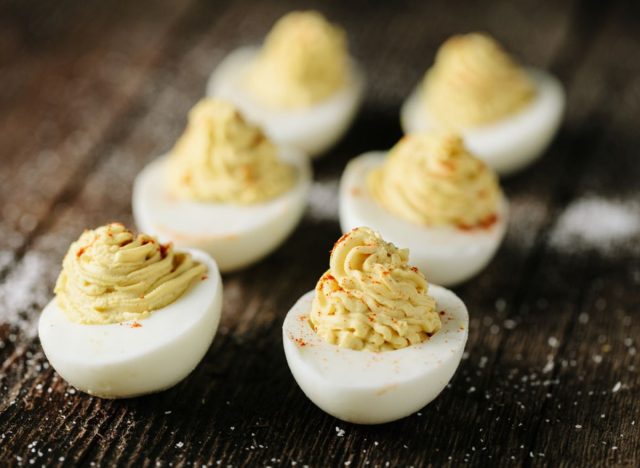
“Eggs are high in protein and healthy fats, making them a filling food that can help reduce appetite,” says Brooking.

A study in Hormone Research in Pediatrics found that a high-protein egg breakfast helped adolescents with obesity lose weight when compared to a bread-based breakfast. Here’s why: Eggs were shown to increase certain hormones that promote satiety.

RELATED: Are Eggs Good for You? 10 Science-Backed Effects of Eating Them Every Day

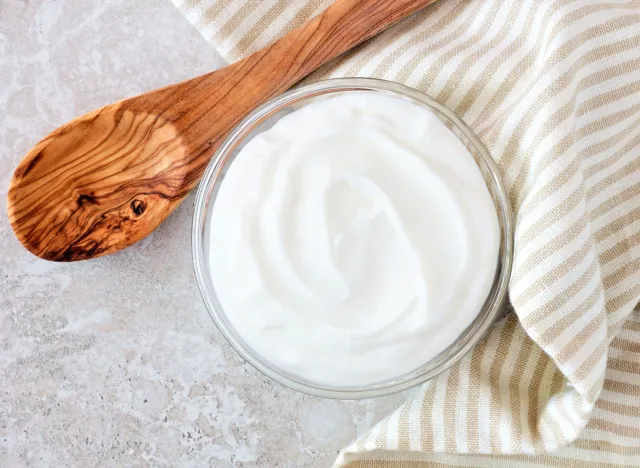
Bowl of greek yogurt
Shutterstock

Greek yogurt is high in protein, which we know helps you feel full for longer and can promote weight loss—but it’s also a rich source of gut-healthy probiotics. And those friendly gut bugs are great for your body composition, too. A small Journal of Functional Foods study found that probiotic yogurt can help alter the gut microbiome to help spur fat loss.

raspberries
Shutterstock

Raspberries are both low in calories and high in fiber. At just 64 calories, one cup of raspberries also contains about 8 grams of fiber, which is a whopping 29{35112b74ca1a6bc4decb6697edde3f9edcc1b44915f2ccb9995df8df6b4364bc} of your DV. The previously referenced study in the journal Annals of Internal Medicine analyzing the impact of increased fiber consumption revealed that those who ate more fiber not only lost more weight, but also they improved their blood pressure and insulin resistance. So go ahead and top a cup of plain Greek yogurt with a handful or two of raspberries for a satiating snack that’s high in protein and fiber.

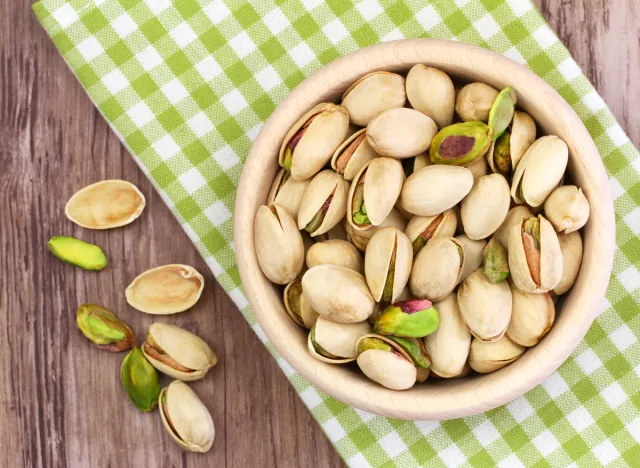
green pistachios checkered backround
Shutterstock

“Pistachios can help you feel full, resulting in eating less food at one sitting and being less hungry to eat again,” says Brooking.

Indeed, a 2020 study in Nutrients showed that eating 1.5 ounces of pistachios a day was associated with weight loss and a smaller waist circumference. “

This is due to the many nutrients, such as fiber, protein, and healthy fats, as well as the need to chew, which slows the eating process,” she adds. “In-shell pistachios have the added benefit of slowing eating time.”

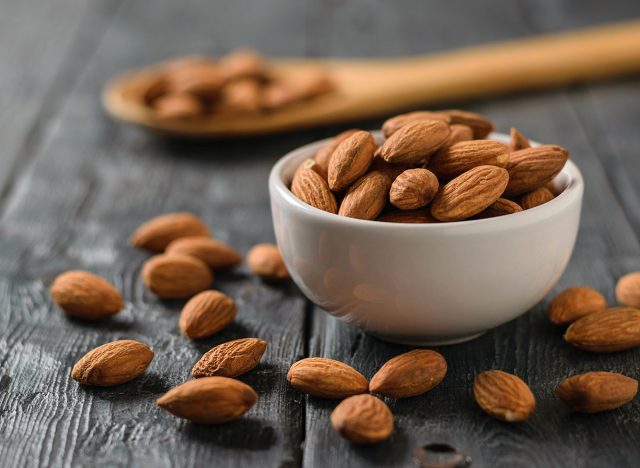
almonds
Shutterstock

Whether you prefer snacking on almonds on their own or spreading a tablespoon of almond butter on toast, including this nut in your meal plan is a smart strategy for weight loss. Enjoying 1.5 ounces (about a handful) of almonds every day is linked to reducing both belly fat and leg fat, per a 2015 study published in the Journal of the American Heart Association.

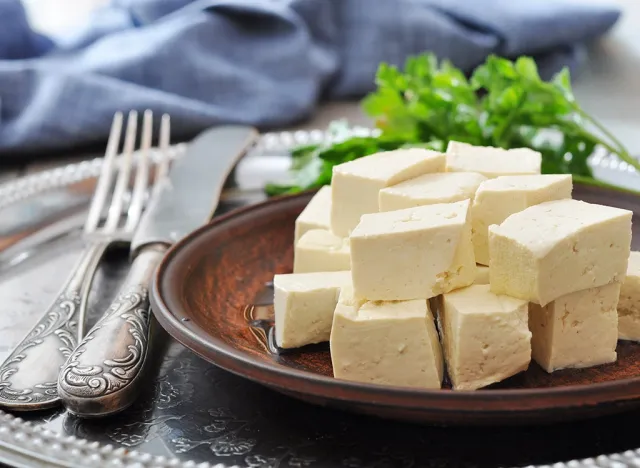
Tofu
Shutterstock

If you’re trying to lose weight, setting a goal for yourself to include more plant-based protein sources like tofu into your meal plan might be a smart way to start. A 2015 study in the Journal of Diabetes Investigation found that people who ate more plant-based proteins had a lower risk of developing metabolic syndrome (a condition that includes obesity), suggesting that plant proteins may help maintain a healthy weight.

RELATED: Soybeans May Help Lower Cholesterol as Effectively as Statins, Study Suggests

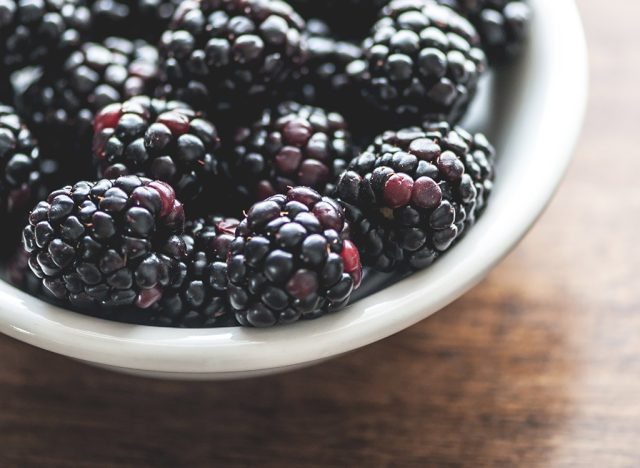
Blackberries in bowl
Shutterstock

Blackberries are low in calories and high in fiber and antioxidants, making them a fantastic food for weight loss. In fact, blackberries boast some of the highest antioxidant contents of all fruits. Contrary to popular belief, eating more fruit is actually linked to weight loss, according to a 2016 study in the journal Nutrients. The researchers suggest that the fiber and phytochemicals in fruit may be responsible for their anti-obesity properties.

walnuts
Shutterstock

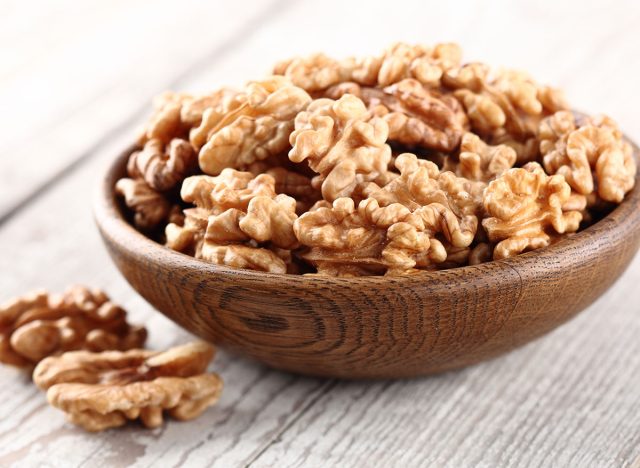
Whether you sprinkle them over oatmeal, bake them into low-sugar banana bread, or nosh on them on their own, walnuts are a weight loss workhorse. According to one study in the Nutrition Journal, eating a low-cal diet that included walnuts promoted weight loss and improved blood pressure and cholesterol levels.
grilled steak
Shutterstock

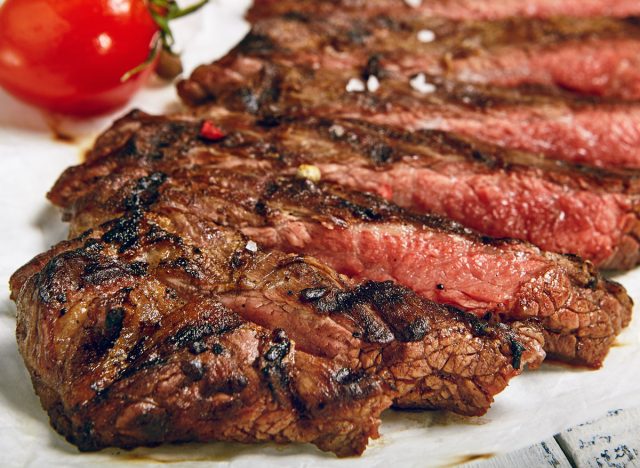
Getting bored of eating grilled chicken every night? Switch things up with steak. A 2017 study published in Obesity Science & Practice found that consuming lean beef as part of a high-protein diet decreased the study participants’ weight without also subtracting from their muscle mass. To make sure you’re picking the leanest beef at the grocery store, make sure to look for labels that say eye of round, top round, bottom round, round tip, top loin, top sirloin, and chuck shoulder or arm roasts, according to the USDA.

RELATED: What Happens to Your Body When You Eat Red Meat Every Day

celery stalks
Shutterstock

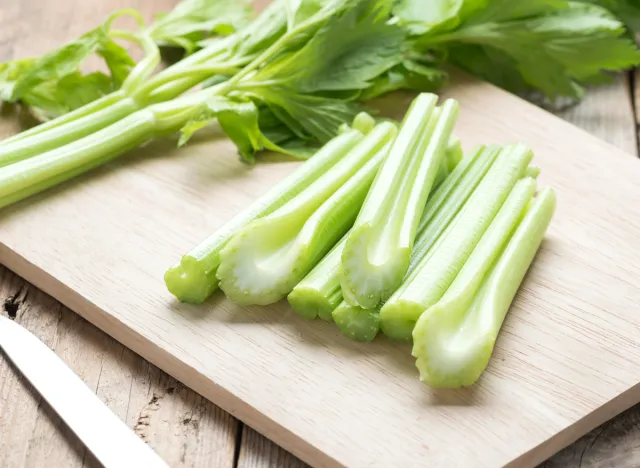
Grab some celery stalks and get dippin’. Celery’s high water content makes it a good snack for weight loss or weight management, according to research by Cambridge University Press. Use crunchy celery as a vehicle to get more satiating protein in. Try pairing it with hummus, cottage cheese, or peanut butter.

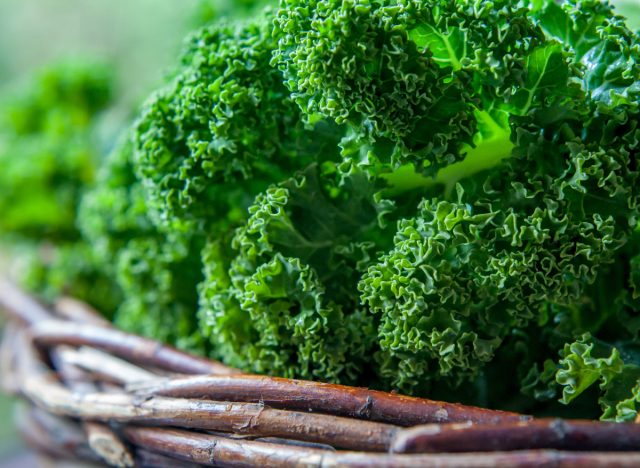
fresh basket of kale
Shutterstock

Next time you struggle with cooking fatigue, try tossing a simple kale salad for lunch or dinner. A review in Nutrients found that eating more than four servings of veggies each day reduced the risk of weight gain. Two cups of raw kale plus 2 cups of raw spinach in a salad will get you halfway to your goal. Add low-sugar cranberries along with diced cucumber and top it off with a piece of grilled salmon for a nutrient-dense bowl.

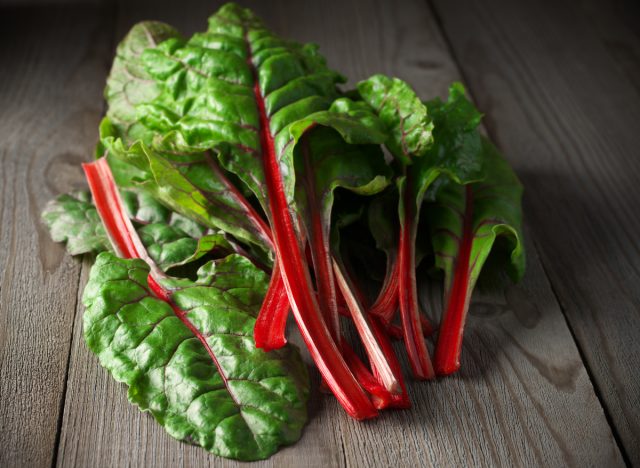
swiss chard leaves
Shutterstock

Another veggie low in calories and high in nutrients, Swiss chard is delicious sauteed with garlic and a bit of olive oil. Eating more than four servings of vegetables, like Swiss chard, a day reduced the risk of weight gain, per a review in Nutrients. So you’ll want to make this fibrous veggie a part of your meal plan more often.

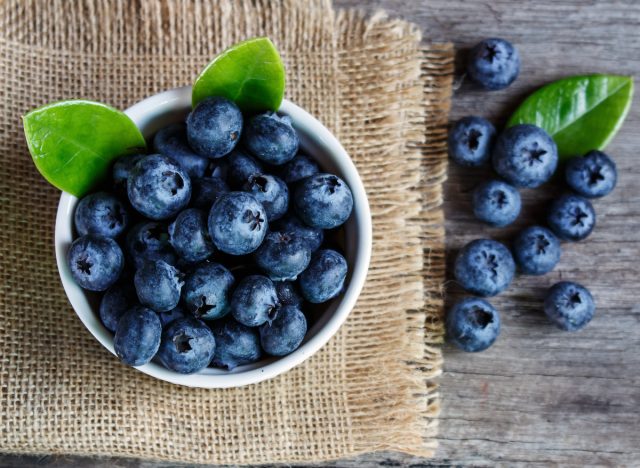
blueberries
Shutterstock

Consider blueberries your new go-to pre-workout snack. A 2023 study published in Nutrients found that eating the equivalent of one cup of fresh blueberries every day was able to boost endurance and help you burn more body fat while exercising. A win-win!

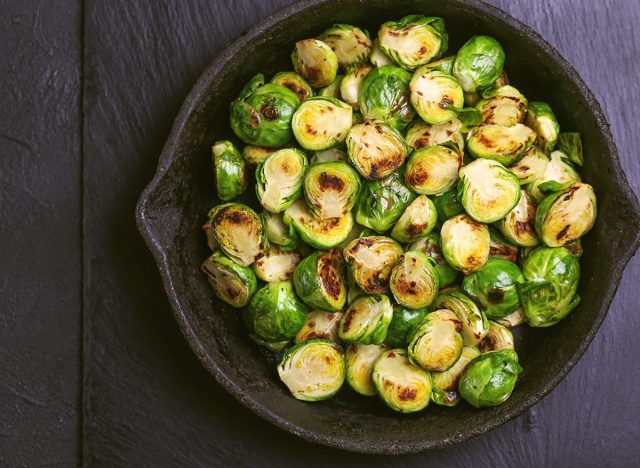
brussels sprouts
Shutterstock

Brussels sprouts shouldn’t be reserved for Thanksgiving only. Eating them year-round might just help you reach your weight loss goals. Not only are brussels high in fiber and low in calories, but a 2012 Journal of Functional Foods study showed that eating more veggies is linked to a reduced incidence of obesity. To help keep the calorie count low as you prepare them, skip the bacon and roast them with just a spritz of olive oil.

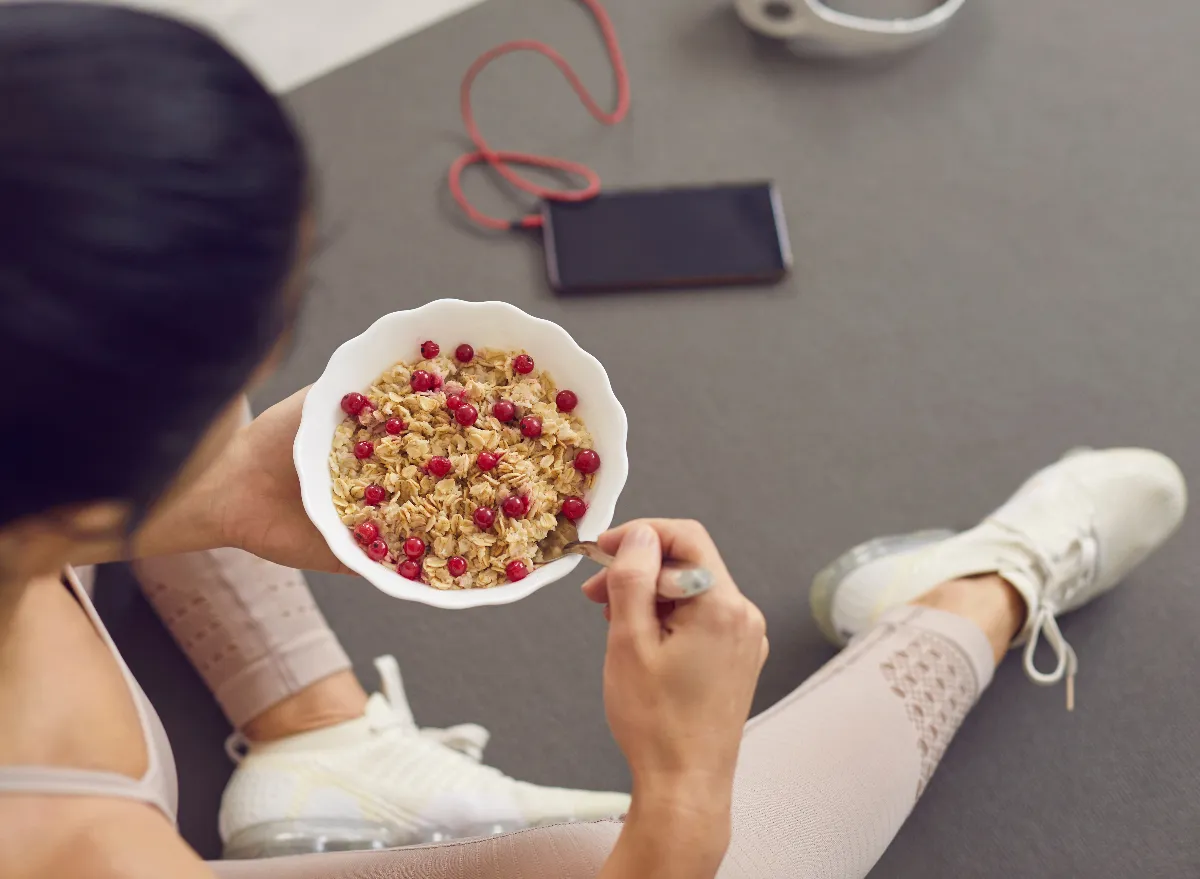
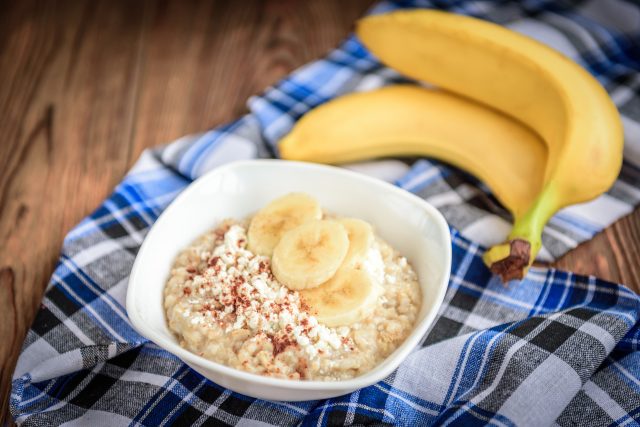
Oatmeal with cottage cheese, cocoa and banana.
Shutterstock

Waking up to a bowl of whole grain oats is a smart way to start the day. People who ate three or more servings of whole grains per day were observed to have 10 percent less belly fat than those who didn’t eat any whole grains, per a 2010 study in The American Journal of Clinical Nutrition. A full cup of prepared oatmeal counts as two servings, so cooking up some oats for breakfast will get you three-quarters of the way to your daily whole-grain goal. Make your oats savory, and top the bowl with a fried egg for extra satiety power.

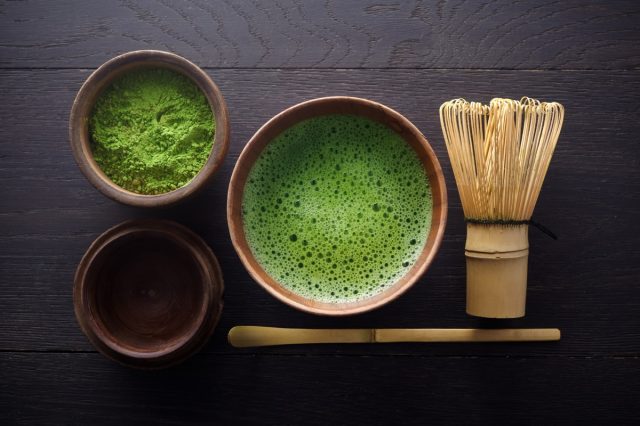
Shutterstock

Though green tea is occasionally used in cooking, more often than not, it’s served up in beverage form. However, it’s still worth noting as one of the best foods for weight loss because if you regularly exercise, consuming green tea can be a simple way to potentially boost your weight loss efforts. For instance, one study published in The Journal of Nutrition found that exercisers who drank about 2.5 cups of green tea daily and worked out for 45 minutes three times a week were able to lose more belly fat than those who didn’t have any green tea.

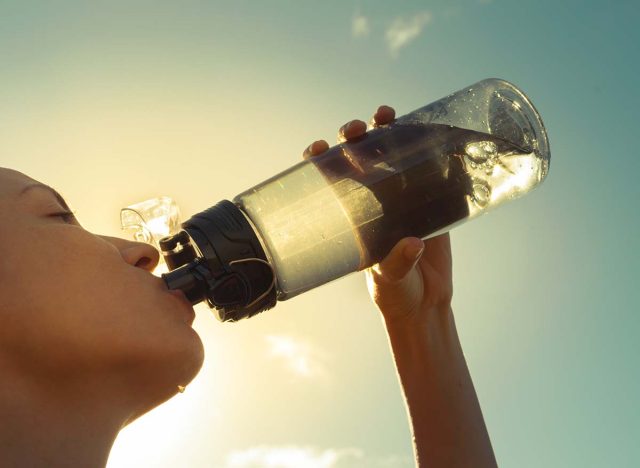
Drinking out of large water bottle
Shutterstock

While also technically not a food, water is essential for weight loss. “Being well-hydrated helps to keep you feeling full, and water has zero calories,” Brooking says. A study in the journal Obesity assessing the impact of water consumption relative to weight loss showed that premenopausal overweight women ages 25–50 who drank more than 4 cups of water a day lost about 4.4 more pounds than those who drank less H2O.

Here’s another reason to hydrate with water instead of soda or fruit juice: “When you have high-calorie beverages, the brain doesn’t register satiety the same way as it does with food, so you can end up drinking [or] eating excess calories to satisfy hunger,” says Brooking.

13 Tips To Keep the Weight off for Good, According to Dietitians

13 Tips To Keep the Weight off for Good, According to Dietitians

Losing weight is the first half of the battle; keeping the weight off is the next challenging part of the equation. Maintaining your new, healthy weight is the end goal here, which is why we spoke with the experts who share their top-recommended tips to keep the weight off for good. Keeping excess stress at bay, getting sufficient beauty rest, and incorporating fruit or veggies into every meal you consume are all key players in staving off extra weight. Read on to learn more, and next, don’t miss 13 Tips To Lose 10 Pounds Quickly.

whole foods diet
Shutterstock

Choosing whole foods over processed foods is always the smart way to go to fuel your body and support your weight loss efforts. Processed foods usually have more preservatives, added sugars, saturated fat, and trans fat, which are culprits that make weight gain easy. According to Melissa Mitri, MS, RD, nutrition writer and owner of Melissa Mitri Nutrition, “A diet full of processed food also increases your risk for heart disease and type 2 diabetes. Aim for 80{35112b74ca1a6bc4decb6697edde3f9edcc1b44915f2ccb9995df8df6b4364bc} of your diet from whole foods and 20{35112b74ca1a6bc4decb6697edde3f9edcc1b44915f2ccb9995df8df6b4364bc} from convenience or processed foods that are in a package or container.”

mature couple sleeping peacefully, demonstrating habits to maintain muscle mass after 50
Shutterstock

Did you know that how you sleep can impact how efficiently your body will keep the weight off? “Poor sleeping patterns can cause an increase in calorie intake and reduce your motivation to exercise,” Mitri explains. She suggests getting seven to eight hours of restful, uninterrupted sleep on a nightly basis. You may even want to consider implementing a calming winddown routine into your evening.

woman eating apple after workout
Shutterstock

When the goal is to maintain your new, healthy weight, keeping up a calorie deficit is crucial. A calorie deficit is essentially torching a greater number of calories than you consume, and “maintenance” means the numbers are basically the same amount. “This prevents unwanted weight gain after you reach your goal weight, and keeps the pounds off for good,” Mitri tells ETNT.

RELATED: 10 Habits That Destroy Your Weight Loss Progress After 50

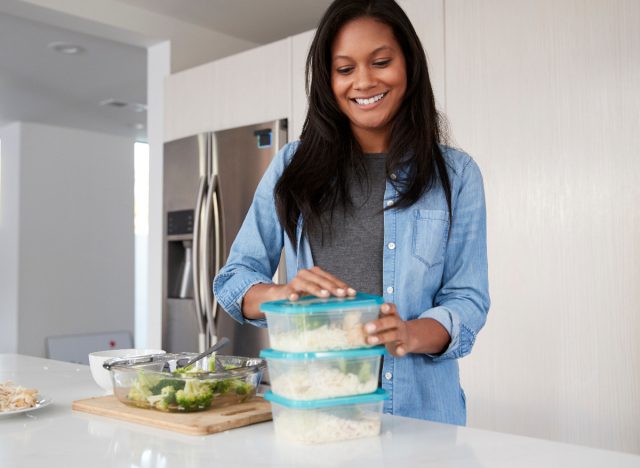
happy woman meal prepping rice and broccoli in containers, concept of habits to start losing weight this week
Shutterstock

Meal planning doesn’t have to be a difficult, drawn-out process. Simplifying this process will work wonders for your physical and mental health!

“Meal planning can help you eat more nutritious meals and keep weight off,” Mitri says. “I see many people often make meal planning complicated, but keeping it simple is key for sustainability. You can do this by using ingredients that can be used in multiple dishes, such as rice, mixed vegetables, or grilled chicken, and utilizing leftovers often.”

woman meditating at home, concept of how to lose weight after 40
Shutterstock

You’re likely already aware that stress can have detrimental effects on your body; it can even lead to weight gain. Therefore, it’s important to keep your stress levels low. “Stress can be a hidden factor in why you aren’t able to maintain your weight loss,” Mitri explains. “It has been studied for its negative impact on your food intake, dietary preferences, decision-making, and more. It is important to have stress relieving techniques in your back pocket, such as meditation, deep breathing, and going for a nature walk.”
lemonade
Shutterstock

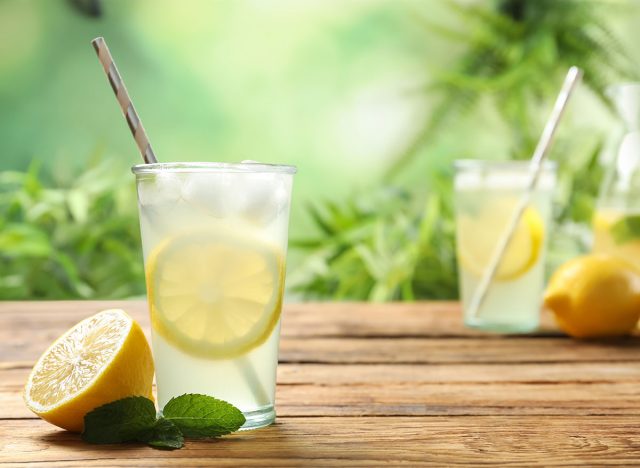
Beverages like lemonade, iced tea, and soda may taste good, but they’re jam-packed with sugar and hundreds of unnecessary calories. If you aren’t mindful of how much you’re drinking, the calories can add up quickly and result in weight gain. Rather than drinking your calories, Mitri suggests choosing healthier alternatives such as flavored and sparkling water or herbal teas if you’re in the mood for a refreshing sip.
woman cooking healthy meal at home to lose weight after 40
Shutterstock

Making meal decisions “on the fly,” as Mitri puts it, is a major no-no if you want to keep your weight down for good. If you have a busy schedule, plan in advance and meal prep. Not having fresh foods readily accessible makes it much easier to opt for less-than-healthy options. “I like the rule, ‘make it once and eat it twice’ for a quick meal prep hack. For example, when cooking dinner, make an extra serving or two for lunch the next couple of days,” Mitri suggests.

RELATED: 15 Ways To Lose Weight & Keep It Off After 40

happy fit woman eating salad on yoga mat, concept of tips to lose weight for good
Shutterstock

This pro tip is an excellent way to get impulse eating under control. The Nutrition Twins®, Tammy Lakatos Shames, RD, CDN, CFT, and Lyssie Lakatos, RD, CDN, CFT, members of our Medical Expert Board, explain, “While this may seem like common sense, much of snacking and impulse eating occurs when standing in the kitchen or in front of the pantry. It’s easy to pop open a bag of chips or a sleeve of cookies and devour it. However, just the act of sitting and plating food, helps to make the experience more mindful and prevent overeating. Our clients achieve long-lasting weight loss by making an intentional life-long habit of sitting down to eat.”

Handful of almonds
Shutterstock

Keeping satisfying, healthy snacks on hand can make you feel like you’re indulging and help you avoid reaching for unhealthy options like sugar-packed granola bars or ultra-processed candy bars. “Sugary granola bars and vending machine candy bars are made from processed ingredients and are high in sugar, which causes a blood sugar spike, followed by a crash that triggers the release of the belly fat hormone, cortisol. These options don’t provide the body with nutrients and the processed ingredients are usually devoid of the satisfying combination of protein and fiber, so they leave you hungry soon after,” The Nutrition Twins tell us.

If you need some inspiration, they love keeping KIND’s Dark Chocolate Nuts & Sea Salt bars in their gym bags and at their desks since they pack a mean protein and fiber punch. They also boast nutrient-dense ingredients such as almonds.

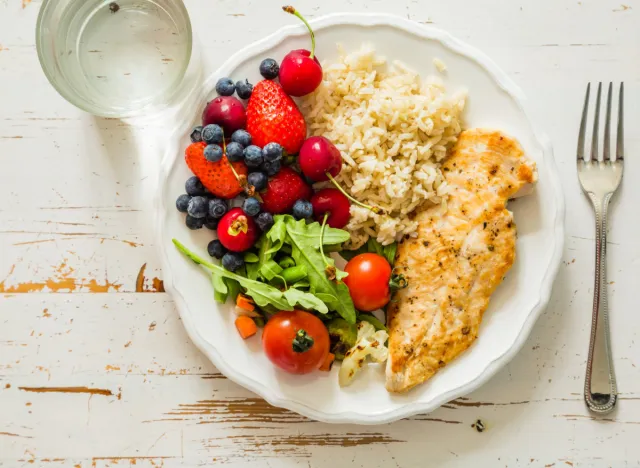
portioned plate with chicken, rice, fruit, and salad
Shutterstock

Performing “portion check-ups” is always a good idea—especially when you’re dining out. “Our perception of a portion size can quickly be skewed by being exposed to oversized portions, (aka portion distortion), especially at restaurants,” The Nutrition Twins explain. “It’s easy to eat the amount that’s served and lose sense of what an actual portion should look like. So our portions typically get bigger over time if we don’t pay attention.”

In order to avoid this, every two weeks, break out your measuring utensils to check what your portions are in order to stay on the right track. Being mindful of healthy portion sizes will keep the weight off for good.

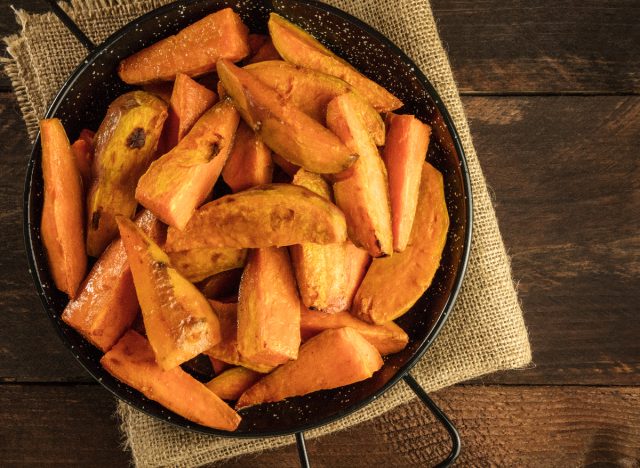
roasted sweet potatoes, healthy carbs concept of tips to keep the weight off for good
Shutterstock

You heard that right! Carbs can be your friend when you’re trying to lose weight and keep it off. It’s all about choosing the right, healthy ones and making sure to keep your portion sizes moderate. “It only takes one-half cup to two-thirds cup of a wholesome, high fiber carb, like sweet potatoes, brown rice, oats, etc., at each meal to give your brain fuel to prevent cravings for sugar and doughy carbs, as well as feelings of deprivation,” The Nutrition Twins explain. “These slower-digesting carbs will keep you on track. You’ll keep weight off long-term as you feel satisfied and prevent the urges to binge from restriction.”

RELATED: 20 Best Healthy Carbs For Weight Loss

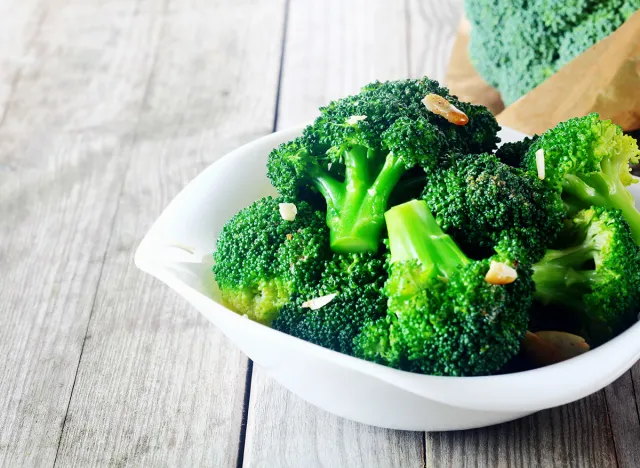
steamed broccoli in bowl, concept of tips to keep the weight off for good
Shutterstock

When you feel the weight creeping back, it’s time to re-assess your plate. Get into the healthy habit of making sure half of your plate is filled with steamed vegetables. This will fill you up with fiber, few calories, and anti-inflammatory nutrients, The Nutrition Twins tell us. “You’ll be less hungry and have less room in your stomach for the heavier carbs and fattier items, so you’ll prevent excess calories from making their way to your mouth,” they add. Just make sure the vegetables are steamed and you’re not using any butter or oil to cook them.

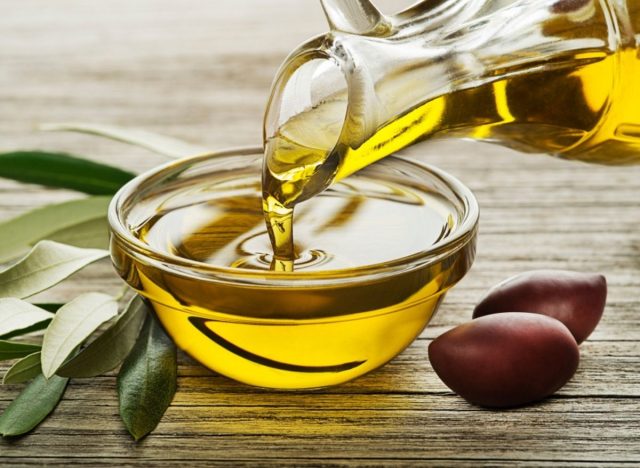
olive oil being poured into bowl, concept of tips to keep the weight off for good
Shutterstock

Last but not least, if you want to keep the weight off for good, “keep an eye on the fats,” The Nutrition Twins say. Fats such as olive oil, avocados, cream sauces, and butters have the tendency to add up in calories really fast, which can lead to excess fat in your midsection. “Maintaining weight loss requires keeping the portions of fat sources in check. If weight starts creeping back on, check your fats,” The Nutrition Twins add.

7-Day Diet Plan for Weight Loss

7-Day Diet Plan for Weight Loss

Just in case you need to hear this: You don’t need to lose weight. Not to be happy. Not to fall in love. Not to get the job of your dreams. If you want to lose weight to get healthier? Great. Just know that body size isn’t the end-all, be-all of determining your health. Feeling good about your body and taking care of your body is the goal — and that can look like a lot of different things.


But if you want to make some healthy changes to your diet or if you want to lose some weight, committing to a healthy eating plan can help. To help you get started, Cheryl Forberg, R.D. and Eliza Savage, R.D., designed this 7-day diet plan for weight loss. With this easy-to-follow plan, you’re sure to feel refreshed, healthy, and strong, and lose weight (if you want to!) in no time.


7-Day Menu for Weight Loss

This is not a restrictive meal plan: You’ll eat three meals and two snacks daily, plus each dish packs a filling balance of macronutrients with 45 percent carbohydrates, 30 percent protein, and 25 percent healthy fats. When it comes to drinks, Forberg recommends sticking to no- and low-cal picks like coffee, tea, and water.


And to accelerate weight loss and build a healthy and strong body, make sure you’re getting the recommended amount of physical activity from the Centers for Disease Control and Prevention (that’s 150 minutes of moderate-intensity physical activity and two days of muscle strengthening activity, FYI).


Day 1

Breakfast:


  • 1/2 cup egg whites scrambled with 1 teaspoon olive oil, 1 teaspoon chopped basil, 1 teaspoon grated Parmesan, and 1/2 cup cherry tomatoes
  • 1 slice whole-grain toast
  • 1/2 cup blueberries


Snack:


  • 1/2 cup plain Greek yogurt topped with 1/4 cup sliced strawberries


Lunch:


  • Salad made with: 3/4 cup cooked bulgur, 4 ounces chopped grilled chicken breast, 1 tablespoon shredded low-fat cheddar cheese, diced grilled veggies (2 tablespoons onion, 1/4 cup diced zucchini, 1/2 cup bell pepper), 1 teaspoon chopped cilantro, and 1 tablespoon vinaigrette


Snack:


  • 2 tablespoons hummus and 6 baby carrots


Dinner:


  • 4 ounces grilled salmon
  • 1 cup wild rice with 1 tablespoon slivered toasted almonds
  • 1 cup wilted baby spinach with 1 teaspoon each olive oil, balsamic vinegar, and grated Parmesan
  • 1/2 cup diced cantaloupe topped with 1 teaspoon chopped walnuts


Day 2

Breakfast:


  • 3/4 cup steel-cut or old-fashioned oatmeal prepared with water; stir in 1/2 cup skim milk
  • 1 cup blueberries


Snack:


  • 1/2 cup low-fat ricotta cheese with 1/2 cup raspberries and 1 tablespoon chopped pecans


Lunch:


  • Quesadilla made with two small corn tortillas, 1/2 cup low-sodium black beans (rinsed), and 3 tablespoons low-fat jack cheese
  • 1/2 cup diced watermelon


Snack:


  • 1/2 cup low-fat cottage cheese with 1/2 cup salsa


Dinner:


  • 1 turkey burger
  • 3/4 cup roasted cauliflower and broccoli florets
  • 3/4 cup brown rice
  • 1 cup spinach salad with 1 tablespoon balsamic vinaigrette


Day 3

Breakfast:


  • Omelet made with 4 egg whites and 1 whole egg, 1/4 cup chopped broccoli, 2 tablespoons each black beans, diced onion, diced mushrooms, and salsa


Snack:


  • 1/2 cup plain greek yogurt with 1 sliced apple and 1 tablespoon chopped walnuts


Lunch:


  • Salad made with 2 cups chopped Romaine, 4 ounces grilled chicken, 1/2 cup chopped celery, 1/2 cup diced mushrooms, 2 tablespoons shredded cheddar, and 1 tablespoon low-fat Caesar dressing
  • 1 medium nectarine


Snack:


  • 1 low-fat mozzarella string cheese stick
  • 1 medium orange


Dinner:


  • 4 ounces shrimp, grilled or sautéed with 1 teaspoon olive oil and 1 teaspoon chopped garlic
  • 1 medium artichoke, steamed
  • 1/2 cup whole wheat couscous with 2 tablespoons diced bell pepper, 1/4 cup garbanzo beans, 1 teaspoon chopped fresh cilantro, and 1 tablespoon honey mustard dressing


Day 4

Breakfast:


  • Toast 1 whole-grain English muffin and top with 2 tablespoons nut butter and 1 banana, sliced
  • 1 wedge canteloupe


Snack:


  • Yogurt parfait made with 1 cup plain greek yogurt, 2 tablespoons sliced strawberries or raspberries, and 2 tablespoons slivered almonds


Lunch:


  • Wrap made with 4 ounces thinly sliced lean roast beef, one 6-inch whole wheat tortilla, 1/4 cup shredded lettuce, 3 medium tomato slices, 1 teaspoon horseradish, and 1 teaspoon Dijon mustard
  • 1/2 cup black beans or lentils with 1 teaspoon chopped basil and 1 tablespoon low-fat Caesar dressing


Snack:


  • Baby carrots with 2 tablespoons guacamole


Dinner:


  • 4 ounces grilled halibut
  • 1/2 cup sliced mushrooms sautéed with 1 teaspoon olive oil, 1/4 cup chopped yellow onion, and 1 cup green beans
  • Salad made with 1 cup arugula, 1/2 cup halved cherry tomatoes, and 1 teaspoon balsamic vinaigrette
  • 1/2 cup plain greek yogurt, 1 tablespoon chopped pecans and dash cinnamon


Day 5

Breakfast:


  • Burrito made with: 1 medium whole wheat tortilla, 4 scrambled egg whites, 1 teaspoon olive oil, 1/4 cup black beans, 2 tablespoons salsa, 2 tablespoons grated low-fat cheddar, and 1 teaspoon fresh cilantro
  • 1 cup mixed melon


Snack:


  • 2 tablespoons nut butter
  • 1 medium apple


Lunch:


  • Turkey burger or veggie burger
  • Salad made with: 1 cup baby spinach, 1/4 cup halved cherry tomatoes, 1/2 cup cooked lentils, 2 teaspoons grated Parmesan, and 1 tablespoon vinaigrette dressing


Snack:


  • 1 low-fat mozzarella string cheese stick
  • 1 cup red grapes


Dinner:


  • 5 ounces grilled wild salmon
  • 1/2 cup brown or wild rice
  • 2 cups mixed baby greens with 1 tablespoon low-fat Caesar dressing
  • 1 sliced pear


Day 6

Breakfast:


  • Frittata made with 3 large egg whites, 2 tablespoons diced bell peppers, 2 teaspoons chopped spinach, 2 tablespoons part-skim shredded mozzarella, and 2 teaspoons pesto
  • 1/2 cup fresh raspberries


Snack:


  • 1/2 cup greek yogurt with 1 tablespoon ground flaxseed and 1/2 cup diced pear


Lunch:


  • 4 ounces sliced turkey breast
  • Tomato-cucumber salad made with 5 slices tomato, 1/4 cup sliced cucumber, 1 teaspoon fresh chopped thyme, and 1 tablespoon vinaigrette dressing
  • 1 medium orange


Snack:


  • Smoothie made with 3/4 cup skim milk, 1/2 banana, 1/2 cup greek yogurt, and 1/4 cup sliced strawberries, handful spinach, ice


Dinner:


  • 4 ounces red snapper baked with 1 teaspoon olive oil, 1 teaspoon lemon juice, and 1/2 teaspoon no-sodium seasoning
  • 1 cup spaghetti squash with 1 teaspoon olive oil and 2 teaspoon grated Parmesan
  • 1 cup steamed green beans with 1 tablespoon slivered almonds


Day 7

Breakfast:


  • 1 whole-grain toaster waffle with 2 tablespoons nut butter
  • 3/4 cup berries


Snack:


  • 1/4 cup low-fat cottage cheese with 1/4 cup cherries and 1 tablespoon slivered almonds


Lunch:


  • Salad made with: 2 cups baby spinach, 4 ounces grilled chicken, 1 tablespoon chopped dried cranberries, 3 slices avocado, 1 tablespoon slivered walnuts, and 2 tablespoons vinaigrette
  • 1 apple


Snack:


  • 1/4 cup plain Greek yogurt with 1 tablespoon ground flaxseed and 1/4 cup blueberries


Dinner:


  • 4 ounces lean pork tenderloin cut into bite-sized pieces stir-fried with onions, garlic, broccoli, and bell pepper
  • 1/2 cup brown rice
  • 5 medium tomato slices topped with 1 teaspoon each chopped ginger, chopped cilantro, light soy sauce, and rice wine vinegar


How to Meal Prep for the Week

  • Shop for all the ingredients you’ll need in advance using our handy shopping list.
  • Grill all the chicken breasts at once, and store them in a sealed container in the refrigerator until ready to use.
  • Turn your steel-cut oats into easy overnight oats by preparing them the night before and storing them in the fridge. Serve cold or warm in the microwave before eating.
  • Cook the couscous, bulgur, and rice ahead of time, store them in the refrigerator, and reheat them when ready to use.
  • Chop vegetables and make salads early in the day for quick and easy dinner prep.
  • Cut up melons and fruits the night before, store them in an air-tight container, and refrigerate.
  • Chop and slice proteins in advance to make the salad and stir fry prep faster and easier.


7-Day Shopping List

To really simplify this satisfying menu, here is a shopping list with all of the ingredients you’ll need to make every meal and snack on this list.


Shopping list

Meat and Fish


  • 3 chicken breasts (4 ounces each)
  • 2 fillets salmon (4-5 ounces each)
  • 2 turkey burgers (or veggie burgers)
  • 4 ounces shrimp
  • 4 ounces halibut
  • 4 ounces red snapper
  • 4 ounces lean pork tenderloin
  • 4 ounces thinly sliced lean roast beef
  • 3 ounces sliced lean ham
  • 4 ounces sliced turkey breast


Other Protein


  • 18 Eggs (or equivalent in egg whites)
  • 1 small can low-sodium black beans
  • 1 small can garbanzo beans
  • 1 small can of cooked lentils
  • 2 tablespoons hummus


Fruit


  • 1 pint blueberries
  • 1 quart strawberries
  • 1/2 cantaloupe
  • 1 pint raspberries
  • 1/4 cup fresh cherries
  • 1/2 cup watermelon
  • 1 medium nectarine
  • 3 apples
  • 2 medium oranges
  • 2 pears
  • 1 cup red grapes
  • 1 banana
  • 1 lemon (for juice)
  • 1 tablespoon dried cranberries
  • 1-1/4 cups cherry tomatoes


Vegetables


  • 1 medium yellow onion
  • 1 zucchini
  • 1 large bell pepper
  • 1 bag baby carrots
  • 5 cups baby spinach
  • 1 container fresh salsa
  • 3/4 cup cauliflower
  • 1 cup broccoli florets
  • 1 cup fresh mushrooms
  • 2 cups chopped romaine
  • 2 cups mixed baby greens
  • 1/2 cup chopped celery
  • 1 garlic clove
  • 2 cups green beans
  • 1 cup arugula
  • 1 medium artichoke
  • 1 avocado 
  • 1/4 cup shredded lettuce
  • 3 medium tomatoes
  • 1 cucumber
  • 1 cup spaghetti squash
  • 1 small ginger root 


Milk and Dairy


  • 6 teaspoons grated Parmesan
  • 1/2 gallon skim milk
  • large container low-fat greek yogurt
  • 5 tablespoons shredded low-fat cheddar
  • 2 tablespoons part-skim shredded mozzarella 
  • 1 cup ricotta
  • 1 cup cottage cheese
  • 1 tablespoon low-fat jack cheese
  • 2 mozzarella string cheese sticks


Condiments and Dressings


  • 1 small bottle olive oil
  • 1 bottle low-fat vinaigrette (or homemade)
  • 3 tablespoons balsamic vinegar
  • 1 bottle low-fat Caesar dressing*
  • 1 tablespoon fat-free honey mustard dressing*
  • 1 tablespoon light soy sauce
  • 1 tablespoon rice wine vinegar
  • 1 teaspoon horseradish
  • 1 teaspoon dijon mustard
  • * Note: You can substitute a simple vinaigrette for any of the recommended prepared dressings if you prefer


Herbs, Nuts, Butters, Spreads


  • 2 teaspoons fresh basil
  • 4 teaspoon fresh cilantro
  • 2 teaspoons pesto 
  • 1 teaspoon fresh thyme
  • 3 tablespoons slivered almonds
  • 3 tablespoons walnuts
  • 2 tablespoons pecans
  • 1 jar unsweetened nut butter (peanut or almond)
  • 2 tablespoons ground flaxseed
  • Dash of cinnamon
  • 1/2 teaspoon no-sodium seasoning


Bread and Grains


  • 1 slice whole grain bread
  • 2 corn tortillas
  • 1 whole grain English muffin
  • 2 6-inch whole wheat tortillas 
  • 1 whole-grain toaster waffle 
  • 1/2 cup bulgur 
  • 1 cup wild rice
  • 2 cups brown rice
  • 1/2 cup whole wheat couscous
  • 1/2 cup steel cut oatmeal


Alternatives for Vegetarians and Those With Dietary Restrictions

While many of the meals on this list include meat and fish proteins, these dishes can be easily become vegetarian-friendly with substitutes like tofu, beans, veggie burgers, and other plant-based options. 


Replace skim milk with almond, soy, or oat milk if you have lactose intolerance, and stick with hard cheeses like Swiss, Parmesan, and cheddar. Those with gluten sensitivity can replace wheat grains with quinoa or millet, and use gluten-free bread and crackers in place of wheat bread tortillas.