Twin Cities union starts program to combat suicide, drug addiction among construction workers

Twin Cities union starts program to combat suicide, drug addiction among construction workers

A Twin Cities painters union is taking on mental health with a program new to Minnesota that provides onsite counseling and intervention training for construction workers.

The goal is to tackle the high rates of suicide and substance abuse in the construction industry head on and to make it much easier to access help without any stigma, organizers said.

The “FTIUM Care Team” program was launched this month by the 3,500-member International Union of Painters and Allied Trades District Council 82 (DC 82) and the Finishing Trades Institute of the Upper Midwest (FTIUM), both in Little Canada.

The extra help is “absolutely 100{35112b74ca1a6bc4decb6697edde3f9edcc1b44915f2ccb9995df8df6b4364bc} needed,” said Mike Vitt, a union building-glass installer and an Air Force veteran who served after 9/11 in both Iraq and Afghanistan. He suffers from PTSD and was delighted by what he saw while taking one of the Care Team’s new classes that hopes to change the macho culture in construction, which organizers say contributes to the high suicide rates.

“I’m glad this is happening,” Vitt said. “I have had suicidal ideation since the age of 10 and had PTSD from both my childhood and the military. So I get the fact that there are people in the industry who have demons and issues and who need help but who are too afraid to speak out.”

Under the new program, which costs around $200,000 a year, Minnesota painters, drywall finishers, glassworkers, glaziers and other tradespeople will gain access to life-saving mental health services, substance use counseling, intervention training and health consultations right at the training school and union hall.

In addition to classes, two mental health counselors will be onsite full time at the training school the two trade groups share in Little Canada. A new four-hour training course called Changing the Culture of Construction is open to all union members after work hours and required for apprentices.

The institute also ordered about 100 Narcan nasal spray dispensers so each classroom and each of the school’s 45 workers have them handy in case of an emergency both on and offsite.

FTIUM Academic Education Director John Burcaw said the combined approach should save lives, improve mental health and is supported by Minnesota’s entire contractor community.

New classes stress ways to ditch macho stereotypes; develop empathy; recognize co-workers in crisis; access hotlines and direct colleagues toward services offered by the FTIUM Care Team.

“We are going to change the culture,” Burcaw said. “Some of our workers are starting to wake up to our industry’s historical toxic masculinity and how it hurts them and their peers.”

The Centers for Disease Control and Prevention (CDC) found suicide rates among construction workers were the second highest of any industry, followed those in the mining/oil and gas extraction fields.

Some 53 of every 100,000 construction workers take their own lives on average each year, the CDC reported. In Minnesota, there were 758 deaths by suicide in 2020, ranking the state the 13th out of 50 for suicides.

A spike in suicides among beleaguered rural farmers has received attention in recent years and unleashed innovative mental health services for them. The data and a similar focus on construction workers has been lacking — until now.

Officials at TEAM Wellness at Work, which provides employee assistance services for the painters union, think suicides are underreported in the industry.

Since the pandemic began, TEAM has responded to and provided grief counseling to members after 32 tradesmen took their lives in Minnesota. And “that is just what we have responded to,” said TEAM Medical Director and CEO Jennifer Stanek. Other employee assistance providers also responded to suicides.

“The statistics are quite alarming [so] … our goal is to encourage workers to ask for help when they need it and stop the stigma around mental health that pervades the construction industry,” she said.

Stanek noted that male construction workers have said they fear being teased or bullied by peers if they seek help. “This deep-rooted stigma surrounding mental health has proven to be deadly, in Minnesota and nationally,” she said.

Several industry factors exacerbate high rates of stress and depression including chronic pain, sleep disruptions caused by overnight shifts, tight deadlines, financial stress due to the seasonal work, and needing to be seen as rugged by peers, according to the Center for Workplace Mental Health and the American Psychiatric Association.

Such studies are prompting wider action, Stanek said.

The North Central States Regional Council of Carpenters will also launch a program similar to FTIUM’s in the fall in St. Paul. That union has 12,000 members in Minnesota and 27,000 across the Midwest.

The new training and resources may help other workers get the help they need. After all, “the numbers of tradesmen who commit suicide speak for themselves. And how many people have substance abuse problems?” said Vitt, the veteran taking advantage of the program at the painters union. “They need to have that support system and not be afraid to talk about it.”

Minnesotans and others struggling with thoughts of suicide or other mental health crises can receive immediate help from the 988 Suicide & Crisis Lifeline by calling or texting 988.

4 Navy sailors assigned to same facility die by apparent suicide within weeks, amid growing concerns of mental health crisis

4 Navy sailors assigned to same facility die by apparent suicide within weeks, amid growing concerns of mental health crisis

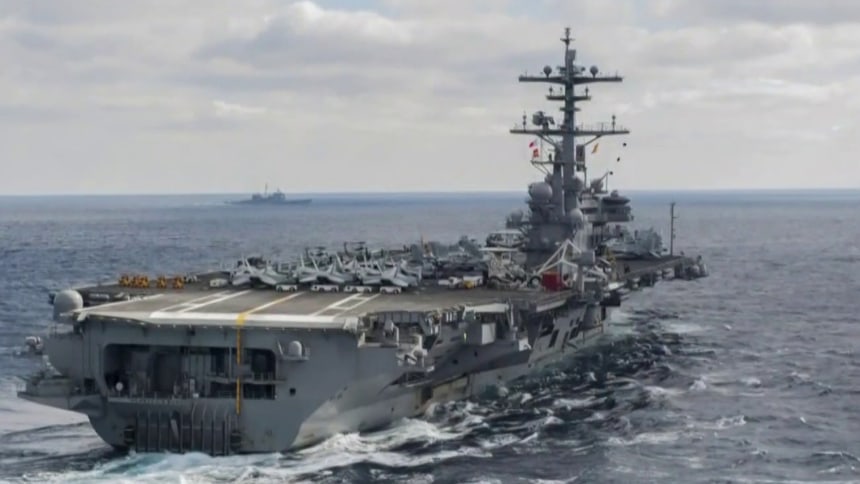
At minimum 4 U.S. Navy sailors assigned to the very same facility in Virginia died by suicide in the past couple months, which includes just one as not long ago as Saturday, armed service officials and relatives users stated.

It is the newest cluster of Navy suicides this calendar year to spark concerns of a fleetwide mental wellness crisis.

The 4 sailors labored for the Mid-Atlantic Regional Maintenance Heart (MARMC), which maintains army ships and is centered in Norfolk, Virginia.

“I was inundated with the amount of hopelessness at that command,” mentioned Kayla Arestivo, a licensed counselor who was brought in two months ago to support the sailors in the device.

Lots of MARMC sailors have been battling with personalized troubles that have been exacerbated by a absence of psychological wellness sources on the task and feeling overworked and undervalued by their leaders, according to a sailor who spoke with NBC News and Arestivo, who a short while ago led 4 suicide avoidance classes at the site.

“Part of it is toxic management. The sailors quickly pointed that out,” Arestivo mentioned.

Of the roughly 3,000 persons assigned to MARMC, quite a few are on constrained obligation due to the fact they possibly have mental or bodily disabilities or are working with individual circumstantial stressors that are preventing them from entire unrestricted responsibility, Arestivo explained.

Arestivo explained the Navy really should have regarded those worries for the complete device and delivered assistance before on.

“Right away, we must know these folks are in higher want, less than larger pressure,” mentioned Arestivo, who is also the co-founder and president of Trails of Intent, a nonprofit that presents cost-free mental well being care to assistance users.

‘It doesn’t want to be this way’

Kody Lee Decker, 22, of Virginia, was on restricted responsibility because of to psychological overall health challenges when he took his have daily life on Oct. 29, in accordance to a sailor shut to Decker, who questioned to continue to be anonymous out of fear of retaliation.

Kody Lee Decker, 22, pictured in New York City this June, died by suicide on Oct. 29.
Kody Lee Decker, 22, pictured in June, died by suicide on Oct. 29.Courtesy image

The electronics technician’s struggles started in early 2020 though he was serving the USS Bataan and working with “toxic leadership” on the amphibious assault ship, the sailor explained.

The sailor said Decker’s mental well being worsened once he was transferred in August to MARMC, wherever his get the job done conditions did not boost and he did not acquire psychological support.

“If he experienced appear to MARMC and they actually acted like they gave a s— and presented assets and followed up, I do not consider we would be sitting down in this article obtaining this discussion,” the sailor mentioned.

Decker, remembered for his outgoing individuality and his appreciate of higher-conclusion sneakers, had just turn out to be a father about 9 months prior to his death.

“Extra children are likely to reduce their mom and dad. More persons are likely to shed their spouses, unnecessarily,” the sailor explained. “It won’t need to be this way.”

Just just one week afterwards, on Nov. 5, Cameron Armstrong died by suicide, his mother, Sharon, said.

Armstrong, 22, was nearing the finish of his contract with the Navy immediately after 4 many years, his relatives and mates claimed.

He experienced informed his mom that he was experience frustrated, but she explained she did not know the extent of his suffering.

“I did not believe it was that bad. I do not know what he was going by way of to do that,” she mentioned.

Sharon mentioned her son, who she termed a “goodhearted soul,” leaves driving his spouse, who was his higher university sweetheart.

Cameron Armstrong, right, in an undated photo with his mother, Sharon. The 22-year-old U.S. Navy sailor died by suicide on Nov. 5.
Cameron Armstrong in an undated photo with his mom, Sharon. Armstrong, 22, died by suicide on Nov. 5.Courtesy Sharon Armstrong

‘We’re placing Band-Aids on bullet holes’

The Navy and community law enforcement departments are investigating the situations encompassing each demise, but navy officers explained the 4 deaths have been categorized as obvious suicides.

The suicide avoidance classes that Arestivo was introduced in for had been necessary to personnel and held twice a working day on Nov. 14 and Nov. 16, MARMC and Arestivo explained.

Much more than fifty percent of the division attended, Arestivo mentioned. But the endeavours, which arrived just after at the very least two other sailors had previously died by suicide, have been far too late, she said.

And with no systematic improvements, the counselor reported she understood a pair of seminars and other responses, these kinds of as suicide consciousness emails, would not be ample to stop extra deaths.

A 3rd sailor died by suicide on Nov. 14. He experienced not attended the suicide prevention session before that day but was slated to go to the 2nd a single, Arestivo mentioned.

“We’re putting Band-Aids on bullet holes,” she claimed.

On Nov. 16, she claimed she relayed that information to MARMC’s commanding officer.

“I stated to him, ‘You will have another a person.’ I shook his hand and appeared him suitable in the eye,” Arestivo reported. “And guaranteed as s—, in this article we are.”

A fourth sailor died by suicide on Nov. 26.

In a statement, MARMC spokesman Douglas Denzine explained chaplains, psychologists and counselors had been readily available, and that leaders ended up getting a “proactive approach” to assistance its customers, make improvements to psychological well being and control stress among the sailors. 

“One suicide is far too a lot of,” Denzine reported. “We keep on being totally engaged with our Sailors and their households to ensure their health and effectively-staying, and to assure a weather of believe in that encourages Sailors to ask for support.”

The most current rash of Navy suicides comes months right after 3 sailors assigned to the USS George Washington killed themselves in a 7 days in April.

Current and previous George Washington sailors instructed NBC News that their struggles were specifically relevant to a society where searching for assistance is not met with the necessary means, as very well as approximately uninhabitable residing situations aboard the ship, such as frequent design sound that designed sleeping difficult and a lack of hot drinking water and electrical energy. 

Considering the fact that then, mom and dad of sailors who died by suicide have explained the Navy has finished tiny to adequately address a fleetwide situation. They also criticized the U.S. military for not but implementing the Brandon Act, which allows assistance associates to confidentially search for mental wellness assistance, just about just one calendar year after it was signed into law.

In a statement, the Defense Office said it would keep on performing towards implementation by the conclude of the calendar yr.

Named right after Navy Petty Officer 3rd Class Brandon Caserta, 21, who died by suicide in 2018, the Brandon Act not only expedites psychological well being evaluations, but also provides a confidential channel for service members to self-report mental wellness challenges.

Caserta’s mother and father, Arestivo and military services psychological wellbeing experts stated equally are important reforms required to minimize suicides in the services.

“They’re sitting on it, and these people today are dying. And it is like they really don’t treatment,” Caserta’s father, Patrick, stated.

In 2021, the most modern calendar year for which entire information is available, 519 provider members died by suicide, a slight fall from 580 the 12 months before, in accordance to the Protection Division, which produced new suicide figures at the stop of Oct.  

Almost 17 out of each individual 100,000 Navy sailors died by suicide in 2021, compared to associates of the Military, who experienced the best fee, at about 36 for every 100,000, Pentagon figures exhibit. 

“No one is getting account of all this missing probable,” the sailor who understood Decker claimed. “You will find so a lot shed likely. It can be just not going to halt.”

If you or somebody you know is in disaster, get in touch with 988 to access the Suicide and Crisis Lifeline. You can also contact the community, beforehand regarded as the Nationwide Suicide Avoidance Lifeline, at 800-273-8255, text Home to 741741 or visit SpeakingOfSuicide.com/resources for added resources.