Treating opioid addiction with Suboxone is easier. Will doctors get on board? : Shots

Treating opioid addiction with Suboxone is easier. Will doctors get on board? : Shots

Registered nurse Jamie Simmons speaks with a patient during an appointment at the Greater New Bedford Community Health Center in Massachusetts. The patient, whose first name is Kim, says buprenorphine has helped her stay off heroin and avoid an overdose for nearly 20 years.

Jesse Costa for KHN


hide caption

toggle caption

Jesse Costa for KHN
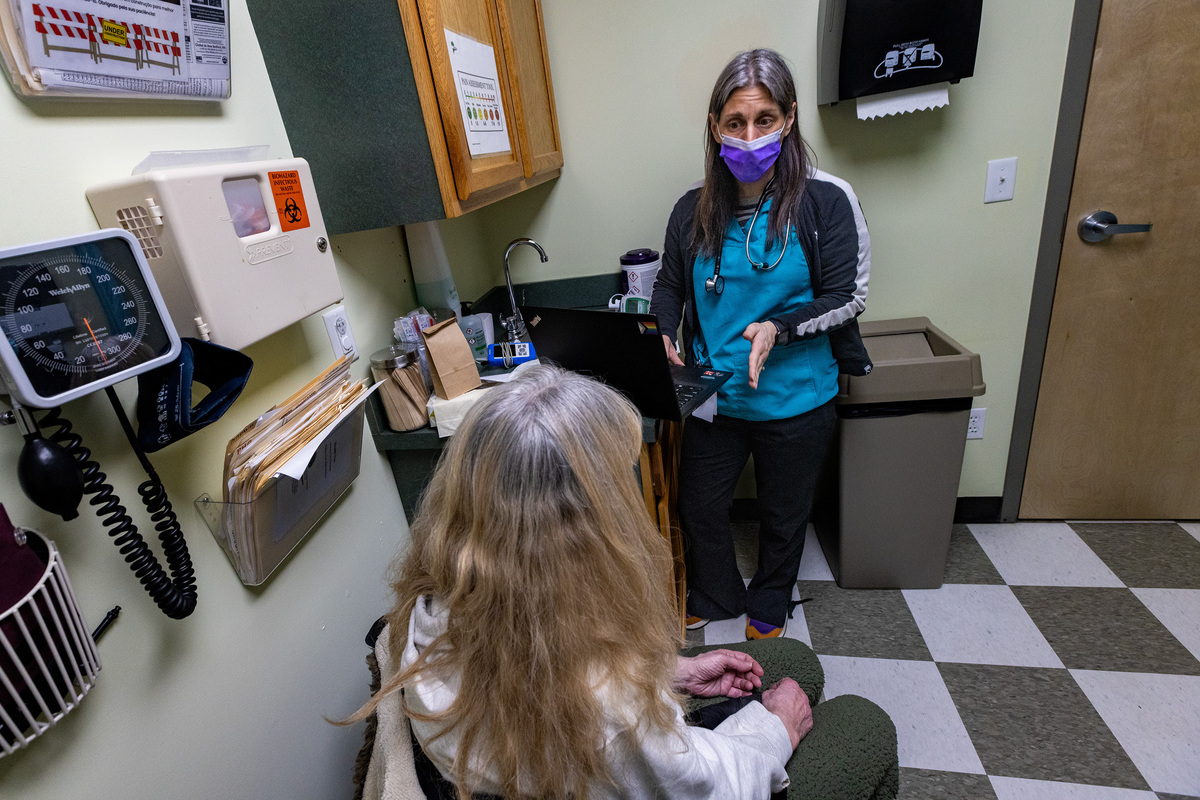

Registered nurse Jamie Simmons speaks with a patient during an appointment at the Greater New Bedford Community Health Center in Massachusetts. The patient, whose first name is Kim, says buprenorphine has helped her stay off heroin and avoid an overdose for nearly 20 years.

Jesse Costa for KHN

For two decades — as opioid overdose deaths rose steadily — the federal government limited access to buprenorphine, a medication that addiction experts consider the gold-standard for treating patients with an opioid use disorder. Study after study shows it helps people continue addiction treatment while reducing the risk of overdose, and death.

Clinicians who wanted to prescribe the medicine had to complete an 8-hour training. They could only treat a limited number of patients and had to keep special records. They were given a Drug Enforcement Administration (DEA) registration number starting with X, a designation that many doctors say made them a target for drug enforcement audits.

“Just the process associated with taking care of our patients with a substance use disorder made us feel like, ‘boy, this is dangerous stuff,'” says Dr. Bobby Mukkamala, who chairs the American Medical Association’s task force on substance use disorder.

“The science doesn’t support that but the rigamarole suggested that.”

That rigamarole is mostly gone. Congress eliminated what became known as the “X-waiver” in legislation President Biden signed late last year. Now begins what some addiction experts are calling a truth serum moment.

Was the X-waiver and the burdens that came with it the real reason only about 7{35112b74ca1a6bc4decb6697edde3f9edcc1b44915f2ccb9995df8df6b4364bc} of clinicians in the U.S. were cleared to prescribe buprenorphine? Or was it an excuse that masked hesitation about treating addiction, if not outright disdain for these patients?

There’s great optimism among some leaders that getting rid of the X-waiver will expand access to buprenorphine and reduce overdoses. One study from 2021 shows taking buprenorphine reduces the risk by 50{35112b74ca1a6bc4decb6697edde3f9edcc1b44915f2ccb9995df8df6b4364bc}. The medication is an opioid that produces much weaker effects than heroin or fentanyl and reduces cravings for those deadlier drugs.

The nation’s drug czar, Dr. Rahul Gupta, says getting rid of the X-waiver will ultimately prevent millions of deaths.

“The impact of this will be felt for years to come,” Gupta says. “It is a true historic change that, frankly, I could only dream of being possible.”

Gupta and others envision obstetricians prescribing buprenorphine to their pregnant patients, infectious disease doctors adding it to their medical tool box, and lots more patients starting buprenorphine when they come to emergency rooms, primary care clinics and rehabilitation facilities.

We are “transforming the way we think to make every moment an opportunity to start this treatment and save someone’s life,” says Dr. Sarah Wakeman, the medical director for substance use disorder at Mass General Brigham in Boston.

Wakeman says clinicians who she’s been reaching out to for the past decade are finally willing to consider treating patients with buprenorphine. Still, she knows stigma and discrimination could undermine efforts to help those who aren’t being served. In 2021, a national survey showed just 22{35112b74ca1a6bc4decb6697edde3f9edcc1b44915f2ccb9995df8df6b4364bc} of people with an opioid use disorder received buprenorphine or methadone, which is another form of medication-assisted treatment.

The truth serum experiment

The truth serum experiment – what will test whether clinicians will now step up prescribing – is underway in hospitals and clinics across the country as patients struggling with addiction queue up for treatment.

One woman named Kim, 65, is among them.

Kim’s recent visit to the Greater New Bedford Community Health Center in southern Massachusetts began in an exam room with Jamie Simmons, a registered nurse who runs the center’s addiction treatment program but doesn’t have prescribing powers. NPR agreed to use only Kim’s first name to limit discrimination linked to her drug use.

Kim tells Simmons that buprenorphine has helped her stay off heroin and avoid an overdose for nearly 20 years. Kim takes a brand of the medication called Suboxone, which comes in the form of thin film-like strips she dissolves under her tongue.

“It’s the best thing they could have ever come out with,” Kim says, “I don’t think I ever even had a desire to use heroin since I’ve been taking them.”

Buprenorphine can produce mild euphoria and slow breathing but there’s a ceiling on the effects. Patients like Kim may develop a tolerance and not experience any effects.

“I don’t get high on Suboxones,” Kim says, “they just keep me normal.”

Still many clinicians have been hesitant to use buprenorphine – known as a partial opioid agonist – to treat an addiction to more deadly forms of the drug.

Kim’s primary care doctor at the health center never applied for an X-waiver. So for years Kim has bounced from one treatment program to another, seeking a prescription. When there were lapses in her access to buprenorphine, the cravings returned – an especially scary prospect now that the powerful opioid fentanyl has replaced heroin on the streets of Massachusetts, where Kim lives.

“I’ve seen so many people fall out [overdose] in the last month,” says Kim, her eyes wide, “that stuff is so strong that within a couple minutes, boom.”

Because fentanyl can kill so quickly, the benefits of taking buprenorphine and other medications to treat an opioid use disorder have increased as deaths linked to even stronger types of fentanyl rise. Buprenorphine is present in a small percentage of overdose deaths nationwide, 2.6{35112b74ca1a6bc4decb6697edde3f9edcc1b44915f2ccb9995df8df6b4364bc} – virtually always with a mix of other drugs, often benzodiazepines. Fentanyl is in 94{35112b74ca1a6bc4decb6697edde3f9edcc1b44915f2ccb9995df8df6b4364bc} of overdose deaths in Massachusetts.

“Bottom line is, fentanyl kills people, buprenorphine doesn’t,” Simmons says.

That reality adds urgency to Kim’s health center visit because Kim took her last Suboxone before arriving. Her latest prescription has run out. Cravings for heroin could resume tomorrow if she doesn’t get more Suboxone. Simmons confirms the dose and tells Kim that her primary care doctor may be willing to renew the prescription now that the X-waiver is not required. But Dr. Than Win has some concerns after reviewing Kim’s most recent urine test.

It showed traces of cocaine, fentanyl, marijuana and Xanax, and Win says she’s worried about how the street drugs might interact with buprenorphine.

“I don’t want my patients to die from an overdose,” Win says. “But I’m not comfortable with the fentanyl and a lot of narcotics in the system.”

Kim is adamant that she’s not intentionally ingesting fentanyl. It might have been in the cocaine she says her roommate shares occasionally. Kim says she takes the Xanax to sleep. Her drug use presents complications that many primary care doctors don’t have experience managing. Some clinicians are apprehensive about using an opioid to treat an addiction to opioids, despite compelling evidence that it saves patients’ lives.

Win is worried about writing her first prescription for Suboxone. But she agrees to help Kim stay on the medication.

“I wanted to start with someone a little bit easier,” Win says. “It’s hard for me, that’s the reality and truth.”

About half of the providers at the health center had an X-waiver when it was still required. Simmons says some of the resistance to having the waiver was rooted in stigma or misunderstanding about addiction. She urges doctors to treat addiction as they would any other disease.

“You wouldn’t not treat a diabetic, you wouldn’t not treat a patient who is hypertensive,” Simmons says. “People can’t control that they formed an addiction to an opiate, alcohol or a benzo.”

Suboxone film

Jesse Costa/WBUR


hide caption

toggle caption

Jesse Costa/WBUR
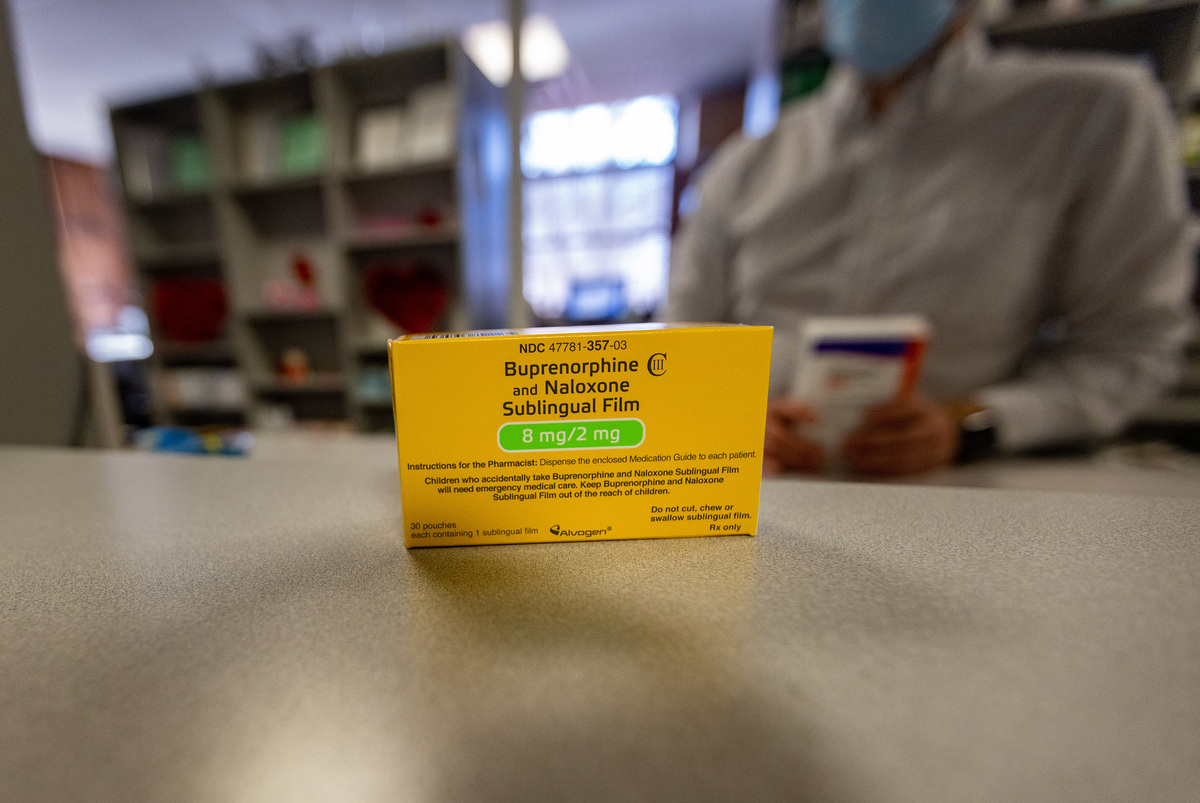

Suboxone film

Jesse Costa/WBUR

Searching for solutions to soften stigma

Although the restrictions on buprenorphine prescribing are no longer in place, Dr. Mukkamala says the perception created by the X-waiver lingers.

“That legacy of elevating this to a level of scrutiny and caution, that needs to be sort of walked back,” says Mukkamala with the AMA. “That’s going to come from education.”

Mukkamala sees promise in the next generation of doctors, nurse practitioners and physician assistants coming out of schools that have added addiction training. The AMA and the American Society of Addiction Medicine have online resources for clinicians who want to learn on their own.

Some of these resources may help fulfill a new training requirement for clinicians who prescribe buprenorphine and other controlled narcotics. It will take effect in June. The DEA has not issued details about that training.

But training alone may not shift behavior: take the experience of Rhode Island.

The number of doctors approved to prescribe buprenorphine jumped more than 200{35112b74ca1a6bc4decb6697edde3f9edcc1b44915f2ccb9995df8df6b4364bc} from 2016 to 2022 after the state said physician training should include an X-waiver. Still, having the option to prescribe buprenorphine “didn’t open the floodgates” for patients in need of treatment, says Dr. Jody Rich, an addiction specialist who teaches at Brown University. The number of patients taking buprenorphine in Rhode Island increased – from 2016 to 2022 when the number of qualified prescribers jumped – but at a much slower rate .

“It all comes back to stigma,” Rich says.

He says longstanding resistance among some providers to treating addiction is shifting as younger people enter medicine. But the opioid crisis can’t wait for a generational change, he says. To expand buprenorphine access now, Rich’s research shows states could use pharmacists, partnered with doctors, to help manage the care of more patients with an opioid use disorder.

Wakeman, at Mass General Brigham, says it might be time to hold clinicians who don’t provide addiction care accountable through quality measures tied to payments.

“We’re expected to care for patients with diabetes or to care for patients with heart attack in a certain way and the same should be true for patients with an opioid use disorder,” says Wakeman.

One quality measure could be to track how often prescribers start and continue buprenorphine treatment. Wakeman says it would also help if insurers reimbursed clinics for the cost of staff who aren’t traditional clinicians but are critical in addiction care, like recovery coaches and case managers.

Will ending the X-waiver close racial gaps?

Wakeman and others are paying especially close attention to whether eliminating the X-waiver helps narrow racial gaps in buprenorphine treatment.

The medication is much more commonly prescribed to white patients with private insurance or who can pay cash. But there are also stark differences by race at some health centers where most patients are on Medicaid and would seem to have equal access to this addiction treatment.

At the New Bedford health center, Black patients represent 15{35112b74ca1a6bc4decb6697edde3f9edcc1b44915f2ccb9995df8df6b4364bc} of all patients but only 6{35112b74ca1a6bc4decb6697edde3f9edcc1b44915f2ccb9995df8df6b4364bc} of those taking buprenorphine. For Hispanics that comparison is 30{35112b74ca1a6bc4decb6697edde3f9edcc1b44915f2ccb9995df8df6b4364bc} to 23{35112b74ca1a6bc4decb6697edde3f9edcc1b44915f2ccb9995df8df6b4364bc}. Most of the health center patients prescribed buprenorphine are white, 61{35112b74ca1a6bc4decb6697edde3f9edcc1b44915f2ccb9995df8df6b4364bc}, while they are just 36{35112b74ca1a6bc4decb6697edde3f9edcc1b44915f2ccb9995df8df6b4364bc} of patients overall.

Dr. Helena Hansen, who co-authored a book on race in the opioid epidemic, says access to buprenorphine doesn’t guarantee that patients will benefit from it.

“People are not able to stay on a life-saving medication unless the immense instability in housing, employment, social supports — the very fabric of their communities — is addressed,” says Hansen. “That’s where we fall incredibly short in the United States.”

Hansen says expanding access to buprenorphine has helped reduce overdose deaths dramatically among all drug users in France, including those who are low-income and immigrants. There, patients with an opioid use disorder are seen in their communities and offered a wide range of social services.

“Removing the X-waiver,” says Hansen, “is not in itself going to revolutionize the opioid overdose crisis in our country. We would need to do much more.”

This story is from NPR’s partnership with WBUR and KHN. KHN (Kaiser Health News) is a national newsroom that produces in-depth journalism about health issues.

Federal prisoners are punished for using the addiction medication Suboxone

Federal prisoners are punished for using the addiction medication Suboxone

This article was published in partnership with The Marshall Project, a nonprofit news organization covering the U.S. criminal justice system. Sign up for its newsletters, and follow on Twitter, Instagram and Facebook.

Timothy York knows what works to treat his decadeslong opioid addiction: Suboxone, a medication that effectively quiets cravings. 

Since York arrived in federal prison in 2008, he has been held in a series of facilities awash with contraband drugs and violence. He’s spent tens of thousands of dollars buying the medication illicitly from prison dealers because Suboxone enables him to think and communicate clearly, he said. But he hasn’t been able to get it consistently. 

In 2019, he was relieved to learn that the federal Bureau of Prisons was starting a program to expand access to Suboxone, and the following year, a pharmacist at the federal prison in Sumterville, Florida, said he was “priority #1” for treatment, according to his medical records.

He’s still waiting. 

In the meantime, he’s been punished for using Suboxone without a prescription. Last year, after York, 46, was caught with the medication, he spent a month in solitary confinement and had his visitor privileges revoked for a year, according to his disciplinary log. He lost access to phone calls and email for four months. And he lost the chance to be released more than a month early. 

York is not alone.

The Marshall Project spoke to more than 20 people struggling with addictions in federal prison, and they described the dire consequences of being unable to safely access a treatment that Congress has instructed prisons to provide. 

Some have overdosed. Many have gotten involved in dangerous and illicit money-making schemes to pay for Suboxone, which costs about $20 for a small fraction of a daily dose on the illegal market, several prisoners said. Many, like York, have lost phone or visiting privileges or been sent to solitary confinement because they were caught taking the medication. Last year, the Bureau of Prisons disciplined more than 500 people for using Suboxone without a prescription, according to data obtained from the agency by The Marshall Project through a public records request. 

“Believe me, 100{35112b74ca1a6bc4decb6697edde3f9edcc1b44915f2ccb9995df8df6b4364bc} I recognize the irony there,” said a bureau administrator familiar with the agency’s addiction treatment programs, who spoke on the condition of anonymity because they are not authorized to speak to the press. “It’s maddening.”

A man battling addiction points to his daily dose of suboxone.
A man battling addiction points to his daily dose of Suboxone.Sarah Bell / Columbia Daily Tribune via AP

Congress passed the First Step Act four years ago, requiring, among other things, that the Bureau of Prisons offer more prisoners addiction medications, the most common of which is Suboxone. The medications can quiet opioid cravings and reduce the risk of relapse and overdose. 

Yet the federal prisons are treating only a fraction — less than 10{35112b74ca1a6bc4decb6697edde3f9edcc1b44915f2ccb9995df8df6b4364bc} — of the roughly 15,000 prisoners who need it, according to the bureau’s estimates. 

At the end of October, 21 prisons were not offering any prisoners addiction medication, and another 59 were treating 10 or fewer people — in many cases, just one person, according to bureau data obtained through a Freedom of Information Act request. The rest of the 121 facilities nationwide were each treating a few dozen people at most. 

The Bureau of Prisons declined an interview request and would not comment on individual cases. But spokesperson Emery Nelson said in a statement that addiction medicines in combination with therapy and other supports (often referred to as medication-assisted treatment) are the “gold standard” for treatment, and “the Bureau’s goal is to provide high-quality, comprehensive, and accessible medication-assisted treatment at all Bureau locations.” 

The bureau would not discuss the barriers to rolling out the program more widely, but prisoners and people who work in the system described a widespread misperception among prison staff that Suboxone substitutes one addiction for another. There’s broad discretion among prison staff about who qualifies for treatment. The bureau also requires patients to get approval from multiple health care providers, and each step has its own lengthy waitlist.  

To be sure, the Bureau of Prisons is treating increasingly more people since it launched its opioid medication program. In 2019, 41 people were receiving addiction medications. As of October, that had risen to 1,035 people; more than 80{35112b74ca1a6bc4decb6697edde3f9edcc1b44915f2ccb9995df8df6b4364bc} of them are receiving Suboxone. 

“That’s great progress,” said Sally Friedman, an attorney with the Legal Action Center, which has been involved in several opioid medication lawsuits against criminal justice agencies. “But BOP cannot rest until it complies with its constitutional mandate to ensure that every single incarcerated person with opioid use disorder has the opportunity to receive life-saving treatment.” 

The bureau’s delay in providing more widespread addiction medication has consequences not only for prisoners but for its employees as well: It “creates an avenue for contraband to flow into the institution through other avenues,” said Aaron McGlothin, union president at the federal prison in Mendota, California. “The BOP is breaking the law” by not providing Suboxone, he said.

For years, the Bureau of Prisons fought in court to prevent people entering the system from staying on the addiction medications they were prescribed by doctors in the community. That began to change in 2018, when the First Step Act was passed and prisons and jails across the country began losing lawsuits from prisoners who argued it was cruel and unusual to deny them the addiction medicine they’d been taking before they were incarcerated. 

In 2019, the bureau released internal guidance saying that “all eligible inmates” at all of its facilities would have access to addiction medications. But what constitutes “eligible” leaves a lot of room for interpretation.

Prisoners need to overcome several administrative hurdles before they can begin medication, obtaining clearance from psychological services, then health services, before seeing a prescriber. A records request from early this year showed more than 2,000 prisoners were caught somewhere in the process, waiting to move from one stage to another. 

Some say the issues stem from a culture at the bureau that is skeptical of addiction medication and pits staff against prisoners. 

One top bureau administrator who has worked in more than 10 federal prisons said he was once a Suboxone skeptic who thought it was just a “crutch.” 

“Once I found a doctor that supported it, and started giving inmates Suboxone, my SHU count went down,” he said, referring to the special housing unit, the name for one type of solitary confinement. “There were less fights. There were less debts. The drug dealers on the compound went out of business.” This administrator, who spoke on the condition of anonymity because he’s not authorized to speak to the press, added, “I bought into it because I’ve seen it work.” 

When he moved to another prison, the administrator discovered that though the bureau’s official policy is to make addiction medications widely available to those who need them, staff at local institutions have tremendous discretion about who begins treatment and who doesn’t. Some facilities only give one medication and not others. In other cases, facilities refused to give people any of the medications until they were nearing release, he said. 

“Once I started inquiring, what I keep getting told is, ‘Well, it’s only for inmates who are close to their release date,’ or, ‘We don’t have enough resources,’” he said. “I’ve only got so much reach. I can’t direct a doctor to prescribe a medication. I’m way out of my lane on that.”

Federal law treats use of any narcotics without a prescription in federal prison — including Suboxone — as a “greatest severity level prohibited act,” allowing officials to punish prisoners by delaying their release date, confiscating their property, taking away their visiting or phone privileges and holding them for up to six months in solitary confinement — which human rights groups have described as torture. Experts say even a few days in solitary can exacerbate the mental illness that is often the cause of, or closely linked to, drug addiction.

The lack of Suboxone treatment comes amid a rise in drug-related deaths behind bars. A variety of substances are routinely smuggled into prisons and jails through mail, drone drops, visitors or corrections officers and other staff. In the last two decades, federal data shows that fatal overdoses increased by more than 600{35112b74ca1a6bc4decb6697edde3f9edcc1b44915f2ccb9995df8df6b4364bc} inside prisons and more than 200{35112b74ca1a6bc4decb6697edde3f9edcc1b44915f2ccb9995df8df6b4364bc} inside jails. 

Forty-seven incarcerated people died of overdoses in federal prison from 2019 through 2021, according to internal bureau data released via a public records request. The data does not specify how many of these overdose deaths were caused by opioids and could have been prevented by medications like Suboxone. However, other bureau data offers some clue: During the same period, correctional staff administered Narcan — a drug that reverses opioid overdoses — almost 600 times in federal prisons. 

“It’s not easy being surrounded by drugs and expected not to use them,” said Linda Wainwright, who spent five months in solitary confinement and lost the chance she had earned to go home nine months early as punishment for using smuggled Suboxone when prison officials wouldn’t provide her with a prescription. “I begged them to help me,” Wainwright said.

At FCI Fort Dix, a low-security prison in New Jersey, Tyler Scher’s prison psychologist wrote to him saying that he was “shocked” and “at a loss” that Scher was repeatedly denied access to Suboxone, records show. In response to a grievance Scher filed, the warden at his prison said the purpose of the Suboxone program was to prevent “relapse, overdose, and death” among those scheduled “for imminent release from the institution.” 

Tyler Scher.
Tyler Scher.Tyler Scher.

Scher — who is serving a 20-year term for charges related to his girlfriend’s overdose death — had complained of withdrawal symptoms and said that he couldn’t stop using drugs without medication. He’d been written up twice for drug use, he said, and even sent to solitary. At one point, the prison offered him a different medication that he’d tried before and found it didn’t work. When he pushed for Suboxone, officials told him, “You may resubmit a new request closer to your release.” 

When prescribed, Suboxone typically comes as a strip of film that patients dissolve under the tongue. On the illegal market behind bars, a strip is cut into 16 or 32 pieces, each of which sells for $20. 

To pay for that with paltry prison wages, prisoners get both creative and desperate. 

“You wash clothes for people, run around, wash tennis shoes, you have sex with people,” said one man incarcerated in a federal prison that was providing Suboxone prescriptions to less than 1{35112b74ca1a6bc4decb6697edde3f9edcc1b44915f2ccb9995df8df6b4364bc} of the people there as of October, according to Bureau of Prisons data. This man, who asked not to be named because he feared retaliation by bureau officials, said in a phone interview and letters to The Marshall Project that he had his jaw broken by another prisoner and had to spend time in protective custody because “I’ve run up bills and I can’t pay for the stuff, telling people lies.” 

The Marshall Project spoke to several people who said they’d endured violence or physical danger resulting from Suboxone debts.

Inmate barracks at FCI Fort Dix in Fort Dix, N.J.
The barracks at FCI Fort Dix in Fort Dix, N.J.Gretchen Ertl / The Providence Journal / USA Today Network

Michael Swain had been trying to get on the Bureau of Prisons’ program for eight months when he almost died of an overdose. He’d served four years of an eight-year sentence for a bank robbery that he said he committed to fund his addiction. He was using an underground supply of Suboxone at USP-Coleman, the federal prison in Florida where he was incarcerated, but it was erratic. 

Last July, he turned to a much more dangerous drug: K2, a synthetic chemical also known as Spice, which varies widely in potency and purity and can cause everything from a mild buzz to death.

“I started projectile vomiting, real bad sweats and passed out,” Swain said in a phone interview. 

Medical staff later told him that he had lain in the infirmary for over an hour, mumbling incoherently and begging them to not let him die, he said. They finally called an ambulance, which brought him to a nearby hospital where, medical records show, he learned he’d had a seizure. “If I had been going to get a regular dose of Suboxone, I would have never seeked the K2,” Swain said.

Even now, every time he asks the medical staff for an update on his request to receive Suboxone to treat his addiction, he said he’s told the same thing: “You have been accepted, and you are on the waiting list.”