
Recovery high schools build a culture of mental health to help kids thrive : Shots

Recovery high schools build a culture of mental health to help kids thrive : Shots

5280 High School in Denver is one of 43 secondary schools in the U.S. with a program designed for students recovering from substance use disorder and related mental health disorders.

Stephanie Daniel/KUNC


hide caption

toggle caption

Stephanie Daniel/KUNC
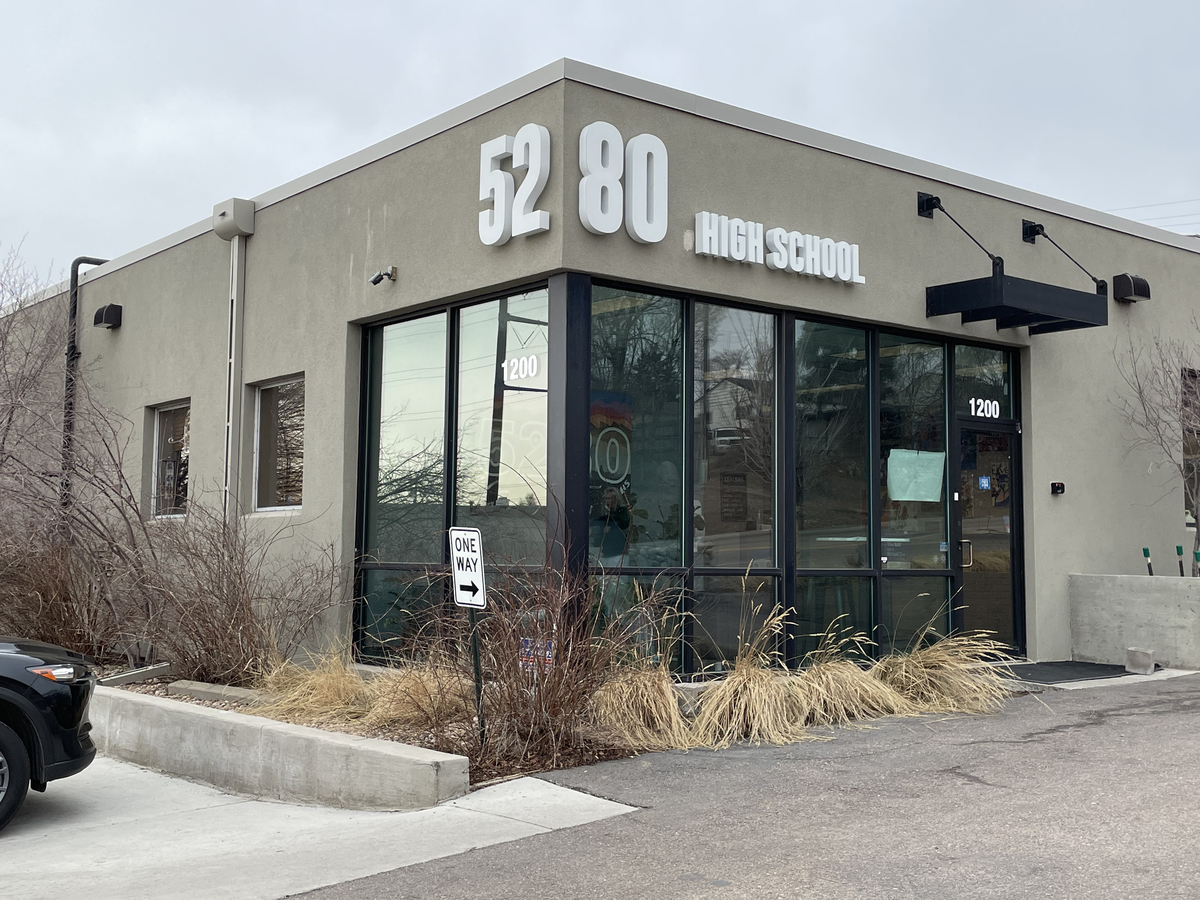

5280 High School in Denver is one of 43 secondary schools in the U.S. with a program designed for students recovering from substance use disorder and related mental health disorders.

Stephanie Daniel/KUNC

Every weekday at 5280 High School in Denver starts the same way.

Students in recovery from drug and alcohol addiction gather on the steps of the school’s indoor auditorium to discuss a topic chosen by staff members. One recent morning, they talked about mental health and sobriety. A teenage boy dressed in tan corduroys, a black hoodie, and sneakers went first.

“I didn’t want to have, like, any emotion,” he said. “So I thought, like, the best way to, like, put it down would be to do more and more and more drugs.”

A classmate said she started doing drugs for fun and then got hooked. Another student said his addiction negatively impacts his mental health. A third announced an upcoming milestone.

“In, like, two days, I’ll be six months sober,” she said, as her classmates cheered.

The students attend Colorado’s only recovery high school — one of 43 nationwide. These schools are designed for students who are recovering from substance use disorder and might also be dealing with related mental health disorders. The Denver school opened in 2018 as a public charter school that today enrolls more than 100 students.

KHN logo

One of those cheering classmates was sophomore Alexis Castillo, 16, who listened supportively during that recent morning meeting. She is in recovery for alcohol and fentanyl addictions. Several of her friends attended the school when she enrolled during her freshman year and initially loved it. But after a while some of Castillo’s friends left and she grew disillusioned. She stopped going to class and wasn’t motivated to work her recovery steps.

“They give you a lot of accountability,” she said. “That was not something I wanted.”

Castillo relapsed and school staffers helped her get into rehab. Three months later she was back at the school, in recovery and ready to do the work.

The school’s mission is to help kids learn to live a substance-free life while receiving an education. This includes attending recovery meetings and wellness activities, and taking traditional high school classes like English, math, and Spanish.

“They can go on to college or a career and really handle anything that life throws at them,” said 5280’s founder and executive director, Dr. Melissa Mouton.

In 2022, nearly a third of 12th graders and 1 in 5 10th graders reported using an illicit drug in the previous year, according to a national survey from the Monitoring the Future project conducted by the University of Michigan Survey Research Center. Those numbers have steadily decreased over the past 25 years. However, data from UCLA shows overdose deaths among teens doubled in the first year of the pandemic, mainly attributed to the increased prevalence of fentanyl-laced drugs.

The first recovery high school opened in Silver Spring, Md., in 1979 and similar programs now operate in 21 states. Compared with their peers at regular schools who have gone through treatment, recovery high school students have better attendance and are more likely to stay sober, and their graduation rate is at least 21{35112b74ca1a6bc4decb6697edde3f9edcc1b44915f2ccb9995df8df6b4364bc} higher, according to one study.

A mosaic in the computer lab at 5280 High School in Denver. Colorado’s only high school with a recovery program opened in 2018 as a public charter school and today enrolls more than 100 students.

Stephanie Daniel/KUNC


hide caption

toggle caption

Stephanie Daniel/KUNC
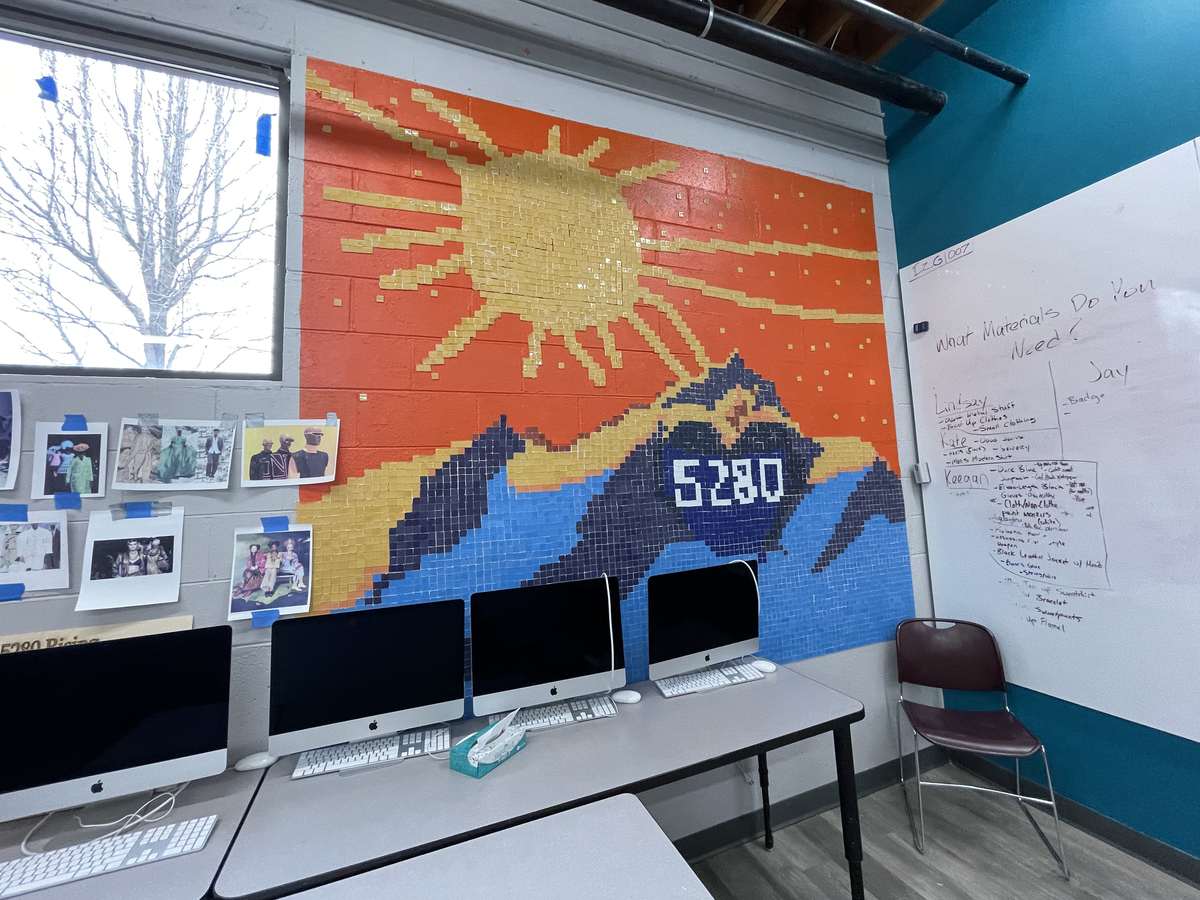

A mosaic in the computer lab at 5280 High School in Denver. Colorado’s only high school with a recovery program opened in 2018 as a public charter school and today enrolls more than 100 students.

Stephanie Daniel/KUNC

“For this particular group of young people who have these disorders, this can be a lifesaver,” said John Kelly, director of the Recovery Research Institute at Massachusetts General Hospital. “It can help them create a social norm of recovery.”

There are three components to effective drug and alcohol treatment, according to Dr. Sharon Levy, a pediatrician and addiction medicine specialist at Boston Children’s Hospital. The first part is medical, which includes seeing a doctor, drug testing, and using medications like buprenorphine to treat opioid addiction. The second is emotional support from counseling to address co-occurring mental health disorders. And there is a behavioral component that, for kids, can include receiving positive feedback from parents, peer support and recovery schools.

“Recovery schools offer an opportunity really for peer support and mutual aid in a kind of a supervised and structured way,” Levy said.

Recovery high schools often weave components of treatment into the school day — activities like 5280’s daily recovery program meeting. In the afternoon, the school offers wellness electives such as spiritual principles and journaling. The school also employs a director of recovery and recovery coach to work with and counsel the students individually.

Recovery schools do face challenges. Most are publicly funded charter or alternative schools that carry a higher cost of educating students than traditional schools do. This is due to a smaller enrollment, the need for mental health and recovery personnel, higher faculty-to-student ratios, and other factors.

The Denver school enrolls about 100 students annually, making it one of the biggest recovery high schools in the nation. This year, the per-pupil cost is about $25,000 per student but the school receives only about $15,000 from federal, state, and local funding, according to Mouton. The remaining money comes from donors.

Given the complex needs of the students, “recovery schools will always be small,” she said.

Pooling such students together may also raise a concern that students will trigger one another to use drugs and alcohol and relapse, but, Levy said, that’s a risk with any social interaction.

“So, if you’re in an environment where the recovery is kind of front and center and people are watching and monitoring and supervising,” she said, “I think that’s helpful for a lot of kids.”

The school in Denver purposely keeps enrollment under capacity so additional teens can enroll anytime during the school year. A student won’t get kicked out if they relapse, but there are two requirements: They must want to be sober and attend an outside recovery program.

“The No. 1 step is just letting them know out of the gate, no matter what’s going on, that we love them,” said Brittany Kitchens, the school’s recovery coach. “We are here for them.”

Kitchens teaches students how to navigate recovery and regulate their emotions. She likens herself to a hall monitor, constantly checking in with students and looking for changes in behavior.

“I tend to be the first kind of line that the kids will come to when they’re experiencing something that is just a little bit too big for them to process,” she said.

Some of these difficulties stem from traumas students have experienced, including sex and drug trafficking, and abandonment. Students also deal with traumas they have caused, Kitchens said, actions that landed them in jail or on probation.

Kitchens, who is in recovery herself, shares coping mechanisms with the students.

“A lot of times it just starts with, ‘Hey, take a breath, breathe in through the nose and out through the mouth,'” she said.

Alexis has been in recovery for nearly a year, she said. The morning meetings where she and her classmates talk about mental health, sobriety, and other topics are an opportunity to build a community of friends who support one another, something she said she didn’t have when she was using drugs.

“It’s really hard to get sober young,” she said.

This article is part of a partnership that includes KUNC, NPR, and KHN.

KHN (Kaiser Health News) is a national newsroom that produces in-depth journalism about health issues. Together with Policy Analysis and Polling, KHN is one of the three major operating programs at KFF (Kaiser Family Foundation). KFF is an endowed nonprofit organization providing information on health issues to the nation.

Opinion | Teen mental health crisis requires more access to care in schools

Opinion | Teen mental health crisis requires more access to care in schools
(Washington Post staff illustration; iStock)

Comment

Responding to clamoring from parents, and dreadful stories of youth suicide and hospitalizations, leaders in both parties convey an increasing sense of urgency to address epidemic levels of teenage anxiety, depression, loneliness and lashing out. About two dozen governors described teenage mental health as a crisis during their state of the state addresses this year and proposed budgets that would expand treatment options. The need is glaring; the pandemic supercharged trend lines that have grown worse as America’s social fabric has been pulled at the seams and social media has grown ubiquitous.

Leaders across the ideological spectrum are surging resources into expanding access to mental health care for kids, especially those who lack strong family support systems. It’s essential to create sturdy lifelines that students know about and can grab hold of when a crisis develops. Many places are scaling up or replicating programs that show promise. But the nation’s leaders are behind; even as they acknowledge the problem, there is a vast number of difficult-to-solve issues — such as onboarding enough mental health professionals and responding to the nation’s deepening cultural decay — after they have already become major problems. The country’s leaders should make this a long-term commitment, even as federal relief dollars dry up.

The Centers for Disease Control and Prevention’s Youth Risk Behavior Survey shows 42 percent of high school students report persistent feelings of sadness or hopelessness and 22 percent say they seriously considered attempting suicide in 2021. It’s much worse among girls. “It’s an issue that transcends both state and party lines,” said New Jersey Gov. Phil Murphy (D), who has made teen mental health his top priority as chair of the National Governors Association.

IMatterColorado.org offers six free mental health consultations for every student in the state, with the promise of confidentiality. The SafeUT app allows any Utah student to immediately, and anonymously, contact a mental health professional. Children can also report friends struggling with suicidal thoughts or who might bring guns to school. “We know we have saved lives,” said Utah Gov. Spencer Cox (R), who speaks openly about his own struggles with suicidal thoughts in middle school after his parents got divorced. Several other states are looking into requiring student identification cards to include a phone number for children and teenagers to call if they’re in crisis.

Pennsylvania Gov. Josh Shapiro (D) campaigned on putting a mental health counselor in every school, and his new budget calls for $500 million to do it. As attorney general, he launched Safe2Say, an anonymous system for students to report threats of violence. More than 100,000 tips were submitted in its first five years, but 75 percent were from kids reaching out about mental health issues. “Students want someone who can help them,” he said. “They want people to talk to.”

Ohio Gov. Mike DeWine (R) launched a Medicaid managed care program last summer that’s already providing 16,000 children specialized behavioral health care. And Virginia Gov. Glenn Youngkin (R) proposed $230 million to build “a strong and stable behavioral health safety net,” including “greater pre-crisis service capacity in schools.”

Federal funding has made much of this investment possible, including the continuing build-out of the 988 suicide prevention hotline. State and local officials used pandemic relief funds and grants under the American Rescue Plan specifically for teen mental health. The bipartisan gun control bill that passed after last year’s elementary school shooting in Uvalde, Tex., includes $1 billion in grants for K-12 schools to combat mental illness. President Biden’s recent budget proposal calls for $428 million in additional grants.

Even if Congress approves that request, which it should, the federal spigots are starting to slow. Many states are now trying to make more permanent investments with their general funds. Wisconsin Gov. Tony Evers (D) declared 2023 “the year of mental health.” Last year, his state spent $30 million of federal pandemic relief funds to expand school-based mental health services through an initiative he called “Get Kids Ahead.” This year he’s proposing to make that a permanent state program and invest $270 million to ensure every student has access to mental health care. “The state of mental health in Wisconsin is a quiet, burgeoning crisis that I believe will have catastrophic consequences for generations if we don’t treat it with the urgency is requires,” said Mr. Evers.

Combating the teen mental health crisis requires more than money. In neighboring Minnesota, Gov. Tim Walz (D) pushed a ban on conversion therapy as part of putting mental health “front and center.” He said it was vital “to ensure that every LGBTQ student knows they are perfect just the way they are.”

Another problem is that, amid growing demand for their services, mental health professionals are in short supply because of low pay and high burnout. No appointments are available in many places and sometimes insurance won’t cover care. Many kids suffer in silence, and their illness gets worse when it goes untreated.

California, Arizona and South Carolina have increased Medicaid reimbursement rates to incentivize psychologists and others to provide mental health services in schools. Nevada Gov. Joe Lombardo (R) proposes increasing reimbursement rates for anyone providing mental health services in areas of acute need. Governors in states such as Montana and Idaho are talking about generational investments to get more doctors to rural areas. In some cases, telemedicine authorizations will need to be expanded so that psychologists can treat people in places without enough therapists. New Jersey launched a student loan redemption program as an incentive for certified professionals to serve communities that have shortages.

California Gov. Gavin Newsom (D) calls for hiring, training and engaging 40,000 new mental health workers in his state. New York Gov. Kathy Hochul (D) aims to reduce unmet mental health needs among children by half in the next five years. “Our children need preventive services now to stop them from needing intensive services in the future,” she said. New Mexico Gov. Michelle Lujan Grisham (D) speaks in moral terms and calls access to mental health treatment a fundamental right.

Maryland, Iowa and Illinois started programs last year that offer mental health training for staff in schools. North Carolina Gov. Roy Cooper (D) is using state money to expand the availability of a national training program called Youth Mental Health First Aid so adults who work with 12-to-18-year-olds, whether teachers or coaches, can learn how to identify and respond to signs of mental distress and substance abuse. This is a welcome stopgap in rural areas with shortages of psychologists.

Making more counselors available to children is an important step, as are many of the varied ways in which state leaders have responded to the teen mental health crisis. But these will not address all the root causes. It’s fair to expect the severity of this crisis to recede as more time passes post-pandemic. But the nation also needs to look upstream to counter the poisons making youngsters feel so sad, hopeless and inclined to self-harm.

Do TikTok, fentanyl and other opioids deserve a share of the blame? Certainly. But there’s also a toxic sludge of selfishness and entitlement that’s corrosive to the culture. Intolerance, polarization and the demonization of the other fuel disunity in civic life. A study this week showed Americans, driven by young adults under 30, place declining value on patriotism, child-rearing and community involvement. The kids are not alright.

If you or someone you know needs help, visit 988lifeline.org or call or text the Suicide & Crisis Lifeline at 988.

The Post’s View | About the Editorial Board

Editorials represent the views of The Post as an institution, as determined through debate among members of the Editorial Board, based in the Opinions section and separate from the newsroom.

Members of the Editorial Board and areas of focus: Opinion Editor David Shipley; Deputy Opinion Editor Karen Tumulty; Associate Opinion Editor Stephen Stromberg (national politics and policy, legal affairs, energy, the environment, health care); Lee Hockstader (European affairs, based in Paris); David E. Hoffman (global public health); James Hohmann (domestic policy and electoral politics, including the White House, Congress and governors); Charles Lane (foreign affairs, national security, international economics); Heather Long (economics); Associate Editor Ruth Marcus; and Molly Roberts (technology and society).

Schools sue social media companies over youth mental health crisis

Schools sue social media companies over youth mental health crisis

Comment

University districts throughout the state are progressively having on social media, submitting lawsuits that argue that Instagram, Snapchat, TikTok and YouTube have helped create the nation’s surging youth psychological health and fitness disaster and should be held accountable.

The authorized motion started out in January, with a go well with by Seattle Community Educational institutions, and picked up momentum in the latest months as college districts in California, Pennsylvania, New Jersey and Florida have adopted. Legal professionals concerned say quite a few far more are prepared.

San Mateo County, dwelling to 23 faculty districts and section of Silicon Valley in Northern California, submitted a 107-web page grievance in federal courtroom final week, alleging that social media organizations utilized innovative artificial intelligence and equipment discovering know-how to make addictive platforms that lead to younger men and women hurt.

“The final results have been disastrous,” the submitting asserts, indicating far more kids than ever battle with their psychological health amid abnormal use of the platforms. “There is merely no historic analog to the crisis the nation’s youth are now dealing with,” it explained.

The go well with factors to the latest facts from the Facilities for Illness Regulate and Avoidance exhibiting climbing costs of depressive symptoms and suicidal feelings among the nation’s significant college college students. The raising popularity of social media, it contends, “tracks precisely” with a youth psychological overall health decline. It offers President Biden’s remarks in his State of the Union tackle that methods applied by social media businesses are an “experiment they are running on our youngsters for earnings.”

San Mateo County Superintendent of Schools Nancy Magee mentioned in an job interview that rampant social media use has remaining a mark on educational institutions, to the place where directors have observed a spike in psychological wellness emergencies through the faculty working day. There have been “very serious” cyberbullying incidents associated to social media — with content material “nearly impossible” to get the firms to consider down — and university threats that have kept students at house, she said.

Magee also pointed to other harms — for example, vandalism in superior faculty bathrooms in the course of what was identified as the “Devious Lick Problem.” Students across the place stole soap dispensers, flooded toilets, shattered mirrors — then confirmed off their stunts on TikTok.

The disaster of college student psychological wellbeing is significantly vaster than we comprehend

“The social media companies produce the platforms and the tools, but the impacts are felt by schools, and I would truly like to see an knowledge of that,” Magee claimed. “And then that the schooling neighborhood receives the means in equally individuals and equipment to help assist college students sufficiently.”

Social media corporations did not directly remark on the litigation but in published statements claimed they prioritize teen basic safety and explained steps to protect youthful buyers.

TikTok cited age-restricted options, with limitations on direct messaging and reside streams, as very well as personal accounts by default for younger teens. It also pointed to limitations on nighttime notifications parental controls, known as Family members Pairing, that let mothers and fathers to manage content material, privateness and display screen time and professional resources, which includes suicide prevention and having ailment helplines, instantly reachable from the app.

YouTube, which is owned by Google, has Household Hyperlink, which makes it possible for parents to set reminders, restrict display time and block particular varieties of material on supervised gadgets, reported spokesperson José Castañeda. Protections for consumers beneath 18 incorporate defaulting uploads to private and perfectly-becoming reminders for breaks and bedtime.

Meta, which owns Instagram, mentioned a lot more than 30 instruments assist teenagers and people, which includes age-verification engineering, notifications to acquire normal breaks and options that let mothers and fathers to restrict time on Instagram. “We don’t allow content material that promotes suicide, self-hurt or consuming diseases, and of the written content we take away or just take action on, we detect in excess of 99 p.c of it before it is reported to us,” mentioned Antigone Davis, worldwide head of basic safety at Meta.

Snapchat said its platform “curates information from known creators and publishers and makes use of human moderation to overview user produced material prior to it can attain a substantial audience.” Undertaking so “greatly minimizes the unfold and discovery of destructive material,” spokesperson Pete Boogaard claimed, incorporating that Snapchat functions with mental overall health organizations to supply in-app equipment and resources for users.

The initially of the lawsuits, filed Jan. 6 by Seattle Public Educational institutions, claimed study reveals that the social media organizations “exploit the similar neural circuitry as gambling and recreational medication to preserve customers making use of their items as a great deal as possible” and that social media is so well known it is made use of by 90 {35112b74ca1a6bc4decb6697edde3f9edcc1b44915f2ccb9995df8df6b4364bc} of all those ages 13 to 17. Just one review showed buyers verify Snapchat 30 occasions a day, it said. Nearly 20 p.c of teens use YouTube “almost continuously,” it stated.

Seattle has viewed a surge in the share of youths “who say they are not able to prevent or regulate their stress, who come to feel so unfortunate and hopeless they stop carrying out the things to do they utilised to love, who are considering suicide,” or created options to take their life or tried suicide, the match mentioned.

The Disaster in American Girlhood

Outdoors Philadelphia, officers in Bucks County submitted fit Tuesday in opposition to the social media companies, laying out a equivalent circumstance. It’s not simply because they are versus social media, said Fee Chair Bob Harvie — who details out the county by itself has used TikTok — but somewhat that the algorithms that get teens to “keep wanting, retain concentrating, hold scrolling” get a toll on kids’ mental health.

“The way we look at it, it’s not in contrast to the way cigarette providers used to manipulate nicotine concentrations to make sure that people saved smoking,” Harvie claimed. “Our selection just one precedence is just to get the conduct of these firms to modify.”

School districts are commonly seeking that the carry out of social media corporations be declared a public nuisance, that their techniques change and that damages be compensated to fund prevention, education and therapy for too much and problematic use of social media.

The 109-web page lawsuit on behalf of Bucks County highlights worsening mental overall health info, indicating the issues have “advanced in lockstep with the development of social media platforms deliberately intended to bring in and addict youth to the platforms by amplifying harmful material, dosing end users with dopamine hits, and therefore driving youth engagement and promoting income.”

Later, it claims social applications “hijack a tween and teenager compulsion — to join — that can be even additional highly effective than hunger or greed.”

In northern New Jersey, the Faculty District of the Chathams has invested escalating means more than the years to enable pupils battling with panic, despair and suicidal feelings, explained lawyer Michael Innes, whose firm is symbolizing the district in its litigation filed in mid-February. The organization filed a equivalent motion for yet another New Jersey college district, Irvington Community Universities, in early March.

“We’ve spoken to faculty districts that have made a conclusion involving investing on mental health and paying out on classroom education,” Innes explained.

Carrie James, a researcher on digital lifestyle at the Harvard Graduate School of Training, reported the lawsuits converse to “the gravity of the issue” that colleges are looking at and their feeling that social media is implicated. Continue to, she claimed in an e mail, it is unclear no matter if the authorized action will develop financial damages for faculties.

There is incredible debate — and combined proof — about the job of social media in adolescent psychological health and fitness and well-becoming, James said. Her function with researcher Emily Weinstein confirmed teenager activities vary, she explained: For some, social media is a internet constructive, even a lifeline, while for some others it displaces snooze and physical activity or intensifies loneliness and poor entire body graphic.

Various interventions are necessary to deal with the complexity, she explained, but social media corporations need to get responsibility for how their products and solutions add. The query, she reported, is, “Will faculty-based lawsuits assist apply ample tension?”

Three schools will win a $100,000 DON’T QUIT!TM Fitness Center | Community News

Three schools will win a 0,000 DON’T QUIT!TM Fitness Center | Community News

MONTPELIER — Health and fitness icon Jake “Body by Jake” Steinfeld, Chairman of the Countrywide Basis for Governors’ Fitness Councils (NFGFC), has kicked off the 12 months by selecting the Condition of Vermont for its 2023 Do not Give up! Campaign. To help reverse rising tendencies in psychological health issues and childhood being overweight, the NFGFC will gift a point out-of-the-artwork Never Quit! Conditioning Heart to three elementary/center faculties. Programs for faculties interested in getting a fitness centre will be recognized right up until Sunday, March 26, 2023. Go to https://natgovfit.org/use-now/, then simply click on your condition button to down load the small application. The application is effortless and the NFGFC wants to hear from as numerous educational facilities as probable! They are inquiring universities to post a quick online video expressing why they deserve a new conditioning middle and what they system to do with it.

“For the final 40 yrs I’ve led the cost relating to the significance of actual physical exercise as a way to fight childhood obesity. But the positive aspects really don’t quit there. Exercising has also been confirmed to present a positive impact on a child’s mental health as effectively. Our youngsters are our most valuable source and by supplying them with a powerful foundation in overall health and health, we will be aiding them excel outside of their wildest dreams,” reported Steinfeld in a release. “It’s inspiring to see elected leaders like Governor Phil Scott champion the Do not Stop! vision by leaping onboard and welcoming us into the excellent point out of Vermont.”

“I’ve constantly thought it is significant to stimulate our youth to be lively and embrace healthy life, which has numerous positive impacts,” mentioned Scott. “Regular training has so quite a few advantages, including improving upon mental health and fitness. I’m thrilled that Jake Steinfeld is bringing his Do not Stop! Campaign to Vermont, and psyched for the option it presents. Elementary and center schools now have an chance to earn a new Really don’t Give up! Conditioning Center. I motivate all our schools to implement for this fantastic gift that will assistance our students stay in good shape and healthful.”

“We’ve delivered Don’t Quit! Physical fitness Centers to 42 states additionally Washington, DC and this 12 months we are adding four far more states to our Do not Give up! family members like Vermont,” stated Steinfeld. “I have witnessed firsthand the positive effects our health and fitness centers have on learners and communities. When you deliver schools the instruments and inspiration, you are going to be shocked by the alterations that consider place. Not only are we looking at amplified tutorial scores but we are also observing self-esteem skyrocket.”

The NFGFC will have gifted conditioning facilities to all 50 states inside the future several a long time. Every health and fitness middle is financed via public/personal partnerships with firms like The Coca-Cola Organization, Elevance Overall health Foundation, Wheels Up and Nike, and does not count on taxpayer dollars or point out funding. Suit Provide delivers the exercise machines. 

Bodily exercise and work out are revealed to assistance stop and handle extra than 40 long-term disorders, enhance person well being and good quality of daily life, and lower health and fitness care expenses. In schools, studies clearly show that bodily activity improves tutorial achievement, raises assurance and self-esteem, cuts down self-control issues, cuts absenteeism, and fosters greater interpersonal interactions.

For a lot more info about the NFGFC or to down load an software, check out www.natgovfit.org.