
How WA’s plan to transform its mental health system has faltered

How WA’s plan to transform its mental health system has faltered

The Mental Health Project is a Seattle Times initiative focused on covering mental and behavioral health issues. It is funded by Ballmer Group, a national organization focused on economic mobility for children and families. The Seattle Times maintains editorial control over work produced by this team.

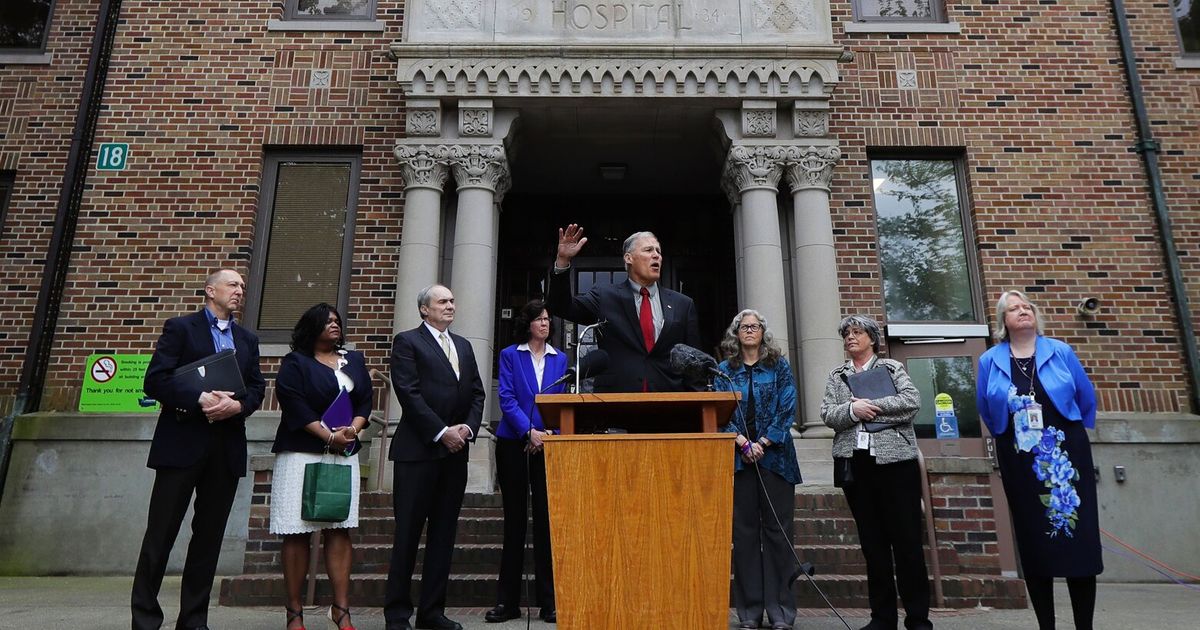
The suits were in town, prepping for a Friday news conference on the brick steps of Western State Hospital.

A photo from that day in Lakewood in May 2018 shows a united front. Hospital officials shoulder to shoulder with state lawmakers, and at the center, Gov. Jay Inslee. These officials were ready to “transform the state’s mental health system” after years of underfunding, lawsuits and federal warnings that threatened to close down Washington state’s largest psychiatric hospital — nearly 800 beds that served some of the most vulnerable residents.

“This is a heavy lift,” Inslee said.

He presented a plan that by 2023 would focus Western State on only serving patients who had been accused of crimes and were coming from jails. State agencies would build new, smaller centers across the state to serve people who weren’t facing charges but were sent for psychiatric commitment by the civil courts.

“It’s an aggressive timeline,” Inslee acknowledged. “2023 is tough, but doable. And it’s necessary.”

It is now 2023. The state failed to meet its goals.

In a quest to revamp mental health care, state officials made a challenging transition even harder — shutting down some of Western State’s wards without the planned community facilities that were supposed to take the people who relied on the state hospital. Combined with the unexpected effects of the pandemic, the resulting logjams have overloaded both jails and psychiatric facilities and left hundreds of incarcerated people languishing without mental health services.

The repercussions have left families and advocates frustrated and have embittered local law enforcement. Often the only two options seem to be either letting people struggle on the streets without care or criminalizing mental health and warehousing them in jail.

Staff and advocates say they warned state officials that the plan needed changes. Mike Yestramski, a social worker by training, remembers that day at Western State in 2018 clearly because he and other hospital union staff were asked to stand in that photo alongside the smiling politicians.

They refused.

“It’s not that we were not supportive of the vision,” explained Yestramski — though union leaders were also concerned that the plan could lead to fewer union jobs in the future. “It was the details, the logistics being worked out … What we’re seeing now come true.”

“We’re moving along by shutting down the civil beds before the community beds were built and ready to go.”

Indeed, this June, another ward is slated for closure — and the patients must go somewhere.

The blueprint

Western State has historically served two main types of patients. Those coming from jails — the state calls them “forensic patients” — need basic mental health services, like evaluations to determine whether they’re competent to stand trial, and restoration treatment to get them back to competency. It also houses “civil patients,” who are not criminally detained but are so seriously sick that they meet the threshold for involuntary commitment through a separate civil court system.

In the past, most of the patients were on the civil side, but in 2015, moves began to shut down the wards where they stayed.

Washington officials were facing challenges on a couple of fronts: The Centers for Medicare & Medicaid Services was scrutinizing Western State more closely after patient-on-patient assaults, threatening a loss of accreditation and federal dollars.

We’d like to hear from you.

The Mental Health Project team is listening. We’d like to know what questions you have about mental health and which stories you’d suggest we cover.

Get in touch with us at mentalhealth@seattletimes.com.

Around the same time, state officials at the Department of Social and Health Services faced a federal lawsuit over allegations they were violating incarcerated people’s due-process rights. People deemed potentially incompetent to stand trial were being held in jail for weeks or months because the state was failing to get them to Western State to get them evaluated or treated.

A federal judge ultimately ordered hospital officials to provide timely services within one to two weeks. Even today, the state is still failing to meet those timelines: In January it was taking about 100 days for patients to receive treatment. Currently, about 464 people are detained in jails across Washington state awaiting competency or restoration mental health services — an additional 344 are waiting out of custody.

In response to these ongoing issues, Washington legislators by spring 2016 had convened a special committee to improve the state hospitals.

Consultants came back with a lengthy report that fall that included nine recommendations. Among their suggestions: Transition the state hospitals into facilities that focus on patients coming from the jails. Build six more long-term civil facilities for patients transitioning out of state hospitals and into the community. Add three mobile crisis teams, and two new crisis centers to pull off the transition. 

In May 2018, Inslee, state legislators and government officials announced a plan building off that blueprint, which included the construction of a new forensic hospital on the Western State campus with 350 beds for people coming from jail. 

Today, while some of Western State’s last civil wards are set to close in June (delayed from a previous April 1 deadline), few of the other solutions recommended by the consultants exist. Washington has built two of the six civil facilities, most notably a 16-bed facility that debuted in January at Maple Lane near Centralia. Another treatment center in Snohomish County will break ground this spring — with two more facilities in Clark County expected in the winter of 2024. 

Additional beds are expected to come online at the University of Washington’s new behavioral health teaching facility at the end of 2023 and at Western State’s forensic hospital in 2027, at the earliest. 

In the meantime, however, there are no walk-in crisis centers in King County and by and large, hospital emergency rooms and jails take the responsibility of caring for people, despite the high cost and being ill-equipped to treat people in psychiatric emergencies. Mobile crisis teams are limited in size and are siloed among mental health service providers, police and fire services. 

“Do I think everything that we contemplated five years ago is going to be done this year? No,” said Amber Leaders, the senior policy adviser on behavioral health, aging and disability with Inslee’s office. 

“We are at a pinch point,” she said, with the civil wards winding down while other housing and treatment options are still coming on line.

“We have made a lot of progress in terms of building up the community capacity that we’ve talked about. But building a brand-new, shiny new forensic hospital takes some time,” Leaders acknowledged. 

State Rep. Nicole Macri, who has been deeply involved in the transition of the mental health system since she joined the Legislature in 2017, acknowledged the plan is “behind schedule,” but said “we haven’t lost sight of the goal.”

“We invested over $800 million in behavioral health in the ‘21 and ‘22 sessions. We should have been investing at that scale for years before that,” added Macri, D-Seattle. 

She points to the ripple effects of the Great Recession and how it led to significant cuts in funding for these services through the following years. Around that time, under former Gov. Christine Gregoire, state leaders similarly tried to “transform” Washington’s ailing mental health system but found limited success in restitching a complex, fragmented system.

Still, others note missteps in the latest iteration: 

“Five years is never a long enough runway when you’re talking about problems that need to be faced with a complete systemic overhaul from top to bottom,” said Lauren Simonds, the executive director of the Washington chapter of the National Alliance on Mental Illness. 

Kim Mosolf, director of treatment facilities with the advocacy organization Disability Rights − Washington — which sued over the delays in mental health evaluations and treatment for people in jails — points out that the new community beds that have come up are at best a replacement for what was lost.

“HCA [Washington Health Care Authority] has opened roughly 190 long-term community civil commitment beds since 2018 when they started this project,” she said. “However, they’re [closing] 180 beds at Western State Hospital. So it appears to be a zero sum game.” 

Yestramski, the social worker and now president of the Washington Federation of State Employees, said the idea of small facilities closer to patients’ homes was a “great idea on paper” but as state officials soon found out, “the problem is once they set out to build those, you have a lot of issues with NIMBYism.” 

Indeed, the construction of a new civil facility in Snohomish County faced “not-in-my-backyard” pushback from the community. Similar attempts to build enhanced services facilities for people with mental illnesses in Auburn and Burien were floated in the last few years but failed when local residents objected. 

Kinks in the system

One of the biggest reasons for delays at Western State, though, is the rising number of a particular type of patient. In prioritizing patients coming from jails, officials didn’t account for the fact that the civil and forensic patient populations often intermingle; closing one door had ripple effects in the other. 

One perfect example of that is called a civil conversion. 

If a patient coming from jail cannot be restored to competency, their criminal charges are typically dropped. Prosecutors can then “flip” their case, kick-starting a separate process that sends the person back to a state hospital but this time for civil treatment. This occurs most often in serious, felony-level cases.

But flipped patients often take four times as long to go through treatment at Western State because they receive more thorough mental health treatment. In comparison, the medication and services given to their jail-based counterparts are often only enough to make them competent in court — meaning they can identify the role of a judge or how to communicate effectively with their attorney. 

While a patient coming from jail may spend up to 90 days at the hospital for services, a civil patient can stay for a year or longer. 

That valuable space at the hospital causes backlogs for people who are languishing in jail while they wait for a spot to open at Western State. The number of patients being civilly converted has grown dramatically.

On any given day, “That number in the last year has climbed from say traditionally about 30 to 175,” said Thomas Kinlen, the director of the DSHS Office of Forensic Mental Health Services.

Prosecutors increasingly opt for this practice to try to keep people who might be a public safety threat off the street. Both Seattle and King County prosecutors have told The Seattle Times that this method offers at least some treatment for people with severe mental illness — and some respite from community complaints. 

However, even when community beds are present, another barrier exists for people discharging from state hospitals — especially if they have complicated backgrounds, like developmental disabilities or a history of violence. The facilities meant to house those civil patients can often decline to take certain people or rescind their placement, a practice common in other parts of the behavioral health system. 

Often it’s not financially or logistically feasible for providers to take those patients because they require more staff time and services. That means some of the most vulnerable patients go without appropriate long-term care or housing. 

Rick Deluga, a clinical supervisor on the community outreach and assessment team at Downtown Emergency Service Center, sees this first hand. Most of his clients are coming from jails or the hospital, and “they’re basically just getting stabilized and then being returned to where they came from,” he said.

“That’s usually an environment that continues to induce trauma, whether it’s because they’re on the street or they are released to a housing site or a shelter that may not be the best place for them to be due to the level of vulnerability,” he said. 

In a 2021 report, the Washington Health Care Authority told legislators about those concerns, saying that some people’s “complex and challenging needs” exceeded what community-based resources could provide.

The report cites the need for better payment rates for these hard-to-place patients, further training for the staff handling their care, specialized facilities for geriatric populations or those with additional needs, and the creation of “no-refusal” facilities who would be forced to accept all patients — essentially, state-run services like those Western State and Eastern State used to provide. 

Lisa Corthell, a psychiatrist working at DSHS’ Maple Lane residential treatment facility, said the Western State backlogs are trickling into her work as well. 

“Historically, [Western State has] been pretty good about freeing up a bed for us,” Corthell said. Her facility typically takes patients who are considered less acute or sick than the patients who go to the state hospitals. 

But in December, a patient of hers had to be transferred to a higher level of care at Western State and she found herself negotiating with the staff: “They said, ‘We can’t take them unless you take one of ours,’” she explained. 

“We’re going ‘What?’ We’re not supposed to be getting patients from Western. We’re supposed to be taking patients in from the jails.”

Moving forward

For Western State, the 2018 plan was a little too much, too late. By that summer, the hospital lost the federal accreditation it had hoped to earn back, and with it, about $53 million of funding. Still, the state poured millions into programs to ameliorate delays for mental health services for incarcerated people, and those time frames were starting to improve at last. 

Then the pandemic decimated the mental health sphere: More people sought care as workers simultaneously left the field for better pay and safety. 

Nevertheless, in 2021 the Legislature tasked DSHS with closing six of Western State’s civil wards in order to make room for the construction of the new forensic hospital that would focus on people coming from jails. In total, 180 people have been or will soon be transferred to community settings. 

King County behavioral health officials saw the challenge ahead and pleaded with state legislators not to close the wards before other facilities were in place

“Additional civil ward closures will leave individuals stuck on waiting lists, in community hospitals not designated for psychiatric care and, for some, in homelessness,” they wrote in a 2021 behavioral health agenda. 

Mental health resources from The Seattle Times

Police and prosecutors say we’re seeing the effects now. To keep the public safe even as mental health resources remain limited and local jail and police staff numbers drop, law enforcement has relied on arrests to keep people considered dangerous off the street, even as those same people fail to get proper care and get sicker in jail. 

Currently, at least 87 people in the King County Jail system are waiting for court-appointed mental health services, out of a population of about 1,200.

Seattle City Prosecutor Ann Davison, who ran on a platform of law and order, is especially frustrated with the inability to get misdemeanor-level detainees mental health services through the state hospitals. State officials chose to focus on providing mental health services to people accused of felonies instead, she said.

Often, if King County prosecutors don’t charge a person with a felony, their case “rolls downhill” to her office, she said. But then that person loses priority for restoration. If they’re not competent, that person will likely just cycle through the jail again.

“It’s as if we’re asking both the community and that person who is struggling to wait until they commit a more serious crime, “ said Davison. 

“Only then will we step in and say ‘Well now you are worth it, the problem is worth it.’” 

Residents, too, are reckoning with the consequences. 

“We feel helpless,” said Tanya Woo, a local volunteer with the CID Community Watch, a group that organizes weekly walks and provides homeless residents with basic needs like socks and food. 

Woo has seen residents with mental illnesses cycle through jails, hospitals, drug use and homelessness. While she doesn’t want police to be the first response, she also acknowledges the cycle takes a toll on the local neighborhood, especially when people in crisis become physically combative as a symptom of their illness. 

In one instance, Woo tells of a 49-year old man with a history of mental illness who’s had over two dozen interactions with police since the early 2000s — at times he’s spat on people or been arrested for harassment and assaultive behavior.

His charges are often dismissed and Woo wishes there was a way to get him treatment — or at least a heads-up when he is released. Prosecutors or judges tend to dismiss “less serious” charges precisely because of the deadlines that kick in if the detained person is not competent. 

Prosecutors then respond by focusing on offenders with the most serious charges, or by going the route of the civil conversion. 

Most recently, however, DSHS sent a memo to local officials in December stating the “ability to admit new patients to Eastern State Hospital and Western State Hospital has reached a critical point.” 

The state hospitals would no longer admit civil conversion patients, and those individuals could end up being “released from jail into the community.” 

While crisis facilities are being floated in King County, and agencies like the state Department of Commerce have invested $160 million in the last biennium to build up facilities, the mental health system transformation promised in 2018 remains stunted with years left to go. 

For Washington mental health professionals like Corthell, Yestramski and Deluga and their patients, change has been painstakingly slow. 

Still, state officials seem keen with their Sisyphean task. 

“This is the first time in quite a long time that I can remember that it feels like the Legislature is truly grasping that we are at an emergency sort of crisis level,” Yestramski said.

Sheriffs in rural counties call for better mental health call response protocols

Sheriffs in rural counties call for better mental health call response protocols

EAU CLAIRE, Wis. (WEAU) – It is the variety of connect with that will come with hazards for legislation enforcement and those people they are making an attempt to assistance, but sheriffs in Western Wisconsin are calling on legislators to make an previously difficult day for a person in disaster a tiny a lot easier.

“Imagine your loved a person calling for help. And now they are owning to be position in legislation enforcement custody for everywhere up to 8 – 12 several hours,” claimed Pepin County Sheriff Joel Wener.

He is chatting about emergency detentions for those people in disaster that pose a risk to them selves and or many others.

The protocols surrounding that while are the challenge, and that is why he and the Trempealeau County sheriff took the vacation to the point out capitol in Madison to contact for change.

“We’re attempting to give them some suggestions, some strategies on how we could acquire the human being in disaster out of law enforcement custody and transfer them to a psychological health professional’s custody,” claimed Sheriff Wener.

He also claimed these in crisis conclude up in police custody for nine hours on normal.

In that time, they go through a professional medical examine up prior to police drops them off at Winnebago Mental Overall health Institute in Oshkosh, all the way in Eastern Wisconsin.

That is why Sheriff Brett Semingson and Sheriff Wener advocate for regional services geared up with an emergency place to pace the approach up.

He reported this also retains law enforcement organizations from other counties from having to fall off people today at Winnebago Psychological Health Institute.

“By significantly this is far more of a humane matter than a price range matter. I just assume it’s dreadful that any individual that is possessing a undesirable day all of a unexpected has to be in police custody., in advance of they get help,” claimed Sheriff Semingson.

He explained the protocols are a dilemma for rural counties as opposed to city ones like Brown County.

“They have the hospitals inside of their personal county, and the procedures that they have let for those people crises conditions to be cleared up inside the make a difference of a couple of hours,” mentioned Sheriff Semignson.

The sheriffs say the present-day situation is not great for everyone concerned.

“They’re previously enduring crisis and now they think they are in difficulties with regulation enforcement,” claimed Wener.

“And that’s just way as well extensive. Not only for the agencies but it is incredibly draining for the person in crisis as perfectly,” mentioned Semingson.

Equally are hoping for transform to happen in advance of they retire.

They also add that it is uncommon for criminal rates to be included in crisis detentions for people today in disaster.

This parenting style puts children at higher risk of mental health problems, new study finds

This parenting style puts children at higher risk of mental health problems, new study finds

One parenting design can practically double a child’s danger of building signs and symptoms of mental health and fitness problems, according to new exploration.

Kids uncovered to “hostile” parenting, characterised by in excess of-controlling habits and severe physical or psychological discipline, have almost 2 times the chance of their friends of acquiring mental health challenges by the time they are 9 years previous, scientists from the College of Cambridge and the College School of Dublin found following researching extra than 7,500 children from infancy via age 9. They thorough their conclusions in a new examine released in the clinical journal Epidemiology and Psychiatric Sciences.

“We are not for a moment suggesting that parents should not established agency boundaries for their children’s behavior, but it is tough to justify repeated severe self-control, offered the implications for psychological overall health,” explained Dr. Ioannis Katsantonis, a doctoral researcher at the College of Cambridge and an author of the study.

Parenting models are deeply connected to a child’s progress and can both be a danger or a protecting aspect for a child’s psychological overall health.

Hostile parenting, in accordance to the researchers, can contain shouting at little ones consistently, plan bodily punishment, isolating kids when they misbehave, damaging their self-esteem or punishing small children depending on the parent’s mood.

Warm and engaged parenting can decrease the likelihood of psychological health concerns in a little one, whilst “over-involved/protective, severe and disciplinary parenting” is a predictor of poor mental wellness indications, the study’s authors pointed out. All those indicators can range from anxiousness and social withdrawal to impulsive or intense actions and hyperactivity.

A growing childhood psychological health crisis

Stress and anxiety and depression diagnoses have been on the increase in children in current yrs, in accordance to details from the U.S. Section of Health and fitness and Human Providers. Stress diagnoses for young children rose 29{35112b74ca1a6bc4decb6697edde3f9edcc1b44915f2ccb9995df8df6b4364bc} in between 2016 and 2020, and depression increased 27{35112b74ca1a6bc4decb6697edde3f9edcc1b44915f2ccb9995df8df6b4364bc}.

Meanwhile, info showed a major minimize in parents’ and caregivers’ psychological and emotional nicely-becoming.

“Our conclusions underline the importance of performing anything attainable to make certain that mothers and fathers are supported to give their kids a heat and favourable upbringing, particularly if wider instances set individuals children at hazard of inadequate psychological wellness results,” reported Dr. Jennifer Symonds, affiliate professor at College Higher education Dublin and an creator of the parenting kinds research.

Parenting design does not entirely decide psychological health and fitness results all those can be shaped by gender, physical health and socioeconomic standing, researchers observed.

“The simple fact that just one in 10 small children (in the analyze) were in the significant-risk category for psychological well being problems is a problem and we ought to be informed of the element parenting might play in that,” Katsantonis stated.

What’s a parenting model?

Someone’s parenting type isn’t the exact as that person’s parenting techniques.

A parenting observe is a specific goal-oriented behavior, like insisting on fantastic desk manners.

Parenting styles have to do with the parent’s crafted-in emotional attributes – this kind of as how delicate they are to their child’s demands – which set the tone for how the parent interacts with their youngster.

In the planet of psychology, there are different names and classifications of parenting models, together with permissive, authoritative, authoritarian or neglectful.

This review grouped parenting styles into 3 categories: – heat: exhibiting affection and attentive to a child’s demands – steady: location apparent expectations and policies – hostile: more than-managing parental behaviors and severe actual physical or psychological self-discipline

Scientists found hostile parenting lifted a child’s prospects of currently being equally large-risk and mild-risk for mental health and fitness difficulties. Scientists identified reliable parenting had a limited protective part for children in the delicate-danger category, but ended up amazed to obtain heat parenting didn’t improve the likelihood of children slipping into the very low threat group. This could be because of to the way other variables, like gender or socioeconomic standing, affect psychological wellbeing outcomes.

Ladies were being extra possible to be in the higher-risk group than boys. Little ones from wealthier backgrounds were being a lot less probably to demonstrate signs or symptoms of mental wellness concerns, though kids with 1 dad or mum ended up much more probable to be significant-possibility for difficulties.

Scientists advised extra intervention and assist not just for small children, but for new dad and mom as nicely.

“Appropriate assist could be a thing as straightforward as giving new mothers and fathers clear, up-to-day info about how most effective to handle young children’s conduct in diverse situations,” mentioned Katsantonis. “There is evidently a danger that parenting style can exacerbate mental overall health challenges. This is some thing we can very easily acquire measures to deal with.”

Need to have support?

The Countrywide Dad or mum Helpline is a free useful resource that presents emotional aid for mother and father from a trained advocate. It’s accessible at 1-855-427-2736.

The Children’s Bureau also retains a list of parenting methods, including information and backlinks to local community businesses, readily available here.

‘I struggled to cope’: over-50s in UK describe Covid’s toll on mental health | Mental health

‘I struggled to cope’: over-50s in UK describe Covid’s toll on mental health | Mental health

As Uk society started to shut down in March 2020, the uncertainty all over the long run began to get to Tina Flintham. “I felt thoroughly not in manage. You just didn’t know what was likely to take place.”

Flintham, 61, from Rotherham, is one of several who uncovered the pandemic introduced mental well being worries. She professional high ranges of stress, specifically as she had aged dad and mom in bad health and fitness. “Every early morning I would wake up pressured, pondering if I, my partner or mother and father would get Covid or die,” she says. “A incredibly near friend’s husband died with Covid [early on] – it truly introduced household how undesirable it was.”

Tina Flintham
Tina Flintham

Study has located that in late 2020, British people today in their 50s and early 60s ended up dealing with bigger levels of psychological distress than they experienced at any time experienced before in adulthood. For many in excess of-50s, the pandemic induced a “second midlife crisis”, with ladies worst afflicted.

Flintham, who is now retired, experienced been as a result of a time period of melancholy in her mid-50s, which she attributes to the menopause. “I was incredibly very low but I managed to carry on performing. It was a actual physical sensation of [being] down and went on for 3 months. I was at the level of pondering go to the health practitioner, but then it just went.” She says she “gritted her teeth” and got via it, incorporating that she has always relied on exercise.

But lockdown brought new difficulties for Flintham, who labored for the local authority at the time. “I’ve normally been a quite sociable human being, usually assembly up with mates, executing yoga and swimming, but I experienced none of that to assistance me via. I truly skipped swimming – I even dreamt about it.” She found using walks in the close by countryside was a “godsend” in coping with the strain.

The turning point for her mental wellness arrived with the vaccine rollout and as culture opened up. When much of the anxiety commenced to dissipate, she still feels its echoes. “Sometimes I wake up and have very similar feelings about what nowadays is likely to carry. I misplaced my confidence I don’t go out half as substantially as I employed to, [and] I have to force myself to. As soon as I’m out, I’m fine, but right before I hardly ever even considered issues like that. Also, becoming in confined spaces with heaps of individuals – I nevertheless feel strange about that.”

Mark Dawes
Mark Dawes

Though Mark Dawes, 60, experienced seasoned bouts of delicate to reasonable despair before, he was always equipped to cope by “forcing” himself to socialise and remain lively. But when the London-centered charity worker lost his father on the 2nd working day of lockdown, his grief blurred into despair for months.

“I had to offer with the grief on your own – even the funeral had to be completely virtual as it was not attainable to travel,” he says. “Living on your own was really isolating and all social lifetime was stopped – and relying on public transportation meant I could not even vacation to go walking in the close by countryside.”

Even though he has skilled psychologically complicated intervals in advance of, this time, “the isolation felt extremely different”. “It all floor to a halt. Then you had the pandemic alone, which was very terrifying when it begun off. It was a blur of times with no occasions in them. I was dwelling, but not truly dwelling.”

About a yr into the pandemic, Dawes began to undergo cognitive behavioural treatment, and with the “loosening” of the pandemic begun to come to feel far better. But he claims there has been a lasting influence, like not becoming in a position to appropriately grieve for his father. “I don’t enjoy existence as significantly as I employed to. I search forward to items significantly less – life’s a bit greyer.”

The pandemic also landed a blow to people who experienced never dealt with mental wellness troubles before. In the early months of lockdown, Sally (not her real identify), in her early 60s, made extreme stress and anxiety and minimal temper for the initial time in her lifestyle. “I was wholly taken by shock as I have never ever experienced with these difficulties right before. I used large pieces of the working day in tears.

“Everyday responsibilities turned hard and, around time, I found it difficult to confront people today. At night time-time I shook, had incredibly hot flushes, terrible desires and struggled to rest.”

Sally, who is retired and life in the east Midlands, grew to become quite fearful of Covid. “When some restrictions commenced to be relaxed I struggled to cope with seeing folks, even in the yard. I did not come to feel capable to go to general public sites these as retailers. Every single morning I woke up with a emotion of dread and unhappiness.”

By Oct 2020, she realised she essential assistance and commenced speaking therapy above the cell phone. “In the stop I decided I required to confront my fears and get back to some sort of usual lifetime. I began by forcing myself to do items this sort of as go into retailers tiny by tiny: not something that I uncovered straightforward,” she says, introducing that returning to the health and fitness center was also essential. “I no longer believe about Covid each waking minute and I am at last commencing to delight in existence again.”

Recovery high schools build a culture of mental health to help kids thrive : Shots

Recovery high schools build a culture of mental health to help kids thrive : Shots

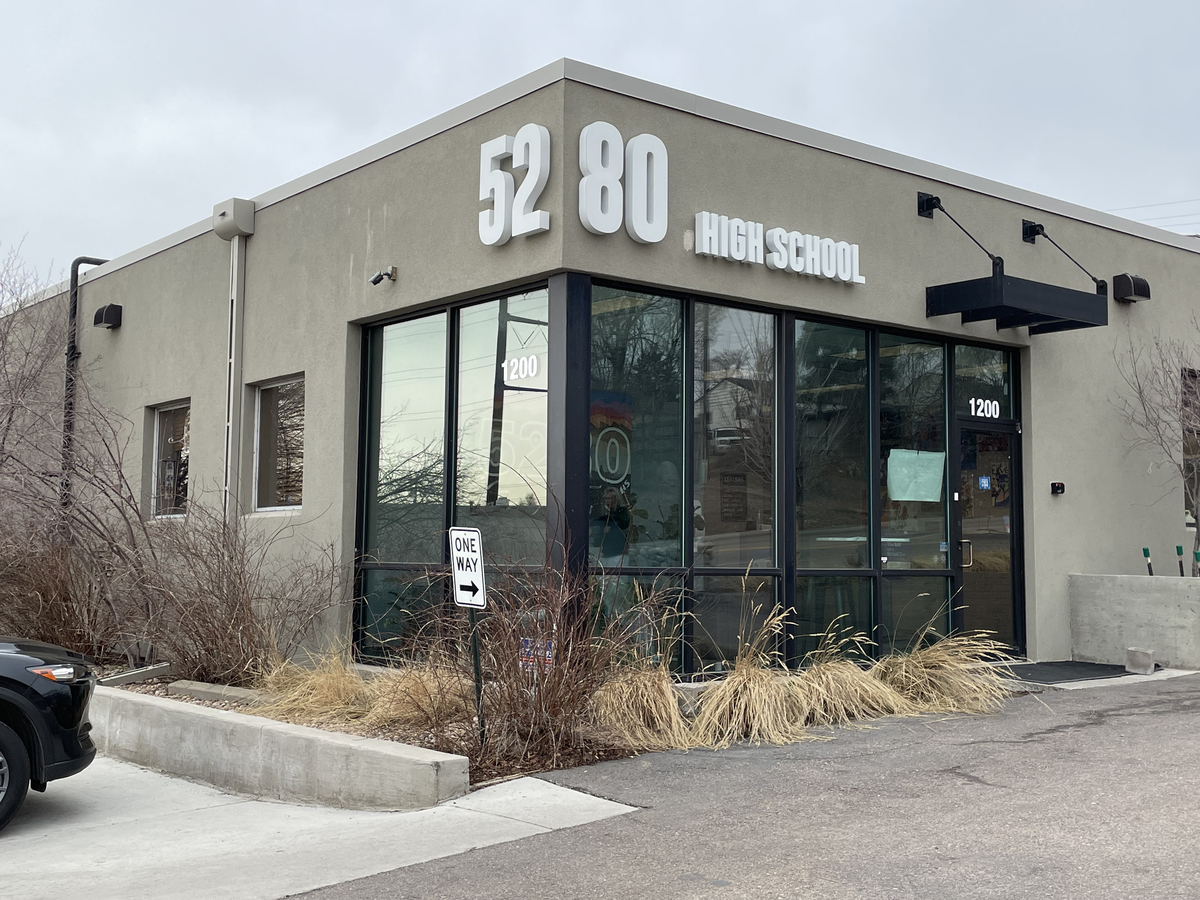
5280 High School in Denver is one of 43 secondary schools in the U.S. with a program designed for students recovering from substance use disorder and related mental health disorders.

Stephanie Daniel/KUNC


hide caption

toggle caption

Stephanie Daniel/KUNC


5280 High School in Denver is one of 43 secondary schools in the U.S. with a program designed for students recovering from substance use disorder and related mental health disorders.

Stephanie Daniel/KUNC

Every weekday at 5280 High School in Denver starts the same way.

Students in recovery from drug and alcohol addiction gather on the steps of the school’s indoor auditorium to discuss a topic chosen by staff members. One recent morning, they talked about mental health and sobriety. A teenage boy dressed in tan corduroys, a black hoodie, and sneakers went first.

“I didn’t want to have, like, any emotion,” he said. “So I thought, like, the best way to, like, put it down would be to do more and more and more drugs.”

A classmate said she started doing drugs for fun and then got hooked. Another student said his addiction negatively impacts his mental health. A third announced an upcoming milestone.

“In, like, two days, I’ll be six months sober,” she said, as her classmates cheered.

The students attend Colorado’s only recovery high school — one of 43 nationwide. These schools are designed for students who are recovering from substance use disorder and might also be dealing with related mental health disorders. The Denver school opened in 2018 as a public charter school that today enrolls more than 100 students.

KHN logo

One of those cheering classmates was sophomore Alexis Castillo, 16, who listened supportively during that recent morning meeting. She is in recovery for alcohol and fentanyl addictions. Several of her friends attended the school when she enrolled during her freshman year and initially loved it. But after a while some of Castillo’s friends left and she grew disillusioned. She stopped going to class and wasn’t motivated to work her recovery steps.

“They give you a lot of accountability,” she said. “That was not something I wanted.”

Castillo relapsed and school staffers helped her get into rehab. Three months later she was back at the school, in recovery and ready to do the work.

The school’s mission is to help kids learn to live a substance-free life while receiving an education. This includes attending recovery meetings and wellness activities, and taking traditional high school classes like English, math, and Spanish.

“They can go on to college or a career and really handle anything that life throws at them,” said 5280’s founder and executive director, Dr. Melissa Mouton.

In 2022, nearly a third of 12th graders and 1 in 5 10th graders reported using an illicit drug in the previous year, according to a national survey from the Monitoring the Future project conducted by the University of Michigan Survey Research Center. Those numbers have steadily decreased over the past 25 years. However, data from UCLA shows overdose deaths among teens doubled in the first year of the pandemic, mainly attributed to the increased prevalence of fentanyl-laced drugs.

The first recovery high school opened in Silver Spring, Md., in 1979 and similar programs now operate in 21 states. Compared with their peers at regular schools who have gone through treatment, recovery high school students have better attendance and are more likely to stay sober, and their graduation rate is at least 21{35112b74ca1a6bc4decb6697edde3f9edcc1b44915f2ccb9995df8df6b4364bc} higher, according to one study.

A mosaic in the computer lab at 5280 High School in Denver. Colorado’s only high school with a recovery program opened in 2018 as a public charter school and today enrolls more than 100 students.

Stephanie Daniel/KUNC


hide caption

toggle caption

Stephanie Daniel/KUNC


A mosaic in the computer lab at 5280 High School in Denver. Colorado’s only high school with a recovery program opened in 2018 as a public charter school and today enrolls more than 100 students.

Stephanie Daniel/KUNC

“For this particular group of young people who have these disorders, this can be a lifesaver,” said John Kelly, director of the Recovery Research Institute at Massachusetts General Hospital. “It can help them create a social norm of recovery.”

There are three components to effective drug and alcohol treatment, according to Dr. Sharon Levy, a pediatrician and addiction medicine specialist at Boston Children’s Hospital. The first part is medical, which includes seeing a doctor, drug testing, and using medications like buprenorphine to treat opioid addiction. The second is emotional support from counseling to address co-occurring mental health disorders. And there is a behavioral component that, for kids, can include receiving positive feedback from parents, peer support and recovery schools.

“Recovery schools offer an opportunity really for peer support and mutual aid in a kind of a supervised and structured way,” Levy said.

Recovery high schools often weave components of treatment into the school day — activities like 5280’s daily recovery program meeting. In the afternoon, the school offers wellness electives such as spiritual principles and journaling. The school also employs a director of recovery and recovery coach to work with and counsel the students individually.

Recovery schools do face challenges. Most are publicly funded charter or alternative schools that carry a higher cost of educating students than traditional schools do. This is due to a smaller enrollment, the need for mental health and recovery personnel, higher faculty-to-student ratios, and other factors.

The Denver school enrolls about 100 students annually, making it one of the biggest recovery high schools in the nation. This year, the per-pupil cost is about $25,000 per student but the school receives only about $15,000 from federal, state, and local funding, according to Mouton. The remaining money comes from donors.

Given the complex needs of the students, “recovery schools will always be small,” she said.

Pooling such students together may also raise a concern that students will trigger one another to use drugs and alcohol and relapse, but, Levy said, that’s a risk with any social interaction.

“So, if you’re in an environment where the recovery is kind of front and center and people are watching and monitoring and supervising,” she said, “I think that’s helpful for a lot of kids.”

The school in Denver purposely keeps enrollment under capacity so additional teens can enroll anytime during the school year. A student won’t get kicked out if they relapse, but there are two requirements: They must want to be sober and attend an outside recovery program.

“The No. 1 step is just letting them know out of the gate, no matter what’s going on, that we love them,” said Brittany Kitchens, the school’s recovery coach. “We are here for them.”

Kitchens teaches students how to navigate recovery and regulate their emotions. She likens herself to a hall monitor, constantly checking in with students and looking for changes in behavior.

“I tend to be the first kind of line that the kids will come to when they’re experiencing something that is just a little bit too big for them to process,” she said.

Some of these difficulties stem from traumas students have experienced, including sex and drug trafficking, and abandonment. Students also deal with traumas they have caused, Kitchens said, actions that landed them in jail or on probation.

Kitchens, who is in recovery herself, shares coping mechanisms with the students.

“A lot of times it just starts with, ‘Hey, take a breath, breathe in through the nose and out through the mouth,'” she said.

Alexis has been in recovery for nearly a year, she said. The morning meetings where she and her classmates talk about mental health, sobriety, and other topics are an opportunity to build a community of friends who support one another, something she said she didn’t have when she was using drugs.

“It’s really hard to get sober young,” she said.

This article is part of a partnership that includes KUNC, NPR, and KHN.

KHN (Kaiser Health News) is a national newsroom that produces in-depth journalism about health issues. Together with Policy Analysis and Polling, KHN is one of the three major operating programs at KFF (Kaiser Family Foundation). KFF is an endowed nonprofit organization providing information on health issues to the nation.

Mental health funding changes may cut services

Mental health funding changes may cut services

In summary

Gov. Gavin Newsom is proposing to shift more money to housing severely mentally ill homeless people. Some officials at mental health organizations fear that funding will come from cuts to other services they provide.

Lea este artículo en español.

For the second time in as many years, Gov. Gavin Newsom is pushing for major reform of California’s mental health system, this time by overhauling the way counties spend mental health dollars and placing a bond measure before voters to build more psychiatric beds.

County behavioral health advocates and local service providers fear programs will be cut, and, much like the controversial CARE Courts legislation — which passed last year and allows individuals to petition a court to force seriously mentally ill people into treatment and housing — say Newsom’s initial announcement came as a shock.

“We listened to the press conference just like you,” said Christine Stoner-Mertz, executive director of the California Alliance of Child and Family Services, which represents organizations that provide child welfare, foster care, juvenile justice and youth behavioral health services.

The proposal is being pitched as a solution to the state’s ballooning homelessness crisis, but experts doubt it will make any kind of meaningful dent. No one has published bill language for the proposal, but Newsom unveiled two major changes during his March state-of-the-state tour:

  • Divert 30{35112b74ca1a6bc4decb6697edde3f9edcc1b44915f2ccb9995df8df6b4364bc} of existing Mental Health Services Act money toward housing people living on the streets who are severely mentally ill;
  • Use a bond measure to generate between $3 billion and $5 billion for 6,000 residential psychiatric treatment beds.

Voters passed the Mental Health Services Act nearly two decades ago as a ballot initiative that levied a 1{35112b74ca1a6bc4decb6697edde3f9edcc1b44915f2ccb9995df8df6b4364bc} tax on state millionaires to fund local mental health programs. Substantial changes to the act are subject to voter approval because it originally passed as a ballot measure in 2004.

The proposal aims to reprioritize a significant portion of the state’s existing behavioral health system to focus on what Newsom characterized as the state’s “most acute challenge,” which is the number of homeless people with mental illness and substance use disorders. Only about 20{35112b74ca1a6bc4decb6697edde3f9edcc1b44915f2ccb9995df8df6b4364bc} of California’s approximately 172,000 homeless people have a severe mental illness, according to the U.S. Department of Housing and Urban Development, but the issue plays an outsized role in state politics.

“It’s unacceptable what we’re dealing with at scale now in the state of California,” Newsom said. “We have to address and come to grips with the reality of mental health in this state and our nation.”

Newsom, who made reducing homelessness a key part of his gubernatorial campaign in 2018, is contending with the reality of homelessness increasing by nearly 32{35112b74ca1a6bc4decb6697edde3f9edcc1b44915f2ccb9995df8df6b4364bc} in the past four years. Though he has called out counties for not acting aggressively enough and dedicated nearly $10 billion to address the problem, he has also faced harsh bi-partisan criticism for what many view as a political stunt in threatening to withhold money from counties and failing to significantly increase the state’s housing stock. 

“The question in our minds is what is the approach and process to solving some of these problems. We would welcome greater partnership around that.”

Christine Stoner-Mertz, executive director of the California Alliance of Child and Family Services

Newsom’s proposal is backed by several lawmakers, including former Assemblymember and current Sacramento Mayor Darrell Steinberg, who co-authored the original act, and Sen. Susan Talamantes Eggman, a Democrat from Stockton who co-authored the CARE Court legislation and who has staked the remainder of her term on advancing mental health changes.

Those who do the on-the-ground mental health work in the state, however, say they have major concerns about such a large system shake-up. The focus on housing and the need for more behavioral health treatment beds is welcome, Stoner-Mertz said, but shouldn’t detract from the current workforce crisis and other problems exacerbated by the COVID-19 pandemic.

“One-third is a big chunk of money,” Stoner-Mertz said. “The question in our minds is what is the approach and process to solving some of these problems. We would welcome greater partnership around that.”

What the mental health funding proposal would change

On Wednesday, state officials revealed new details about the proposal. It changes the categories counties would be required to invest in, focusing most of the money on homeless adults. Counties would be required to spend 30{35112b74ca1a6bc4decb6697edde3f9edcc1b44915f2ccb9995df8df6b4364bc}, or roughly $1 billion annually, of their Mental Health Services Act dollars on housing homeless people with serious mental illness or drug addiction. They would also direct 35{35112b74ca1a6bc4decb6697edde3f9edcc1b44915f2ccb9995df8df6b4364bc} of the funds to full-service partnerships for these individuals, which include clinical treatment and social supports co-designed by the client and the program.  

The remaining 35{35112b74ca1a6bc4decb6697edde3f9edcc1b44915f2ccb9995df8df6b4364bc} could be used for a combination of existing programs like mental health prevention and early intervention, infrastructure and workforce investments, although officials made it clear that workforce would be a priority. Innovation grants that have historically been part of the program do not have any dedicated funds. The proposal also opens the door to using the money for people who struggle with addiction but don’t have additional mental health needs.

In contrast, current regulations give counties broad flexibility in using the money. A minimum of 38{35112b74ca1a6bc4decb6697edde3f9edcc1b44915f2ccb9995df8df6b4364bc} must be spent on full-service partnerships, although counties can spend up to 70{35112b74ca1a6bc4decb6697edde3f9edcc1b44915f2ccb9995df8df6b4364bc} on these services. (Full-service partnerships are intensive wraparound services designed to do “whatever it takes” to meet the client’s long-term needs. They can include things like 24/7 case management, clinical treatment, and housing.) About 19{35112b74ca1a6bc4decb6697edde3f9edcc1b44915f2ccb9995df8df6b4364bc} is reserved for prevention and early intervention programs, much of which focuses on children, and 5{35112b74ca1a6bc4decb6697edde3f9edcc1b44915f2ccb9995df8df6b4364bc} for innovation. Some counties choose to use a portion of the funds for workforce and infrastructure needs.

There are some concerns about whether counties have historically met minimum spending requirements, particularly for full-service partnerships, but there’s no question that the money has become an integral part of the state’s behavioral health system, making up nearly one-third of all spending. Last year the tax generated about $3.8 billion. Newsom’s proposal introduces standardized accountability measures and reduces the amount of money counties are allowed to keep in reserves.

In addition, language will be placed on the 2024 ballot asking for a general obligation bond to pay for 6,000 psychiatric and substance abuse treatment beds. These beds would serve approximately 10,000 people annually, according to a fact sheet from Newsom’s office, by providing long-term residential treatment. An undetermined portion of the bond funds would be used to house homeless veterans.

For many mental health organizations, the bond to increase residential care capacity is much easier to swallow than prescriptive changes to how mental health dollars are spent. The state faces a shortage of more than 7,700 adult psychiatric beds, according to a 2021 RAND report commissioned by the County Behavioral Health Directors Association.

“We really appreciate the administration looking at the report that we did, and the focus on building out infrastructure is wonderful,” said Michelle Doty Cabrera, executive director of the County Behavioral Health Directors Association. “But we continue to need the same kind of focus on workforce and funding for services ongoing.”

At the same time that Newsom is advancing this proposal, his January budget delays $1.1 billion in other behavioral health investments over the next two years, including money intended to increase treatment capacity for adults and kids in crisis, and money for workforce development.

What are the primary concerns? 

There’s no telling how exactly existing mental health priorities will get reallocated, but cuts are nearly inevitable given how heavily counties rely on the dollars. The money is “braided into the fabric of all things in our safety net,” Doty Cabrera said.

But some of the most pressing questions come from those who work with children and families. Currently, at least half of the money earmarked for prevention and early intervention must be used for children and young adults. 

“This is the only protection from our perspective that is actually going to keep a focus on young people and keep a focus on more upstream services,” said Adrienne Shilton, director of public policy for the nonprofit California Alliance of Child and Family Services.

That money is potentially on the chopping block under the new proposal, as are innovation grants that have catalyzed multi-county programs to improve services for communities of color and LGBTQ folks. 

Historically, Medi-Cal — the state’s public health insurance program for extremely low-income residents — has not covered behavioral health prevention programs, which is where the Mental Health Services Act becomes important. The money was intended to allow counties the greatest amount of flexibility in meeting local needs, particularly when other funding streams came with restrictions, said Toby Ewing, executive director of the Mental Health Services Oversight and Accountability Commission.

“It is designed to be a counterpoint to historic restrictions that were in place for Medi-Cal,” Ewing said. 

The public perception that California’s homelessness crisis is caused by psychiatric emergencies and drug addiction is a false one.

At the same time that the money gives counties the ability to provide services beyond Medi-Cal, they also use qualifying program expenses to draw down matching Medi-Cal federal funds, effectively expanding local mental health programs. Collectively, counties use about half of the money on services that qualify for matching federal dollars, Doty Cabrera said.

With about $1 billion earmarked for housing, which the federal government will not pay for, the mental health system may face between $500 million and $1 billion in lost federal revenue, Shilton said, if Newsom’s proposal is approved.

Dr. Mark Ghaly, state secretary for Health and Human Services, disagrees with the assumption that these changes mean cuts will happen. The administration’s team has heard the same concerns in stakeholder meetings following the announcement and will work with counties “to try to maintain as much as we possibly can with them,” Ghaly said.

“There is no reason why we won’t be able to do a lot on the prevention and early intervention side,” Ghaly said.

He also notes that this proposal can’t be considered alone. It is part of a larger strategy to improve mental health services in the state, which includes sweeping changes to Medi-Cal, a children’s behavioral health initiative and investments in crisis response. One piece of the puzzle seeks permission from the federal government to use Medi-Cal dollars on housing, which would allow counties to still draw down a significant portion of matching funds. 

“All of these things come together, build on each other, and I would like to say catalyze one another to promote the transformation,” Ghaly said. “This is, in my mind, government doing well.”

Will this help homelessness? Not really.

The proposal has been couched as a solution to California’s explosive homelessness problem, which consistently tops the list of voter issues. 

“We’re fooling ourselves that if we don’t address that fundamental need that we can turn this thing around,” Newsom said during his press conference, backed by more than a half dozen officials who detailed homeless issues from state, county, city and personal perspectives.

But the public perception that California’s homelessness crisis is caused by psychiatric emergencies and drug addiction is a false one. Rather, decades of politicians upholding restrictive zoning laws and obstructive environmental policies have pushed California to the bottom of affordable housing rankings and are the primary drivers of homelessness in the state. Other factors, like changes to the state’s criminal justice system, also contribute. Dr. Margot Kushel, director of the UC San Francisco Benioff Homelessness and Housing Initiative, said no amount of spending on mental health will improve the state’s overall homelessness problem.

Still, she and other medical professionals who work primarily with unhoused people say the most vulnerable people on the streets are those with untreated mental illness, and prioritizing housing is the most important thing the state can do for that population’s physical and mental health. People living without shelter also face dismal health outcomes, and discharging a patient back to the street is a recipe for swift deterioration.

Even local and county behavioral health groups that have raised concerns about the proposal acknowledge the need for more housing for their clients, but they fear an inversion of the current problem — housing without services — will result. 

“My concern is robbing Peter to pay Paul,” said Debbie Manners, president and CEO of Sycamores, a Los Angeles behavioral health and child welfare agency. Sycamores serves about 500 children and families daily through its school-based mental health program. Two years ago the state allocated $4.4 billion to a Children and Youth Behavioral Health Initiative, but it’s a one-time investment.

“I’m not sure how that will fill in the gap. I don’t think it will fill the gap,” Manners said.

Unfortunately, limited funding is the reality of this year’s budget cycle, with the Legislative Analyst’s Office projecting a $24 billion deficit.

“You don’t want to pit one need for money against another, and I get that,” Kushel said. “On the other hand, it isn’t really possible to serve this population without their having housing.”