National Women’s Health Advisory Council to tackle medical misogyny in medicine and health care

National Women’s Health Advisory Council to tackle medical misogyny in medicine and health care

“Women are in pain,” writes Gabrielle Jackson in Pain and Prejudice.

“They’re in pain with their periods, and while having sex; they have pelvic pain, migraines, headaches, joint aches, painful bladders, irritable bowels, sore lower backs… But women’s pain is all too often dismissed, their illnesses misdiagnosed or ignored.”

First published in 2019, Jackson’s book — subtitled a “call to arms for women and their bodies” — captured her frustration at how little progress had been made on the treatment of endometriosis after her own diagnosis 14 years earlier.

“I was so angry when I wrote the book,” Jackson says.

A headshot of Gabrielle Jackson, wearing an orange jacket and creme top. She is smiling
Gabrielle Jackson’s book drew attention to how little progress has been made on the treatment of diseases which overwhelmingly affect women. (Supplied)

“And it was so exhausting. When you’ve got a chronic illness, sometimes full-time work is all you can do, and I was writing the book on top of my full-time job. And there were times when I really thought it wasn’t worth it.”

In the years since, Jackson has stepped back her advocacy, focusing on her “day job” as Guardian Australia’s head of multimedia while she recovers some energy.

An announcement made in the last week, however, has her feeling reinvigorated.

On Thursday, Ged Kearney, Assistant Minister for Health and Aged Care, announced that the federal government would be establishing a Women’s Health Advisory Council to tackle “medical misogyny” within healthcare systems.

The council, which Kearney will chair, brings together experts — and those with lived experience — to provide advice and recommendations to the government on all matters women’s health.

In her speech, Kearney thanked Jackson and others who have advocated for action, acknowledging that the “system is stacked against them”.

Ged Kearney gives a press conference in front of a range of female senators at Parliament House
Assistant Minister for Health Ged Kearney will chair the new advisory council. (Mick Tsikas: AAP)

“It’s not about doctors hating women,” Kearney says.

“There’s no conspiracy in a basement somewhere. It’s just that society, the world, simply everything is built around men. And the good thing that’s happening is that we’re starting to get a small body of evidence to show what women have known for centuries.”

Stats show women at increased risk of dying

That small body of evidence is increasingly more alarming — and the discrepancies aren’t just relevant to gynaecological issues.

A recent study looking at Australian and New Zealand data showed that women are approximately 1.5 times more likely to die in ICU after heart surgery than men.

Yet studies also show that women complaining of symptoms consistent with heart disease are twice as likely to be diagnosed with mental illness compared to men with identical symptoms.

Emergency nurse and woman patient COVID 19
Australian and New Zealand women are 1.5 times more likely to die in ICU following heart surgery. (Getty Images)

We now know that women present with different symptoms of heart-attack than men (for example being less likely to complain of chest pain), but doctors routinely recognise only those symptoms that men most commonly experience.

A 2021 study from the U.S., meanwhile, found that diseases which primarily affect women are vastly underfunded relative to disease burden, while those primarily affecting men are over funded by a ratio of 2:1.

And trans women face a raft of unique barriers to accessing appropriate health care, including inadequate training and stigma on the part of doctors and specialists. 

The stats are proof of what women have been saying all along: that they face a range of “poorer health outcomes” comparative to men.

“It feels like I’ve put my shoulder up against a massive juggernaut and I’m trying to steer it in another direction,” Kearney says.

“I’m not going to pretend that life is going to be different tomorrow, but I hope this can be the start of systematic change at the policy level.”

More research, gendered guidelines needed

Dr Sarah White, CEO of Jean Hailes for Women’s Health, is one of the experts who has been invited onto the national advisory council.

Dr Sarah White smiles for the camera. She is wearing a pink suit.
Dr Sarah White, CEO of Jean Hailes for Women’s Health, wants the council to address gendered gaps in research. (Supplied)

She has a number of suggestions for where the council can start getting to work.

“So much medical research has studied males and then generalised those findings to females,” she says.

“As a society, none of us seems to have a problem understanding that we need paediatric research and children’s hospitals.

“We intuitively understand that small boys are not the same as men, but for some reason, we treat women as if they’re small men.”

This is an issue raised by Jackson in Pain and Prejudice. She points out that while 70 per cent of those who live with chronic pain are women, 80 per cent of pain studies are conducted on men or male mice.

This means that women are often prescribed drugs (and at dosages) that may not be appropriate for them.

“The Therapeutic Goods Administration (TGA) should not approve medicines unless there is sufficient data around quality, safety and efficacy for males and females separately,” Dr White says.

“We also need different treatment guidelines and public awareness campaigns. If you look at something like menopause, it affects 50 per cent of the population, and of those, 10 per cent will have symptoms that really impact their ability to work, live, study and play. But we still don’t have anywhere near enough research on it.”

The Labor government has undertaken some preliminary, related measures to address some of the issues raised by Dr White.

This includes the announcement that it will fund 16 dedicated Endometriosis and Pelvic Pain Clinics across the country, while in October Health Minister Mark Butler announced that the NHMRC would set targets to award equal numbers of Investigator Grants to women and men to address gendered inequities in research funding.

Minister for Health Mark Butler gives a press conference in front of the Aboriginal and Torres Strait Islander flags
Minister for Health Mark Butler announced in October that the government would set targets to ensure women received an equal number of NHRMC Investigator Grants.(Mick Tsikas: AAP)

Kearney says this measure is one step towards addressing knowledge gaps, given women are more likely to study issues relevant to women’s health.

While White welcomes both initiatives, she says she would like to see the government go further by promising targeted funding for issues that overwhelmingly affect women and gender diverse people:

“We need to make sure there is equality of funding for conditions like endometriosis and menopause, and perhaps even more funding, to make up for injustices in the past.”

Women’s voices ‘haven’t been heard’

Tackling gender inequality in the healthcare system also requires addressing the underlying issue of how women are treated when they present to doctors.

“When we do our work as women’s health services and ask women what’s missing from medical care, time and again they say ‘we’re not being heard’,” Tricia Currie, head of the Victorian Women’s Health Council and CEO of Women’s Health Loddon Mallee, says.

A lady in a red jumper with blonde hair smiles at the camera
CEO of Women’s Health Loddon Mallee Tricia Currie says women frequently say that their voices aren’t being heard. (Supplied)

“They might be speaking, they might be telling their story, but they’re not actually being heard.

“There’s unconscious bias within the health care system which is why it is important that we have structures around decision-makers that ensure governments are hearing from women, and diverse women, about not only what the issues are but what some of the potential solutions are.”

It’s an issue Dr Mariam Tokhi feels passionately about. She is a GP at Utopia, a refugee and asylum seeker health centre in Hoppers Crossing.

Tokhi has a diploma in obstetrics and gynaecology, and recently completed a qualification in narrative medicine.

“As doctors and health care workers, we get a lot of training in statistics and biosciences,” she says.

“But what I see is that when we meet people every day, we are hearing stories, and we really need to get some training and skills in how to listen, and how to show up for patients.” 

Medical model needs overhaul: GP

Tokhi argues that addressing the many issues with women’s health care requires a re-think of the medical model.

“The way Medicare is set up, the way our hospitals are designed, all of those things have been done with a particular lens, and it has mostly been set up by white, wealthy men,” Tokhi says.

Dr Mariam Tokhi smiles for the camera
Dr Mariam Tokhi says the existing Medicare model punishes doctors for spending quality time with patients. (Supplied)

“With general practice, the system is set up to incentivise fast care. So GPs, especially if you’re bulk billing, make the most money if you see someone every six minutes.

“There is a penalty for spending more time with patients. And we need to question that — why is fast seen as good? Fast favours a hyper-masculine, terse and laconic form of communication.

“People who have complicated and messy stories, who are carrying trauma and struggling with their mental health, need longer to express themselves, and someone to listen.”

These issues are only amplified, she says, when women face other forms of disadvantage, including those from diverse cultural and lower socio-economic backgrounds.

For 2023, patient experience, ‘smarter’ analytics and data-driven medicine

For 2023, patient experience, ‘smarter’ analytics and data-driven medicine

Matthew Gitelis, CEO of PatientIQ, a wellness IT firm deriving insights from affected person-documented outcomes information, has some ideas about healthcare information technologies in 2023.

For just one, that client experience will be king in the 12 months ahead. In between CMS doubling the pounds of individual-experience CAHPS metrics and its latest unveiling of new performance metrics pertaining to affected individual-documented outcomes, it is obvious that patients will be a major precedence in 2023, Gitelis stated.

On a different entrance, he will make a difference among “clever” versus “smarter” analytics for 2023. Upcoming 12 months, company businesses ought to leverage “smarter” analytics applications  – those people that synthesize predictive and descriptive abilities and leverage device understanding systems to actually go the needle, he contended.

He additional that healthcare companies have to have to embrace the shift to info-driven drugs. The U.S. healthcare analytics marketplace is projected to quadruple among 2020 and 2030. Handful of issues are as potent as knowledge in medicine, still to this working day, so quite a few clinical decisions are made without the need of adequate quantitative and qualitative details to assist them, he mentioned.

We spoke with Gitelis to get him to dive deeply into these predictions and help health care service provider corporation CIOs and other health and fitness IT leaders put together for the 12 months ahead.

Q. You predict the affected individual practical experience will be king in 2023. Why and how?

A. Improving the affected person practical experience isn’t really a new aim – it has been at the forefront of medication for decades. But the issue we have to have to be asking is, how profitable have our attempts and technologies been in transferring the needle, because the stakes are not getting any smaller sized.

CMS, for instance, has doubled the excess weight of affected individual-working experience CAHPS metrics it has unveiled new functionality metrics pertaining to individual-described outcomes and healthcare corporations are concurrently dealing with steep competitiveness for possible incentive payments. Our governing bodies are earning it obvious that improving upon the affected individual experience is no for a longer period a “great” objective – it’s an crucial a person.

In addition, over and above the money and operational ramifications of not adequately leveling up the affected individual expertise, we know scientific outcomes can endure when people have bad perceptions of their treatment – and affected individual anticipations are not lowering. Improving excellent of treatment, and patient perceptions of excellent, has never been much more important.

Health care businesses have their perform reduce out for them. It can be a daunting task to strengthen the overall care expertise, notably, if the infrastructure to do it correctly isn’t there – which, for several, it is just not. And, as healthcare businesses continue to climb out of the influence of the COVID-19 pandemic, they have to be strategic in wherever they commit already strained assets.

In 2023, health care businesses will have to have to carry on to prioritize the digital entrance doorway and commit in the capacity to obtain, measure and act on patient-documented perceptions of their wellness and treatment experience. Medical and operational results rely on it.

Q. You also propose the distinction among “intelligent” and “smarter” analytics will be of significant value in 2023. How so?

A. Health care companies have been skeptical of analytics or technologies that guarantee to make healthcare “smarter” – and not devoid of cause. For one, some improvements have failed to realize that healthcare is inherently a people business enterprise.

The target need to usually be to nutritional supplement or increase the clinician – not substitute. Secondarily, some “sensible” systems have promised to help but, finally, ended up hurting. For example, a person requirements to only glimpse a number of years into the previous, when “smart” medical decision guidance equipment embedded in the EHR had been hailed as a Holy Grail of precision medication and now are correlated with notify tiredness and exacerbating clinician burnout.

Some simple, descriptive analytics applications – isolating meaningful trends like the presence of many comorbidities among the 60-yr-outdated people – are shedding gentle on inhabitants health trends, but these are not a reflection of the whole opportunity of analytics. They are also not sufficient. 

Health care corporations more and more need more sturdy functionalities and additional predictive abilities. They need to have to know not only how many hazard factors a individual possesses, but also the patient’s odds of achievements.

For case in point, take into consideration an orthopedic practice with a overall knee substitution surgical treatment achievement level of 95{35112b74ca1a6bc4decb6697edde3f9edcc1b44915f2ccb9995df8df6b4364bc}. If that exercise would not use highly developed analytics applications to mine details and evaluate why 5{35112b74ca1a6bc4decb6697edde3f9edcc1b44915f2ccb9995df8df6b4364bc} of people are reporting lousy results, they would not have the specific intelligence they require to place or solve a likely difficulty. As an alternative, they operate the hazard of the challenge worsening and all round results using a hit. 

Smarter analytics apps, or those people that synthesize predictive and descriptive capabilities and leverage device learning technologies, are critical. We ought to go past combing as a result of all available data to the position in which we understand most effective procedures aligned with scientific good results.

Q. Why do you say extra healthcare supplier firm leaders will embrace information-driven medicine in 2023?

A. There is a explanation the U.S. health care analytics marketplace is projected to quadruple in sizing amongst 2020 and 2030: Few issues are as highly effective as details in medication. Even so, regardless of its ability, so quite a few scientific and operational conclusions in health care currently are designed without having enough data.

Providers require both of those quantitative and qualitative facts to comprehensively recognize how their scientific decisions translate into affected person results. They have to have the ability to obtain insights at the person individual stage and then make incrementally smarter conclusions that positively change the shipping of affected person care.

And administrative management wants the similar amount – they want the capability to outline the excellent of the treatment they provide and discover where by they fall quick and where they excel higher than the relaxation. As they go on to experience the tension to triumph with new quality metrics in 2023, it will be crucial for them to recall that high-quality improvement isn’t really possible without facts that tells a story or sales opportunities to action.

In the same way, as healthcare payers and businesses keep on to search to lover with sturdy benefit-based treatment providers, health care companies will require to back again up their means with outcomes and pleasure details. They will have to have to up their match and meet the directive for information-pushed care in 2023.

The problem, having said that, specifically, for technological management seeking to assistance clinical stakeholders, will be how. The critical will be to adopt smarter instruments that extract and review both equally structured and affected individual-noted outcomes data to generate procedure variations that correlate with both equally scientific top quality and small business achievements.

Abide by Bill’s Hit protection on LinkedIn: Invoice Siwicki
Electronic mail the author: bsiwicki@himss.org
Health care IT News is a HIMSS Media publication.

‘New era of treatment’: Israelis among first to receive ‘game-changing’ ALS medicine

‘New era of treatment’: Israelis among first to receive ‘game-changing’ ALS medicine

Israeli individuals have grow to be some of the initially in the globe to start receiving a new ALS drug meant to sluggish the development of the degenerative illness.

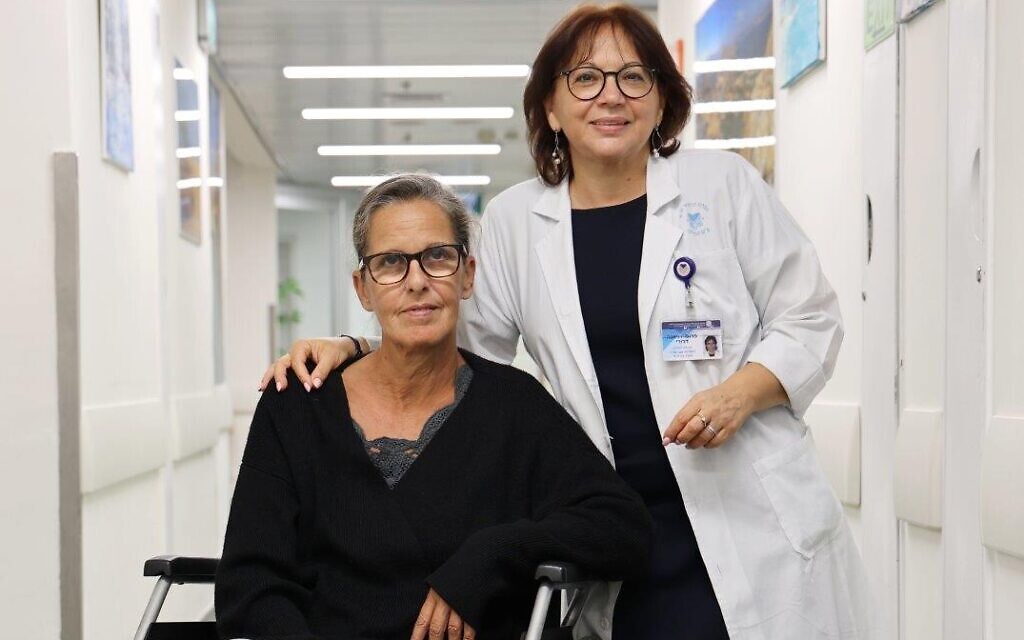
Tofersen, which is injected into the backbone like an epidural, is providing new hope to two sufferers at Tel Aviv Sourasky Professional medical Middle. A single of them, Narkis Moshe of Nahariya, dropped a brother to ALS, and was then diagnosed with the disease six months ago. She stated that she is less frightened about her destiny now that she has commenced with the drug.

“When I was identified with the ailment I was incredibly fearful simply because I did not want what happened to my brother to happen to me,” mentioned Moshe, 58. “But it looks that these days we’re getting into a new era of study and therapy.

“I am quite psyched about the new procedure and I am hopeful that it will give me a excellent high quality of life and many additional decades with my family members.”

Tofersen, developed by Massachusetts-dependent Biogen, isn’t ideal for all ALS clients, as the sickness has distinctive fundamental causes alternatively, it is designed to assistance clients whose ailment is cause by a defective SOD1 gene.

The drug has gained the eco-friendly mild for a “compassionate use” system from the Foods and Drug Administration, which permits it for certain sufferers in progress of whole regulatory approval. Israel tends to abide by the US in drug regulation, and is therefore allowing for the drug to be utilized at Sourasky.

Illustrative picture: neurones inside the human mind (onimate by means of iStock by Getty Photographs)

Prof. Vivian Dror, the Sourasky medical professional who is administering the cure, claimed that with only a several dozen patients globally receiving the drug so significantly, she is pleased that Israel is becoming an early adopter.

“It’s a possibly video game-changing cure,” she explained to The Situations of Israel. “The sufferers acquiring it are continue to communicative, capable to swallow and with some use of their limbs, and it is hoped that the drug will sluggish their deterioration and help them to keep these capabilities for for a longer period.

“What it does is sizeable compared to the restricted treatment options that exist nowadays for this ailment.”

There are diverse fundamental results in advertising the onset of ALS in unique sufferers. Tofersen is developed particularly for those people who put up with as a consequence of overproduction of hSOD1. It is a protein created by everybody but when produced in excess seems to have poisonous results on the motor neurons in the disease. A defect in the SOD1 gene, which provides hSOD1, is the lead to of the problem.

Tofersen works by inhibiting the creation of hSOD1, making an attempt to offset the influence of the SOD1 defect.

Dror said that while only a modest minority of ALS situations are caused by the SOD1 gene, she thinks that the fundamental engineering behind Tofersen will be tailored for clients who put up with as a result of other genes.

“It is essential to observe that this is a technological breakthrough not only for sufferers with this specific SOD1 defect, but also for other people, since with the similar technology it is doable to create and develop specific medication for defects in supplemental genes,” she claimed. “This gives us hope.”

&#13
Israeli politics advised straight

I joined The Occasions of Israel after numerous several years masking US and Israeli politics for Hebrew news stores.

I feel responsible coverage of Israeli politicians signifies presenting a 360 diploma view of their words and deeds – not only conveying what happens, but also what that implies in the broader context of Israeli modern society and the location.

That’s difficult to do simply because you can seldom acquire politicians at face worth – you will have to go the further mile to current entire context and test to get over your own biases.

I’m very pleased of our operate that tells the tale of Israeli politics straight and comprehensively. I imagine Israel is stronger and far more democratic when skilled journalists do that challenging task very well.

Your guidance for our perform by signing up for The Periods of Israel Neighborhood aids guarantee we can continue on to do so.

Thank you,
Tal Schneider, Political Correspondent

&#13
Be part of Our Neighborhood

&#13
Be a part of Our Neighborhood

Presently a member? Indicator in to end seeing this

&#13
You’re a dedicated reader

That is why we started out the Instances of Israel ten many years back – to present discerning audience like you with should-read protection of Israel and the Jewish world.

So now we have a request. Unlike other news stores, we haven’t set up a paywall. But as the journalism we do is highly-priced, we invite audience for whom The Instances of Israel has grow to be significant to support assist our work by signing up for The Occasions of Israel Local community.

For as minor as $6 a month you can assistance aid our high quality journalism while savoring The Periods of Israel Advertisement-Cost-free, as perfectly as accessing exclusive material obtainable only to Instances of Israel Community customers.

Thank you,
David Horovitz, Founding Editor of The Occasions of Israel

&#13
Be part of Our Local community

&#13
Be a part of Our Community

Currently a member? Sign in to cease observing this

A digital application and augmented physician rounds reduce postoperative pain and opioid consumption after primary total knee replacement (TKR): a randomized clinical trial | BMC Medicine

A digital application and augmented physician rounds reduce postoperative pain and opioid consumption after primary total knee replacement (TKR): a randomized clinical trial | BMC Medicine
  • Vowles KE, McEntee ML, Julnes PS, Frohe T, Ney JP, van der Goes DN. Rates of opioid misuse, abuse, and addiction in chronic pain: a systematic review and data synthesis. Pain. 2015;156(4):569–76.

    Article 
    PubMed 

    Google Scholar
     

  • Makary MA, Overton HN, Wang P. Overprescribing is major contributor to opioid crisis. BMJ. 2017;359:j4792.

    Article 
    PubMed 

    Google Scholar
     

  • Hirschfeld DJ. Trump Declares Opioid Crisis a ‘Health Emergency’ Requests no Funds The New York Times; 2017.


    Google Scholar
     

  • Hollmann MW, Rathmell JP, Lirk P. Optimal postoperative pain management: redefining the role for opioids. Lancet. 2019;393(10180):1483–5.

    Article 
    PubMed 

    Google Scholar
     

  • Silva BM, Rodrigues JJ, de la Torre DI, Lopez-Coronado M, Saleem K. Mobile-health: A review of current state in 2015. J Biomed Inform. 2015;56:265–72.

    Article 
    PubMed 

    Google Scholar
     

  • Bhavnani SP, Narula J, Sengupta PP. Mobile technology and the digitization of healthcare. Eur Heart J. 2016;37(18):1428–38.

    Article 
    PubMed 
    PubMed Central 

    Google Scholar
     

  • Brummett CM, Waljee JF, Goesling J, Moser S, Lin P, Englesbe MJ, et al. New Persistent Opioid Use After Minor and Major Surgical Procedures in US Adults. JAMA Surg. 2017;152(6):e170504.

    Article 
    PubMed 
    PubMed Central 

    Google Scholar
     

  • Hamnvik OR, Alford DP, Ryan CT, Hardesty IT, Drazen JM. NEJM Knowledge+ Pain Management and Opioids – A New Adaptive Learning Module. N Engl J Med. 2019;380(16):1576–7.

    Article 
    PubMed 

    Google Scholar
     

  • Babu KM, Brent J, Juurlink DN. Prevention of Opioid Overdose. N Engl J Med. 2019;380(23):2246–55.

    Article 
    PubMed 

    Google Scholar
     

  • Colloca L, Barsky AJ. Placebo and Nocebo Effects. N Engl J Med. 2020;382(6):554–61.

    Article 
    PubMed 
    CAS 

    Google Scholar
     

  • Benedetti F. Placebo analgesia. Neurol Sci. 2006;27(2):100–2.

    Article 

    Google Scholar
     

  • Colloca L, Lopiano L, Lanotte M, Benedetti F. Overt versus covert treatment for pain, anxiety, and Parkinson’s disease. Lancet Neurol. 2004;3(11):679–84.

    Article 
    PubMed 

    Google Scholar
     

  • Hack TF, Degner LF, Parker PA, Team SC. The communication goals and needs of cancer patients: a review. Psychooncology. 2005;14(10):831–47.

    Article 
    PubMed 

    Google Scholar
     

  • Del Re AC, Fluckiger C, Horvath AO, Symonds D, Wampold BE. Therapist effects in the therapeutic alliance-outcome relationship: a restricted-maximum likelihood meta-analysis. Clin Psychol Rev. 2012;32(7):642–9.

    Article 
    PubMed 

    Google Scholar
     

  • Epstein R, Street RL. Patient-centered communication in cancer care: promoting healing and reducing suffering: National Cancer Institute. Bethesda: US Department of Health and Human Services, National Institutes of Health; 2007.


    Google Scholar
     

  • Baker PN, van der Meulen JH, Lewsey J, Gregg PJ. The role of pain and function in determining patient satisfaction after total knee replacement. Data from the National Joint Registry for England and Wales. J Bone Joint Surg Br. 2007;89(7):893–900.

    Article 
    PubMed 
    CAS 

    Google Scholar
     

  • World Health O. ICD-10 : international statistical classification of diseases and related health problems : tenth revision. 2nd ed. Geneva: World Health Organization; 2004.


    Google Scholar
     

  • Breivik H, Borchgrevink PC, Allen SM, Rosseland LA, Romundstad L, Hals EK, et al. Assessment of pain. Br J Anaesth. 2008;101(1):17–24.

    Article 
    PubMed 
    CAS 

    Google Scholar
     

  • Younger J, Gandhi V, Hubbard E, Mackey S. Development of the Stanford Expectations of Treatment Scale (SETS): a tool for measuring patient outcome expectancy in clinical trials. Clin Trials. 2012;9(6):767–76.

    Article 
    PubMed 

    Google Scholar
     

  • Faul F, Erdfelder E, Buchner A, Lang AG. Statistical power analyses using G*Power 3.1: tests for correlation and regression analyses. Behav Res Methods. 2009;41(4):1149–60.

    Article 
    PubMed 

    Google Scholar
     

  • Booth RG, Strudwick G, McBride S, O’Connor S, Solano López AL. How the nursing profession should adapt for a digital future. BMJ. 2021;373:n1190.

    Article 
    PubMed Central 

    Google Scholar
     

  • Fairbrother P, Ure J, Hanley J, McCloughan L, Denvir M, Sheikh A, et al. Telemonitoring for chronic heart failure: the views of patients and healthcare professionals – a qualitative study. J Clin Nurs. 2014;23(1-2):132–44.

    Article 
    PubMed 

    Google Scholar
     

  • Barello S, Triberti S, Graffigna G, Libreri C, Serino S, Hibbard J, et al. eHealth for Patient Engagement: A Systematic Review. Front Psychol. 2015;6:2013.

    PubMed 

    Google Scholar
     

  • Eaton L, Walsh C, Magnuson T, Schweitzer M, Lidor A, Nguyen H, et al. On-line bariatric surgery information session as effective as in-person information session. Surg Obes Relat Dis. 2012;8(2):225–9.

    Article 
    PubMed 

    Google Scholar
     

  • Heikkinen K, Leino-Kilpi H, Vahlberg T, Salanterä S. Ambulatory orthopaedic surgery patients’ symptoms with two different patient education methods. Int J Orthop Trauma Nurs. 2012;16(1):13–20.

    Article 

    Google Scholar
     

  • Matthew DA. The use of a computer website prior to scheduled surgery (a pilot study): impact on patient information, acquisition, anxiety level, and overall satisfaction with anesthesia care. AANA J. 2005;73(1):29.


    Google Scholar
     

  • D’Haese PF, Pallavaram S, Li R, Remple MS, Kao C, Neimat JS, et al. CranialVault and its CRAVE tools: a clinical computer assistance system for deep brain stimulation (DBS) therapy. Med Image Anal. 2012;16(3):744–53.

    Article 
    PubMed 

    Google Scholar
     

  • de Visser H, Watson MO, Salvado O, Passenger JD. Progress in virtual reality simulators for surgical training and certification. Med J Aust. 2011;194(4):S38–40.

    PubMed 

    Google Scholar
     

  • Neuprez A, Neuprez AH, Kaux J-F, Kurth W, Daniel C, Thirion T, et al. Early Clinically Relevant Improvement in Quality of Life and Clinical Outcomes 1 Year Postsurgery in Patients with Knee and Hip Joint Arthroplasties. Cartilage. 2018;9(2):127–39.

    Article 
    PubMed 

    Google Scholar
     

  • Klimek M, Büchele G, Rehm M, Beyersmann J, Günther KP, Brenner H, et al. Long-term mortality of patients with osteoarthritis after joint replacement: Prognostic value of pre-and postoperative pain and function. Athritis Care Res. 2021;0(0):1–7. https://doi.org/10.1002/acr.24808.

    Article 
    CAS 

    Google Scholar
     

  • Kaptchuk TJ, Miller FG. Placebo Effects in Medicine. N Engl J Med. 2015;373(1):8–9.

    Article 
    PubMed 
    CAS 

    Google Scholar
     

  • Amanzio M, Pollo A, Maggi G, Benedetti F. Response variability to analgesics: a role for non-specific activation of endogenous opioids. Pain. 2001;90(3):205–15.

    Article 
    PubMed 
    CAS 

    Google Scholar
     

  • Bingel U, Wanigasekera V, Wiech K, Ni Mhuircheartaigh R, Lee MC, Ploner M, et al. The effect of treatment expectation on drug efficacy: imaging the analgesic benefit of the opioid remifentanil. Sci Transl Med. 2011;3(70):70ra14. https://doi.org/10.1126/scitranslmed.3001244.

    Article 
    PubMed 
    CAS 

    Google Scholar
     

  • Kam-Hansen S, Jakubowski M, Kelley JM, Kirsch I, Hoaglin DC, Kaptchuk TJ, et al. Altered placebo and drug labeling changes the outcome of episodic migraine attacks. Sci Transl Med. 2014;6(218ra5).

  • Levine JD, Gordon NC. Influence of the method of drug administration on analgesic response. Nature. 1984;312(5996):755–6.

    Article 
    PubMed 
    CAS 

    Google Scholar
     

  • Moore RA, Cai N, Skljarevski V, Tolle TR. Duloxetine use in chronic painful conditions–individual patient data responder analysis. Eur J Pain. 2014;18(1):67–75.

    Article 
    PubMed 
    CAS 

    Google Scholar
     

  • Rief W, Nestoriuc Y, Weiss S, Welzel E, Barsky AJ, Hofmann SG. Meta-analysis of the placebo response in antidepressant trials. J Affect Disord. 2009;118(1-3):1–8.

    Article 
    PubMed 
    CAS 

    Google Scholar
     

  • Colloca L. The Placebo Effect in Pain Therapies. Annu Rev Pharmacol Toxicol. 2019;59:191–211.

    Article 
    PubMed 
    CAS 

    Google Scholar
     

  • Elsenbruch S, Kotsis V, Benson S, Rosenberger C, Reidick D, Schedlowski M, et al. Neural mechanisms mediating the effects of expectation in visceral placebo analgesia: an fMRI study in healthy placebo responders and nonresponders. Pain. 2012;153(2):382–90.

    Article 
    PubMed 

    Google Scholar
     

  • Kaptchuk TJ, Friedlander E, Kelley JM, Sanchez MN, Kokkotou E, Singer JP, et al. Placebos without deception: a randomized controlled trial in irritable bowel syndrome. PLoS One. 2010;5(12):e15591.

    Article 
    PubMed 
    PubMed Central 
    CAS 

    Google Scholar
     

  • Timmers T, Janssen L, Kool RB, Kremer JA. Educating Patients by Providing Timely Information Using Smartphone and Tablet Apps: Systematic Review. J Med Internet Res. 2020;22(4):e17342.

    Article 
    PubMed 
    PubMed Central 

    Google Scholar
     

  • Klinger R, Colloca L, Bingel U, Flor H. Placebo analgesia: clinical applications. Pain. 2014;155(6):1055–8.

    Article 
    PubMed 

    Google Scholar
     

  • Colloca L, Jonas WB, Killen J, Miller FG, Shurtleff D. Reevaluating the placebo effect in medical practice. Z Psychol. 2014;222(3):124–7.

    PubMed 
    PubMed Central 

    Google Scholar
     

  • Benedetti F. Placebo Effects. Understanding the mechanisms in health and disease. Oxford: Oxford University Press; 2014.

    Book 

    Google Scholar
     

  • Colloca L, Miller FG. Harnessing the placebo effect: the need for translational research. Philos Trans R Soc Lond B Biol Sci. 2011;366(1572):1922–30.

    Article 
    PubMed 
    PubMed Central 

    Google Scholar
     

  • Enck P, Bingel U, Schedlowski M, Rief W. The placebo response in medicine: minimize, maximize or personalize? Nat Rev Drug Discov. 2013;12(3):191–204.

    Article 
    PubMed 
    CAS 

    Google Scholar
     

  • Miller FG, Colloca L. The legitimacy of placebo treatments in clinical practice: evidence and ethics. Am J Bioeth. 2009;9(12):39–47.

    Article 
    PubMed 

    Google Scholar
     

  • Schedlowski M, Enck P, Rief W, Bingel U. Neuro-Bio-Behavioral Mechanisms of Placebo and Nocebo Responses: Implications for Clinical Trials and Clinical Practice. Pharmacol Rev. 2015;67(3):697–730.

    Article 
    PubMed 

    Google Scholar
     

  • Crum A, Zuckerman B. Changing Mindsets to Enhance Treatment Effectiveness. JAMA. 2017;317(20):2063–4.

    Article 
    PubMed 
    PubMed Central 

    Google Scholar
     

  • Price DD, Finniss DG, Benedetti F. A comprehensive review of the placebo effect: recent advances and current thought. Annu Rev Psychol. 2008;59:565–90.

    Article 
    PubMed 

    Google Scholar
     

  • Finniss DG, Benedetti F. Mechanisms of the placebo response and their impact on clinical trials and clinical practice. Pain. 2005;114(1-2):3–6.

    Article 
    PubMed 

    Google Scholar
     

  • Colloca L, Finniss D. Nocebo effects, patient-clinician communication, and therapeutic outcomes. JAMA. 2012;307(6):567–8.

    Article 
    PubMed 
    PubMed Central 

    Google Scholar
     

  • Colloca L. How do placebo effects and patient-clinician relationships influence behaviors and clinical outcomes? Pain Rep. 2019;4(3):e758.

    Article 
    PubMed 
    PubMed Central 

    Google Scholar
     

  • Ashton-James CE, Forouzanfar T, Costa D. The contribution of patients’ presurgery perceptions of surgeon attributes to the experience of trust and pain during third molar surgery. Pain Rep. 2019;4(3):e754.

    Article 
    PubMed 
    PubMed Central 

    Google Scholar
     

  • Henry SG, Matthias MS. Patient-Clinician Communication About Pain: A Conceptual Model and Narrative Review. Pain Med. 2018;19(11):2154–65.

    Article 
    PubMed 
    PubMed Central 

    Google Scholar
     

  • Volkow ND, Collins FS. The Role of Science in Addressing the Opioid Crisis. N Engl J Med. 2017;377(4):391–4.

    Article 
    PubMed 

    Google Scholar
     

  • White AG, Birnbaum HG, Mareva MN, Daher M, Vallow S, Schein J, et al. Direct costs of opioid abuse in an insured population in the United States. J Manag Care Pharm. 2005;11(6):469–79.

    Article 
    PubMed 

    Google Scholar
     

  • Wolford ML, Palso K, Bercovitz A. Hospitalization for total hip replacement among inpatients aged 45 and over: United States, 2000-1010: US Department of Health and Human Services, Centers for Disease Control and …; 2015.

  • Arthrose K-IR. Gesundheitsberichterstattung des Bundes. Berlin: RKI; 2013.


    Google Scholar
     

  • Darley JM, Fazio RH. Expectancy confirmation processes arising in the social interaction sequence. Am Psychol. 1980;35(10):867–81.

    Article 

    Google Scholar
     

  • Von Korff M, Ormel J, Keefe FJ, Dworkin SF. Grading the severity of chronic pain. Pain. 1992;50(2):133–49.

    Article 

    Google Scholar
     

  • Klinger R, Krug F, Goßmann M, Damzog U, Dahme B, Bruch H-P. Das perioperative Schmerz- und Befindlichkeitsinventar: Ein Fragebogen zur Erfassung der perioperativen Lebensqualität. Der Schmerz. 1999;13:86.


    Google Scholar
     

  • Flor H, Rudy TE, Birbaumer N, Streit B, Schugens MM. The applicability of the West Haven-Yale multidimensional pain inventory in German-speaking countries. Data on the reliability and validity of the MPI-D. Schmerz. 1990;4(2):82–7.

    Article 
    PubMed 
    CAS 

    Google Scholar
     

  • Lowe B, Wahl I, Rose M, Spitzer C, Glaesmer H, Wingenfeld K, et al. A 4-item measure of depression and anxiety: validation and standardization of the Patient Health Questionnaire-4 (PHQ-4) in the general population. J Affect Disord. 2010;122(1-2):86–95.

    Article 
    PubMed 

    Google Scholar
     

  • Lequesne MG. The algofunctional indices for hip and knee osteoarthritis. J Rheumatol. 1997;24(4):779–81.

    PubMed 
    CAS 

    Google Scholar
     

  • Faul F, Erdfelder E, Lang AG, Buchner A. G*Power 3: a flexible statistical power analysis program for the social, behavioral, and biomedical sciences. Behav Res Methods. 2007;39(2):175–91.

    Article 
    PubMed 

    Google Scholar
     

  • Beswick AD, Wylde V, Gooberman-Hill R, Blom A, Dieppe P. What proportion of patients report long-term pain after total hip or knee replacement for osteoarthritis? A systematic review of prospective studies in unselected patients. BMJ Open. 2012;2(1):e000435.

    Article 
    PubMed 
    PubMed Central 

    Google Scholar
     

  • Kim SS, Kaplowitz S, Johnston MV. The effects of physician empathy on patient satisfaction and compliance. Eval Health Prof. 2004;27(3):237–51.

    Article 
    PubMed 
    CAS 

    Google Scholar
     

  • Sim I. Mobile Devices and Health. N Engl J Med. 2019;381(10):956–68.

    Article 
    PubMed 

    Google Scholar
     

  • Bortz J, Schuster C. Statistik für Human-und Sozialwissenschaftler: Limitierte Sonderausgabe. Berlin: Springer-Verlag; 2011.


    Google Scholar
     

  • Dr. Jedd Wolchok Appointed Meyer Director of the Sandra and Edward Meyer Cancer Center at Weill Cornell Medicine | Newsroom

    Dr. Jedd Wolchok Appointed Meyer Director of the Sandra and Edward Meyer Cancer Center at Weill Cornell Medicine | Newsroom

    NEW YORK (July 28, 2022)—Dr. Jedd Wolchok, an internationally acclaimed health-related oncologist whose improvements in immunotherapy have revolutionized melanoma treatment, has been recruited as the Meyer Director of the Sandra and Edward Meyer Cancer Middle at Weill Cornell Medication, powerful Sept. 12.

    In his new position, Dr. Wolchok will guide an expansive, multidisciplinary investigation and scientific company devoted to translating groundbreaking discoveries on the fundamental triggers of cancer into reducing-edge treatment approaches and personalized therapies to improve patient results. Dr. Wolchok will also expand the exemplary care sent at the institution’s flagship Higher East Facet Manhattan locale and even further boost treatment for patients in Brooklyn and Queens.

    Dr. Wolchok at the moment serves as chief of the Immuno-Oncology Services and the Lloyd J. Old /Virginia and Daniel K. Ludwig Chair in Scientific Investigation at Memorial Sloan Kettering Cancer Center (MSK), and he is a professor of medicine at Weill Cornell Medicine. He succeeds Dr. Massimo Loda, chair of the Department of Pathology and Laboratory Medication at Weill Cornell Medication, who has served as interim director considering the fact that past year’s departure of Dr. Lewis Cantley, the center’s founding Meyer Director.

    “Dr. Wolchok is a distinguished health practitioner-scientist and an esteemed chief in oncology, whose ground breaking exploration in immunotherapy has reworked the prognosis for countless melanoma people and will certainly have lasting implications for other varieties of cancer. We are thrilled he will be heading the Meyer Cancer Center,” said Dr. Augustine M.K. Choi, the Stephen and Suzanne Weiss Dean of Weill Cornell Medication. “His skills and vision will be crucial as the establishment improves most cancers research and procedure attempts through the town, supplying significant treatment and hope to most cancers clients, and setting up on the center’s outstanding standing as a chief in this field.

    “We would also like to thank Dr. Loda for his committed provider as interim director of the Meyer Cancer Middle more than the past yr,” Dr. Choi additional. “His robust management and broad practical experience in this area of medication have permitted the center to proceed its very important, groundbreaking operate in most cancers investigation and treatment.”

    Dr. Jedd Wolchok Appointed Meyer Director of the Sandra and Edward Meyer Cancer Center at Weill Cornell Medicine | Newsroom

    Dr. Taha Merghoub, deputy director of the Meyer Most cancers Centre

    Created in 2014 with a $75 million present from Sandra and Edward Meyer and the Sandra and Edward Meyer Foundation, the Weill Cornell Medication Meyer Cancer Centre, in partnership with NewYork-Presbyterian, unifies most cancers study all over Weill Cornell Medication and has much more than 140 core users, which includes essential researchers, surgeons, oncologists, radiologists, pathologists and other clinicians. The Meyer Cancer Center focuses on multidisciplinary, significant-influence science, harnessing reducing-edge technological know-how and new biomedical strategies to illuminate the organic problems that allow for cancer to build and proliferate. Collaborations concerning simple researchers and doctors are accelerating the application of these results into clinical care, though partnerships with group stakeholders enable to rapidly translate cancer prevention and detection discoveries into new outreach packages for the communities that need it most.

    “Dr. Wolchok is a renowned medical doctor-scientist and remarkable chief whose pioneering research in immunotherapy has essentially changed the way we solution cancer care and enhanced the life of numerous patients. We are delighted to welcome him as the new director of the Meyer Most cancers Middle,” stated Dr. Steven J. Corwin, president and CEO of NewYork-Presbyterian. “His leadership and practical experience will be instrumental in elevating the groundbreaking do the job of the Meyer Most cancers Centre and further enhancing the revolutionary, customized and compassionate most cancers care we present to sufferers in all the communities we provide. We would like to categorical our gratitude to Dr. Loda for his perseverance and leadership in helming the middle as interim director for the previous 12 months.”

    Dr. Wolchok is a pioneer in a cancer therapy strategy that harnesses immune cells to fight the condition, with a certain concentration on melanoma. A clinician-scientist, he investigates progressive immunotherapy tactics in laboratory designs of melanoma and has served as principal investigator of many scientific trials. Immunotherapy has now emerged as a fourth pillar of standard cancer remedy, along with surgical procedures, radiation treatment and chemotherapy. Dr. Wolchok performed a pivotal function in the medical improvement of the U.S. Food items and Drug Administration-permitted immunotherapy ipilimumab for superior melanoma and a lot more recently intended and led a world-wide period 3 trial of the first mixture of immunotherapies, recognised as immune checkpoint blocking antibodies, aimed at reactivating the immune reaction to melanoma. These ways have resulted in therapeutic achievements in various cancer forms right after original scientific tests in melanoma.

    The establishment has also appointed Dr. Taha Merghoub, a hugely completed and ground breaking analysis scientist who has been Dr. Wolchok’s scientific associate at Memorial Sloan Kettering for more than 15 yrs as perfectly as a professor of immunology research in drugs at Weill Cornell Medicine, as deputy director of the Meyer Most cancers Centre. Dr. Merghoub, who was also recruited as the Margaret and Herman Sokol Professor of Oncology Analysis as effectively as a professor of pharmacology, will lead a laboratory at Weill Cornell Drugs, which investigates the progress of immune-centered therapies to handle most cancers. Dr. Merghoub strives to recognize why immunotherapy is helpful in some patients but not many others and aims to create new mechanism-based mostly mix therapies that can triumph over cure resistance.

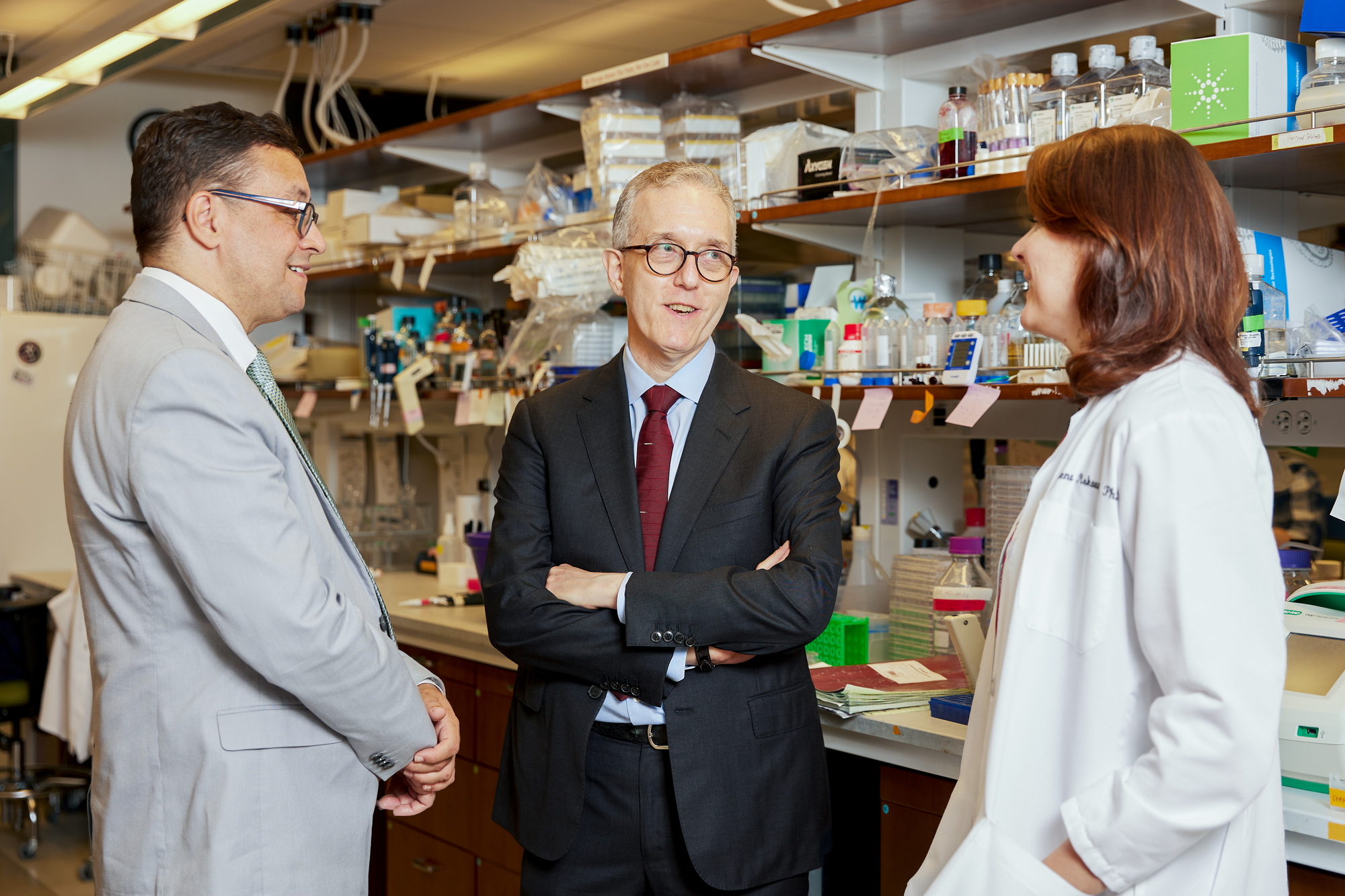
    Two men in suits and a woman in white coat talking in a labDr. Jedd Wolchok (centre) and Dr. Taha Merghoub (still left) speak with Dr. Elena Piskounova at Weill Cornell Medicine.

    “Through the generosity and eyesight of Sandra and Edward Meyer, the Meyer Most cancers Center serves as the backbone of Weill Cornell Medicine’s most cancers ecosystem, as we advance our mission to give the greatest treatment for our people and locate cures for these devastating diseases,” stated Jessica M. Bibliowicz, chairman of the Weill Cornell Medicine Board of Fellows. “Dr. Wolchok is a established chief and innovator in this field and the perfect option for this situation, harnessing the outstanding, collaborative achievements in cancer study and therapy and elevating it to the next amount of excellence.”

    “Bringing the typical of care and the analysis portfolio that exists at the Meyer Most cancers Heart to patients in Brooklyn and Queens is a critical priority for me to assure that all New Yorkers obtain ‘A-team’ cancer remedy that is based upon the most recent research,” Dr. Wolchok reported. “I’m honored to direct our doctors and scientists throughout all of oncology to carry on driving discoveries that alter drugs.”

    “This is an chance for me to boost the impact of my attempts so much in my profession,” he said. “I’ve been very pleased to be a Weill Cornell Medicine faculty member all over my time at Memorial Sloan Kettering, and this new part will allow me to discover more about the institution from the inside of, establish a even larger cancer team and share what I have uncovered.”

    “Jedd Wolchok’s contributions to Memorial Sloan Kettering Cancer Middle have  benefitted the MSK group, sufferers and trainees around the world,” mentioned Dr. Craig B. Thompson, president and chief government officer of MSK. “We are grateful to Dr. Wolchok for his commitment and compassionate care and know that he will keep on to speed up progress and make a difference in the lives of men and women with cancer in his new endeavor.”

    In his new part, Dr. Wolchok will elevate the Meyer Cancer Center’s actions, recruiting foremost cancer researchers and clinicians, with a focus on enhancing equally school variety and broadening the arrive at of health and fitness treatment to assorted affected person populations. He will try to bolster the center’s instructional applications to coach generations of medical professionals and researchers. He will also prioritize growing the center’s medical trial business, looking for to generate a balanced portfolio “that has substantial effects across the populations that we provide,” he said, including investigator-initiated trials, National Most cancers Institute cooperative team trials, as effectively as trials sponsored by industry. These trials will extend to NewYork-Presbyterian Brooklyn Methodist Hospital and NewYork-Presbyterian Queens, to far better attain patients who reside in typically underserved communities and enhance entry to the most highly developed treatments exactly where it’s effortless for them.

    “I am a very pleased medical doctor-scientist, and neither one particular of those people descriptors is a lot more important than the other,” claimed Dr. Wolchok, who mentioned that he will go on to see individuals. “At the Meyer Most cancers Center, I hope to achieve a genuine equilibrium, and with genuine-time interaction involving our clinicians and scientists, we will be ready to obtain the optimum diploma of success.”

    About Dr. Jedd Wolchok

    Dr. Wolchok is a board-licensed oncologist and investigator who specializes in discovering modern immunotherapeutic strategies, with a concentrate on melanoma investigate and medical experience in the care of men and women with state-of-the-art stages of the ailment. He has printed a lot more than 275 scholarly papers in primary peer-reviewed journals which include The New England Journal of Medicine, Mother nature, Cell, Journal of Medical Oncology, Most cancers Discovery and The Journal of Experimental Drugs, wherever he serves as an tutorial editor. His work has been consistently funded by the National Most cancers Institute, the Ludwig Institute for Most cancers Exploration, the Parker Institute for Cancer Immunotherapy, Swim Throughout The usa, Stand Up to Most cancers, the Mark Foundation, and the Melanoma Study Alliance, amongst other corporations.

    He is a member of American Modern society of Scientific Oncology (ASCO), the American Association for Most cancers Research (AACR), the American Affiliation of Doctors and the American Society for Scientific Investigation. Dr. Wolchok has acquired many awards and honors which includes the Damon Runyon-Lilly Clinical Investigator Award, the Melanoma Study Foundation Humanitarian Award, the AACR’s Richard and Hinda Rosenthal Memorial Award and Joseph H. Burchenal Award, and, most not long ago, ASCO’s David Karnofsky Award.

    Dr. Wolchok obtained his undergraduate degree from Princeton University, his doctorate in microbiology from NYU Graduate Faculty of Arts and Sciences and professional medical degree from NYU Grossman College of Drugs, in which he also done his residency method in interior medicine. Following completing a fellowship in clinical oncology-hematology at Memorial Sloan Kettering Cancer Centre, he joined its faculty—as very well as Weill Cornell Medicine’s—and has served there for more than 25 many years, in the end rising to the position of chief of the Immuno-Oncology Assistance.

    Weill Cornell Drugs

    Weill Cornell Drugs is fully commited to excellence in affected person treatment, scientific discovery and the training of upcoming medical professionals in New York Town and close to the environment. The doctors and researchers of Weill Cornell Medication — faculty from Weill Cornell Medical School, Weill Cornell Graduate University of Professional medical Sciences, and Weill Cornell Medical professional Group — are engaged in planet-class clinical care and chopping-edge analysis that hook up people to the latest cure improvements and avoidance methods. Situated in the coronary heart of the Upper East Side’s scientific corridor, Weill Cornell Medicine’s powerful community of collaborators extends to its mother or father college Cornell University to Qatar, wherever Weill Cornell Medication-Qatar features a Cornell College health care degree and to systems in Tanzania, Haiti, Brazil, Austria and Turkey. Weill Cornell Medicine college deliver exemplary affected person care at NewYork-Presbyterian/Weill Cornell Medical Centre, NewYork-Presbyterian Westchester Behavioral Wellness Heart, NewYork-Presbyterian Lower Manhattan Hospital, NewYork-Presbyterian Queens and NewYork-Presbyterian Brooklyn Methodist Hospital. Weill Cornell Medicine is also affiliated with Houston Methodist. For extra info, take a look at weill.cornell.edu.

    NewYork-Presbyterian

    NewYork-Presbyterian is one particular of the nation’s most comprehensive, integrated educational health care systems, encompassing 10 hospitals across the Higher New York place, nearly 200 principal and specialty treatment clinics and health-related teams, and an array of telemedicine companies. 

    A chief in clinical education, NewYork-Presbyterian Hospital is the only academic health care middle in the country affiliated with two world-course health-related schools, Weill Cornell Medication and Columbia College Vagelos University of Physicians and Surgeons. This collaboration suggests individuals have obtain to the country’s foremost physicians, the full vary of healthcare specialties, most current innovations in care, and research that is developing cures and preserving life.

    Started 250 years back, NewYork-Presbyterian Healthcare facility has a prolonged legacy of professional medical breakthroughs and innovation, from the creation of the Pap test to pioneering the groundbreaking heart valve alternative technique known as TAVR.

    NewYork-Presbyterian’s 48,000 employees and affiliated doctors are dedicated to delivering the highest top quality, most compassionate care to New Yorkers and clients from throughout the region and close to the earth.

    For additional information and facts, check out www.nyp.org and come across us on Facebook, Twitter, Instagram, and YouTube.