To stop fatal overdoses, hospitals turn to addiction treatment teams : Shots

To stop fatal overdoses, hospitals turn to addiction treatment teams : Shots

David Cave, a recovery coach who is part of an addiction specialty team at Salem Hospital, north of Boston, stands outside the emergency department.

Jesse Costa/WBUR


hide caption

toggle caption

Jesse Costa/WBUR
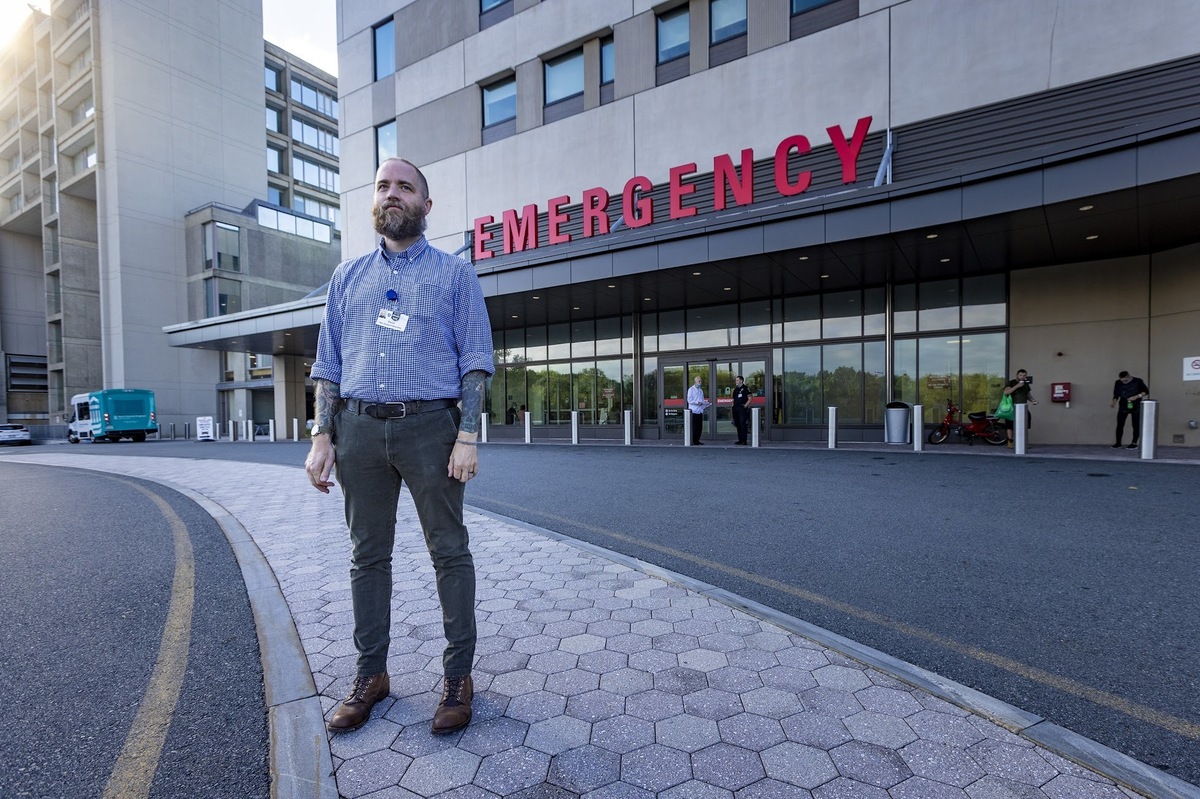

David Cave, a recovery coach who is part of an addiction specialty team at Salem Hospital, north of Boston, stands outside the emergency department.

Jesse Costa/WBUR

Marie lives in the coastal town of Swampscott, in Massachusetts. Last December, she began having more and more trouble breathing. One morning, three days after Christmas, she woke up gasping for air. A voice in her head said, “You’re going to die.” Marie dialed 911.

“I was so scared,” Marie said later. Describing that day, the 63-year-old’s voice filled with tension, and her hand clutched at her chest.

Marie was admitted to Salem Hospital, north of Boston. The staff treated her COPD, a chronic lung condition that includes emphysema and chronic bronchitis.

KHN logo

After her worst symptoms subsided, a doctor came the next day to check on her. He told Marie her oxygen levels looked good and that she was stable and ready to be discharged.

NPR is not using Marie’s last name because she, like 1 in 9 hospitalized patients, has a history of addiction to drugs or alcohol. Disclosing a diagnosis like that can make it hard to find housing, a job and even medical care in hospitals where patients with an addiction may be shunned.

But talking to the doctor that morning, Marie felt she didn’t have a choice. She had to tell him about her other medical problem.

“He said I could be released,” Marie recalled. “And I said, ‘I got to tell you something. I’m a heroin addict. And I’m, like, starting to be in heavy withdrawal. I can’t literally move, please don’t make me go.'”

Without care, discharged patients risk overdose

At many hospitals in Massachusetts and across the country, Marie would likely have been discharged anyway, while still in the pain of withdrawal. Perhaps she would leave with a list of local detox programs where she might — or might not — find help.

But a crucial opportunity to intervene and treat at the hospital would have been lost — partly because most hospitals don’t have specialists available who know how to treat addiction, and other clinicians don’t know what to do.

Hospitals typically employ all sorts of specialists who focus on critical organs like hearts, lungs and kidneys — or who treat systemic or chronic diseases of the immune system or the brain. There are specialists for children, for mental illness, for childbirth and hospice.

But if your illness is an addiction or a condition related to drug or alcohol use, there are few hospitals where patients can see a clinician — whether that be an M.D., nurse, therapist or social worker — who specializes in addiction medicine.

Their absence among hospital personnel is particularly striking at a time when overdose deaths in the U.S. have reached record highs, and research shows patients face an increased risk of fatal overdose in the days or weeks after they are discharged from a hospital.

“They’re left on their own to figure it out, which unfortunately usually means resuming [drug] use because that’s the only way to feel better,” says Liz Tadie, a nurse practitioner certified in addiction care.

In the fall of 2020, Tadie launched a new approach at Salem Hospital, using $320,000 from a federal grant that the hospital had worked for several years to secure. Tadie put together what’s known as an “addiction consult service.”

At Salem, that team included Tadie, a patient case manager, and three recovery coaches — who draw on their experience with addiction to advocate for patients and help them navigate their treatment options.

What an addiction consult service brings to the bedside

So on that day, when Marie said, “Please don’t make me go,” her doctor didn’t tell Marie she had to leave. He called Tadie for a bedside consult.

Tadie started out the treatment by first prescribing methadone, a medication to treat opioid addiction. Although many patients do well on that drug, it didn’t help Marie, so Tadie switched her to buprenorphine, with better results. After a few more days, Marie was eventually discharged and continued taking buprenorphine to manage her addiction to opioids.

But Marie continued seeing Tadie for treatment as an outpatient and was able to turn to her for support and reassurance:

“Like, that I wasn’t going to be left alone,” Marie said. “That I wasn’t going to have to call a dealer ever again, that I could delete the number. I want to get back to my life. I just feel grateful.”

Among Salem’s clinical staff, Tadie helped spread the word about the expertise she can offer and how it can help patients. Success stories like Marie’s helped her make the case for addiction medicine — which also meant unraveling decades of misinformation, discrimination and ignorance about patients with an addiction and their treatment options.

Part of the problem, according to Tadie, is that doctors, nurses and other clinicians get very little training in the physiology of addiction and withdrawal, the medications and treatment options, and the emerging science about what works for these patients. What little training that doctors and nurses do get is often unhelpful.

“A lot of the facts are outdated,” Tadie says. “And people are training to use stigmatizing language — words like ‘addict’ and substance ‘abuse.'”

Tadie gently corrected doctors at Salem Hospital, for example, who thought they weren’t ever allowed to start patients on methadone in the hospital.

“Sometimes I would recommend a dose and somebody would give pushback,” Tadie says. But “we got to know the hospital doctors and they, over time, were like, “OK, we can trust you. We’ll follow your recommendations.”

Over time, addiction specialists help change the culture

Other members of Tadie’s team have also wrestled with finding their place in the hospital hierarchy. David Cave, one of the recovery coaches at Salem Hospital, is often the first person to speak to a patient who comes to the emergency room in withdrawal. He tries to help doctors and nurses understand what the person is going through and help navigate their care.

“I’m probably punching above my weight every time I try to talk to a clinician or doctor,” says Cave. “They don’t see letters after my name. It can be kind of tough.”

But naming addiction as a specialty, and hiring people with training in this particular disease, is shifting the culture of Salem Hospital, according to Jean Monahan-Doherty, a social worker who has referred patients to Tadie.

“There was finally some recognition across the entire institution that this was a complex medical disease that needed the attention of a specialist,” Monahan-Doherty says. “People are dying. This is a terminal illness unless it’s treated.”

Former director of substance use disorder services at Salem Hospital Liz Tadie (left) and social worker Jean Monahan-Doherty. Tadie is moving to a new job at another hospital, but Salem Hospital leaders say they are committed to continuing the program.

Jesse Costa/WBUR


hide caption

toggle caption

Jesse Costa/WBUR
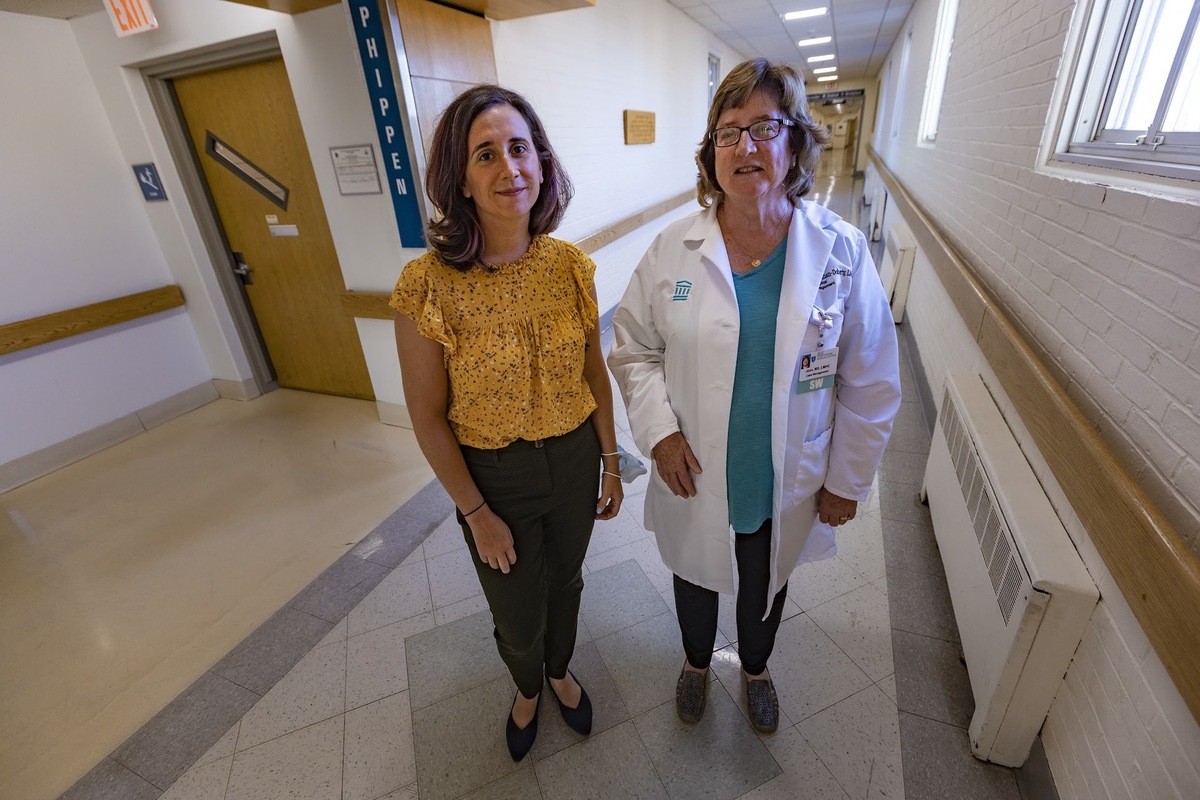

Former director of substance use disorder services at Salem Hospital Liz Tadie (left) and social worker Jean Monahan-Doherty. Tadie is moving to a new job at another hospital, but Salem Hospital leaders say they are committed to continuing the program.

Jesse Costa/WBUR

This approach to treating addiction is winning over some Salem Hospital employees — but not all.

“Some of the medical staff continue to see it as a moral issue,” Monahan-Doherty says. “Sometimes you hear an attitude of ‘Why are you putting all this effort into this patient? They’re not going to get better.’ Well, how do we know? If a patient comes in with diabetes, we don’t say, ‘OK, they’ve been taught once and it didn’t work. So we’re not going to offer them support again.'”

Despite lingering reservations among some colleagues, the demand for their services is quite high. Many days, Tadie and her team have been overwhelmed with referrals.

With federal support, states experiment to stop overdose deaths

Four other Massachusetts hospitals also added addiction specialists in the past three years and experienced similar challenges and success. The additional staff were paid for by federal funding from the HEALing Communities study. This project is paying for a wide range of strategies across several states, to determine the most effective ways to reduce drug overdose deaths. They include mobile treatment clinics, street outreach teams, naloxone trainings and distribution, rides to treatment sites, and multilingual public awareness campaigns.

“You really do provide better care for patients and you make the care environment one that people are more satisfied working in,” says Dr. Jeffrey Samet, who leads the Massachusetts portion of this research effort. Samet practices primary care at Boston Medical Center and says adding addiction specialists in hospitals is a key piece of the solution.

Dr. Todd Kerensky, president of the Massachusetts Society of Addiction Medicine, has seen patients cry when they learn he specializes in addiction and wants to treat their disease, not shame them.

“It’s gut-wrenching to know there are a lot of institutions that don’t have this service,” says Kerensky. It’s not clear how many hospitals in Massachusetts have addiction experts on staff, but Kerensky says it’s a “distinct minority.”

There are many possible reasons. It’s a new field, so finding qualified staff members with the right certifications may be a hurdle. Some hospital leaders say they’re worried about the costs of addiction treatment and fear they’ll lose money on the efforts. Some doctors report not wanting to initiate a treatment medication while the patient is still in the hospital, because they don’t know where to refer patients after they’ve been discharged, whether that be outpatient follow-up care or a residential program. To address follow-up care, Salem Hospital started what’s known as a “bridge clinic,” where patients get help transitioning to outpatient care.

Despite these worries and reservations, hospitals that don’t have an addiction specialty team need to start one, says Dr. Honora Englander, a national leader in addiction specialty programs.

“People with substance use disorder are coming to our hospitals now,” said Englander, who directs an addiction care team at Oregon Health and Science University. “We can’t wait. We have to do better, and this is the time.”

Englander says the federal government could support the creation of more addiction consult services by offering financial incentives — or penalties for hospitals that don’t embrace them. The Centers for Medicare & Medicaid Services, which has regulatory authority over most U.S. hospitals, could require that hospitals stock the medications used to treat an addiction and track outcomes for patients hospitalized with a substance use disorder, in the same way that CMS already does when it comes to readmissions for other health conditions.

At Salem Hospital, the program is still new, and some staff worry about its future. Liz Tadie is moving to a new job at another hospital, and the federal grant ended June 30. But Salem Hospital leaders say they are committed to continuing the program, and the service will continue.

Compared to the other four Massachusetts hospitals that launched addiction consult teams using the same federal grant, Salem Hospital has helped the most patients. Over a 15-month period, its team helped 448 patients begin medication to treat their opioid use disorder.

This story comes from NPR’s health reporting partnership with WBUR and KHN (Kaiser Health News).

More than 300 people walk through downtown Portland calling for an end to state’s addiction crisis

More than 300 people walk through downtown Portland calling for an end to state’s addiction crisis

An organizer for the fifth annual Portland Stroll for Recovery questioned the close to 350 men and women gathered in Pioneer Courthouse Square on Saturday morning: “By a display of fingers, how several of you have lost an individual to addiction?”

Far more than fifty percent of the crowd lifted their arms superior.

The rally and subsequent two-mile wander by downtown Portland, arranged by the statewide coalition Oregon Recovers, was punctuated by private tales of addiction and recovery as very well as a desire to stop the escalating dependancy crisis struggling with the point out.

Advocates have been particularly centered on the affect of alcoholism in Oregon: In 2021, 2,153 people died of brings about attributed to liquor, according to the Oregon Health Authority —more than twice the amount of individuals killed by methamphetamines, heroin and fentanyl put together.

“I walk for additional obtain to treatment method, I walk for far more detoxes, I walk for extra restoration organizations,” explained Jerrod Murray, executive director of Painted Horse Recovery Middle. At the rally, Murray claimed his brother died of a heroin overdose last year and he’d shed a different brother to an alcohol-similar incident.

The Portland walk was a person of many the coalition led statewide Saturday as it known as on the governor and Oregon Legislature to close the escalating habit disaster. The group has an crisis 12-action campaign that contains much better coordination amongst companies, enhanced funding, much more peer mentors and quick access to detox facilities.

Meandering via downtown, the group turned a sea of teal blue T-shirts donated by the event’s quite a few community sponsors. Several family members introduced young children in strollers and puppies on leashes. A number of held posters with obituaries for children, siblings and close friends they’d missing to dependancy. Among the pack, were being folks in energetic recovery – some for many years and some, like 38-year-aged Heather Kautenberg, have been sober for a week.

At first from Gladstone, the mother of three chanted loudly Saturday early morning, donning a poster she fashioned into a crown. Kautenberg was a short while ago divided from her youngsters after she “lost everything” and was residing on the streets. This thirty day period, she acquired help from Central Metropolis Concern, which positioned her in temporary housing and linked her with counseling as she detoxes from methamphetamines.

Kautenberg mentioned she feels like the stroll helps make a big difference. “Hopefully this motion can preserve obtaining more substantial,” she explained.

Two men stand on a temporary stage at Pioneer Square with a banner that says: "End Oregon's Addiction Crisis" and "Take Emergency Action Now!"

Tony Vezina, left, co-founder and government director of 4D Restoration Middle in Portland, stands with Mike Marshall, co-founder and government director of Oregon Recovers, at Pioneer Sq. all through a rally which kicked off a two mile stroll through downtown to convey attention to the state’s addiction disaster. Savannah Eadens, The Oregonian/OregonLive

Before in the week, a workforce of scientists at Oregon Wellbeing & Sciences University presented a devastating investigation of the state’s habit crisis and major gaps in the products and services desperately wanted to help Oregonians.

The study’s main takeaways display grim deficits in the state, which ranks 2nd in the country for drug dependancy prices, but 50th in obtain to cure.

In accordance to OHSU, Oregon should really have 968 dependancy avoidance specialists centered on the state’s populace and addiction level, but has only 62. The point out also has considerably less than fifty percent the household therapy services and recovery residences it demands. Oregon has about 75 detox services, but desires 103, researchers wrote.

Todd Gleason, a mentor at 4D Restoration, a group center that specializes in peer support for youthful grown ups, has observed the dearth firsthand. At present, 4D is a person of 18 restoration group centers throughout the point out. The OHSU analysis indicates a need for 127 far more like it.

Exacerbating the trouble, reported Gleason, who is 49 years old and 10 years into his possess restoration, is Portland’s homelessness disaster. Several folks who appear out of treatment method are place on extended wait around lists for housing or put in shelters where they are reexposed to medicine, Gleason claimed though walking Saturday morning.

The restoration neighborhood is continue to reeling from the decline of the protection and assist of Narcotics Nameless and Alcoholics Anonymous conferences for the duration of COVID. A large amount of people who were in recovery relapsed for the duration of that time, Gleason mentioned.

“But this movement is increasing,” Gleason explained, noting the walk’s group was substantially larger this yr than last. “It’s a way for all of us in the recovery group to all arrive together and demonstrate solidarity for each individual other.”

As the group handed the Very first Unitarian Church of Portland, a woman picked fresh new roses from the church yard and handed them to contributors with a smile. A gentleman stood on the sidewalk close to Portland Condition University, clapping as the crowd handed. He explained, “Thank you for what y’all are accomplishing. I’m an ex-convict, and it’s been 20 yrs considering the fact that I sold dope.” And some motorists honked their horns in support as the group crossed West Burnside Avenue.

As they passed persons utilizing medications or handed out on doorsteps in Aged City, Kelly Hernandez and Meggan McEvoy, founders of Oregon Moms for Habit Restoration, ended up thankful their eldest children are presently safe.

Herandez’ 27-yr-old son is incarcerated in Cowlitz County, and McEvoy’s 23-yr-previous daughter is in procedure for a fentanyl addiction. Their kids had been sick collectively on the streets of Portland.

“I see my son when I see someone on the sidewalk, I see my son when I see an individual using in a McDonald’s rest room,” Hernandez stated. “That’s the place my coronary heart goes. There’s just so a lot untreated habit all around us.”

The mothers’ friendship began as a need to have for assistance amid the isolating nature of habit stigma.

“Portland sucked my daughter in like a vortex. It got to a stage where by I felt like all the untreated habit in this town was swallowing her up,” said McEvoy, who is a scientific social worker for Multnomah County Behavioral Well being. “Our children wanted and necessary support, and we saw firsthand the boundaries they faced to procedure and sober dwelling.”

Their group held its 1st occasion on Mother’s Day, when they carried symptoms and marched to Gov. Kate Brown’s dwelling. They hope to retain the visibility and momentum of their advocacy going by talking to legislators and the gubernatorial candidates. With new funding coming from Measure 110, there’s a feeling of hope, McEvoy stated.

Though the electrical power at Saturday’s walk was loaded with excitement, healing and a refreshing perception of community, Oregon Recovers founder Mike Marshall is “guardedly optimistic” that condition and community governments will bring alternatives to the addiction crisis dealing with Oregonians.

Marshall was a lone voice in opposing Measure 110 in 2020, arguing publicly it was a misstep to decriminalize medicines just before putting companies in location. “The cart before the horse,” he’d claimed.

Marshall and other advocates are pushing for the future $10 million in condition funding and assets to go where by those people in restoration want it most.

“This is not about just working with compound use problem,” Marshall mentioned. “This is about using all of Oregon and lifting it up. We are on the precipice of a excellent option for modify.”

– Savannah Eadens seadens@oregonian.com 503-221-6651 @savannaheadens

Our journalism wants your assistance. Make sure you develop into a subscriber right now at OregonLive.com/subscribe

Candy, Cash, Gifts: How Rewards Help Addiction Recovery | News, Sports, Jobs

Candy, Cash, Gifts: How Rewards Help Addiction Recovery | News, Sports, Jobs

Harold Lewis, a recovering drug person, sits on the porch of his mother’s dwelling in Stratford, Conn. For Lewis, in recovery from opioids, a weekly prize drawing grew to become a way for him to deliver dwelling items for his mom. “The prizes make me truly feel very good,” he explained. “But the prizes make my mother really feel great. I’m chatting Tony the Tiger Fantastic!”
AP pictures

Harold Lewis has been fighting drug habit for many years, but only not long ago began thinking restoration could be pleasurable.

The 59-12 months-aged previous cook gained compact prizes — sweet, gum, reward cards, sunglasses and headphones — for attending meetings and keeping in remedy for opioid addiction all through a 12-week application in Bridgeport, Connecticut.

“Recovery really should be fun due to the fact you’re acquiring your life back,” Lewis said.

For an growing number of People in america, habit treatment method involves not only tricky function, but also earning rewards — occasionally totaling $500 — for destructive drug assessments or exhibiting up for counseling or team meetings.

There is brain science behind the system, which is identified as contingency management. And boundaries to wider adoption of reward systems, these kinds of as governing administration issues about fraud, are starting to crumble.

Scientific supervisor Bobby Boback scrolls through prizes though consumer Harold Lewis, a recovering drug person, picks paper slips out of a fishbowl.
AP photograph

“We’re in a condition of desperation exactly where we require to pull out all the stops and this is something that performs,” reported Dr. James Berry, who directs addiction medication at West Virginia College.

U.S. overdose fatalities climbed to a document large throughout the pandemic. Though opioids are typically to blame, deaths involving stimulants this sort of as methamphetamines also are climbing. Generally, men and women die with many medicine in their program.

Treatment can assistance people stop abusing opioids, but stimulant addiction has no efficient medication. Rewards packages — especially when the greenback value will increase with steady overall performance — are extensively regarded as the most productive cure for individuals addicted to stimulants.

Given that 2011, the U.S. Section of Veterans Affairs has made use of the strategy with 5,700 veterans. Rewards are vouchers the vets redeem at their neighborhood canteen. Over the several years, 92{35112b74ca1a6bc4decb6697edde3f9edcc1b44915f2ccb9995df8df6b4364bc} of the urine checks completed on these veterans have been damaging for medicine, mentioned Dominick DePhilippis of the VA’s material use disorders software.

When completed suitable, reward programs can be a bridge from the tough days of early recovery to a improved existence, stated Carla Rash, affiliate professor of drugs at UConn Wellness, who studies the strategy. It aids people today make far better choices in the instant, tipping the scale when the speedy benefits of using prescription drugs are hard to resist.

Clinical supervisor Bobby Boback talks to client Harold Lewis at Liberation Programs in Bridgeport, Conn. The behavioral wellbeing corporation specializes in treatment for compound use problems.

The rewards can “provide a tiny bit of recognition for people’s efforts,” Rash explained.

For Casey Thompson, 41, of Colville, Washington, the first thirty day period soon after quitting meth was the worst. Devoid of stimulants, he felt burned out and exhausted.

“Even standing up, you could fall asleep,” Thompson reported.

Earning reward playing cards for passing drug exams aided, he reported. For the duration of his 12-week software, he gained about $500 in Walmart gift playing cards he spent on food items, shirts, socks and shampoo. He’s a trained welder and is on the lookout for perform immediately after a new layoff.

“I’m a fully distinctive human being than I was,” claimed Thompson. “I was already scheduling on being clean up, so it was just extra.”

Far more than 150 experiments in excess of 30 several years have shown benefits work greater than counseling by itself for addictions which includes cocaine, liquor, tobacco and, when utilised along with medications, opioids.

The technique is grounded in brain science. Psychologists have recognised for decades that people who favor smaller, immediate rewards around larger sized, delayed types are susceptible to habit. They may possibly vow to quit each and every morning and commence using once again by afternoon.

And neuroscientists have uncovered from imaging research how dependancy normally takes over the brain’s reward heart, hijacking dopamine pathways and robbing people today of the means to delight in basic pleasures.

“It’s pretty much applying that similar dopamine reward system that’s the basis for addictions to promote balanced behavior modify,” stated psychologist Stephen Higgins of the College of Vermont, who pioneered the technique in 1991. His recent research shows it aids pregnant women of all ages give up smoking and improves the health of their newborns.

“Biologically, the use of substances lights up the similar part of the mind that is lit up when a person wins the lottery, falls in enjoy or activities something genuinely favourable and exciting,” claimed psychologist Sara Becker of Northwestern College.

The very same pathway is lit up if someone wins a reward.

“That’s aspect of what’s powerful about these plans,” Becker claimed.

Help has never been more powerful. The Biden administration backs the strategy in its Nationwide Drug Control Tactic. This fall, California will launch a pilot system designed to reward $10 reward playing cards passing drug tests for stimulants. Oregon will use tax earnings from the state’s authorized marijuana business to fork out for similar incentives. Montana introduced a program in March applying a federal grant.

The U.S. Office of Wellbeing and Human Expert services is doing the job to revise its steering on how significantly govt grant dollars can be invested on prizes, rewards and dollars playing cards. Researchers say the latest $75 restrict for every patient is arbitrary and ineffective and must be lifted to $599.

The approach “is a extensively researched and proven intervention that has been thriving in treating folks with a range of substance use disorders,” explained Dr. Yngvild K. Olsen, who directs the U.S. government’s Centre for Substance Abuse Cure.

Reward plans can be minimal tech — slips of paper drawn from a fish bowl — or higher tech — working with “smart” debit playing cards programmed so they can not be expended at liquor shops or transformed to money at an ATM.

Maureen Walsh is a 54-12 months-outdated Philadelphia flower store proprietor who stays off opioids with aid from a smartphone application referred to as DynamiCare. When she passes a saliva check, she earns dollars on a sensible card. She works by using the revenue to treat herself to a new pair of shoes or make a donation to a favorite cause.

“The reward to me was recognizing that I was clear and the exam confirmed it,” Walsh mentioned.

For Lewis, the Connecticut guy in restoration from opioids, a weekly prize drawing turned a way for him to deliver residence items for his mom.

“The prizes make me feel fantastic,” he explained. “But the prizes make my mother truly feel terrific. I’m conversing Tony the Tiger Terrific!”

On a recent summer time working day, Lewis experienced attained the prospect to pull 10 slips — 10 chances to earn prizes, such as a pill personal computer. The large prize eluded him, but he gained six modest prizes and $20 in grocery reward cards.

“Recovery is just not all balled-up fists and clutched tooth, you know what I imply?” Lewis mentioned later on. “It can be entertaining, exactly where you can exhale and you can breathe and get fired up — because you don’t know what you’re heading to win today.”

——

AP videojournalist Emma H. Tobin contributed to this report.

——

The Associated Press Wellness and Science Office gets guidance from the Howard Hughes Professional medical Institute’s Division of Science Education. The AP is solely responsible for all written content.

Copyright 2022 The Associated Press.

&#13
&#13

Present-day breaking news and much more in your inbox

&#13
&#13

MGH recruiting for trial of new treatment for vaping addiction

MGH recruiting for trial of new treatment for vaping addiction

Michael Werner was a university university student in Vermont when he to start with made use of an digital cigarette.”I anticipated it to be hard to quit working with,” he explained. “I will not assume I envisioned it to be pretty as tough as it in the end was.”Slender and discreet, the vaping system from Juul reworked the tobacco market when it was initially introduced in 2015.”You can use them in bogs,” Werner explained. “You can use them in the back of the classroom. You can use them really much wherever.”Users loved the way it mimicked a cigarette, but with out the toxic smoke.Instead, the product heats a pod made up of solvent, taste, and nicotine into a vapor that’s inhaled.”It variety of appeared to be nicotine with out the implications,” Werner said.Scientists now know that is not true.After a long time of declining tobacco use, the selection of teenagers working with e-cigarettes has surged.”It experienced a larger concentration of nicotine in it, and it had a unique formulation that made it easier to inhale,” stated Dr. Nancy Rigotti, director of the Tobacco Study and Treatment Device at Mass General Hospital. “It just took off.”She explained a lot of of those teenage vapers are now younger grown ups who are wanting to stop.”Some of them are in a position to, but some of them usually are not,” Rigotti mentioned. “They will need help, and we you should not actually know how to support them because this is a new trouble.”Due to the fact men and women who vape may possibly demand different solutions than cigarette people who smoke, Rigotti is now recruiting individuals for a new medical trial at MGH testing the performance of a medicine called cytisinicline, which is developed from a plant by the similar title. “It is really a pure solution that has been utilised in Eastern Europe for decades as a smoking cessation drugs,” she claimed.Early investigation indicates that cytisinicline may perhaps block the hurry from a nicotine strike and decrease the symptoms of withdrawal.It really is a problem that Werner understands to start with-hand.”I sustained a nicotine habit for an additional yr soon after I truly desired to give up,” he claimed. “That whole 12 months telling myself, telling my buddies, I’m seeking to stop, I want to stop.”Following 25 to 30 makes an attempt, Werner claimed quitting “cold turkey” eventually labored for him.He is now the study coordinator for this trial, hoping to make restoration more quickly and simpler for the following era.”To have that liberty from dependancy — mixed with my lungs sensation so substantially superior, my throat not experience scratchy, paying a lot of money on it — it really is truly a fantastic sensation,” Werner said.Those people who are fascinated can enroll in the trial In this article.

Michael Werner was a university student in Vermont when he 1st utilized an electronic cigarette.

“I anticipated it to be tricky to stop making use of,” he explained. “I really don’t imagine I envisioned it to be quite as hard as it in the end was.”

Slender and discreet, the vaping machine from Juul transformed the tobacco market when it was to start with released in 2015.

“You can use them in bathrooms,” Werner stated. “You can use them in the back of the classroom. You can use them pretty considerably wherever.”

People liked the way it mimicked a cigarette, but without having the toxic smoke.

Instead, the device heats a pod that contains solvent, flavor, and nicotine into a vapor which is inhaled.

“It sort of appeared to be nicotine devoid of the consequences,” Werner said.

Scientists now know that’s not true.

Right after many years of declining tobacco use, the selection of young adults employing e-cigarettes has surged.

“It had a increased focus of nicotine in it, and it experienced a distinct formulation that built it simpler to inhale,” reported Dr. Nancy Rigotti, director of the Tobacco Research and Procedure Device at Mass Typical Hospital. “It just took off.”

She stated quite a few of those teenage vapers are now youthful adults who are looking to quit.

“Some of them are equipped to, but some of them are not,” Rigotti reported. “They will need support, and we you should not genuinely know how to assistance them mainly because this is a new difficulty.”

Given that men and women who vape could have to have distinct therapies than cigarette smokers, Rigotti is now recruiting contributors for a new clinical trial at MGH tests the performance of a medicine called cytisinicline, which is manufactured from a plant by the exact same title.

“It is really a pure product or service that has been employed in Jap Europe for decades as a smoking cigarettes cessation drugs,” she said.

Early exploration indicates that cytisinicline might block the rush from a nicotine hit and minimize the indications of withdrawal.

It’s a challenge that Werner understands to start with-hand.

“I sustained a nicotine habit for an further year just after I actually needed to stop,” he claimed. “That full yr telling myself, telling my good friends, I’m seeking to give up, I want to stop.”

Following 25 to 30 makes an attempt, Werner said quitting “cold turkey” lastly labored for him.

He’s now the investigate coordinator for this trial, hoping to make restoration a lot quicker and less complicated for the future technology.

“To have that freedom from addiction — merged with my lungs emotion so a great deal much better, my throat not sensation scratchy, shelling out tons of revenue on it — it truly is seriously a wonderful feeling,” Werner stated.

These who are interested can enroll in the demo In this article.

Addiction experts tell Oregon lawmakers the state has been too lax on drug use

Addiction experts tell Oregon lawmakers the state has been too lax on drug use
A man, 23, sits on the sidewalk in downtown Portland, preparing what he says is heroin, June 25, 2021. Measure 110, a drug treatment and recovery act, aims to connect drug users to treatment and recovery services, including housing assistance instead of serving time in jail for possessing small amounts of drugs.

A person, 23, sits on the sidewalk in downtown Portland, making ready what he states is heroin, June 25, 2021. Evaluate 110, a drug cure and restoration act, aims to join drug consumers to cure and recovery providers, including housing assistance instead of serving time in jail for possessing compact amounts of medicine.

Kristyna Wentz-Graff / OPB

Oregon overall health officials declared a noteworthy milestone this 7 days, revealing they’d awarded much more than $300 million intended to expand providers for persons with drug dependancy.

But a pair of addiction professionals warned Wednesday that a lot more than just companies will be required in order to stem the state’s higher rate of drug use — and the expanding societal prices that arrive with it. They advised lawmakers the condition also has to modify its permissive technique.

“On the one hand we have very satisfying drugs which are widely available, and on the other very little or no pressure to cease employing them,” Keith Humphreys, a psychology professor at Stanford College, informed the state’s Senate Committee on the Judiciary and Ballot Measure 110 Implementation. “Under those people ailments we really should count on to see accurately what Oregon is suffering from: comprehensive drug use, substantial habit and not significantly remedy in search of.”

Neither Humphreys nor one more skilled showing prior to lawmakers — Oregon Health & Science College head of dependancy medication Dr. Todd Korthuis — advocated for undoing Oregon’s groundbreaking law decriminalizing minimal-degree drug possession, approved by voters in 2020 as Evaluate 110.

But equally reported state leaders could and should do more to press folks toward treatment and end the easy availability of medications on the street, like by way of stepped-up law enforcement enforcement.

Evaluate 110 removed felony consequences for possessing very low concentrations of illicit medications but licensed police to situation violations, akin to visitors tickets, for that possession. Those people tickets are punishable by up to a $100 fine but are dismissed if recipients connect with a hotline that presents screening for drug dependancy. The measure sought to minimize criminal penalties for drug use and dependancy, which advocates argued need to be taken care of as a community wellness difficulty.

New solutions that were intended to occur with the lawful improve have been hampered by very long delays. State health and fitness officers announced Tuesday that they’d only just finished allocating far more than $300 million to expert services like outreach, peer mentors, restoration housing and needle exchanges during Oregon.

Advocates for Evaluate 110 say that these solutions will essentially reshape the state’s meager remedy landscape, and guide to significantly increased successes than the country’s failed war on drugs. But they are inquiring Oregonians for patience until those people rewards are realized. The new providers, now funded, will get time to get likely.

At the very same time, the tickets for drug possession meant to steer persons to therapy have failed. Most of the more than 3,169 tickets issued as a result of August have been disregarded, according to point out courts officials, with recipients neither paying a high-quality nor displaying up in courtroom. Fewer than 200 people have called a hotline the state established up to assist men and women who get possession tickets get remedy.

Humphreys and Korthuis spoke to lawmakers as aspect of the Legislature’s quarterly “legislative times,” when committees satisfy in the interim period of time between legislative classes. Both of those gentlemen painted a rather dire photograph of the state Oregon finds by itself in.

Korthuis, of OHSU, noted the point out has the highest fees of drug use and the the very least obtain to treatment plans in the country — however he did not blame Measure 110 for either of those realities. The state saw a almost 20{35112b74ca1a6bc4decb6697edde3f9edcc1b44915f2ccb9995df8df6b4364bc} surge in overdose fatalities in the 12 months that finished in April 2022, he reported.

“Despite the greatest endeavours and extremely superior intentions of numerous people, our dependancy remedy system has just been outpaced by these tendencies,” he said.

Humphreys, who advised the Obama White Residence on drug policy, explained drug addiction as frequently the opposite of other health complications. People with most critical overall health maladies are quick to look for remedy for the reason that of their particular suffering, he observed. “In habit, the equilibrium of the prices is frequently reversed with, for case in point, families, buddies and the community struggling additional than is the man or woman who is addicted.”

The solution, he advised, was rising societal and authorized stress for people to stop problematic drug use. That’s a stance that Portugal made use of, Humphreys stated, in enacting a productive drug decriminalization legislation that is normally cited by Measure 110 advocates.

“The open up use and flagrant drug working that we see in West Coastline towns in this state are almost absent in Portugal, which shuts them down and employs courtroom stress to get people into remedy,” Humphreys said. “I’ve expended a large amount of time in Portugal, and I know the men and women who made their plan. So remember to acquire it from me, Oregon is not next Portugal’s example and will not get its effects.”

Humphreys’ central takeaway was that Oregon really should get the job done to protect against drug use in the to start with area, but also do extra to lessen its societal impacts. That features, he mentioned, encouraging police to shut down open up-air drug markets that make substances simple to entry and enacting “swift, particular and fair” policies for steering persons who commit crimes mainly because of their drug use into treatment.

“That leaves drug possession for own use alone decriminalized … but applies tension to cease drug use in these circumstances wherever a drug-utilizing person is committing crimes that threaten community basic safety,” Humphreys claimed.

The solution prompted problem from Sen. James Manning, D-Eugene, about no matter whether Humphreys was advocating a return to drug war procedures that negatively impacted communities of coloration.

Humphreys claimed he was not.

“If everyone thinks law enforcement can resolve this issue by themselves, they have not been paying out notice,” he stated. “Health men and women just can’t address it on their own both.”

Unclear on Wednesday was how the views could shape long term coverage, as point out lawmakers get ready to good-tune Measure 110 in future year’s legislative session.

“This is a model new application. It’s a system that has never ever been tried out or tested in the United States,” mentioned Sen. Floyd Prozanski, D-Eugene, as the hearing came to a close. “We will will need to continue on to spouse up with every single other and different disciplines to ensure that we are, in reality, continuing to just take a holistic strategy … a single that does hold men and women accountable.”

LGBTQ addiction recovery group in Sheboygan County now available

LGBTQ addiction recovery group in Sheboygan County now available

SHEBOYGAN – Dan L. began ingesting to numb himself though trying to conceal that he was gay, he stated. 

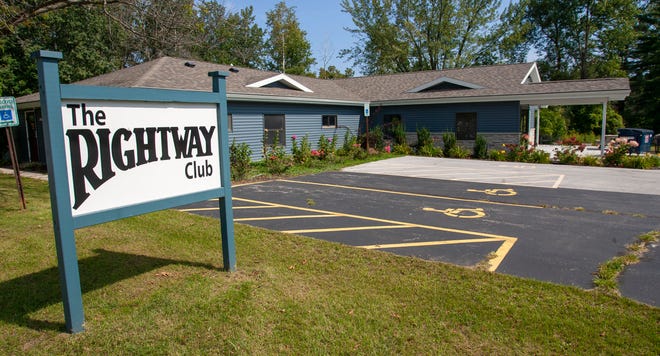
Now 32 a long time sober and seeking some others to have a risk-free spot to turn, Dan started an LGBTQ+ 12-Action Restoration Group at Sheboygan County’s Rightway Club. The team fulfills weekly on Tuesdays at 6 p.m. and is open to all individuals who want to battle drug, liquor or other addiction difficulties.

If the restoration team grows, it might take place a lot more than at the time a 7 days, claimed Dan, a board member of the club. There are no age or schooling demands to take part.

The Rightway Club is a nonprofit that delivers meeting rooms for several 12-phase recovery groups.

LGBTQ addiction recovery group in Sheboygan County now available

“The cause I commenced this team is, I never want just one particular person in this environment to truly feel that for the reason that they’re diverse from the quote ‘norm,’ they are not welcome,” Dan reported.

He explained the significance of having a LGBTQ-affirming restoration team has been apparent at the group’s initial two meetings.

“One (human being) set it this way: ‘I by no means could definitely be myself at a typical meeting. But at this assembly, I can be myself’ — so I was happy,” Dan said.