The crisis of student mental health is much vaster than we realize

The crisis of student mental health is much vaster than we realize
Lucy Wegener, then 13, center right, an organizer with Arizona Students for Mental Health, listens to attendees at a vigil on Sept. 10 in Chandler, Ariz.
Lucy Wegener, then 13, center right, an organizer with Arizona Students for Mental Health, listens to attendees at a vigil on Sept. 10 in Chandler, Ariz. (Caitlin O’Hara for The Washington Post)

Comment

The change was gradual. At first, Riana Alexander was always tired. Then she began missing classes. She had been an honors student at her Arizona high school, just outside Phoenix. But last winter, after the isolation of remote learning, then the overload of a full-on return to school, her grades were slipping. She wasn’t eating a lot. She avoided friends.

Her worried mother searched for mental health treatment. Finally, in the spring, a three-day-a-week intensive program for depression helped the teenager steady herself and “want to get better,” Alexander said. Then, as she was finding her way, a girl at her school took her own life. Then a teen elsewhere in the district did the same. Then another.

“It just broke my heart that there were three different people who were going through what I was, and they never got the chance to heal,” said Alexander, 17, now a high school senior.

After that devastating stretch in May, families and classmates in the Chandler Unified School District mourned the three 15-year-olds. They would enjoy no more summer vacations, no birthdays or graduations. The losses ignited a debate about what schools should be doing to support students in despair.

Nationally, adolescent depression and anxiety — already at crisis levels before the pandemic — have surged amid the isolation, disruption and hardship of covid-19. Even as federal coronavirus relief money has helped schools step up their efforts to aid students, they also have come up short. It’s unclear how much money is going to mental health, how long such efforts will last or if they truly reach those who struggle most.

“The need is real, the need is dire,” said Alberto Carvalho, superintendent of the Los Angeles Unified School District, who recalled hearing just that day from the district’s mental health partners that calls about suicidal thoughts had quadrupled. “We’re living through historically unprecedented times,” he said.

More than 75 percent of schools surveyed in spring said their teachers and staff have voiced concerns about student depression, anxiety and trauma, according to federal data. Nearly as many schools cited a jump in the number of students seeking mental health services.

But mental health is not the only pandemic priority. Schools are spending vast sums of their coronavirus relief money on ventilation upgrades, expanded summer learning, after-school programs, tutors and academic specialists.

The federal spending plans of 5,000 school districts nationally show that more than one-third intend to bring new mental health professionals into schools, and about 30 percent plan to fund social-emotional learning efforts, according to an analysis by FutureEd, a think tank at Georgetown University’s McCourt School of Public Policy.

“This is an incredible increase in the amount of money being spent and the number of districts pursuing it,” Phyllis Jordan, associate director of FutureEd said. But it is still, advocates say, not nearly enough.

“We simply don’t have enough people in our profession to meet the need.”

— Kelsey Theis, president of the Texas Association of School Psychologists

In many areas, even when money is in hand, hiring is not easy. As this school year opened, nearly 20 percent of schools reported vacancies in mental health positions, according to federal data. Schools often said they employed too few staff to manage the caseload but also complained about difficulties finding licensed providers, the data showed.

“We simply don’t have enough people in our profession to meet the need,” said Kelsey Theis, president of the Texas Association of School Psychologists. When families seek private therapists, “sometimes there’s a wait list of months and months before they get help,” she said.

In Maine, waiting lists grew so long last year that school counselor Tara Kierstead began looking out of state for therapists who had openings — a solution that was not practical for many families.

“It was the hardest I’ve ever had to work to get resources to people,” Kierstead said. “I know some kids who were never seen.”

Surgeon General Vivek H. Murthy called out the “devastating” effects of the pandemic on youth mental health in a public advisory last December. Earlier that year, the American Academy of Pediatrics, the American Academy of Child and Adolescent Psychiatry and the Children’s Hospital Association together declared “a national state of emergency” in children’s mental health. They pointed out that young people of color were especially affected and linked the struggle for racial justice to the worsening crisis.

A year later, this October, they sounded the alarm again. Things are not getting better.

Not long after the pandemic started, researchers began to document declines in child and adolescent mental health. The numbers are stark.

Hospital emergency room visits spiked for suspected suicide attempts among girls ages 12 to 17, according to the Centers for Disease Control and Prevention. From February to March 2021, the number jumped by 51 percent compared with the same period during 2019. For boys, the increase was 4 percent. Early research from MIT suggested the suicide rate for people aged 10 to 19 increased in 2020, compared with before the pandemic. More recently, CDC provisional data for 2021 showed an increase in the national rate from 2020 to 2021, especially for people ages 15 to 24.

In other research, the CDC found nearly 45 percent of high school students were so persistently sad or hopeless in 2021 they were unable to engage in regular activities. Almost 1 in 5 seriously considered suicide, and 9 percent of the teenagers surveyed by the CDC tried to take their lives during the previous 12 months. A substantially larger percentage of gay, lesbian, bisexual, other and questioning students reported a suicide attempt.

Family upheaval, meanwhile, was widespread, particularly in the early pandemic: Nearly 30 percent of students said an adult in their home had lost a job, and 24 percent said they went hungry for a lack of food.

There are no directly comparable pre-pandemic studies, but Kathleen Ethier, the CDC’s director of the division of adolescent and school health, said student well-being is significantly better for teens who report feeling connected to their schools — a problem for a population that, nationwide, was kept out of them for so long.

“There is 20 years of research showing that it not only has an impact on how young people do while they’re adolescents, but it has 20-year impacts on all kinds of measures of health,” including emotional well-being, suicidality and substance use, she said.

It also left many children grieving. More than 230,000 U.S. students under 18 are believed to be mourning the ultimate loss: the death of a parent or primary caregiver in a pandemic-related loss, according to research by the CDC, Imperial College London, Harvard University, Oxford University and the University of Cape Town. In the United States, children of color were hit the hardest, another study found. It estimated that the loss for Black and Hispanic children was nearly twice the rate for White children.

Too much need, too little help

In Maryland, Julia Horton, 16, recalls that, as her struggles worsened last year, she fell asleep in class a lot and did not turn in work; her grades dropped. Looking back, she said, “it is very obvious it was a cry for help.” Some teachers were compassionate, but others less so. “A lot of teachers talk about understanding mental illness, but they don’t act upon it,” she said.

Her school in suburban Montgomery County had two mental health professionals within its wellness center, county officials said, but Horton — like many students — had no idea. She talked to a counselor she liked about getting more time for assignments but it did not help. Her mother ultimately found her an excellent therapist to help Horton with her depression and anxiety, but she wonders about other teens who may not be as fortunate.

Montgomery County school officials said they inform students about mental health services through community messages, their website, student forums and advisory period lessons — though school board member Lynne Harris said messaging should be more robust and focused on platforms students use most.

In Philadelphia, Mikayla Jones, then 15, took care of her father in spring 2020 when he caught covid-19 and she had little contact with teachers and friends during remote learning. She wanted to talk to a therapist, but her mother couldn’t find one with an opening and she’d never heard of any mental health specialist at school. “I feel like this should not be something that’s possible,” she said. Now a 17-year-old senior, Jones is starting a club to advocate for mental health support across Philadelphia’s schools. “All youth deserve someone to be there for them.”

Philadelphia officials said counselors were meeting with students virtually or in person during the pandemic to assess their needs and help decide next steps. Still, the high school senior never found a therapist. The first meeting of her mental health support club will be later this month.

Told about the school system’s comment, the teenager said: “If the school does not communicate the availability of counselors, and their role as counselor has been repeatedly labeled as ‘college counselor,’ then how will we know that they are there as a mental health resource?”

Shortages of mental health professionals have been the norm in schools. Professional organizations recommend one school psychologist per 500 students, but the national average is one per 1,160 students, with some states approaching one per 5,000. Similarly, the recommended ratio of one school counselor per 250 students is not widespread. The national average: one per 415 students.

National research from 2019 showed that students of color have not received equal access to school counselors. At that time, 38 states were shortchanging students of color, students from low-income families or both, according to the study done by the Education Trust.

As the pandemic has persisted, students have spoken out — in Nebraska, Arizona, Connecticut and Washington.

In Seattle, students who formed the Seattle Student Union to promote racial justice decided this year to push for mental health support in schools. Chetan Soni, a 17-year-old who co-founded the union, said there are too few mental health professionals to meet rising student needs. The district told him it doesn’t have the money, he said.

Seattle teachers, who went on strike in September, included a call for more mental health support for students as one of their bargaining points. The strike settlement included part-time social workers at most schools — a sign of progress, Soni said, but not enough to help all. “Students are suffering from the pandemic and so many other things too,” he said.

His school, Lincoln High, is fortunate in having a school-based health clinic, run by Neighborcare Health. But just one therapist works there, said Rachel Gordon, the company’s school-based mental health clinical manager. Nearly all therapists based at Seattle’s schools have full caseloads and wait lists, Gordon said. Many run group therapy sessions as a way to serve more students. “We’ve seen increases in anxiety, disordered eating, suicidal ideation, OCD and many other mental health challenges,” she said.

In rural Montana, the squeeze was different: Altacare, a for-profit provider, decided to halt services in the state this year amid recruitment difficulties and funding issues. Districts scrambled to cover for the loss, but many could not, and state officials were limited in what they could do. “Unfortunately, they were serving a lot of the very small rural schools that were already struggling,” said Mary Windecker, executive director of the nonprofit Behavioral Health Alliance of Montana.

The shortages meant that Montana kids who needed residential care, for the most serious mental illnesses, were mostly being sent to other states, she said. “Not because we don’t have beds for those children but because we don’t have people to staff those kids,” she said. “Imagine a six-year-old with a serious emotional disturbance being sent as far away as Georgia. That’s happening.”

One result of all these deficiencies: More students are acting out. Last school year, nearly 40 percent of schools nationally reported increases in physical attacks or fights, and roughly 60 percent reported more disruptions in class because of student misconduct, according to federal data. Las Vegas officials reported several alarming attacks on teachers. In Louisiana, fathers at a Shreveport school showed up to help keep the peace after a particularly heated week of student fighting.

National test scores also plummeted to levels not seen since 1999, according to recent data — setting off a wave of alarm among educators, many of whom consider the mental health crisis a contributing factor.

Violence in schools is on the rise

School administrators across the country are clear-eyed about students’ worsening mental health, many of them strategizing about school initiatives that might help.

“We know that when kids are mentally well, they’re much more likely to attend school and do well in school,” said Sharon Hoover, co-director of the National Center for School Mental Health.

In Maryland’s Montgomery County, the state’s largest school system has expanded school-based wellness centers that provide mental health services: Five are open, a sixth will debut in January and 19 others are being phased in.

In Georgia, Hawaii and a host of other states, schools rely on telehealth services to help meet the gap. They often involve contractors — such as Hazel Health — that respond to referrals from teachers, school counselors or parents; services are often covered through government funding or payer reimbursements.

Some school systems have adopted student mental health “check-ins” to get a quick read on student well-being. Others created calming rooms for students or found ways to build mindfulness, yoga or meditation into student life.

“We know that when kids are mentally well, they’re much more likely to attend school and do well in school.”

— Sharon Hoover, co-director of the National Center for School Mental Health

A growing number of schools now offer therapy. Many have forged partnerships with community providers who treat students in person on campus. Health or wellness centers that are located inside of schools numbered roughly 3,000 before the pandemic.

“School-based health centers fill a void, particularly in low-income communities,” said Robert Boyd, chief executive at the nonprofit School-Based Health Alliance. “In rural communities, sometimes it’s the only provider around.”

How mindfulness practices are changing an inner-city school

More broadly, school systems are expanding social-emotional learning intended to help students understand and regulate their emotions, develop positive relationships and face challenges. These lessons may be embedded in classes (say, a discussion of empathy related to characters in a novel) or they may come directly through an activity about, for instance, decision-making. In some parts of the country, social-emotional teaching is tangled up in the culture wars, particularly when material deals with gender and racial equity.

In California’s Natomas School District, Superintendent Chris Evans brought in an administrator with mental health expertise seven years before the pandemic. Each school already had a psychologist. But as the pandemic began, social workers were hired for each school, too — a decision that no one regretted. “About one in every two of our students,” Evans said, “accessed some form of mental health resource.” Suicide assessments more than doubled last year, to 191, compared with 71 before the pandemic.

A big worry in many areas is what happens when federal aid runs out. The school board in Natomas voted this spring to retain the new hires even after the money is gone, Evans said.

Other efforts flowed from legislation. At least 12 states have adopted some form of “mental health days,” which excuse student absences for mental health purposes. In Illinois, students are now allowed five days per year under a new measure approved by the legislature.

Ten ways to get mental health help during a therapist shortage

Critics see the excused days off as counterproductive for students who have already missed too much school, but supporters say the laws recognize the stressful reality of many students’ lives and elevate the stature of mental health so that it is comparable to physical health.

Twenty states also require mental health education in schools — which Barb Solish, director of youth and young adult initiatives with the National Alliance on Mental Illness, said will reduce stigma and increase literacy so students recognize symptoms and learn how to get help for themselves or their friends.

Mental health in schools is expected to get a big boost, too, Solish said, from the passage of the Bipartisan Safer Communities Act, which allots more than $1 billion over five years to support school-based mental health services. More than $500 million is slated for a grant program to hire and retain providers in schools, and another $500 million is for building a pipeline of future professionals.

Riana Alexander and other students in Chandler, Ariz., showed up at school board meetings for several months, distressed about the string of suicides that left three 15-year-olds dead. At a meeting in June, many of them acknowledged their own mental health difficulties as they pressed the school district to do more.

The father of a teen who took his life joined them, his voice breaking in grief. “I don’t have the answers,” he said. He vowed to work with the students as they seek change and called them brave.

Then his voice stiffened.

“It’s a shame they have to come in here and ask for this,” he said.

Two months later, another teenager took her life. She was 16. School had been open less than three weeks.

“This is a crisis,” Sofia Borczon, a 10th-grader, told the board at another meeting. She’d had mental health struggles for four years, she said, and never felt there were necessary resources. “Kids are dying — and they have been for years.”

She and others — part of Arizona Students for Mental Health, which was founded by Alexander — asked for mental health “first-aid training,” so that everyone would know more about how to help kids in need, and for “student action boards” to elevate mental health concerns at schools. They wanted to lead a town hall meeting, so their peers could be heard too.

Chandler officials told The Washington Post the requests either take time to implement or might conflict with best practices. Eventually, Chandler’s prevention coordinator started to meet with the students, and the school system held a mental health event in October, with speakers and resource information.

Chandler schools spokeswoman Stephanie Ingersoll said the district has suicide prevention training for all teachers and staff, going beyond what is required by the state. At a meeting in August, the school system outlined a list of other initiatives. The district plans to begin teen mental health first aid training, but only for students 15 and older who have parental consent, Ingersoll said, and offers mental health first aid for staff within its training department. “We hope there is an understanding that implementing anything new takes time,” she said in an email.

Alexander said the school system’s recent efforts are a step forward, but lack urgency and are not enough. She and others testified before a state committee on teen mental health.

In September, the students gathered with classmates for a Saturday evening vigil to remember students who died recently by suicide and those who preceded them. It was World Suicide Prevention Day — a month after the most recent Chandler student took her life.

“Mental health is hard,” Alexander told those gathered. “It’s hard to talk about it, it’s hard to struggle with it, it’s hard to open up about it. But struggling in silence isn’t the way and it’s not the answer. There are people out there who have gone through or are currently going through exactly what you are. There are people out there who love you and there are people out there who care about you.”

If you or someone you know needs help, visit 988lifeline.org or call or text the Suicide & Crisis Lifeline at 988.
Hear SAFD firefighter’s powerful spoken poem about mental health challenges in fire service

Hear SAFD firefighter’s powerful spoken poem about mental health challenges in fire service

SAN ANTONIO – A firefighter’s job is grueling, but it is not just physically perilous. Observing so a lot dying and destruction is mentally and emotionally putting on.

Nevertheless, in a profession like firefighting, vulnerability can be difficult to appear by.

Which is why the San Antonio Fire Section just held a Mental Overall health Stand-Down 7 days, to place this hard topic front and middle.

They did that with the help of one of their possess.

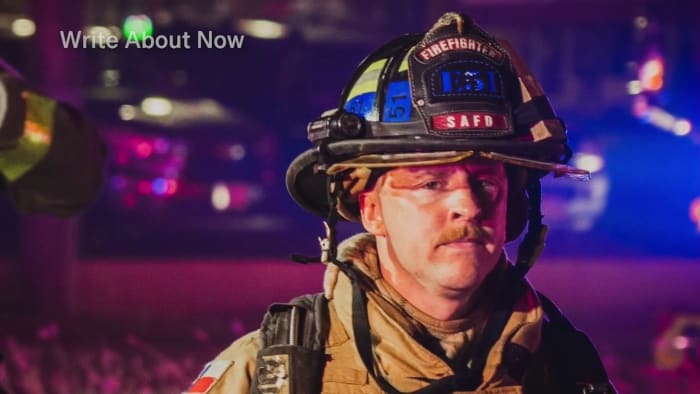
Firefighter Kevin Burke is also an worldwide spoken word performer, musician, and artist. He’s been with SAFD due to the fact 2016.

“Anything and almost everything that you could feel of. I signify, we’re there for healthcare operates. We’re there for psych runs, fires, auto or vehicle wrecks, all that type of things,” Burke claimed.

A handful of decades ago he was temporarily trapped in a hearth, and he described the terrifying working experience in a potent spoken phrase performance known as “Full Disclosure.”

“Full disclosure. I bought a minor blown up at work. I noticed a wall of black and orange, search up at my lieutenant and it shoved him into me, me out the doorway, the door slammed shut separating me from all of them,” his voice mentioned whilst the screen exhibits photos of the enormous hearth.

The video clip was designed by the group Publish About Now, a poetry group that includes poetry from across the planet. Their movie permitted Burke to hash out the psychological wellness obstructions that appear with being in the fireplace provider.

When Burke not too long ago figured out that far more firefighters die from suicide than fireplace, he realized he experienced to release it.

“Full disclosure,” the video continues. “My major fear is not acquiring harm or even dying, at times. It’s who I’ll be at the close of each individual shift. Will my coronary heart finally crack hard more than enough to ash?”

The release of the movie freed him to dig deep and inspire some others to chat about their most affordable instances.

“I went through a rough patch and kind of had a pretty low issue, we’ll just say, and thankfully experienced individuals close to me that stated they were concerned about me that I should really, you know, glance into acquiring assist,” Burke reported.

He’s been in remedy ever given that and is now focused to aiding his friends obtain aid also.

This thirty day period, SAFD held a Psychological Wellbeing Stand-Down 7 days.

A counselor visited every station in town, conversing about assets and techniques to assistance every other.

“We’re setting out messages each individual working day. We have set out a podcast, we have a video that’s operating. We’re in essence evaluating each individual single issue that this division does for our users and then to make absolutely sure that they are informed of all the assets for them and for their spouse and children,” said SAFD Main Charles Hood.

Chief Hood understands how deep psychological wellness problems operate in his sector.

“I get these calls that come throughout my cell phone. Boy or girl killed in a teach incident, a particular person sets himself on fire. We go on individuals runs, and then we have to go household to our people,” Hood reported.

He has observed devastating fallout from unhealed invisible wounds.

“There’s been considerably far too numerous incidents close to the state of initial responders harming by themselves, initially responders getting rid of their jobs when they shouldn’t, first responders acting out since of factors that they have seen,” Hood claimed.

Psychological overall health stigma runs deep in basic, but even deeper in the fireplace service.

“Hard to get guys to say when they have to have assistance and not see that as a indicator of weakness,” Burke explained.

“We’re in a macho business. We’re Type A people today, so we’re not generally going out seeking for help from men and women,” Hood admitted.

He’s altering the way they debrief after serious events and introducing trauma treatment pet dogs to the rosters.

“This would be a doing work canine that is skilled to deal with traumatic cases. We know medically, scientifically, animals give us hope. Animals reduce our blood strain, animals decrease our heart amount. Pets are comforting. So we’re going to start out a software listed here,” Hood said.

He acknowledges that the mental wellbeing struggle will only turn out to be extra fierce if it is not addressed out in the open.

“Our city’s obtaining even larger, connect with volumes heading up, modern society is far much more violent than it was when I commenced,” Hood mentioned.

So the energy to retain firefighters emotionally and mentally resilient must be prioritized.

It’s a aim Burke is happy to be a portion of.

“There’s been a good deal of things previously in area from our employees psychologist to peer guidance team to CIT schooling. Just make that more noticeable and then consider additional progressive matters this sort of as the, the pet dog plan and owning somewhere to go to on your cellular phone, no matter if it’s by that app or just one landing webpage,” Burke reported.

Burke’s poem ongoing: “Full disclosure. We are firefighters. We do like our position. We are trauma jugglers wading by way of a day by day flood of tragedy. We joke about each individual other’s shut calls, bloodied health care gloves, laughing invincible together. We snicker loud and hard and get real peaceful when no one’s all around.”

Burke’s online video was circulated during the psychological health and fitness 7 days.

It was a distinct exhibit of bravery, in the kind of vulnerability.

“My telephone was blowing up with men achieving out, thanking me and like I stated, telling me their tales and, you know, so it is been it’s been definitely cool,” he claimed.

“Full disclosure,” Burke mentioned towards the close of the video clip. “I am ok. Significantly, I am. I see a fantastic therapist, I inquire for aid when I want it. I just desire extra of us did.”

Proper now, Burke is acquiring his masters in medical mental health counseling. He needs to come to be a therapist, to be on the supporting finish for fellow firefighters.

Copyright 2022 by KSAT – All rights reserved.

Yale University: Students sue, alleging discrimination against students with mental health disabilities

Yale University: Students sue, alleging discrimination against students with mental health disabilities

Editor’s Observe: If you or an individual you know wants support, contact the Countrywide Suicide Avoidance Lifeline at 988. You can also reach a crisis counselor by messaging the Disaster Text Line at 741741.


CNN
 — 

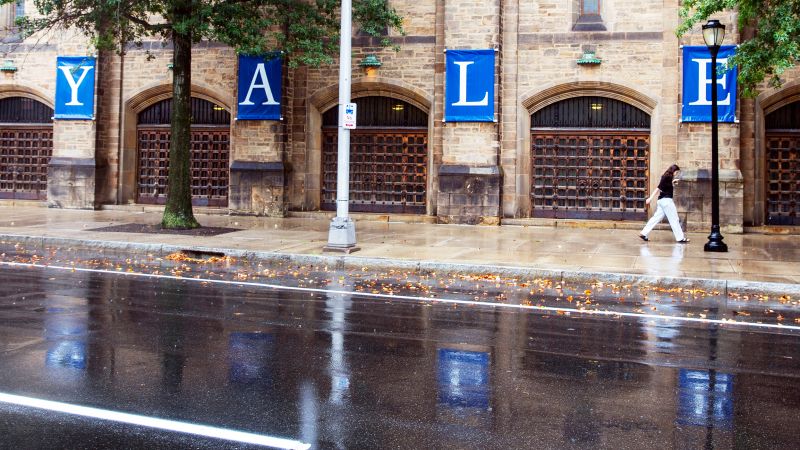
Recent learners and an advocacy group are suing Yale College and its governing system, alleging “systemic discrimination versus pupils with psychological health disabilities,” according to a lawsuit submitted Wednesday in Connecticut federal court docket.

The lawsuit alleges the college discriminated versus college students with mental health and fitness disabilities and pressured college students to withdraw from the faculty right after demonstrating intense mental health and fitness incapacity indications.

Yale officers pressure students to get “voluntary” leaves of absence for at the very least 1 or two phrases when they expertise major signs and symptoms from a mental overall health incapacity by suggesting they would otherwise facial area an ‘involuntary’ withdrawal,” the lawsuit alleges.

Learners who withdraw from the college are barred from checking out campus and all campus actions devoid of prior authorization from the university, including in-human being summertime classes that are open up to non-students, the lawsuit states.

The procedures demand learners on withdrawal to move out of their campus housing in 48 hrs.

Rishi Mirchandani, a Yale alumnus and plaintiff in the lawsuit, described his struggles with college when he was dealing with his possess mental wellness disaster as a school student there.

“I believe that Yale tends to clean its hands of scenarios of psychological health issues that are much too intense due to the fact they never want to be linked with that university student. They want the scholar to deal with their problems anyplace except Yale’s campus,” Mirchandani advised CNN. “And in some instances, having time off is a balanced selection. In other scenarios, it separates pupils from their most important assist group.”

An legal professional with Bazelon Heart for Mental Wellness Law representing the students and the advocacy group reported Yale’s procedures are difficult to navigate.

“We’ve been accomplishing analysis and gathering data on campus psychological overall health difficulties nationwide and applying that to tell the policy alter that we advocate for on a national amount. We have observed Yale to be a particularly egregious example,” Monica Porter informed CNN.

Yale has been examining its withdrawal polices given that September, Yale’s president reported in a November statement.

“A committee of Yale Faculty college student affairs experts and psychological health and fitness experts at Yale has been assembly considering that September 2022 to continue the assessment of our withdrawal and reinstatement policies,” the statement explained. “This team is poised to roll out plan variations in phases that will go on to assistance learners.”

And the college has been performing on plan changes that are responsive to students’ emotional and economical effectively-becoming, a Yale spokesperson advised CNN on Wednesday in a assertion.

“Yale’s faculty, employees, and leaders treatment deeply about our pupils. We figure out how distressing and complicated it is for the pupil and their enjoys types when a scholar is struggling with mental health and fitness challenges. When we make conclusions and established guidelines, our most important concentration is on students’ basic safety and health and fitness, in particular when they are most vulnerable. We consider in developing and sustaining sturdy and smart assist buildings for our college students, and in quite a few circumstances, the safest plan features the student’s mom and dad and household,” spokesperson Karen Peart reported.

“We have taken steps in latest years to simplify the return to Yale for pupils on health-related withdrawals and to present more help for college students. We are also working to enhance sources to assist college students. The college is confident that our policies comply with all applicable regulations and polices. However, we have been functioning on plan modifications that are responsive to students’ psychological and monetary wellbeing,” she said.

The lawsuit aspects instances in which learners were expected to be accompanied by a law enforcement escort to collect their belongings from campus housing right after becoming withdrawn from the university.

Pupils who leave for incapacity-connected causes on a voluntary or an involuntary foundation often end up forfeiting chunks of their tuition and area and board payments relying on when they withdraw, and also shed their pupil well being coverage, the lawsuit suggests.

The lawsuit cites a 2018 report from the Ruderman Relatives Basis that awarded Yale an “F” for its absences and withdrawal procedures, behind six other Ivy League educational facilities. A person college student named in the lawsuit explained staying referred to as a “liability” by college officers right after mental health episodes.

“If just about anything ended up to come about to (her), (she) would be a liability to the university,” an formal explained to the university student, who was admitted to a local clinic after she was reported for self-damage.

The college student eventually withdrew from Yale voluntarily and graduated from a different university mainly because she couldn’t afford the class specifications Yale mandated in get for her to return.

Named plaintiff Hannah Neves alleges in the match that Yale officers frequented her in the healthcare facility just after she took an overdose of aspirin in February of her junior 12 months, pressuring her to voluntarily withdraw or be withdrawn by the faculty versus her will.

Regardless of becoming hospitalized without having obtain to her mobile mobile phone, the college educated her by means of e mail that she experienced 72 several hours to leave campus, the lawsuit alleges. A native of Brazil on a college student visa, Neves was forced to return to her house state on brief discover. Neves was finally permitted to return to the college for the spring 2021 semester and is on monitor to contend her degree upcoming yr, the lawsuit suggests.

According to the university’s website, the college reserves the appropriate to withdraw college students for health-related causes when it determines that “because of a professional medical ailment, the pupil is a risk to self or many others, the university student has significantly disrupted some others in the student’s residential or educational communities, or the scholar has refused to cooperate with initiatives considered necessary by Yale Overall health and the dean of Yale University to make these kinds of determinations. Every circumstance is assessed separately based mostly on all appropriate components, like, but not minimal to, the degree of possibility introduced and the availability of acceptable modifications.”

Yale’s review of withdrawal polices in recent months, followed a Washington Submit post detailing very similar allegations from learners and alumni.

Two Yale officials were being “disappointed to read” the tale, they wrote in reaction to it in a Washington Submit op-ed, noting confidentiality prevents the school from commenting on certain scenarios. Ongoing enrollment is not often the ideal alternative for the mentally ill, and in modern a long time, in excess of 90{35112b74ca1a6bc4decb6697edde3f9edcc1b44915f2ccb9995df8df6b4364bc} of learners who utilized for reinstatement had been effective on their first endeavor, their op-ed claimed.

The lawsuit asks the courtroom to approve its course-motion standing, alleging there are probably hundreds of latest Yale learners who could qualify as plaintiffs with mental wellness disabilities. The plaintiffs have questioned the court docket to enjoin the university, barring the discriminatory guidelines it statements are illegal underneath federal legislation, and award attorneys’ fees and charges.

A non-income named as a plaintiff in the lawsuit, Elis for Rachael, contacted college officers in August in an endeavor to solve students’ promises with out litigation, according to the lawsuit, but the parties have not met or mentioned the issues raised in the criticism, it says.

“A committee of Yale University university student affairs gurus and mental wellness experts at Yale has been meeting because September 2022 to carry on the overview of our withdrawal and reinstatement guidelines,” the assertion from the university’s president reported. “This group is poised to roll out coverage variations in levels that will continue to aid learners.”

4 Navy sailors assigned to same facility die by apparent suicide within weeks, amid growing concerns of mental health crisis

4 Navy sailors assigned to same facility die by apparent suicide within weeks, amid growing concerns of mental health crisis

At minimum 4 U.S. Navy sailors assigned to the very same facility in Virginia died by suicide in the past couple months, which includes just one as not long ago as Saturday, armed service officials and relatives users stated.

It is the newest cluster of Navy suicides this calendar year to spark concerns of a fleetwide mental wellness crisis.

The 4 sailors labored for the Mid-Atlantic Regional Maintenance Heart (MARMC), which maintains army ships and is centered in Norfolk, Virginia.

“I was inundated with the amount of hopelessness at that command,” mentioned Kayla Arestivo, a licensed counselor who was brought in two months ago to support the sailors in the device.

Lots of MARMC sailors have been battling with personalized troubles that have been exacerbated by a absence of psychological wellness sources on the task and feeling overworked and undervalued by their leaders, according to a sailor who spoke with NBC News and Arestivo, who a short while ago led 4 suicide avoidance classes at the site.

“Part of it is toxic management. The sailors quickly pointed that out,” Arestivo mentioned.

Of the roughly 3,000 persons assigned to MARMC, quite a few are on constrained obligation due to the fact they possibly have mental or bodily disabilities or are working with individual circumstantial stressors that are preventing them from entire unrestricted responsibility, Arestivo explained.

Arestivo explained the Navy really should have regarded those worries for the complete device and delivered assistance before on.

“Right away, we must know these folks are in higher want, less than larger pressure,” mentioned Arestivo, who is also the co-founder and president of Trails of Intent, a nonprofit that presents cost-free mental well being care to assistance users.

‘It doesn’t want to be this way’

Kody Lee Decker, 22, of Virginia, was on restricted responsibility because of to psychological overall health challenges when he took his have daily life on Oct. 29, in accordance to a sailor shut to Decker, who questioned to continue to be anonymous out of fear of retaliation.

Kody Lee Decker, 22, pictured in New York City this June, died by suicide on Oct. 29.
Kody Lee Decker, 22, pictured in June, died by suicide on Oct. 29.Courtesy image

The electronics technician’s struggles started in early 2020 though he was serving the USS Bataan and working with “toxic leadership” on the amphibious assault ship, the sailor explained.

The sailor said Decker’s mental well being worsened once he was transferred in August to MARMC, wherever his get the job done conditions did not boost and he did not acquire psychological support.

“If he experienced appear to MARMC and they actually acted like they gave a s— and presented assets and followed up, I do not consider we would be sitting down in this article obtaining this discussion,” the sailor mentioned.

Decker, remembered for his outgoing individuality and his appreciate of higher-conclusion sneakers, had just turn out to be a father about 9 months prior to his death.

“Extra children are likely to reduce their mom and dad. More persons are likely to shed their spouses, unnecessarily,” the sailor explained. “It won’t need to be this way.”

Just just one week afterwards, on Nov. 5, Cameron Armstrong died by suicide, his mother, Sharon, said.

Armstrong, 22, was nearing the finish of his contract with the Navy immediately after 4 many years, his relatives and mates claimed.

He experienced informed his mom that he was experience frustrated, but she explained she did not know the extent of his suffering.

“I did not believe it was that bad. I do not know what he was going by way of to do that,” she mentioned.

Sharon mentioned her son, who she termed a “goodhearted soul,” leaves driving his spouse, who was his higher university sweetheart.

Cameron Armstrong, right, in an undated photo with his mother, Sharon. The 22-year-old U.S. Navy sailor died by suicide on Nov. 5.
Cameron Armstrong in an undated photo with his mom, Sharon. Armstrong, 22, died by suicide on Nov. 5.Courtesy Sharon Armstrong

‘We’re placing Band-Aids on bullet holes’

The Navy and community law enforcement departments are investigating the situations encompassing each demise, but navy officers explained the 4 deaths have been categorized as obvious suicides.

The suicide avoidance classes that Arestivo was introduced in for had been necessary to personnel and held twice a working day on Nov. 14 and Nov. 16, MARMC and Arestivo explained.

Much more than fifty percent of the division attended, Arestivo mentioned. But the endeavours, which arrived just after at the very least two other sailors had previously died by suicide, have been far too late, she said.

And with no systematic improvements, the counselor reported she understood a pair of seminars and other responses, these kinds of as suicide consciousness emails, would not be ample to stop extra deaths.

A 3rd sailor died by suicide on Nov. 14. He experienced not attended the suicide prevention session before that day but was slated to go to the 2nd a single, Arestivo mentioned.

“We’re putting Band-Aids on bullet holes,” she claimed.

On Nov. 16, she claimed she relayed that information to MARMC’s commanding officer.

“I stated to him, ‘You will have another a person.’ I shook his hand and appeared him suitable in the eye,” Arestivo reported. “And guaranteed as s—, in this article we are.”

A fourth sailor died by suicide on Nov. 26.

In a statement, MARMC spokesman Douglas Denzine explained chaplains, psychologists and counselors had been readily available, and that leaders ended up getting a “proactive approach” to assistance its customers, make improvements to psychological well being and control stress among the sailors. 

“One suicide is far too a lot of,” Denzine reported. “We keep on being totally engaged with our Sailors and their households to ensure their health and effectively-staying, and to assure a weather of believe in that encourages Sailors to ask for support.”

The most current rash of Navy suicides comes months right after 3 sailors assigned to the USS George Washington killed themselves in a 7 days in April.

Current and previous George Washington sailors instructed NBC News that their struggles were specifically relevant to a society where searching for assistance is not met with the necessary means, as very well as approximately uninhabitable residing situations aboard the ship, such as frequent design sound that designed sleeping difficult and a lack of hot drinking water and electrical energy. 

Considering the fact that then, mom and dad of sailors who died by suicide have explained the Navy has finished tiny to adequately address a fleetwide situation. They also criticized the U.S. military for not but implementing the Brandon Act, which allows assistance associates to confidentially search for mental wellness assistance, just about just one calendar year after it was signed into law.

In a statement, the Defense Office said it would keep on performing towards implementation by the conclude of the calendar yr.

Named right after Navy Petty Officer 3rd Class Brandon Caserta, 21, who died by suicide in 2018, the Brandon Act not only expedites psychological well being evaluations, but also provides a confidential channel for service members to self-report mental wellness challenges.

Caserta’s mother and father, Arestivo and military services psychological wellbeing experts stated equally are important reforms required to minimize suicides in the services.

“They’re sitting on it, and these people today are dying. And it is like they really don’t treatment,” Caserta’s father, Patrick, stated.

In 2021, the most modern calendar year for which entire information is available, 519 provider members died by suicide, a slight fall from 580 the 12 months before, in accordance to the Protection Division, which produced new suicide figures at the stop of Oct.  

Almost 17 out of each individual 100,000 Navy sailors died by suicide in 2021, compared to associates of the Military, who experienced the best fee, at about 36 for every 100,000, Pentagon figures exhibit. 

“No one is getting account of all this missing probable,” the sailor who understood Decker claimed. “You will find so a lot shed likely. It can be just not going to halt.”

If you or somebody you know is in disaster, get in touch with 988 to access the Suicide and Crisis Lifeline. You can also contact the community, beforehand regarded as the Nationwide Suicide Avoidance Lifeline, at 800-273-8255, text Home to 741741 or visit SpeakingOfSuicide.com/resources for added resources.

Speaking out on stigma

Speaking out on stigma

Speaking out on stigma

Persons with psychosocial disabilities routinely confront stigma, discrimination and legal rights violations, which includes within just and from the healthcare community, which displays broader societal stigma. 1 medical doctor relates his private working experience below and how he utilizes it right now to problem stigma. 

When Dr Ahmed Hankir 1st expert extreme psychological distress as a clinical college student in the United Kingdom in 2006, he delayed trying to get support owing to the shame and stigma of owning a psychological well being ailment.

Exacerbating his distress was the additional stigma of becoming a person of color and a Muslim, which, with his psychological health affliction, built up what he calls a “triple whammy” of stigmas that he “internalized”. It led to him emotion “dehumanised”. 

The anxiety and strains of operating reduced-paid careers to assist himself as a pupil, and an outbreak of war in Lebanon, the nation of his roots and where his parents had been residing, created matters even worse. In the meantime, he was dwelling in a dilapidated house in a person of the most unsafe places of Manchester.

The intersectionality of these stressors – which extra a “layer on layer” – are often disregarded at the level of the specific, he explained. Racism may possibly be handed over. “It may possibly be there is some gaslighting… so, you know, you are not a target of racism.”

Hankir, who was born in Belfast when his dad and mom fled the 1982 war in Lebanon, but later on returned to Lebanon as a teen, also claimed he experienced an identity disaster. “We want to be recognized, but I wasn’t treated as British in the British isles and I was not addressed as Lebanese in Lebanon.” 

Stigma “rampant” in the medical profession 

Nonetheless it was in his possess occupation that he felt the stigma of mental wellness most deeply, which led to the delay in trying to get aid. He was “ridiculed” by fellow professional medical students and ostracised by his closest companions. When he sought aid from the human being in cost of pupil support, a human being who experienced the electricity to have him eliminated from his study course, he was “psychologically tortured”. He was compelled to briefly interrupt his scientific tests. 

“Stigma is rampant in the healthcare career. Except if we handle it, it will continue to destroy and devastate the lives of lots of. We’re just scratching the surface now – I never know an expert in stigma. There is a good deal of ignorance on how to offer with psychological wellness,” he reported. 

Not only is there ignorance, but there is also arrogance from health and fitness companies, some of whom glimpse down on persons with mental health conditions and psychosocial disabilities, he mentioned. 

“It can take strength to accept that you could possibly be a resource of stigma. What we have to have is humility. But I’ve satisfied inspirational, humble medical doctors who have contributed to my restoration and keep on to add to my resilience.”

“My lived encounter is my superpower”

Currently, Hankir is a psychiatrist and he draws from his past: “My lived knowledge is my superpower. It’s a energy, not a weak point. It will make me additional insightful, empathetic and driven. 

“When I’m doing work in frontline psychiatry and I’m furnishing treatment for a human being in a psychological well being crisis at 2am, I usually attract on my personal abilities far more than my specialist knowledge specifically when attempting to build a rapport and ‘therapeutic alliance’ with the particular person acquiring care from me.”

He thinks that several of his friends have also expert psychological distress, but have preferred to remain silent about it. “I’m sincere and open up about my working experience of living with a mental wellness ailment. Additional people are chatting about it. We normalize residing with psychological well being conditions.”


Offering the “Wounded Healer” presentation all-around the entire world

Hankir is now renowned for his “Wounded Healer” presentation, which aims to debunk myths and humanize men and women living with mental health and fitness conditions by means of mixing undertaking arts and storytelling with psychiatry.

The Wounded Healer also traces Hankir’s restoration journey. “Speaking out on stigma helps to reduce it,” he discussed. Extra than 100,000 folks in 20 international locations have listened to him communicate. In recognition of his operate, Hankir been given the 2022 Globe Well being Organization Director-Normal Award for Global Well being, among the other awards.

He welcomes WHO’s High-quality Rights Initiative, which usually takes an solution to mental health  grounded on a human legal rights framework that empowers, dignifies and humanizes folks with psychological wellbeing disorders.

“Our human rights are currently being violated, regardless of time and position – high cash flow place, lower revenue state. Much too numerous people come to feel like they have been brutalized,” he reported. “When treatment is available, there are also considerations about the high-quality of care.”

He carries on to confront negativity from some psychiatrists, some of whom are “suspicious” of his achievements. “They accuse me of fabricating obtaining a serious mental well being problem. It is as if people dwelling with intense mental well being situations just can’t recover or excel, and can only at any time consider of survival. I was miserable for lots of a long time. But now I am not just surviving, I’m thriving,” he laughed. 

A model of this story initially appeared in the WHO International report on overall health equity for persons with disabilities. 

Program paving way for officers to get mental health help: “To police well, you have to be well”

Program paving way for officers to get mental health help: “To police well, you have to be well”

MIAMI – 1 South Florida software is paving the way to assist regulation enforcement officers get the psychological well being assistance they will need.

The Local community Law enforcement Relations Foundation, paired with Boulder Crest, a non-revenue for veterans, has been keeping intense mental health and fitness seminars at the South Florida PBA. The method, recognised as Wrestle Effectively, has helped about 2,000 officers.

The Group Law enforcement Relations Foundation’s objective is to unite the community with regulation enforcement, and Struggle Effectively is one more instrument to assistance.

Al Eskanazy, CEO and Chairman of CPRF, claims this software is about serving to officers who put their life on the line each and every solitary working day.

He explained to CBS4, “To police perfectly, you have to be perfectly. That’s what we want to do. Police reform, to us, is giving officers the possibility for mental wellbeing, and it is functioning extremely, very effectively.”

Eskanazy additional, “The programs are five-day packages. You will have to realize how tricky it is for a chief of police to give up an officer for five days. But they do it because the final results are so distinct.”

Two South Florida police chiefs attest to the program’s good results.

Manny Morales from the City of Miami Police Office mentioned, “The points that they see and listen to. You won’t be able to unsee and you cannot unhear. They will be etched in your memory and your heart and your soul.”

Morales added, “So, as we give them the applications. You have to give them the sources, the resources and the training to not only defend the group, but secure on their own, and this is in which Wrestle Well arrives in.”

Rene Landa, the main of the South Miami Law enforcement Section, instructed CBS4, “Officers have actually opened. That’s hardly ever been listened to of. Police officers do not open up up. They by no means have. It is a culture we have that you won’t be able to clearly show any type of weakness.”

CBS4 spoke with Jody Wright, a sergeant with the Miami-Dade Police Section, who desires to consider portion in Struggle Properly. She was one of the officers associated in a shootout back in 2007 that claimed the daily life of Jose Somohano.

Wright tells CBS4 she is familiar with a whole lot of folks have read her tale, but she is also keen to share it herself.

She reported, “I feel a good deal of officers that do not know me hear the things that I’ve absent by way of. And I’m nonetheless listed here, I’m nevertheless standing, I am however performing, and everything is doable.”

Wright was shot in the leg and has undergone 30 surgeries to help her get back on her toes. She tells CBS4 her beneficial mentality retains her heading every day.

Shortly, the Battle Nicely application will broaden to be peer to peer, wherever other officers can glimpse for indicators among their colleagues so they can support a single one more as perfectly.

The Neighborhood Police Relations Foundations is mainly associated with regulation enforcement organizations in New York and South Florida, but has begun branching out to other locations like Los Angeles and Chicago.