
Hayden Panettiere Is Standing Strong After Addiction And PPD

Hayden Panettiere Is Standing Strong After Addiction And PPD

It’s the fourth consecutive day of rain in Los Angeles, and Hayden Panettiere, clad in a white sweatshirt and sweatpants, is lighting candles in the guest room of her apartment before cozying up underneath a blanket. The 33-year-old actor has owned this home since she was 16 years old— one of her first big purchases after moving from New York to L.A. and landing the role of Claire on the hit NBC series Heroes.

“This is the last place my family lived all together,” she says of her parents and younger brother, Jansen. Hayden moved multiple times over the past 15 years, including relocating to Tennessee to film the TV show Nashville. But she always held on to this place.

Recently, she’s been renovating it into her personal sanctuary since returning to L.A. after a four-year hiatus from acting. “I’ve completely redone it,” she beams, looking over her shoulder at two black-and-white prints she brought back from Montreal, where she shot Scream 6. She’s particularly fond of the lighting she installed—bulbs that change color to suit your mood. Now, they’re pink and yellow for warmth. “It feels like home,” she says.

hayden panettiere standing in between a rock alcove, hands on rocks on each side, wearing a brown and black striped cropped turtleneck and black bikini bottoms

Cynthia Rowley turtleneck, cynthiarowley.com; Moeva bikini bottom, moeva.com; Soko earrings, shopsoko.com; Pascale Monvoisin ring (left hand), pascale monvoisin.com; Jennifer Zeuner Jewelry ring (right hand), jenniferzeuner. com

Kimber Capriotti

There’s no missing the symbolism: This homecoming isn’t simply about a place. For Hayden, it’s a state of mind, a return to her roots—to herself—after years of struggling with postpartum depression and substance abuse and giving up custody of her daughter, Kaya, to her ex, retired pro boxer Wladimir Klitschko.

Hayden admits she’s nervous to do a cover tied to a movie release—it’s been awhile. But she says it’s important to her.

“A lot of people feel stuck,” she says. “I want to let them know they’re not alone.”

Plus, she has decades of experience to guide her.

Hayden started work as a child actor at 4 years old. She went from roles in popular daytime soap operas to Grammy nominee before she was 10. She starred opposite Denzel Washington in Remember the Titans at 11, and at 14, she trained to race a zebra in South Africa for the movie Racing Stripes. She’s done her own stunts (in heels) and learned to ice skate like a pro. She became a prime-time television staple for most of her teens and 20s, and while other celebrities her age were out partying, she was constantly working—and her star continued to rise.

Then, at age 22, she moved to Nashville and began drinking to cope with stress.

“I was being told how to be and how to live by so many people in my life,” she says. “I wanted certain decisions to be my own, and nobody could stop me. What I put in my body was like an act of defiance.”

Hayden maintained her professionalism on-set, and with no paparazzi following her, it was easy to hide her habit.

“Some people work out. I wish that was my coping mechanism,” Hayden says. “Alcohol might make you feel better in that moment, but it makes you feel so much worse the next day, and then you do it all over again.”

Her drinking ramped up in 2014 after giving birth to her daughter and dealing with crippling postpartum depression, which she describes as feelings of “extreme hopelessness” and “like all the walls are closing in.” (Postpartum depression occurs in about 6.5 to 20 percent of women after childbirth and can last for years.)

It was around this time that an old neck injury flared up, and Hayden began taking opioids. “I was in a lot of pain,” she says. “My tolerance got so high so fast that it became a problem.” She found herself in a vicious cycle, alternating between opioids and alcohol.

“I should have gone on antidepressants [to cope with the postpartum depression], but you have to find the right one that works for you,” she says. “They don’t mix well with alcohol, and I wasn’t ready to stop drinking.”

She entered rehab in the middle of production on Nashville’s fourth season in 2015. “I was the one who put myself in the first treatment center,” she says. “I was drowning.”

In treatment, she was told to change everything about her daily routine, from what she read to the people she surrounded herself with, yet returning to work made that advice basically impossible. In a cruel twist of fate, art was imitating life.

“They wrote my character as having postpartum depression,” says Hayden, whose daughter was going back and forth between Nashville and Ukraine (with her father) at the time. “They wrote that she abandoned her child and went to a different country. And it was very difficult to go on-set and to act out these feelings about these things that I was truly going through in my real life.”

Hayden eventually left the industry and the public eye to work on herself but returned to drinking to manage anxiety. That’s when her physical health caved. “I struggled with sleep deprivation,” she says. “Sleep is massive. It affects your motor skills, your ability to think, and your overall health.”

This is an image

Alaïa bodysuit, mytheresa.com; Brilliant Earth earrings, brilliantearth. com

“My body was like, ‘enough,’” she continues. “I hit 30. My face was swollen. I had jaundice. My eyes were yellow. I had to go to a liver specialist. I was holding on to weight that wasn’t normally there. My hair was thin and coming out in clumps.”

She went back to treatment in 2021, enrolled in a 12-step program, and even went to trauma therapy.

“I did a lot of work on myself,” Hayden explains of this soul-searching period. “After eight months of intensive therapy, I felt like I had this blank canvas to work with.”

Now, without alcohol or opiates, her body is recovering, and she’s choosing which habits will fill that blank canvas. At night, she sips chamomile tea with milk and honey while soaking in vanilla-scented bubble baths. She’s finally sleeping again. She works out with trainer Eddie Pavese, whom she met while in treatment, and keeps a Peloton in her bedroom—though she admits she doesn’t have a rigid workout schedule in order to keep exercise from feeling too much like a chore.

Part of her recovery process has included reclaiming herself after childbirth too.

“My body still didn’t feel like it belonged to me,” Hayden says, explaining why she decided to get a breast reduction in November 2022. “I don’t think there’s anything wrong with somebody who wants to tweak something if it makes them feel more confident. That’s all I have to say about it. My confidence is back.”

Perhaps the biggest shift is how Hayden has learned to connect to herself emotionally and view her journey with compassion. “A big part of my therapy has been living in forgiveness,” she says. “A step in the 12-step program is making amends. If somebody wants to be a good person and to be the best version of themselves, they can choose to do that.”

Speaking of amends, her daughter, for now, doesn’t know about her mother’s struggles, but Hayden’s “looking forward to the day where I get to have these conversations with her,” she says. “I’m grateful that I’m equipped with the information and with the experience that I’ve had with postpartum depression.”

Hayden’s return to acting was inspired, in part, by the desire to go back to a feeling of “home,” in the well-being sense.

“In therapy, I kept wanting to go back to the beginning of the period of time where I was really happy and healthy,” she says of reprising her role as Kirby Reed in Scream 6. (Hayden has fond memories of filming Scream 4 in 2010 and says she’s still on a text thread with her costars from the movie.)

This time around, though, she and her character have something in common: They’re both survivors. “We saw Kirby get stabbed, but we never saw her die. We didn’t see her rescued either,” Hayden says of her character’s fate. “She has that human trauma, and it’s changed her. That’s something I can obviously relate to.”

Kirby is back, and so is Hayden. Her homecoming has been hard-earned—rebuilding from the inside out to become the strongest, healthiest version of herself. This is the Hayden of the future, the woman who creates her own environment and makes her own moves. The best part? She feels like she’s just now getting started.

A version of this story ran in the April 2023 issue of Women’s Health. The interview with Hayden took place in January.

women's health cover with celebrity hayden panettiere, wearing a brown and black striped cropped turtleneck and black bikini bottoms, smiling next to rocks on the beach

Cynthia Rowley turtleneck, cynthiarowley. com; Moeva bikini bottom, moeva.com; Soko earrings, shopsoko. com; Pascale Monvoisin ring, pascalemonvoisin.com

Kimber Capriotti

Photographed by Kimber Capriotti. Styled by Kristen Saladino. Celebrity hairstylist: Rena Calhoun using Virtue Hair Products. Hair color: Erick Orellana for Roil Salon. Celebrity makeup artists: Janice Daoud using Charlotte Tilbury, Sarah Chue using Dior Vernis. Production: Wonder Partners.

Treating opioid addiction with Suboxone is easier. Will doctors get on board? : Shots

Treating opioid addiction with Suboxone is easier. Will doctors get on board? : Shots

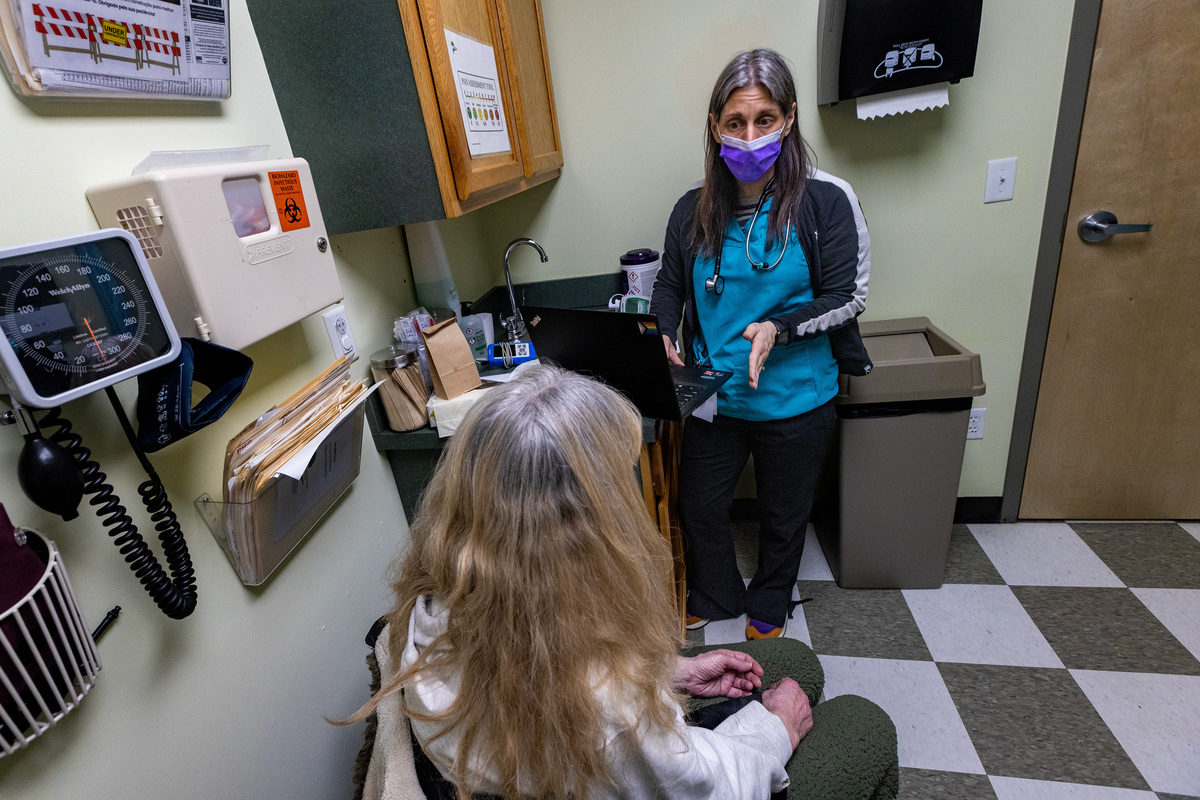
Registered nurse Jamie Simmons speaks with a patient during an appointment at the Greater New Bedford Community Health Center in Massachusetts. The patient, whose first name is Kim, says buprenorphine has helped her stay off heroin and avoid an overdose for nearly 20 years.

Jesse Costa for KHN


hide caption

toggle caption

Jesse Costa for KHN


Registered nurse Jamie Simmons speaks with a patient during an appointment at the Greater New Bedford Community Health Center in Massachusetts. The patient, whose first name is Kim, says buprenorphine has helped her stay off heroin and avoid an overdose for nearly 20 years.

Jesse Costa for KHN

For two decades — as opioid overdose deaths rose steadily — the federal government limited access to buprenorphine, a medication that addiction experts consider the gold-standard for treating patients with an opioid use disorder. Study after study shows it helps people continue addiction treatment while reducing the risk of overdose, and death.

Clinicians who wanted to prescribe the medicine had to complete an 8-hour training. They could only treat a limited number of patients and had to keep special records. They were given a Drug Enforcement Administration (DEA) registration number starting with X, a designation that many doctors say made them a target for drug enforcement audits.

“Just the process associated with taking care of our patients with a substance use disorder made us feel like, ‘boy, this is dangerous stuff,'” says Dr. Bobby Mukkamala, who chairs the American Medical Association’s task force on substance use disorder.

“The science doesn’t support that but the rigamarole suggested that.”

That rigamarole is mostly gone. Congress eliminated what became known as the “X-waiver” in legislation President Biden signed late last year. Now begins what some addiction experts are calling a truth serum moment.

Was the X-waiver and the burdens that came with it the real reason only about 7{35112b74ca1a6bc4decb6697edde3f9edcc1b44915f2ccb9995df8df6b4364bc} of clinicians in the U.S. were cleared to prescribe buprenorphine? Or was it an excuse that masked hesitation about treating addiction, if not outright disdain for these patients?

There’s great optimism among some leaders that getting rid of the X-waiver will expand access to buprenorphine and reduce overdoses. One study from 2021 shows taking buprenorphine reduces the risk by 50{35112b74ca1a6bc4decb6697edde3f9edcc1b44915f2ccb9995df8df6b4364bc}. The medication is an opioid that produces much weaker effects than heroin or fentanyl and reduces cravings for those deadlier drugs.

The nation’s drug czar, Dr. Rahul Gupta, says getting rid of the X-waiver will ultimately prevent millions of deaths.

“The impact of this will be felt for years to come,” Gupta says. “It is a true historic change that, frankly, I could only dream of being possible.”

Gupta and others envision obstetricians prescribing buprenorphine to their pregnant patients, infectious disease doctors adding it to their medical tool box, and lots more patients starting buprenorphine when they come to emergency rooms, primary care clinics and rehabilitation facilities.

We are “transforming the way we think to make every moment an opportunity to start this treatment and save someone’s life,” says Dr. Sarah Wakeman, the medical director for substance use disorder at Mass General Brigham in Boston.

Wakeman says clinicians who she’s been reaching out to for the past decade are finally willing to consider treating patients with buprenorphine. Still, she knows stigma and discrimination could undermine efforts to help those who aren’t being served. In 2021, a national survey showed just 22{35112b74ca1a6bc4decb6697edde3f9edcc1b44915f2ccb9995df8df6b4364bc} of people with an opioid use disorder received buprenorphine or methadone, which is another form of medication-assisted treatment.

The truth serum experiment

The truth serum experiment – what will test whether clinicians will now step up prescribing – is underway in hospitals and clinics across the country as patients struggling with addiction queue up for treatment.

One woman named Kim, 65, is among them.

Kim’s recent visit to the Greater New Bedford Community Health Center in southern Massachusetts began in an exam room with Jamie Simmons, a registered nurse who runs the center’s addiction treatment program but doesn’t have prescribing powers. NPR agreed to use only Kim’s first name to limit discrimination linked to her drug use.

Kim tells Simmons that buprenorphine has helped her stay off heroin and avoid an overdose for nearly 20 years. Kim takes a brand of the medication called Suboxone, which comes in the form of thin film-like strips she dissolves under her tongue.

“It’s the best thing they could have ever come out with,” Kim says, “I don’t think I ever even had a desire to use heroin since I’ve been taking them.”

Buprenorphine can produce mild euphoria and slow breathing but there’s a ceiling on the effects. Patients like Kim may develop a tolerance and not experience any effects.

“I don’t get high on Suboxones,” Kim says, “they just keep me normal.”

Still many clinicians have been hesitant to use buprenorphine – known as a partial opioid agonist – to treat an addiction to more deadly forms of the drug.

Kim’s primary care doctor at the health center never applied for an X-waiver. So for years Kim has bounced from one treatment program to another, seeking a prescription. When there were lapses in her access to buprenorphine, the cravings returned – an especially scary prospect now that the powerful opioid fentanyl has replaced heroin on the streets of Massachusetts, where Kim lives.

“I’ve seen so many people fall out [overdose] in the last month,” says Kim, her eyes wide, “that stuff is so strong that within a couple minutes, boom.”

Because fentanyl can kill so quickly, the benefits of taking buprenorphine and other medications to treat an opioid use disorder have increased as deaths linked to even stronger types of fentanyl rise. Buprenorphine is present in a small percentage of overdose deaths nationwide, 2.6{35112b74ca1a6bc4decb6697edde3f9edcc1b44915f2ccb9995df8df6b4364bc} – virtually always with a mix of other drugs, often benzodiazepines. Fentanyl is in 94{35112b74ca1a6bc4decb6697edde3f9edcc1b44915f2ccb9995df8df6b4364bc} of overdose deaths in Massachusetts.

“Bottom line is, fentanyl kills people, buprenorphine doesn’t,” Simmons says.

That reality adds urgency to Kim’s health center visit because Kim took her last Suboxone before arriving. Her latest prescription has run out. Cravings for heroin could resume tomorrow if she doesn’t get more Suboxone. Simmons confirms the dose and tells Kim that her primary care doctor may be willing to renew the prescription now that the X-waiver is not required. But Dr. Than Win has some concerns after reviewing Kim’s most recent urine test.

It showed traces of cocaine, fentanyl, marijuana and Xanax, and Win says she’s worried about how the street drugs might interact with buprenorphine.

“I don’t want my patients to die from an overdose,” Win says. “But I’m not comfortable with the fentanyl and a lot of narcotics in the system.”

Kim is adamant that she’s not intentionally ingesting fentanyl. It might have been in the cocaine she says her roommate shares occasionally. Kim says she takes the Xanax to sleep. Her drug use presents complications that many primary care doctors don’t have experience managing. Some clinicians are apprehensive about using an opioid to treat an addiction to opioids, despite compelling evidence that it saves patients’ lives.

Win is worried about writing her first prescription for Suboxone. But she agrees to help Kim stay on the medication.

“I wanted to start with someone a little bit easier,” Win says. “It’s hard for me, that’s the reality and truth.”

About half of the providers at the health center had an X-waiver when it was still required. Simmons says some of the resistance to having the waiver was rooted in stigma or misunderstanding about addiction. She urges doctors to treat addiction as they would any other disease.

“You wouldn’t not treat a diabetic, you wouldn’t not treat a patient who is hypertensive,” Simmons says. “People can’t control that they formed an addiction to an opiate, alcohol or a benzo.”

Suboxone film

Jesse Costa/WBUR


hide caption

toggle caption

Jesse Costa/WBUR


Suboxone film

Jesse Costa/WBUR

Searching for solutions to soften stigma

Although the restrictions on buprenorphine prescribing are no longer in place, Dr. Mukkamala says the perception created by the X-waiver lingers.

“That legacy of elevating this to a level of scrutiny and caution, that needs to be sort of walked back,” says Mukkamala with the AMA. “That’s going to come from education.”

Mukkamala sees promise in the next generation of doctors, nurse practitioners and physician assistants coming out of schools that have added addiction training. The AMA and the American Society of Addiction Medicine have online resources for clinicians who want to learn on their own.

Some of these resources may help fulfill a new training requirement for clinicians who prescribe buprenorphine and other controlled narcotics. It will take effect in June. The DEA has not issued details about that training.

But training alone may not shift behavior: take the experience of Rhode Island.

The number of doctors approved to prescribe buprenorphine jumped more than 200{35112b74ca1a6bc4decb6697edde3f9edcc1b44915f2ccb9995df8df6b4364bc} from 2016 to 2022 after the state said physician training should include an X-waiver. Still, having the option to prescribe buprenorphine “didn’t open the floodgates” for patients in need of treatment, says Dr. Jody Rich, an addiction specialist who teaches at Brown University. The number of patients taking buprenorphine in Rhode Island increased – from 2016 to 2022 when the number of qualified prescribers jumped – but at a much slower rate .

“It all comes back to stigma,” Rich says.

He says longstanding resistance among some providers to treating addiction is shifting as younger people enter medicine. But the opioid crisis can’t wait for a generational change, he says. To expand buprenorphine access now, Rich’s research shows states could use pharmacists, partnered with doctors, to help manage the care of more patients with an opioid use disorder.

Wakeman, at Mass General Brigham, says it might be time to hold clinicians who don’t provide addiction care accountable through quality measures tied to payments.

“We’re expected to care for patients with diabetes or to care for patients with heart attack in a certain way and the same should be true for patients with an opioid use disorder,” says Wakeman.

One quality measure could be to track how often prescribers start and continue buprenorphine treatment. Wakeman says it would also help if insurers reimbursed clinics for the cost of staff who aren’t traditional clinicians but are critical in addiction care, like recovery coaches and case managers.

Will ending the X-waiver close racial gaps?

Wakeman and others are paying especially close attention to whether eliminating the X-waiver helps narrow racial gaps in buprenorphine treatment.

The medication is much more commonly prescribed to white patients with private insurance or who can pay cash. But there are also stark differences by race at some health centers where most patients are on Medicaid and would seem to have equal access to this addiction treatment.

At the New Bedford health center, Black patients represent 15{35112b74ca1a6bc4decb6697edde3f9edcc1b44915f2ccb9995df8df6b4364bc} of all patients but only 6{35112b74ca1a6bc4decb6697edde3f9edcc1b44915f2ccb9995df8df6b4364bc} of those taking buprenorphine. For Hispanics that comparison is 30{35112b74ca1a6bc4decb6697edde3f9edcc1b44915f2ccb9995df8df6b4364bc} to 23{35112b74ca1a6bc4decb6697edde3f9edcc1b44915f2ccb9995df8df6b4364bc}. Most of the health center patients prescribed buprenorphine are white, 61{35112b74ca1a6bc4decb6697edde3f9edcc1b44915f2ccb9995df8df6b4364bc}, while they are just 36{35112b74ca1a6bc4decb6697edde3f9edcc1b44915f2ccb9995df8df6b4364bc} of patients overall.

Dr. Helena Hansen, who co-authored a book on race in the opioid epidemic, says access to buprenorphine doesn’t guarantee that patients will benefit from it.

“People are not able to stay on a life-saving medication unless the immense instability in housing, employment, social supports — the very fabric of their communities — is addressed,” says Hansen. “That’s where we fall incredibly short in the United States.”

Hansen says expanding access to buprenorphine has helped reduce overdose deaths dramatically among all drug users in France, including those who are low-income and immigrants. There, patients with an opioid use disorder are seen in their communities and offered a wide range of social services.

“Removing the X-waiver,” says Hansen, “is not in itself going to revolutionize the opioid overdose crisis in our country. We would need to do much more.”

This story is from NPR’s partnership with WBUR and KHN. KHN (Kaiser Health News) is a national newsroom that produces in-depth journalism about health issues.

Amitabh Bachchan Health Update: ‘It shall take time.’ Amitabh Bachchan shares health update, says he will resume work once condition improves

Amitabh Bachchan Health Update: ‘It shall take time.’ Amitabh Bachchan shares health update, says he will resume work once condition improves
Bollywood megastar Amitabh Bachchan, who is recovering from a ‘muscle tear to the appropriate rib cage’, took to his weblog on Tuesday early morning to share an update with his fans.

Through the weekend, Bachchan explained that he endured accidents whilst shooting an action sequence on the sets of his upcoming film ‘Project K’ in Hyderabad. He claimed that his “rib cartilage popped broke” and there is a “muscle mass tear to the right rib cage.”

Sharing an update on his wellbeing, the 80-calendar year-previous explained that he was receiving superior “step by step” but it will just take some time. He has been following the doctors’ orders “diligently” and guaranteeing complete mattress purple.

The actor also verified that he has paused capturing for Nag Ashwin’s directorial, starring Prabhas and Deepika Padukone, and other jobs in his kitty till he fully recovers. ‘Project K’ will strike the theatres on January 12, 2024.

“I progress progressively .. it shall acquire time .. and what has been recommended by the medical doctors is getting adopted diligently .. relaxation and strapped upper body .. all get the job done has stopped and will only get started after the affliction increases and the healthcare presents an assurance,” he extra.

​Big B's noteAgencies

The actor had revealed that he was in discomfort and was enduring issues in motion and breathing. “.. certainly agonizing .. on movement and respiration .. will get some weeks they say right before some normalisation will take place .. some medication is also for discomfort .. (sic)”In the similar write-up, the actor also claimed that he is “cell a little bit for all the critical functions”.Ahead of returning to his Mumbai home ‘Jalsa’, Bachchan underwent a CT scan at a Hyderabad-based mostly hospital and the physicians suggested him bed relaxation.

Overcome with the messages and excellent needs, the veteran actor thanked his lovers, who he fondly calls his extended loved ones (Ef), for their prayers.

“To all that mail their issue on my harm, may well I convey my gratitude and like for your prayers … I am confused by the attention you give me and am so grateful to the relatives Ef for this embrace. But my enormous gratitude to all,” he wrote.

The Significant B also dropped a sequence of tweets on Twitter for his 48.3 million followers.

“Gratitude and like ever … for your worry and wishes. Your prayers are the cure. I relaxation and make improvements to with your prayers,” he wrote in a few diverse tweets.

https://twitter.com/SrBachchan/position/1632963435217448960

https://twitter.com/SrBachchan/standing/1632963581825146880

https://twitter.com/SrBachchan/position/1632963941352472576

Because of to his personal injury, Bachchan also couldn’t be a part of his supporters for his Sunday ritual of assembly and greeting admirers stationed exterior his Juhu bungalow.

10th Mountain Division Soldiers learn the basics about Holistic Health and Fitness while in-processing at Fort Drum | Article

10th Mountain Division Soldiers learn the basics about Holistic Health and Fitness while in-processing at Fort Drum | Article


10th Mountain Division Soldiers learn the basics about Holistic Health and Fitness while in-processing at Fort Drum


1 / 4

Show Caption +
Hide Caption –


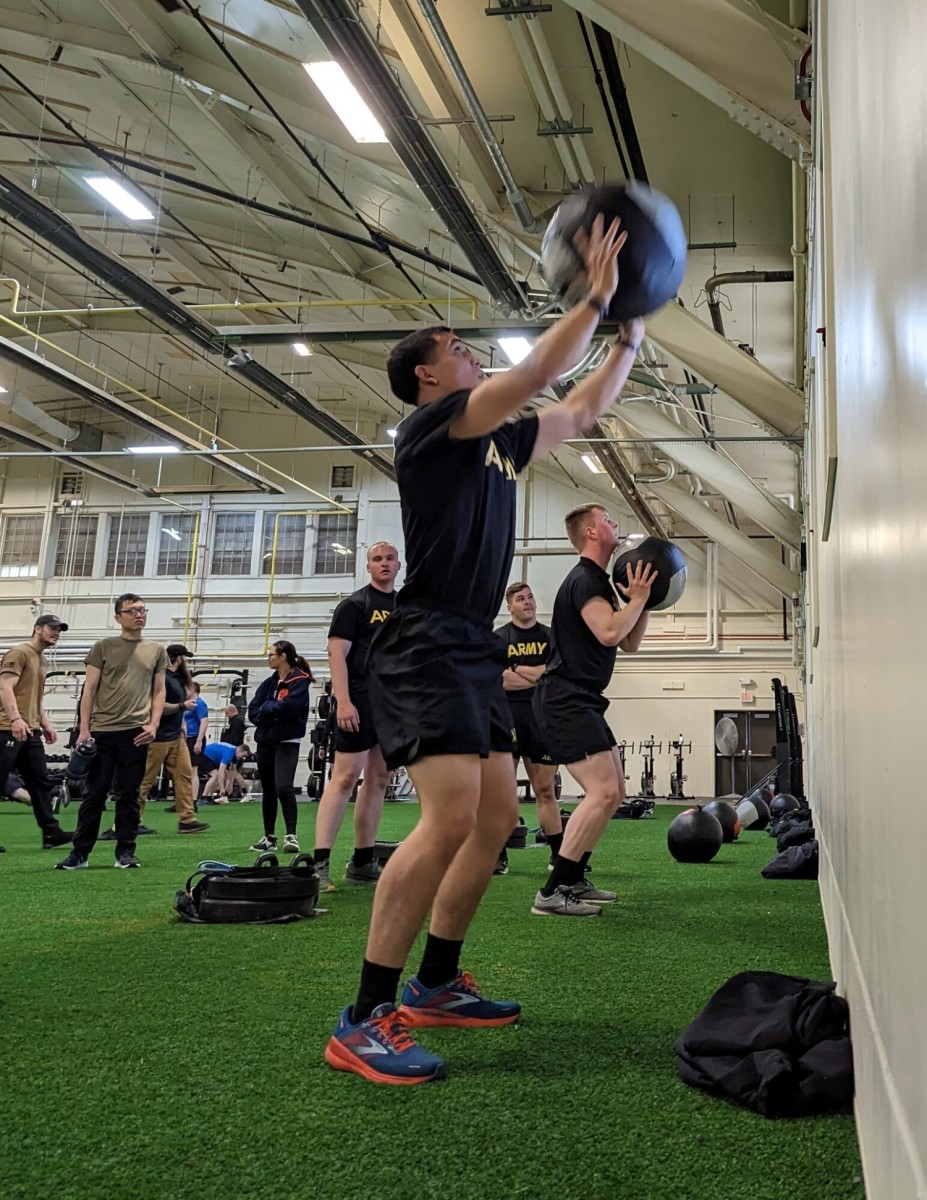
Soldiers participate in a team-building functional fitness competition March 8 inside the Nash Training Facility. This is part of the 10th Mountain Reception Company’s H2F (Health and Holistic Fitness) Integration Program where in-processing Soldiers learn about H2F resources available at their units and receive instruction on movement fundamentals and injury prevention. (Photo by Mike Strasser, Fort Drum Garrison Public Affairs)
(Photo Credit: Michael Strasser)

VIEW ORIGINAL


10th Mountain Division Soldiers learn the basics about Holistic Health and Fitness while in-processing at Fort Drum


2 / 4

Show Caption +
Hide Caption –


Soldiers participate in a team-building functional fitness competition March 8 inside the Nash Training Facility. This is part of the 10th Mountain Reception Company’s H2F (Health and Holistic Fitness) Integration Program where in-processing Soldiers learn about H2F resources available at their units and receive instruction on movement fundamentals and injury prevention. (Photo by Mike Strasser, Fort Drum Garrison Public Affairs)
(Photo Credit: Michael Strasser)

VIEW ORIGINAL


10th Mountain Division Soldiers learn the basics about Holistic Health and Fitness while in-processing at Fort Drum


3 / 4

Show Caption +
Hide Caption –


A Health and Holistic Fitness (H2F) trainer leads a group of Soldiers on techniques of foam rolling after completing an injury prevention screening March 8 inside the Nash Training Facility. (Photo by Mike Strasser, Fort Drum Garrison Public Affairs)
(Photo Credit: Michael Strasser)

VIEW ORIGINAL


10th Mountain Division Soldiers learn the basics about Holistic Health and Fitness while in-processing at Fort Drum


4 / 4

Show Caption +
Hide Caption –


Ben Smith, 10th Combat Aviation Brigade H2F strength and conditioning coach, watches a Soldier’s form on the rower during a functional fitness competition March 8 inside the Nash Training Facility. This is part of the 10th Mountain Reception Company’s H2F (Health and Holistic Fitness) Integration Program where in-processing Soldiers learn about H2F resources available at their units and receive instruction on movement fundamentals and injury prevention. (Photo by Mike Strasser, Fort Drum Garrison Public Affairs)
(Photo Credit: Michael Strasser)

VIEW ORIGINAL

FORT DRUM, N.Y. (March 8, 2023) — Before Soldiers begin their “Climb to Glory” with the 10th Mountain Division (LI), they enter the 10th Mountain Reception Company for 12 days of in-processing activities.

The 10th MRC staff helps newly arrived Soldiers with their transition to Fort Drum, which includes an introduction to the Holistic Health and Fitness (H2F) program and the team of dietitians, occupational therapists and strength and conditioning coaches who are helping to define what readiness means in the Army.

The Fort Drum H2F Integration Program began in June 2022 with the support of the 10th Combat Aviation Brigade and 10th Mountain Division Sustainment Brigade H2F teams at the Nash Training Facility and 10th MRC Barracks.

“The program focuses on education of H2F resources available to Soldiers, movement fundamentals and injury prevention,” said 1st Lt. Evan Murray, 10th MRC executive officer. “Over the course of 12 days, new Soldiers are brought into the PT (physical training) culture of Fort Drum with daily education coupled with their workouts.”

In addition to several hands-on H2F classes from trainers, Soldiers also receive an injury prevention screening, complete an Army Combat Fitness Test (ACFT), and participate in a competitive team workout with senior leaders from the 10th Mountain Division (LI).

Maj. Gen. Gregory Anderson, 10th Mountain Division (LI) and Fort Drum commander, participated in the workout March 8 with the in-processing Soldiers.

“H2F is one of the most important things we do here,” he said. “Fitness is not just about strength. It also includes range of motion, flexibility, endurance, agility, and all the things our trainers are teaching us. Pay attention to those techniques because they will serve you through life. The Army is doing physical fitness better now than ever before. We are far more advanced, and the science and technology is there so we can take care our bodies.”

The workout consisted of a 1,500-meter row, 150 burpees, 150 wall balls and then another 1,500-meter row. A team of three second lieutenants finished first to earn the Warhammer trophy, but they said the real prize was the knowledge they have gained through the H2F program.

“I thought this was a phenomenal functional fitness workout, and it was good to get a competition going after focusing on techniques these past couple of days,” said 2nd Lt. Dylian Jackson, with 1st Brigade Combat Team. “I didn’t really know much about H2F before coming here, and now I feel comfortable coming here and knowing that all these resources are available.”

Second Lt. John Salerno said he lifts weights every day in the gym, but H2F is providing him with useful information about injury prevention and physical training techniques he didn’t know.

“This is going to help my own physical fitness and my ability to bring those training aspects to my Soldiers,” he said. “There’s a lot of ways to be fit, and physically fit is a big one, but H2F also focuses on nutrition and mental health. And those are just as important as being able to run two miles, bench two plates or whatever it may be.”

Ben Smith, 10th Combat Aviation Brigade H2F strength and conditioning coach, said changing the Army culture on physical fitness means showing Soldiers that it is a privilege, not a punishment.

“One of the stigmas is that Army PT is a grind session, and that if you’re not sore or suffering then you’re not doing it right,” he said. “I like to take the concepts and methods of PT and show Soldiers the ‘why.’ We show them the purpose and intent of physical training, and go over it in detail, so we can move away from that stigma. If you approach it correctly with the right intent and intensity then you’re going to get the most out of it, instead of feeling torn down all the time.”

The 10th CAB H2F motto is “Wisdom in Strength,” and Smith said that is a lesson he wants to teach new Soldiers.

“We want to show them there is a deeper level of understanding to fitness and physical readiness in general,” he said. “We try to give them a good foundation – making sure they are moving in all the ways human beings are designed to move – and challenging that with load, speed, and intensity. Staying healthy is the goal for a career Soldier, and that’s what we are trying to do.”

Retired Sgt. Maj. of the Army Dan Dailey had told Soldiers that physical training may not be the most important thing they do in a single day, but it’s the most important thing they do every day. Smith said that is a mindset that the H2F staff is passionate about.

“That will take time to achieve,” he said. “And in my experience with H2F so far, it’s about us having that presence here and being people who care for Soldiers.”

Murray said that Fort Drum is the only installation to provide in-processing Soldiers with an H2F integration program, and it has been recognized at the TRADOC (U.S. Army Training and Doctrine Command) level for its positive impact on troops.

“The program is also the subject of a white paper published through the 10th Mountain Division on the value of early intervention and integration to change physical training culture,” Murray said.

In recent months, the 10th MRC has improved the way new Soldiers integrate into their units and the community. The Keys to Connection Program was established late last year as a spiritual readiness forum to get Soldiers thinking about goals and how they will make the most of their time at Fort Drum. A “Powder Keg” patching ceremony created a formal way for leaders to welcome Soldiers to their units and instill pride in division history and a sense of purpose.

“We’re really proud of how we bring our new teammates into the division and get them set up with everything they need to be successful once they leave the reception company,” Anderson said.

A Bodybuilder and Dietitian Shares 3 Tips for Eating to Build Muscle

A Bodybuilder and Dietitian Shares 3 Tips for Eating to Build Muscle
  • Bodybuilding dietitian Holly Baxter claimed large-protein foodstuff like yogurt can aid with making muscle mass. 
  • She reported the most prosperous meal plans are kinds you can stay reliable with in the extensive phrase. 
  • Her dieting technique consists of room for treats like ice cream, so she can continue to love food items.

You you should not have to stay on rooster and rice or get highly-priced nutritional supplements to establish muscle mass, according to a pro bodybuilder and dietitian.  

Holly Baxter, an worldwide award-profitable physique athlete, claimed she’s learned from private and expert encounter that the ideal diet program for a powerful, lean physique is just one you can adhere to extended-expression.

“Come across anything that performs for your tastes. It can be not super attractive or glamorous, but generally folks are wanting for shortcuts that just usually are not sustainable,” she told Insider. 

Baxter shared some of her most loved ways to get plenty of protein for a robust, muscular physique when ingesting genuine foodstuff she enjoys. In complete, she claimed she receives about 130 to 140 grams of protein per day, about the middle of the advisable assortment (about 1 – 1.3 grams per pound of lean physique fat each and every day). 

Protein shakes are not magic for setting up muscle mass

Supplements can be a hassle-free way to get much more protein in your diets, but you can find absolutely nothing unique or necessary about a shake or powder, in accordance to Baxter. 

Whey protein is also becoming more and more pricey, so if you detest protein shakes or they are draining your funds, you can get your vitamins and minerals as a result of day to day foodstuff as a substitute, she explained. 

“If you delight in consuming like I do, I’m additional of an advocate of eating a meal,” Baxter claimed. 

1 higher-protein snack typically advisable by dietitians is also Baxter’s go-to: fat-absolutely free Greek yogurt, which is healthy and can be personalized with your favourite flavorings or toppings. 

“You’re acquiring a definitely healthful food stuff abundant in calcium, vitamin D, and protein, and you’re obtaining positive aspects from gut-welcoming micro organism,” she explained. 

Baxter mentioned she’s also a supporter of steak, because it’s a rich resource of iron to assist athletes (specially ladies) avoid fatigue or anemia. She explained she eats lean crimson meat about 3-5 moments a 7 days: her favorite is a filet mignon with tacky bread, roasted veggies, and a glass of pink wine. 

You should not anxiety about timing

It’s a myth that you require protein promptly soon after a training to get the benefits. Baxter reported that it is really simple to get caught up in concerns about when to take in, but investigation implies you can build muscle regardless of when you try to eat all over a work out. 

“The vital is building confident you are supplementing with protein inside a couple several hours before or following,” she mentioned.

If you’re attempting to burn up unwanted fat and preserve muscle mass in a calorie deficit, it could enable to try to eat one thing right before working out to give vitality, she extra. And for athletes who require to carry out at the maximum amounts, ingesting more than enough carbs for a exercise routine can assist, as well. 

Make area for food items you enjoy

Whilst protein is an essential nutrient for building muscle mass, Baxter stated it’s tough to adhere to a diet that’s all do the job and no enjoyment.

“There is an factor of my diet program that is likely to focus on foods satisfaction and pleasure from taking in anything that tastes genuinely superior,” she reported. 

Baxter formerly advised Insider that she used to struggle with continual dieting, and had to re-find out to love foodstuff and take in adequate to build muscle and assist her health. 

She stated acquiring strategies to contain her most loved treats like ice product, Nutella, and sugary cereal without the need of derailing her ambitions served her cultivate a balanced partnership with food. 

For anyone who needs to eat to develop muscle mass, Baxter mentioned consistency is important, so earning home for what you delight in can enable. 

“Finally what dictates somebody’s lengthy term achievement is making muscle mass is nutritional adherence,” she said. 

Should You Use a Credit Card to Pay for Medical Treatment?

Should You Use a Credit Card to Pay for Medical Treatment?

There may possibly be other possibilities to think about.


Key details

  • Lots of persons battle to protect their professional medical charges.
  • Although you may have the choice to swipe a credit rating card to pay back for health-related remedy, there may be a more value-efficient option.
  • Seem into payment programs, or see if you can negotiate with your healthcare provider to decrease the bill.

If you’ve ever had a healthcare bill wreak havoc on your finances, you’re definitely not on your own. An estimated 23 million Individuals owe much more than $250 in healthcare bills, according to the Kaiser Family Basis. And quite a few men and women owe a ton far more than that.

If you are confronted with a health care cost, your first inclination might be to put it on a credit card and do your ideal to pay back it off as rapidly as you can. But right here are a couple of possibilities to pursue that might charge you a lot less money in the extended operate.

1. Get on a payment prepare

It’s not unheard of for individuals to receive a professional medical bill they are unable to spend in complete suitable absent. The good news is that quite a few health care facilities will set you on a payment plan that gives you further time to spend off your clinical charges if you ask for a person. And normally, you’ll be qualified for {35112b74ca1a6bc4decb6697edde3f9edcc1b44915f2ccb9995df8df6b4364bc} interest.

Preserve: This credit rating card has one of the longest intro {35112b74ca1a6bc4decb6697edde3f9edcc1b44915f2ccb9995df8df6b4364bc} curiosity durations all-around

A lot more: Help save although you fork out off financial debt with just one of these leading-rated balance transfer credit cards

A credit score card, by contrast, is going to cost you fascination the moment you carry your stability forward, except you transpire to have a {35112b74ca1a6bc4decb6697edde3f9edcc1b44915f2ccb9995df8df6b4364bc} introductory APR. And keeping away from fascination expenses on your medical expenses could make them considerably significantly less highly-priced to fork out off.

2. Use your HSA or FSA

If you have cash in a wellbeing financial savings account (HSA) or a flexible paying account (FSA), then it pays to use these cash in advance of resorting to swiping a credit history card. In simple fact, FSAs pressure you to expend down your plan balance each 12 months or risk forfeiting your funds, so there is no purpose not to swipe an FSA card if you will find a stability on it.

Now HSAs are a tiny little bit diverse. Because HSA cash under no circumstances expire, and since these accounts allow for you to invest money you don’t will need to withdraw proper away, there are advantages to leaving your HSA by yourself and paying out your clinical costs out of pocket if you can afford to pay for to do so. But if presented the selection between dipping into your HSA and racking up credit card credit card debt in the course of covering a health-related cost, the former is actually your far better guess.

Will not think you are trapped with your bill in full

Obtaining a significant health care monthly bill can be tense, no matter what payment technique you use to choose treatment of it. But in advance of you pay out that invoice, seem it above thoroughly. It can be not all that uncommon for medical expenditures to include glitches, so it truly is worth providing yours a near go through right before handing over income in any form.

Also, you shouldn’t hesitate to negotiate healthcare payments that are a load to pay. In some scenarios, your service provider could possibly minimize you a crack, these types of as if you are paying for a service your wellness coverage company would not select up the tab for.

In a worst-case scenario, you can usually swipe a credit rating card to go over professional medical treatment you want. But before you go that route and rack up interest rates in the system, see if you will find a less highly-priced way to deal with your health care costs.

Major credit score card wipes out fascination till 2024

If you have credit history card debt, transferring it to this top stability transfer card secures you a {35112b74ca1a6bc4decb6697edde3f9edcc1b44915f2ccb9995df8df6b4364bc} intro APR for up to 21 months! Additionally, you can pay out no once-a-year fee. Those are just a couple of motives why our experts rate this card as a top rated choose to help get management of your personal debt. Study our total evaluation for free and use in just 2 minutes.