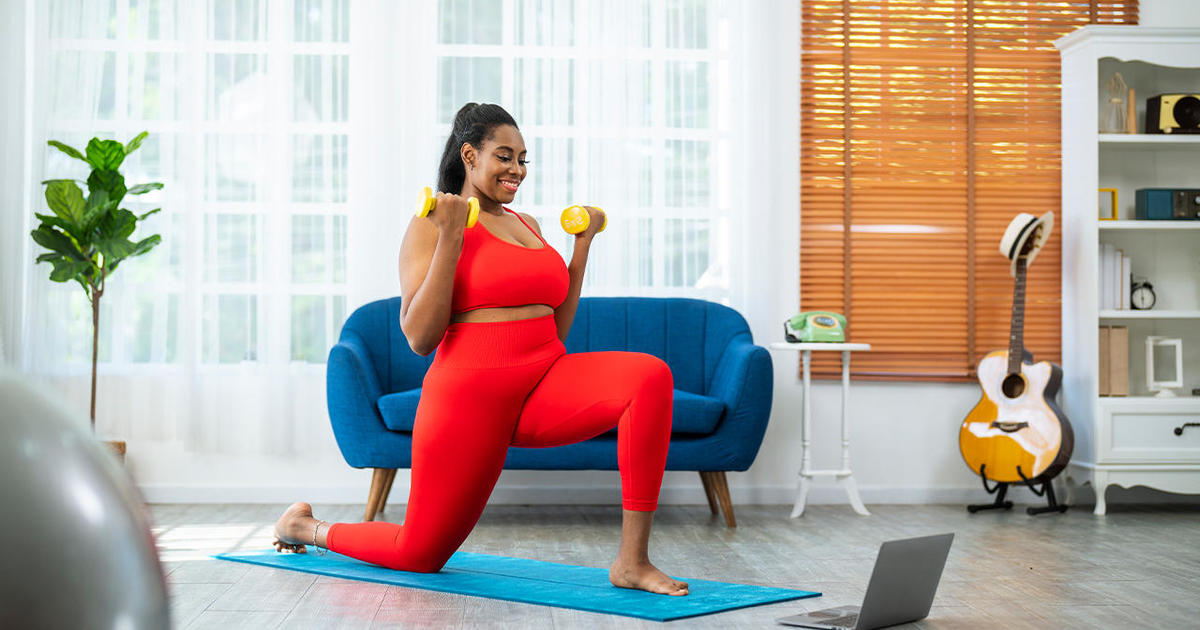
The best after-Christmas health fitness deals to help with your New Years’ resolutions: Theragun, Peloton, home gym equipment and more

The best after-Christmas health fitness deals to help with your New Years’ resolutions: Theragun, Peloton, home gym equipment and more
home-workout.jpg

Getty Images


If you’re planning to jumpstart your workout routine in the new year or setting some health and wellness New Year’s resolutions, you’ll need the right equipment and accessories. To help you reach your 2023 fitness goals, we’ve compiled the best after-Christmas fitness deals on home gym equipment, activewear, fitness trackers and more.


Top products in this article:

Theragun Pro, $400 (reduced from $599)

Original Peloton Bike, $1,195 (regularly $1,445)

Amazon Halo View, $50 (reduced from $80)


We’ve found the perfect fitness deals for people who want to kick their outdoor workouts up a notch, transform their living room into a home gym, easily workout while working from home or want the latest and greatest Apple Watch. We’ve found home gym essentials from Best Buy, Amazon and more of your favorite retailers to help you build your home gym and start a new workout routine in 2023.

The best massage gun deals

Shop the best Theragun deals. Select Theragun devices are on sale now. 

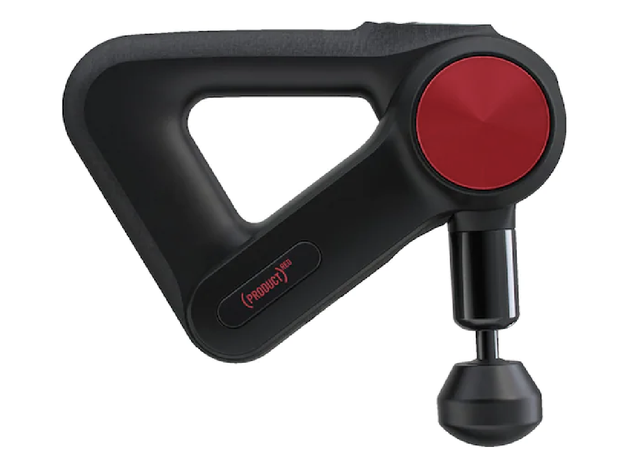
Theragun Pro: $400 (save $200)
theragun-pro.png

Best Buy


Theragun Pro is a professional-grade device constructed for physical therapists, trainers and other professionals, but it’s also great for athletes, however amateur. Like the Theragun Elite, it is equipped with an OLED screen and a customizable speed range of 1,750 to 2,400 PPMs (percussions per minute) with three presets. However, instead of 40 pounds of force, the Pro boasts 60 and is the only model with an adjustable arm, allowing for easier use.

The Theragun Pro comes with six attachments: a dampener, standard ball, wedge, thumb, cone and super soft tip. A two-year warranty (compared with just one with the less expensive models) makes it more appealing for anyone who might use the gadget daily. 

Theragun Pro, $400 (reduced from $599)


Theragun Elite: $298
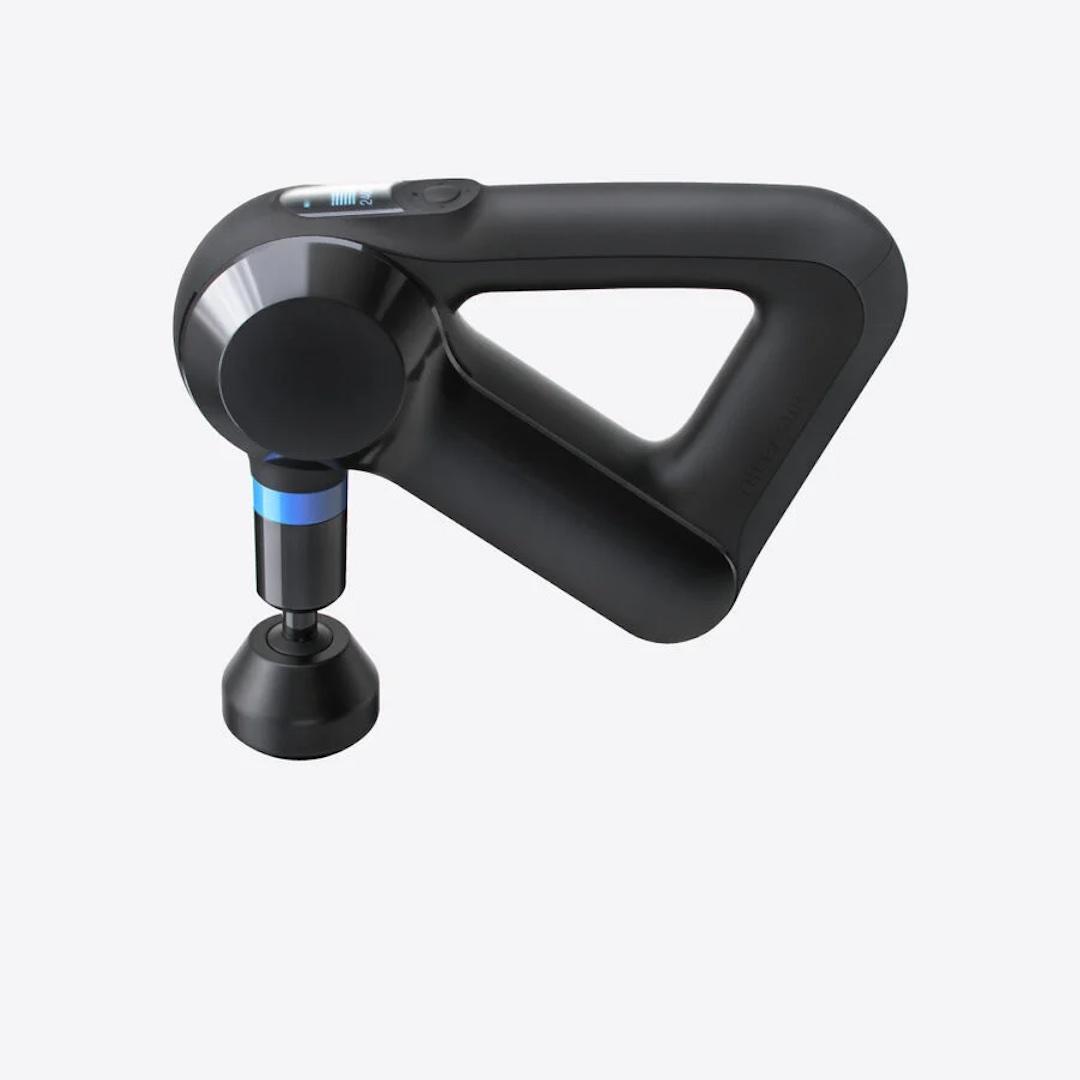
Theragun Elite

Therabody


The Theragun Elite is really simple to use — you control the intensity of the massage via an up or down press of a button and by varying the pressure you apply on your muscle. (We recommend, from first-hand experience, starting with a lighter touch.) The triangular design makes it really easy to reach all areas of your body on your own, at just the right angles — even those otherwise hard-to-reach spots on your back. It includes five attachments — a dampener, standard ball, thumb, cone and wedge.

It’s a high-end splurge, to be sure, but trust us — you’ll wind up getting a lot of use out of this massage gun once you know how good it makes you feel after a session.

Theragun Elite, $298 (regularly $399)


Theragun Prime: $198
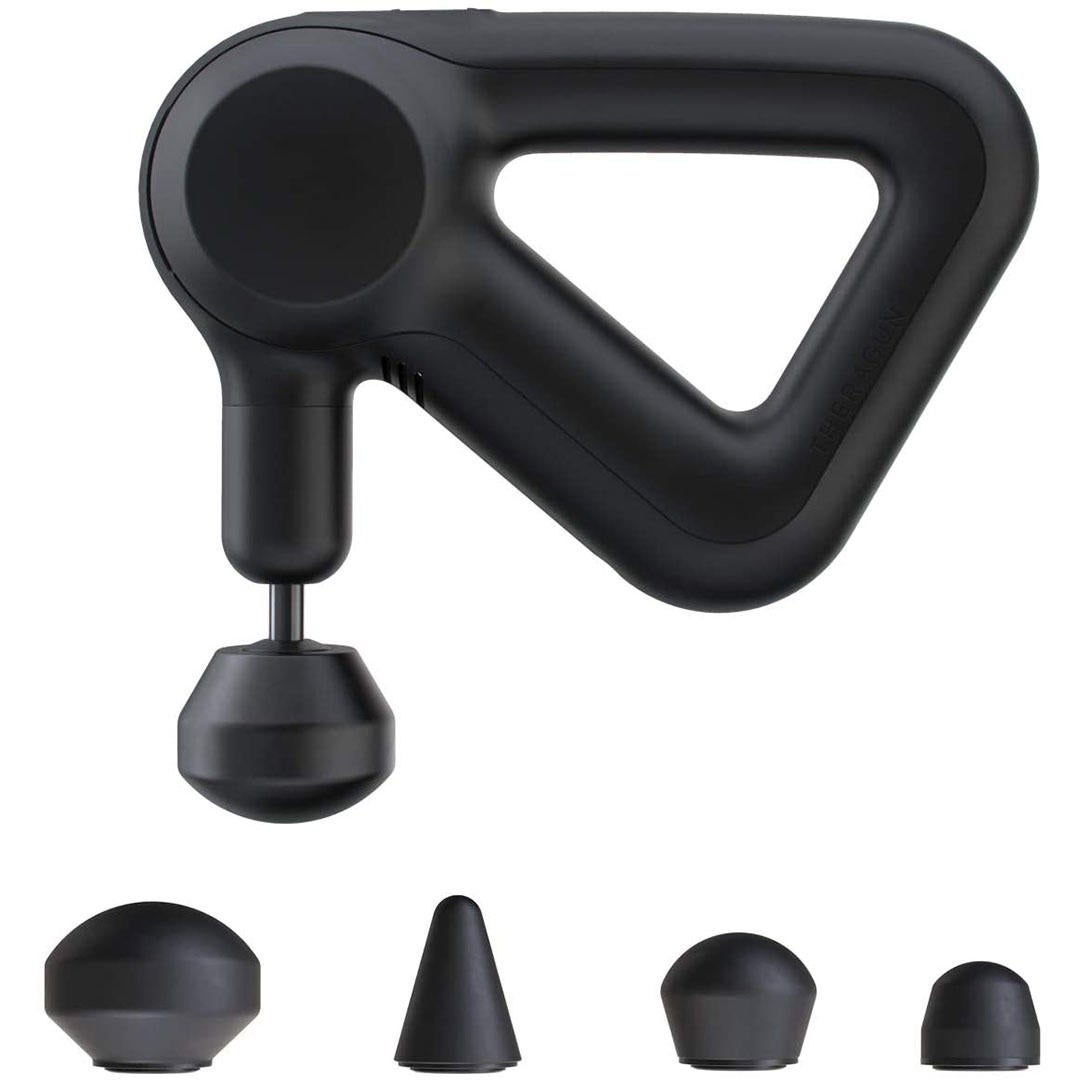
theragun-prime.jpg

Theragun Store via Amazon


Prime is Theragun’s most basic, standard-sized model, with up to 30 pounds of force. It also offers a five-speed range with customizable speed through the Theragun app and weighs 2.2 pounds. It’s also equipped with four attachments: dampener, standard ball, thumb and cone. 

This model is quite user-friendly and will suit the needs of the average person suffering from muscle soreness, tightness and pain.

Theragun Prime, $198 (regularly $299)


Theragun Mini: $150
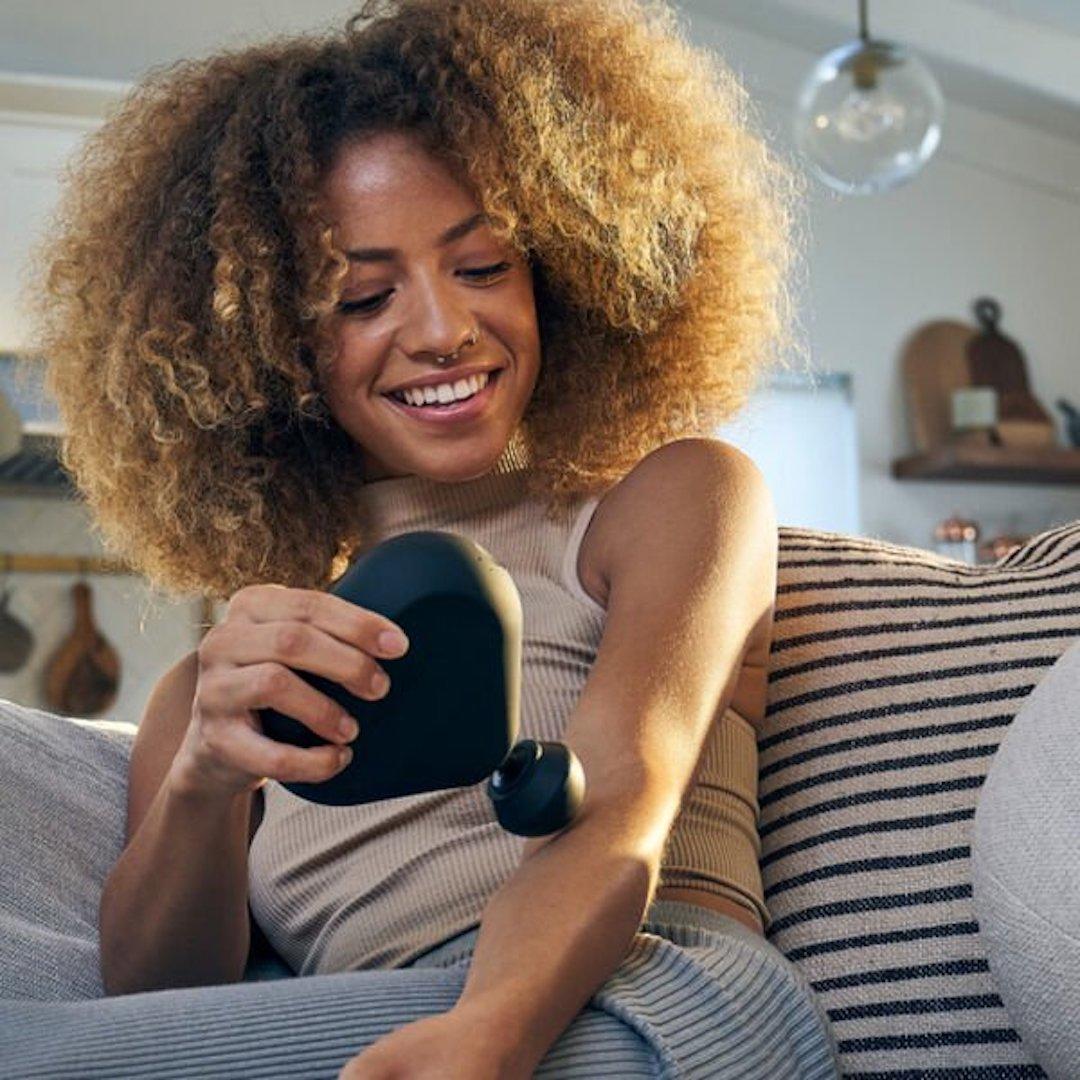
Theragun mini

Therabody


The Theragun Mini weighs just 1.43 pounds. It offers 20 pounds of force and three speeds — 1,750; 2,100 and 2,400 PPMs. While the three standard-size Theragun models are Bluetooth enabled, the mini is not. The Mini may not replace the need for a full-size, full-powered massage gun, but it is a great supplementary option for anyone who travels often or wants to bring a massage gun to the gym.

The Mini is covered under a one-year warranty.

Theragun Mini, $150 (regularly $200)


Hyperice Hypervolt 2: $229
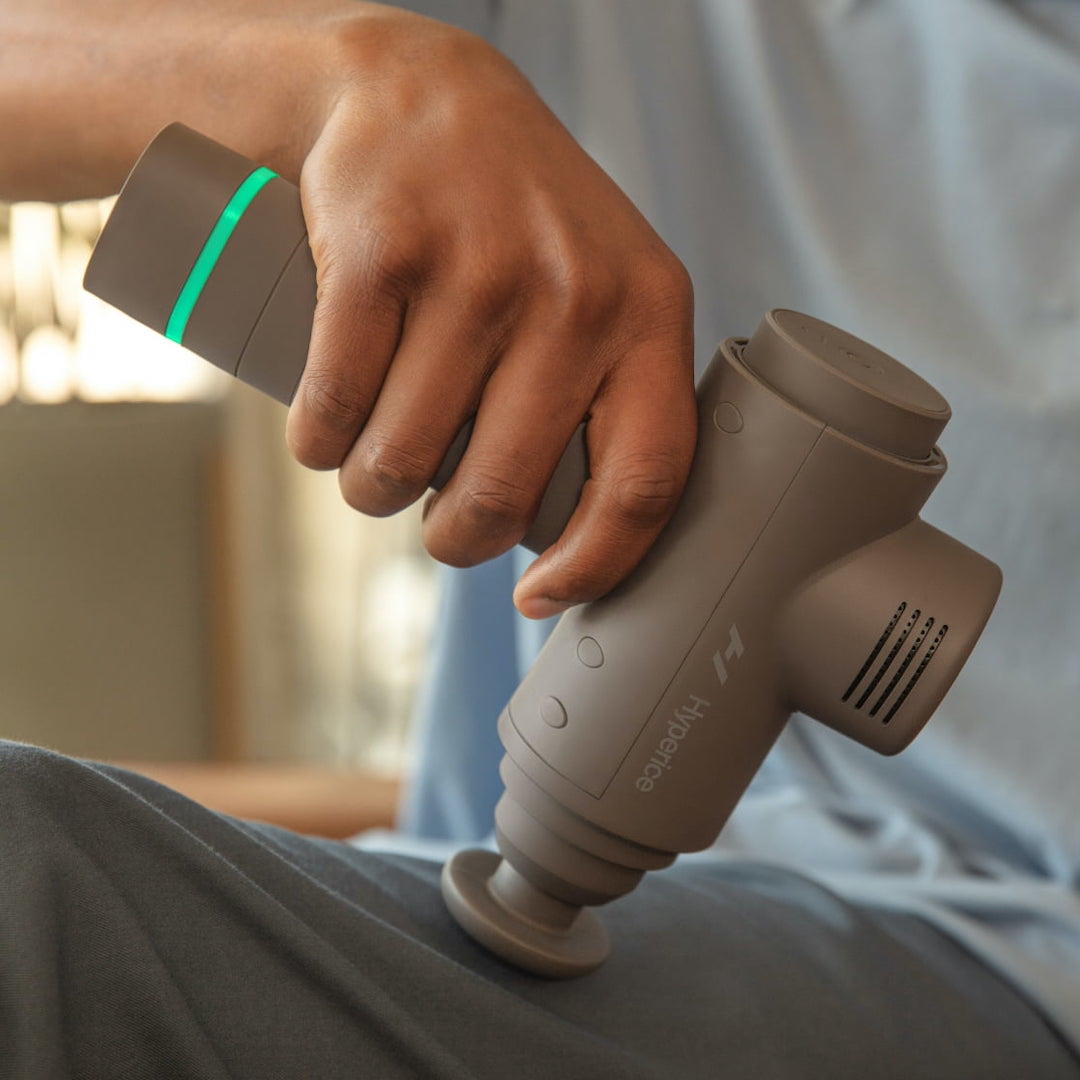
Hypervolt 2

Hyperice


This updated version of the original Hypervolt is lighter, more powerful and has a newly designed handle. It has three speeds and five head attachments, and promises to be super quiet. It works with the Bluetooth-connected Hyperice app. It’s lighter than the Theragun Elite, at 1.8 pounds.

“This little gem is great right after a run for easing some of the stiffness,” shared one Amazon reviewer. “I also like to use it right before going to bed — it seems to keep me from having quite so much stiffness in my quads and glutes in the morning.”

Hyperice Hypervolt 2, $229 (reduced from $299)


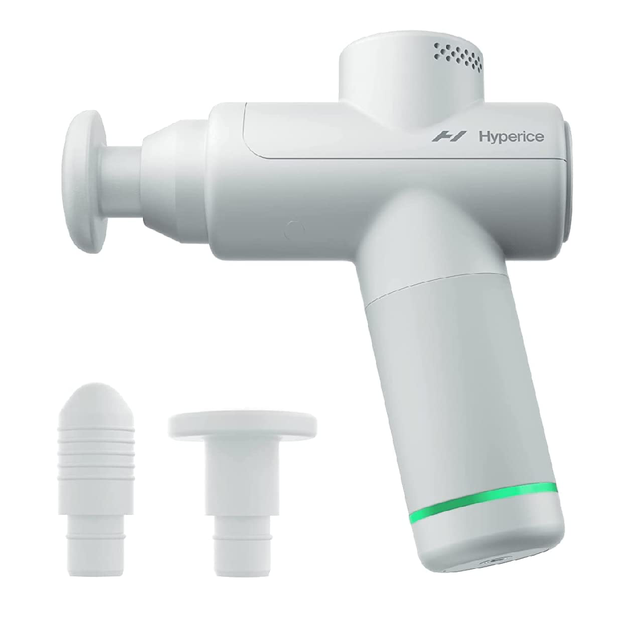
Hyperice Hypervolt Go 2
hyperice-go-2.png

Amazon


The Hypervolt Go 2 boasts 40 watts of power, two head attachments and three speeds. Its main selling point is its extreme portability – its lack of heft is meant to literally keep you on the go.

“I was gifted a full size Hypervolt which I use regularly for my legs after runs. When I travel and do runs away from home, I surely miss my massage gun. So I purchased the Hypervolt Go 2,” wrote a verified purchaser on Amazon. “It charges quickly and is quiet. It  will definitely be a good traveling companion for races that are away from home. ”

Hyperice Hypervolt Go 2, $149 (reduced from $199) 


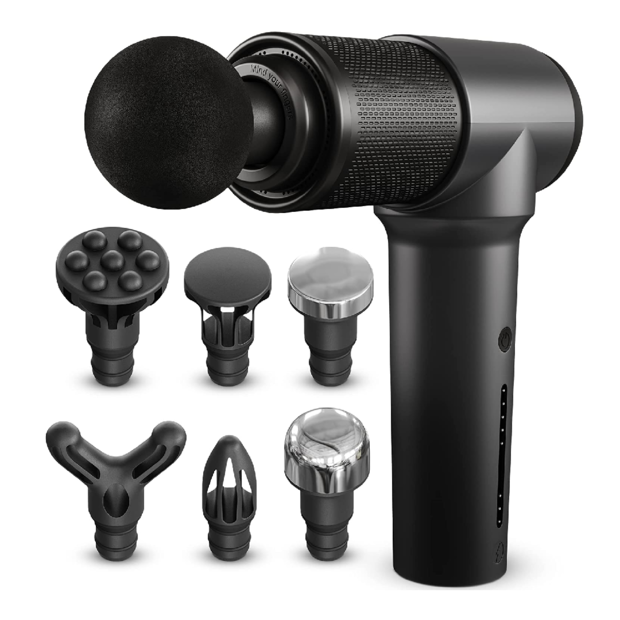
Turonic GM5 massage gun: $130
turonic-massage-gun.png

Amazon


This Turonic massage gun features a 4.6-star rating with reviewers praising the massager’s long battery life, ease of use, and ability to provide relief to tight muscles. The massage gun offers 5 intensity modes and comes with 7 replaceable massage heads for a customizable massage experience.

One Amazon reviewer noted that the Turonic GM5 offers a “really good variety in intensity between the different levels. I use it to recover from running. It’s great for relieving pain/soreness in calves and feet.”

Turonic GM5 massage gun, $130 after coupon (reduced from $180)


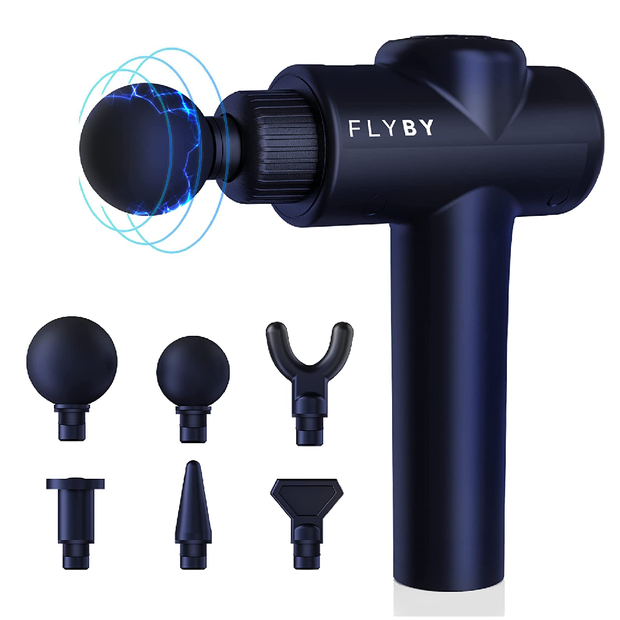
Flyby F1Pro deep tissue percussion massage gun for athletes
flyby-f1pro.png

Amazon


The Flyby F1Pro massage gun offers 3 speed settings and 6 interchangeable heads. It is quiet and lightweight, weighing only 1.8 lbs. This high performance massager features a high-impact brushless motor that offers speeds up to 3200 rpm and up to 50lbs of pressure, It’s great for relieving soreness and muscle tension after a serious workout.

“If you are not looking to spend a fortune on the TheraGun, the FlyBy is just for you,” shares one verified buyer on Amazon. “It has many different heads to put on the massager for different areas of your body. I personally have shoulder and foot pain, and it relieves the pain about 85-90{35112b74ca1a6bc4decb6697edde3f9edcc1b44915f2ccb9995df8df6b4364bc}.”

Flyby F1Pro deep tissue percussion massage gun for athletes, $52 after coupon (reduced from $140)


The best stationary bike deals

We’ve found stationary bikes that suit a wide variety of budgets. Shop bikes from Peloton, Schwinn and more. 

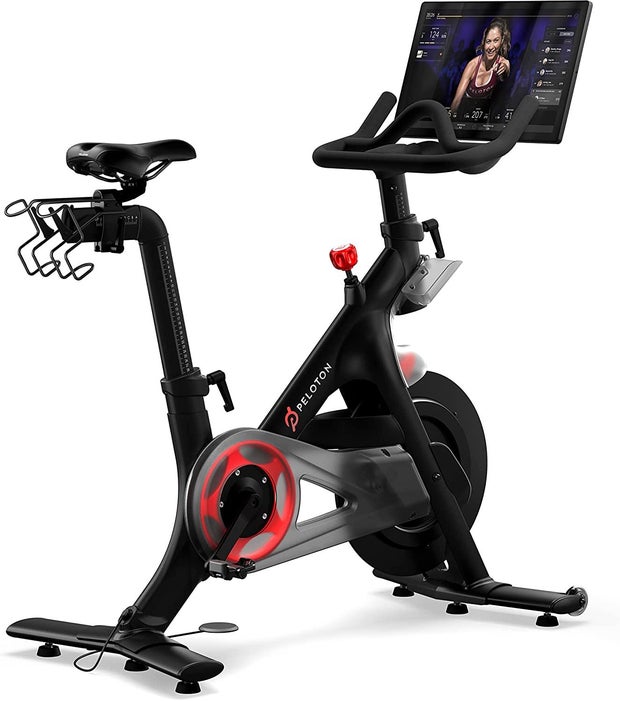
The Peloton Bike: $1,195
Original Peloton Bike

Peloton


Clip into a Peloton Bike for a cycling workout like no other. This small-space-friendly bike features delta-compatible pedals, a resistance knob for manual control, a two-channel, rear-facing stereo speaker system with 16W of total power, 10-point multitouch touchscreen, USB micro port, 3.5mm headphone jack, Bluetooth 4.0 connectivity, 5MP front-facing camera, built-in microphone and volume buttons.

A Peloton All-Access Membership ($44 monthly) must be purchased separately to access Peloton content on your Bike. Membership offers unlimited access to Peloton’s entire library of content available on your new Bike and through the Peloton App. 

Original Peloton Bike, $1,195 (regularly $1,445)


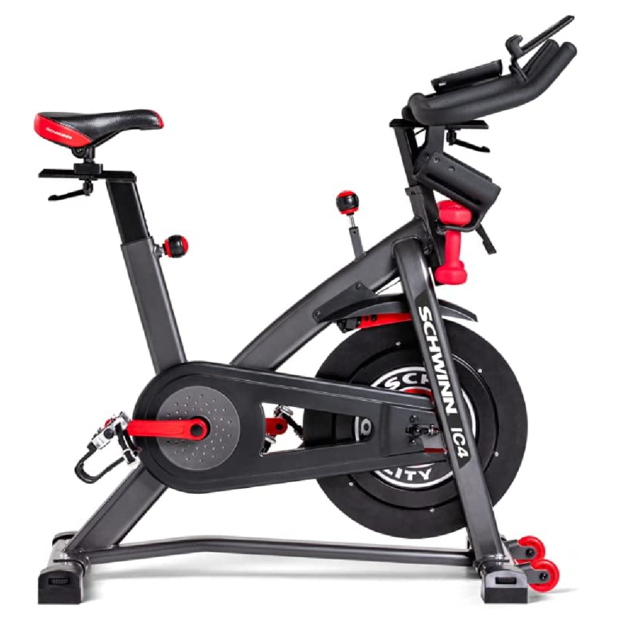
Schwinn indoor cycling bike: $800
schwinn-fitness-indoor-cycling-exercise-bike-series.png

Amazon


This indoor cycling  bike is compatible with popular third-party cycling apps, like Peloton and Zwift. It features a full-color, backlit LCD console that monitors your heart rate, speed, time, distance and calories burned while cycling. It also has an adjustable race-style seat and dual-link foot pedals with toe cages and clips for a secure ride.

Schwinn Fitness indoor cycling bike, $800 (reduced from $1,199)


Schwinn Fitness IC3: $620
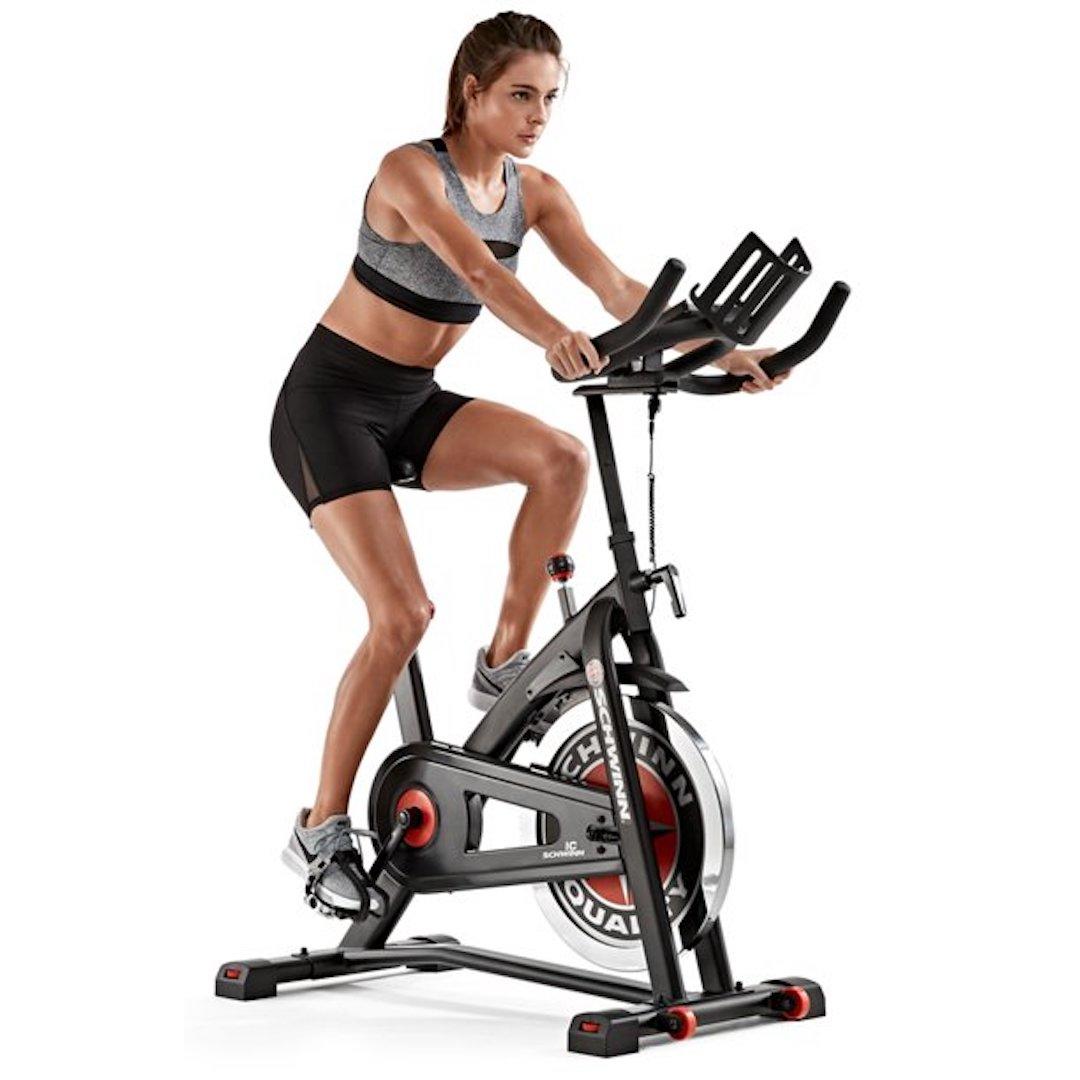
Peloton alternative: Schwinn Fitness IC3 exercise bike

Walmart


This bike with a tablet holder has an LCD console, Bluetooth capability and a 40-pound flywheel. It tracks RPMs, heart rate, calories, time and distance. Try it with the Peloton app.

Schwinn Fitness IC3, $620 (reduced from $799)


Yosuda indoor cycling bike: $210
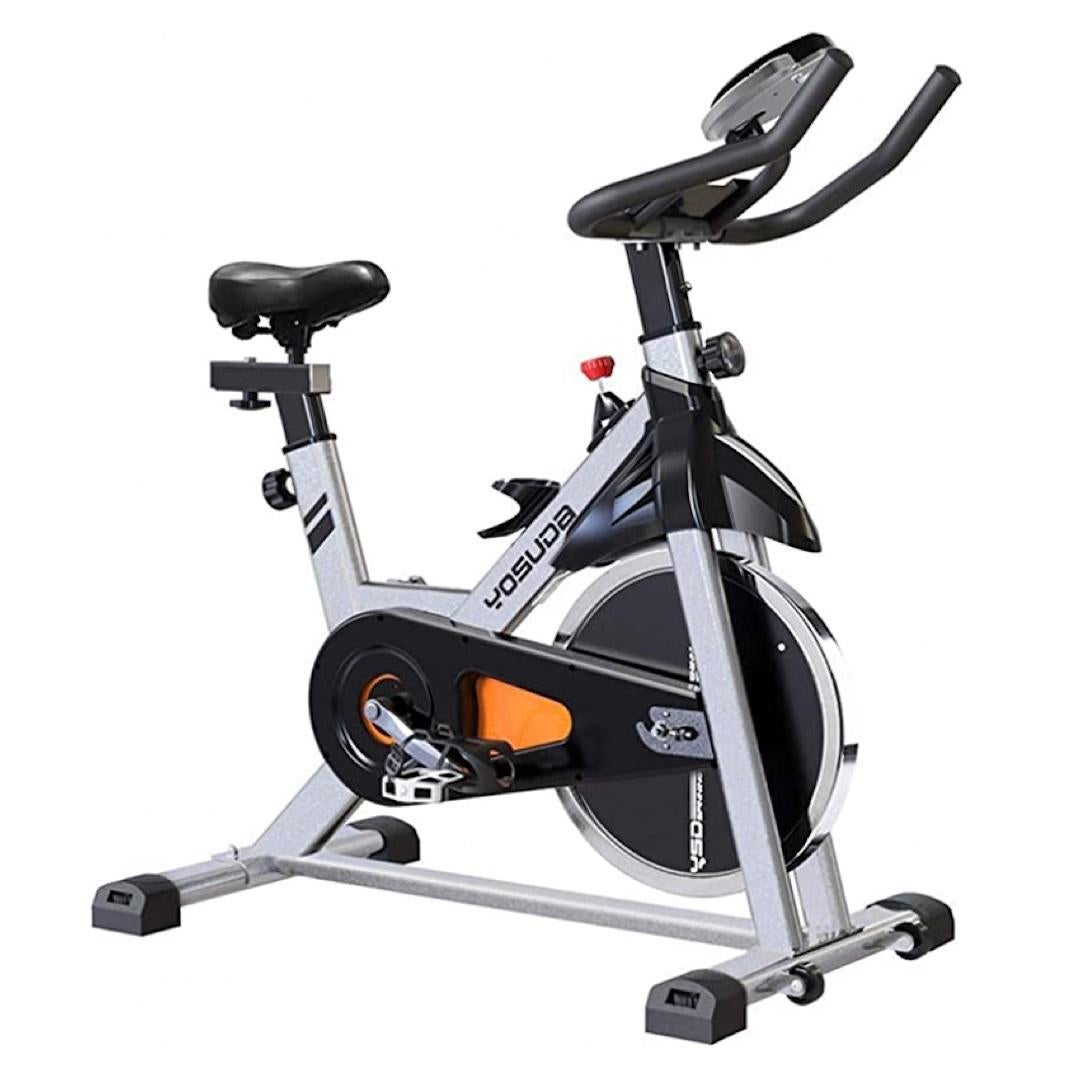
Peloton alternative: YOSUDA Indoor Cycling Bike

Yosuda via Amazon


This stationary bike has a belt-driven system for a smooth and quiet ride, an adjustable non-slip handlebar and a tablet holder. Its LCD monitor tracks time, speed, distance and calories burned. There is a water bottle holder and wheels on the bike, so that it can easily be moved.

Yosuda indoor cycling bike, $210 with coupon (reduced from $440)


Sunny Health & Fitness indoor exercise bike: $330
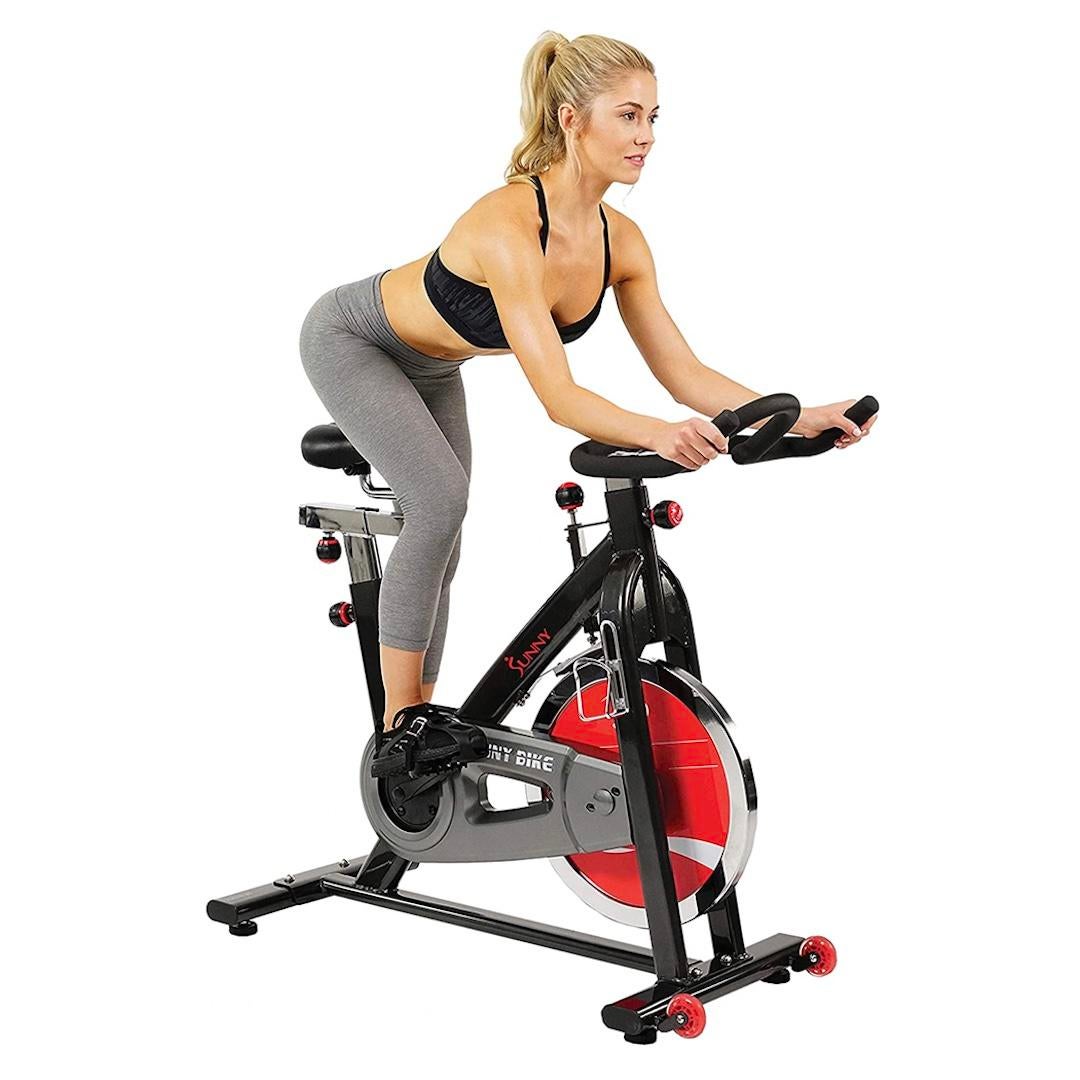
Peloton alternative: Sunny Health & Fitness Indoor Exercise Bike

Sunny Health & Fitness


This spin bike has a weighted flywheel and quiet belt drive system. It has an adjustable seat and handlebars, plus a water bottle holder. Stream your workout on your TV or a laptop in front of you, or invest in a tablet holder for this bike’s handlebars, as it doesn’t come with a tablet or workout streaming subscription.

Sunny Health & Fitness indoor exercise bike, $330 (reduced from $399)


The best rowing machine gift ideas

Rowing has become the hot new fitness trend. Shake up your fitness routine in 2023 with a new rower for your home gym.

Hydrow Rower: $2,295 and up
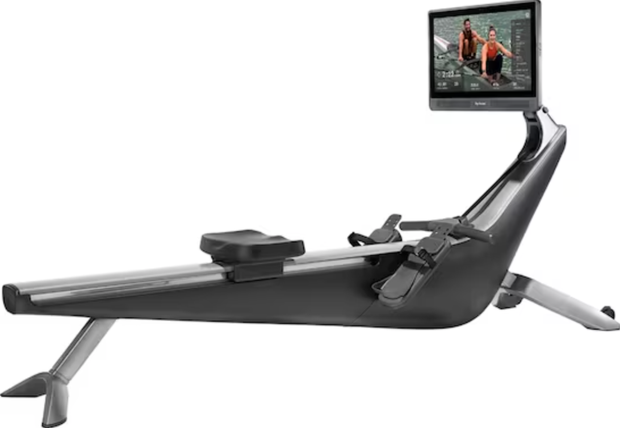
Hydrow Rowing Machine

Best Buy


The Hydrow rowing machine features an adjustable 22-inch HD screen, an aluminum and steel frame and a customizable footbed. The Hydrow Rower fits heights up to a 36-inch inseam and weights up to 375 pounds. Rated 4.8 stars at Best Buy.

Learn more about the Hydrow rower, here.

Hydrow Rower, $2,295 (regularly $2,495)

Hydrow Rower + 1 year Hydrow subscription, $2,701 (regularly $2,951)


Hydrow Wave Rower: $1,695 and up
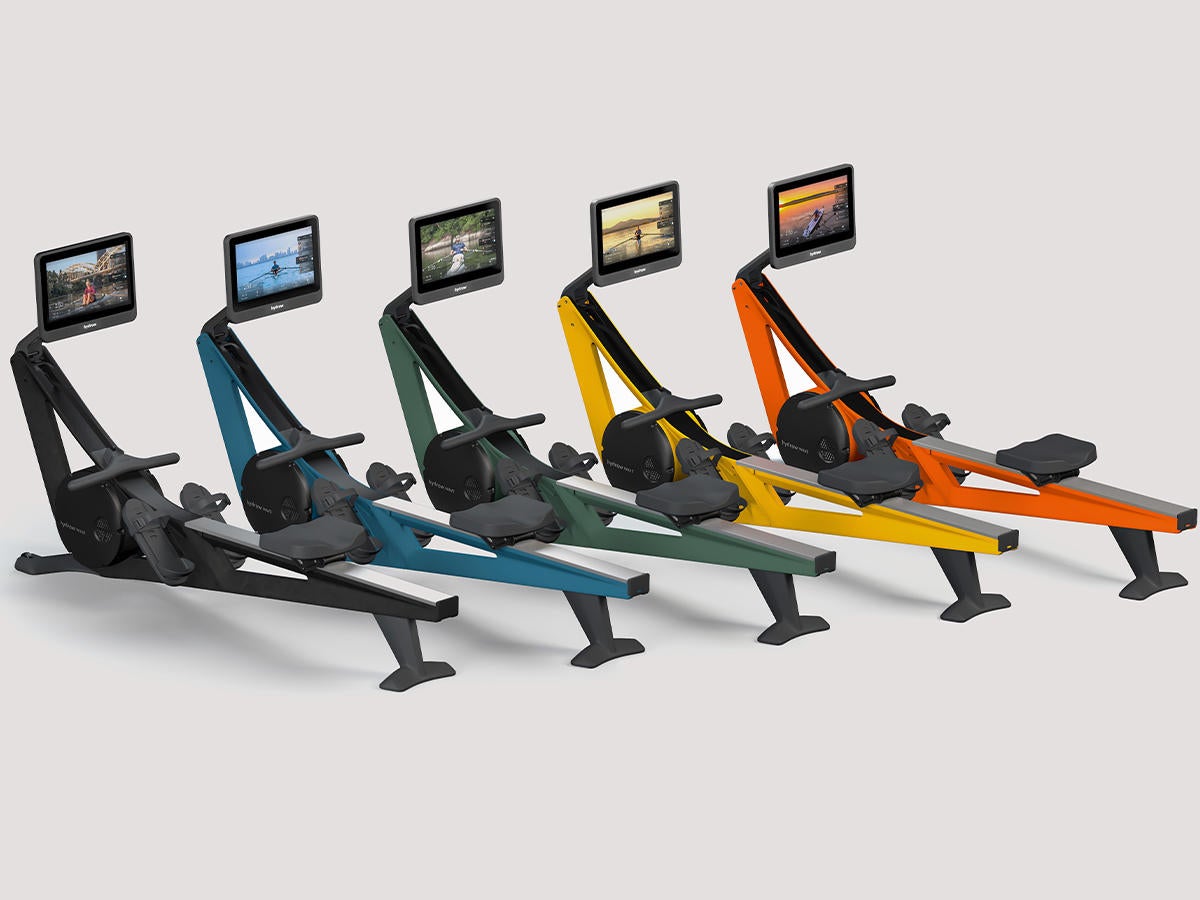
color-rower.jpg

Hydrow


The Hydrow Rower’s small-space-suitable successor features a 16-inch HD screen, stainless steel seat track, durable polymer frame and an adjustable footbed. Despite its smaller size, the Hydrow Wave also fits heights up to a 36-inch inseam and weights up to 375 pounds. 

Hydrow Wave rowing machine, $1,695


Echelon Sport exercise rower: $497
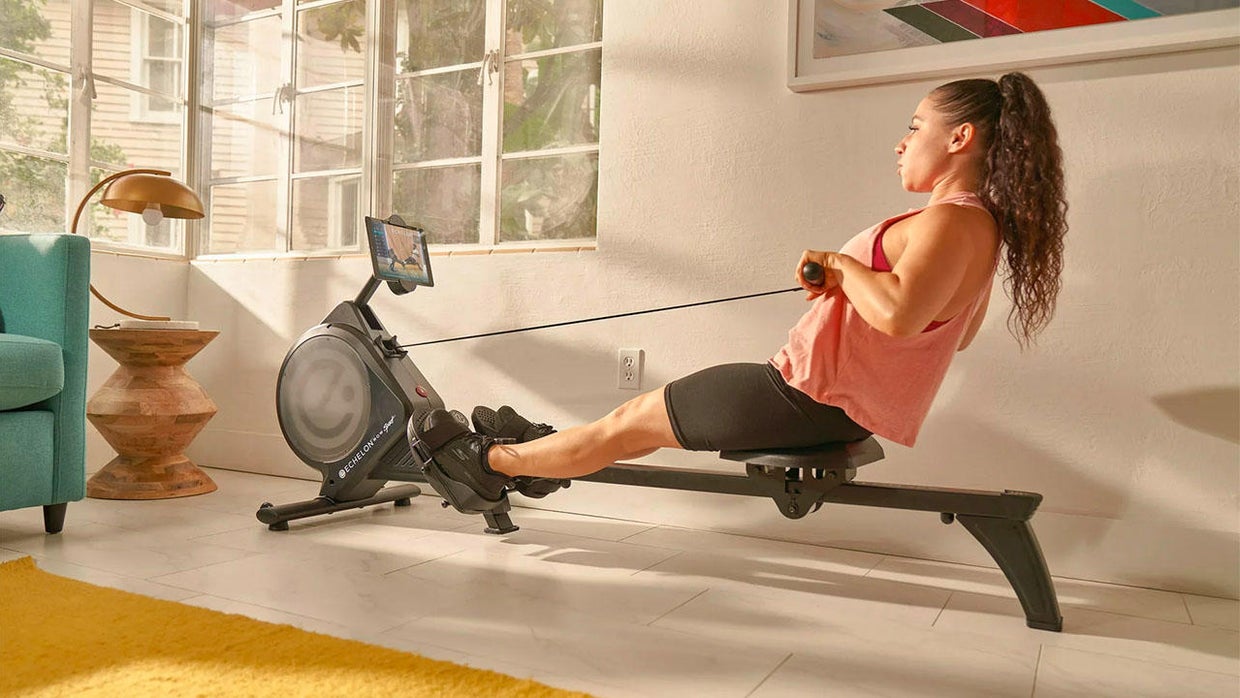
walmart-echelon-sport-exercise-rower.jpg

Walmart


The Echelon sport exercise rower features 32 levels of magnetic resistance and a built-in tablet holder (up to 12.9 inches). It easily folds up when not in use for easy storage.

The Echelon Sport exercise rower includes a 30-day free trial membership to Echelon Premiere, with more than 40 daily live and 15,000 on-demand fitness classes. (Echelon Premiere costs $34.99 per month after that; membership is not required to use the rower.)  

Echelon Sport exercise rower, $497 (reduced from $597)


The best treadmill deals

If the weather outside is frightful, you might as well workout inside where it’s warm. We’ve found treadmill deals that suit a variety of budgets.

NordicTrack T Series 6.5 S treadmill: $649 and up
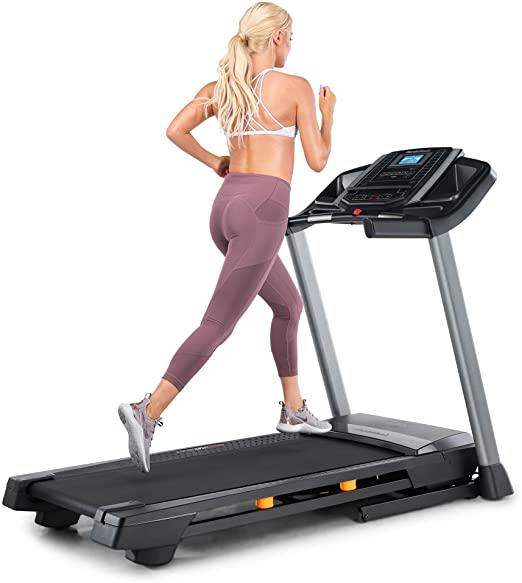
NordicTrack T series 6.5 S treadmill

Amazon


The NordicTrack T Series 6.5 S treadmill is equipped with one-touch, zero to 10 percent incline control, can reach speeds of up to 10 mph, and be folded up into the frame for storage. It has a 300-pound capacity.

“Precise and well-crafted, the unit smoothly folds upright to reduce the footprint in my living space,” reviewer Morgan Powers says. “The console immediately synced with my home Wi-Fi. Graphics/audio on the 10-inch monitor are crystal clear.”

The treadmill is available in two varieties: one with a five-inch display screen; and, one with a 10-inch display screen. 

NordicTrack T Series 6.5 S treadmill (5″ inch display screen), $649

NordicTrack T Series 6.5 S treadmill (10″ inch display screen), $958 (reduced from $999)


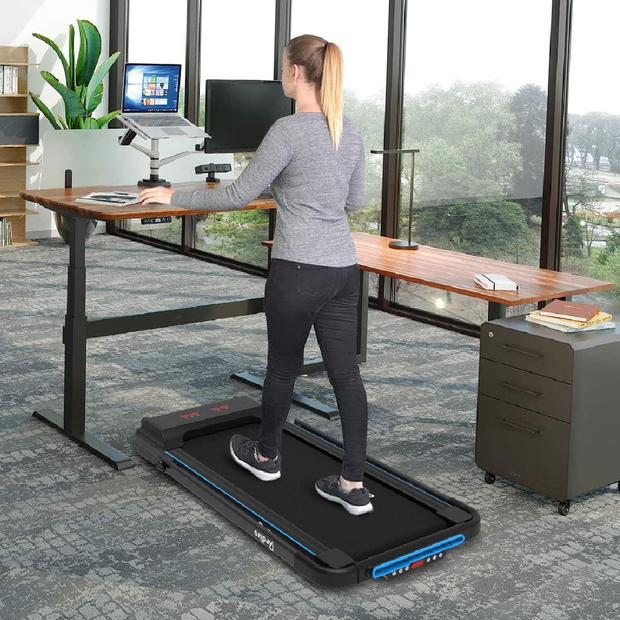
Redliro under desk treadmill: $312
under-desk-treadmill.png

Amazon


Consider this under-desk treadmill if you work from home and want to get more movement into your daily routine. 

This motorized walking and jogging treadmill offers 12 preset exercise modes as well as the option to manually adjust the setting for your perfect workout. The treadmill is currently 35{35112b74ca1a6bc4decb6697edde3f9edcc1b44915f2ccb9995df8df6b4364bc} off at Amazon.

Redliro under desk treadmill, $312 (reduced from $480)


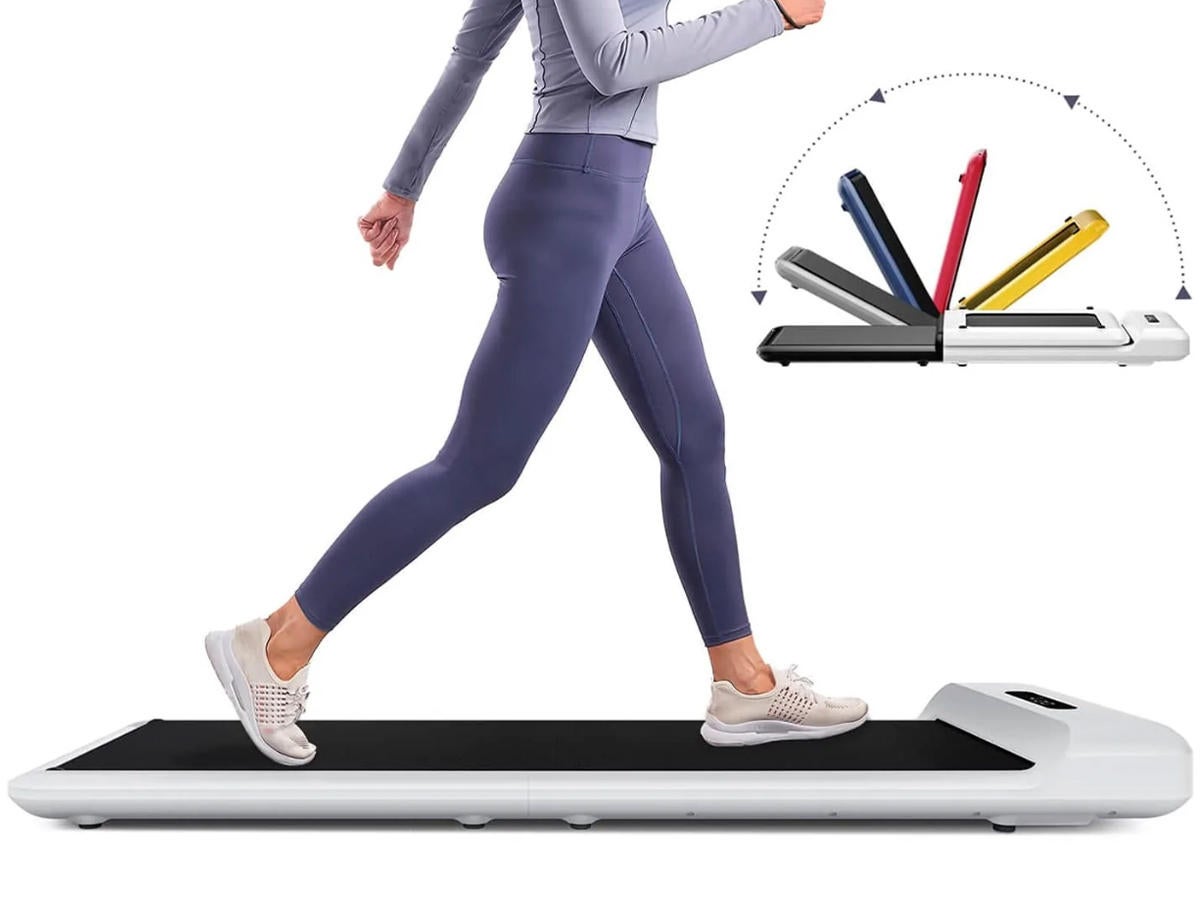
WalkingPad C2 Mini foldable walking treadmill: $550
walking-pad.jpg

WalkingPad


Know someone who works from home and doesn’t have a ton of space? This mini walking treadmill is the perfect size to slide under a standing desk. When it’s not in use, this fitness machine can be folded to almost half its size for easy storage. 

Choose from five colors.

WalkingPad C2 Mini foldable walking treadmill, $550 (regularly $600)


The best health and workout supplement deals

Turn your office into a home gym. These apartment-friendly workout setups will transform your space and your body.

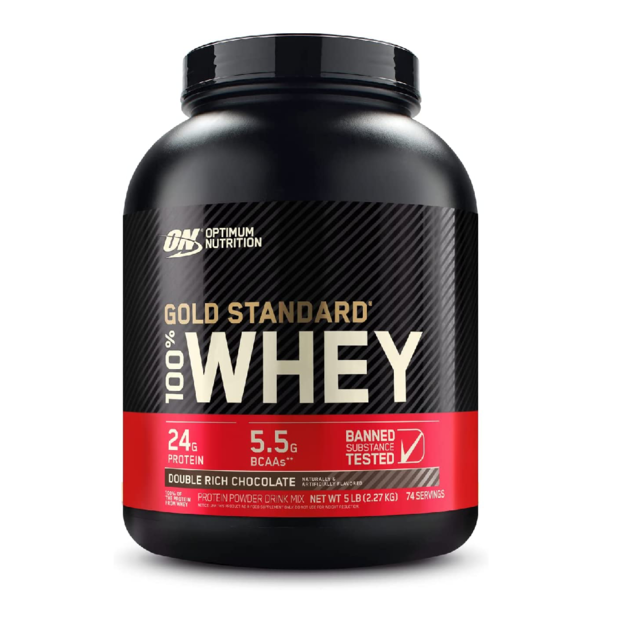
Optimum Nutrition whey protein powder: 
optimum-nutrition.png

Amazon


If one of your 2023 goals is to build muscle you’ll need a good protein powder. Right now, you can get this best-selling whey protein powder on sale on Amazon.

Optimum Nutrition whey protein powder, $65 (reduced from $86)


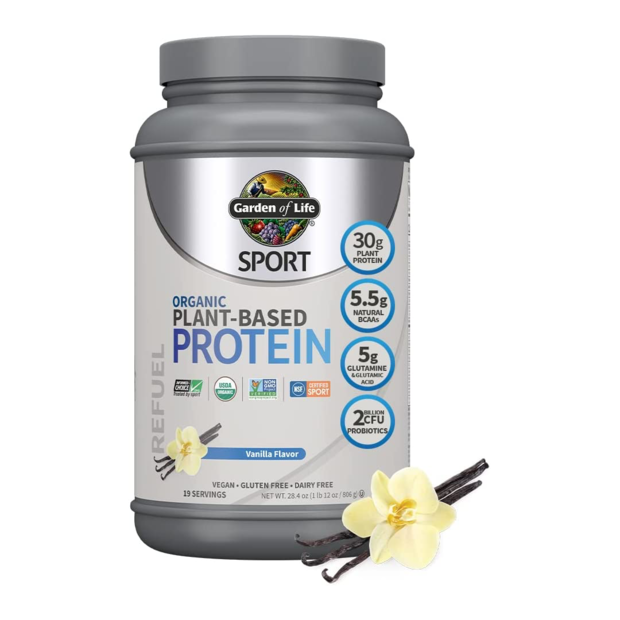
Garden of Life vegan sport protein powder: $40
garden-of-life.png

Amazon


If you prefer plant-based protein, check out this deal on Garden of Life vegan protein powder. It’s made with pea protein, fruits and veggies, lentils and other plant-based high-protein ingredients. The powder has 30 grams of protein per serving and comes in two flavors; chocolate and vanilla.

Garden of Life vegan sport protein powder, $40 (reduced from $55)


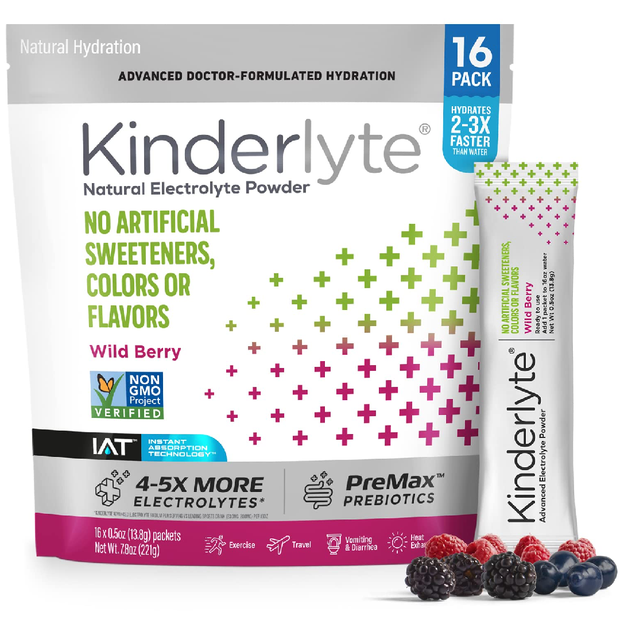
Kinderlyte advanced electrolyte powder: $23
kinderlyte-powder.png

Amazon


Replenishing your electrolytes after working out (or going to a New Years’ party) is important. If you’ve been sweating at the gym, you need to replenish your electrolytes such as sodium and potassium for proper post-workout recovery

Kinderlyte electrolyte powder, from Jessica Biel’s company Kinderfarms, provides advanced hydration without artificial sweeteners or colors. It also has significantly less sugar than traditional sports drinks.

Kinderlyte advanced electrolyte powder, $23 (reduced from $25)


The best wearable fitness tracker deals

Track your fitness goals this year with a top-rated wearable. Shop smart watches and smart jewelry from Oura, Fitbit, Apple, Samsung and more.

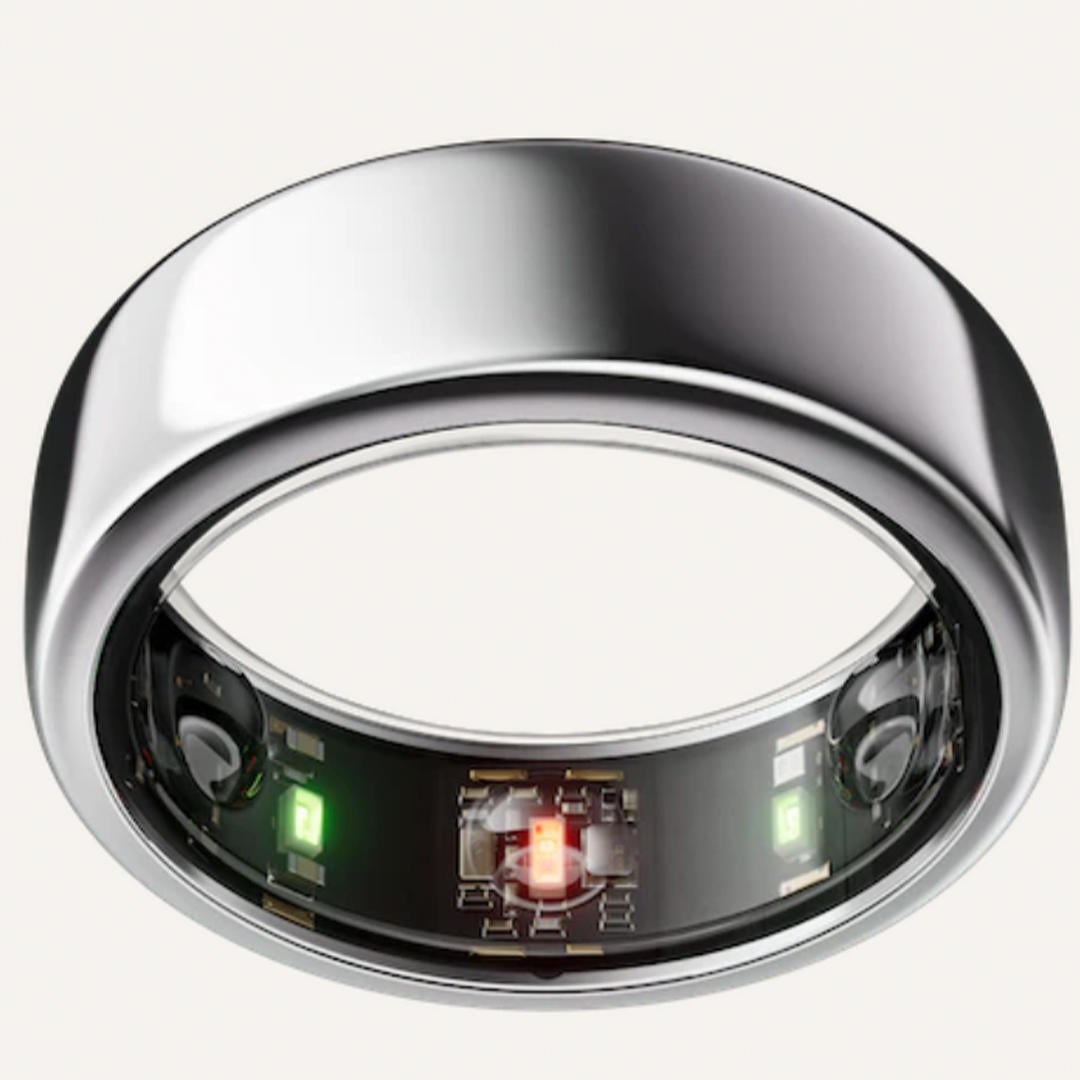
Oura Ring Gen3: $349
oura.jpg

Oura


The Oura Ring tracks how well you sleep, your daily movement and heart rate, can help set health goals, take you through guided meditations and more. This small wearable can sync your health and workout data from your favorite apps through Apple Health, Google Fit, Strava and Natural Cycles.

Available in two styles and five metal finishes. 

Oura Ring Gen3, $349


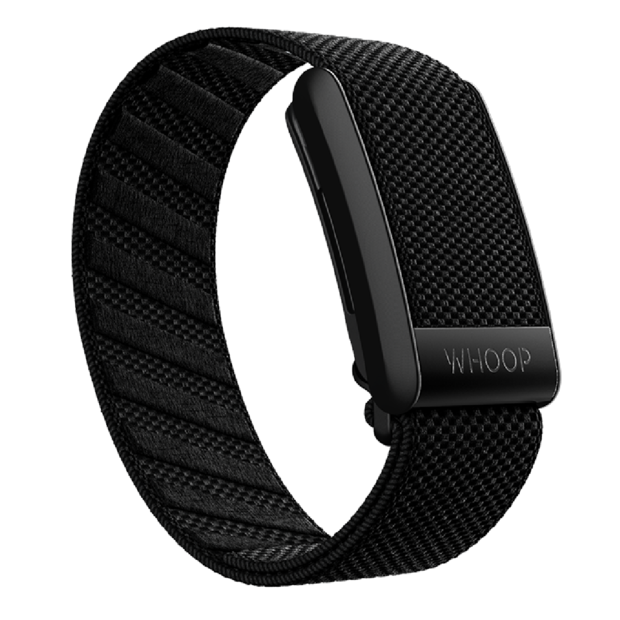
Whoop: $20 and up per month
whoop.png

Whoop


Whoop is designed to help you track your health habits including sleep, workouts and recovery. With the Whoop device and compatible mobile app, you can receive insights as to what to do to improve your recovery and health scores for a healthier and happier 2023.

A membership subscription is required. Whoop currently offers memberships for $20-$30 per month depending on commitment length. The standard Whoop band is included with membership.

Whoop, $20 and up per month


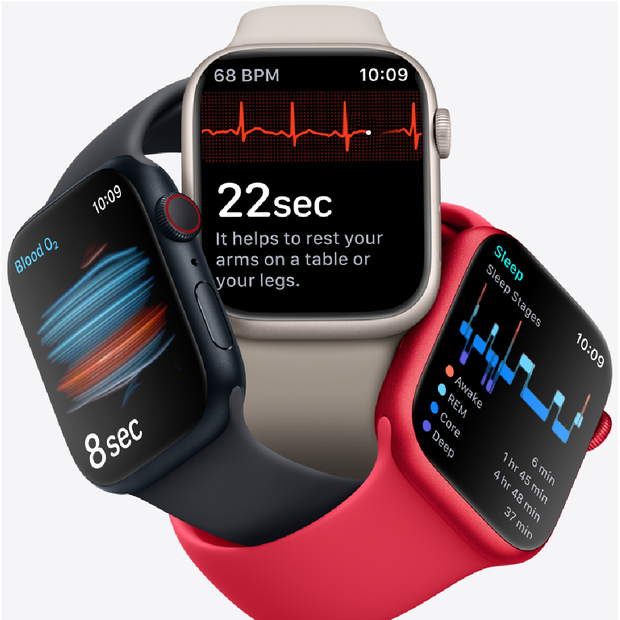
Apple Watch Series 8: $369 and up
apple-watch-8.png

Apple


Apple Watch Series 8, the latest addition to the Apple Watch lineup, features the new S8 chip for improved performance. It also includes an always-on display and new watch face options. The Apple Watch 8 will has a larger battery than previous models: Battery life can be extended to 36 hours when in low-power mode. The Apple Watch 8 features a durable design and is swim-proof, dust-proof and crack-resistant. 

The Apple Watch 8 has a number of health-tracking features, including an optical heart sensor, electrical heart sensor for ECG, blood oxygen sensor and a new body temperature sensor.

The Apple Watch 8 is available in 41mm and 45mm sizing options. Shoppers can choose between stainless steel or aluminum casing and several different colors. 

Apple Watch 8 GPS (41mm), $369 (reduced from $399)

Apple Watch Series 8 GPS (45mm), $399 (regularly $429)


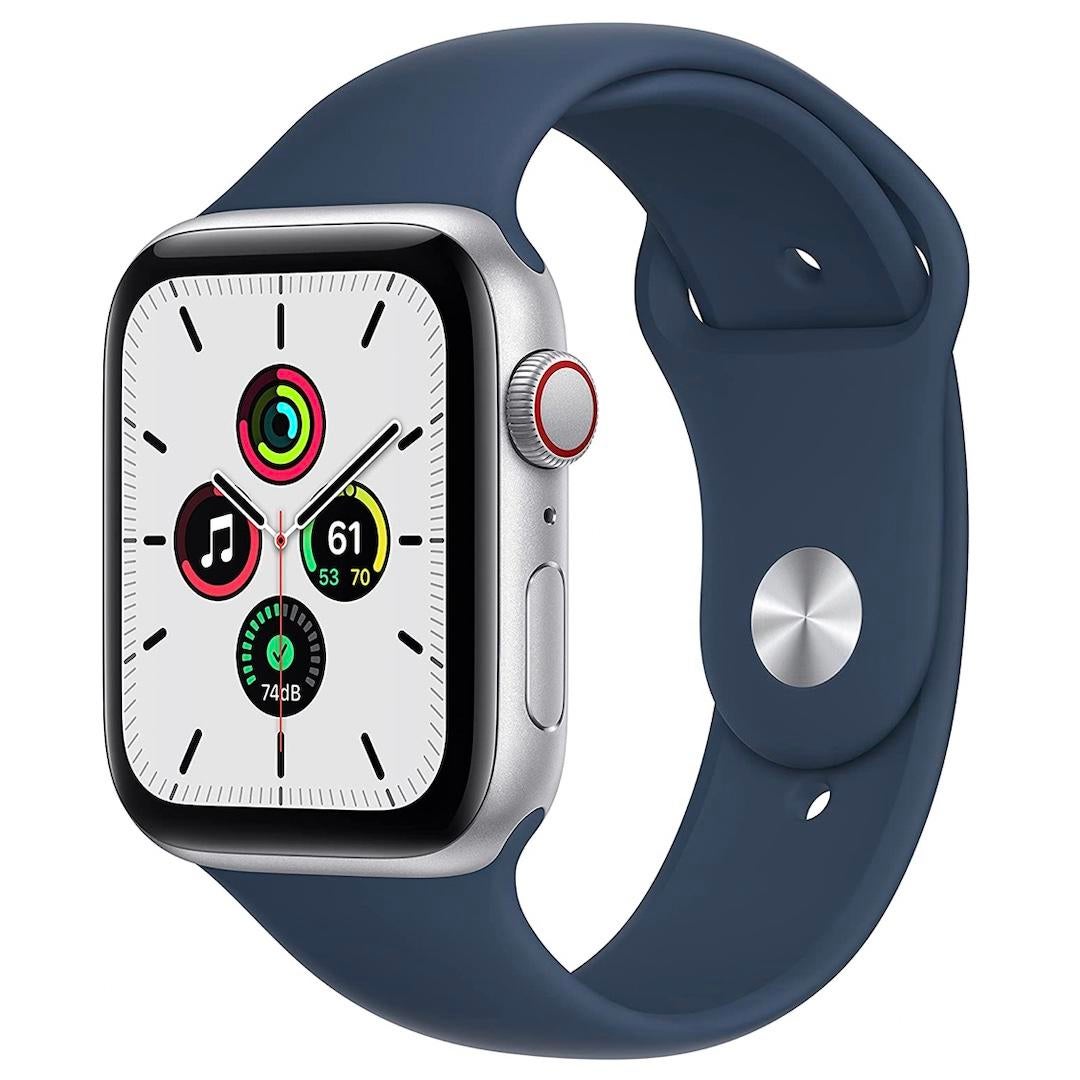
Apple Watch SE (1st generation): $199
Apple Watch SE

Amazon


The Apple Watch SE, the most affordable model in the Apple Watch lineup, is even more affordable now with this deal at Walmart. The smartwatch offers a 40mm screen and boasts a wide range of health and fitness features. It can also be used to play music, check your tests and make calls when paired with your iPhone.

Apple Watch SE GPS (1st generation), $199 (reduced from $279)


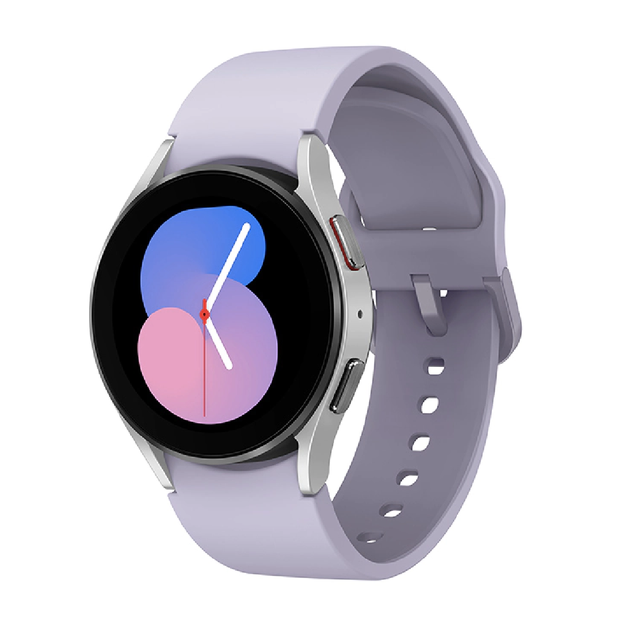
Samsung Galaxy Watch 5: $280 and up
watch5.png

Samsung


The Samsung Galaxy Watch 5 is an upgrade from the popular Samsung Galaxy Watch 4. It features 10W smart-charging capabilities, a notable upgrade from the slower 5W charging offered by the prior model. It also offers an advanced workout algorithm and sleep tracking technology.

The Galaxy Watch 5 features an advanced bioactive sensor that collects more accurate data. This data can be managed and tracked in the Samsung Health app.

This is the first time that Samsung is offering its sapphire glass on its non-premium smartwatch options. (Sapphire glass isn’t actually glass. It is a ceramic that mimics the transparency of glass and offers more durability.)

Like prior Galaxy Watch models, the Galaxy Watch 5 is available in 40mm and 44mm display sizes. It is also available in five colors. 

Samsung Galaxy Watch 5, $280 and up


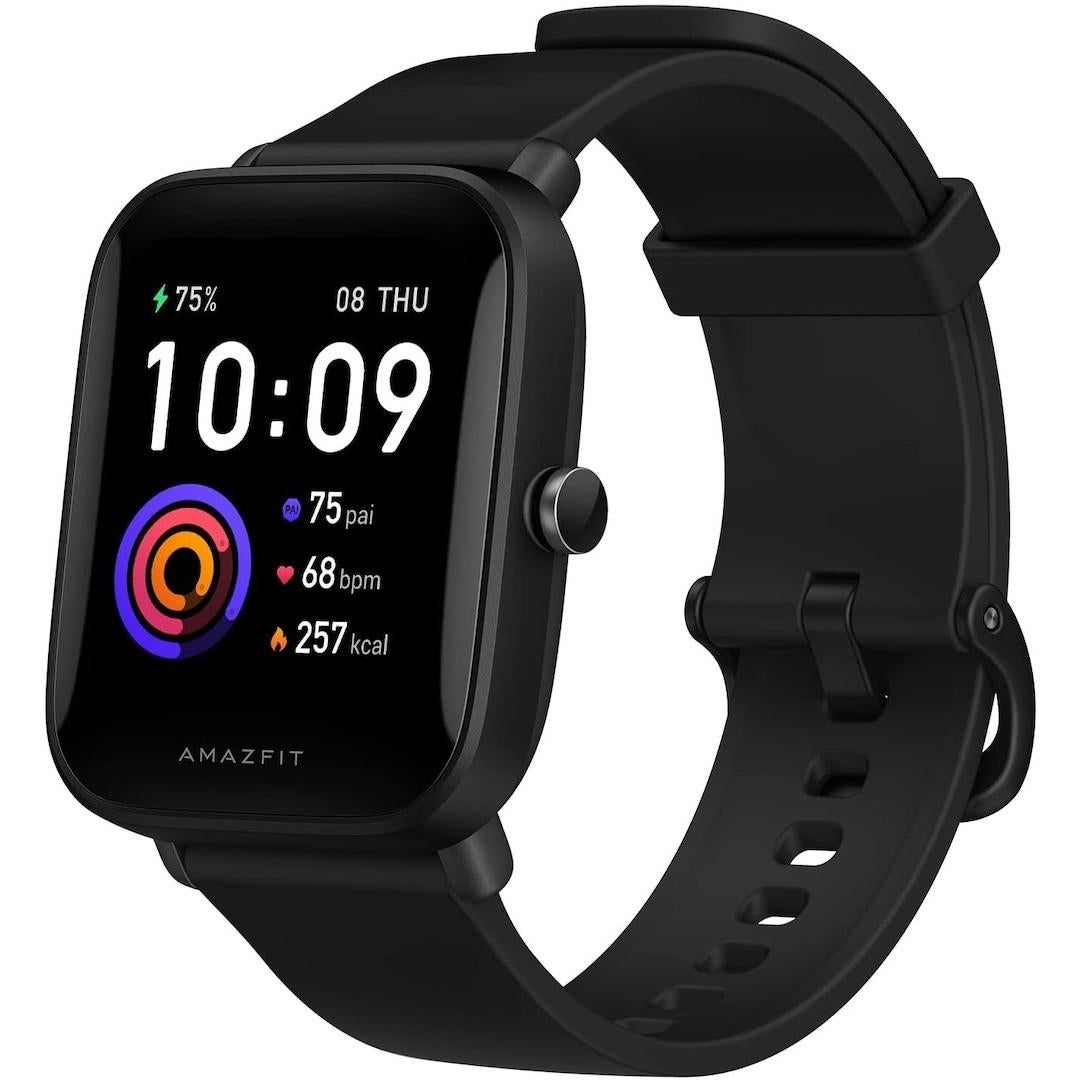
Amazfit Bip U: $45
amazfit.jpg

Amazfit/Amazon


A water-resistant, budget-friendly alternative to the Apple Watch, and compatible with both Android and iOS, the Amazfit Bip U boasts a longer battery life—up to nine days per charge—and a variety of activity tracking options. 

Measure heart rate, blood oxygen levels, breathing, sleep quality and even stress levels. Women can track periods and get reminders when it’s almost that time of the month. 

Amazfit Bip U, $45 (reduced from $60)


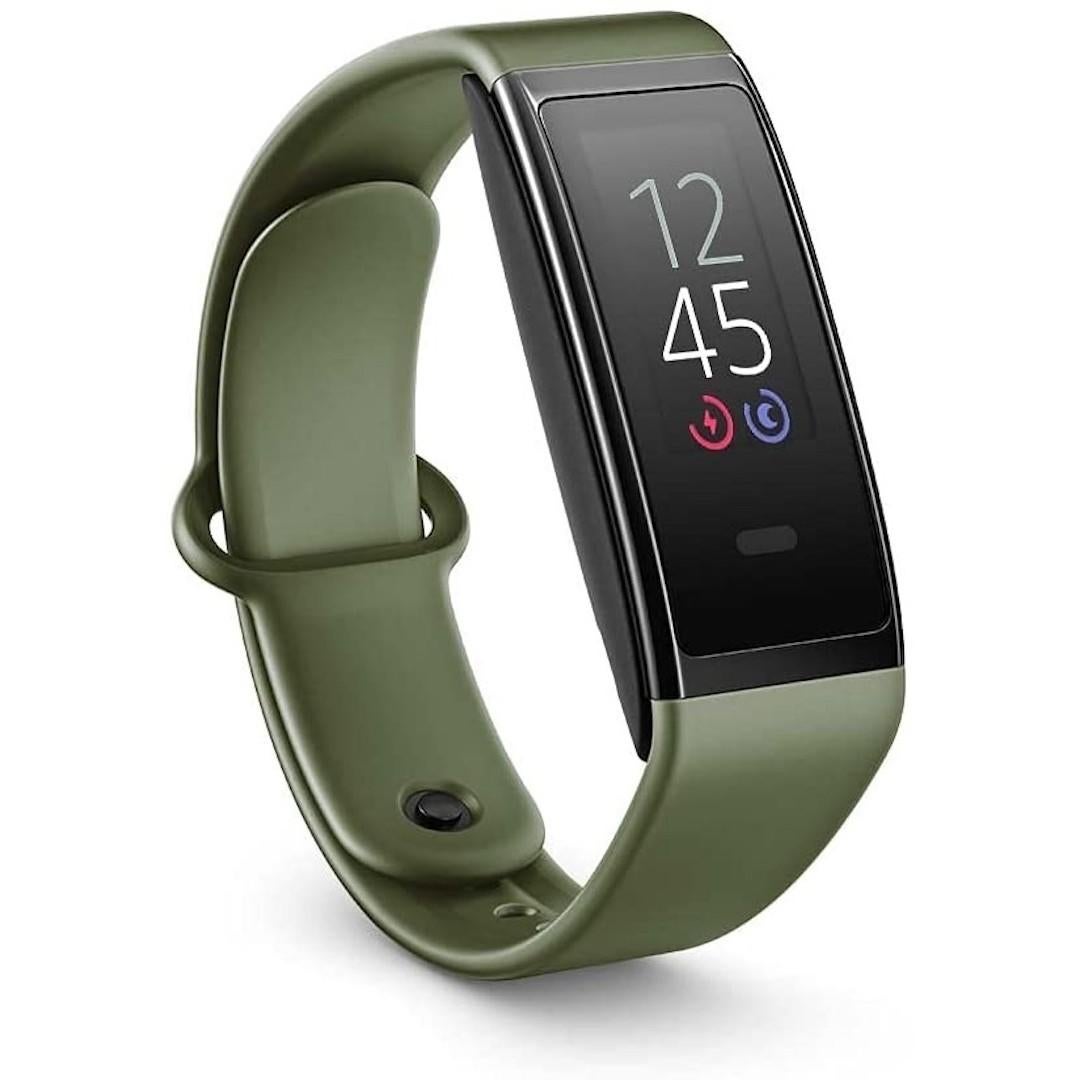
Amazon Halo View: $50
amazon-halo.jpg

Amazon


Released in late 2021, the slender, Alexa-enabled Amazon Halo View measures heart rate, activity, sleep and even blood-oxygen levels. It also offers connectability to popular health apps, such as Headspace and Bettersleep, as well as connectivity to your phone. It also boasts a seven-day battery life.  

Another added bonus? Each watch comes with a 12-month membership subscription with access to workout and programs. After the trial period, it auto-renews at $4 per month. 

Amazon Halo View, $50 (reduced from $80)


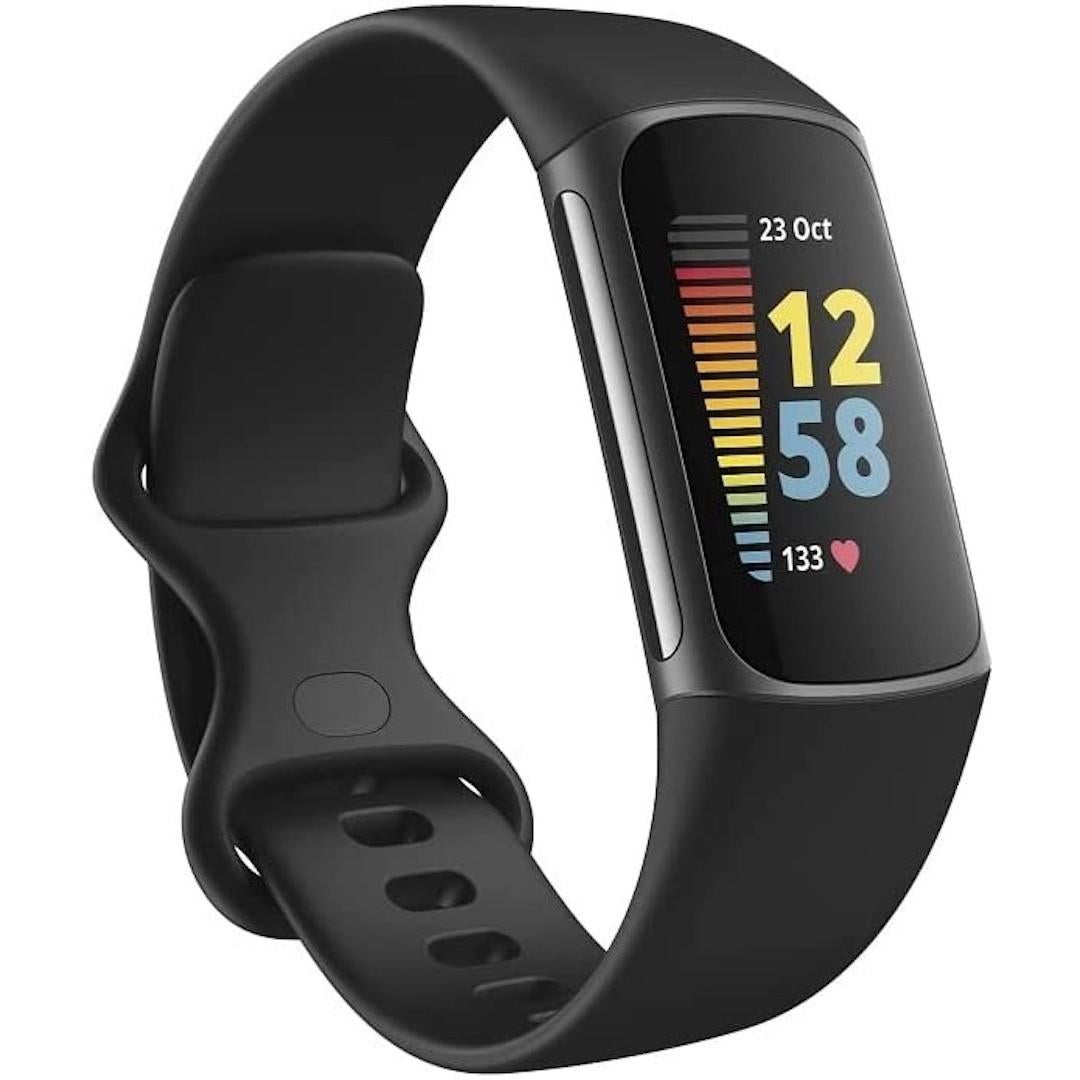
Fitbit Charge 5: $130
fitbit-charge-5.jpg

Fitbit/Amazon


The latest incarnation of the popular Charge line from Fitbit, this well-equipped activity and health tracker packs advanced technology into a slender device and features a color touchscreen. The smartphone-enabled device helps you manage stress and stay on top of heart health and sleep. 

Android users can even respond to text messages.

Fitbit Charge 5, $130 (reduced from $180)


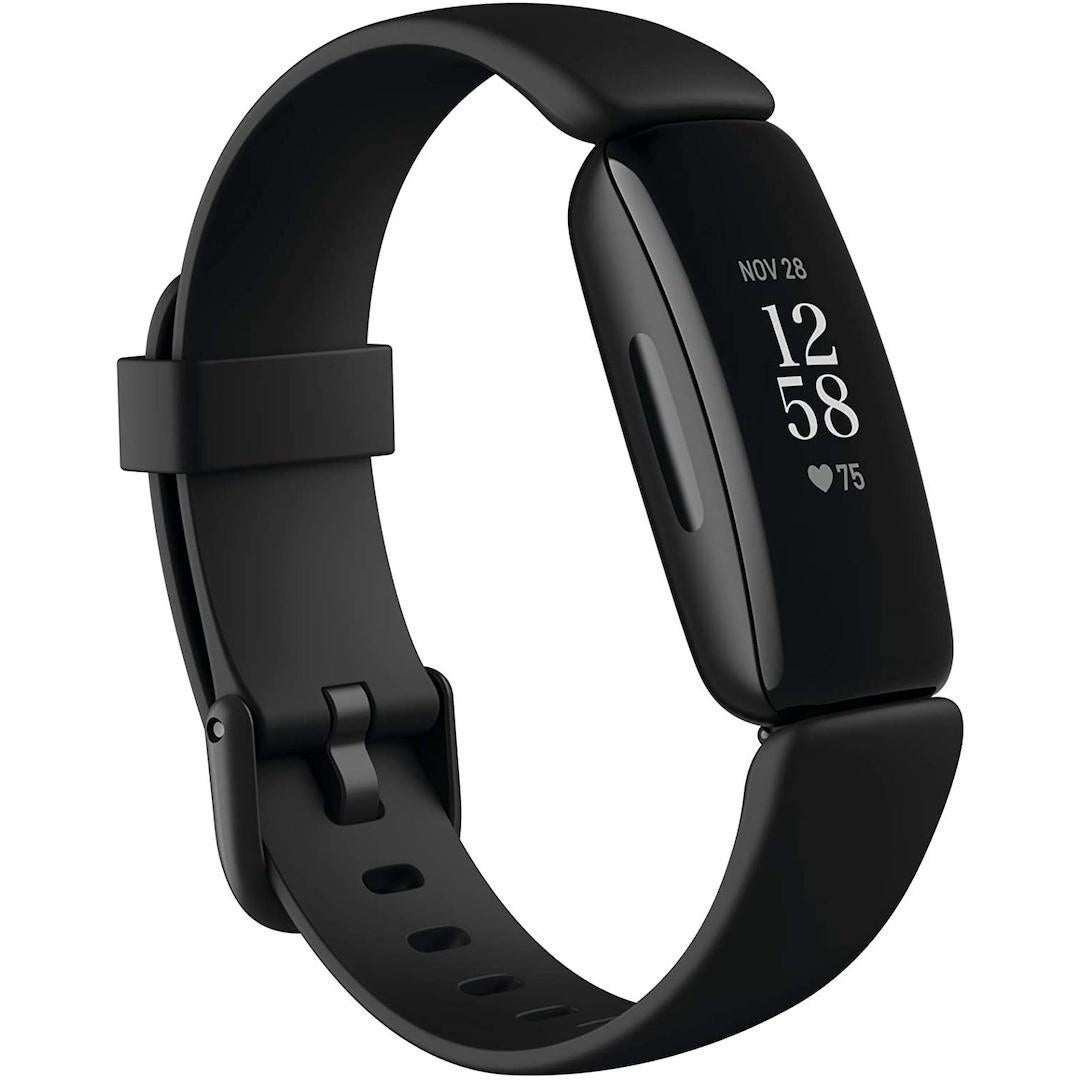
Fitbit Inspire 2: $56
fitbit-inspire.jpg

Fitbit/Amazon


A budget-friendly, no-frills Fitbit that gets the job done, this easy-to-use, entry-level activity and sleep tracker offers a whopping 10-day battery life, various exercise modes, and 24/7 heart rate tracking. New subscribers receive a one-year, free trial of Fitbit Premium. 

Available in three colors (black, lunar white and desert rose) and with multiple accessory options. 

Fitbit Inspire 2, $56 (reduced from $100)


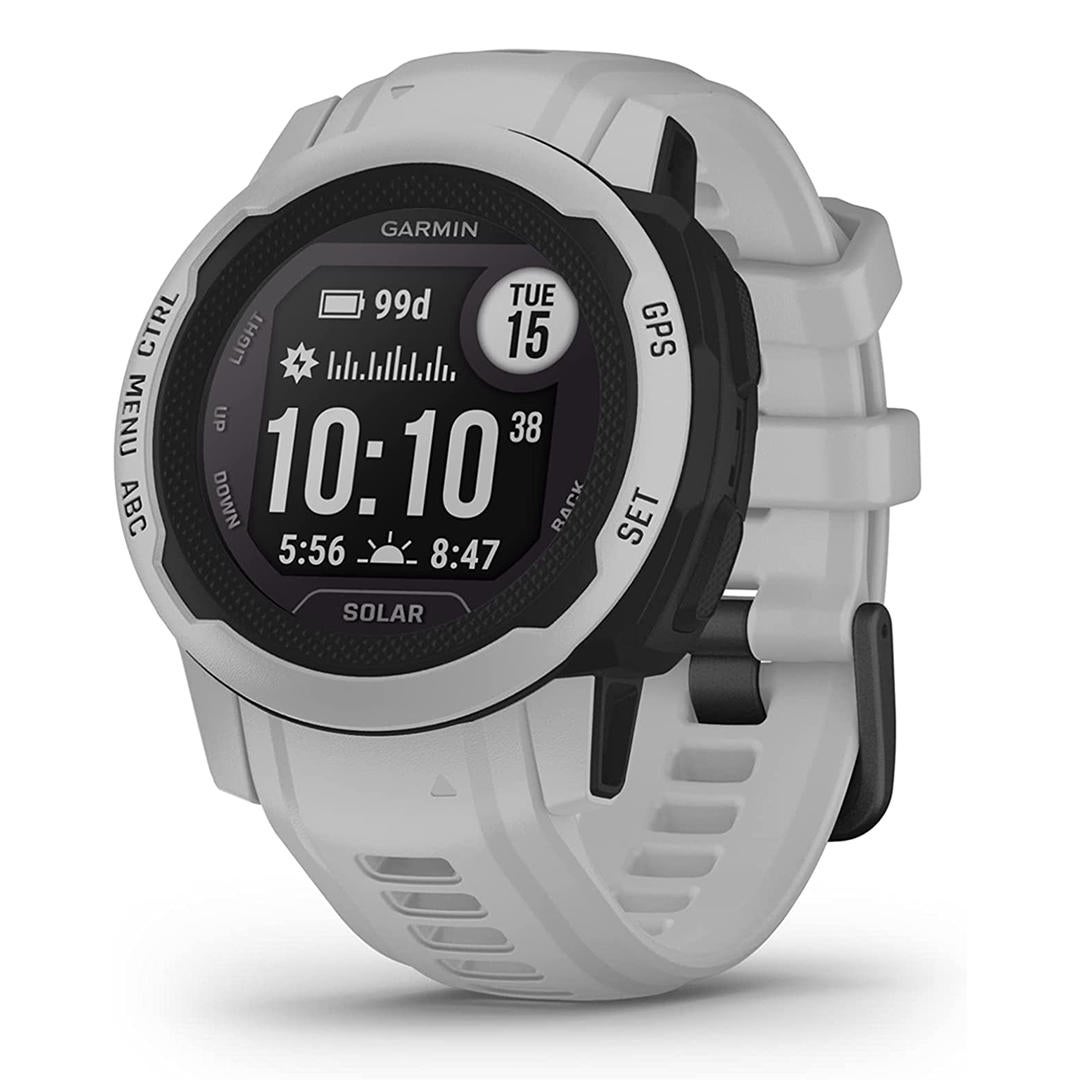
Garmin Instinct 2 Series: $398
Garmin Instinct 2 Series

Garmin via Amazon


The Garmin Instinct 2 Series was introduced in February. It’s built not just to be worn, but to be actively worn. It’s an outdoorsy, thermal- and shock-resistant GPS smartwatch that boasts damage- and scratch-resistant glass. It measures your heart rate, stress level, sleep metrics, blood oxygen, your fitness age and more. It delivers daily workout prompts, comes with built-in workout and sport apps and even tracks your mountain-biking stats, if any. Download apps from Garmin’s Garmin Connect IQ store to up the watch’s game even more, and track everything from hydration to menstrual cycles. The battery will last up to 30 hours in GPS mode — and up to 28 days in smartwatch mode. Or get the solar version for what Garmin says will be unlimited battery life. 

The Instinct 2 Series comes in two case sizes: 40mm and 45mm. It also comes in a range of editions, from standard to surf and more. Pictured above is the 40mm, solar, standard-edition Instinct 2 in mist gray. This version of the watch lists for $450.

Garmin Instinct 2 Series (40mm) standard edition, solar (mist gray), $398 (reduced from $450)


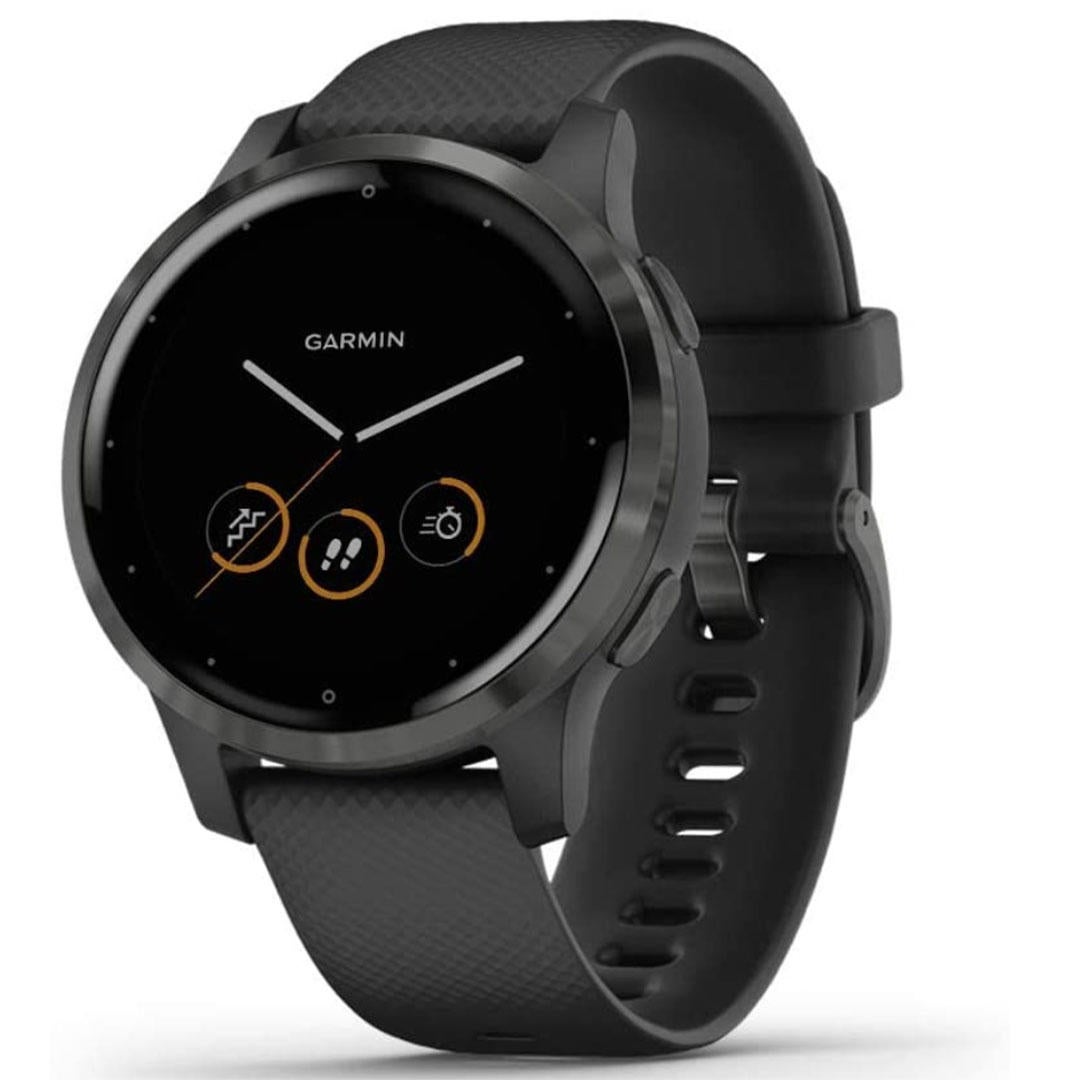
Garmin Vivoactive 4: $200
garmin-vivoactive-4.jpg

Garmin Store via Amazon


The Garmin Vivoactive 4 with a 45mm case is 45{35112b74ca1a6bc4decb6697edde3f9edcc1b44915f2ccb9995df8df6b4364bc} off right now at Amazon. This Garmin smartwatch uses Garmin’s Pulse Ox technology to track your energy levels, respiration, menstrual cycle, stress, sleep, heart rate, hydration levels and more. It can stream downloaded music from Spotify and Amazon Music. When paired with your smartphone, the watch can receive incoming notifications.   

This Garmin smartwatch features more than 20 preloaded GPS and indoor-sports apps. Want a personal trainer on your wrist? This watch can show you animated workouts via your watch screen.   

Available in a variety of colors. The price listed below is for the black watch.

Garmin Vivoactive 4 (black), $200 (reduced from $330)


The best workout shoes and activewear deals

Complement any fitness gift with some top-rated workout wear. Shop our top-rated sneaker and athleisure picks. 

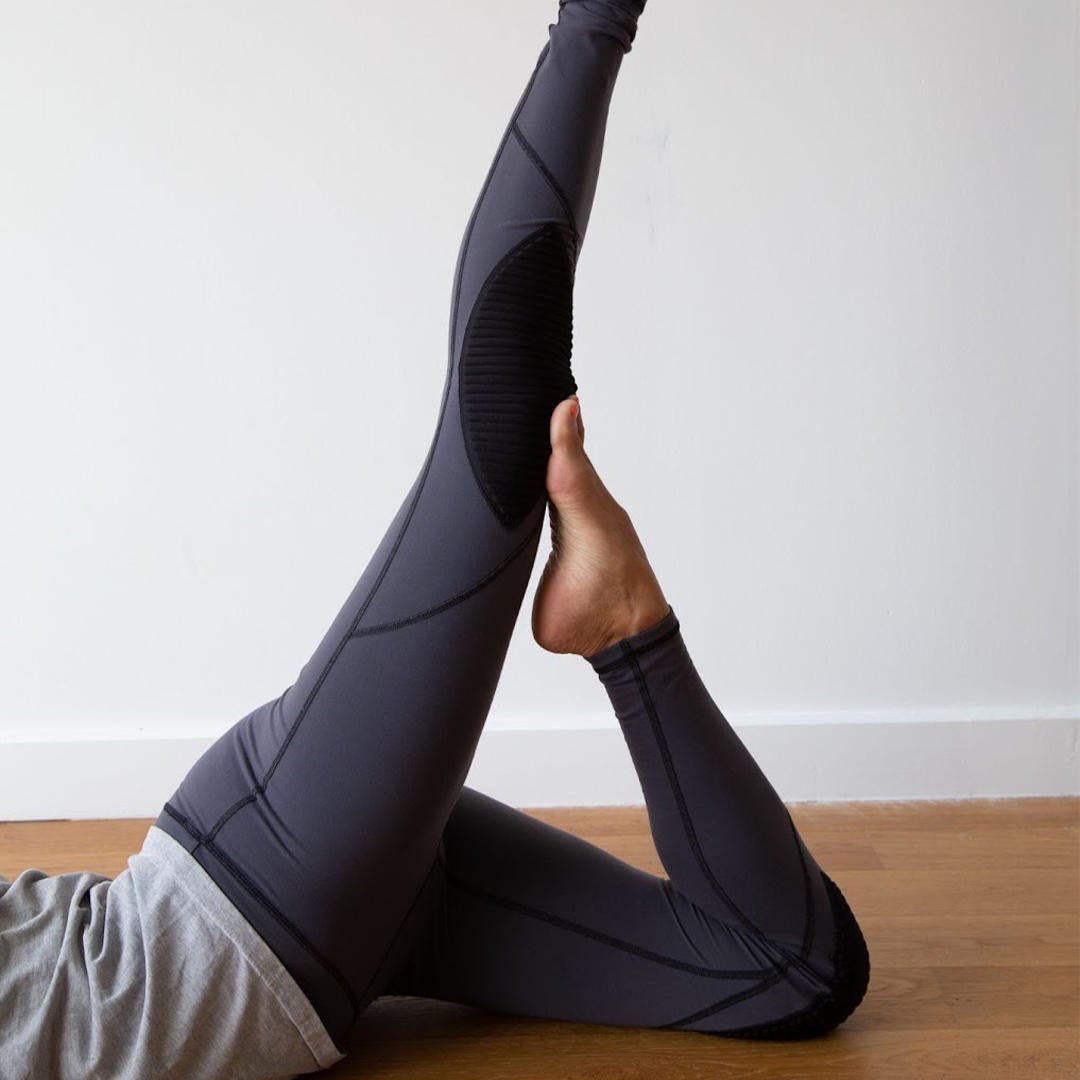
MAÄT leggings: $148
maat.jpg

MAÄT


These futuristic-looking leggings provide protection and cushioning for your knees while you workout. MAÄT’s moisture-wicking, stretchy leggings are designed with ultra-flexible ribbed knee pads that pad the area without being bulky, and are tapered to put wider coverage where it’s needed. 

“I wore these leggings to a pilates class,” said CBS Essentials senior writer Lily Rose. “I normally get knee pain when I use the reformer, but these leggings really cushioned the area and helped me hold my poses. Plus, the material is really soft, stretchy and the leggings are flattering.”

Select from three colors. 

MAÄT leggings, $148


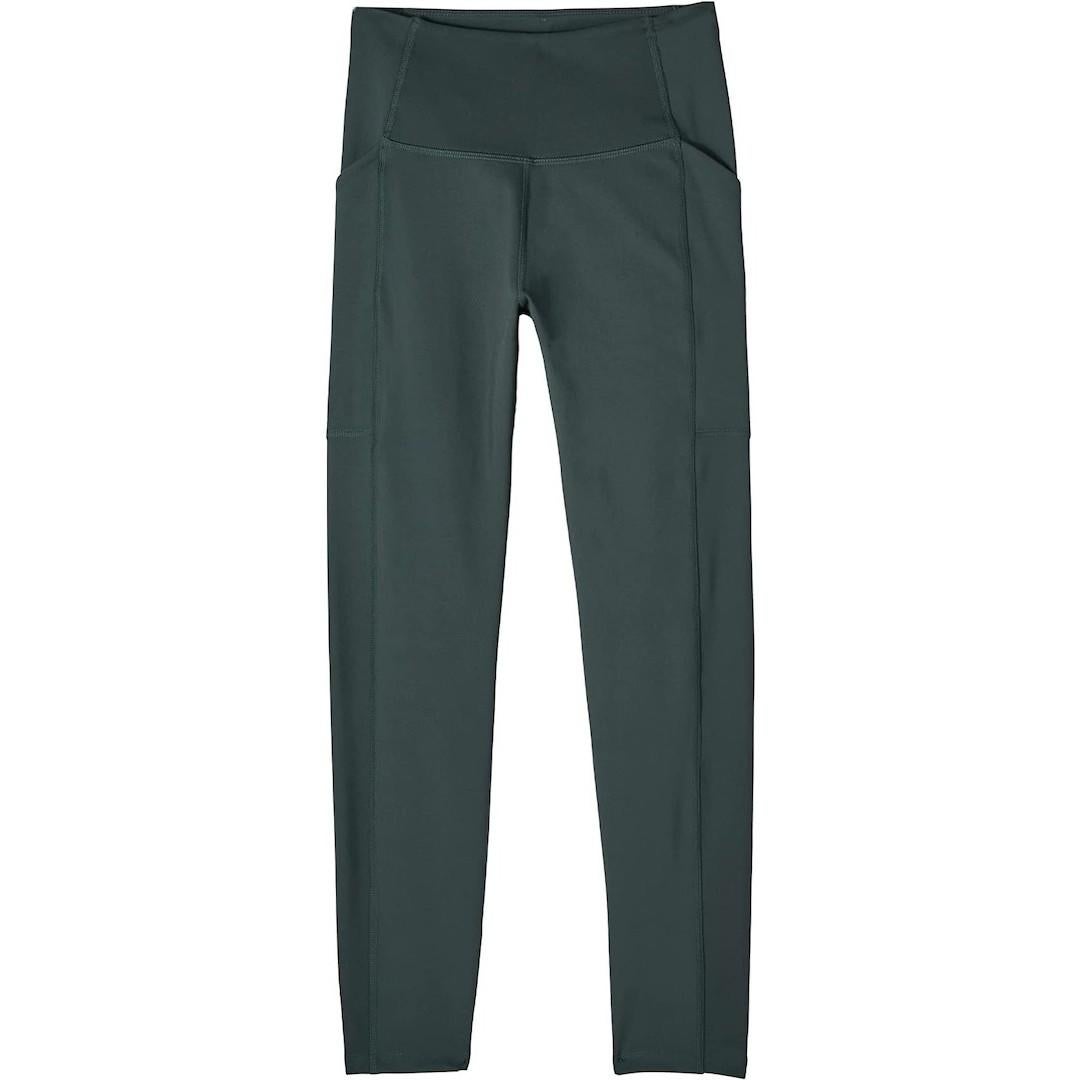
Girlfriend Collection compression pocket leggings: $70
girlfriend-collective.jpg

Girlfriend Collective


These Girlfriend Collective leggings are one of Oprah’s Favorite Things 2022. The TV icon loves these “sweat-wicking, high-compression and high-waisted,” leggings from size-inclusive brand Girlfriend Collective, made out of recycled plastic bottles. 

Available in sizes XS to 6XL.

Girlfriend Collective compression pocket leggings, $70 (reduced from $88)


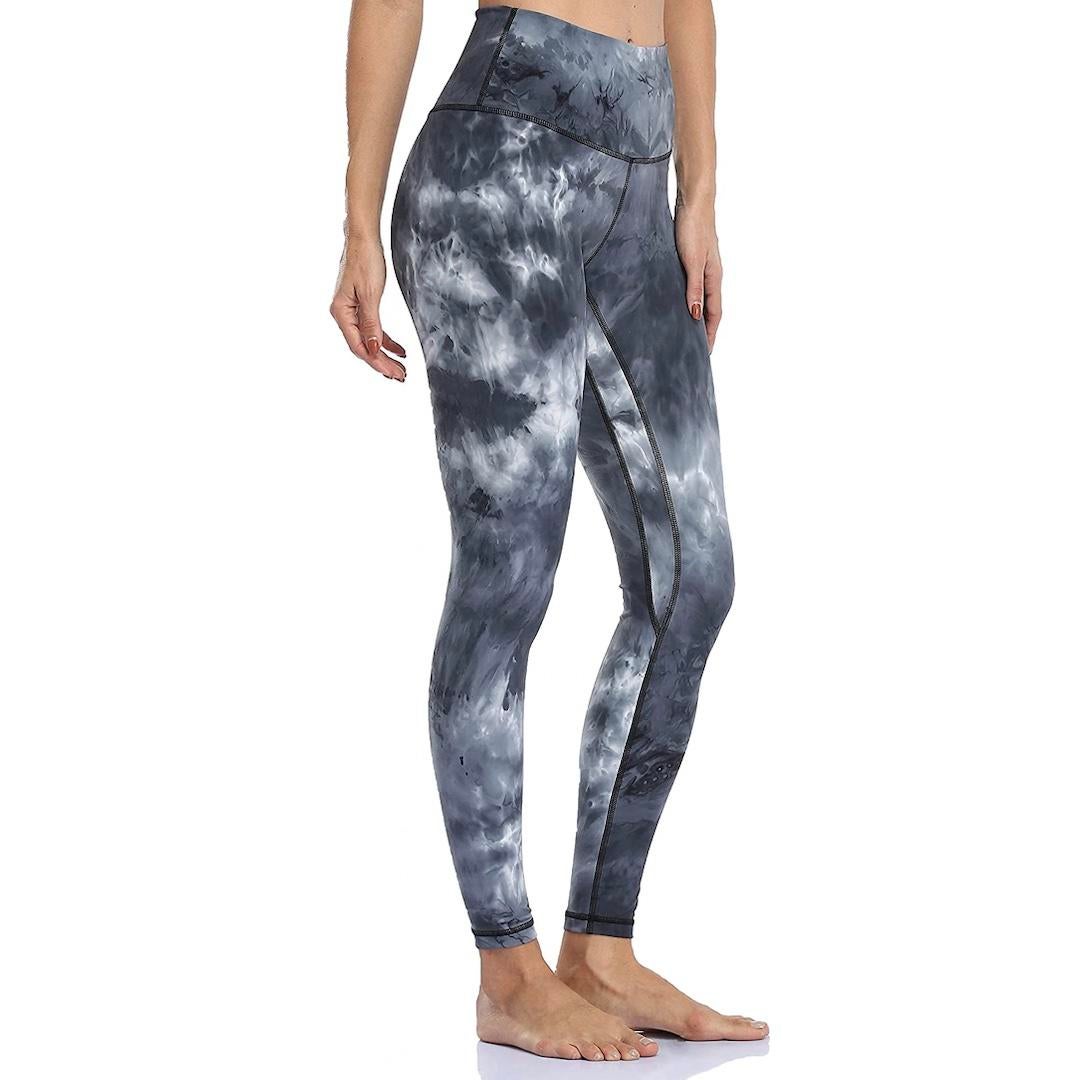
Colorfulkoala high-waisted tie-dye leggings: $30
Colorfulkoala Women's High Rise Tie Dye Leggings

Amazon


Reviewers rave about Colorfulkoala’s Lululemon Align-lookalike leggings (and they’re Essentials bestsellers). The tie-dye option, which comes in six colorways, is currently on sale. These leggings have a seamless waistband with a hidden pocket.

“I cannot get enough of Colorfulkoala,” an Amazon reviewer says. “I can’t stop buying them! They are so comfy, fit so great and are cheap! They’re squatproof and cute to wear out. I almost don’t want to share how good these are because I hate when they sell out!”

Colorfulkoala high-waisted tie-dye leggings, $30 (reduced from $35)


Lululemon Scuba oversized funnel neck half zip: $118

lulu-jacket.jpg

Lululemon


Stay warm during outdoor runs in this Lululemon jacket. This oversized half-zip is made with breathable cotton-blend fleece fabric. It features a kangaroo pocket with hidden phone sleeve and the elastic zipper pull doubles as an emergency hair tie. 

Select from eight colors. Sizes run from XS to XXL.

Lululemon Scuba oversized funnel neck half zip, $118


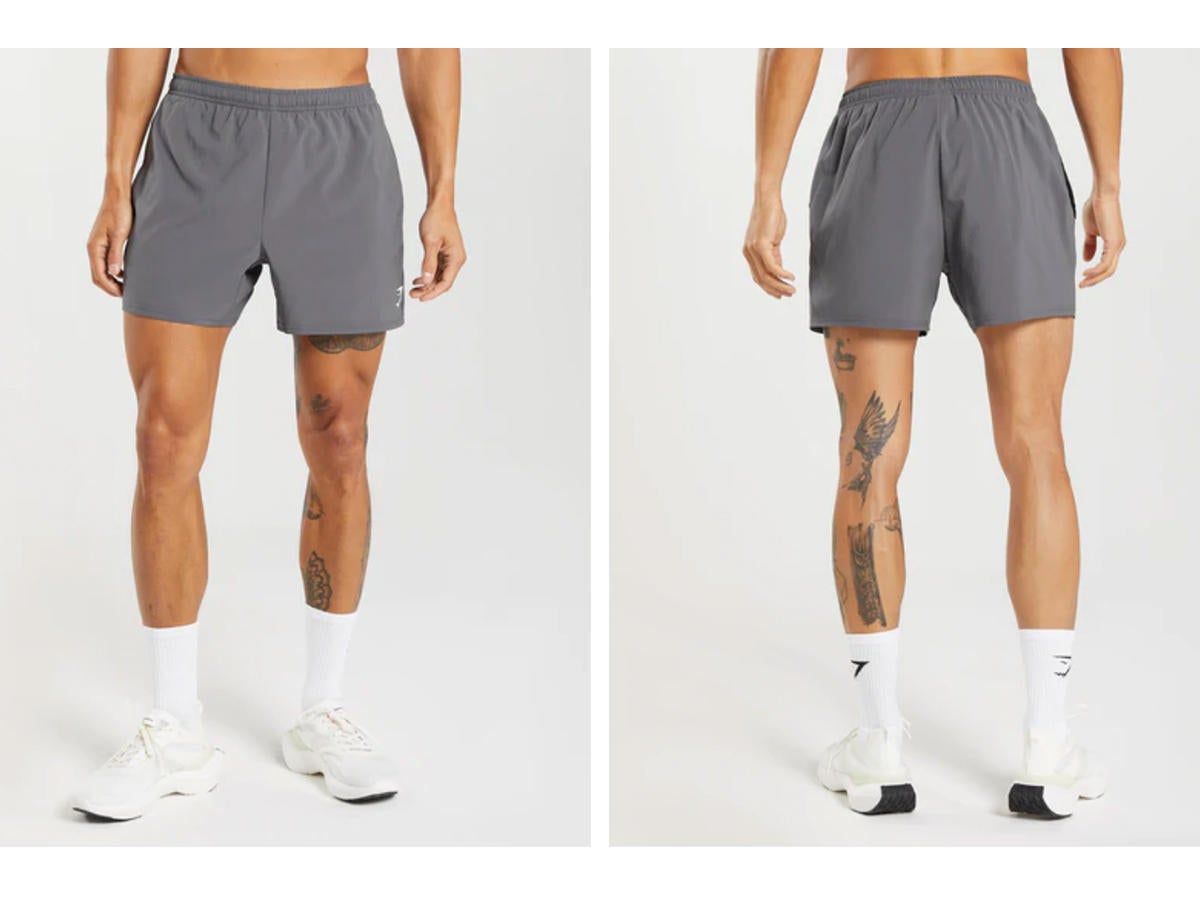
Gymshark Arrival 5″ shorts: $26
gym-shark.jpg

Gymshark


These slim-fit shorts are made with a lightweight material that features sweat-wicking tech. 

Choose from 15 colors. Shorts run from XS to 3X.

Gymshark Arrival 5″ shorts, $26


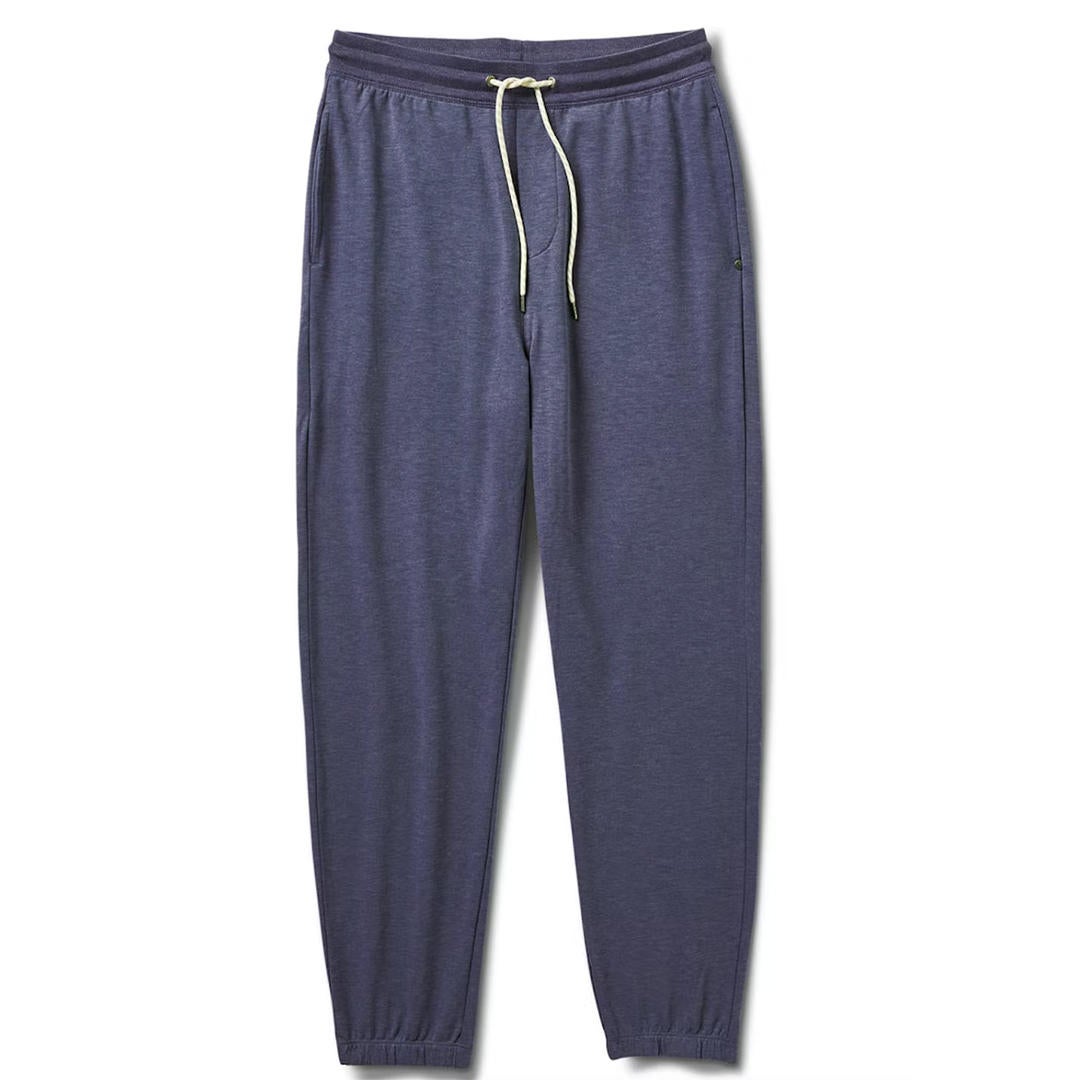
Vuori Austin sweatpant: $110
vuori.jpg

Vuori


Vuori makes some of the softest athleisure on the market. These sweatpants feature a straight leg and relaxed fit. The gym essential is made with stretch terry fabric and features a soft, brushed interior.

Choose from three colors. Sizes run from XS to XXL.

Vuori Austin sweatpant, $110


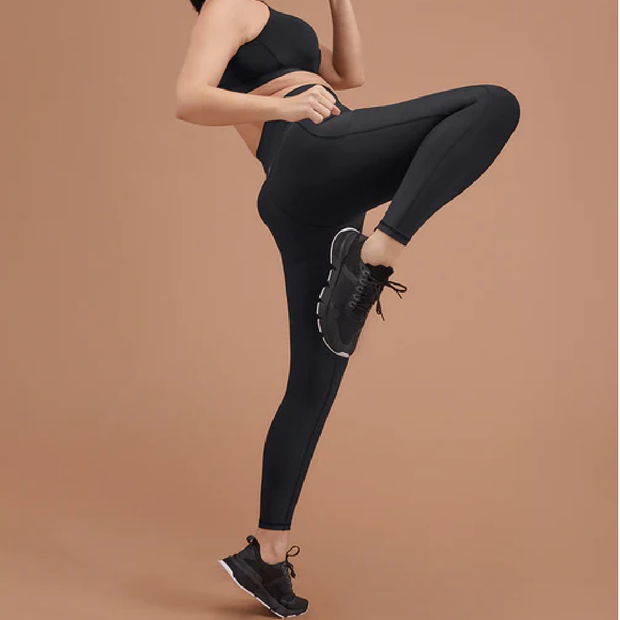
ThirdLove Kinectic performance pocket leggings
thirdlove-pocket-leggings.png

Thirdlove


These ThirdLove Kinectic performance pocket leggings are great for running, HIIT classes, cardio boxing and other cardio activities. Made with dry-feel performance fabric and a lightly compressive fit, these leggings provide the perfect balance between performance and comfort.

They feature drop-in leg pocket, which I love because it’s big enough for my phone and feels very secure, unlike some other pocket leggings I’ve tried. I also like that it’s a sweat-wicking performance fabric that still feels comfy enough to lounge around in.

ThirdLove Kinectic performance pocket leggings, $74


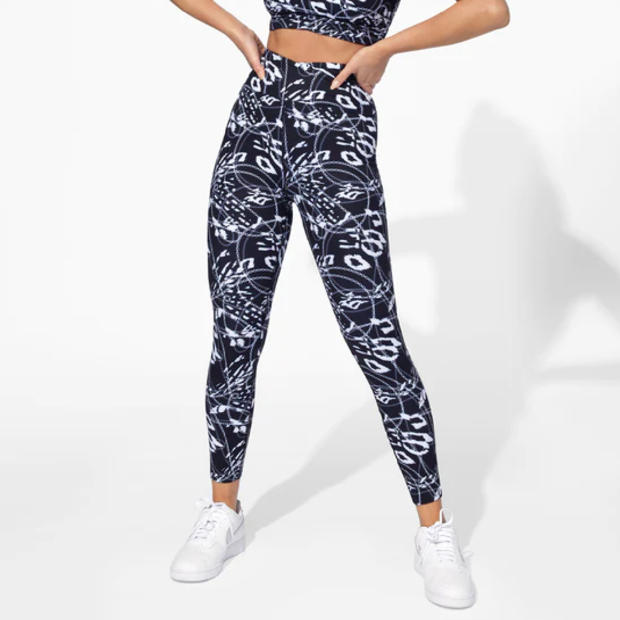
EleVen by Venus Williams 90s girl leggings
90s-girl-leggings.png

EleVen by Venus Williams


These leggings are super stretchy and soft. They feature a moisture-wicking fabric that moves sweat to the fabric’s outer surface to leave you comfortable and dry throughout your workout.

EleVen by Venus Williams 90s girl leggings, $108


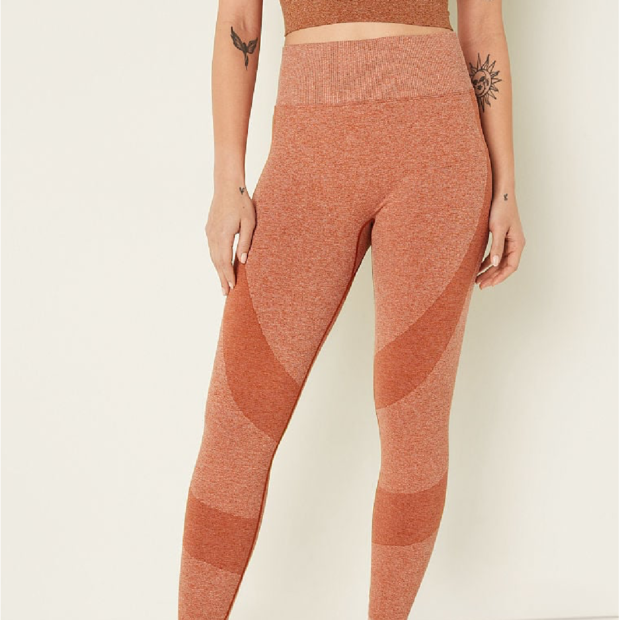
Victoria’s Secret Pink seamless high waist leggings
vs-pink-seamless-workout-legging.png

Victoria’s Secret


Victoria’s secret is often overlooked for its activewear, but I’ve owned several great workout leggings from the brand. These are my current favorites.

These leggings are made with a breathable, sweat-wicking material to keep you cool and dry while you break a sweat at your favorite workout class or go for a job. They’re super comfortable and flattering. They come in eight colors.

VS pink seamless high waist leggings, $45 

There is also a matching sports bra available.

Victoria’s Secret Pink seamless racerback sports bra, $30


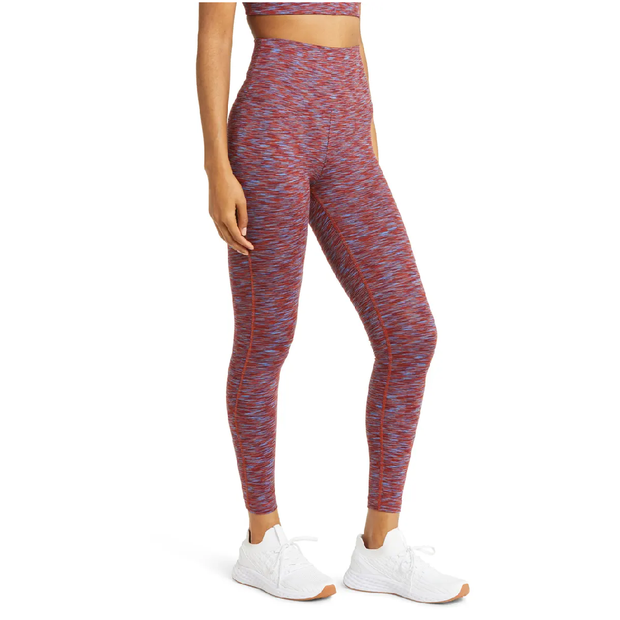
Outdoor Voices Freeform 7/8 high waist leggings
ov-flow-leggings.png

Outdoor Voices


These popular leggings are made with a supersoft knit fabric and feature a high-rise fold over waistband for unrestricted comfort during yoga. They are designed for low to medium-sweat workouts like yoga and pilates.

Outdoor Voices Freeform 7/8 high waist leggings, $88


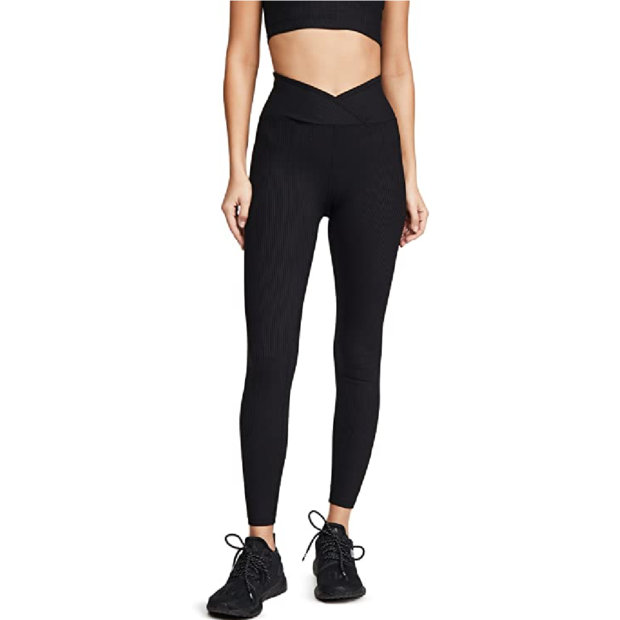
Year of Ours Veronica ribbed leggings
year-of-ours-veronica.png

Amazon


The Veronica ribbed leggings from Year of Ours feature a lightweight, ribbed activewear jersey material and a stylish cross-over waistband. The fabric is moisture-wicking for maximum dryness and provides just the right amount of stretch.

Year of Ours Veronica ribbed leggings, $49 and up


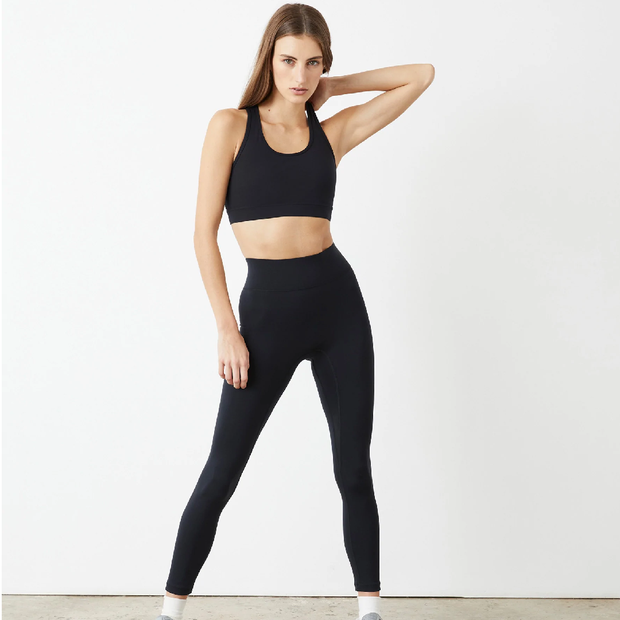
Bandier All Access Center Stage high-waisted leggings
bandier-all-access.png

Bandier


These Bandier workout leggings are made with silky-smooth compression fabric and feature a double layer elastic waistband to keep your leggings in place while you’re moving around.

“These high-waisted Center Stage leggings are perfect for both working out and lounging around.” wrote one verified buyer. “They hold up for long runs, yoga, hit training, etc. They also shape your legs nicely.”

These leggings come in two fabric options; All Motion and sport rib. All Motion is a high-compression, quick-drying fabric. Sport rib is a ribbed stretchy quick-drying fabric. You can also choose from capri, mid-rise, high waist and high waist with a pocket.

Bandier All Access Center Stage high-waisted leggings, $98 and up

You can also complete the look with a matching bra.

Bandier Front Row sports bra, $80 


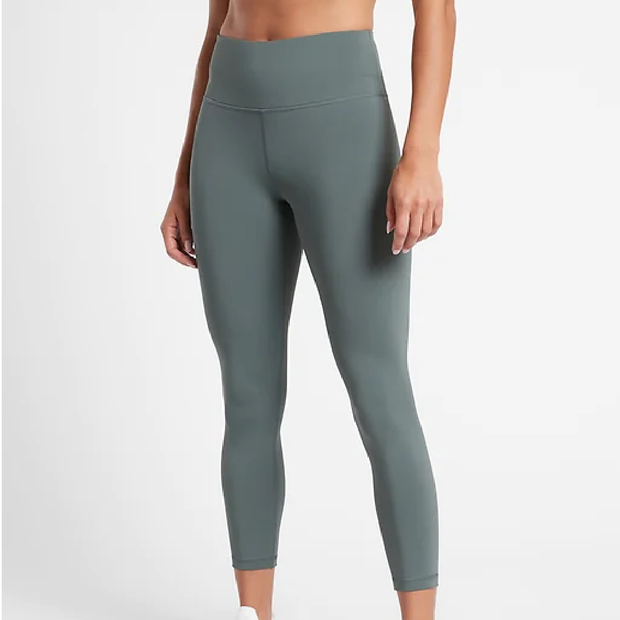
Athleta Elation Train 7/8 workout tight
athleta-elation.png

Athleta


These Athleta leggings are designed for medium-to-high-impact workouts at the gym or outdoors. They’re made of recycled SuperSonic fabric with supportive compression. They also feature back drop-in pockets to hold your phone or essentials at the gym.

Athleta Elation Train 7/8 workout tight, $60 and up


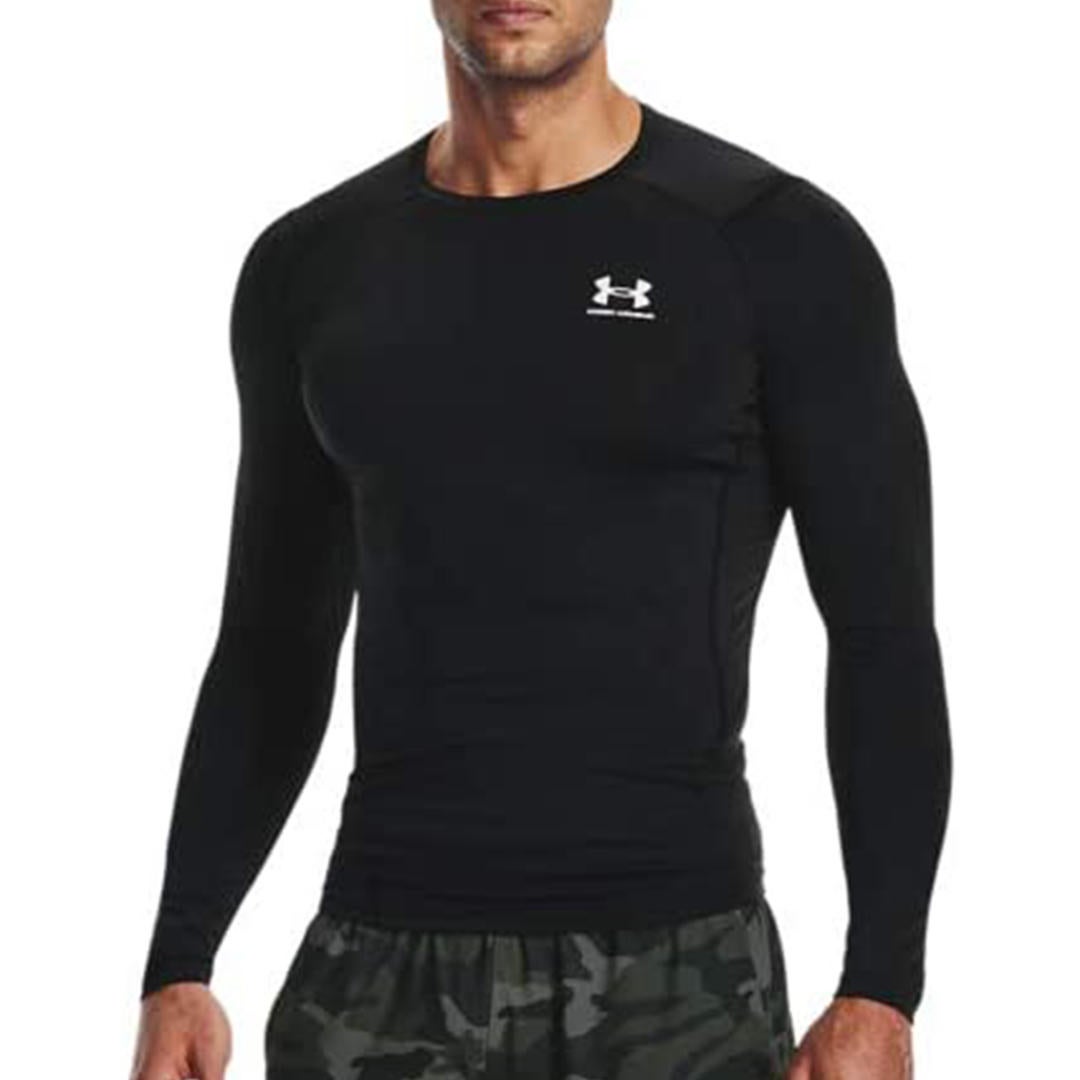
Under Armour men’s HeatGear compression long-sleeve T-shirt: $22
under-armour.jpg

Under Armour via Amazon


This long-sleeve is made with Under Armour’s super-light HeatGear fabric which delivers superior coverage (keeps you warm) without weighing you down.

Choose from 22 colors. Sizes run from XS to 4X in select colors. 

Under Armour men’s HeatGear compression long-sleeve T-shirt, $22 (regularly $35)


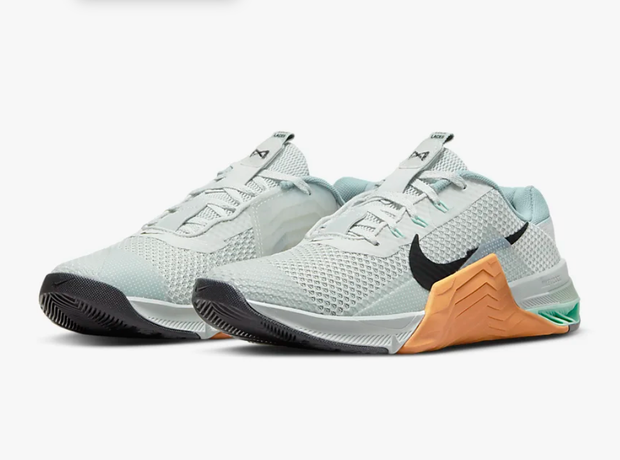
Nike Metcon 7: $130
Nike Metcon 7

Nike


With an impressive 4.5-star rating, Nike’s Metcon 7 sneakers are a favorite in the workout world. They’re great shoes for weight lifting, with wide, flat heels and an inner plate that helps with weight distribution. The cushioned midsoles offer plenty of support for cardio, while rubber treads provide a secure grip on the training floor. These shoes even have a tab that locks down your laces to keep you from tripping mid-workout.

“By far the best Metcons I have bought from Nike,” a reviewer wrote. “I am able to run an easy mile with these shoes and squat and deadlift without having to switch shoes.”

Nike Metcon 7 sneakers are available in both men’s and women’s sizes.

Nike Metcon 7, $130


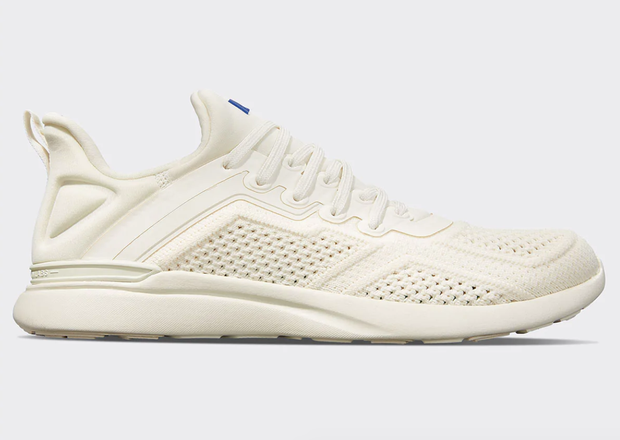
Athletic Propulsion Labs TechLoom Tracer: $250
APL TechLoom Tracer

Athletic Propulsion Labs


At $250, APL’s Tracer is the priciest option on this list. But with more than 100 five-star reviews, it’s definitely an investment worth considering. Designed to handle every level of intensity in the gym, the Tracer is crafted with highly breathable fabric and has a non-stretch forefoot to keep your feet centered for extra stability in the shoe. The midsole has medium cushioning for a balance between support and a low profile.

“This is my second pair of Techloom, great all around training shoes,” a reviewer wrote. “They’re lightweight but strong, love ’em!”

All of APL’s shoes are unisex. If your size in men’s is sold out, you can select a women’s size and adjust the fit by a size and half, and vice versa. For example, a size 7 in men’s is a size 8.5 in women’s. 

Athletic Propulsion Labs TechLoom Tracer, $250


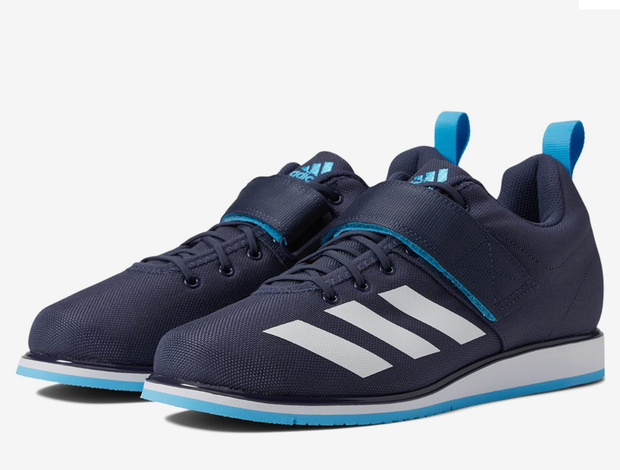
Adidas Powerlift 4: $100
Adidas Powerlift 4

Zappos


The Powerlift 4 shoes from Adidas are designed specifically for weightlifting, with a high-density, die-cut midsole and an intentionally snug fit for maximum stability. The non-slip outsole and adjustable hook-and-loop strap will help you feel more secure while you lift.

“Brilliant fit, true to size,” raved a reviewer. “The benefit of these shoes is you’re able keep balance super well on squat and they force you to push with your heel resulting in much better form and less risk of injury.”

Men’s Adidas Powerlift 4, $100


Hoka Clifton 8: $140
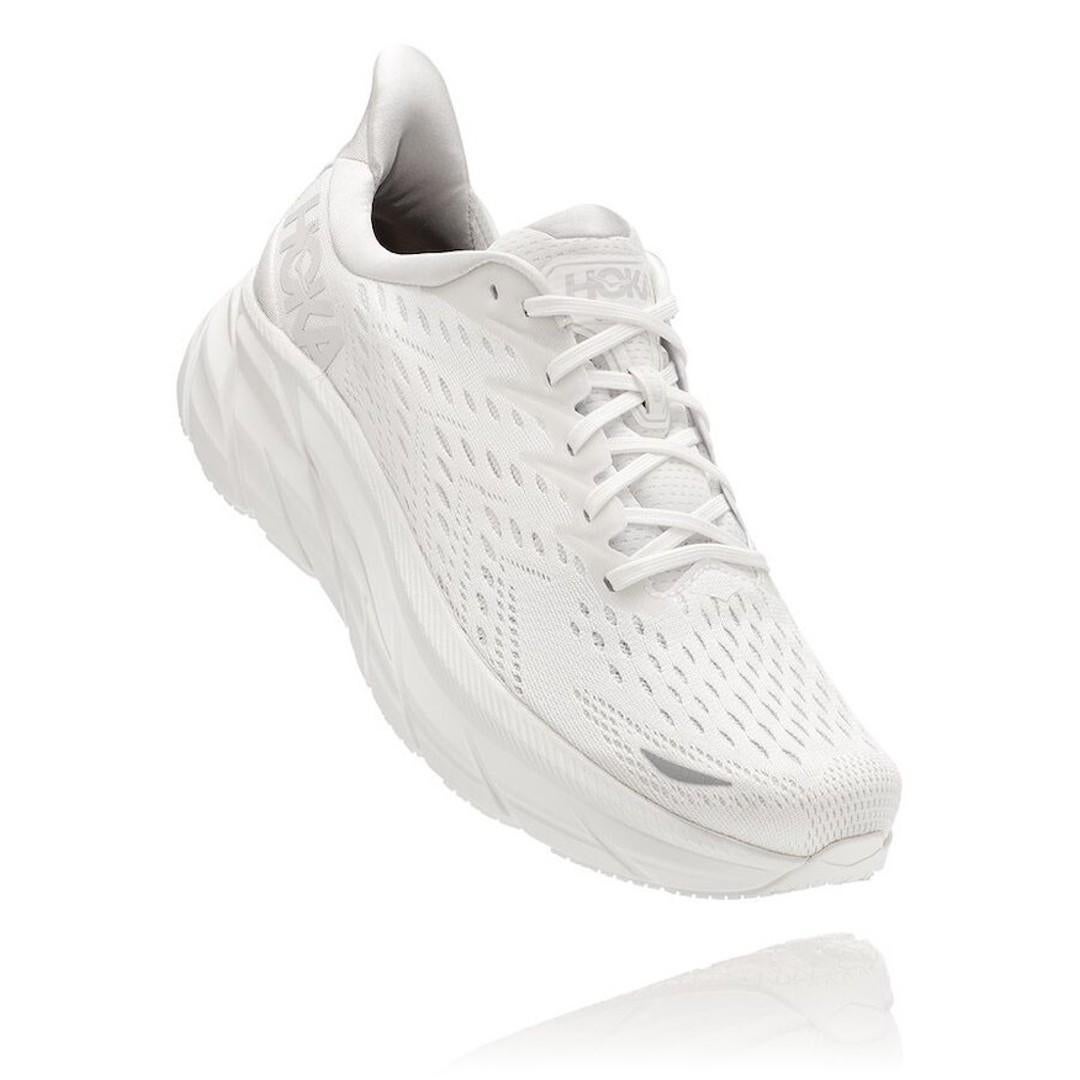
hoka-one-one.jpg

Hoka


Hoka’s Clifton 8 running shoes boast a streamlined silhouette, breathable mesh upper and foam midsole for extra cushioning while pounding the pavement. With a 4.5-star rating (out of more than 1,000 reviews) on the Hoka site, it’s no wonder the Clifton 8 is one of the brand’s bestselling shoes. Available in both men’s and women’s sizes.

“This is my second pair of Hokas and I really like them. They are comfortable and provide a lot of cushion. I am in the medical field and always on my feet. These provide great cushioning and I feel great at the end of the day,” a reviewer wrote. “I have another pair that I use for exercise and they are perfect for long walks or runs.”

Women’s Hoka Clifton 8, $140

Men’s Hoka Clifton 8, $140


Nike Air Zoom Pegasus 38: $73
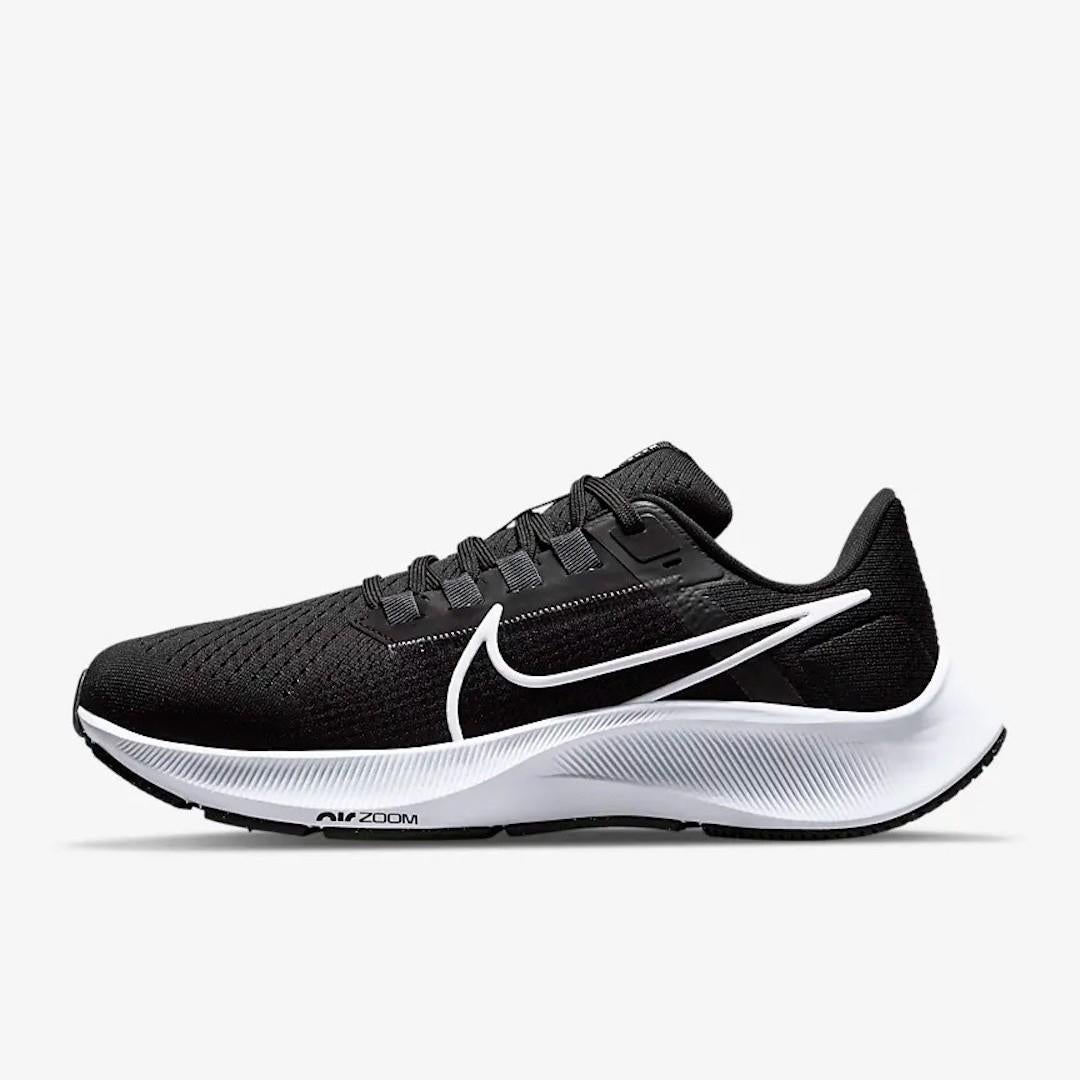
nike-air-zoom-pegasus.jpg

Nike


Nike’s popular Pegasus shoes first came out in 1983. They continue to be one of the brand’s top selling shoes. Described as a “workhorse with wings,” Nike’s latest design iteration of the Pegasus shoe offers cushioned support, durability and breathability.

“Originally bought this shoe for training/running and [it] has been an incredibly comfortable and durable light shoe,” a reviewer raved. “One of the only shoes that has been reliable for me.”

Whether you’re aiming for long distance on the trail or sprinting on the track, the Air Zoom Pegasus is a reliable running shoe — and it’s currently on sale. Available in men’s and women’s sizes. 

Women’s Nike Air Zoom Pegasus 38, $73 (reduced from $120)


Brooks Ghost 15
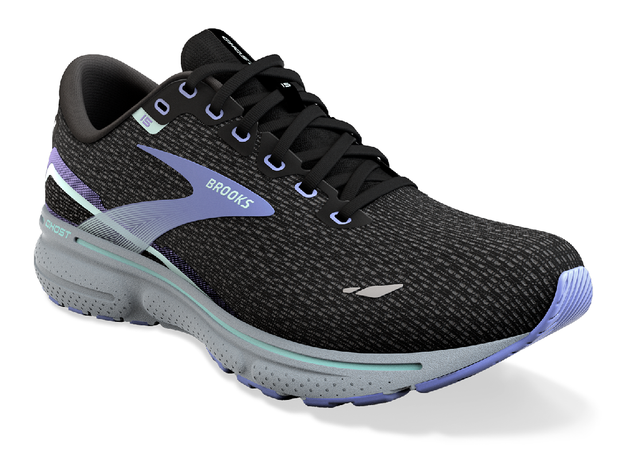
brooks-ghost-15.png

Brooks Running


Avid runners love the Ghost, one of the most popular sneaker styles from Brooks. The latest version, the Ghost 15, offers ample cushioning for a soft, smooth ride from start to finish and features an updated midsole that reacts to your unique stride and provides smooth transitions. 

They are available on Amazon with Amazon Prime’s Try Before You Buy feature, so you can try these shoes out for 7 days for free before buying them to make sure that they are the right fit for you.

Women’s Brooks Ghost 15, $140


Brooks Glycerin 20
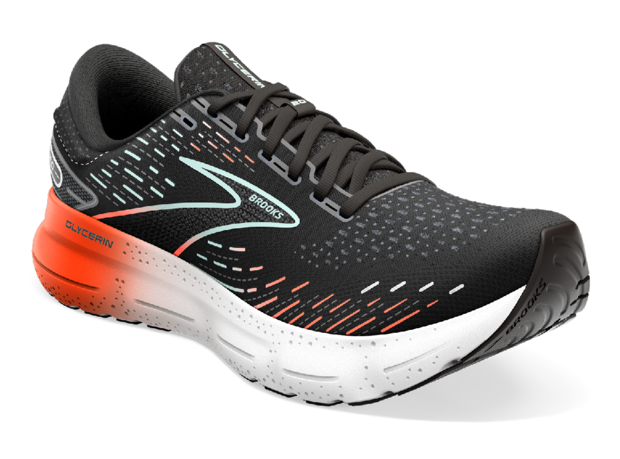
brooks-glycerin-20.png

Brooks Running


The Glycerin 20 feature Brooks’ super soft nitrogen-infused DNA LOFT v3 cushioning for maximum comfort while running. They feature a breathable mesh upper and a redesigned outsole for a smooth ride when running. 

This is one of Brooks Running’s most popular styles due to its comfort and durability.

Select colors and sizes are on sale now at Amazon. Pricing varies.

Brooks Glycerin 20, $134 and up (reduced from $160)


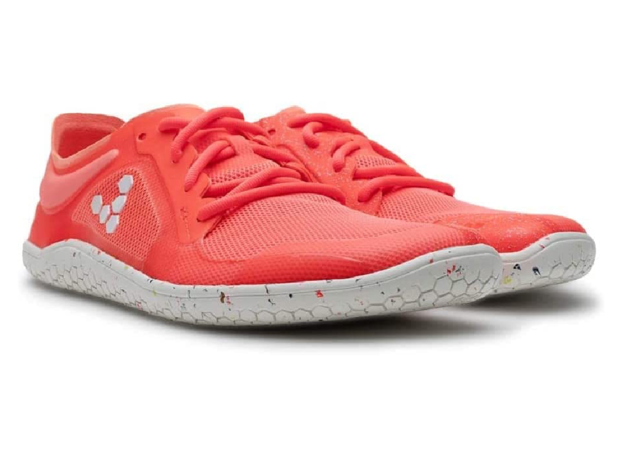
Vivobarefoot Primus Lite III
vivobarefoot-primus-lite.png

Amazon


The Vivobarefoot Primus Lite III running shoes are meant to allow your feet to move in the most natural way possible while running. They simulate the barefoot running experience while still providing grip and protection for your feet.

“I have noticed significant differences in my posture and mobility since wearing these shoes.” wrote one Amazon reviewer “They are also so light and comfortable to wear all day long.”

Vivobarefoot Primus Lite III, $141 and up


FitFlop Vitamin FF

fitflop-vitamin-ff.png

FitFlop


The FitFlop Vitamin FF shoes features a Neodynamic midsole with high-rebound and impact-reducing cushioning. In addition, the sport sneaker include a springy central carbon plate, that propels you forward and smoothes out movements while running. These are great for casual runners that want a shoe that they can run in, walk in, or wear to the store. 

FitFlop Vitamin FF, $150


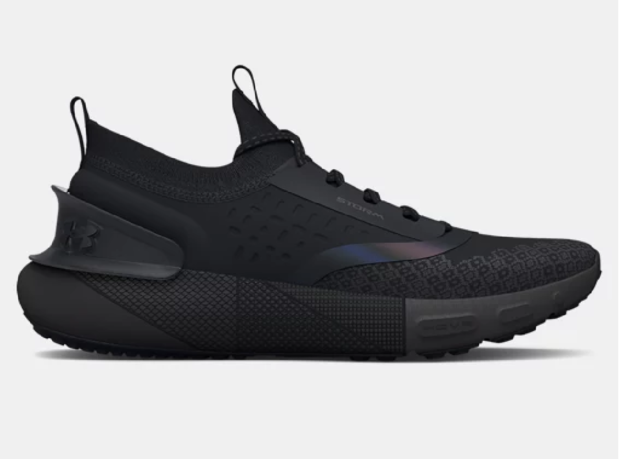
Under Armour Hovr Phantom 3 Storm
under-armour-hovr-phantom-3-storm.png

Under Armour


These Under Armour running shoes feature a water-repelling material that is great for running in the winter with rain or wet terrain. The Hovr Phantom Storm 3s feature ultra-comfortable plush cushioning and an external heel counter for added stability. The responsive  UA Hovr cushioning reduces impact and helps propel you forward. 

Under Armour Hovr Phantom 3 Storm, $160


The best fitness subscription deals

Give the gift of a boutique workout experience. Check out the best fitness subscription gift ideas from Obé, ClassPass, Alo Moves and so much more.

Obé Fitness

Obé Fitness

Obé Fitness


Strive for five (workouts per week) with Obé Fitness. As the company’s mantra encourages, finding the inspiration to work out often is extra easy with Obé’s collection of more than 6,000 on-demand classes, plus 22 daily classes available via livestream. The virtual fitness subscription service offers a wide range of workout sessions, from dance, yoga and Pilates to equipment-based classes such as cycling, bounce (indoor trampoline) and foam rolling. Class lengths vary anywhere from 5 minutes to an hour, making it easy to fit in a workout around any schedule.

The benefits to Obé Fitness include the already existent bank of on-demand classes; the affordable monthly subscription cost; and the convenience of workout classes you can take in your living room. The overall neon-meets-pastel, ’80s-inspired aesthetic of every class is an added bonus, alongside the reportedly peppy and optimistic workout instructors.

An Obé Fitness subscription starts at $25 a month, but if you prefer, you can pay annually for $170 (roughly $14 a month). You can also try Obé Fitness free for seven days. 

Access classes via the Obé Fitness app, or stream them through your Apple TV, Chromecast, Roku, FireTV, Airplay or a simple HDMI and laptop set-up.

Obé Fitness, $17 per month and up


ClassPass
CLASS PASS

Grave Rivera/ClassPass


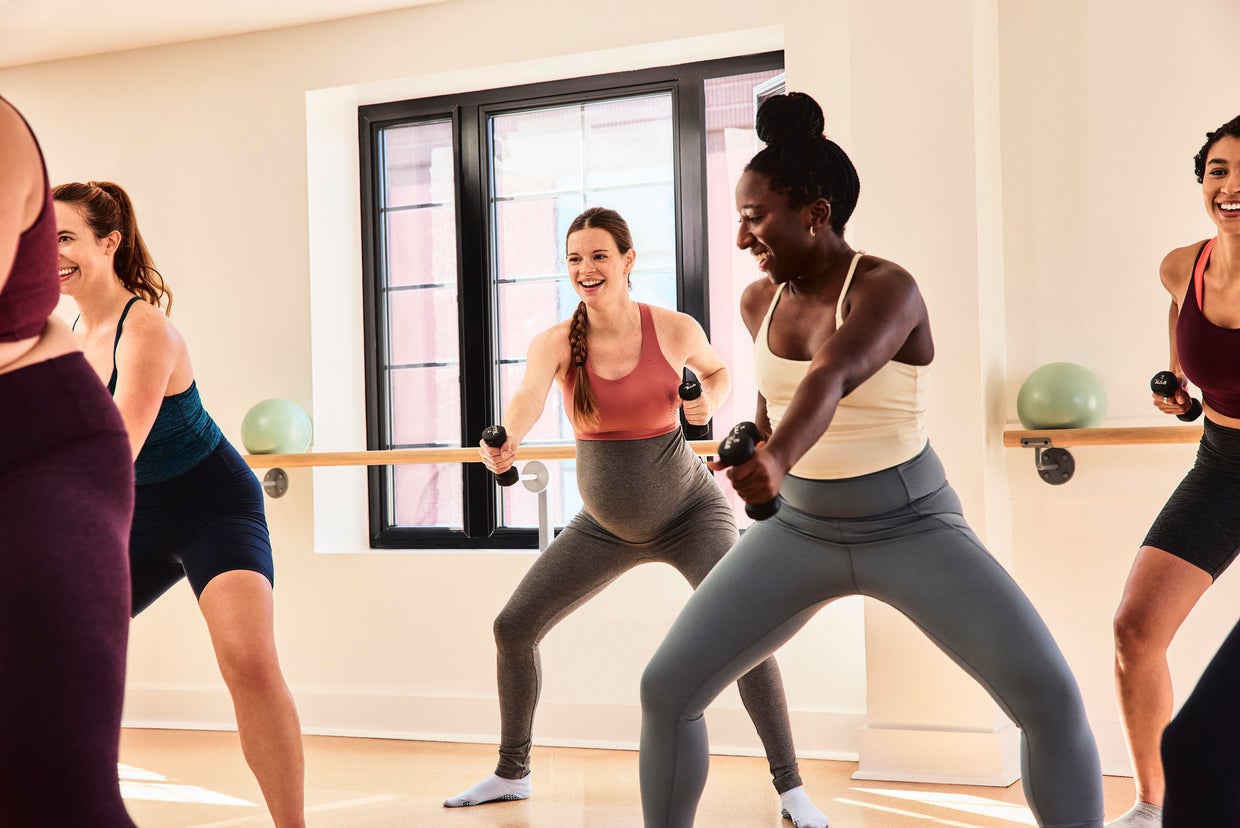
If in-person fitness classes are more your speed, ClassPass could be for you. A ClassPass membership has four tiers available at various price points, and each tier allots a certain number of monthly credits to redeem for fitness and wellness activities in your area. Credits can apply to range of activities, from cycling classes to cryotherapy sessions. While in-person classes are clearly the focus of ClassPass, credits can also apply to virtual sessions, and a membership grants access to more than 4,000 free, on-demand online workouts.

The benefits to a ClassPass subscription include the flexibility and variety that comes with a credit system: change your fitness routine every month if you like. Going through a busy month? You can roll up to 10 credits into the next month and make up for lost time later. And if you travel frequently but don’t want to skip your workout, ClassPass offers services in cities across the country (and even some internationally) so you can take your credits on the road.

The cost of a ClassPass membership can vary slightly based on your location, but costs for the lowest plan start at $19 monthly for eight credits, and can go as high as $199 for 100 credits. Right now, you can also get up to 20 credits to try for one month free.

ClassPass, $15 per month and up


Future Fitness

Future Fitness

Future Fitness


Future Fitness is a wellness app that goes beyond on-demand fitness classes — although there are plenty of those included. When you sign up, you’ll be matched with a fitness expert to serve as your digital personal trainer, who will work with you to create a custom fitness plan that fits your goals, needs and schedule.

Once you’re matched with your trainer, you’ll receive weekly workout plans, along with daily check-ins, motivation quotes and critiques or guidance based on the data your trainer observes from your workout. Future works exclusively with an Apple Watch to collect your fitness data, but if you don’t have the latest Series 7, or any Apple Watch for that matter, Future will loan you one free of charge with a refundable deposit.

A subscription to Future Fitness will run you $149 monthly, but you can try your first month for $19.

Future Fitness, $149 per month


Alo Moves

Alo Moves

Alo Moves


This subscription-based fitness app comes from — you may have guessed it — Alo Yoga. The maker of popular yoga-friendly clothing and workout gear, Alo Yoga also has a fitness app that is, of course, focused on yoga, offering vinyasa, hatha, ashtanga, and restorative classes. But Alo Moves also boasts a range of other on-demand workouts, such as HIIT (high-intensity interval training), barre and Pilates, as well as mindfulness sessions that include breath training and sound baths.

When you first sign up with Alo Moves, you can take a short quiz to help the app make workout recommendations based on your fitness level and goals. You can also search for classes yourself and filter by instructor, style, difficulty, intensity, and duration. Classes can last anywhere from 10 to 90 minutes, and are taught by one of more than 70 Alo-apparel-clad instructors, often in picturesque locations. On-demand classes are accessible on nearly any device, from a smartphone to an Apple TV. Live classes are only accessible via desktop or laptop computer right now.

Beyond beautiful backdrops and a wide range of class options, Alo Moves isn’t doing anything groundbreaking in the world of fitness apps. But if you’re an aspiring yogi or already love the brand’s apparel and workout gear, then this app is definitely worth trying out.

Alo Moves usually costs $20 monthly, or $200 annually. You can also try a 14-day free trial.

Alo Moves, $99 per year (or $20 per month)


Apple Fitness Plus

Senior woman exercising at home

Marko Geber / Getty Images


Apple enthusiasts, and people who strive to close their daily rings, will appreciate the limited, but still solid, workout offerings of Apple Fitness+. This app works with your Apple Watch and streams workout classes to iPhones, iPads and Apple TVs, so if you’re already outfitted with Apple’s latest tech, incorporating Apple Fitness into your life should be no sweat.

The fitness subscription offers nearly 2,000 studio-style classes across 11 exercise categories, including HIIT, yoga, core, strength, treadmill, cycling, rowing, dance, Pilates, meditation and mindful cooldown. As you participate in classes, your Apple Watch will track your progress with metrics such as heart rate, calories burned and time elapsed, as well as close your activity rings accordingly.

Apple Fitness+ costs $10 monthly, or $80 annually. Right now, Apple offers three months of Fitness+ free when you purchase an Apple Watch. You can also try the premium fitness subscription free for one month if you already own an Apple Watch.

Apple Fitness+, $80 per year (or $10 per month)


Related content from Essentials: 

Use these 5 experts tips to actually get healthy and stay healthy in 2023 | Lifestyle

Use these 5 experts tips to actually get healthy and stay healthy in 2023 | Lifestyle

A new year suggests numerous are wanting to strengthen their health by embracing a new life style, but not all approaches for modifying up your practices are created equal.

Trend eating plans and expensive fitness courses frequently turn out to be common in January but are hard to retain up and can even pose risks to your health and fitness. Nonetheless, according to authorities, some developments can really assistance you get more healthy.

And there are lots of other long-expression variations you can make in your everyday living that won’t split the bank and will assistance you feel much better in your everyday lifestyle.

In this article are some tips for creating a sustainable diet plan and conditioning plan to get healthful in 2023:

Consume ‘real food’

Dr. Shami Hariharan, an integrative medicine doctor with Atrium Wellness in Charlotte, suggests to people developing a healthful diet program all around one of her favourite quotations from writer Michael Pollan: “Eat genuine foods, mostly vegetation, not way too much.”

“Real food items,” she explains, involves “whole foods, fruits, veggies, legumes and other proteins.”

Inside that framework, Hariharan additional, it is essential to obtain foods that nevertheless convey you “joy.”

“If we really don’t like how we’re ingesting or it’s really hard, then that impacts maybe even how we course of action our vitamins,” she reported.

Farmer’s markets are a fantastic put to come across healthier foodstuff at a acceptable price tag, Hariharan notes, though also supporting nearby companies. Nonprofits this sort of as The Bulb assist carry healthful foodstuff to foods desserts all-around Charlotte at small to no value, she included.

Steer clear of ‘extreme’ fad meal plans

When some fad diet programs might have “helpful components,” Hariharan explained, most close up obtaining “skewed.”

“Keto, for example, is basically a quite severe diet regime where by it puts our entire body into this full various sort of metabolism that it’s not used to,” she mentioned. “The way that Keto has kind of gotten skewed about time is that people today will stop up ingesting a lot of saturated body fat and animal items. Some of these points in moderation are just great, but to that stage are not.”

And though a fad eating plan may possibly help you shed pounds in the shorter phrase, they’re hard to maintain and there’s often “little to no evidence on the long-term outcomes.”

“What I see incredibly continually with trend diets, people acquire it appropriate back as before long as they’re not in a position to keep this very stringent routine and could even get body weight back again even additional than they begun with,” she reported.

“And so that variety of up and down with our bodies can be not wholesome on the inside of as nicely.”

Contemplate ‘Dry January’

1 New Year’s wellness pattern that can be successful, Hariharan advises, is “Dry January,” abstaining from alcoholic beverages for the very first thirty day period of the 12 months.

“Alcohol is a person of those people matters in which there’s a very fine line among exactly where it’s helpful and in which it commences to become destructive and make inflammation or result in us to have pounds acquire or additional seriously have an effect on our detoxing organs,” she explained. “And it does not choose a full great deal for that to come about, in particular when it is compact amounts above time.”

Dry January can then be an opportunity to “reflect on our ingesting behaviors,” Hariharan stated.

“Taking these breaks can have an impact on well being, not just the actual physical health of not consuming alcohol for a thirty day period, but also it’s possible obtaining a minimal perspective and redefining our connection with” liquor, she claimed.

Locate a secure, satisfying workout program

Like with diet program, Hariharan pointed out, it is critical to come across a health and fitness regimen you essentially get pleasure from so that you’ll adhere with it all through the year and further than.

“There’s so numerous wonderful resources out there, on line and in-particular person, so locating one thing we enjoy is great. And we really don’t require to shoot for the moon just about every time,” she claimed.

Environment certain and attainable goals will support you get wherever you want, Hariharan added.

“For illustration, if I say, ‘I’m likely to work out a lot more in 2023’ vs . ‘I’m likely to wander for 20 minutes on my lunch break on Mondays, Wednesdays and Fridays for all of January,’ I’m a lot much more probably to do the next matter than I am the 1st,” she reported.

And if you have “chronic health care problems” — these as coronary heart ailment, joint discomfort or arthritis — Hariharan recommends reaching out to your doctor for assist crafting an physical exercise program that’s each “safe and beneficial.”

Handle your anxiety amounts

Our well being is afflicted not just by what we try to eat and how a great deal we training but also by our attitude, Hariharan explained. So, she advises, it is critical to uncover a “meaningful outlet” for dealing with pressure.

“I believe that that anxiety, even minimal amounts of long-term strain, is in all probability one particular of the most widespread conditions in our society,” she explained.

That outlet can consider numerous kinds dependent on what operates ideal for you, she included.

“People get intimidated,” she reported. “They imagine, ‘I just cannot do, like, meditation.’ Or they feel about any person sitting down quietly for 30 minutes, and that appears like torture. It does not need to be one thing like that. It can be a breathing apply, it can be prayer, it can be sitting exterior in mother nature and can be listening to significant music.”

As very little as 5 minutes a day “of some aware style of practice” can “create measurable modifications in the intellect and the system,” in accordance to Hariharan.

“For case in point, if I was to elevate weights for five minutes each individual day for a month, I would see that I could perhaps decide anything up far more simply or do other things about my day with additional simplicity. It’s the exact same with brain-body tactics,” she explained. “If we do that for five minutes right now, we don’t just experience greater for those people 5 minutes. The gains get started to form of diffuse out into the relaxation of our working day, and the positive aspects expand.”

____

©2022 The Charlotte Observer. Stop by at charlotteobserver.com. Dispersed by Tribune Content Company, LLC.

This doctor prescribes ketamine to thousands online. It’s all legal.

This doctor prescribes ketamine to thousands online. It’s all legal.

Comment

In the past two years, Scott Smith has become licensed to practice medicine in almost every U.S. state for a singular purpose: treating depressed patients online and prescribing them ketamine.

The sedative, which is sometimes abused as a street drug, has shown promise in treating depression and anxiety. But instead of dispensing it in a clinic or under the strict protocols endorsed by the Food and Drug Administration, the South Carolina physician orders generic lozenges online for patients to take at home. He says this practice, though controversial, has benefited more than half of his 3,000 patients. “People are beating a path to my door,” he said in an interview.

Smith is part of a wave of doctors and telehealth start-ups capitalizing on the pandemic-inspired federal public health emergency declaration, which waived a requirement for health-care providers to see patients in person to prescribe controlled substances. The waiver has enabled Smith to build a national ketamine practice from his home outside Charleston — and fueled a boom among telehealth companies that have raised millions from investors.

As the urgency around covid-19 subsides, many expect the waiver to expire this spring. Companies are lobbying to extend it, and patients are bracing for a disruption to purely virtual care.

“I would not have wanted to do this if I had to go to a clinic,” said Steve, a Chicago resident who works in public relations and who spoke on the condition that his last name be withheld because of the stigma around the drug. Ketamine has helped his bipolar disorder more than any other medication, he said, and he wants to continue taking it through a service called Mindbloom, which connected a Post reporter with him. “It’s just not going to happen, if that regulation changes.”

Ketamine for depression: What it feels like and who it can help

The Drug Enforcement Administration in 2020 temporarily waived the requirement that prescribers meet patients in person before treating them with several classes of drugs, from opioids to certain treatments for depression. A DEA spokesperson said the agency is working on regulations to allow this permanently, but declined to provide details or a timeline.

At least eight companies have begun providing ketamine by telehealth since the start of the pandemic. Between just Smith and two of the better known companies, Nue Life and Mindbloom, more than 10,000 patients have been treated at home. Virtual ketamine start-ups say they’re making the treatment vastly more accessible and improving patients’ lives. But many psychiatrists — including those who believe in ketamine’s promise for treating mental illness — worry that having patients taking it outside a doctor’s direct supervision is a step too far, too soon.

Smith, who thinks the federal waiver should be made permanent, is unbothered by critics who question the wisdom of mailing ketamine to patients at home. “I’m like a medic running around on the battlefield taking care of wounded people, and ketamine helps the people I’m taking care of,” he said.

Ketamine has long been used in hospitals for anesthesia and abused recreationally for its mind-altering properties. But in recent years, it’s shown promise for delivering rapid relief to patients with mental health conditions who’ve tried conventional antidepressants without success.

Nothing seemed to treat their depression. Then they tried ketamine.

The FDA approved a nasal spray derived from ketamine, Spravato, in 2019 to treat severe depression. But that approval came with strict guardrails to ensure patient safety, a nod to known side effects such as altered consciousness and increases in blood pressure.

The FDA requires that patients be monitored by health-care professionals for two hours after they take Spravato, in addition to mandating certain steps for clinics and pharmacies.

Those safety measures may have an unintended consequence, some ketamine scholars say: Rather than go through the extensive FDA requirements, more patients and doctors may turn to what is known as “off-label” ketamine, ordering the generic variety the FDA has approved for anesthesia to instead treat depression. Ketamine clinics have opened up across the nation to provide the generic version through an IV infusion.

Now, with the federal waiver of requirements to treat patients in person, more health-care professionals — and venture capital-backed start-ups — are prescribing ketamine in the form of dissolving tablets that patients can take at home.

The growing use of off-label ketamine outside direct medical supervision has aroused concern among some psychiatrists who worry there isn’t enough evidence to show it’s safe.

“I’m very concerned about treatments that deviate too far from the standard recommendations given by the FDA,” said Gerard Sanacora, director of the Yale Depression Research Program who led a team that pioneered ketamine to treat depression. “I really do believe that it is one of the major advances of psychiatry in the past half-century,” he said of ketamine, “but we have to be very careful to continue to develop this responsibly.”

“I understand the concern,” said Juan Pablo Cappello, chief executive of Miami-based Nue Life, launched in 2021 to provide virtual ketamine therapy. “But what I really spend my time thinking about is suffering that’s going on today and how to alleviate it,” he said.

Among telehealth ketamine companies, the details vary but the model is similar: Patients meet with a doctor virtually to determine whether ketamine therapy is appropriate. If so, a provider orders generic ketamine lozenges from a pharmacy. The patient is mailed a dose, with instructions to have a “sitter” present while they take the ketamine and how to follow up after the experience. Prescribing practitioners work with patients to adjust the dose and monitor their symptoms.

The telehealth model allows ketamine providers to offer the treatment at a lower cost than infusion clinics, which can run hundreds of dollars per session.

How to know if it’s depression or just ‘normal’ sadness

“At-home ketamine has increased accessibility for those who may not have access to ketamine clinics due to physical location, cost and time commitments,” Ryan Magnussen, chief executive of ketamine provider Wondermed, said in a statement.

Beyond pitching their affordability, telehealth providers are trying to translate their patients’ experiences into scientifically rigorous proof that ketamine is safe and effective to take at home. Company websites highlight research findings alongside images of blissful-looking people in warm hues, though the scientific claims at times lack context.

Nue Life, for instance, cites an American Psychiatric Association publication that ketamine’s effects are “rapid and robust” without mentioning another passage in the same paper: “we strongly advise against the prescription of at-home self-administration of ketamine.” The association still maintains this view.

Wondermed proclaims that “over 90{35112b74ca1a6bc4decb6697edde3f9edcc1b44915f2ccb9995df8df6b4364bc}” of patients see an improvement in anxiety and depression — but that is among those who have reported on their well-being, and some 40 percent have not.

Mindbloom similarly touts that 89 percent of its clients report improvement for these conditions, but that figure comes from a study where more than half of participants didn’t report any follow-up data.

Despite the incomplete data, the study is a point of pride for Mindbloom. Dylan Beynon, Mindbloom’s chief executive and a ketamine patient himself, said it is the largest-ever peer-reviewed study on ketamine therapy, showing that 63 percent of 1,247 patients had a clinically significant improvement in their anxiety and depression and fewer than 5 percent reported side effects.

The study had significant limitations. It didn’t compare ketamine treatment with a control group receiving a placebo, the gold standard for gauging a drug’s safety and impact.

Sanacora, the ketamine specialist at Yale, objected to the conclusions of the Mindbloom study, which described ketamine by telehealth as “safe and effective.” In a letter to the journal that published the study, he and a colleague wrote, “We think the authors’ conclusions go well beyond the data.”

Mindbloom said the study was open about its limitations. “It’s also important to understand how well a treatment works for people in the real world,” the company said in a statement attributed to Thomas Hull, the paper’s lead author.

The company CEOs uniformly believe that telemedicine is here to stay but are preparing for the expiration of the federal waiver, including making plans to open physical clinics.

Mindbloom, one of the more established ketamine telehealth firms, reports operating in 35 states and Washington, D.C. But even that reach doesn’t match one doctor in South Carolina.

As a doctor working in an emergency room in the early 1990s, Scott Smith knew ketamine as a drug he used to sedate patients. His understanding began to shift with the experience of his wife, who after suffering from depression tried ketamine infusions.

“I had lost the person I had married,” he said. After her ketamine treatment, “I got my college girlfriend back. That was a life-changing event.”

Smith describes himself as a “person who gets obsessed with things.” He took up quilting after watching “Project Runway” and acquired five sewing machines. When he got into gardening, he threw himself into researching plants that could thrive in his completely shaded yard. He bought a fixer-upper house and did the electrical and plumbing work himself, he said. Ketamine is his latest fixation.

Smith closed his brick-and-mortar family practice during the pandemic to focus on ketamine by telemedicine, where patient demand was higher. People began reaching out to him on Reddit, where he posts under the handle KetamineDrSmith, to see if he could treat them.

With the federal public health emergency declaration, he could. It just took getting licensed in states where patients lived, he said. He went all in, obtaining licenses in 45 states in addition to South Carolina, according to a Washington Post review of state licensing databases. His Louisiana license expired in May. In July, an Alabama law required telehealth providers to meet patients in person to prescribe a controlled substance like ketamine.

Initially, “it was like building a bridge while you’re driving across it,” Smith said. Catherine Smith, his wife and medical assistant, added, “We’re really saving more lives than we ever did in our primary care practice.”

Smith estimates that about 5 percent of patients who come to him aren’t good candidates for ketamine therapy, and he declines to treat them. Occasionally, younger patients will ask for a prescription simply because they want to try the drug.

“They think it’s like an internet service,” he said, “like there’s a drive-through window at McDonald’s for ketamine.” Smith only treats patients for a legitimate medical purpose, he said, usually for depression, anxiety or post-traumatic stress disorder.

His patients generally pay $250 a month, which includes a supply of ketamine — 10 tablets at a time — and follow-up visits with a nurse practitioner, medical assistant or other members of his eight-person practice. More than half respond well, he said, and he will prescribe ketamine for six months and then encourage them to stop taking it.

Ketamine doesn’t carry the same risk of addiction or overdose as opioids, but side effects can range from unpleasant, disorienting sensations — what some might call a “bad trip” — to being temporarily immobilized.

“So if somebody took a dose of ketamine that was way too high and their house caught on fire, they wouldn’t be able to leave the house,” Smith said.

At first, Smith scheduled virtual appointments with patients in the evening and would stay by his computer for 90 minutes. “It was so incredibly uneventful and such a poor use of my time,” he said. “If a competent adult has somebody to sit with them, that’s adequate.”

By taking ketamine orally, patients absorb less of the drug, and more slowly, than they do when it is administered through an IV. Smith believes this reduces the risk of side effects, citing the Mindbloom study and another study by Nue Life.

Because he doesn’t physically watch patients take ketamine, Smith acknowledges it is possible for them to use the drug inappropriately — taking multiple doses at once to get a high, for instance, or selling the ketamine to others. Still, he says, he has ways of holding patients accountable, such as having them do a “pill count’ on screen to see if they are taking the doses as directed.

“This is a part of my job I take very seriously,” he said. “I can have my medical license taken away. I can be fined, can do jail time for continuing to treat people” who are abusing ketamine, he said. Of some 3,000 patients, he said there have only been two who wanted to abuse the drug, and he stopped prescribing and arranged follow-up care for them.

Smith knows his practice is controversial but isn’t concerned. “What is the risk versus benefit, is the question society needs to ask,” he said. Rather than returning to pre-pandemic regulations where he would have to consult patients in person, Smith says the key to making ketamine therapy safer is for the DEA to create a registry and closely monitor the drug’s prescribers.

“Put everybody under a microscope,” he said.

But should the waiver that has allowed him to practice nationally expire, he has a plan: hit the road.

“I would buy an RV,” he said, comparing the prospect of meeting his virtual patients to reunions with people he’s come to know through internet games. “Nothing would thrill me more than to meet these people in person,” he said.

The story of the Jada for new mothers shows how bias holds back women’s health

The story of the Jada for new mothers shows how bias holds back women’s health

As she prepared her medical-device startup for a make-or-break clinical trial, one of Anne Morrissey’s first thoughts was, There’s no way we can do this clinical trial.

There were the usual challenges that test any health care startup, including financial worries—did they have enough money to hire a team, train staff, compensate investigators, gather sufficient data? But there were also some uniquely convoluted ones. Like: When and how could they get informed consent from patients on the verge of giving birth?

It was 2016, and Morrissey was the new CEO of Alydia Health, a five-year-old company with a novel device, known as the Jada System, to treat postpartum hemorrhage (PPH), or excessive bleeding after delivery. PPH is a potentially devastating complication of childbirth that affects 14 million women a year, including hundreds of thousands in the U.S. And while deaths from PPH are largely preventable—and rare, in rich nations—it still kills 70,000 women every year globally, ranking as the leading cause of maternal death worldwide. 

As medical devices go, Jada, a wand-like tool that is inserted in the uterus, was unbelievably simple. But as a device designed to address a pregnancy-related problem—an area of medicine rarely touched by innovation—its path to approval was anything but straightforward. 

PPH is an emergency complication—often sudden and hard to anticipate. A woman can’t volunteer for a trial while she’s rapidly losing blood and in need of lifesaving care. Nor it seemed, could she do so while in active labor, when she may be under duress. (FDA rules require that patients be given sufficient opportunity to consider participation in a trial, in a period of clear thinking where they’re free of coercion.) But it wouldn’t work to “consent” women at prenatal appointments, either, due to the paperwork nightmare of getting the relevant forms from doctors’ offices to hospitals.

By 2017, Alydia, the FDA, and the clinical trial sites had finally worked out an elaborate protocol around informed consent: allowing the process during the first stage of labor, but not the second, or while contractions or medical interventions were underway. 

A Jada System medical device
The Jada System helps stop postpartum hemorrhaging by creating gentle suction in the uterus.

Courtesy of Organon

That matter settled, Morrissey’s team moved onto the next doozy: how to sensitively discuss the benefits of participating in an experimental study—and raise the possibility of additional risks—with women who were about to undergo the physically intense and profoundly vulnerable experience of childbirth. And how many would you have to ask, given that only a fraction of them would suffer hemorrhage?

In the end, more than 7,000 women provided consent to reach the 107 U.S. PPH cases Alydia needed to power its study. “It was really slow,” remembers Morrissey—so slow that, in the beginning, the team celebrated each additional case by opening a bottle of champagne. But as word of success spread at trial sites, the pace of enrolling patients picked up.

In 2020, five painstaking years after the trial was first being planned, that success began to bear fruit. Data published in Obstetrics & Gynecology, a preeminent journal, showed Jada was effective in 94{35112b74ca1a6bc4decb6697edde3f9edcc1b44915f2ccb9995df8df6b4364bc} of the hemorrhage cases, controlling bleeding in a median time of just three minutes. That same year, Jada received FDA clearance. And in March 2021, Alydia sold for $240 million to Organon, a women’s health-focused company that was being spun out of Merck, the giant American drugmaker.

It was an eye-popping exit for Alydia, a crowning and previously almost unthinkable achievement for a team of people who willed the Jada, on a shoestring budget, through 10 twisty, turny years of development. The founders hadn’t doubted the technology, only that they’d ever get through the obstacle-laden path to bring it into the world.

The odds are long for most medical innovations, but especially so in women’s health, a field that remains underdeveloped—trapped by old-fashioned gender dynamics that still stubbornly guide the market today. 

Anne Morrissey, former CEO of Alydia Health, led the company through its pivotal clinical trial.

Photograph by Anastasiia Sapon for Fortune

Alydia was selling a product that had a potential market of millions of women a year, one that could save lives and money too. But up until Alydia’s acquisition, that was a value proposition that almost no one wanted to bet on. As a women’s health product—and not, say, a cancer drug—the Jada was an opportunity that simply didn’t compute in most investor models and mindsets.

That left Alydia, like a lot of companies in its neglected field, under-resourced for a development process that in nearly every aspect is tougher for women’s health companies: the science less clear, the regulators more demanding, the history more fraught. Even the hard-won success stories are modest, flotsam and jetsam in a multitrillion-dollar industry’s deal flow. The fate of Jada is a case in point: It’s now tied to the future of Organon, an ambitious but unproven company that’s arguably even more at the mercy of financial markets that haven’t shown much faith in women’s health.

There are signs—and certainly hopes—that such neglect and uninterest are giving way to something more equitable. And that makes the story of Alydia and Organon a parable of the women’s health business, emblematic of the challenges that have long thwarted innovation and the forces that could change the industry for the better.

Investing in women, in a system that doesn’t

“Here for Her Health,” proclaimed the banner on the façade of the New York Stock Exchange on the rainy morning in June 2021 that Organon made its public-market debut. The company’s arrival seemed well timed to capitalize on the cultural moment and the energies of #MeToo and FemTech—the name given to the women’s health startup industry.

More than a splash of marketing savvy went into the ceremony—Organon executives rang the opening bell and posed for photographs under fuchsia umbrellas. But the company’s launch also represented something bold and unusual, a fist raised to the male-centered medical establishment, in the form of a business with a $9.4 billion market cap that was proudly, explicitly investing in women’s health.

Organon’s ambitions for innovation are expansive, ranging from diagnostics and devices to drugs and digital therapeutics for conditions exclusive to women, like endometriosis, and to those that disproportionately affect them, like migraine or overactive bladder syndrome. The company has moved quickly, doing six deals in its first 16 months, a spree that included Alydia, a Finnish biopharma company, and an agreement to develop an on-demand, non-hormonal contraceptive. 

Organon executives, led by CEO Kevin Ali (center, with arms raised), ring the opening bell at the New York Stock Exchange on June 3, 2021, Organon’s IPO day.

Courtesy of NYSE

Sandy Milligan, the company’s R&D chief, has a lot more on her wish list. When Fortune spoke with her this fall, her team had already looked at 220 companies. She rattled through priorities—a diagnostic for preterm labor, treatment for preeclampsia, digital therapeutics for menopause—giving the sense that both the possibilities and needs are endless. “It’s blue sky,” says Milligan.

It’s a puzzle of the $4.3 trillion American health care market that investing in women’s health should be either novel or bold. After all, women account for more than half the population, and 80{35112b74ca1a6bc4decb6697edde3f9edcc1b44915f2ccb9995df8df6b4364bc} of all health care purchasing decisions. They take more prescription drugs and more often go to the doctor. But despite their market power, for much of history, women—their perspectives and biology—have largely been an afterthought or inconvenience for the broader industry. 

Medical education, diagnostics, devices, drugs—even some drugs intended for women—were largely developed using men and an understanding of male biology. It wasn’t until 1993 that the government required women to be included in the health studies it helped fund, and not until 2016 that it required the same of cells and animals used in research. 

Nor have their needs been the focus of much innovation. In 2020, just 1{35112b74ca1a6bc4decb6697edde3f9edcc1b44915f2ccb9995df8df6b4364bc} of all biopharma R&D spending went towards female-specific conditions, excluding oncology according to McKinsey. (Adding oncology, you get to 5{35112b74ca1a6bc4decb6697edde3f9edcc1b44915f2ccb9995df8df6b4364bc}.) In the medical-device industry, it was 4{35112b74ca1a6bc4decb6697edde3f9edcc1b44915f2ccb9995df8df6b4364bc}. The FemTech movement, which saw funding increase from $499 million in 2018 to $1.5 billion in 2021, still amounts to only 5{35112b74ca1a6bc4decb6697edde3f9edcc1b44915f2ccb9995df8df6b4364bc} of digital health investment in the U.S., according to venture fund Rock Health. Large corporate actors, meanwhile, have fled: “A lot of companies move away, as it’s proven challenging to innovate,” says Jason Gerberry, a Bank of America analyst who covers Organon. 

Challenging, and sometimes downright dangerous. The history of the women’s health business is littered with misguided products—like thalidomide, the anti-nausea drug for pregnant women that wound up causing birth defects, or the Dalkon Shield IUD, which was linked to problems like pelvic infection and infertility—and companies hobbled by litigation over them.

The costs of this longstanding bias are evident in statistics that show how poorly women have been served by centuries of medical development. Women suffer adverse drug reactions nearly twice as often as men. They must wait longer and work harder to get a diagnosis, and they are more often misdiagnosed or likely to have legitimate concerns—like a heart attack—dismissed. There’s a whole category of health issues that have been ignored, viewed as the unfortunate discomforts of aging or pregnancy, rather than as needs that could be met. And for conditions that haven’t been ignored, the solutions are often crude. “I can’t tell you the number of times I’ve heard male physicians say, ‘Oh, we’ll just take her ovaries out,’” says Surbhi Sarna, who founded a company focused on better detection of ovarian cancer.

The unjustness of this status quo has been a subject of advocacy for decades, but change has been halting and slow. Businesswoman Carolee Lee—she founded accessory company Carolee Designs—has long been an activist on this front. In 2020, her organization, Women’s Health Access Matters (WHAM) commissioned a study from RAND on the value of women’s health research. The firm found that investing just $300 million—a pittance by health care standards—would reap a $13 billion return on investment in terms of “quality of life, reduced healthcare costs and more productive years added back to our workforce.”

Lee’s instinct to focus on dollars is a smart one, as economic assumptions are perhaps the biggest barriers to innovation. “It’s believed you can’t make money in women’s health,” says Dr. Elizabeth Garner, chief scientific officer for Ferring, a privately held, 72-year-old Swiss company that’s a leader in the field. Garner and others describe that self-reinforcing notion as a brick wall that entrepreneurs and innovators consistently crash into. Valuations of women’s health companies are depressed because there are few success stories to point to, and there are few success stories because they struggle to get sufficient investor support. And with male investors and executives still far more likely than female ones to be calling the shots, women’s health has been that much more likely to wind up in the industry’s discard pile. 

This is the narrative that Organon is trying to change. At the company’s May 2021 Investor’s Day, Organon CEO Kevin Ali (yes, he’s a man, though 40{35112b74ca1a6bc4decb6697edde3f9edcc1b44915f2ccb9995df8df6b4364bc} of Organon’s executive leadership team and 70{35112b74ca1a6bc4decb6697edde3f9edcc1b44915f2ccb9995df8df6b4364bc} of its board are women) made the case for betting big on women’s health. He led investors through a data-packed spiel on the staggering market sizes, the wide-open playing field, the bounty of affordable valuations of acquisition targets, the spending power of women. In all, he described it as a $61 billion opportunity by 2026.

The analysts at the virtual event, almost all of them male, weren’t particularly curious about these ambitions. One, Steve Scala of Cowen, seemed bewildered and somewhat antagonistic towards them: “I would like to go back to the most basic of points and ask why it makes sense to focus predominantly on women’s health?” He pressed Ali on why a focus on cardiology or respiratory medicines wouldn’t be better. Like a polished executive, Ali said “great question” and went back to his talking points, with more feeling. (Scala declined to comment for this story.)

A year and a half later, the market has yet to match Ali’s enthusiasm. Organon’s current share price is 15{35112b74ca1a6bc4decb6697edde3f9edcc1b44915f2ccb9995df8df6b4364bc} off its June 2021 debut; that compares to -7{35112b74ca1a6bc4decb6697edde3f9edcc1b44915f2ccb9995df8df6b4364bc} for the S&P 500 and an 11{35112b74ca1a6bc4decb6697edde3f9edcc1b44915f2ccb9995df8df6b4364bc} return for an index of health care companies over the same period. In October, CNBC pundit Jim Cramer weighed in on the stock. “It’s been a real dog…no thank you,” he exclaimed, though he noted that it wasn’t obvious why that was the case. (The company notes that about 80{35112b74ca1a6bc4decb6697edde3f9edcc1b44915f2ccb9995df8df6b4364bc} of its revenue is from outside the U.S., so a strong dollar has impacted its top-line numbers.)

When Ali spoke to Fortune this fall, he expressed a certain impatience with the investment community—“it’s pretty much male-dominated,” he noted—and its failure to grasp what he does. “I think the market is a lagging indicator of what future performance is going to look like,” he said, adding that Organon has delivered on its earnings expectations quarter after quarter. Ali had grown resigned to the idea that, in terms of the promise of women’s health innovations, investors were going to have to see it to believe in it.

From student project to startup

Lack of imagination is a consistent theme in the women’s health field. Take the Jada. When asked about the device, obstetricians-gynecologists have a common response: “Why didn’t I think of that?” They often describe the tool as “elegant” and “basic.” Why it took until 2011 for someone to invent such a useful and obvious technology, they couldn’t tell me. 

All the more fascinating, then, is how the work on Jada began—not with an entrepreneurial physician or in a medical-device company’s R&D division, but as an undergraduate student project. 

The assignment, put to Alex Norred and his biomedical engineering classmates at California Polytechnic State University, had been to develop “a better balloon tamponade.” The goal was a noble one: The balloon tamponade had been an important tool for treating PPH since the late ‘90s, but marketed versions of the device were far too expensive for the low-resource health systems that most needed them.

Most often, when a woman experiences postpartum hemorrhage it’s because her uterus hasn’t contracted well after giving birth, a critical process that decreases the flow of blood to vessels that fed the placenta during pregnancy. Sometimes, particularly after difficult deliveries, the muscles are too tired to contract, and bleeding continues. Without speedy intervention, hemorrhage, which occurs in up to 10{35112b74ca1a6bc4decb6697edde3f9edcc1b44915f2ccb9995df8df6b4364bc} of pregnancies, can quickly escalate, resulting in shock, an emergency hysterectomy or death.

A diagram showing the Jada System at work. Jada’s inventors wondered why doctors would use tools to expand the uterus when they wanted it to do the opposite. Why not just follow the body’s natural physiology?

Courtesy of Organon

Providers have tools to treat PPH, but when those fail, there’s the uterine balloon tamponade, a device that’s inserted into the uterus and filled with saline liquid, expanding to apply pressure to the uterine wall and stanch the bleeding. While studies show it to be reasonably effective—and certainly preferable to emergency surgery—it raised a question: Why would you expand the uterus when you wanted it to do the opposite? Why not just follow the body’s natural physiology? Norred and his peers began kicking around an alternative idea: a device that used gentle suction to get the uterus to contract. 

Norred remembers the feedback from his professors and others as disbelieving and dismissive. Some feared the method would suck all the blood out of a woman’s body. But there were believers. Along the way, Norred had sought the advice of a family friend and ob/gyn, Dr. George Harper. Harper enlisted Dr. David Lagrew, a specialist in maternal fetal medicine who had recently led a California-wide hemorrhage task force. One gripe Lagrew heard repeatedly was about how cumbersome it could be to use a balloon tamponade—making the idea of an alternative approach especially appealing. The two doctors became advisors and co-inventors, working with Norred to conceptualize the device. Meanwhile Norred and his classmate, Davis Carlin, pressed on with a plan to make it a business.

The inventors found another champion in a 21-year-old go-getter named Jessie Becker Alexander, a business student who worked at Cal Poly’s innovation center, where Norred and Carlin had placed second in a competition and participated in a summer accelerator program. Becker Alexander says she “fell in love with what [the technology] could do for the world.” As Norred prepared to take a corporate job, she decided that if no one else was going to develop the device, she would. She became the CEO of the company, then named InPress Technologies, which she founded with Nathan Bair, a medical technology veteran who had recently begun advising startups at Cal Poly. Bair remembers thinking about the idea for the Jada device: “This is going to be a huge game changer.” 

Given the number of women’s lives at stake, Bair was confident the startup would find some grant support. But prospective funders wanted to see proven technology first. So, it turned out, did venture capital.

Instead, Bair describes this as one of the company’s “wandering in the desert periods,” in which they scraped together cash from friends and found ways to be resourceful. On the advice of an ob/gyn, they used crushed silken tofu and pulpy orange juice to simulate uterine blood product; they also used another company’s lab animals for testing before they were euthanized.

Nathan Bair outside his home in San Luis Obispo, CA. Bair remembers thinking about the idea for the Jada device: “This is going to be a huge game changer.”

Courtesy of Bair

That period also brought moments of serendipity. Early on, the founders discovered that the server at the coffee shop around the corner, Amelia Degenkolb, was a biomedical engineer. Degenkolb’s graduate thesis had focused on treating inguinal hemorrhage, or bleeding from the groin area, a battlefield injury that has become common with the proliferation of land mines. Her job options had been limited to weapons companies, and so she chose coffee—until InPress recruited her to be their lead engineer.  

Breakthroughs, but little funding

By 2014, the team was testing the Jada in its first-in-woman study, a 10-patient trial at a hospital in Jakarta, Indonesia. PPH was considered a national emergency in Indonesia, and the founders had connected with an eager physician-collaborator there. 

Degenkolb trained hospital staff on the device, and she was present for the first case. She watched anxiously as the doctor turned the device on, tending to a woman who was losing torrents of blood. The bleeding stopped almost instantly, and in that pause, Degenkolb was seized with terror—what had happened?—until she saw the attending physician’s expression, which went “from panic to calm to ecstatic. He had the biggest smile,” she says. Through light touch of the patient’s abdomen, he could feel the transformation of the uterus—it had contracted. 

In the Jakarta trial, Jada controlled bleeding quickly all 10 times. The study’s findings ran in Obstetrics & Gynecologyin 2016, generating excitement among practitioners. In other fields of medicine, that data might have been the cue for funders or companies to swoop in with capital or acquisition offers.  But Alydia still wasn’t generating much interest from investors. 

Those involved at the time attribute that struggle in part to the team’s inexperience and strategy, but also to the unspoken laws that govern women’s health. “I couldn’t wrap my brain around how few people were ready to fund a company doing this,” says Degenkolb. She describes the business case for Jada as “dummy economics”: “If you stop someone from hemorrhaging, if you stop one blood transfusion, you’ve saved massive amounts of money.” But she attended pitch meetings with Becker Alexander and Bair, and she could sense when they’d lost the room (typically, of men): “As soon as we would say the word ‘uterus,’ you would just see their eyes glaze over and they’d disconnect.”

In fact, the InPress team’s biggest coup may have been landing a meeting with Merck for Mothers, the $650 million philanthropic arm of the drug company dedicated to improving maternal health worldwide. From early on, they’d seen Merck for Mothers as a natural ally for its mission to treat PPH in low- and middle-income countries. In what seems a common strategy among young, scrappy entrepreneurs—they’d invented a trip to New York and finagled some time on the organization’s calendar. It went well—“these are our people,” Bair remembers thinking—and a grant followed.

Grant money only goes so far, however, and InPress, which had taken residence at Fogarty Innovation, a Mountain View-based medtech incubator, was almost out of money and appeared to be approaching a dead end.  

But at Fogarty, InPress also found crucial support, along with a new leader: Anne Morrissey, an industry veteran who had co-founded and sold device startups and worked in the women’s health space. At this precarious moment, Becker Alexander saw the best way to move the company forward was to put it in Morrissey’s more experienced hands.

Morrissey has three children, but until she met the InPress team she hadn’t thought much about PPH. From the outset, they’d discussed the complication as a “developing world problem” (indeed, that’s where most PPH-related deaths occur). But in talking with friends about the company, she’d inevitably learn about experiences of PPH within her own peer group, traumatic stories of women who, rather than spending their first hours with their newborns, were rushed off to receive emergency blood transfusions and found themselves packed with gauze, and tilted awkwardly in Trendelenberg position with their feet elevated above their heads.

Amelia Degenkolb, Alydia’s lead engineer, describes the business case for Jada as “dummy economics”: “If you stop someone from hemorrhaging, if you stop one blood transfusion, you’ve saved massive amounts of money.”

Photograph by Mary Fehr for Fortune

By some accounts, that was a trajectory-shifting insight for InPress. It turned out that the complications associated with PPH were an almost invisible issue. Many ob/gyns would tell the team that PPH wasn’t a problem in the U,.S. because deaths were few. (PPH was the cause of 11{35112b74ca1a6bc4decb6697edde3f9edcc1b44915f2ccb9995df8df6b4364bc} of America’s maternal deaths between 2016-18; as with other examples of America’s woeful maternal health statistics, Black women have a significantly higher risk of the worst outcomes.) 

But Morrissey and her team realized that while PPH-driven mortality was low in the U.S., the complication still affected up to 360,000 women every year. Yes, America’s better health care resources prevented deaths, but the health and financial impacts associated with PPH, like longer hospital stays and severe morbidities, were still substantial and widespread. Cases of PPH are being reported with increasing frequency, a phenomenon linked to higher C-section rates and more mothers at risk due to health issues and other factors. According to Premier, a company that works with 60{35112b74ca1a6bc4decb6697edde3f9edcc1b44915f2ccb9995df8df6b4364bc} of the nation’s health systems, deliveries that involve a hemorrhage cost $10,337 on average, 45{35112b74ca1a6bc4decb6697edde3f9edcc1b44915f2ccb9995df8df6b4364bc} more than those that don’t.

The team recalibrated its pitch, leaning into the idea that the Jada device could be an important tool for the U.S. market, too. (Around this time, the company also got a new name, Alydia.) With this strategy, the company at last got its first institutional investor, the impact-oriented Global Health Investment Fund, which critically stepped in with capital needed for its trial in 2018. And the team’s new message would help pave the way for a much bigger deal.

Organon: A women’s health ‘reboot’

Organon isn’t actually a new company, but a century-old reboot. Founded in 1923, the original company was started in a slaughterhouse in Oss, in the Netherlands, where an endocrinologist started experimenting with animal glands and hormone extraction. Over the years, the company became a reproductive health powerhouse, an innovator in at-home pregnancy tests, contraceptives, fertility drugs, and hormone replacement therapy. In 2006, those products generated $1.3 billion in revenue as scientists pursued innovations like male birth control and endometriosis meds.

Over the past 16 years, Organon was acquired by one American drug company and then sold to another, Merck. The important takeaway is that when Organon spun off from Merck in 2021, its women’s health portfolio was almost identical—essentially the same products, an additional $300 million in sales—to what it had in 2006. In the interim, its women’s health R&D had been shut down, with those dollars redirected to develop another of the assets Organon brought to Merck: the blockbuster cancer drug, Keytruda.

Merck’s calculation in deprioritizing women’s health research is one that other pharma companies have made as they’ve reoriented their portfolios around higher-priced specialty drugs. “All the money is chasing oncology,” acknowledges Organon’s Milligan. “And when it chases oncology, it walks away from other areas of therapeutic interest.”

The industry’s embrace of specialty drugs also signaled a pivot away from “primary care” categories, women’s health included, that required large sales forces, says Gerberry, the Bank of America analyst. He adds that the incentive to invest in innovation in traditional women’s health products, like birth control, has declined with those products’ genericization, since payers usually require the use of low-cost generics rather than more expensive new products.  

The field’s historical baggage and safety scandals, meanwhile, have scared some companies away from taking bigger swings at developing treatments for conditions like uterine fibroids and preterm labor, where treatments are lacking. And many in the industry say U.S. regulators in women’s health are conservative and more demanding in terms of safety and efficacy data from clinical trials. They appreciate the FDA’s rigor, but say the effects make the development process even more expensive, and the path to market even more challenging.  “You have to be a bit courageous,” explains Milligan. “Because you can’t go into women’s health if you are not going to go into those higher-risk areas…How can you be a women’s health company and just sit and do contraceptives?” 

While its ambitions (and deals) are real, Organon’s own women’s health branding is currently somewhat aspirational. Just a quarter of its $6.3 billion in annual revenue currently comes from that space; the majority of sales are generated by its “Established Brands” portfolio, which include dozens of Merck’s off-patent medicines, such as Nasonex and Propecia, that remain popular and important internationally. The company also has a third division—the one that seems to most excite those analysts—that will commercialize biosimilar drugs, essentially copies of biologic medicines like the blockbuster Humira, when they go off-patent. 

This motley package of businesses began taking shape in 2019 when Merck was looking to simplify its portfolio, and Ali, a longtime executive there, was tasked by Merck’s then-CEO Ken Frazier with figuring out a way to do it. Ali didn’t set out to create a women’s health company, but it’s where he saw potential.

Merck’s women’s health business, though dormant, offered the foundation of products developed by the old Organon years ago. Ali imagined that many, with some added marketing muscle and more focused business attention, could be blockbusters. Chief among them was Nexplanon, a highly effective contraceptive implant that earned Merck $787 million in revenue in 2019 and offers patent exclusivity through at least 2027. There was also a neglected fertility business that continued to perform well due to growing demand worldwide. 

Ali says he also felt cultural forces were shifting in favor of women’s health. Becoming the only publicly traded company focused on that field was a purpose he felt he could rally employees around, while the other divisions would generate a steady flow of cash to “give oxygen” to women’s health innovation.

Organon, was spun off as a purely commercial operation, created without its own drug pipeline or in-house R&D capabilities. Ali and Milligan say that’s a strength at this stage, allowing Organon to build out those features, both on its own and by acquiring the best assets from the growing women’s health field—in which there’s currently minimal competition.

Analysts don’t seem wild about Organon’s approach. Leadership is frequently asked on earnings calls about the likelihood that the company will make a “transformational” acquisition. Gerberry muses, for example, on whether Organon might get into the “women’s health adjacent” aesthetics category (think Botox). But he notes that Organon doesn’t have much leeway on that front. Merck spun off the company with debt (“about four times levered,” Gerberry says), leaving it with limited financial capacity for the sort of deal that could quickly make it a high-growth company.

In any case, Milligan sees a bright future, comparing the women’s health field’s now-percolating landscape to oncology’s a couple decades ago: “[It’s] a therapeutic area that had just a lack of investment, a lack of scientific progress, and all it took was a spark of a couple of successes,” she says. “I think about development as a relay race,” she adds, involving a chain of partners and investors to carry innovation along the way. She and others note that what’s really been lacking in women’s health are well-resourced companies like Organon that can take the baton and run, pulling the science through. 

There are already signs that Organon is nurturing that ecosystem. Various Alydia alums, armed with their experience, are now working on other women’s health ventures. Degenkolb is developing a device targeting preterm labor, the leading cause of infant death and morbidity, which costs the U.S. $13.8 billion annually. Morrissey now leads May Health, a company developing a treatment for polycystic ovary syndrome. They’re among the entrepreneurs, investors, and executives whose work and purpose have been boosted, directly or indirectly, by Organon’s reemergence.

Jada reaches the market

And of course, Organon’s arrival was game-changing for Jada itself. The Alydia team already had the relationship it had built with Merck for Mothers, Organon’s nonprofit corporate cousin. With Alydia’s sale to Organon—one of three companies that made a bid—the Jada now has the potential for a much wider reach, thanks to the acquirer’s global salesforce, which supplies products to 140 countries. The company acquired commitments to specific terms set by the Global Health Investment Fund, Alydia’s main investor, stipulating that it sell Jada in low- and middle-income countries at an affordable price and in a form that is viable in settings that lack electricity. (Alydia had already developed prototypes at the time of the sale.)

Organon says it’s working on that. For now, Jada is being rolled out across the U.S. and sold for about $1,000 per single-use device. It’s so far been used to treat more than 10,000 women in 800 hospitals and birth centers. The physicians and midwives Fortune contacted almost universally celebrated the device as an easy-to-use solution that has saved patients from emergency surgeries and hysterectomies, ICU stays, and more trauma in the delivery room. 

“We’ve had tremendous success with it,” says Dr. Angela Bianco, professor and director of maternal fetal medicine for Mount Sinai in New York City, where they’ve used the device on more than 200 occasions.  Bianco says the device has proven cost-effective, too; for her hospital, it’s only slightly more expensive than transfusing one unit of blood—and PPH patients usually need more blood than that, not to mention care for complications. At Northeast Georgia Medical Center, which sees many high-risk patients, they’ve used the device 34 times—it controlled the bleeding in 97{35112b74ca1a6bc4decb6697edde3f9edcc1b44915f2ccb9995df8df6b4364bc} of cases. Jada has also cut down on blood transfusions there, which Dr. Keshma Saujani notes is significant, especially amidst an ongoing national blood shortage. “It came to us at the right time. We needed this,” she says. 

Dr. Dilys Walker, a professor of Obstetrics, Gynecology and Reproductive Sciences at UCSF who serves on the World Health Organization’s PPH Guideline Development Group, describes herself as a “fan of Jada,” but also emphasizes that “PPH is a complex issue that requires a highly coordinated, efficient response to really be effective.” No individual tool is a silver bullet, Walker stresses: She’s leading a global research effort focused on how best to deploy new tools designed to address PPH, including Jada, more broadly in a way that avoids doing more harm than good.

Others, especially those who worked on Jada before Organon took over, express frustration that a lifesaving tool isn’t yet in use in parts of the world that could most benefit. Organon is in the early stages of its global rollout, launching in several countries, and pursuing regulatory approval in the EU. As for low- and middle-income countries, the company says it has its own global research effort underway: “It’s a high priority need and one where it is critical to fully understand how Jada can work in these settings,” writes an Organon spokesperson.

Dr. Othiniel Musana, an ob/gyn at St. Francis Hospital Nsambya in Kampala, Uganda, first used the Jada in 2018 as part of Alydia’s trial work. In his career, he’s become all too familiar with “the period of terror” that comes with PPH, in a hospital that delivers more than 4,000 babies per year. He’s also the president of the Association of Obstetricians and Gynecologists of Uganda and chairs a committee that investigates the cause of every maternal death in the country. PPH accounts for 40{35112b74ca1a6bc4decb6697edde3f9edcc1b44915f2ccb9995df8df6b4364bc} of the 6,000 that occur each year, a rate that remains stubbornly high due to shortages of personnel, medications, and blood.

All that made him enthusiastic to try the Jada. He was even more enthusiastic after using it. “Within about 30 seconds, the bleeding stopped,” he says. His hospital successfully treated multiple women as part of the study using Jada, but he hasn’t been able to get a device since. When Fortune mentioned its U.S. price, he noted that the sum is more than his monthly pay. 

Still, Musana wishes the company had sought approval in Uganda immediately. “It was easy to use—very easy, actually,” he told Fortune, before adding, “The science around it was very basic. It’s something that I think should have been thought of much, much earlier.” 

A grant from the NIHCM Foundation helped fund reporting for this story.

Addiction to Tianeptine Lands Corinth Businessman in Rehab

Addiction to Tianeptine Lands Corinth Businessman in Rehab

Booneville, Miss., resident John Doe (not his real name), 25, vaguely remembers what happened in 2021 when a gas-station employee told him to “try this new thing.” Doe told the Mississippi Free Press on Dec. 16, 2022, that he later purchased Pegasus, the product’s name. It contains Tianeptine, a chemical substance that the French Society of Medical Research discovered and patented in the 1960s.

France and other European countries use Tianeptine to treat depression, but the U.S. Food and Drug Administration has not approved it for “any medical use” in the United States and, in fact, warns of “a potential for abuse.“ The Practical Pain Management Journal said that there is “evidence of increasing rates of tianeptine abuse over the past two decades.”

Doe, who is white, runs a business in Corinth, Miss., about 20 miles from Booneville in northeast Mississippi, and agreed to share his story on the condition of anonymity.

“I wouldn’t call it super strong, I guess maybe like a pain pill,” he said of his initial experience after taking the drug. “After a while, it was more of—if you didn’t take it, you knew it, and if you took it, it was like a normal feeling.”

“At the very beginning, there wasn’t like a severe withdrawal effect, but it didn’t take super long to become what I would call dependent, and going without it for some time, the withdrawal symptoms kicked in,” he said. “If it went far enough—like shaking or you may feel nauseous or tense, it would start like a minor headache, like an agitated-type feeling, anxious, I guess might be a word.”

The US Food and Drug Administration logo
The Food and Drug Administration says using Tianeptine poses a risk of abuse. Logo courtesy FDA

The FDA warns that using Tianeptine can come with the risk of experiencing withdrawal symptoms. “The clinical effects of Tianeptine abuse and withdrawal can mimic opioid toxicity and withdrawal, according to the Centers for Disease Control and Prevention (CDC),” the agency reports.

“The FDA has identified cases in which people experienced other serious harmful effects from abusing or misusing Tianeptine by itself or with other drugs, including antidepressants and anti-anxiety medicines,” the agency added. “These effects included agitation, drowsiness, confusion, sweating, rapid heartbeat, high blood pressure, nausea, vomiting, slowed or stopped breathing, coma, and death.”

To feed the developing addiction, Doe started taking more and more doses of Tianeptine daily, with one bottle containing 15 capsules costing between $25 and $30 apiece. He would later share the information with Dickie Scruggs, a former attorney based in Oxford, Miss., (and a donor to the Mississippi Free Press). Scruggs gained fame in the mid-2000s for leading a team of lawyers in a class-action lawsuit against tobacco companies on behalf of the State of Mississippi. Scruggs later pleaded guilty in an unrelated bribery scandal involving judges and went to federal prison. He now lives back in Oxford.

Dickie Scruggs
Dickie Scruggs, a former attorney, said on Dec. 7, 2022, that information from a nephew led him to research problems associated with Tianeptine abuse. Photo courtesy Dickie Scruggs

Scruggs told the Mississippi Free Press by phone on Dec. 7, 2022, that his nephew, who was Doe’s friend, told him about Doe’s addiction. Scruggs then went to a convenience store in Oxford to find out if such drugs were for sale there. He found it by another name, Zaza, at the local, independently run Marathon Filling Station and paid $24 for it.

“I still have it unopened,” Scruggs said. “So it’s a real and present danger here in Mississippi as recently as last week when I bought this stuff.”

‘She Was Hooked’

A mother was going through depression, and her friend advised her to purchase a remedy at a convenience store, Flowood, Miss.-based family medicine doctor Jennifer Bryan told the Mississippi House of Representatives’ Drug Policy Committee members on Oct. 10, 2022.

Bryan described the woman as “a wonderful mother of a couple of kids” and said the friend told her to “try out the new gas station medication for depression,” which she did.

“After two or three doses of Tianeptine, she was hooked,” the medical doctor told the legislators during the hearing, which the House streamed on Youtube.

Bryan expressed alarm about the “backdoor” to getting “medications or toxic substances of abuse into the gas stations,” adding that “companies are definitely taking advantage of this backdoor opportunity and making a lot of money.”

Marathon Gas Stations Sell Tianeptine

This reporter traveled to another independently operated Marathon Gas Station in Jackson, Miss., where the cashier sold a bottle of Zaza for $28.

Under the “direction for use” label on the bottle was the phrase “research purposes only.”

The labeling also stated: “The Food and Drug Administration has neither reviewed these statements nor approved this product for consumption. It is not known to diagnose, treat, cure, or prevent disease; Manufacturers/resellers assume no responsibility for the use or misuse of this product; Not for sale to minors; 21+ only.”

Dr. Jennifer Bryan
Flowood, Miss.-based family medicine practitioner Dr. Jennifer Bryan on Oct. 10, 2022, told the Drug Policy Committee of the Mississippi House of Representatives about a patient who suffered from tianeptine addiction. Photo courtesy Dr. Jennifer Bryan

The guidance for the intake merely describes the serving size as “1 capsule.”

The address for the distributor, M&J Distribution, only identified the city as Villa Rica, Ga., with ZIP code 30180. The bottle did not include any information about the manufacturer. On Dec. 23, a M&J Distribution salesperson returned this reporter’s call, while thinking this reporter wanted to order Zaza. She gave her name simply as Shama.

A search of the Georgia Secretary of State’s website yielded an address that returned a hit for one M&J Distribution Inc., formed in 2014 and dissolved in 2016. The office dissolved the organization for “failure to deliver its annual registration, together with all required fees and penalties.”

“Shama” said she has “heard” about people becoming addicted to the product but insisted that “these products work really good for people who suffer from anxiety and depression; it helps them a lot.”

The sales representative said she “only takes orders,” from people with “a smoke shop or a gas station.”

“These are the customers that I deal with,” she said.

Marathon Gas station shown active in a run down area of town, next to a pawn shop
A cashier at a convenience store at this gas station in Jackson, Miss., sold a bottle of Zaza containing Tianeptine to reporter Kayode Crown on Dec. 12, 2022. Photo by Kayode Crown

The website of Marathon Petroleum Corporation showed that the gas station that Scruggs went to in Oxford, Miss., and the one the reporter went to in Jackson, Miss., are part of a network of independently operated gas stations bearing its brand name. The Mississippi Secretary of State’s website search yielded the independent companies’ email addresses. Neither responded to emails from the Mississippi Free Press at press time, even after this reporter visited the Jackson location on Dec. 20, 2022, and left his business card. A clerk there said the reporter could not meet or interview the owner until 2023.

Dr. Bryan told legislators in October 2022 that Tianeptine products go by different names and has “strong opioid-like” properties.

“Tianeptine is also known as Zaza, gas-station heroine, Tiana Red; there are a lot of different names,” she said. She explained that some states had clamped down on the drug’s distribution.

Five States Ban Tianeptine

In 2018, Michigan became the first state to ban the sale of the drug, classifying it as a schedule II drug that may result in severe addiction with stringent punishment for the possession, distribution, or manufacture.

When the website woodtv.com reported the news that year, it said Tianeptine is “marketed as a supplement or research chemical through unregulated vendors but is often abused in high doses to simulate opioid-like highs.”

A bottle of Zaza White
Michigan, Georgia, Alabama, and Tennessee banned the sale and manufacturing of Tianeptine between 2018 and 2022. This bottle of Zaza contains Tianeptine.

Alabama followed in Michigan’s footsteps in 2021. In 2022, Georgia, Tennessee and Ohio took a more severe stance by classifying it as schedule I. Ohio Gov. Mike Dewine wrote the Dec. 22, 2022, executive order banning the substance that “case reports have documented neonatal abstinence syndrome mimicking opioid neonatal abstinence syndrome occurring after tianeptine dependence during pregnancy.” 

With the schedule I classification, Dewine explained that the State Board of Pharmacy said “the compound has no accepted medical use in treatment in this state and poses an imminent hazard to the public health, safety, or welfare.”

‘They Spend a lot of Money on Marketing’

In a subsequent phone interview on Dec. 26, 2022, the M&J Distribution salesperson said she had the manufacturer’s number but declined to provide it in order for this reporter to seek comment.

“He doesn’t give his number to anyone, only a few people that he trusts,” she said. “It took me like six months to earn his trust, and he gave me his number.”

John Doe (not real name) spent one month at Pine Grove Behavioral Health and Addiction Service (2255 Broadway Drive, Hattiesburg, Miss.) after becoming addicted to Tianeptine. He took these pictures of the information booklet and pamphlet that the facility gave him when he left in November 2022. Photo by John Doe

While on the phone with the salesperson that Monday, she promised to link the reporter to someone she referred to as the “owner of M&J Distribution,” who arrived at her Atlanta, Ga., location, shortly afterward. After muting the call for two minutes to speak with him, she said he had declined to talk with this reporter.

“I spoke to him. He says no,” she said.

The salesperson said the manufacturer left Atlanta when the state banned Tianeptine. “M & J Distribution is based in Atlanta, Georgia, (but) they ship (Tianeptine) from the manufacturer,” she said.

Sample images of products reportedly containing tianeptine
Ohio State Pharmacy Board added these “Sample Images of Products Reportedly Containing Tianeptine” in a Dec. 22, 2022, report creating an emergency schedule I classification for the substance. Photo courtesy Ohio State Pharmacy Board

The salesperson described how big Zaza’s business had been in the country.

“That’s an $80-million brand; it’s not a small brand; they sell in big numbers, but it’s really sad that they are banned from so many states,” she said. “They have been to very big trade shows, and they spend a lot of money on marketing, and customers try it, like it.”

“It helps a lot with depression,” she added. “A customer can buy 20 bottles; they can buy a half case—there are 50 bottles in a case—they buy 20, 10, they love it.”

Some Mississippi Doctors Want Tianeptine Banned

Dr. Jenniffer Byran served as the chairman of the Mississippi delegation to the American Medical Association at the June 2022 conference, where the Mississippi chapter proposed a resolution recommending that authorities schedule and ban the drug Tianeptine.The national delegate later approved the resolution.

While reporting on the approval, the American Medical Association noted that the resolution explained that the product is often legally sold over the counter in gas stations and convenience stores.

“While Tianeptine is not covered under the Controlled Substances Act, it may lead to severe psychological or physical dependence and joins other substances such as morphine, methamphetamine, cocaine, methadone, hydrocodone, fentanyl and phencyclidine,” the organization said in the report. “To address this, delegates directed the AMA to advocate ‘banning the sale of tianeptine directly to the public in the absence of research into the safety and efficacy of the substance.’”

State Health Officer Dr. Daniel P. Edney also spoke to the Mississippi House of Representatives drug policy committee members in October 2022 and condemned Tianeptine’s sale.

“With everything we do in medicine and in pharmaceuticals, there is an obligation to demonstrate safety and efficacy, and somehow, our gas station products bypass that,” he said. “There should not be any products, in my opinion, in the gas stations that we have not proven to be safe and effective, at least, not be causing harm.”

“I can tell you the Tianeptine issue that Dr. Bryan testified on is escalating,” he said. “We have doctors calling around the state into the Poison Control Center to report Tianeptine overdoses, and those numbers are going up.”

Headshot of Dr. Dan Edney
State Health Officer Dr. Daniel P. Edney said he is seeing increasing cases of Tianeptine addiction in his practice. Photo courtesy MSDH

Tianeptine overdose-related calls to the Mississippi Poison Control Center have increased from none in 2018, one each in 2019 and 2020, to seven in 2021 and 17 so far in 2022. The center provided the information to the Mississippi Free Press on Dec. 14, 2022, and noted that calls are primarily from hospitals.

Between 2019 and 2022, the center received six calls from Lee County, three each from Harrison and Desoto counties, and two from Jackson County. The center received one call each from Forrest, Hancock, Tippah, Lowndes, Jones, DeSoto, Simpson, Lafayette, Marshall, Rankin, Pearl River, Oktibbeha, Hinds and Madison counties over the last four years.

‘Toxicities Associated with Taking Such Large Amounts’

Dr. Bryan said the woman who came into her practice in September was not readily forthcoming about her addiction and tried to hide it.

“She came in, and it took a while to even get it out of her, but it was clear something was wrong,” the family medicine doctor said in October. “I sat with her, and I talked, and I talked, and it finally came out.”

“She was taking eight of these a day, which was just a massive amount,” she said. “It does take a good bit to induce the euphoric effect that people are after, (and) there are toxicities associated with taking such large amounts.”

As Doe’s addiction progressed, he purchased Tianeptine in gas stations throughout Mississippi, including Corinth, Tupelo and Booneville. He developed health challenges that he attributed to the addiction, including feeling weak and having a low appetite.

“I didn’t have any color, whiteish, gray looking, dry skin, that kind of thing,” he said.

Doe concluded that Tianeptine made him “anemic,” and he went to see the doctor with those complaints.

“I had been feeling bad, so I was getting blood work done, and then they did it again, and then one more time to track what numbers were moving,” he said. “I never threw any up or anything, but it (Tianeptine) made me anemic, and it dropped my iron levels really, really, really, really low, like they were dropping so fast that my doctor at home thought that I had some internal bleeding.”

“That went on for a few months, but then, in the end, the numbers started getting really alarming.”

Around late September, 2022, the doctor performed a colonoscopy to check for rectal bleeding. “I had to have an emergency colonoscopy,” Doe said. “Because I wasn’t bleeding, I wasn’t throwing up any blood or anything, but my blood (level) was dropping … that’s why they did the colonoscopy.”

“They thought maybe I had a tear somewhere or something, but I knew what it was, but they didn’t know what it was.”

State Health Officer Dr. Edney told the Mississippi Legislature that the addiction to the substance is difficult to uncover. “Two years ago, I saw zero in my practice; we’re up to seeing three to four (now)—if you can find them—(because) they’re hard to diagnose,” he said.

the chemical structure of Tianeptine
This is the chemical structure of Tianeptine, which the French Society of Medical Research discovered and patented in the 1960s and is being used to treat depression in France and some other European countries. Photo courtesy drugbank.com

Dr. Bryan said her female client took eight doses of Tianeptine daily. But for Doe, the substance dependence progressed from less than a bottle at the beginning to two to four bottles a day and then eight to ten bottles, totaling $250 a day.

She said that the less profound impact of the drug includes nausea, constipation and dry mouth, while also mimicking “opioid toxicity and withdrawal.”

“We don’t have to fill the gas station up with more stuff that’s going to cause (an) opioid crisis (among) our young folks and our young adults; we don’t have to have it there,” she said.

An Intervention

About one week after the colonoscopy, with the doctor finding no internal bleeding, Doe’s mother and aunt took him on the hours-long drive to Pine Grove Behavioral Health and Addiction Service. He described the Oct 7, 2022, visit as an intervention. “My mom set it all up,” he said. “it had gotten bad enough that I was ready to go.”

The 30-day stay there, he said, cost his family close to $30,000, and he described the detoxification process as unpleasant. 

Exterior photo of the Pine Grove Behavioral Health and Addiction Service building
John Doe (not real name) spent one month at Pine Grove Behavioral Health and Addiction Service (2255 Broadway Drive, Hattiesburg, Miss.) after becoming addicted to Tianeptine. Photo courtesy Pine Grove Behavioral Health and Addiction Service

“It was awful. It was terrible. Yeah, it was miserable,” he said. “I lost probably 25 pounds over three or four days; I didn’t have any vomiting or anything like that, just no appetite, didn’t feel like drinking any water; (I had) the shakes, headpins, that kind of thing.”

Doe came back home on Nov. 8, 2022, and said he knows some who are still addicted to Tianeptine. “I know people who do, (but) I don’t know anybody that would openly talk about it,” he said.

Editor’s Note: As described above, reporter Kayode Crown tried multiple ways to get response from the manufacturer and distributor of the drug described in the story above. If they respond after publication, he will add their comments to this story. He is available at [email protected] to set up interviews.

Consumers Favor Digital Health, But Only Through One Platform

Consumers Favor Digital Health, But Only Through One Platform

A new study by PYMNTS and Lynx finds that individuals are really interested in accessing and taking care of their healthcare and insurance policies services by way of digital health, but they never want to use quite a few distinct portals or applications to get there.

The essential to customer electronic well being adoption is ease of use, whether or not it’s for clinical care or spending for that care.

Which is the take-absent from a study of a lot more than 2,500 customers by PYMNTS and financial engineering business Lynx. It found that around 80{35112b74ca1a6bc4decb6697edde3f9edcc1b44915f2ccb9995df8df6b4364bc} of people surveyed want to use a digital health and fitness platform to deal with both of those treatment and insurance policies gains, but fifty percent have experienced difficulties accessing what they want. With that in mind, about 80{35112b74ca1a6bc4decb6697edde3f9edcc1b44915f2ccb9995df8df6b4364bc} want that access to occur on a solitary digital platform.

“The synergy of 1 unified system is crystal clear,” the report states. “Much better access to details about insurance policy coverage, medical care, and economic details — when blended with improved info about providers, prescription prescription drugs, and pharmacy positive aspects as properly as upgraded channels to share info with providers — can finally enable buyers control all duties associated to their care and nicely-becoming as very well as aid coordination amongst insurers, fiscal providers suppliers, care companies, and pharmacies.”

People have been demanding a lot more electronic well being possibilities for several years, dependent on the results they’ve experienced with these platforms in the journey, hospitality, and retail industries. And while the health care market has acknowledged the will need to go toward client-directed health care, the changeover has been gradual and often agonizing.

The pandemic could have helped that course of action along, as health and fitness programs saw the value in shifting products and services from in-particular person to on-line to overcome the distribute of the virus and aid overcrowded hospitals and worn-out vendors. But even though several health care organizations area superior worth on a digital overall health strategy, couple have managed to bridge the hole to a experienced system.

The PYMNTS/Lynx research finds that shoppers are demanding – and encountering roadblocks with – digital health and fitness obtain for their fiscal requirements as a lot as their medical requirements. Only about 40{35112b74ca1a6bc4decb6697edde3f9edcc1b44915f2ccb9995df8df6b4364bc}, the survey indicates, are particularly common with their well being insurance plan positive aspects, however 82{35112b74ca1a6bc4decb6697edde3f9edcc1b44915f2ccb9995df8df6b4364bc} of consumers who do use the system say it can be time-conserving and easy, and a very little far more than 50 percent cite digital health and fitness access as the most significant attribute from an insurer, provider, or wellness and wellness application.

But individuals want one issue of obtain, not various apps or platforms.

“Even though shoppers know that on the net obtain to health care data can conserve them time, increase their command when dealing with suppliers and enable them obtain their insurance coverage positive aspects, decentralizing and scattering this details between quite a few portals can insert to their frustrations,” the survey documented. “Eleven {35112b74ca1a6bc4decb6697edde3f9edcc1b44915f2ccb9995df8df6b4364bc} of individuals say it is really hard to keep in mind login credentials for all their online accounts, and 9{35112b74ca1a6bc4decb6697edde3f9edcc1b44915f2ccb9995df8df6b4364bc} of buyers say they have way too several web-sites, portals or applications to use.”

Some 92{35112b74ca1a6bc4decb6697edde3f9edcc1b44915f2ccb9995df8df6b4364bc} of all those surveyed who had challenges though paying on the net for health care services explained they’re fascinated in utilizing a unified electronic platform, and 91{35112b74ca1a6bc4decb6697edde3f9edcc1b44915f2ccb9995df8df6b4364bc} of these who experienced troubles using the platform for healthcare solutions and insurance policy benefits stated the exact. Much more than 70{35112b74ca1a6bc4decb6697edde3f9edcc1b44915f2ccb9995df8df6b4364bc} stated a digital health platform would also improve their information and management of products and services and insurance coverage.

But they’re also aware of the negatives. Far more than 40{35112b74ca1a6bc4decb6697edde3f9edcc1b44915f2ccb9995df8df6b4364bc} of these not intrigued in a unified digital health system explained they’re worried about protection, with 28{35112b74ca1a6bc4decb6697edde3f9edcc1b44915f2ccb9995df8df6b4364bc} indicating it would have an impact on the safety of their overall health records. Some 38{35112b74ca1a6bc4decb6697edde3f9edcc1b44915f2ccb9995df8df6b4364bc}, in simple fact, mentioned they don’t want all their facts in a single area.

As for who would control that system, those surveyed are combined on their choices. About 50 percent say they would want their insurance policy service provider to control that system, while 31{35112b74ca1a6bc4decb6697edde3f9edcc1b44915f2ccb9995df8df6b4364bc} would choose that their service provider regulate the system and 39{35112b74ca1a6bc4decb6697edde3f9edcc1b44915f2ccb9995df8df6b4364bc} want a healthcare know-how company to consider that work.

Eric Wicklund is the Innovation and Engineering Editor for HealthLeaders.