

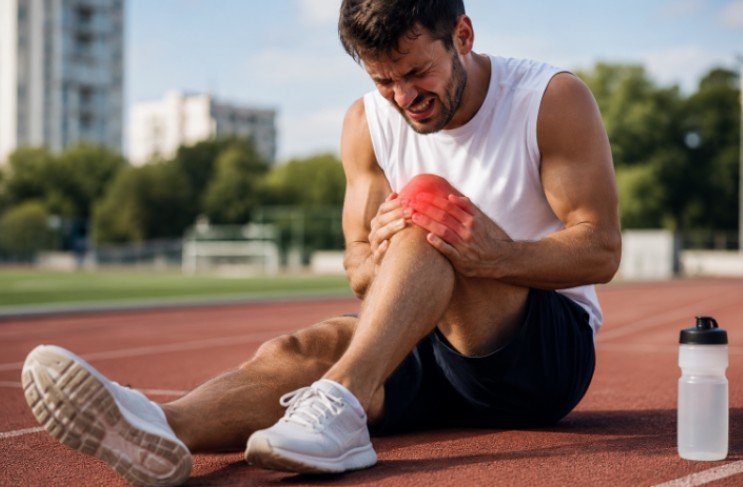
For many active people, sport is an important part of life. It might be running, cycling, tennis, golf, hiking, swimming, gym training or simply staying fit enough to enjoy weekends and holidays.
So when knee pain starts interfering with exercise, it can feel like much more than a minor inconvenience.
A knee that aches after a long run may eventually begin to hurt during ordinary walks. A tennis player might start avoiding matches. A golfer may find walking the course increasingly difficult. Someone who enjoys hiking may gradually choose shorter and flatter routes.
Knee pain has many possible causes, but osteoarthritis is one of the most common reasons for persistent symptoms in adults. Previous sporting injuries, damage to cartilage or the meniscus, ligament injuries, age, genetics and other factors can all contribute to the development of arthritis.
The good news is that knee arthritis does not automatically mean giving up an active lifestyle. There are many ways of managing symptoms and maintaining movement. For some people, however, symptoms eventually become severe enough that surgery needs to be considered.
The objective should always be broader than simply treating the knee. It should be about helping people reduce pain, maintain mobility and, where possible, get back to doing the things they enjoy.
Why active people can develop knee arthritis
It is sometimes assumed that regular exercise should protect the knees from arthritis. The relationship is more complicated than that.
Previous injuries can play an important role. A significant meniscal injury, ligament injury or cartilage problem sustained during sport may alter the mechanics of the knee and contribute to degenerative changes later in life.
Some people also develop osteoarthritis without having a major previous injury. Ageing, genetics, body weight, muscle strength and the way forces are distributed through a joint can all influence the development of symptoms.
Being active is not, in itself, a reason to stop exercising. Physical activity is an important part of maintaining muscle strength, cardiovascular fitness and general health.
The challenge comes when activity repeatedly aggravates an already painful joint.
Rather than abandoning exercise completely, it may be possible to adapt the type, intensity or frequency of activity. The right approach will depend on the individual and the underlying cause of their symptoms.
When knee pain becomes a problem
Occasional knee discomfort after an unusually demanding activity is different from persistent pain that gradually changes what someone is able to do.
There are several signs that knee pain deserves proper assessment.
These can include persistent or worsening pain, swelling, stiffness, difficulty bending or straightening the knee, pain at night and increasing difficulty with everyday activities.
For an active person, another important sign is a change in performance or behaviour.
If someone who previously ran several times a week begins avoiding running because of pain, or a tennis player starts turning down matches because they know their knee will hurt afterwards, the problem is beginning to affect quality of life.
It is worth getting persistent symptoms assessed rather than simply assuming that they are an inevitable consequence of ageing or years of sport.
Staying active while managing knee arthritis
A diagnosis of knee arthritis does not necessarily mean that exercise has to stop.
In many cases, the emphasis is on finding activities that maintain fitness and strength without excessively aggravating symptoms.
Walking may remain possible for some people, while others may find cycling or swimming more comfortable. Strength training can also be valuable because maintaining strong muscles around the hip and knee can support movement and function.
Physiotherapy can help people develop an appropriate exercise programme and identify ways of modifying activities.
For example, someone who finds running painful may be able to maintain cardiovascular fitness through cycling, swimming or other lower-impact exercise. A recreational athlete may also be able to alter training volume rather than stopping completely.
Weight management can be relevant for some people with knee arthritis. Where excess weight is contributing to symptoms, losing weight may make physical activity easier.
Pain management can also form part of an individual’s treatment plan. The most appropriate approach varies according to the person’s symptoms, medical history and circumstances.
The important principle is that treatment should be individualised.
When does knee arthritis require surgery?
For some people, non-surgical treatment eventually stops providing sufficient relief.
Knee replacement may then become a consideration when arthritis is causing significant pain and disability and is substantially affecting everyday life despite appropriate conservative treatment.
The decision should not be made simply because an X-ray shows arthritis.
Imaging findings and symptoms do not always correspond perfectly. Someone can have significant changes on an X-ray without experiencing severe limitations, while another person may have symptoms that have a major impact on their life.
For an active person, the conversation is therefore about function as well as the appearance of the joint.
What activities have become impossible? How much pain is being experienced? Is sleep affected? Has exercise been reduced? Are everyday tasks becoming difficult?
These questions help put the condition into the context of the individual’s life.
When surgery is being considered, understanding what is involved in knee replacement surgery can help patients have a more informed discussion about their options, expectations and rehabilitation.
Not every knee replacement is the same
When people hear the words “knee replacement”, they often imagine that the entire knee joint has to be replaced.
That is not necessarily the case.
The knee has different compartments, and in appropriately selected patients arthritis may be predominantly confined to one part of the joint.
In these circumstances, a partial replacement may sometimes be considered.
Whether this is appropriate depends on several factors, including where the arthritis is located, the condition of the other compartments of the knee, ligament function, alignment and the individual’s symptoms and expectations.
A partial replacement is not automatically better or more suitable than a total replacement. The important question is which procedure, if any, is appropriate for that particular knee.
For people who are keen to remain active, this is an important part of the conversation with an orthopaedic specialist.
Getting back to activity after knee replacement
For an active person, having a knee replacement is rarely the end goal.
The real objective is often to regain mobility and confidence so that everyday life becomes easier and activities can be resumed.
Recovery is a gradual process.
Initially, attention is focused on pain control, swelling, movement and becoming independently mobile. As recovery progresses, strength, balance, endurance and confidence become increasingly important.
It is important not to assume that everyone follows exactly the same timetable. Recovery can vary according to age, general health, fitness before surgery, the condition of the knee and individual rehabilitation.
Understanding knee replacement recovery can help people appreciate why returning to activity is generally a progressive process rather than something that happens immediately after surgery.
The goal is to build capacity gradually.
Returning to sport
The activities people return to after knee replacement vary considerably.
For many people, walking, swimming, cycling, golf and appropriately structured gym exercise can form an important part of an active lifestyle.
Other activities place greater demands on a replacement joint.
Running, jumping, repeated impact, rapid changes of direction and contact sports may require more careful consideration. The suitability of any particular activity depends on the individual and should be discussed with their clinical team.
Someone who is passionate about a particular sport should therefore raise that subject before surgery rather than making assumptions about what they will be able to do afterwards.
The aim is to establish realistic expectations and understand how rehabilitation can support the activities that matter most.
Building strength and confidence
Physical recovery is only part of returning to an active life.
After months or years of painful movement, people may have developed ways of moving that protect the knee but reduce strength and confidence.
Rehabilitation can help reverse this.
Strengthening the muscles around the knee and hip can improve functional capacity. Balance and coordination may also need attention, while cardiovascular fitness can be gradually rebuilt.
Confidence is equally important.
Someone who has spent a long time associating exercise with pain may initially be reluctant to trust their new knee. A progressive rehabilitation programme can help demonstrate what the body is capable of doing.
This is particularly relevant to people who have always been active. The instinct to push through discomfort can be useful in sport, but rehabilitation requires a different approach.
Progressive loading, patience and listening to the body are often more useful than trying to achieve too much too quickly.
The goal is getting back to living
Knee arthritis can gradually narrow the range of activities people feel able to do.
A person may stop running, reduce their walking, avoid sports or spend less time outdoors. Over time, these changes can affect not just physical health but also enjoyment and independence.
That is why managing knee arthritis should be about more than treating pain in isolation.
For some people, appropriate exercise, physiotherapy, lifestyle changes and other non-surgical treatments may allow them to remain active without an operation.
For others, joint replacement may eventually provide an opportunity to regain mobility when other approaches are no longer sufficient.
Either way, the ultimate objective is the same: helping people maintain or regain the freedom to move.
Being active does not necessarily mean competing in sport or achieving a particular fitness target. It can mean walking comfortably, cycling with friends, playing golf, going on holiday, hiking with family or simply being able to get through the day without constantly thinking about knee pain.
For people who love sport and an active lifestyle, that freedom can be one of the most valuable outcomes of effective treatment.
The knee may be the immediate problem, but the bigger goal is helping the person get back to the life they want to live.