Welcome to State of Head, a segment from Slate and Arizona State College committed to exploring mental wellbeing. Abide by us on Twitter.
“What do you necessarily mean there is no way to get me my medication?”
A younger school pupil looked at me throughout the Zoom online video psychiatry appointment, visibly angry, and a little saddened.
“There’s a lack of ADHD medicine, and I’m not even sure when it will end.” I allow out an audible sigh, “It’s annoying, I know.”
“So, then, what do we do?” The affected person seems to be right at me, hoping that I can by some means support him navigate around the barrier. But I cannot.
“There are a several, all very not-good, solutions,” I instructed him. “You can connect with a bunch of pharmacies and then explain to me which area has it in stock and in what doses. I can then deliver in prescriptions for what you require. You can also wait around right up until anywhere you ordinarily choose it up gets remedies again in inventory, but I know you require it to function, primarily in college, so waiting around could be out of the question. Or, we can also communicate about switching prescription drugs quickly.”
Switching is far from a straightforward modify or even a useful one. This patient, like lots of of those people I see, experienced to test numerous remedies prior to getting an reasonably priced just one that is effective for him devoid of far too lots of facet consequences (like insomnia, deficiency of appetite, and further anxiousness). Even if he decides to give switching a consider, there is no warranty that the new drug will even be in inventory. The lack has started to trickle into other drugs, moving from Adderall to Ritalin and Concerta, and his new a single could be following.
Listening to my sequence of unhelpful selections, my individual seems to be defeated. I come to feel responsible for it. “I’m so sorry,” I say, for the fourth or fifth time today alone.
I did not have a phrase for what I was encountering until finally the pandemic introduced it out into my lexicon: ethical harm. Right before I went into this subject, no one informed me that the helplessness that will come with doing work in psychological well being is truly regular ethical injury.
The phrase itself originated in the context of the armed service and war in buy to capture an experience of veterans that is distinct from PTSD. At its most fundamental definition, ethical injury occurs when people are uncovered to demanding circumstances and possibly perpetuate, are unsuccessful to reduce, or witness activities that contradict their have values and ethical beliefs. The personal injury element is the distress we sense afterward in any or all regions of our life—psychologically, behaviorally, socially, and spiritually.
In the army, triggering situations incorporate situations when officers have to make decisions that have an effect on the survival of others, or other individuals in which a person failed to complete a duty throughout a traumatic celebration. Throughout the early pandemic, we discussed moral injury in health treatment in reference to resource allocation issues like masks or ventilators, or viewing significantly far more than the (now tricky) predicted quantity of suffering and demise. Most not too long ago, we have mentioned it as a most likely end result of the Dobbs ruling for OB-GYNs. However number of researchers have looked at the prevalence of moral injury in health care, in a review evaluating military services veterans deployed to battle following 9/11 and health treatment staff for the duration of the pandemic, the all round prevalence prices of opportunity ethical damage were equivalent.
There was a person big difference, nonetheless: The health care personnel described better charges of moral damage from many others instead than on their own. This implies that they ended up additional probable to concur with statements like “I am troubled by having witnessed others’ immoral acts” than “I am troubled by getting acted in strategies that violated my personal morals and values.” An illustration could possibly be realizing sufferers should have family associates present when they are dying in the healthcare facility, but not getting ready to due to the fact of COVID-connected medical center restrictions. This plan might operate counter to their individual beliefs of how an individual ought to die, but they feel powerless to change it. The distinction concerning others and self may perhaps be relevant to the idea that health care workers get the job done in a broken system, and may well truly feel far more betrayed by others because of it: society, authorities, or healthcare facility leaders, for instance.
As an outpatient psychiatrist, I’m constantly apologizing for something exterior of my handle. If it is not an ADHD medication lack, it’s insurance policies denying other necessary prescriptions. Or a patient currently being unable to come across a therapist. They may change employment (or, even worse, get fired), and the coverage modifications or new fees suggest they just cannot see me anymore. As a end result, they now have to uncover a new psychiatrist in the center of a pandemic and amid a compounded lack of mental well being providers.Chronically unwell to my belly and wounded, I desire them luck.
It is not just outpatient, though. When I was in residency we were being warned that our initially two several years, made up of largely inpatient psychiatry, would be even even worse, and they were proper. We had people who stored coming back to the medical center mainly because we did not have social help to get them to appointments or to help them find the money for their prescription drugs. There were being also the sufferers waiting around days, even weeks, in the crisis home, just to get into the inpatient device, for the reason that we did not have ample beds to assistance all of the men and women who necessary it. I keep in mind currently being explained to by my attendings that I just essential to get to my 3rd 12 months of instruction, wherever I’d be primarily outpatient, to see that persons do get superior. That part is accurate: It’s 1 of the brilliant places of my job and the motive I selected it. But they forgot to convey to us that even if people increase, the procedure doesn’t.
It could help to think about moral personal injury in drugs as the variation among telling an individual “We did all we could” and “We did all we could in a broken system with out all the vital assets.” We are all unwilling reps of the process. I get yelled at or cried to regularly, and as an empath, I take up it all. I know at the core, my patients’ reactions in my visits are not about me, but that does not make it harm any fewer. In some cases apologizing is all I can do, to truly feel like I’m carrying out anything. Or it’s possible it is my way of reminding them that I’m nevertheless a excellent man or woman, attempting to be a superior doctor.
My response, however, is a usual a single. Moral damage often sales opportunities us to blame ourselves and sense responsible, to really feel offended or disgusted, and even ashamed. These unfavorable views about ourselves and many others do not immediately suggest we have psychological wellness results, but we may possibly start out to observe tension reactions like improvements in our sleep, overworking, turning to alcohol to cope, and social isolation. When moral injury by itself is not a psychological wellbeing analysis, it is a chance variable for creating melancholy, PTSD, suicidal ideas, and burnout. As medical professionals, our costs of despair and burnout are presently better than in other very similar groups, and this is just yet another result in compounding it. In truth, in 1 study of health and fitness treatment employees in excess of COVID, bigger ethical injuries scores have been linked to worsened severity of signs or symptoms, such as suicidal ideas.
Over and above the risk to the mental wellness of the particular person wellness care worker, there is a potential for ethical injury to trigger men and women to depart the subject completely. Getting rid of staff members will only strain a method with minimal accessibility to commence with, notably for mental overall health gurus. In simple fact, in accordance to the Wellness Sources and Solutions Administration, by 2030 the demand for psychiatrists will increase by 6 p.c, outpacing the provide and top to a scarcity of nearly 18,000 psychiatrists. This selection doesn’t even get into account the unmet have to have thanks to limitations to getting psychological health and fitness care, or the rise in mental wellness worries around COVID-19 that have compounded the pressure and demand from customers on psychological health and fitness experts. Accessibility is already a problem, but when the existing workforce leaves owing to moral injury, clients remaining with out care are ultimately the types who will undergo.
Naming what I’ve been encountering as moral injuries is practical and is actually a very first move in coping. In these moments, lots of of us—including the bulk of my well being care–worker clients and me—are quick to converse down to ourselves and self-blame. It is vital alternatively that we pause, accept our emotions and struggling, and practice self-compassion. To do this, we will need to find out to switch our adverse thoughts with the methods we talk to somebody else we care about—a mate, loved ones member, or even the more youthful model of ourselves. Our positions are difficult ample with out us adding to them by tearing ourselves down.
At the very same time, one of the couple of answers offered to us as individuals is sharing our ordeals with ethical injuries. Drugs is not a area of vulnerability, and as a result, we frequently truly feel by yourself in our experiences and feelings. Real self-care for ethical personal injury consists of creating alternatives with the assistance or advice of other people, when probable, and wanting for support in the conversations that result in distress (or later on). Collectively, in both structured strategies or informally just after troubling gatherings arise, we can system our activities and hear distinctive strategies to consider about or make which means from what we witnessed. We never need to have to experience in silence.
Even creating all of this out has helped me.
Point out of Mind
is a partnership of
Slate
and Arizona State University
that offers a useful appear at our psychological wellness system—and how to make it
superior.
For American Heart Month, “Good Morning America” enlisted top experts to share advice, food tips and nutritious recipes that can help home cooks maintain a diet that focuses on heart health.
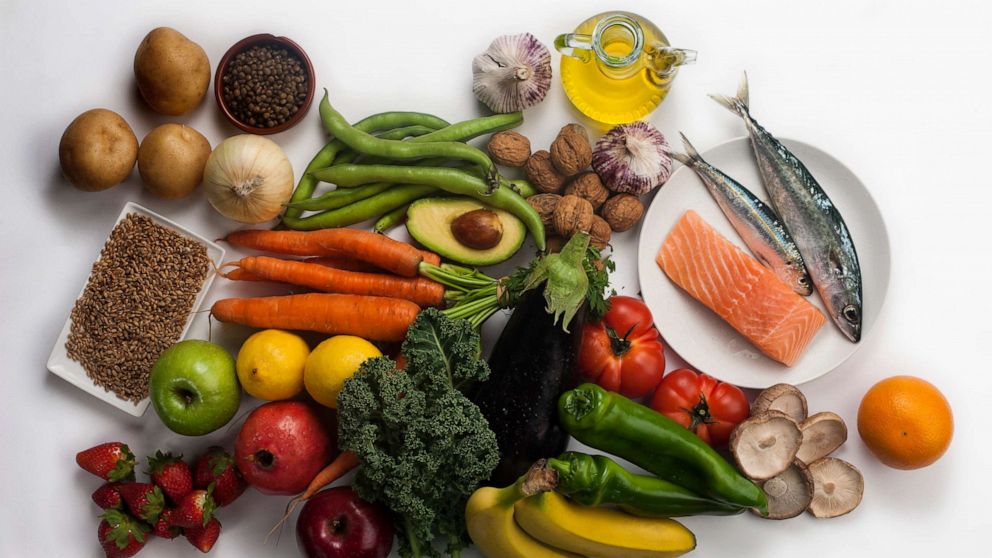
The increasingly popular Mediterranean-style diet, which is supported by the American Heart Association, includes lean, unprocessed red meat, whole fruits and vegetables, dairy, beans, nuts and whole grains, and has been hailed as a great way for anyone hoping to help support their heart health in their everyday diet.
Top tips for a heart-healthy diet
STOCK PHOTO/Getty Images
Vegetables, fruits, beans, nuts, whole grains, fish and olive oil make up the majority of a Mediterranean diet.
Stefani Sassos, a registered dietitian and nutrition director for the Good Housekeeping Institute, told “GMA” that “instead of thinking about all of the foods that you have to restrict on a heart-healthy diet, I like to focus on an abundance of heart-healthy foods that you can incorporate into your daily routine.”
One tip she shared is to opt “for more nutritious fats that can improve blood cholesterol levels and lower your risk of heart disease.” You can find those healthy fats in things like olive oil, avocados and avocado oil, raw nuts, nut butter, flaxseeds, chia seeds and fatty fish, she said.
Most Americans don’t meet their daily fiber requirements, according to the American Society for Nutrition, and Sassos said the key is to incorporate more fiber-rich foods into your diet gradually.
“These foods can help lower your LDL ‘bad’ cholesterol, manage weight and provide a slew of beneficial nutrients that can help protect you against heart disease. The most heart-healthy fiber-rich foods include berries, cruciferous vegetables, oatmeal, nuts, legumes and beans,” Sassos said.
Overconsumption of sodium, meanwhile, puts people at risk for high blood pressure, heart attacks and strokes, and since 70{35112b74ca1a6bc4decb6697edde3f9edcc1b44915f2ccb9995df8df6b4364bc} of the sodium we eat comes from processed and restaurant foods, according to the U.S. Food and Drug Administration, Sassos suggests “cooking more meals at home” to help cut down on salt and save money.
For folks still reaching for processed and packaged foods like canned soups or lunch meats, Sassos said to “opt for reduced sodium and lower-sodium varieties when you can.”
Top ingredients to incorporate for heart health
Tara Schmidt, a lead registered dietitian for the Mayo Clinic, further explained why certain ingredients are better than others.
“We want to encourage foods that provide fiber, vitamins, minerals and fats that can be beneficial for cholesterol, blood pressure, or be protective for those without a diagnosis,” she said. “This often boils down to an eating plan high in plants and low in ultra-processed foods.”
Sassos said “fresh herbs are your friend when it comes to keeping dishes heart-healthy.” On top of adding flavor, she said herbs like parsley, basil and mint “supply special vitamins and minerals that can support a healthy heart.”
Staples like legumes and beans that “pack in fiber and plant-based protein” are another favorite of Sassos, and act as a filling, heart-healthy base for an array of meals.
“If you’re buying the canned options, look for lower-sodium or no-salt-added varieties and be sure to rinse and drain them,” Sassos said.
“Don’t be afraid to experiment with different cuisines and unique spices. Garlic, ginger, turmeric, cinnamon and cayenne all have powerful anti-inflammatory properties and add bold flavor to dishes. Start small and then add more after you have taste tested your dish,” she suggested.
Best cooking methods for heart healthy meals
“Air frying uses significantly less oil than deep frying and pan frying, so it can provide a lower-calorie and lower-fat heart-healthy meal alternative that still delivers a crisp texture,” Sassos said, calling out air fried wild-caught salmon as a go-to dish with omega-3 fatty acids for lean protein. “I’ll serve it alongside roasted sweet potato wedges and braised spicy kale for a dose of antioxidants and fiber.”
Heart-healthy recipes for American Heart Month
2 small zucchini, shredded
2 teaspoons Dijon mustard
2 1/2 teaspoons extra virgin olive oil
1/4 cup red onion, chopped
2 medium tomatoes, chopped
1 cup Swiss chard, firmly packed, shredded
2 tablespoons cheddar cheese, reduced fat
2 tablespoons part-skim ricotta cheese
1 tablespoon parsley or basil, fresh
4 slices whole-grain bread, toasted
Place shredded zucchini into a clean tea towel, gather the edges and squeeze the excess liquid. Discard liquid.
Preheat the oven to broil. Whisk the mustard and eggs together until well combined.
Heat the olive oil in the base of 7-inch (base), 10-inch (top) non-stick ovenproof frying pan over medium heat. Add the onion, cook for 1 minute stirring occasionally, until soft. Add the zucchini and tomatoes, cook for 5 minutes until the vegetables have softened and the moisture has evaporated. Stir in the Swiss chard and half the cheddar cheese. Spread evenly over the pan. Dollop over the ricotta.
Pour over the egg mixture and allow the egg to run to the base. Cook for 4 minutes or until the egg is almost set. Sprinkle the remaining cheese.
Place the pan under the broiler for 2 to 3 minutes or until the top is set and lightly golden. Scatter over the parsley or basil. Season to taste with black pepper. Cut in half and serve with slices of toast.
Schmidt said “both apples and oats have cholesterol-lowering properties,” making this a great heart-healthy breakfast. “It would also be appropriate for a DASH-style eating plan for hypertension,” she added.
1 cup old fashioned (rolled) oats
1 medium apple, diced (leave skin on)
1 cup cranberries, whole, fresh or frozen
2 tablespoons brown sugar, unpacked
1 teaspoon ground cinnamon
1 teaspoon vanilla extract
1/4 teaspoon ground cloves
In medium pot, bring 2 cups water and milk to a boil. Add oats and wheat bran and cook about 3 to 5 minutes.
Stir in diced apple, cranberries, brown sugar, cinnamon, vanilla and cloves.
Cook for an additional 3 minutes or until oatmeal reaches desired consistency.
Grilled Lemony Chicken and Kale
Mike Garten
Grilled lemony chicken and kale âCaesarâ. Good Housekeeping Savor Weeknight July/Aug 2022
Heat grill or grill pan to medium-high. In large bowl, combine lemon juice, 1 tablespoon oil, oregano, garlic powder, Aleppo pepper, 1/2 teaspoon salt, and 1/4 teaspoon pepper. Add chicken and toss to coat. Let sit 3 minutes (resist marinating longer, as the lemon juice could start cooking the chicken).
In second large bowl, toss kale with remaining 2 tablespoons oil and 1/4 teaspoon each salt and pepper.
Grill chicken until charred and cooked through, about 2 minutes per side; transfer to plates. Grill kale, turning often, until charred and just tender, 3 to 4 minutes total; transfer back to bowl. Grill lemons, cut sides down, until charred, 1 to 2 minutes.
Squeeze half of grilled lemon over kale and toss to combine, then toss with Parmesan. Serve over chicken with additional shaved Parmesan and grilled lemon halves.
Prep step: Strip kale leaves by holding the end of each stem and pulling each side down and off in one motion, or fold like a closed book (think of the stem as the spine) and cut away the leafy part.
Poblano and Black Bean Loaded Baked Potato
Mike Garten. Food Styling: Rebecca Jurkevich. Prop Styling: Lis Engelhart.
Poblano and Black Bean Loaded baked potato
4 medium russet potatoes (about 8 ounces each), scrubbed and dried
2 poblano peppers, cut into small pieces
15.5-ounce can black beans (including liquid)
1/2 teaspoon ground cumin
1/4 teaspoon smoked paprika
1/2 teaspoon lime zest, plus 2 teaspoons lime juice and more for serving
1 large plum tomato, seeded and chopped
Grated cheddar for serving
Heat oven to 400 F. Prick potatoes and microwave on high 10 minutes. Brush potatoes with 1 tablespoon oil, sprinkle with 1/4 teaspoon kosher salt, place directly on middle oven rack (with baking sheet on rack below to catch oil drippings), and bake until tender, 18 to 20 minutes.
Meanwhile, heat 1 tablespoon oil in large skillet on medium. Add peppers and cook, covered, stirring occasionally, until tender, 5 to 7 minutes; transfer to plate.
To skillet, add black beans, cumin, smoked paprika, and 1/4 teaspoon salt and cook, stirring occasionally, until beans are slightly thickened, 4 to 5 minutes. Fold in poblanos.
In bowl, combine sour cream and lime zest. In second bowl, toss tomato with lime juice and a pinch of salt.
Split potatoes, top with cheddar if desired, then top with beans, tomatoes, and sour cream. Sprinkle with additional lime zest if desired.
Best Seared Salmon with Charred Green Beans
Mike Garten. Prop Styling by Chr
Seared Salmon With Charred Green Beans
2 tablespoons, plus 2 teaspoons olive oil, divided
1 1/4 pound-skinless salmon fillet, cut into 4 portions
1 pound green beans, trimmed
4 cloves garlic, smashed and thinly sliced
1 small red chile, thinly sliced
2 tablespoons capers, drained, patted dry
Lemon wedges, for serving
Heat 2 teaspoons oil in a large skillet on medium-high. Season salmon with 1/2 teaspoon each salt and pepper, add to skillet, flesh side down, reduce heat to medium, and cook until golden brown and just opaque throughout, 5 to 6 minutes per side.
Heat remaining 2 tablespoons oil in a large cast-iron skillet on medium-high. Add green beans and cook until browned, 2 1/2 minutes. Turn with tongs and cook until browned and just barely tender, about 3 minutes more.
Remove from heat and toss with 1/4 teaspoon salt, then garlic, chile, and capers. Return to medium heat and cook, tossing until garlic is golden brown, 1 to 2 minutes. Serve with salmon and lemon wedges if desired.
CHICAGO (WLS) — A great deal of folks are hosting Tremendous Bowl view parties Sunday, but there is a person in the suburbs that is encouraging raise money for former Chicago Bears defensive deal with Steve “Mongo” McMichael.
He’s battling ALS, which involves close to-the-clock care.
It is Tremendous Bowl Sunday, and the beers and pizza started out flowing early at the Des Plaines Theatre. So did the goodwill.
A look at party was established up as a fundraiser for previous Chicago Bears defensive deal with Steve McMichael, who is currently battling ALS.
Connected: Bears legend Steve ‘Mongo’ McMichael shares glimpse inside of his ALS battle | The us Robust
“The NFL has been definitely handy but not handy plenty of. It does not include everything. So that is why we’re fundraising these days, to aid deal with that hole,” claimed McMichael’s wife, Misty.
Section of the 1985 Chicago Bears, McMichael exposed his analysis in April 2021. He is now totally paralyzed and has shed his voice as well, but not his will.
“This male is the toughest gentleman I’ve at any time achieved in my everyday living. He’s hanging in there,” Misty said. “He’s actually better now that he is determined in no way go back to the hospital since we have been likely very much every thirty day period for distinct factors.”
Remaining handled at dwelling suggests Mongo, as he is affectionately acknowledged, necessitates 24/7 nursing care. Sunday’s fundraiser included a displaying of the 1985 Super Bowl, to remind people the pleasure McMichael and the full staff furnished to so quite a few.
“I was there. A large amount of us were there and we recall just the joy that the ’85 Bears gave us,” claimed Ron Onesti, with Onesti Entertainment. “These guys weren’t football gamers, they were being entertainers who transpired to participate in soccer.
But amidst the properly-wishes and the raffles, there was also a desire to do much more than just elevate income. Misty’s two picked companions equally misplaced their husbands to ALS above the very last two a long time. They are girls who did not have the fortune of notoriety to aid with their expenditures. Preventing for awareness and a overcome is now their life’s mission.
Similar: Steve ‘Mongo’ McMichael warns of fraudsters hoping to make revenue off his ALS diagnosis
“When my partner was diagnosed, family members, friends, entire strangers dropped off gift cards, food at our dwelling. We would have dropped our home if it wasn’t for the kindness of family close friends and strangers,” claimed Kelly Salzburg, who shed her husband to ALS.
“You just have to aid just about every other. You have to elevate consciousness. We have to take care of each other,” claimed Karen Toole, who also dropped her partner to ALS.
Working concurrently with Sunday’s event in Des Plaines is a next fundraiser in St. Charles. The two are daylong, cost-free to show up at and will run through the huge game itself.
FROM WILD Improvements in group fitness to the at-residence tech physical fitness revolution, the physical fitness landscape is in the midst of a transformation. The effects will push you to rethink your workouts—and the points you’re accomplishing when you’re not teaching, far too.
You’ve observed early parts of this transformation for several a long time. A several decades back, the increase of smartwatches experienced all people tracking steps and preaching about coronary heart amount variability. And at the top of the pandemic, Peloton, Hydrow, and a host of other related conditioning models taught us all about the energy of a property exercise routine group.
But the next ways in the tech-fitness revolution assure to be even extra sweeping, in aspect mainly because, for the first time in a long time, outdated-college fitness centers are embracing the globe of tech and device mastering. The close final result is poised to enable new audiences embrace health and conditioning in obtainable and sustainable means. Not a gymnasium dude? Very well, virtual fact will let you sweat from property, delivering a new (and tremendous-pleasurable!) entry level for these intimidated by hardcore exercise routines. Motion-monitoring tech will support you proper form errors—and aid muscle mass experts recognize and examine the sort errors that ordinary guys make.
Are you likely tough currently, but possessing difficulty bouncing again? Get all set to jumpstart your gains guiding an explosion in higher-tech restoration gear that allows you access the identical applications that preserve professional athletes like LeBron James and Patrick Mahomes in ideal condition. Add in a new wave of exercise trackers and blood tests that supply next-stage information insights, and you have a host of new applications for health good results.
These tech transformations have blended with a new wave of in-gymnasium thoughts to revitalize a health and fitness landscape that is been all about bench presses and squats for considerably far too lengthy. But a new technology of social media trainers is now supporting everybody rethink the crucial qualities of health and longevity (spoiler inform: six-pack ab muscles never make the list), and an energized team exercise scene will enable you redefine concepts of competition and health group.
It all sets you up with the applications you have to have to grow to be your supreme self. Study on for the rundown on the physical fitness innovations we enjoy most.
Ebenezer Samuel, C.S.C.S., is the health and fitness director of Men’s Wellbeing and a accredited trainer with far more than 10 several years of education expertise. He’s logged coaching time with NFL athletes and observe athletes and his present education regimen contains pounds coaching, HIIT conditioning, and yoga. Right before joining Men’s Well being in 2017, he served as a athletics columnist and tech columnist for the New York Each day News.
Examination time has always been the toughest time for pupils. They study like they under no circumstances analyzed the complete year. It is a time interval when most children sense overcome, pressured, and anxious. The continuous stress and stress of exams sometimes consider a toll on the well being of some youngsters. So, it gets to be extremely significant for youngsters to consume appropriately. A well balanced diet regime is essential for maintaining exam stress in check and strengthening focus. Plus, a superior nutritious diet regime can support you preserve general health.
Dietician Sneha Kamat at SRV Hospital, Goregaon, Mumbai shared some diet program strategies for young ones to aid them offer with examination tension.
How diet regime assists youngsters offer with exam pressure?
Not only young children, but scientific tests have also shown that consuming meals has a positive impact on your mental well being. Dietician Kamat shares that food items use has a immediate influence on the mental skill of youthful young ones. “For occasion, iron deficiency can disrupt dopamine transmission, which can choose a toll on their intelligence at an early phase. There are several minerals and vitamins that have been revealed to improve kids’ cognitive capacity and mental emphasis, together with vitamin E, thiamine, vitamin B, zinc, and iodine.”
Also Read: Yoga for exam pressure: Asanas just about every university student should consider
Make your youngsters try to eat ideal to offer with examination strain. Impression courtesy: Adobe Stock
Diet regime ideas to continue to keep exam tension in command
Right here are some diet plan strategies from the pro to enable you offer with test anxiety and retain your head in the activity:
1. Include carbohydrates in your diet regime
Not all carbs are bad! So, guarantee you incorporate some balanced carbohydrates to your diet regime, which includes entire grains like whole-grain bread, brown rice, quinoa, and wheat, as they all are higher in glucose, suggests the expert. Sweet potatoes, pumpkin, and gourd are illustrations of starchy veggies that college students can integrate into their daily carb usage, she provides.
Even so, make confident you are eating anything in moderation and not loading on too considerably also quickly.
2. Eat additional veggies
Really do not underestimate the electricity of a straightforward vegetable! Greens are loaded with many nutrients that can gain you in a lot more approaches than a single. So, the dietician urges little ones to involve all forms of veggies in their food plan. Having said that, you ought to consider to include much more non-starchy veggies and consider to stay clear of potatoes.
Also Browse: Steamed greens vs raw: What is much healthier?
3. Load up on Omega-3s
Did you know Omega-3 fatty acids support you make improvements to your brain health and fitness and assistance you emphasis? Kamat suggests, “Kids must consume Omega-3-abundant foods at minimum two times a week mainly because meals large in omega-3s like seafood and fish account for 8 per cent of the mind. Lean food items (reduced-excess fat meats) these kinds of as fish, chicken, tuna, turkey, and lean pink meat will have to be incorporated in students’ foods.”
Consume far more Omega-3 abundant meals to deal with examination anxiety. Impression courtesy: Shutterstock
4. Curd can help
Curd helps to preserve your intestines nutritious, explains the dietician. With tests listed here, it is vital to try to eat food items that enable you steer clear of abdomen ailments and manage gut wellness. Curd is a probiotic that encourages excellent germs in the stomach when also stimulating the circulation of serotonin, a nice hormone that success in controlled stress. The dietician advises pupils not to skip the ‘Dahi-Shakkar’ in advance of exams.
5. Maintain a equilibrium
Whilst carbs have normally gotten a poor status, the dietitian suggests that carbs along with amino acids can aid young ones to make improvements to their consciousness, reasoning, and comprehension qualities. “According to research, having a balanced diet plan will enhance the cognitive and intellectual effectiveness of the learners, specifically when finding out for examinations.
Try to eat a healthy diet to offer with test anxiety. Picture courtesy: Shutterstock
Students need to incorporate at least half a plate of vegetables, a quarter plate of carbs, and a acceptable quantity of protein in their foods. Pupils should take in well in buy to be attentive and fascinated,” advises Kamat.
A phrase from the professional!
Prolonged several hours of researching can drain the scholar and they might get bored. So, it is essential for them to slumber adequately and consume a nicely-balanced diet program. It will increase their focus techniques and help them keep what they have been studying. It will enable them understand and assimilate the new understanding they have read through. Just before going to bed, students ought to get some time to unwind. Late at night, learners must steer clear of caffeine-containing drinks. Learners must go for a wander, swim, exercising, or simply just stroll to the shop.
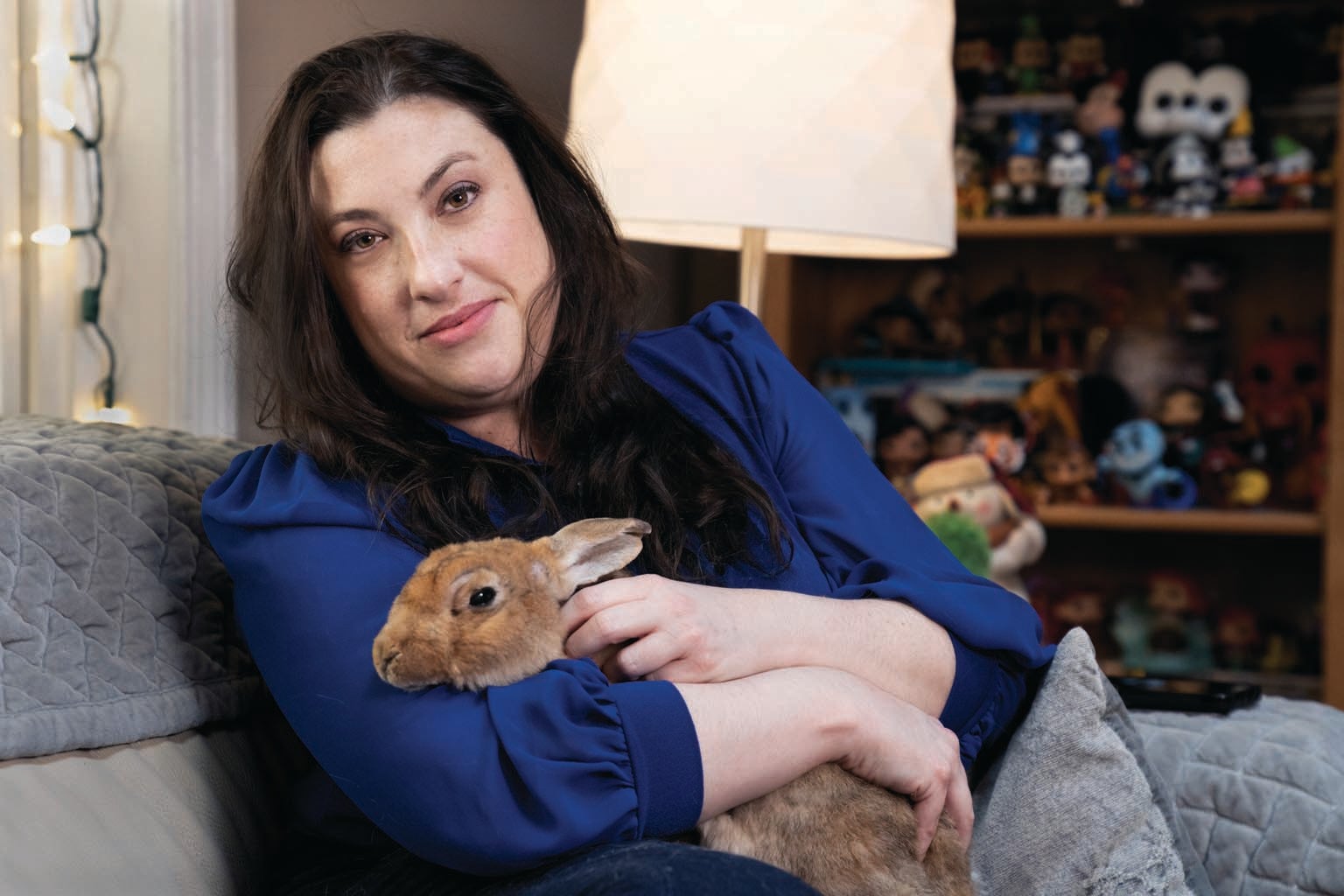
Tara Ghormley has always been an overachiever. She finished at the top of her class in high school, graduated summa cum laude from college and earned top honors in veterinary school. She went on to complete a rigorous training program and build a successful career as a veterinary internal medicine specialist. But in March 2020 she got infected with the SARS-CoV-2 virus—just the 24th case in the small, coastal central California town she lived in at the time, near the site of an early outbreak in the COVID pandemic. “I could have done without being first at this,” she says.
Almost three years after apparently clearing the virus from her body, Ghormley is still suffering. She gets exhausted quickly, her heartbeat suddenly races, and she goes through periods where she can’t concentrate or think clearly. Ghormley and her husband, who have relocated to a Los Angeles suburb, once spent their free time visiting their “happiest place on Earth”—Disneyland—but her health prevented that for more than a year. She still spends most of her days off resting in the dark or going to her many doctors’ appointments. Her early infection and ongoing symptoms make her one of the first people in the country with “long COVID,” a condition where symptoms persist for at least three months after the infection and can last for years. The syndrome is known by medical professionals as postacute sequelae of COVID-19, or PASC.
People with long COVID have symptoms such as pain, extreme fatigue and “brain fog,” or difficulty concentrating or remembering things. As of February 2022, the syndrome was estimated to affect about 16 million adults in the U.S. and had forced between two million and four million Americans out of the workforce, many of whom have yet to return. Long COVID often arises in otherwise healthy young people, and it can follow even a mild initial infection. The risk appears at least slightly higher in people who were hospitalized for COVID and in older adults (who end up in the hospital more often). Women and those at socioeconomic disadvantage also face higher risk, as do people who smoke, are obese, or have any of an array of health conditions, particularly autoimmune disease. Vaccination appears to reduce the danger but does not entirely prevent long COVID.
The most common, persistent and disabling symptoms of long COVID are neurological. Some are easily recognized as brain- or nerve-related: many people experience cognitive dysfunction in the form of difficulty with memory, attention, sleep and mood. Others may seem rooted more in the body than the brain, such as pain and postexertional malaise (PEM), a kind of “energy crash” that people experience after even mild exercise. But those, too, result from nerve dysfunction, often in the autonomic nervous system, which directs our bodies to breathe and digest food and generally runs our organs on autopilot. This so-called dysautonomia can lead to dizziness, a racing heart, high or low blood pressure, and gut disturbances, sometimes leaving people unable to work or even function independently.
The SARS-CoV-2 virus is new, but postviral syndromes are not. Research on other viruses, and on neurological damage from the human immunodeficiency virus (HIV) in particular, is guiding work on long COVID. And the recognition that the syndrome may cause its many effects through the brain and the nervous system is beginning to shape approaches to medical treatment. “I now think of COVID as a neurological disease as much as I think of it as a pulmonary disease, and that’s definitely true in long COVID,” says William Pittman, a physician at UCLA Health in Los Angeles, who treats Ghormley and many similar patients.
Although 16 million U.S. sufferers is a reasonable estimate of the condition’s toll, there are other, more dire assessments. A meta-analysis of 41 studies conducted in 2021 concluded that worldwide, 43 percent of people infected with SARS-CoV-2 may develop long COVID, with about 30 percent—translating to approximately 30 million people—affected in the U.S. Some studies have offered more conservative numbers. A June 2022 survey reported by the U.S. National Center for Health Statistics found that among adults who had had COVID, one in five was experiencing long COVID three months later; the U.K. Office for National Statistics put the estimate at one in 10. Even if only a small share of infections result in long COVID, experts say, they will add up to millions more people affected—and potentially disabled.
Most of the first recognized cases of long COVID were in patients who needed extended respiratory therapy or who had obvious organ damage that caused lasting symptoms. People reporting neurological symptoms were often overlooked or dismissed as traumatized by their initial illness and hospitalization. But as 2020 came to an end, says Helen Lavretsky, a psychiatrist at the University of California, Los Angeles, “we started getting to a place of sorting through what was really going on … and it became very evident at that time that neuropsychiatric symptoms were quite prevalent,” most commonly fatigue, malaise, brain fog, smell loss and post-traumatic stress disorder, as well as cognitive problems and even psychosis.
Ghormley was in her late 30s and relatively healthy when she caught the virus, but she had underlying conditions—including rheumatoid arthritis and asthma—that put her at risk for severe COVID. She spent several days at home, struggling to breathe, and then she went to the hospital, where her blood pressure soared and her blood glucose dropped precipitously. She mostly recovered from this acute phase within a few weeks, but, she says, “I never really got better.”
Soon after coming home from the hospital, Ghormley developed what her husband called “goldfish brain.” “I’d put something down and have no idea where I put it,” she recalls. “It kept happening over and over. I was thinking, ‘This is getting weird.’ My husband said I was not remembering anything. I’d try to talk, and I knew what I wanted to say, but I couldn’t think of the word.”
“Everything fell apart for me,” says Tara Ghormley, who has been struggling with long COVID since 2020. Credit: Ewan Burns
She also experienced tremors, dramatic mood swings and painful hypersensitivity to sounds. “My husband opening a paper bag felt like knives stabbing me in the ear,” she recounts. Any exertion—physical or mental—left her exhausted and in pain. The changes were jarring to Ghormley, who prided herself on her sharp mind. “The thing that bothered me the most was that I was really having trouble thinking, speaking, remembering—trying to complete a task and having no idea what it was. Suddenly I had quite profound neurological deficits. Everything fell apart for me at that time. That was horribly traumatic … it kind of broke me. I didn’t feel like me.”
Roots of Dysfunction
As a veterinary internist, Ghormley says, it’s her job to problem solve when mysterious symptoms arise, including her own. “I was actively trying to find reasons and find what I could do.” She theorized that some of her neurological symptoms might be the result of thrombotic events, blood clots that can cause ministrokes. Several early studies showed that COVID attacks endothelial cells, which line blood vessels. That can lead to clotting and oxygen deprivation in multiple organs, including the brain. Even subtle disruption of endothelial cells in the brain could contribute to cognitive dysfunction.
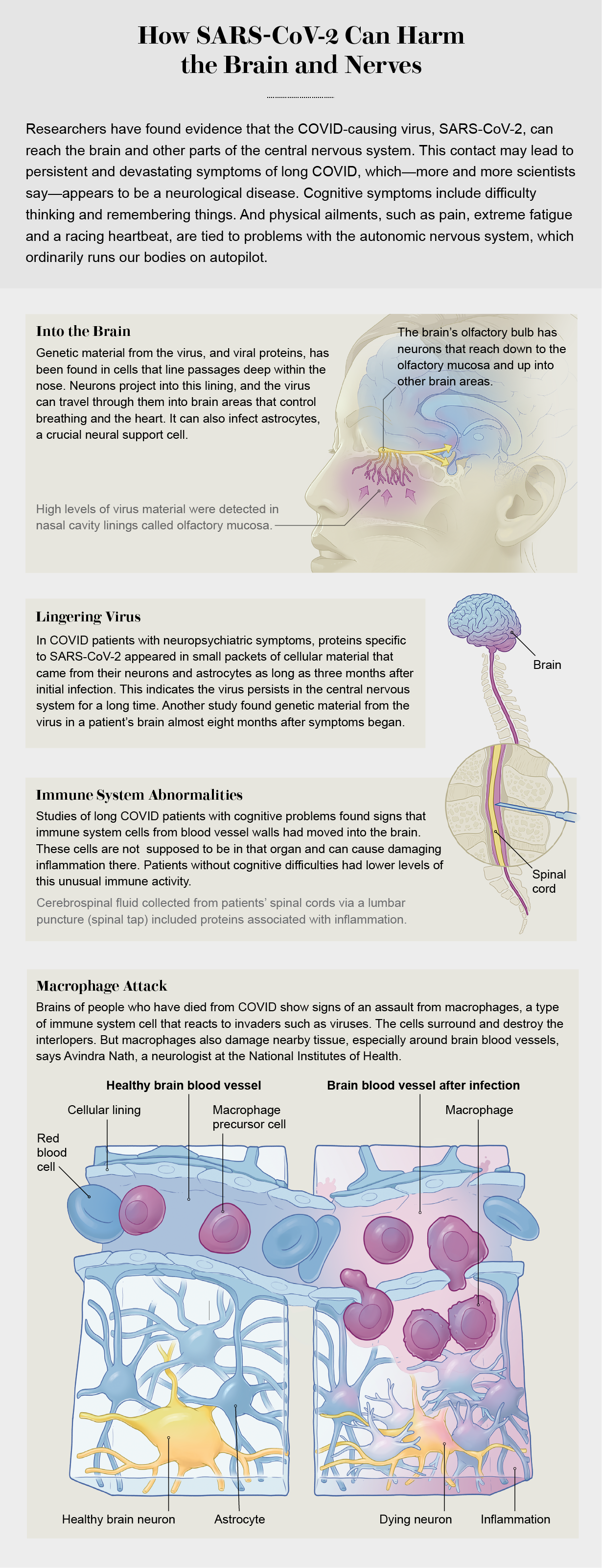
One study found that in people with neurological COVID symptoms, the immune system seems to be activated specifically in the central nervous system, creating inflammation. But brain inflammation is probably not caused by the virus infecting that organ directly. Avindra Nath, who has long studied postviral neurological syndromes at the National Institutes of Health, found something similar in an autopsy study of people who died of COVID. “When you look at the COVID brain, you don’t actually find [huge amounts of virus, but] we found a lot of immune activation,” he says, particularly around blood vessels. The examinations suggested that immune cells called macrophages had been stirred up. “Macrophages are not that precise in their attack,” Nath says. “They come and start chewing things up; they produce all kinds of free radicals, cytokines. It’s almost like blanket bombing—it ends up causing a lot of damage. And they’re very hard to shut down, so they persist for a long time. These are the unwelcome guests” that may be causing persistent inflammation in the brain.
Determining which patients have ongoing inflammation could help inform treatments. Early research identified markers that often are elevated in people with the condition, says Troy Torgerson, an immunologist at the Allen Institute in Seattle. Three cell-signaling molecules—tumor necrosis factor alpha, interleukin 6 and interferon beta—stood out in long COVID patients. But this pattern wasn’t found in absolutely everyone. “We’re trying to sort through long COVID patients and say, ‘This would be a good group to take to trials of an anti-inflammatory drug, whereas this group may need to focus more on rehabilitation,’” Torgerson says. He led a study (currently released as a preprint, without formal scientific review by a journal) in which his team measured proteins from the blood of 55 patients. The researchers found that a subset had persistent inflammation. Among those people, they saw a distinct immune pathway linked to a lasting response to infection. “One subset of patients does appear to have an ongoing response to some virus,” Torgerson says.
Isolated pockets of SARS-CoV-2 or even pieces of viral proteins may remain in the body well after the initial infection and continue to elicit an immune attack. The first solid evidence for “viral persistence” outside the lungs came in 2021 from researchers in Singapore who found viral proteins throughout the gut in five patients who had recovered from COVID as much as six months earlier. A study conducted at the University of California, San Francisco, found evidence for viral particles in the brains of people with long COVID. Scientists collected exosomes, or tiny packets of cellular material, released specifically from cells of the central nervous system. The exosomes contained pieces of viral proteins as well as mitochondrial proteins, which may indicate an immune attack on those vital cellular organelles. Amounts of such suspicious proteins were higher in patients with neuropsychiatric symptoms than in those without them.
The virus could linger in the brain for months, according to research conducted at the NIH and reported in Nature in December 2022. The autopsy study of 44 people who died of COVID found rampant inflammation mainly in the respiratory tract, but viral RNA was detected throughout the body, even in the brain, as long as 230 days after infection. Two other studies, both published last year in the Proceedings of the National Academy of Sciences USA, showed evidence that SARS-CoV-2 may infect astrocytes, a type of neural support cell, gaining entrance via neurons in the skin lining the nose.
Researchers are examining inflammatory signals in patients with long COVID in increasingly fine detail. A small study led by Joanna Hellmuth, a neurologist at U.C.S.F., found that patients with cognitive symptoms had immune-related abnormalities in their cerebrospinal fluid, whereas none of the patients without cognitive symptoms did. At the 2022 meeting of the Society for Neuroscience, Hellmuth reported that she had looked at more specific immune markers in people with cognitive symptoms and found that some patients had an elevated level of VEGF-C, a marker of endothelial dysfunction. Higher VEGF-C concentrations are associated with higher levels of immune cells getting into the brain, she says, and “they’re not doing their normal function of maintaining the blood-brain barrier; they’re distracted and perhaps activated.” Although the studies are small, Hellmuth adds, they reveal “real biological distinctions and inflammation in the brain. This is not a psychological or psychosomatic disorder; this is a neuroimmune disorder.”
What keeps the immune system in attack mode? According to Torgerson, “one option is that you’ve developed autoimmunity,” in which antibodies produced by the immune system to fight the virus also mark a person’s own cells for immune attack. The response to the virus “turns the autoimmunity on, and that doesn’t get better even when the virus goes away,” he says. Several studies have found evidence of autoimmune components called autoantibodies that interact with nerve cells in people with long COVID.
Clues about the inflammatory processes at work could point toward treatments for neurological symptoms. “If it’s a macrophage-mediated inflammatory process … intravenous immunoglobulin could make a difference [to] dampen the macrophages,” Nath says. The treatment, referred to as IVIg, contains a cocktail of proteins and antibodies that can mitigate an overactive immune response.
IVIg can also be used to block autoantibodies. And a therapy called rituximab that targets antibody-producing B cells provides “a time-tested therapy for a lot of autoantibody-mediated syndromes,” Nath says. Another strategy is to use corticosteroids to dampen immune activity altogether, although those drugs can be used for only a limited time. “That’s a sledgehammer approach, and you can see if it makes a difference. At least it gives you an idea that, yes, it’s an immune-mediated phenomenon, and now we need to find a better way to target it,” Nath says.
If the virus does hang around in some form, antiviral medications could potentially clear it, which might help resolve neurological symptoms. That’s the hope of scientists running a clinical trial of Paxlovid, Pfizer’s antiviral drug for acute COVID.
A Chronic Fatigue Connection?
Postviral syndromes have been documented for more than a century, arising after infection with viruses from HIV to the flu. Epstein-Barr virus, which causes mononucleosis, is one of several viruses linked to a condition called myalgic encephalomyelitis/chronic fatigue syndrome (ME/CFS), which is estimated to affect at least one and a half million people in the U.S. ME/CFS bears striking resemblances to long COVID, with symptoms such as immune system dysregulation, fatigue and cognitive dysfunction. “One of the patterns we see is patients who definitely meet the criteria for ME/CFS. This is something we are seeing and treating all the time” in long COVID patients, Pittman says. ME/CFS can be severe, with some people losing mobility and becoming bedbound.
Credit: Now Medical Studios; Sources: “Neurovascular Injury with Complement Activation and Inflammation in COVID-19,” by Myoung-Hwa Lee et al., in Brain, Vol. 145; July 2022 (blood vessel reference); “Olfactory Transmucosal SARS-CoV-2 Invasion as a Port of Central Nervous System Entry in Individuals with COVID-19,” by Jenny Meinhardt et al., in Nature Neuroscience, Vol. 24; February 2021 (nasal passage reference)
Nath, who also studies ME/CFS, says that “we think mechanistically they are going to be related.” Researchers suspect that ME/CFS, like some cases of long COVID, could be autoimmune in nature, with autoantibodies keeping the immune system activated. ME/CFS has been difficult to study because it often arises long after a mild infection, making it hard to identify a viral trigger. But with long COVID, Nath says, “the advantage is that we know exactly what started the process, and you can catch cases early in the [development of] ME/CFS-like symptoms.” In people who have had ME/CFS for years, “it’s done damage, and it’s hard to reverse that.” Nath speculates that for long COVID, if doctors could study people early in the illness, they would have a better chance of reversing the process.
Torgerson hopes that researchers will ultimately come to better understand ME/CFS because of COVID. “COVID has been more carefully studied with better technology in the time we’ve had it than any other infectious disease ever. I think we’ll learn things that will be applicable to other inflammatory diseases driven by infection followed by an autoimmune process.”
Team Treatment
Ghormley, after months of illness, sought care at UCLA Health’s long COVID clinic, among the country’s few comprehensive, multidisciplinary programs for people with this syndrome. Even though her symptoms are rooted in nervous system dysfunction, she needed an array of medical specialists to treat them. The clinic grew out of a program aimed at coordinating care for medically complex COVID patients, says its director Nisha Viswanathan, an internist and primary care physician. In following up with COVID patients after several months, she realized that “we had a group of patients who still had symptoms. There was no understanding around the condition; we were just trying to see what we could offer them.” Viswanathan and others convened a biweekly meeting of UCLA Health doctors in pulmonology, cardiology, neurology, psychiatry and other specialties to discuss individual cases and overall trends.
At UCLA Health, Pittman coordinates Ghormley’s treatment. He says the interdisciplinary team is crucial to getting patients the best possible care. “Oftentimes there are so many symptoms,” and some patients have seen multiple specialists before arriving, but not necessarily the right ones. As long COVID primary care providers, he says, “we do the initial testing and get them to the right person.” For Ghormley, that list of providers includes Pittman, along with a neurologist, a pulmonologist, a cardiologist, a psychiatrist, a trauma counselor, a rheumatologist and a gynecologist.
The team approach has also been critical for doctors trying to understand a brand-new disease, Pittman says. “It’s been a very interesting journey from knowing almost nothing to knowing a little bit now, and we’re learning more every day, every week, every month,” he says. The term “long COVID” “is an umbrella, and I think there are multiple diseases under that umbrella.” Although each long COVID patient is unique, Pittman says, “we start to see patterns developing. And with Ghormley, we saw a pattern of dysautonomia, which we see frequently.”
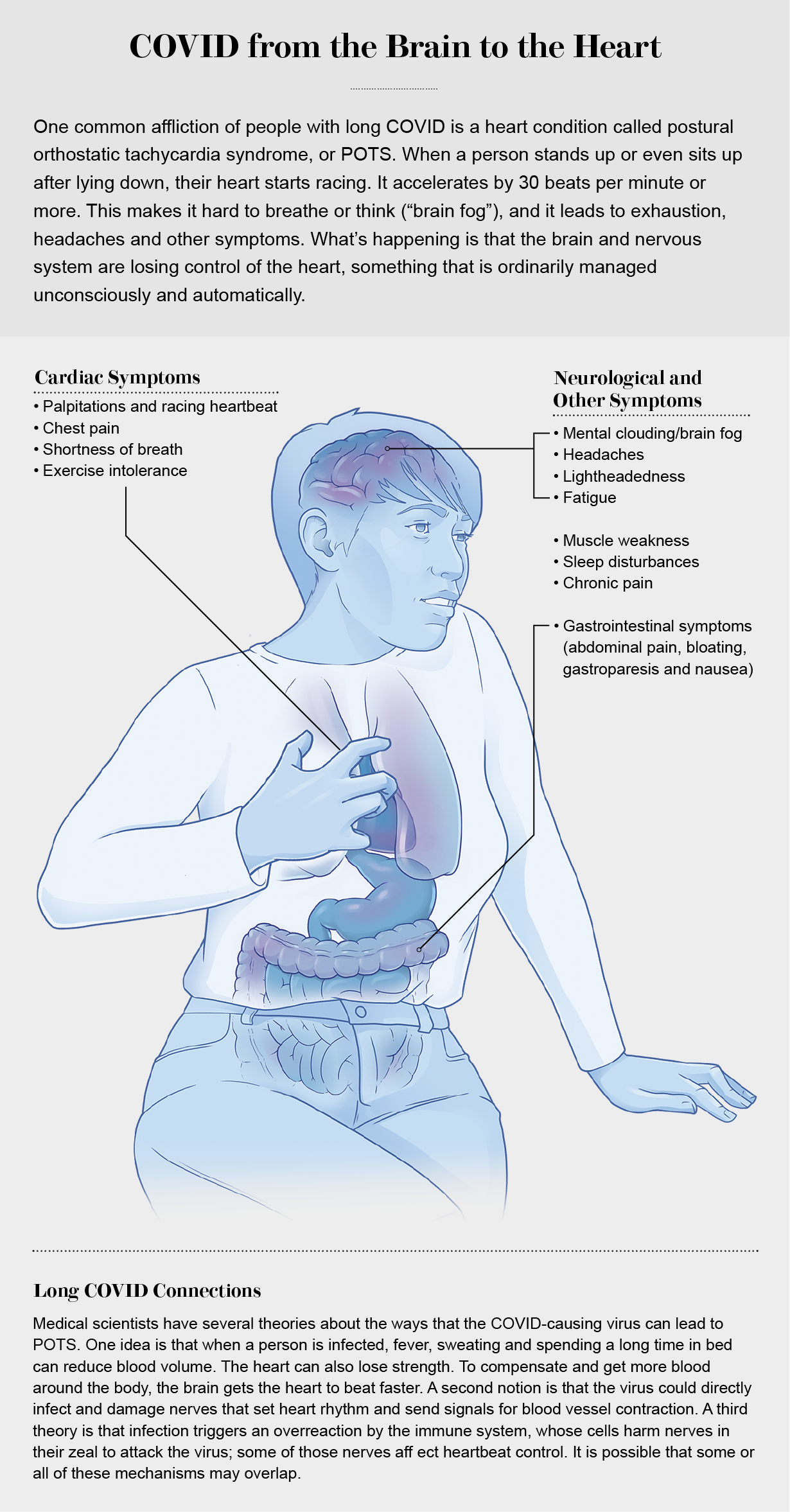
Dysautonomia impairs the autonomic nervous system, a network of nerves that branch out from the brain or spinal cord and extend through the body, controlling unconscious functions such as heartbeat, breathing, sweating and blood vessel dilation. For Ghormley, like many people with long COVID, dysautonomia takes the form of postural orthostatic tachycardia syndrome, or POTS. The syndrome encompasses a collection of symptoms that include a racing heart rate—particularly on standing—and fatigue, and it can cause bowel and bladder irregularities. POTS can also be a component of the exhaustion that comes with PEM. Although the symptoms may seem to affect the body, they stem from nervous system dysfunction.
Ghormley’s dysautonomia led her to see cardiologist Megha Agarwal at a UCLA clinic near her home. Many physicians are not familiar with POTS, but Agarwal is particularly attuned to it, having seen it in some of her patients before COVID hit. “There’s dysregulation of the nervous system, and so many things can cause it: some cancer therapies, viruses, autoimmune conditions.” Agarwal recognized POTS in Ghormley in the fall of 2020, when very little was known about long COVID. Now she believes “POTS is really what long-haul COVID is causing” in many patients. Luckily, Agarwal says, there are medical interventions that can help.
Tachycardia—the T in POTS—causes the heartbeat to speed up, contributing to exhaustion and fatigue in addition to stressing the heart itself. Drugs called beta-blockers (for the beta-adrenergic receptors they shut off in the heart) can lower the heart rate and improve symptoms. “When heart rate is controlled, not only does the pump improve,” Agarwal says, “[but people’s] energy improves, their fatigue is gone, and sometimes there’s better mental clarity.” For some patients like Ghormley, beta-blockers are not enough, so Agarwal adds a medication called ivabradine. “It’s a bit off-label, but it’s currently being aggressively studied” for POTS. For Ghormley, the combination led to real improvements, “so now she doesn’t feel like she ran the Boston Marathon when all she did was sit down and stand up at work or take a shower,” Agarwal says.
Among Ghormley’s toughest symptoms is her brain fog, a catchall term for a slew of cognitive problems that make it hard for her to function. For days when Ghormley works, her psychiatrist prescribes Adderall, a stimulant used to treat attention deficit hyperactivity disorder that helps her concentrate and stay focused. That has “helped immensely,” Ghormley says.
Ghormley credits her doctors and Agarwal in particular with doing the detective work to dig into her symptoms. “Nobody knew anything about it, but everyone listened to me,” Ghormley says. Perhaps because she was a professional from a medical field, no one “brushed me aside.”
That’s unusual for people with long COVID, many of them women, who are often dismissed by physicians who doubt their complaints are real. “Patients just don’t feel heard,” Viswanathan says. “I had a patient who told me everything, and after, I just said, ‘This must be so hard for you. I want you to know that everything you’re feeling is real, and I’ve seen so many patients like you.’ And she started crying. She said, ‘No one has told me that. I can’t tell you the number of times I was told it was in my head.’”
Credit: Now Medical Studio; Sources: “Postural Orthostatic Tachycardia Syndrome as a Sequela of COVID-19,” by Cameron K. Ormiston et al., in Heart Rhythm, Vol. 19; November 2022; “Long COVID-19 and Postural Orthostatic Tachycardia Syndrome—Is Dysautonomia to Be Blamed?” by Karan R. Chadda et al., in Frontiers in Cardiovascular Medicine; March 2022 (references)
In addition to drugs, other types of therapies, including physical therapy, can help improve some symptoms. But people who experience PEM face a particular challenge when using movement therapies. Pittman says the exertion can make these patients feel worse. “We don’t want patients to go to not moving at all, but sometimes the type of movement they’re doing may be flaring their symptoms.” He notes that often PEM strikes young, previously healthy people who will say, “‘I need to push myself,’ and then they go way too far and get worse. Our job is to try to find that middle ground and then make that consistent over time, so they’re not getting further deconditioned but they don’t have the PEM, which has been shown to set them back.”
The Long Haul
Some patients, Pittman says, “have the expectation that they’re going to come in, and within a month they’re going to be back to normal. And resetting those expectations can be really challenging. You have to be really empathetic because people’s lives have completely changed.” But sometimes patients’ quality of life can improve noticeably when they are able to adjust to a new normal. Still, he says, “patients have so many questions, and I can’t lead them down a physiological pathway. I can tell them there’s neuroinflammation, maybe there’s autoimmunity, but we still don’t have the answers. Sometimes it’s really tough for us to accept and for the patient to accept that we just have to try our best.”
A number of people, Viswanathan says, benefit from reducing various treatments they have accumulated. Some people become so desperate that they will try anything from supplements to off-label medications to untested potions from the Internet. Stopping those sometimes leads to improved symptoms, she says.
Psychological care and support groups can help. Lavretsky adds that “lifestyle choices can play a huge role in improvement,” particularly better sleep habits and the use of breathing exercises to control anxiety. She tells people their bodies can heal themselves if the patients and clinicians find the right tools.
Whether that’s true for everyone remains to be seen, Viswanathan says. “We see many patients who have gotten better with time. I have patients whose symptoms have disappeared in the course of a year, or they disappear and occasionally flare up again.” But for some, she says, “it could last many years.”
“We’re going to be addressing this for probably decades,” Viswanathan says. “COVID is not going to go away so much as we’re just going to get used to living with it, but part of [that] means that people will continue to develop long COVID.”
Vaccination appears to reduce the risk of long COVID. But a study published in May 2022 in Nature Medicine suggests the protection, though real, is not as good as one might hope. The survey of electronic health records from the U.S. Department of Veterans Affairs looked at the relatively small portion of vaccinated people who subsequently became infected. They developed long COVID only 15 percent less often than unvaccinated people. “These patients can have symptoms for one to two years or longer, and so every month you’re racking up more patients. Even if it’s 15 percent less, the total population of patients is still growing and exploding,” Pittman says. The best way to avoid getting long COVID, experts all agree, is to avoid getting COVID at all.
The syndrome is still mired in a lot of medical uncertainty. Patients might have one or a combination of the problems investigated so far: Long COVID might be caused by viral particles that persist in the brain or other parts of the nervous system. Or it might be an autoimmune disorder that lasts long after the virus has disappeared. Maybe overactive immune cells continue to perturb the nervous system and nearby blood vessels. Fortunately, the increasing ability to recognize specific problems is helping clinicians hone treatments that give patients the best chance of recovery.
Although Ghormley says her care has dramatically improved her symptoms and allowed her to “do some normal things again,” she continues to experience flare-ups that make it impossible for her to work for weeks at a time. One day last year she skipped a dose of her heart medication and made a Target run in the southern California heat. “I got home and basically collapsed in the hallway. Since then, everything has been out of whack. If I try to move around, my legs give out.” Most frustrating—and scary—to Ghormley is the unpredictability of her symptoms. “They have changed so much; some are manageable, some debilitating. One thing will get better, and another thing comes back. I’m always hopeful that it’s going to get better, but I just don’t know.”