Veganuary 2023: Discover HELLO!’s round up of the best royal and celebrity tips for going vegan. From Meghan Markle and Venus Williams to Kim Kardashian and Liam Hemsworth.
Veganuary is upon us and with the trend growing year upon year there are exciting vegan delivery boxes available and restaurants offering seasonal menus… but how do celebrities sustain this life choice all year round?
From Duchess Meghan‘s tip on easing your way into veganism to tennis champion Venus Williams’ discovery on beating sugar cravings, read HELLO!’s round-up of fascinating celebrity and royal insights to help make your post Christmas health kick a success.With vegan diets growing in popularity and food brands now catching up with demand, there is no better time to try a plant-based diet – be it for environmental reasons or a fun challenge.
WATCH: Quotes from vegan celebrities
If you need some extra motivation to stay on track with your new vegan diet, here are some top tips from famous vegan celebrities…
Ease yourself into going vegan like Meghan Markle
The Duchess of Sussex told Best Health in 2016: “I try to eat vegan during the week and then have a little bit more flexibility with what I dig into on the weekends.”
MORE:Going vegan? Top five influencers to follow and their easy tips to start a plant-based diet
Replace eggs with mung beans like Kim Kardashian
In June 2019 Kim Kardashian revealed to her Instgram followers that she was going vegan by posting a picture of her morning breakfast with the caption: “Plant-based life.”
The reality star’s breakfast included vegan mung bean ‘scrambled eggs’ from the brand Just Egg. The egg-free scramble has since appeared multiple times on the KUWTK star’s Instagram, proving going vegan doesn’t mean sacrificing your all-important morning fry-up!
READ: Vegan Beauty: everything you need to know
Beat sugar cravings with fruit like Venus Williams
Venus decided to take on a vegan diet for her health to assist with her Sjögren’s syndrome symptoms, but she struggled with the lack of sweetness in her diet. Speaking to Eating Well, the tennis star said she loves eating fruit to “beat sugar cravings with natural sweetness”.
LOOK: The whole family will love this super tasty vegan mushroom hotpot
Increase your portion size to pack in the protein like Liam Hemsworth
Liam is making veganism work for him
Hollywood star Liam Hemsworth caused a stir in 2015 when he announced that he had gone vegan. Since then, the 33-year-old Australian has managed to maintain his incredibly muscular build and he revealed his secret to building muscle on a vegan diet to Men’s Health Australia in May 2021.
Liam revealed that it is all about increasing portion size, and since switching to an all-vegan diet he says he has been able to fill up on larger quantities of the foods he loves than ever before. The actor detailed his go-to smoothie which consisted of spinach, strawberries or blueberries, one banana, almond butter, almond milk, and plenty of plant-based protein powder.
“They’re great for you and so good, I probably do a few of those a day,” Liam explained.
Stock up on grains, lentils, rice and beans like Ellen Pompeo
Former Grey’s Anatomy star Ellen Pompeo told People: “I don’t think it’s tricky at all — it’s actually easier because meat you have to cook it before it goes bad. Grains and lentils and rice and beans, everything’s in the pantry already.”
Clear your house of all non-vegan products like Lea Michelle
Former Glee star Lea Michelle told US Weekly: “I keep my home completely vegan, which I think is one of the most important things. If you keep your home healthy, then, when you’re reaching for snacks, you’re not reaching for bad things. So, I stock it with fruits and vegetables.”
Have a back-up option at home like Ariana Grande
The ‘Thank you next’ singer Ariana Grande admitted to The Mirror: “It is tricky dining out, but I just stick to what I know – veggies, fruit, and salad – then when I get home, I’ll have something else.”
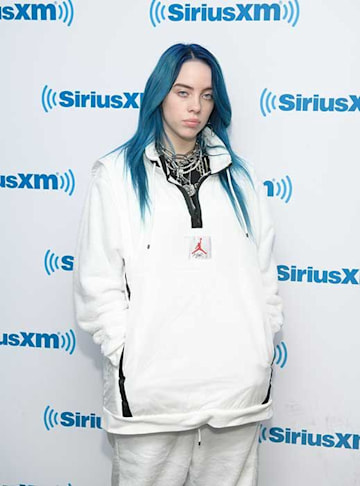
Use UberEats to discover nearby vegan takeaways like Billie Eilish
In 2019, the 18-year-old singer-songwriter teamed up with UberEats to discuss her favourite vegan food restaurants across America, all of which she accesses from UberEats whilst travelling. The ‘Bad Guy’ singer also admitted that she has an obsession with ordering vegan burritos.
Use apps like Tiffany Watson
Whilst talking to Live Kindly, former Made In Chelsea star Tiffany Watson advised: “Look on Instagram, look on the Happy Cow app, plan ahead, and it’s fun! You get to find new places and it helps you get excited for your holidays.”
MORE: Top ten vegan restaurants in London that you need to try
DISCOVER: What is the Climatarian diet? Here’s why everyone is talking about it
Go on social media for inspiration like Lucy Watson
Whilst giving her top tips for going vegan, Made in Chelsea star Lucy Watson told Indy100: “There are so many online articles and social posts to inspire you. I recently made and shared a granola pizza on my Instagram and people loved it. So many amazing Instagrammers follow a plant-based diet. They are constantly posting recipes to inspire their followers and help them with simple ways to get involved.”
Swap burgers for meat substitutes like Kate Mara
House of Cards actress Kate Mara told Bon Appetit: “I’m completely obsessed right now with the vegan, gluten-free Beyond Meat burger. The first time I had it, I thought, ‘I must have gotten this wrong.’ It looked so bloody because of the beets! I’m completely addicted. I’ll cook one up in some olive or coconut oil, top it with a slice of vegan American, and put it in a gluten-free bun with ketchup and lettuce.”
Take your vitamins like Natalie Portman
Hollywood actress Natalie Portman revealed to Harper’s Bazaar: “I usually have oatmeal or avocado toast in the morning … I take vitamins too — vitamin D, and I’m still on prenatal vitamins. I get B12 shots once a month because it’s the one thing you don’t get from a vegan diet.”
SHOP: 6 best plant-based vegan subscription boxes for 2023
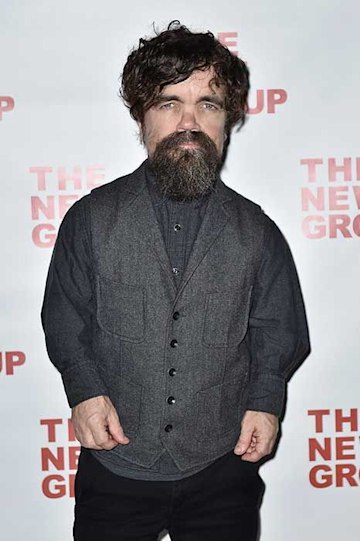
Swap meat for tofu like Peter Dinklage
According to Veganuary, when Game of Thrones star Peter Dinklage had to eat meat on-screen for a GOT scene, he swapped the meat products for tofu instead so that viewers couldn’t tell the difference.
Like this story? Sign up to our HELLO! Mail newsletter to receive all the latest royal and celebrity news straight in your inbox.
(RNS) — About 21 million grown ups in the U.S. have experienced at the very least 1 key depressive episode, the Countrywide Institute of Psychological Well being stories.
A new review now finds that all those who have gone to a priest or pastor for guidance will most probable have been inspired to search for out mental well being pros and just take medication to deal with it.
Which is the summary of a nationally agent study of clergy serving U.S. congregations from across the religious spectrum. The Countrywide Survey of Spiritual Leaders asked 890 individuals whose major job is as a clergy leader about causes of depression and ideal treatments for it.
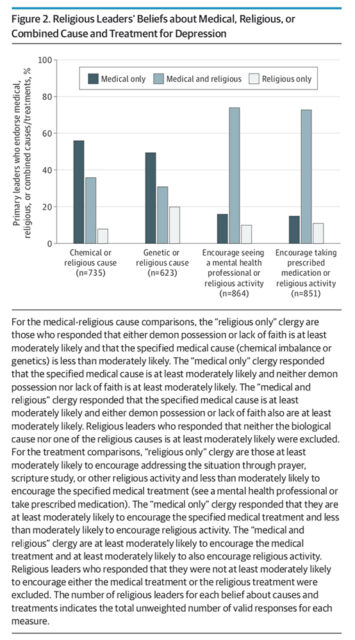
Printed this 7 days in JAMA Psychiatry, the review stories that 90{35112b74ca1a6bc4decb6697edde3f9edcc1b44915f2ccb9995df8df6b4364bc} of clergy respondents reported they would motivate a person with depressive indications to see a psychological wellbeing qualified and 87{35112b74ca1a6bc4decb6697edde3f9edcc1b44915f2ccb9995df8df6b4364bc} would motivate folks to take prescribed medications for it.
“There are some clergy out there that discourage health-related treatment,” mentioned Duke University sociologist Mark Chaves, who co-authored with the study with Duke sociologist Anna Holleman. “But it turns out, it’s a small minority, even amid conservative spiritual teams.”
The study, funded by the Templeton Foundation and fielded from February 2019 to June 2020, is thought to be the first nationally consultant study of clergy beliefs on despair, Chaves said. The larger review included 1,600 congregational leaders from which 890 main clergy have been polled for the despair research.
Although quite a few clergy also encouraged spiritual remedy for despair, this kind of as prayer or Scripture review, these religious treatments were supplementary. They did not replace professional medical procedure.
The examine also asked clergy what they believed ended up the factors people skilled depression. The wide bulk attributed it to “stressful instances,” “traumatic activities,” “chemical imbalance,” “lack of social support” or a “genetic problem.”
Only 29{35112b74ca1a6bc4decb6697edde3f9edcc1b44915f2ccb9995df8df6b4364bc} of clergy reported depression was brought on by “lack of faith,” and 16{35112b74ca1a6bc4decb6697edde3f9edcc1b44915f2ccb9995df8df6b4364bc} mentioned “demon possession.”
Black Protestants and white evangelical Protestants ended up a lot more very likely than Catholic monks or white mainline Protestant ministers to motivate religious treatment method of depression, with no a healthcare part. Even between individuals teams, while, only a tiny minority — about 15{35112b74ca1a6bc4decb6697edde3f9edcc1b44915f2ccb9995df8df6b4364bc} — endorsed substituting spiritual for health care responses.
Non-Christian clergy comprised 8.5{35112b74ca1a6bc4decb6697edde3f9edcc1b44915f2ccb9995df8df6b4364bc} of those people surveyed and incorporated Jewish, Muslim, Hindu and Buddhist leaders. They scored in the same way to mainline Protestants and Catholics, Chaves reported, with incredibly “pro-medical” sights on managing despair.
Most clergy endorsed mixing both of those medical and spiritual techniques to melancholy.
“These benefits recommend that clinical specialists must see the broad greater part of spiritual leaders as allies in determining and adequately managing melancholy,” the research concludes.
Associated: As depression, stress and anxiety, grief spike during pandemic and protest, church buildings supply hope, mental overall health means
“Religious Leaders’ Beliefs about Health care, Spiritual, or Merged Cause and Procedure for Depression” Graphic courtesy of JAMA Psychiatry
Main despair is the most popular psychological problem in the U.S. and is the strongest hazard issue for suicide. Reports have revealed an enhance in despair in the U.S. populace from 6.6{35112b74ca1a6bc4decb6697edde3f9edcc1b44915f2ccb9995df8df6b4364bc} in 2005 to as high as 9{35112b74ca1a6bc4decb6697edde3f9edcc1b44915f2ccb9995df8df6b4364bc} in 2020, in accordance to a review released last 12 months by Columbia College Mailman Faculty of Community Health and City College of New York.
The Countrywide Survey of Religious Leaders was executed on the web, on paper and by cellular phone just as the coronavirus pandemic commenced. But Chaves mentioned he did not consider the effects would transform considerably if the review had been fielded today.
“I don’t see why the pandemic may possibly alter people’s sights of the underlying results in of depression and how to handle it,” he explained. Continue to, he said, the examine furnished a baseline that really should be repeated to evaluate alterations in excess of time.
Harold G. Koenig, a Duke professor of psychiatry and behavioral sciences who was not related to the review, explained its effects have been heartening.
“The the vast majority of psychological overall health pros are not spiritual, and that is a challenge due to the fact the the vast majority of their clients are,” Koenig reported. “So it is encouraging to see the vast vast majority of clergy see despair as a little something that is additional probable to have biological or situational instead than religious leads to.”
Associated: Review: Religion and spirituality can aid youth psychological well being crisis
One woman was told she was being “dramatic” when she pleaded for a brain scan after suffering months of headaches and pounding in her ears. It turned out she had a brain tumor.
Another was ignored as she cried out in pain during a 33-hour labor. She was supposed to be getting pain medication through her epidural, but it had fallen out.
Dozens of women complained of torturous pain as their vaginal walls were punctured during an egg retrieval process. They were told their pain was normal, but, in actuality, they were getting saline instead of anesthesia.
These are just some of the stories of women who say their pain and suffering has been dismissed or misdiagnosed by doctors. Although these are anecdotal reports, a number of studies support the claim that women in pain oftenare not taken as seriously as men.
Story continues below advertisement
Story continues below advertisement
This year, the Journal of the American Heart Association reported that women who visited emergency departments with chest pain waited 29 percent longer than men to be evaluated for possible heart attacks.
An analysis of 981 emergency room visits showed that women with acute abdominal pain were up to 25 percent less likely than their male counterparts to be treated with powerful opioid painkillers.
“I was told I knew too much, that I was working too hard, that I was stressed out, that I was anxious,” said Ilene Ruhoy, a 53-year-old neurologist from Seattle, who had head pain and pounding in her ears.
Despite having a medical degree, Ruhoy said she struggled to get doctors to order a brain scan. By the time she got it in 2015, a tennis ball-sized tumor was pushing her brain to one side. She needed surgery, but first, she rushed home, hugged her 11-year-old daughter and wrote her a letter to tell her goodbye.
Ruhoy did not die on the operating table, but her tumor had grown so large it could not be entirely removed. Now, she has several smaller tumors that require radiation treatment.
She said many of her female patients have had experiences similar to hers. “They’re not validated with regards to their concerns; they’re gaslit; they’re not understood,” she said. “They feel like no one is listening to them.”
Research also suggests that women are more sensitive to pain than men and are more likely to express it, so their pain is often seen as an overreaction rather than a reality, said Roger Fillingim, director of the Pain Research and Intervention Center of Excellence at the University of Florida.
Fillingim, who co-wrote a review article on sex differences in pain, said there are many possible explanations, including hormones, genetics and even social factors such as gender roles.
Regardless, he said, “you treat the pain that the patient has, not the pain that you think the patient should have.”
(Illustration by Vanessa Saba for The Washington Post/Photos: Getty Images)
Women say reproductive health complaints are commonly ignored
When Molly Hill made an appointment at a Connecticut clinic in 2017 to get an IUD, she said she was warned it would be uncomfortable, but she was not prepared for “horrific” pain. Hill, now 27 and living in San Francisco, recalled that during the procedure, she began crying in pain and shouted at the doctor to stop.
“We’re almost done,” she said the doctor told her and continued the procedure.
“It was full-body, electrifying, knife-stabbing pain,” she said. After it was done, she said she lay sobbing on the table in physical and emotional pain. “It felt violating, too, to have that pain that deep in your core where you feel the most vulnerable.”
Would you like to share your own experiences of coping with pain and navigating the medical system? Fill out this form, and we may include you in a collection of reader stories.
My wife of 35 years complained of intense abdominal pain for over 5 years. She was dismissed. My wife returned home from work and begged me to take her to the ER because her pain was unberaable. In the hospital a female physician’s assistant did what multiple doctors had not done: She believed my wife. After a series of tests, she diagnosed Stage 3 ovarian cancer, and 18 months later, my wife died.
Mick, South Carolina, 69
I was told for 15 years that what turned out to be super-ventricular tachycardia was “anxiety attacks.” It finally took a female nurse at the school I worked for to put a blood pressure cuff and blood oxygen reader on me to realize I had a bigger issue.
Angelina, New Jersey, 27
I had a uterine biopsy to rule out cancer. Women are typically not given any kind of anesthesia or pain relief for this procedure. The pain was so intense that I couldn’t keep myself from screaming. I asked my doctor afterward why they don’t administer any sort of anesthesia for that procedure, and the answer was, “We just don’t.”
Jeanna, Georgia, 46
I started to experience strange sensations along my face, extending along the right side of my body. My GP laughed and said, “What do you want me to do, order a total body neurological work up?” At the same time, I complained to my eye doctor I was experiencing double vision and blurriness. I joked it was a brain tumor; they reassured me it was not. Six months later I lost consciousness and had an MRI. It was a brain tumor.
Anne, Maryland, 60
I, too, had extreme pain from an IUD insertion. I passed out on the table and was awakened by a nurse telling me to hurry and get dressed because they needed the room.
Margaret , CA, 70
I was 45 when I consulted a GYN about cramping pain and excessive bleeding. He told me I was being mildly inconvenienced by perimenopause. A year later, when I changed medical insurance, I learned I had endometrial cancer.
Diane, NY, 68
It saddens me that this is still an issue so many years after I experienced it myself. In the early 1960’s, at the age of 29, I developed a gastric ulcer. My doctor refused to believe it was anything more than ”heartburn.“ I lost weight and suffered for an entire year before my doctor reluctantly ordered tests. I am now 89 years old and remember this as one of the worst periods of my life.
Jean, Maryland, 89
I was having an emergency C-section and could feel every cut my doctor made. It was excruciating. I was screaming and my female doctor stopped and instructed the male anesthesiologist to up my pain meds. Instead of addressing me, he turned to my husband and said “All she’s feeling is pressure. And pressure feels like pain to some people.” Luckily my doctor insisted he up the dosage. Her subsequent cuts started feeling less painful.
Lauren, PA, 35
End of carousel
Studies consistently show that women who have not experienced vaginal birth have much higher pain during IUD insertion compared with women who have given birth. A Swedish study found that among 224 women who had not given birth, 89 percent reported moderate or severe pain. One in six of the women said the pain was severe.
Although numbing agents and local anesthetics are available, they are rarely used.
In some cases, women have sued physicians for ignoring their pain. Dozens of women sued Yale University claiming that during an egg harvesting procedure at its infertility clinic, they were supposed to be receiving the powerful painkiller fentanyl. But some women were getting only diluted pain medication or none at all, according to lawsuits filed in the state Superior Court in Connecticut.
Later, the clinic discovered a nurse had been stealing vials of fentanyl and replacing the painkiller with saline solution. The nurse pleaded guilty last year and was sentenced for tampering with the drugs.
One of the plaintiffs, Laura Czar, wrote about her experience for Elle magazine, describing it as “a horrible, gut-wrenching pain,” and told a doctor at the time, “I can feel everything you’re doing.” Despite her protests, the doctor continued.
Yale said in a statement that it “deeply regrets” the women’s distress and has “reviewed its procedures and made changes to further oversight of pain control and controlled substances.”
(Illustration by Vanessa Saba for The Washington Post/Photos: Unsplash, Pexels)
Racial disparities in pain management
For Sharee Turpin, the pain of sickle-cell diseasesometimes feels like tiny knives slicing her open. Sickle cell disease is an inherited blood disorder that can cause suffering so severe, its attacks are called “pain crises.”
But when Turpin, who is Black, experiences a pain crisis, the 34-year-old does not rush to the ER in Rochester, N.Y. Instead, she combs her hair, mists some perfume and slips on her “Sunday best” in hopes that the doctors and nurses won’t peg her as a drug seeker, she said.
Sometimes, Turpin gets a care team that understands her pain. Other times, she is treated as a bother. “I’ve even been told ‘shut up’ by a nurse because I was screaming too loud while I was in pain,” she said.
Story continues below advertisement
Story continues below advertisement
Abundant research shows racial bias in pain treatment. A 2016 study found half of white medical students and residents held at least one false belief about biological differences between Blacks and Whites, and were more likely to underestimate Black patients’ pain.
“The management of pain is one of the largest disparities that we see between Black people and White people in the American health-care system,” said Tina Sacks, an associate professor at the University of California at Berkeley and author of “Invisible Visits: Black Middle-Class Women in the American Healthcare System.”
Labeling women “hysterical” or blaming psychological causes
Research shows men in chronic pain tend to be regarded as “stoic” while women are more likely to be considered “emotional” and “hysterical” and accused of “fabricating the pain.”
Carol Klay, a 68-year-old from Tampa, had endured years of chronic pain from arthritis, degenerative disk disease and spinal stenosis. During a hospital stay last year, her doctor noted in her medical record that she was crying “hysterically.”
Klay said she was crying because she was unable to sit, stand or walk without agony, and the doctor had removed morphine from her cocktail of pain medications. She wonders whether the doctor “would have called me hysterical if I was a man,” she said.
Tampa General Hospital said it could not discuss specific patients, but stated: “Patient treatment plans, including medication orders to reduce pain, are prescribed by multi-disciplinary clinical teams.”
Research shows women’s physical pain is also often attributed to psychological causes.
Story continues below advertisement
Story continues below advertisement
Jan Maderios, a 72-year-old Air Force veteran from Chipley, Fla.,said the trauma of having pain dismissed by doctors has stayed with her for years. She saw about a dozen doctors in the early 1970s for pelvic pain. When clinicians could not identify the cause of her pain, she was referred to a psychiatrist.
“You start to doubt yourself after so many medical experts tell you there’s nothing wrong with you,” she said.
After a hysterectomy in 1976, Maderios learned that fibroid tumors in her uterus had been the source of her pain. She said learning her pain was real — and physical — “made all the difference in the world.”
(Illustration by Vanessa Saba for The Washington Post/Photos: iStock, Unsplash)
Why women’s pain complaints often aren’t taken seriously
During a 33-hour labor with her first child in 2011, Anushay Hossain, 42, of D.C., opted for epidural pain relief but said she stillfelt it all — every contraction, every cramp and every dismissal of her pain by her medical team. The doctor reassured her that she was getting the maximum dosage of pain medication.
In fact, she wasn’t getting any at all. She said her epidural had slipped out. By the time the error was caught, she was shaking uncontrollably and in need of an emergency Caesarean section, she said.
This pain gap may stem, in part, from the fact that women have historically been excluded from medical research. It wasn’t until 2016 that the National Institutes of Health (NIH) required sex to be considered as a biological variable in most studies it funded.
“We’re making progress,” said David Thomas, special adviser to the director of NIH’s Office of Research on Women’s Health. “But we do have a long way to go because there’s this whole institutional approach to doing research — pain and beyond — where it tends to be male-focused.”
Nearly 95 percent of U.S. medical school students said instruction on sex and gender differences in medicine should be included in curriculums, according to a 2015 survey. But only 43 percent said their curriculum had helped them understand those differences and only 34.5 percent said they felt prepared to manage them in a health-care setting.
Story continues below advertisement
Story continues below advertisement
“It is changing, but it’s changing very slowly,” said Janice Werbinski, immediate past president of the American Medical Women’s Association and chair of the mentorship committee of the association’s Sex and Gender Health Collaborative.
How women can advocate for better pain care
It took decades to solve the mystery of Maureen Woods’s chronic pain. Woods, 64, of Myersville, Md., started having joint pain in her teens and, over the years, told dozens of doctors her pain was “debilitating,” she said. Some told her it was all in her head. In 2017, she was diagnosed with hypermobile Ehlers-Danlos syndrome, a connective tissue disorder often causing loose joints, dislocations and chronic pain.
She said women who are not being heard should keep advocating for themselves. “You have to go with your gut — something is wrong and I need to find a doctor who can figure it out,” she said.
Marjorie Jenkins, dean of the University of South Carolina School of Medicine Greenville, urged women against feeling pressured to accept an “everything is normal” non-diagnosis.
Story continues below advertisement
Story continues below advertisement
“If your provider does not appear to be listening to you or believing what you’re saying, then you need a new provider,” Jenkins said. “You are the client, you are the customer and you are the owner of your health.”
Particularly in emergency departments, she said, there can be an inherent bias. “There’s this assumption that women are emotional and they’re anxious and that that’s the main issue,” she said.
[Sign up for the Well+Being newsletter, your source of expert advice and simple tips to help you live well every day]
Increased injection drug use has led to a spike in conditions of the existence-threatening coronary heart condition endocarditis, with conditions promptly accelerating considering that the onset of Covid-19.
The enhanced scenario rely is 1 of the lesser-recognized aspect results of the fatal dependancy epidemic. But individuals with endocarditis, an swelling of the heart lining brought about by an infection, require advanced, thoughtful treatment — care that the U.S. well being technique is unwell-equipped to deliver.
With drug fatalities hovering at an all-time high and endocarditis situations amongst drug customers up practically tenfold in the previous 10 years, medical professionals, researchers, and well being officials have begun to confront the challenge with more urgency. In distinct, health professionals are coming to terms with a basic fact: Their hospitals frequently have couple of protocols for treating endocarditis clients who use opioids and the withdrawal they’ll probable practical experience upon admission.
ad
“We’re taking ways in the ideal course, but we need to do a lot a lot more,” reported Daniel DeSimone, an infectious disorders expert at the Mayo Clinic in Minnesota. “We need to do improved with regard to running opioid withdrawal in the healthcare facility.”
In places with substantial fees of injection drug use, infectious ailment outbreaks are very little new. In the past 10 years by yourself, the U.S. has found outbreaks of HIV and hepatitis C linked with amplified opioid use.
advertisement
Concerning 2011 and 2022, the level of new endocarditis amid individuals with opioid use disorder increased radically, in accordance to new study revealed by the Countrywide Institute on Drug Abuse and researchers at Circumstance Western Reserve College. Between drug consumers, most endocarditis infections stem from the use of non-sterile syringes, letting microbes to enter the bloodstream and, at some point, the heart.
Amid folks with opioid use dysfunction, the level of endocarditis jumped from 4 for every million for each day to 30 per million per working day. The sharpest improve transpired in between 2021 and 2022 — a spike that the study’s authors attribute to the Covid-19 pandemic.
Treatment for endocarditis, which is not often brought about by drug use, normally consists of a course of antibiotics sent by IV drip. Some patients get what’s regarded as a PICC line, a larger type of IV applied when they’ll need treatment for a number of months. Several cases have to have surgery to fix or substitute damaged heart valves.
These kinds of care is difficult to start with. But for people with dependancy, each of all those actions adds a new layer of complexity — in certain, lengthy healthcare facility stays and ensuing withdrawal for individuals accustomed to standard opioid use.
“You have anyone that has very powerful physical dependence to opioids, they go into the clinic, and they go into withdrawal, and that withdrawal can be really, really critical,” Nora Volkow, NIDA’s director and the co-author of the current analyze, mentioned in an interview. “They may possibly go away the hospital versus clinical tips, mainly because they’re not remaining dealt with for the severity of the withdrawal indications.”
Even when patients’ withdrawal is addressed, Volkow reported, patients “stay in the course of the complete hospitalization as wanted — and then they get produced with no linkage to therapy or care.”
Holding patients in the clinic, having said that, is only 50 {35112b74ca1a6bc4decb6697edde3f9edcc1b44915f2ccb9995df8df6b4364bc} the fight. In circumstances where by people stay in remedy, lots of continue to really do not obtain the means they want, or the abilities their treatment needs.
Even at the time patients’ an infection and heart ailment has been tackled, discharging them from the hospital can existing distinctive challenges. Quite a few of individuals who inject prescription drugs are also experiencing hazardous or unpredictable housing situations, and all those whose addictions continue to be untreated normally rapidly return to use.
Many of those people individuals shortly wind up readmitted to the healthcare facility for repeat bacterial infections. In latest decades, this sort of conditions have engendered aggravation from hospitals and more stigma amongst overall health providers — even leading to general public debates about regardless of whether people with various endocarditis situations are deserving of additional care.
As a outcome, some physicians search for long-term treatment amenities exactly where their clients can recuperate in a a lot more steady environment. Even in individuals cases, even so, the U.S. health and fitness infrastructure poses important road blocks.
“I just can’t inform you the selection of situations I’ve had experienced nursing amenities say they will not settle for a affected person with addiction, because of issues having them methadone or obtaining them buprenorphine, or other causes that look to be code for stigma,” explained Ashish Thakrar, an habit physician and postdoctoral fellow at the College of Pennsylvania’s Nationwide Clinician Scholars System.
The spike in cases, and developing recognition that the U.S. wellbeing system is sick-geared up to take care of complex individuals dealing with dependancy, has spurred phone calls for bettering therapy specifications.
The American Coronary heart Affiliation previous 12 months issued new suggestions for endocarditis treatment that revolve close to treating the patient’s underlying addiction. The AHA’s multidisciplinary strategy, in an suitable state of affairs, would incorporate input from physicians in at minimum 4 fields: cardiology, cardiac surgical procedure, infectious sickness, and dependancy drugs or habit psychiatry.
The Section of Justice has weighed in as effectively, issuing advice and asserting a number of settlements and new lawsuits aimed at forcing well being treatment services to confess clients who’ve been prescribed addiction prescription drugs like methadone or buprenorphine.
Whilst some industry experts welcome the new guidance, they concede that in some conditions it is unattainable to live up to.
“Most hospitals really don’t have habit talk to services,” Thakrar reported. “Most hospitals are not heading to have entry to dependancy skills, and in element that’s due to the fact hospitals haven’t paid for it. It hasn’t been a precedence. … A ton of hospitals don’t have specialty solutions, so a great deal of companies and cardiologists might be still left without the need of any person to connect with.”
The resulting void forces other doctors — in this scenario, cardiologists or infectious ailment specialists — to take care of their patients’ addiction, which they’re sometimes unwell-geared up to do.
DeSimone, the infectious condition specialist who was the direct creator for the AHA’s new recommendations, acknowledged those medical practitioners may be not comfortable offering addiction medications, like producing a prescription for buprenorphine or connecting their people with a methadone clinic.
The failure to offer in depth care is a large missed option, Volkow said, simply because individuals hospitalized with endocarditis are a “captive audience” for dependancy care. A clinic, she argued, delivers individuals with remedies, food, shelter, and safety — in other words, an ideal environment to commence dependancy remedy.
Furthermore, individuals whose addictions remain untreated go away the healthcare facility at even larger hazard.
The ailment “may have to have heart valve restore or total replacement,” DeSimone explained. “That commonly necessitates the use of prosthetic substance — and specifically for individuals who inject medication, that components now predisposes you to getting infected again.”
The raise in infective endocarditis has taken spot amid a broader debate about the impact of “harm-reduction” approaches — expert services together with syringe trade, which facts displays as extremely efficient at blocking infectious condition transmission.
In recent yrs, having said that, community governments in Indiana and West Virginia have moved to limit or outright near syringe trade solutions. Even left-leaning leaders, like President Biden or California Gov. Gavin Newsom, have resisted the opening of proposed supervised injection web-sites that would present syringe expert services together with medical supervision for individuals employing medications.
Previous yr, conservative media caused an uproar by falsely reporting that the Biden administration prepared to use federal income to distribute sterile pipes applied to take in methamphetamine or fentanyl, among other prescription drugs. In reaction, the White Property issued a official denial — and lawmakers from both get-togethers introduced legislation meant not only to ban the use of federal money for sterile pipes, but also to avert authorities funds from currently being spent, for the initial time, on thoroughly clean syringes.
When the $30 million allocation for hurt-reduction products and services previous calendar year was unparalleled, critics say it wasn’t ample. And when communities absence obtain to solutions like syringe trade, Volkow claimed, the outcomes are straightforward to predict.
“During the Covid pandemic, lots of of the community expert services that exist to aid people that just take drugs — which include, for example, syringe trade plans — were being shut,” Volkow said.
She additional: “You can seem at it all through the full planet: Places closing their syringe trade programs are followed by outbreaks for HIV, and we’re seeing the similar matter with hepatitis C. We can incredibly a great deal predict it is also involved with infectious endocarditis.”
STAT’s coverage of long-term overall health troubles is supported by a grant from Bloomberg Philanthropies. Our monetary supporters are not involved in any choices about our journalism.
Get your day-to-day dose of health and medicine every single weekday with STAT’s cost-free newsletter Morning Rounds. Indication up listed here.
The annual selection of ransomware assaults on health and fitness care provider companies much more than doubled from 2016 to 2021, exposing the personalized wellbeing details of almost 42 million folks. A new report from the College of Minnesota School of Public Overall health (SPH), revealed in the Journal of the American Health care Affiliation (JAMA) Wellness Forum, reveals that ransomware attacks on health care vendors are not just expanding in frequency, they are also becoming additional critical — exposing more substantial portions of particular health and fitness details and affecting large organizations with a number of health and fitness treatment amenities.
To carry out the examine, scientists designed a databases known as the Monitoring Healthcare Ransomware Occasions and Traits (Threat), a exceptional tool that for the very first time makes it possible for researchers to keep track of the occurrence of ransomware attacks on wellness care service provider businesses.
Ransomware is a kind of destructive software program that prevents consumers from accessing their electronic units and demands a ransom to restore access. When some well known ransomware assaults on overall health treatment supply businesses have received media consideration, there is at the moment no systematic documentation of the extent and impact of ransomware assaults on our well being care system.
In the 1st-at any time extensive examination of ransomware assaults on U.S. overall health treatment vendors, researchers documented that between 2016 and 2021:
374 cases of ransomware attacks on wellbeing treatment supply companies uncovered the personal wellness facts of virtually 42 million people today.
Ransomware attacks more than doubled on an yearly basis, from 43 to 91 for each yr.
The amount of persons whose own overall health information and facts was uncovered amplified from about 1.3 million in 2016 to extra than 16.5 million in 2021.
Disruptions in treatment for sufferers as a result of ransomware incidents occurred in 166 — or 44{35112b74ca1a6bc4decb6697edde3f9edcc1b44915f2ccb9995df8df6b4364bc} — of attacks.
Amongst well being care supply facilities, clinics were the most frequent targets of ransomware assaults, followed by hospitals, ambulatory surgical centers, psychological/behavioral health facilities, dental practices and write-up-acute care companies.
“As wellbeing care supply corporations have amplified their reliance on information technologies to serve their sufferers, they have unfortunately also greater their potential publicity to cybersecurity risks, these as ransomware attacks,” stated Hannah Neprash, lead writer and an assistant professor at SPH. “Despite this enhanced threat, facts about the frequency and scope of these attacks is restricted to anecdotal information coverage. This research and the enhancement of the Menace database addresses this hole, offering the initial peer-reviewed investigation of the threat that ransomware poses to overall health care vendors and the thousands and thousands of patients they serve.”
More investigation is needed to more precisely recognize the operational and medical care consequences of ransomware attacks on overall health treatment providers. The researchers also propose that as policymakers craft laws aimed at countering the threat of ransomware across various industries, they really should think about the precise wants of wellbeing treatment supply corporations and the likely damaging implications on affected individual treatment.
About the University of General public Wellness The University of Minnesota School of Community Health and fitness enhances the overall health and wellbeing of populations and communities all-around the world by bringing innovative investigate, discovering, and concrete actions to today’s major wellness problems. We put together some of the most influential leaders in the area, and partner with health departments, communities, and policymakers to progress wellness fairness for all. Learn extra at sph.umn.edu.
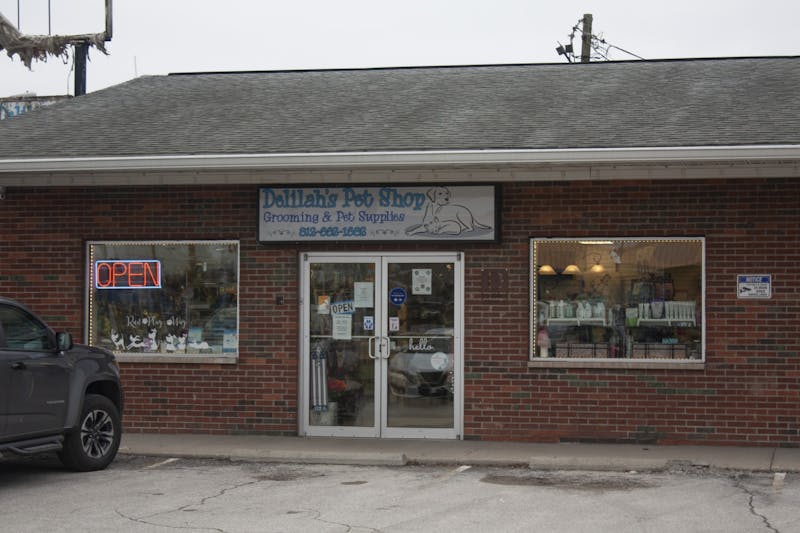
For 40 years, Delilah’s Pet Shop has provided pets for the Bloomington community. But on Jan. 1, a city ordinance banning the retail sale of cats and dogs took effect, forcing the store to adapt.
“It’s so quiet now,” owner Lesli Henderson-Miller said. “Before, we could hear the sounds of people laughing, the sounds of dogs barking.”
The shop, named after the family Saint Bernard Delilah, was started by Henderson-Miller’s mother, Karene Kidwell, who was a veterinarian technician. Henderson-Miller teared up as she talked about her mother’s death, which happened just last year.
“It’s been a hard year,” she said.
In an 8–0 vote in December 2021, the Bloomington City Council passed the ordinance in response to concern about puppy mills, which are large dog-breeding facilities that breed for profit, regardless of how the animals are treated.
Henderson-Miller said only one member of the city council visited her shop while the ordinance was being decided. She recalls the member saying the shop was nothing like what they were trying to stop.
“What we do here is we love our animals,” Henderson-Miller said. “It’s a soul. It’s a little person. It should be treated as a person.”
Henderson-Miller understands the council had good intentions but thinks that the ban was unfair to shops that weren’t doing anything wrong.
“This is my whole life,” she said.
Opponents of the retail sale of pets are mostly concerned about where the pets are sourced. Virgil Sauder, director of City of Bloomington Animal Care and Control, said some breeders do not ensure pets come from healthy genetics and sometimes separate puppies too young, causing health and behavioral problems.
The other option for sourcing is a broker system, where people buy animals from puppy mills and resell them online or to pet stores. Sauder said places like these often place animals in small cages filled with feces, urine and litter.
“They’re basically factory farming puppies,” he said.
But getting pets from ethical breeders can be beneficial for those who want young puppies or are interested in knowing the parents of the pet, Sauder said.
While the push to ban the sale of pets in stores has reduced the number of pets in mills nationally, some Indiana legislators are looking to pass a law that would allow stores to sell pets from USDA-licensed breeders. Filed in both the House of Representatives and Senate, these bills would make local ordinances, like the one in Bloomington, unenforceable.
Samantha Morton, the Indiana state director for the Humane Society of the United States, said that USDA certification doesn’t mean breeding practices are ethical. According to the Humane Society of the United States, USDA-licensed breeders that violate the Animal Welfare Act are rarely fined and are easily able to renew their licenses.
Morton said the organization is working to stop the Indiana legislation. She said that 32,000 fewer breeding dogs are caged in licensed facilities compared to ten years ago, which she believes is due to legislation causing a decline in retail pet sales.
Morton said pet stores may not be getting pets ethically even if they don’t source from puppy mills.
“Responsible breeders want to meet the family that’s coming to buy the dog,” she said.
Henderson-Miller says she got her pets from local breeders and emphasized the commitment involved in pet ownership to prospective buyers. She said being a small business owner is making it difficult to compete with large businesses that have also stopped selling pets, like PetSmart or PetCo, because she cannot buy store items in bulk.
“It’s such a fast-paced world that it’s just really easy to sweep someone under the carpet if you can,” she said. “But when you destroy somebody’s life, like what it’s beginning to do, that hurts.”
Although the state of the retail sale of pets remains uncertain, Henderson-Miller is adapting to the ordinance by offering grooming services and selling an array of pet food, toys and accessories.
In a room of wooden pens that used to hold puppies and kittens, all that remains are a few rescues and favors for friends. The pens with pets are marked with notes that read “NOT FOR SALE.”